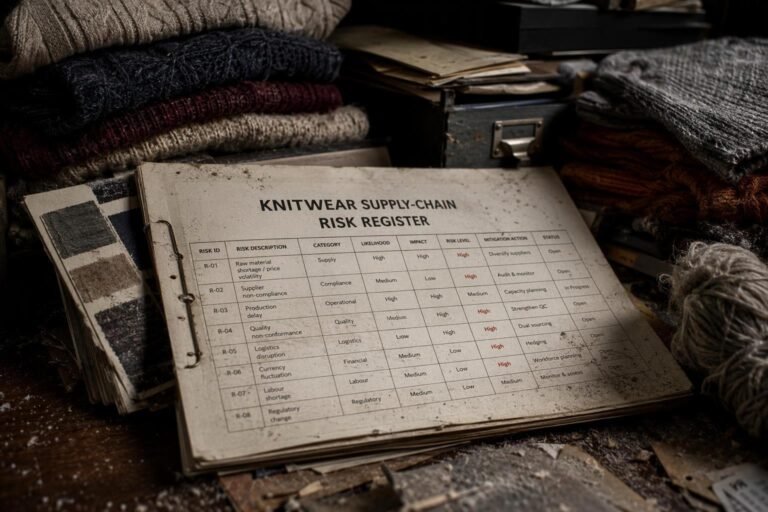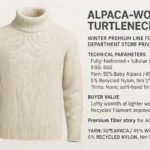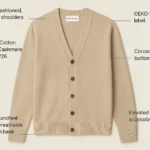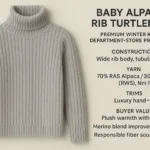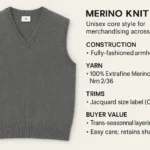

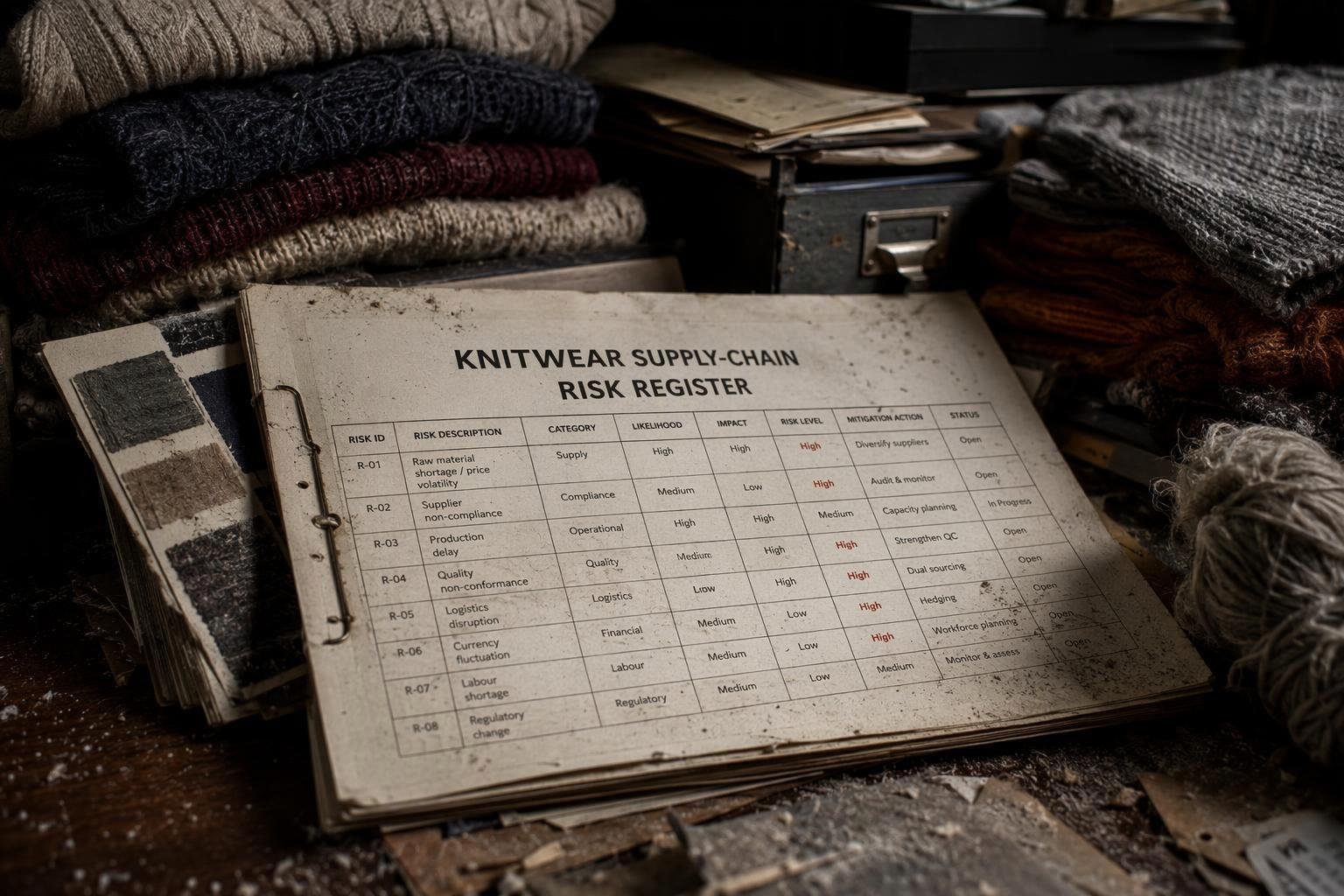
Most risk registers die in the same way. Someone builds a 60-row spreadsheet before the season, presents it in a kickoff meeting, and then the file goes quiet until a shipment slips in October — at which point it becomes a post-mortem document rather than a management tool.
Knitwear punishes that habit harder than most apparel categories. The yarn has to be committed before the garment exists. A gauge change late in development resets weight, drape and grading at once. A dye lot that runs out cannot be fixed by re-cutting a panel. And the whole seasonal program — orders placed February to June, production running July to December — compresses every mitigation into the same few months.
This playbook is written for a category manager running a seasonal knit program of roughly 1,000–5,000 units per style, working with a China-based OEM on a 3–5 working day sampling promise and a bulk lead time of around three weeks after sample approval. It covers six risk families — yarn, supplier concentration, sampling, quality, freight and contingency production — and, for each, the register design that keeps it live rather than filed.
Why knitwear breaks generic risk registers
A cut-and-sew risk register can usually be borrowed from a woven program with minor edits. A knit register cannot, because five structural features change what can go wrong and when you still have room to act.
Yarn is the longest-lead input and it is ordered before the garment exists. In knitwear the fiber decision — Nm count, ply, micron, composition, dye route — is effectively the product decision. Once the yarn is spun and dyed, the style’s handfeel, weight and price are largely fixed. A register that tracks “fabric lead time” as a single line misses the fact that the binding constraint sits one or two tiers upstream of the factory.
Dye-lot and lot consistency create risk that re-cutting cannot repair. Woven programs can often replace a faulty roll. A sweater knitted from a different dye lot of the same color reference will not match the previous delivery, and a seasonal reorder that arrives in a visibly different shade is a markdown problem, not a quality-claim problem.
A sample failure is often a machine-setting failure. Gauge, stitch structure, tension and washing/blocking all interact. When a sample comes back heavy, short or stiff, the fix is usually a machine and finishing adjustment rather than a sewing correction — which means the iteration loop runs through the knitting floor, not the sample room.
Weight makes freight a genuine cost and calendar decision. Knitwear is heavy relative to its value. A 900 g chunky knit and a 220 g fine-gauge pullover have very different air-freight economics, and the decision between sea and air is a margin decision that belongs in the register, not in a shipping inbox.
Demand bunches. Knitwear is about as seasonal as apparel gets: buyers place orders from February to June, yarn procurement and sample approval run through May and June, knitting begins in July, and the heaviest load falls across August to October ahead of a November–December shipment window. Coats Digital’s analysis of sweater factory capacity describes this as a stable, foreseeable annual crunch — which is precisely why a register that only activates when something goes wrong adds nothing.
Treat the register, then, as a decision log for these specific dependencies: what could break, what evidence would tell you first, who acts, and what they do. It is not a compliance artifact and it is not a forecast.
Register anatomy: fields that earn their place
A row earns its place only if someone can act on it. That test eliminates most of the fields in a generic template and keeps about ten.
Field | What it holds | Why it matters in knitwear |
|---|---|---|
Risk ID and short name | e.g. YRN-04 “Merino 2/30 single mill” | Lets the team refer to a risk in one phrase |
Risk family | Yarn / concentration / sampling / quality / freight / contingency | Keeps the heat map readable and stops freight crowding out yarn |
Trigger or cause | The specific condition, not the category | “Only one approved mill holds this count” is actionable; “supply risk” is not |
Affected styles or SKUs | Style numbers and units at risk | Connects the risk to revenue, not to a feeling |
Likelihood and impact | Scores plus the basis for each | Forces the evidence to sit next to the number |
Leading indicator | The observable that moves first | This is the field that makes the register a monitoring tool |
Indicator owner and cadence | Named person, review frequency | Unowned indicators are never checked |
Mitigation in place | What is already being done | Prevents the team re-litigating settled decisions |
Contingency if triggered | The pre-agreed alternative | Distinguishes a plan from a worry |
Decision owner | The person with authority to hold, rebook or switch | A gate without authority changes nothing |
Status and date stamp | Open / monitoring / triggered / closed, with date | Makes staleness visible at a glance |
How many rows? A working register of roughly 15–25 live rows per season is enough for a small team and small enough to review properly. Anything beyond that belongs in an archive tab, closed with a date and a one-line outcome. The rows that kill a register are not the wrong ones — they are the ones with no owner and no review date, which sit in the file looking like diligence while nothing happens.
A worked example shows the fields in use:
YRN-04 — Merino 2/30, single approved mill. Trigger: only one mill holds the approved 2/30 merino in the required micron band. Affected: three styles, 4,200 units. Likelihood 3 (mill missed a confirmed date once in the last two seasons; no second source qualified). Impact 3 (a four-week slip would push two styles past their vessel cut-off). Indicator: mill order-book confirmation date, checked weekly by the category manager. Mitigation: yarn booked at order confirmation rather than at sample approval. Contingency: pre-approved 2/28 alternative at the same micron band, requiring a gauge adjustment and a re-approved shrinkage test. Decision owner: head of category. Status: monitoring, reviewed weekly.
That row is useful because a reader can tell, without asking a question, what would happen next and who would decide.
Scoring likelihood and impact honestly
Most registers fail at scoring, not at listing. Teams under-score risks they have never personally experienced and over-score whatever went wrong most recently, and a five-point scale with no definitions invites both errors.
Use a short ordinal scale with written definitions tied to knitwear consequences. Four levels are usually enough. Define impact by calendar days lost, units at risk and margin exposure rather than by adjectives:
Score | Impact definition (example) |
|---|---|
1 | Under 1 week slip; under 5% of style units affected; absorbable within the season |
2 | 1–2 week slip; 5–20% of units; requires re-sequencing but no air freight |
3 | 2–4 week slip; 20–50% of units; air freight or markdown likely on part of the range |
4 | Over 4 weeks or full style loss; launch date missed; write-off or full-price loss |
Define likelihood the same way, anchored to evidence rather than instinct:
Score | Likelihood definition (example) |
|---|---|
1 | No occurrence in the last two seasons; no structural reason to expect one |
2 | Occurred once in the last two seasons, or a structural exposure exists without precedent |
3 | Occurred more than once, or the exposure is structural and unmitigated |
4 | Currently occurring or already indicated this season |
Anchor likelihood to observable evidence and record it in the row. Has this mill missed a confirmed delivery date in the last two seasons? Has this yarn been substituted before, and did the substitute pass? Has this dye house re-dyed a shade after bulk approval? The evidence note is what stops a score drifting upward because someone is anxious, or downward because someone is optimistic.
Handle uncertainty in a separate field. Add a one-line confidence note — “based on two seasons of delivery data” or “no data; based on mill statement only” — instead of inflating or deflating the score to signal doubt. A high score with low confidence and a high score with solid evidence call for different responses: the first needs information, the second needs a contingency.
Finally, be clear about what the scores are for. They rank rows for attention and structure a conversation in the review meeting. They are not a probability forecast, and treating a 3 as “30% likely” is false precision that will be quoted back at you when the season ends.
Yarn availability, dye-lot and mill lead time
Yarn deserves its own family because it is where knitwear risk originates and where the register has the most lead time to act.
Eastern Market Indicator, Australian wool, 2025–26 season. AWI reports the EMI opening the season near A$12.00/kg clean and finishing near A$19.50/kg clean, roughly a 60% rise, alongside an 8.0% year-on-year fall in the Australian clip to 271.7 million kg. Prices are season opening and closing levels, not a continuous series; the report notes the rise was not continuous, with easing in November and volatility in March–April.
Single-mill dependency. For any given fiber, count and micron band, identify how many mills are actually approved — not how many exist. A fiber available in the market but not qualified by your factory is not a source; it is a qualification project.
Quoted versus observed lead time. Record both. A mill that quotes four weeks and has delivered in six for two consecutive seasons should be scored on the six, with the gap noted as the indicator.
Dye-lot continuity across a reorder. For any style expected to reorder, the register should carry the original dye lot reference and the quantity remaining. A reorder placed after the lot is exhausted is a color-match risk, not a yarn-availability risk, and it needs a different mitigation: approve the new lot against the sealed standard before bulk, or plan the reorder as a distinct colorway.
Certification status of the specific lot. OEKO-TEX STANDARD 100 certificates are valid for one year and are issued per article and product class, with different limit values across the four classes. A certificate on file is therefore not automatically a certificate for this lot, this article or this product class. The register should carry the certificate number, the article it covers, the product class and the expiry date, and flag any renewal falling inside the production window.
Track the input market, not just the supplier. Fiber price and availability can move together, and the 2025–26 Australian wool season is a clean example. AWI’s market intelligence report records AWTA test data showing the Australian clip down 8.0% year-on-year to 271.7 million kg for 2025–26, with the Eastern Market Indicator rising from around A$12.00 per kg clean at the start of the season to about A$19.50 by season end — roughly a 60% increase. The report also notes the decline was broad-based across micron categories rather than confined to one, and that the finest wool recorded the largest price gains. For a wool or merino program, that combination — less fiber and higher prices — is exactly the scenario in which a single-mill dependency becomes expensive as well as slow.
Four indicators do most of the work in this family: the mill’s order-book confirmation date, the greige or yarn stock position held for your counts, the dye-house queue length, and any pending certificate renewal. Each has a named owner and a review cadence, and each can move before the factory notices.
Supplier concentration: measuring it before you reduce it
Concentration is usually measured at the wrong tier. A factory with two yarn suppliers can still be single-sourced upstream, and a program with three factories can still depend on one dye house for its entire navy and black range.
Build three separate maps. Share of seasonal knit volume by garment supplier, by yarn mill, and by dye house. Plot each as a simple percentage bar for the season. The maps will rarely agree, and the disagreement is the finding: a supplier map that looks diversified alongside a dye-house map with one source above 60% is a concentration risk the factory-level view hides.
Expect compliance strategy to push concentration up, not down. EU textile and clothing imports are concentrated among a relatively narrow group of suppliers led by China, Bangladesh, Türkiye, Vietnam and India, according to a European Parliament briefing covering 2014–2023 trade. The same briefing notes that as traceability and product-information expectations rise under measures such as the Corporate Sustainability Due Diligence Directive, the Ecodesign for Sustainable Products Regulation, Digital Product Passports and the Forced Labour Regulation, buyers may reduce the number of suppliers they use and shift toward larger firms with stronger compliance systems — reinforcing concentration as a side effect of compliance strategy. Reducing concentration and improving compliance can therefore pull in opposite directions, and the register should show both.
Reduce concentration without doubling cost. Three approaches work at the reader’s volume band:
Qualify a second source on one style, not the whole range. Pick the highest-volume or highest-risk style and run the second mill through a full sample and test cycle on that style alone.
Split a single style’s colorways across two mills. This gives each mill a live order, keeps both qualified, and isolates a failure to part of the range rather than all of it.
Hold a validated backup yarn in a different count. A 2/28 in place of a 2/30 can often be substituted with a gauge adjustment — but only if the shrinkage, tension and handfeel have already been tested and approved.
Define “qualified” so the backup is real. A second source is qualified when a sample has been approved against the sealed standard, a test report is on file, and price and lead time are confirmed in writing. Anything short of that is a name on a list, and a name on a list is not a contingency.
Sampling gates that protect the calendar
Sampling is where knitwear calendars are lost, and almost always for the same reason: the loop restarts because the input was incomplete.
A gate sequence that protects the production window has five steps:
Tech pack completeness. Yarn specified by Nm, ply, micron and composition; gauge; target garment weight; trims and any hand-finishing. A pack that says “soft merino, medium weight” will produce a sample that has to be re-made.
First sample against that spec. The sample is a test of the specification, not of the idea. If the spec was vague, the sample tests nothing.
Fit and handfeel approval. Measured comments, not adjectives. “Make it looser” is not a production instruction; a named point of measure with a delta is.
Shrinkage and tension pre-test. Run before bulk, not after. A shrinkage failure discovered in the finished garment is a re-make; discovered at sample stage it is a machine adjustment.
Signed-off production standard. One sealed sample, one revision number, one approval record — so the factory and the buyer are working from the same document.
Each gate exists because of how knitwear behaves. A gauge change alters weight, drape and size grading simultaneously, so a late gauge decision cascades through the pattern, the yarn quantity and the cost. A handfeel change usually means a yarn or finishing change, which reopens the yarn question. This is why the gates are sequential rather than parallel: skipping one does not save time, it defers the cost into the production window.
Yarn availability is a sampling risk, not just a production risk. A 3–5 working day sample turnaround is achievable when the yarn is available and the design is defined — AzKnit, for example, states 3–5 working days for sampling depending on yarn availability and design complexity. When the yarn is not available, the sampling clock does not start, and the register should show that dependency explicitly rather than treating sampling and yarn as separate families.
The failure mode to watch for is the restart loop: sample made, comments issued, sample re-made because the tech pack was incomplete, comments issued again. Each cycle consumes a week or more of the window that bulk production needed, and the cost appears later as air freight or a missed launch.
Quality checkpoints: in-line versus final
Final inspection cannot catch what has already been knitted into the garment. The register should distinguish in-line checks from final checks and assign authority to each.
In-line checkpoints for knitwear:
Yarn lot verification against the approved standard at knitting start — count, color, lot number and certificate reference.
First-off panel approval per machine and per gauge, before the run continues.
Dimensional and weight checks at defined intervals through the run, against the approved measurements and target garment weight.
Linking and finishing checks before washing and blocking, where a linking fault is still correctable.
Final inspection covers the finished garment against the sealed approved sample, using AQL sampling, plus the visual and measurement checks agreed in the quality standard. Standard test families apply here — colorfastness under the ISO 105 series, dimensional stability under ISO 6330 and ISO 5077, pilling under ISO 12945 — and the acceptance limits should be agreed in writing before the season, not negotiated after a failure.
Authority is the point. A QC gate only changes outcomes when a named person can hold or reject the lot. The register should record that person for each checkpoint, because a gate that reports to no one with authority is a data-collection exercise. The same principle applies at the pre-production meeting: agree who can approve or reject top-of-production output before the line starts.
The buyer’s own QC records are part of the compliance story. OEKO-TEX STANDARD 100 certification rests on the tested articles plus operational quality assurance and a successful quality audit by an OEKO-TEX institute. That means the certification is not a document you file and forget; it depends on the mill’s operating discipline, and your inspection records are evidence that the discipline held for this order. Keeping lot verification and in-line records in the same file as the certificate is what makes the compliance claim defensible.
Freight lanes, weight and documentation
Freight belongs in the register as a scored risk with lane-specific indicators, not as a single “shipping” line that nobody owns.
Mode selection against knitwear’s weight-to-value profile. Typical transit windows, as a planning baseline rather than a guarantee:
Mode | Best for | Typical transit | Example volume |
|---|---|---|---|
Sea freight (FCL/LCL) | Bulk production | 20–35 days | 1,000–10,000 pcs |
Air freight | Urgent orders, sampling | 5–10 days | 200–1,000 pcs |
Express courier | Small parcels, samples | 3–7 days | 1–50 pcs |
For a 900 g chunky knit, air freight on a full order is usually a margin decision rather than a logistics one, and the register should carry the air-freight cost per unit at the point the sea cut-off is at risk — so the decision is made with the number in front of the team.
Route risk. Suez transits have partially resumed, and the picture is uneven. Metro’s analysis reports that around 5.5 million TEU of the 8.7 million TEU deployed between the Far East and Europe is now assigned to services using the Red Sea, with Mediterranean trades further recovered than Far East–North Europe services, and notes that mixed routings and potential European port congestion mean the benefits will not be immediate or consistent across every service. The practical consequence for the register is that transit time and schedule reliability now vary by carrier and by service, so the lane indicator should name the carrier and the routing assumption rather than the port pair alone.
Calendar risk. Greater China holiday closures compress capacity in the same weeks every year. In 2026, Mid-Autumn runs 25–27 September and National Day 1–7 October, with only three working days between them; SCAN Logistics recommends booking at least 14 days before expected departure and confirming suppliers’ production and closure schedules. For a knit program whose heaviest production load falls in August to October, this is not a background fact — it is a dated trigger in the register.
Documentation. EU customs and compliance expectations are tightening. The European Parliament briefing cited earlier notes that Digital Product Passports and related measures are increasing expectations around traceability and product information, and that even where direct obligations apply mainly to large firms, smaller exporters may face indirect pressure through buyer requirements and documentation demands. The register should therefore track document readiness — origin, fiber composition, test reports and certificate validity — as a freight-adjacent risk with its own owner, because a complete container with an incomplete document set does not clear.
Contingency production without panic premiums
Contingency production works when it is a pre-qualified option and fails when it is an emergency purchase. The difference is decided before the season, not during it.
Identify which styles are contingency-eligible. Simple constructions, stable yarns already held or qualified, and no complex jacquard or hand-finishing. A cable knit with a hand-linked finish is a poor candidate for a fast switch; a plain 12-gauge merino crew is a good one. Mark eligibility in the register per style, so the decision is not made under pressure.
Pre-agree capacity windows with a backup supplier before the season starts. This is a booking, not a promise of an order: a named window, a named gauge, and an agreed price basis. The backup supplier should be qualified to the same standard as the primary — sample approved, test report on file, social audit current.
Specify the trigger conditions. A missed in-line gate by a defined number of days, a yarn confirmation date that passes without confirmation, or a dye-house queue that exceeds an agreed threshold. The trigger should be observable by the indicator owner, not a matter of judgement in a crisis call.
The MOQ reality. At 1,000–5,000 units per style and an expected MOQ of around 100–300 pieces, a contingency split is feasible if planned early. Splitting a 4,000-unit style into 3,000 primary and 1,000 backup keeps both suppliers live and gives the backup a real order rather than a theoretical one. Improvised, the same split is expensive: a new supplier needs a sample, a test cycle and a production slot, and none of those are available at short notice in October.
Record the carrying cost. A contingency plan that is never triggered still costs qualification time and possibly a small sample fee. That cost belongs in the register as a known carrying cost, so the plan can be judged on its insurance value rather than looking like waste in a season where nothing went wrong.
Keeping the register alive: cadence, owners and review
The operating rhythm is what separates a used register from a shelved one, and it is deliberately light.
Weekly or biweekly stand-up, 20 minutes. Review only the rows whose leading indicator has moved. Not the whole register — the moved rows. This is why the indicator field and the owner field exist: without them, the meeting becomes a general status update and stops happening.
Monthly full review before each seasonal milestone. Walk the whole active set ahead of yarn commitment, ahead of sample approval, ahead of bulk start and ahead of the vessel cut-off. Re-score anything whose evidence has changed, and close anything that has resolved.
Post-season retrospective. Close every row with a one-line outcome: what actually happened versus what was scored. This is the only mechanism that corrects the scoring bias described earlier, because it replaces memory with a record.
One register owner, separate decision owners. The category manager usually owns the register and its cadence; the decision owner for each row is the person with authority to hold, rebook or switch. Keeping those roles distinct prevents the register owner from becoming a bottleneck for decisions they cannot make.
One-page heat map for the seasonal review. Rows by risk family on one axis, likelihood and impact on the other, with the detailed rows behind it. The heat map is for the meeting; the rows are for the work.
The failure mode is worth naming plainly: a register reviewed only when something goes wrong is a post-mortem tool, not a risk tool. If the only time the file is opened is after a missed shipment, the team has already lost the lead time the register was supposed to buy.
Key takeaways
Ten fields make a row actionable: risk ID, family, trigger, affected styles, scores with basis, leading indicator, indicator owner and cadence, mitigation, contingency, and decision owner with a date stamp.
Keep 15–25 live rows per season and archive the rest. Rows without an owner and a review date are the main reason registers die.
Score on a short ordinal scale with written definitions tied to days lost, units at risk and margin exposure — and record the evidence next to the score.
Build three concentration maps: by garment supplier, by yarn mill and by dye house. They will disagree, and the disagreement is the finding.
Treat yarn availability as a sampling risk. A 3–5 day sample turnaround depends on the yarn being there; the sampling clock does not start without it.
Sequence sampling gates — tech pack, first sample, fit and handfeel, shrinkage and tension pre-test, signed-off standard — because a late gauge change cascades through weight, drape and grading.
Put authority behind every QC gate. In-line checks catch what final inspection cannot, but only if a named person can hold the lot.
Score freight by lane, including carrier and routing assumptions, the Greater China holiday calendar and document readiness.
Pre-qualify contingency production with a named capacity window, an observable trigger and a recorded carrying cost.
Run a weekly indicator review and a post-season retrospective. A register opened only after a failure is a post-mortem.
FAQ
How many rows can a two-person team realistically maintain?
Around 15–25 live rows per season, reviewed weekly on indicators and monthly in full. Beyond that, the review meeting stops finishing and the register stops being read.
Should the register be one file per season or a rolling file?
A rolling file with a seasonal tab works better for a program with annual framework agreements and seasonal top-ups, because yarn and supplier risks carry across seasons. Archive closed rows with their outcome so the scoring history survives.
How do we score a risk the team has never experienced?
Score it on structural exposure rather than precedent — single source, no qualified backup, long lead time — and record a low confidence note. A high score with low confidence calls for information gathering; a high score with solid evidence calls for a contingency.
Is a second yarn source worth the qualification cost for a 1,000-unit style?
Usually yes if the style is expected to reorder or sits in a launch window, and the cost can be limited by qualifying the second source on that one style rather than the whole range. For a genuine one-off with no reorder, the qualification cost may exceed the benefit — record the decision either way.
What if a supplier will not share its upstream yarn source?
Record the gap explicitly as an open traceability item with an owner and a date, and treat it as a scored risk rather than a blocker. Ask for the spinner name and the yarn certificate as the two specific items; a factory that cannot name its spinner is telling you something about its own visibility.
What do we do when a certificate on file turns out to be expired or issued for a different article?
Treat it as a triggered row, not a paperwork correction. Hold the affected lot pending a valid certificate for the actual article and product class, and check whether any earlier shipment relied on the same document.
Build the register before the season builds it for you
The register does not need to be complete to be useful. It needs to be small, owned and reviewed.
Start this week with the three concentration maps — garment supplier, yarn mill, dye house — because they take an afternoon and usually surface one finding nobody expected. Then write ten rows: the yarn counts with a single approved mill, the styles with a reorder expectation and an exhausted dye lot, the sampling gates that have slipped before, the lane with the tightest cut-off against the holiday calendar, and the one style you would most want a backup for.
If you want to test the framework against a real style, AzKnit publishes a 3–5 working day sampling window depending on yarn availability and design complexity, a bulk lead time of around three weeks after sample approval, and MOQ from 100 pieces (50 for new designs). Those numbers are one way to shorten the sampling and yarn-confirmation legs of the register — they do not replace it. A yarn proposal or a sampling consult is enough to check whether the gates in this playbook hold against an actual tech pack before you commit the season to them.