
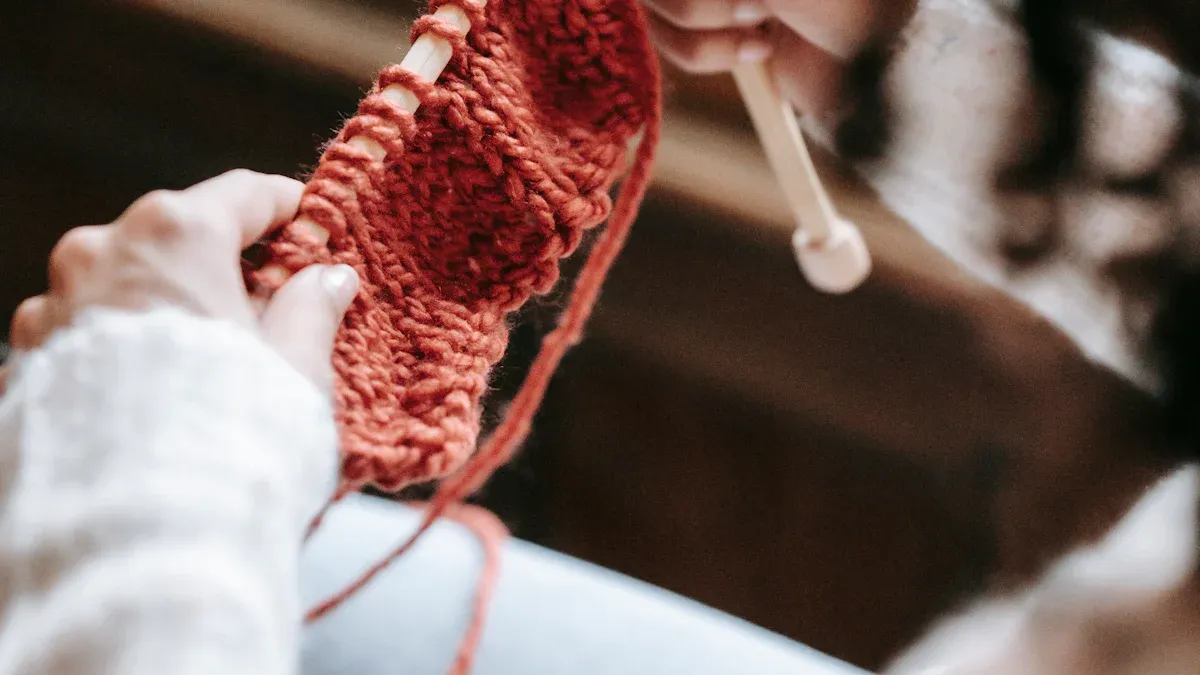
You measure yarn gauge by knitting a small sample, or swatch, and counting the stitches and rows over a set area. When you get this step right, your custom knitwear fits as intended and looks just how you want. Here’s why this matters:
Gauge affects the size and shape of your project.
Swatching helps you see how your tension compares to the pattern designer’s.
You learn how your yarn behaves after washing and blocking.
With a yarn count and gauge guide for custom knitwear, you can predict results and enjoy knitting with confidence.
Key Takeaways
Measuring yarn gauge helps your knitwear fit well. You should knit a swatch before you start your project. This lets you check your gauge and make changes. Yarn types and needle sizes can change your gauge. Pick them carefully for the best outcome. Wash and block your swatch first. This shows how your yarn acts before you measure it. If your gauge is not like the pattern, change your needle size. You can also try a new yarn. Write down your gauge swatch results. This helps you with future projects. Swatching lets you try colors and textures first. You do this before you start the whole project. Check your gauge often. This helps you avoid fitting problems and saves time later.
Gauge Basics for Custom Knitwear
What Is Gauge
Gauge is the measurement that tells you how many stitches and rows fit into a certain area of your knitted fabric. When you knit, you create loops with yarn and needles. The size of these loops changes based on your tension, the yarn, and the needles you use. Gauge helps you figure out if your knitting matches the pattern’s requirements. If you want your sweater or hat to fit just right, you need to know how to determine your gauge size before you start.
Tip: Always knit a small sample, called a swatch, before you begin your project. This lets you check your gauge and make adjustments if needed.
Why Gauge Matters
Getting the right gauge is important for every custom knitwear project. If your gauge is off, your finished item might turn out too big or too small. Here are some reasons why gauge matters:
The gauge of your fabric depends on the stitch pattern, yarn type, needle size, and your tension.
Different stitch patterns, like cables or ribbing, can change the number of stitches across the width.
Thicker yarns make bigger stitches, so you get fewer stitches and rows in the same space.
Larger needles create larger stitches, which affects the number of rows and stitches per inch.
Your tension can change, especially if you are new to knitting.
Matching the gauge to your pattern helps you avoid surprises. You want your custom knitwear to look and fit the way you planned.
Gauge Terms Explained
Let’s look at some common gauge terms you’ll see in knitting patterns. Understanding these words helps you choose the right yarn and needles for your project.
Term | Definition |
|---|---|
Measuring the gauge of a knitted piece to see if it matches the desired number of stitches and rows per inch or centimeter. | |
Getting gauge | Achieving the desired number of stitches and rows per inch or centimeter. |
Stitch gauge | The number of knitted stitches per inch or centimeter of fabric. |
Row gauge | The number of knitted rows per inch or centimeter of fabric. |
Gauge swatch | A small piece of knitted fabric made for checking gauge before starting a full project. |
Gauge | The number of stitches per unit measure for a particular pattern, important for sizing. |
Tension | Another word for gauge, meaning the number of stitches and rows in a defined area. |
Stitches and Rows per Inch
When you measure your swatch, you count the number of stitches and the number of rows in one inch or four inches. Patterns usually tell you what gauge size in knitting you need. For example, a pattern might say, “Gauge: 18 stitches and 24 rows = 4 inches in stockinette stitch.” You use this information to check if your knitting matches the pattern.
Yarn Weight and Needle Size
Yarn weight and needle size play a big role in your gauge. Bulky yarns make bigger stitches, while finer yarns make smaller ones. The same yarn can give you different results if you change your needle size. Stitch patterns also affect gauge, so always check your swatch before starting. If you understand these terms, you can pick the best yarn and needles for your custom project and get the fit you want.
Note: Professional knitters always knit a swatch and adjust their needle size to match the pattern’s gauge. This helps keep their projects consistent and accurate.
Yarn Count and Gauge Guide for Custom Knitwear
Estimating Yarn Quantity
You want to make sure you have enough yarn before you start your project. The yarn count and gauge guide for custom knitwear helps you figure out how much yarn you need. Start by knitting a swatch with your chosen yarn and needles. Make your swatch large, about 8 inches square, so you get an accurate measurement. Weigh your swatch and measure the area. This lets you estimate the amount of yarn for your whole project.
Here’s a simple way to estimate:
Knit a swatch using the same yarn and needles as your project.
Measure a 4-square-inch area in the center of your swatch.
Weigh the swatch with a small kitchen scale.
Calculate how much yarn you used for that area.
Multiply by the total area of your finished piece.
If you want to substitute yarn, compare the weight, fiber content, and yardage of the new yarn to the original. Adjust the amount of yarn based on any differences in gauge. Swatching is always important. Wash and dry your swatch as you would your finished item, then measure again. This step helps you avoid surprises later.
Using Yarn Estimation Charts
Yarn estimation charts are a handy part of the yarn count and gauge guide for custom knitwear. These charts give you rough estimates for how much yarn you’ll need for different projects. You can look up the type of item, yarn weight, and size to get a starting point.
Keep in mind:
Charts give you a ballpark figure, not an exact answer.
The real amount of yarn you need can change based on stitch pattern, size, and gauge.
Use charts as a guide, but always check your own swatch and measurements.
You don’t need perfection. The goal is to feel confident that your project will turn out the size and shape you want. The yarn count and gauge guide for custom knitwear helps you plan ahead and avoid running out of yarn.
Choosing Yarn and Needles
Picking the right yarn and needles is key for your yarn count and gauge guide for custom knitwear. Different fibers act differently, so your gauge can change. If you knit tightly or loosely, your gauge will shift. Swatching helps you see if you need to adjust your needle size.
Here’s a table to help you think about your choices:
Factor | Description |
|---|---|
Needle Material | Square needles may need a larger size than the pattern suggests. |
Temperature & Humidity | These can affect your knitting and the needle material. |
Swatching Importance | Always check your gauge and adjust needle size to match your pattern. |
You can follow these steps:
Decide if your project needs bigger or smaller needles.
Block the square as you would the finished piece to see how the yarn stretches.
Needle size changes the number of stitches and rows per inch. Bigger needles make bigger stitches and fewer stitches per inch. Smaller needles make tighter stitches and more stitches per inch. If you change needle size, you might need to adjust your yarn weight too. The yarn count and gauge guide for custom knitwear helps you make these choices with confidence.
How to Knit a Gauge Swatch
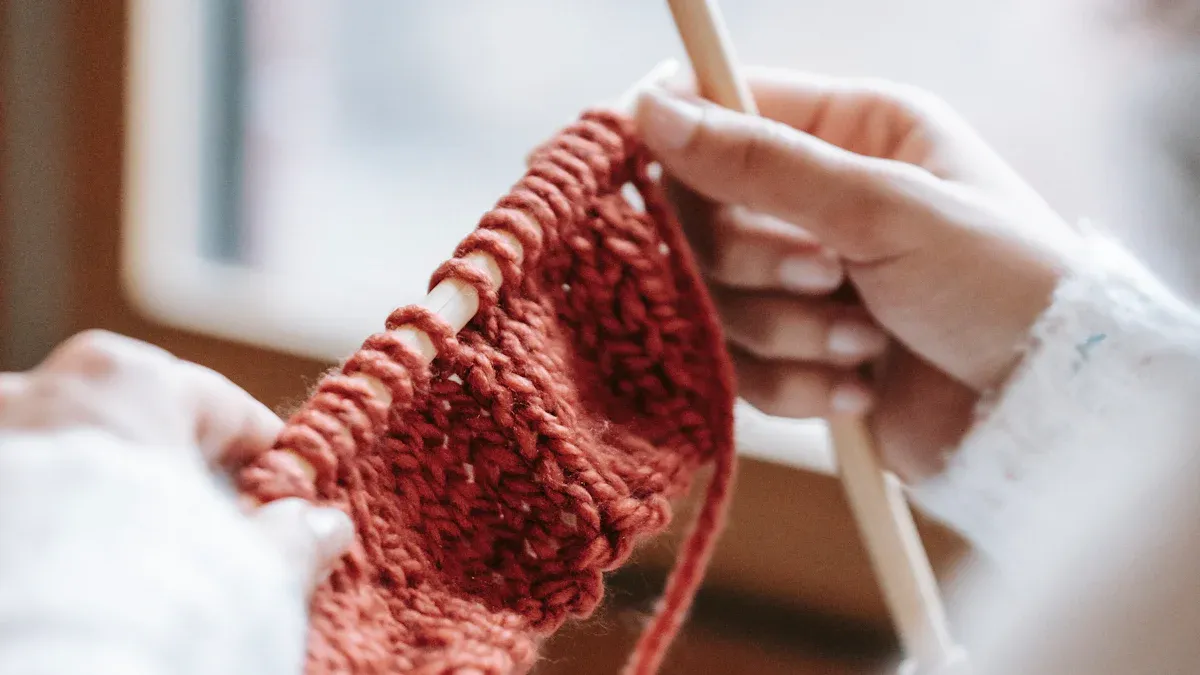
Learning how to knit a gauge swatch is the first step to making sure your custom knitwear fits perfectly. You get to see how your yarn and needles work together before you start your project. Let’s break down the process so you can feel confident every time you knit a swatch.
Swatch Size and Setup
You might wonder how big your gauge swatch should be. Many patterns mention a 4-inch square, but going bigger helps you get a more accurate measurement. Edge stitches can mess up your count, so you want to avoid them.
Here’s what works best:
Make your swatch at least 6 to 8 inches square.
A larger swatch lets you measure a true 4-inch area in the center, away from the edges.
You get a better idea of the drape and weight of your fabric.
Small swatches can give you the wrong gauge, which leads to problems with fit.
Start by casting on enough stitches to cover the width you need, plus a few extra for the edges. Use the same yarn and needles you plan to use for your project. Knit more rows than you think you need, so you can measure in the middle. This setup helps you see how your knitting will look and feel.
Tip: Always use the same tension and technique you plan to use for your actual project. This gives you the most reliable results.
Swatching in the Round
If your project is worked in the round, you need to swatch in the round too. Flat swatches don’t always match the gauge you get when knitting in the round. The difference comes from how you work the stitches. In the round, you knit every row, but flat swatches use both knit and purl stitches.
Let’s look at how the gauge can change:
Swatching Method | Needle Size | Gauge (sts = 1″) |
|---|---|---|
Flat Swatch | US 8 | 4.25 |
In-the-Round Swatch | US 8 | 4.75 |
In-the-Round Swatch | US 9 | 4.25 |
You see that swatching in the round often gives you a tighter gauge. You might need to use a larger needle size to match the gauge from a flat swatch. If you skip this step, your finished project might not fit as you expect.
Here are some things to remember:
Swatching in the round is important for hats, sleeves, and sweaters worked in the round.
Flat swatches can give you different results, which can cause fitting issues.
Adjust your needle size if your gauge swatch in the round is tighter than you want.
You can knit a tube and cut it open, or use circular needles and carry the yarn loosely across the back. Both methods help you get a true gauge for projects worked in the round.
Techniques for Accurate Swatches
Getting an accurate gauge swatch means using the right techniques. You want your swatch to show how your finished fabric will look and behave.
Stockinette vs. Pattern Stitch
You should knit your swatch in the same stitch pattern as your project. If your pattern uses stockinette, knit your swatch in stockinette. If it uses cables, lace, or ribbing, use those stitches in your swatch. This helps you see the real gauge and how the fabric will stretch or shrink.
Some knitters like to make a “useful swatch,” such as a hat or sleeve. This lets you test colorwork, motifs, and yarn wear at the same time. You can also knit a tube and cut it open to check your gauge for stranded colorwork.
Swatching Method | Description | Benefits |
|---|---|---|
Knit a tube and cut it | Cast on enough stitches for a 6” tube, cut it vertically, and wet-block it. | Tests colorwork and gives accurate gauge in the round. |
Knit a hat as a swatch | Make a hat instead of a flat swatch. | Practical gauge and tests yarn wear. |
Use a sleeve as a swatch | Start with a sleeve, block after a few inches. | Checks gauge and tests motifs. |
Edge Treatments
Edge stitches can curl or stretch, which makes your gauge swatch hard to measure. You can add a few garter or seed stitches at each edge to keep them flat. This helps you measure the center of your swatch without distortion.
Here’s how you can treat the edges:
Add 3 to 5 stitches of garter or seed stitch at each side.
Slip the first stitch of every row for a neat edge.
Block your swatch before measuring to see how the fabric will behave after washing.
Note: Always wash and block your gauge swatch before you measure. This step shows you the true size and shape of your finished fabric.
When you follow these steps, you get a gauge swatch that helps you predict the fit and look of your custom knitwear. You avoid surprises and feel confident about your project from start to finish.
How to Measure a Gauge Swatch
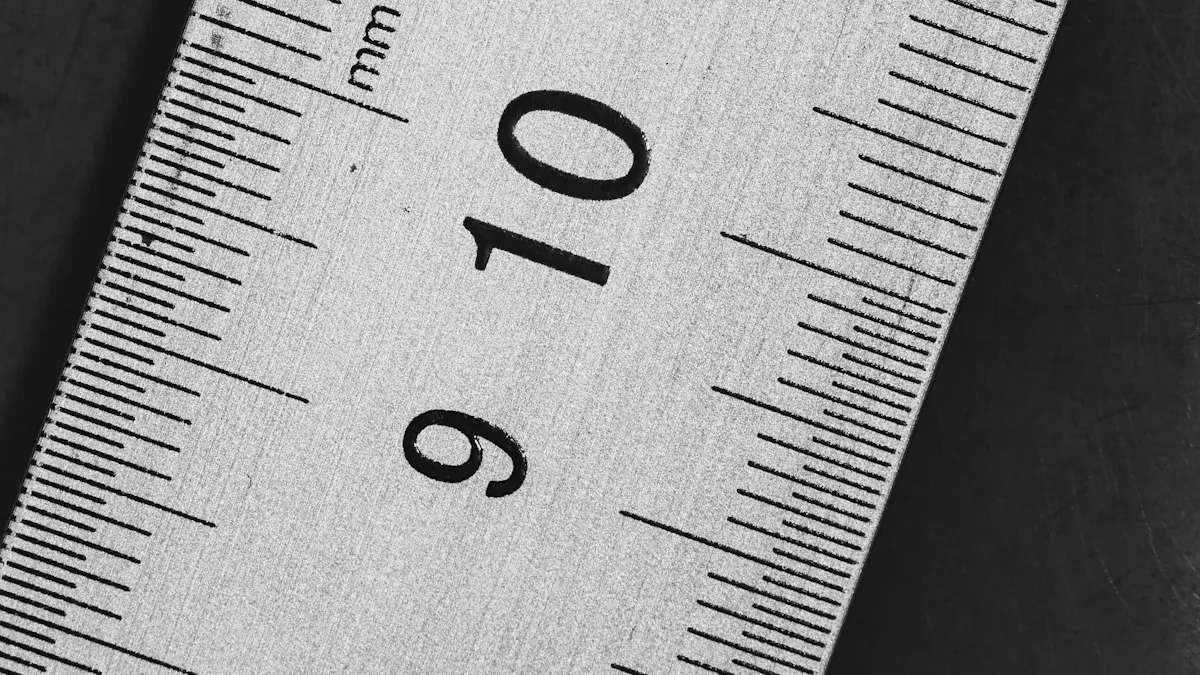
Measuring a gauge swatch is the key to getting custom knitwear that fits just right. You can follow a few simple steps to make sure your measurements are accurate. Let’s walk through how to measure a gauge swatch and get the best results for your project.
Tools for Measuring
You don’t need fancy equipment to measure gauge, but the right tools make the job easier. Here are some things you might want to have on hand:
Straight needles for knitting flat swatches
Circular needles for knitting your swatch in the round
Measuring tape or a wooden ruler for checking width and length
Gauge swatch ruler or gauge tool for counting stitches and rows
Blocking mats and pins for preparing your swatch before measuring
A gauge ruler helps you count stitches and rows in a set area. Blocking mats and pins let you stretch and shape your swatch so you can measure knit gauge after washing and blocking. You can use a regular ruler, but a gauge tool gives you more accuracy.
Tip: Good lighting helps you see stitches and rows clearly. Lay your swatch flat on a table for the best results.
Measure Knit Gauge: Stitches and Rows
You want to measure knit gauge by counting stitches and rows in a specific area. Here’s a step-by-step guide:
Use the same yarn as your main project for your swatch.
Cast on enough stitches to make your swatch at least 5 to 6 inches wide.
Knit enough rows to create a square swatch.
Follow the same stitch pattern as your project.
Place your finished swatch on a flat surface with good lighting.
Use a ruler or gauge tool to count the number of stitches and rows in the area your pattern specifies.
Count over 4 inches, or use 2 or 1 inch if the pattern says so. Make sure your swatch is bigger than the area you need to measure.
When you measure gauge, always count in the center of your swatch. The edges can curl or stretch, which makes your numbers less accurate. If you measure your gauge over a larger area, like 4 inches, you get a better idea of how your knitting will look.
Note: Patterns usually tell you how many stitches and rows should fit in 4 inches. If your numbers don’t match, you may need to change your needle size or adjust your tension.
Measuring After Washing and Blocking
Washing and blocking can change the size and shape of your gauge swatch. Yarn can stretch, shrink, or relax after you wash it. You need to measure your gauge both before and after washing and blocking to see how your fabric will behave.
Here’s what you should do:
Wash your swatch as you would your finished item.
Block your swatch using mats and pins to shape it.
Measure the blocked gauge and compare it to the raw gauge.
See if the gauge has changed. If it has, adjust your needle size or tension.
Washing can change the yarn’s properties. Blocking can make your swatch bigger or smaller, especially with soft or drapey yarns. Always measure knit gauge after washing and blocking for the most accurate results.
Negative Ease and Stretching Swatch
Some patterns use negative ease, which means the finished item will stretch to fit snugly. If your project needs to stretch, gently pull your swatch when you measure gauge. This helps you see how the fabric will behave when worn.
Stretch your swatch just enough to mimic how the finished item will fit.
Don’t pull too hard, or your numbers will be off.
Record both relaxed and stretched measurements if you want to compare.
Tip: If you’re making socks, hats, or fitted sweaters, always check how much your swatch stretches. This helps you avoid surprises with fit.
Recording Results
Keeping good notes helps you remember what worked and what didn’t. You can record your gauge swatch results for future projects. Here’s what to write down:
Yarn brand, color, and fiber content
Needle size and type
Number of stitches and rows in 4 inches
Whether you measured before or after washing and blocking
Any changes in gauge after blocking
Pattern stitch used for the swatch
You can use a notebook, your phone, or a knitting app. If you remove the yarn label, write down the details so you don’t forget. Review your notes after finishing your project. This helps you improve your knitting and makes it easier to repeat your success.
Note: Always measure your gauge in a larger section, like 4 inches, for better accuracy. Clean up your notes so you can use them again.
Measuring a gauge swatch takes a little time, but it saves you trouble later. You get custom knitwear that fits and looks great. Now you know how to measure a gauge swatch and record your results for every project.
Comparing and Adjusting Gauge
Match Gauge to Pattern
Matching your gauge to a pattern is like finding the right key for a lock. If you get it right, your project fits perfectly. Here’s how you can do it:
Knit a swatch with your chosen yarn and needles. Try making more than one swatch if you need to. Each swatch helps you see how your yarn and tension work together.
Measure your swatch carefully. Use a ruler or a gauge tool. Count the stitches and rows in a set area, usually 4 inches. Place a 4-inch template over your swatch if you have one. This helps you see if your stitches match the pattern’s numbers.
Adjust your tension or needle size if needed. Sometimes, you need to knit a little tighter or looser. Keep swatching until your numbers line up with the pattern.
Tip: Don’t skip this step! If your gauge is off, your sweater or hat might not fit the way you want.
What If Gauge Doesn’t Match
You checked your swatch, but your numbers don’t match the pattern. Don’t worry! You have a few ways to fix this.
Adjust Needle Size
Changing your needle size is the easiest way to adjust your gauge. If you have too many stitches per inch, try a larger needle. This makes your stitches bigger and reduces the stitch count. If you have too few stitches, use a smaller needle. This tightens your stitches and increases the count.
Problem | Solution |
|---|---|
Too many stitches/rows | Use larger needles |
Too few stitches/rows | Use smaller needles |
Always knit a new swatch after changing your needle size. Measure again to see if you hit the target.
Change Yarn
Sometimes, your yarn just doesn’t work with the pattern. If you can’t match the gauge with needle changes, try a different yarn. Pick a yarn that is thicker or thinner, depending on what you need. Make sure the new yarn feels good and looks right for your project.
Note: Yarn weight and fiber can change how your fabric drapes and stretches. Always swatch with the new yarn before starting your project.
Recalculate Pattern
If you love your yarn and needles but still can’t match the pattern’s gauge, you can recalculate the pattern. This means you adjust the number of stitches and rows to fit your gauge. It takes a little math, but it lets you use the materials you want.
Figure out your gauge (stitches and rows per inch).
Measure the size you want for your finished piece.
Multiply your gauge by the size to get the new stitch and row counts.
Callout: Keep good notes when you recalculate. This helps you stay on track and makes it easier to repeat your success.
Matching and adjusting gauge takes practice, but you’ll get better each time. You’ll soon feel confident making changes and getting the fit you want.
Adapting Patterns and Troubleshooting
Modifying Stitch and Row Counts
You can change the fit of your knitwear by adjusting stitch and row counts. This gives you control over the size and shape of your project. Here are some ways you can do this:
Add or remove rows to make your sweater longer or shorter. Always keep shaping in mind so the garment looks balanced.
Change the width by adding or subtracting stitches at the cast-on or along the side seams. Make sure you keep the stitch pattern repeats correct.
Adjust sleeve length by knitting more or fewer rows. You can also change the style of the sleeves if you want.
Customize the neckline by binding off more or fewer stitches. This lets you change the depth or width of the neck.
Use your gauge swatch to guide your changes. If your gauge is different from the pattern, recalculate your stitch counts so your project fits.
Let’s say your stitch gauge is 18 stitches per 10 cm. You know that each centimeter needs 1.8 stitches. If you want a sweater that is 50 cm wide, you multiply 50 by 1.8 to get 90 stitches. This simple math helps you get the fit you want.
Tips for Custom Fit
Getting a custom fit means you measure, plan, and adjust as you go. You want your knitwear to feel comfortable and look great. Here are some tips to help you:
Always measure your gauge with the yarn you plan to use. This step helps you avoid surprises later.
Look at the pattern schematics. Find the size that matches your measurements.
Calculate how many stitches you need for key areas, like the bust or waist.
Pick the size that fits your gauge and your body. Don’t be afraid to mix sizes for different parts of your project.
Try on your work as you knit. This lets you see if you need to make changes before you finish.
A table can help you keep track of your adjustments:
Area | Measurement | Gauge (sts/cm) | Stitches Needed |
|---|---|---|---|
Bust | 90 cm | 1.8 | 162 |
Waist | 80 cm | 1.8 | 144 |
Sleeve | 40 cm | 1.8 | 72 |
Common Gauge Issues
You might run into problems with gauge, but you can fix them. Here’s how you can troubleshoot:
Change your needle size. If you have too few stitches, use smaller needles. If you have too many, use larger needles.
Block your swatch the right way. Soak it in cool water for at least 30 minutes. Use blocking tools to shape it before measuring.
Check your pattern. Some projects need a certain row height. If your row gauge is off, try using a different needle size for purl rows.
Tip: If you keep running into gauge problems, take a break and come back with fresh eyes. Sometimes a little rest helps you see what needs to change.
You can solve most gauge issues with patience and practice. Each project teaches you something new, and you get better every time you knit.
Measuring and adjusting your gauge makes all the difference in custom knitwear. When you check your gauge, you make sure your project fits, avoid wasting yarn, and learn how your yarn acts. Swatching lets you play with color and texture, too.
You get to know your yarn better
You skip the stress of fixing mistakes after finishing
Troubleshooting and making changes help you grow as a knitter. Keep checking your gauge, and you’ll enjoy projects that fit and feel just right. Happy knitting! 🧶
FAQ
How do I know if my gauge swatch is big enough?
You want your swatch to be at least 6 inches wide and tall. This size helps you measure in the middle, away from the edges. Bigger swatches give you more accurate results.
Can I skip washing and blocking my swatch?
No, you shouldn’t skip this step. Washing and blocking show you how your yarn will behave. Your finished project might change size if you don’t test it first.
What if my gauge matches in stitches but not in rows?
Focus on matching stitch gauge first. You can adjust row counts as you knit. Patterns often give length measurements, so you can knit more or fewer rows to reach the right size.
Do I need a special tool to measure gauge?
You don’t need fancy tools. A simple ruler or measuring tape works well. Gauge rulers help you count stitches easily, but you can use what you have at home.
Why does my gauge change when I switch yarns?
Different yarns have unique thickness and fiber. These qualities affect how your stitches look and feel. Always knit a new swatch when you change yarns to check your gauge.
How can I fix my gauge if it’s off?
Try changing your needle size. Use bigger needles for fewer stitches per inch. Use smaller needles for more stitches per inch. Always knit a new swatch after making changes.