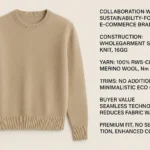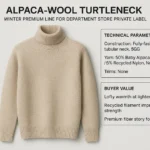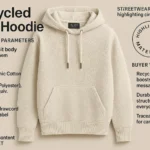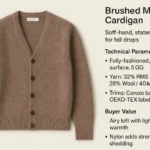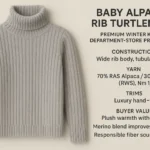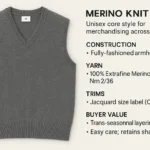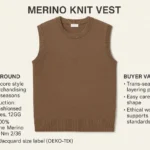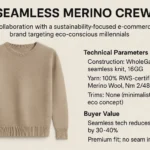


You need a knitwear QC checklist for bulk orders. It helps you find problems before customers get your products. If you skip this step, you may have issues like neps or knots, open seams, misprinting, drop stitches, uneven dyeing, dirt or stains, and shade variation. These problems can hurt your reputation. They can also waste your time and money. Use simple steps to make sure your products are always good quality.
Key Takeaways
A knitwear QC checklist helps find problems before customers get products. This saves time and money.
Set clear quality rules to stop mistakes. This helps keep product quality the same.
Check yarn and materials closely. This helps avoid problems like uneven dyeing and defects.
Use acceptable quality levels (AQL) to show how many defects are okay in a batch.
Share quality rules clearly with your team and suppliers. This helps everyone understand.
Check products at every step of making them. This helps find and fix problems early.
Use digital tools for checklists. This makes quality control faster and more correct.
Always try to make your QC process better. This gives better products and happier customers.
Setting Quality Standards for Knitwear
Quality standards are important for every big order. You need to make rules before you start making products. This helps you stop mistakes and saves money. When you make your knitwear QC checklist, focus on three things: product specs, acceptable quality levels, and talking with your team.
Defining Product Specs
Yarn and Material
You have to pick the right yarn and material. Some brands have a pattern library for small orders. You can choose different yarns, colors, and fibers to make special items. Many brands use organic fibers and recycled materials. They want factories with certifications like GOTS or OEKO-TEX. Good yarns and fibers make better products with fewer problems.
Design and Tech Packs
Design and tech packs are like a plan for your products. You should add things like size, stitch type, trims, and how to finish. Brands ask for samples before they order a lot. This lets you check the design and fix things early. You need to work with factories that do quality checks to keep things the same.
Acceptable Quality Levels
You have to set acceptable quality levels for your orders. AQL tells you how many mistakes you can have in a batch. Use the table below to help you set your rules:
Defect Type | Description | Examples of Defects | |
|---|---|---|---|
Critical Defects | Problems that mean you must reject the item. | 0.0 | Missing safety labels, sharp metal pieces |
Major Defects | Problems that make the item not work right. | 2.5% | Seams not lined up, broken zippers, wrong labels |
Minor Defects | Small problems that do not matter much. | 4.0% | Little logo smudges, tiny bubbles, color fading |
Pick your AQL by thinking about your brand and what your customers want.
Communicating Standards
You need to tell everyone your quality rules. Clear rules help your team and suppliers know what you want. As one factory says:
Our quality control system starts with our people. We have a culture of quality that begins with our work ethic and extends to our manufacturing process and final product. Our process begins with having clear, concise, and well-defined guidelines that are implemented by qualified and trained professionals.
You should teach your staff, use technology, and work well with suppliers. This helps everyone care about quality.
When you make your quality rules, remember to add order size, inspection type, and sampling standard to your checklist. These steps help you find problems early and send out good products.
Building the Knitwear QC Checklist for Bulk Orders
A strong knitwear QC checklist for bulk orders helps you catch problems before they reach your customers. You need to include specific items and checks to make sure every piece meets your standards. This section shows you what to add to your checklist and how to use it for large orders.
Essential Checklist Items
You need to check several key areas when you inspect knitwear. Each item on your checklist helps you find defects early and keep quality high.
Appearance and Defects
Look at the garment closely. Check for broken stitches, skip stitches, and uncut threads. You should also look for oil stains or dirty marks. These problems can make your products look bad and may cause customers to return them.
Tip: Hold the fabric against the light. This helps you spot stitching inconsistencies and hidden defects.
Here is a table that shows common defects, their causes, and how they affect production:
Defect Type | Cause | Impact on Production |
|---|---|---|
Broken Stitch / Skip Stitch | Poor machine setting, dull needle, improper thread tension | Affects garment durability and appearance. |
Uncut Thread / Long Thread Ends | Inefficient trimming process during or after stitching | Reduces garment’s aesthetic and may cause rejection in final audit. |
Oil Stain / Dirty Mark | Poor machine maintenance or improper handling | Directly affects garment quality and leads to costly rework or rejection. |
You should inspect for these top defects every 2 to 3 hours during production. This helps you catch problems early and avoid mass rejection.
Seams and Stitching
Check the seams for strength and neatness. Count the stitches per inch (SPI) to make sure they match your specs. Loose threads or uneven stitching can make the garment fall apart or look messy.
Essential Item | Description |
|---|---|
Stitch Count | Count stitches per inch (SPI) for consistency to spot thread loosening. |
Light Inspection | Hold fabric against light to find stitching inconsistencies. |
Color and Dye
Check the color of each piece. Make sure the dye is even and matches your approved sample. Shade variation can happen if the dye process is not controlled. Uneven color can make your products look cheap.
Fabric Quality
Feel the fabric. It should be soft, strong, and free from holes or snags. Poor fabric quality can lead to returns and unhappy customers. You should also check for pilling and stretching.
Sizing and Labeling
Measure each garment to make sure it matches your size chart. Labels and tags must be correct. Check the brand logo, text, and fiber content. Wrong labels can confuse customers and hurt your brand.
Essential Item | Description |
|---|---|
Label and Tag Accuracy | Ensure brand logo, text accuracy, and fiber content are correct. |
Final Quality Report Documentation | Record inspection details including report number, date, and inspector name. |
Order Quantity and Sampling
You need to decide how many pieces to inspect from each batch. For large orders, you cannot check every item. Use a sampling method to pick a group of garments to inspect. The sample size depends on your acceptable quality level (AQL) and order quantity.
For small batches, you can inspect more pieces.
For big orders, use random sampling to save time.
If you find many defects, increase your sample size or switch to 100% inspection.
Sampling helps you find problems without checking every item. It also saves time and money.
Inspection Types
You can choose different inspection types for your knitwear QC checklist for bulk orders. Each type has its own benefits.
Random inspections work well when your supplier has a good quality record. You check a sample of products, which helps you spot most problems.
100% inspections are best when you expect high return costs or suspect quality issues. You check every item in the batch.
Random inspections may miss some defects, but they are faster. 100% inspections catch every problem but take more time.
Pick the inspection type that fits your needs and order size. You can switch between types if you see changes in defect rates.
Note: Always record your inspection results. This helps you track quality over time and improve your process.
A complete knitwear QC checklist for bulk orders includes all these items and steps. When you use it, you lower defect rates and keep your customers happy.
Inspection Points in Production

You need to check your knitwear at every step. This helps you find problems early. It also keeps your quality high. There are three main times to check: before making, during making, and after making the products.
Pre-Production Checks
Start with good checks before you make anything. These steps help your whole order go well. You should:
Get fabrics, trims, and accessories from suppliers you trust. This lowers the chance of problems.
Make sure all materials meet your buyer’s rules and certifications. This keeps your products safe.
Make and approve samples before making a lot. This helps you fix design or fit problems early.
Test raw materials for things like color, thickness, and softness.
Plan your work with clear patterns and know your costs.
Tip: Good planning before you start helps stop problems and saves money.
When you do these steps, you stop problems before they happen. Your team also knows what to do.
In-Process Inspections
You need to check your knitwear while you are making it. Do not wait until the end. Checking during making helps you find mistakes before they get worse. Here are the main things to check:
Check color, thickness, weight, and size as you make each piece.
Use grading systems like the 4-point system to score problems.
Compare each piece to your approved sample.
Watch for even width and color.
Check seams, stitching, and trims for neatness and strength.
A table can help you see what to measure:
Dimension Type | Description |
|---|---|
Critical Dimensions | Most important for fit and comfort, like chest or waist size. |
Secondary Dimensions | Affect comfort and look, such as hem width or sleeve length. |
Minor Dimensions | Show workmanship, like button spacing or label placement. |
Checking often during making stops big problems later. You can stop work and fix things before they ruin the whole batch.
Final Product Review
The last step is to check the finished products. This is your last chance to make sure everything is right before you ship. You should:
Check and test materials for thickness and softness.
Make sure each piece matches your rules for weight, size, color, and labels.
Check packing and labels to make sure they are right and look good.
Look at cutting and sewing for problems and strong stitching.
Test the finished product for strength, fit, and color.
Here is a checklist you can use:
Criteria | Description |
|---|---|
Check raw materials for quality, thickness, and softness. | |
Make sure weight, size, color, and labels are correct. | |
Packing and Labeling | Check that packaging and labels are neat and right. |
Cutting and Sewing Quality | Look for problems in seams and stitching. |
On-Site Apparel Testing | Test for strength, fit, and color to make sure it is good. |
Note: Careful checking at the end helps you send out good knitwear every time.
If you follow these steps, you can stop problems, waste less, and make your customers happy with your quality.
Documenting and Using the Checklist

Checklist Format
You need a clear format for your knitwear QC checklist. A good checklist helps you catch mistakes and share information with your team. Start by listing product requirements. Write down every detail, like yarn type, color, and size. Add packaging rules so everyone knows how to pack each item. Include on-site testing steps to make sure every piece meets your standards.
Here is an example of how you can organize your checklist:
Specify packaging rules to avoid confusion.
Outline on-site testing steps for quality checks.
A table can help you see why each part matters:
Component | Importance |
|---|---|
Product Requirements | Prevents defects by making specifications clear. |
Packaging Requirements | Keeps products safe and neat during shipping. |
On-site Testing Procedures | Finds defects before products leave the factory. |
You should share your checklist with suppliers and inspectors. This helps everyone know what to look for and what to fix. Use the checklist to organize your work and keep your team focused on quality.
Workflow Integration
You can make your production faster and better by using your QC checklist in every step. Add technology to your process. Digital checklists help you track quality and update records quickly. You can see problems right away and fix them before they get worse.
Here are some ways a checklist helps your workflow:
Boosts efficiency and speeds up production.
Reduces human error by using digital tools.
Improves data management with real-time updates.
A table shows the benefits:
Benefit | Description |
|---|---|
Boosts Efficiency | Makes production faster and smoother. |
Reduces Human Error | Digital checklists help you avoid mistakes. |
Improves Data Management | Keeps all quality records in one place and helps with audits. |
You should use your checklist every day. Make it part of your routine. This keeps your team alert and ready to catch problems.
Training for QC Staff
You need to train your QC staff so they know how to use the checklist. Start by checking what your team knows and what they need to learn. Make a training plan that fits your team. Teach them about textile types, testing methods, and rules for quality.
Follow these steps for successful training:
Assess your team’s skills and needs.
Design a training plan for your team.
Teach and check how well the training works.
Reward team members for good work.
Involve your team in the QC process.
Watch and support your team as they work.
Give full training on textiles, testing, and standards.
Tip: When you train your team well, you build a strong quality culture. Your staff will feel confident and ready to keep your knitwear at top quality.
Tools and Best Practices for QC
Digital vs. Paper Checklists
You can pick digital or paper checklists for knitwear QC. Digital checklists help you work faster. They keep your records neat and easy to find. You get updates right away and can see problems quickly. Paper checklists are simple and do not need devices. But they can slow you down and make tracking changes harder.
Here are some good things about digital checklists:
You make inspections more accurate.
You save time by making notes faster.
You can see quality data right away.
A table shows how digital checklists help your QC work:
Advantage | Description |
|---|---|
Improved accuracy | You find more mistakes and keep records clear. |
Increased efficiency | You finish checks faster and use less paper. |
Real-time data insights | You spot problems as they happen and fix them fast. |
Identification of hidden defects | You find issues that paper checks may miss. |
Digital systems help you track materials and products as they move. You can see slow spots and fix them to speed up your work.
Tip: If you want to work faster and better, try digital checklists for bulk orders.
QC Metrics and KPIs
You need to measure your QC to see how well it works. QC metrics and KPIs help you track your results. You can count defects and see how long checks take. You can check how many items pass or fail. These numbers show where you need to get better.
Some useful QC metrics are:
Defect rate for each batch
Number of items checked each day
Time spent on each check
Percent of products passing the final check
You can use these numbers to set goals for your team. When you track KPIs, you see patterns and can make changes to improve quality.
Note: Checking your QC numbers often helps you find problems early and keep your standards high.
Continuous Improvement
You should always try to make your QC better. Continuous improvement means making small changes every day. Inline checks help you find defects early. When you do less rework, you save time and money. Small daily changes make your work smoother and your products better.
Here is a table that shows how continuous improvement helps quality:
Continuous Improvement Practice | Impact on Quality Outcomes |
|---|---|
You find defects early and lower defect rates. | |
Reducing rework | You improve quality and waste less material. |
Encouraging small daily improvements | You make your process faster and raise quality. |
Remember: When you focus on getting better every day, you build a strong QC team. Your team learns to spot problems and fix them before they get big.
If you use the right tools and good habits, you keep your knitwear quality high and your customers happy.
Overcoming QC Challenges
Managing Variability
Bulk knitwear production has many things that can change. Each change can affect your product. If you do not control these things, you may get defects. You may also see uneven quality. A table can help you see the main causes and how to fix them:
Source of Variability | Management Strategy |
|---|---|
Start checking yarn lots for quality. This stops defects later. | |
Panel Matching | Look for symmetry and alignment. This stops twisting and seams that do not match. |
Seam Strength | Test seams for stretching and strength. Wash samples many times to check them. |
Shrinkage | Check at different steps. This stops shrinkage from ruining your batch. |
Color Shade Control | Use shade bands and compare colors during making. This keeps shades the same. |
Surface Quality | Watch for pilling and other defects at every step, not just at the end. |
Check these things often. If you find problems early, you save time. You also avoid expensive mistakes.
Team Communication
Your QC team needs to talk well. If your team does not share news, mistakes can get worse. Set up daily meetings or quick talks. Use simple words and clear steps. If you see a problem, tell your team fast.
Tip: Use photos or samples to show defects. Pictures help everyone know what to look for.
You can use digital tools to share news. If you keep everyone updated, your team works together to fix problems quickly.
Preventing Recurring Defects
You must stop the same defects from coming back. If you see a problem often, make a plan. Here are ways to stop recurring defects:
Build a strong QC program. Find defects early in making.
Keep machines clean and set right. Good equipment makes better products.
Train workers often. Skilled workers know how to sew and check for mistakes.
Help your team fix problems before they get worse.
You can also focus on special problems:
Bad stitches often come from poor machines or wrong needle sizes. Check machines and set them up right.
Bad joints happen when workers handle fabric wrong. Train your team and adjust machines as needed.
Uncut threads usually mean dull cutting tools. Keep tools sharp and organize your factory for easy trimming.
Note: If you fix problems fast and teach your team, you lower defect rates and make your knitwear better.
If you control changes, talk well, and stop repeat defects, you build a strong QC system. Your products stay the same, and your customers stay happy.
Knitwear QC Checklist in Action
Real-World Example
You can see how a knitwear QC checklist works by looking at real companies. UV Exports is a manufacturer in India. They use certified performance knits made from eco-friendly blends. They work with brands that want premium products and want to grow fast. Their strong quality control system helps brands trust their supply chain. You get steady quality when you use a checklist and work with good suppliers.
You need to train your QC staff and talk clearly with your suppliers. Technology helps you work faster and find problems early. If you keep improving, you keep your standards high and fix issues before they get worse. Many brands use tech packs and PLM systems to keep product quality the same in all collections. Teams that use these tools work faster and better.
When you use a checklist, you find defects early. You can fix them before they become big problems. This saves you money and stops costly returns. You also keep your customers happy because your products look and feel the same every time.
Tip: If you want buyers to trust you, invest in training, technology, and good communication. These steps help you deliver high-quality knitwear in every bulk order.
Key Takeaways
You need to remember some important points when you use a QC checklist in knitwear production.
You keep size, color, and quality the same. This makes your customers happy.
You find and fix defects early. This lowers the chance of expensive rework.
You follow safety and environmental rules. This helps you avoid legal trouble.
You build a strong brand reputation. High-quality products make customers trust you.
You use technology and training to improve your process. This makes your team work faster and smarter.
A table can help you see the benefits:
Benefit | How It Helps You |
|---|---|
Consistency | Keeps products uniform and reliable |
Early Defect Detection | Saves money and time |
Compliance | Meets safety and environmental standards |
Reputation | Builds trust with customers |
Efficiency | Speeds up production and reduces errors |
You get better results when you use a checklist every day. You keep your quality high and your customers loyal.
You can make a strong knitwear QC checklist by setting clear rules. Check every step and teach your team what to do. If you start quality control early, you get many good things:
You protect your brand’s good name.
You avoid losing sales and returns that cost a lot.
You show you care about making good products.
Begin your checklist now. Look at how you work and find ways to get better. Factories use new tools like automated fabric testing and AI-powered checks to meet new rules:
Practice | Benefit |
|---|---|
Cuts down mistakes and keeps results steady. | |
Data Analytics | Lets you find and stop defects early. |
AI-Powered Inspections | Makes checks faster and finds more errors. |
Sustainability Practices | Builds trust and meets industry rules. |
Keep learning and changing your QC steps so you stay ahead.
FAQ
What is a knitwear QC checklist?
A knitwear QC checklist is a list of steps you follow to check the quality of knitwear. You use it to find defects and make sure every item meets your standards.
How often should you inspect bulk knitwear orders?
You should inspect at every stage: before production, during production, and after production. Frequent checks help you catch problems early and keep quality high.
Why do you need to train your QC staff?
Training helps your staff understand what to look for. You build a strong team that can spot defects and follow your checklist correctly.
Can you use digital tools for QC checklists?
Yes, you can use digital tools. They help you record results quickly, track defects, and share updates with your team. Digital checklists make your work faster and more accurate.
What are common defects in knitwear?
You may find broken stitches, loose threads, oil stains, wrong sizes, and color shade differences. Checking for these defects helps you keep your products consistent.
How do you choose the right sampling method?
You pick a sampling method based on your order size and acceptable quality level (AQL). For large orders, random sampling saves time. For high-risk orders, you may inspect every item.
What should you do if you find recurring defects?
You should review your process, retrain your team, and fix equipment. You can also update your checklist to catch the defect earlier next time.
How does a QC checklist help your brand?
A QC checklist helps you deliver consistent quality. You build trust with your customers and reduce returns. Your brand reputation grows stronger with every good order.