
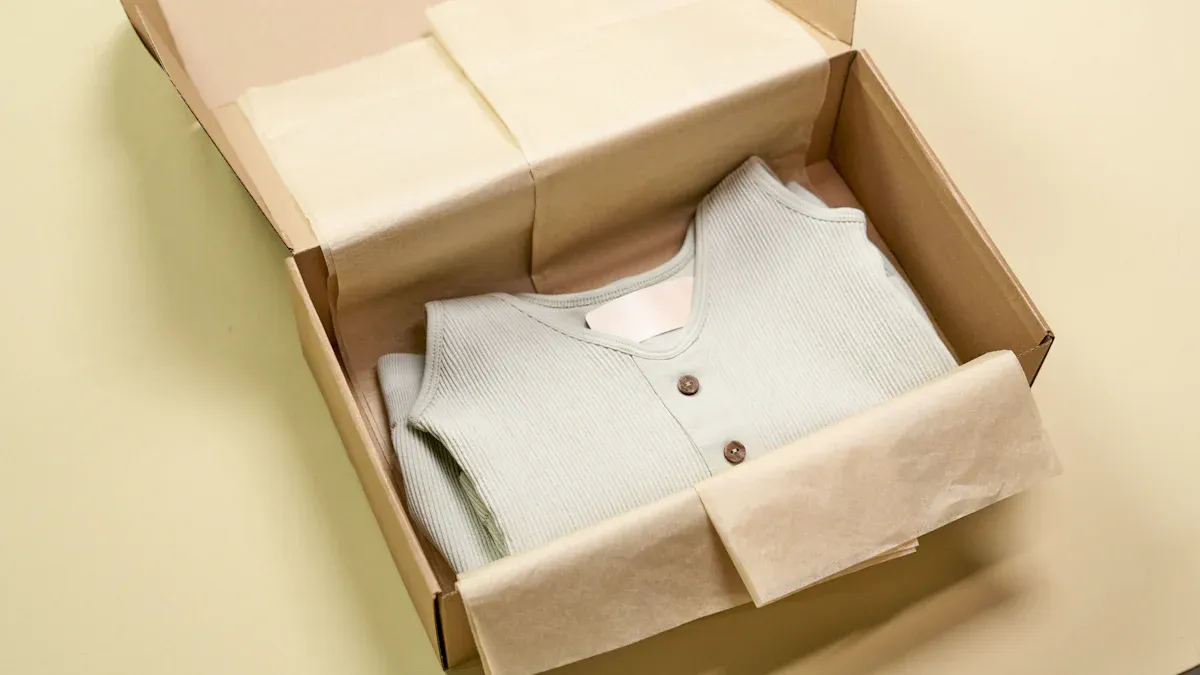
You may wonder how to ship custom knitwear to other countries. The good news is you can do it without much stress. You can manage shipping, even if you have a small shop or work alone. Use smart packaging and fill out the right paperwork. Choose a carrier you trust. These steps keep your knitwear safe and help you deliver on time. When you start shipping, you might face some problems, like:
Currency changes can make your costs go up or down
Customs can slow things down or need more paperwork
Items can get damaged or lost
Forms can be hard to understand
You need to keep shipping eco-friendly
Shipping clothes to other countries gets easier as you practice. This custom knitwear shipping & insurance guide will help you avoid mistakes. It will help keep your packages safe when you ship them internationally.
Key Takeaways
Check and clean your knitwear before you ship it. This helps it arrive in great shape. Make a clear packing list for each shipment. This makes customs paperwork easier and stops delays. Pick the best way to pack: roll to save space or fold for gentle items. Use waterproof poly bags to keep your knitwear dry while it ships. Choose a shipping carrier that fits your needs. Think about cost and how fast it delivers. Always fill out customs forms the right way. This keeps your package from getting stuck at the border. Tell your customers about shipping updates and when to expect delivery. This helps them trust you. Ship in batches and use shipping software. This makes shipping faster and saves time.
Preparing Knitwear for Shipping
Getting your custom knitwear ready for international shipping takes a little planning. You want each item to arrive in perfect condition, so let’s walk through the steps together.
Inspect and Clean Items
Before you pack clothes for shipping, take time to check each piece. Clean knitwear looks better and feels fresher when it reaches your customer.
Check for Damage
Look closely at every item. Search for loose threads, snags, or small holes. If you spot any problems, fix them before you move on. This helps you avoid unhappy surprises later.
Wash and Dry Properly
You want your knitwear to stay soft and keep its shape. Here’s a simple way to clean and dry your items:
Turn each piece inside out before washing. This protects the surface and keeps colors bright.
Wash by hand if you can. If you use a machine, place the knitwear in a mesh bag. This reduces wear and tear.
Never wring or twist wet knitwear. Instead, roll it in a towel to soak up extra water.
Lay each item flat on a towel or mesh rack to dry. This keeps the shape and prevents stretching.
Keep knitwear away from direct heat and sunlight. Dry in a cool, airy spot.
Store folded, not on hangers. Folding helps the knitwear keep its form.
Tip: Clean knitwear not only looks great, but it also passes customs checks more easily.
Organize and Document
After preparing clothes for shipping, you need to keep things organized. Good records help you avoid customs delays and make your shipping process smoother.
Packing List Creation
Write a packing list for every shipment. List each item, its size, color, and any special features. This helps you track what you send and makes customs paperwork easier.
Proper documentation keeps your shipment moving. Customs officers like clear, accurate records.
When your documents match your shipment, you avoid fines and delays.
Consistent paperwork builds trust with customs and your customers.
Note: A detailed packing list can save you time if you ever need to handle a return or answer questions.
Rolling vs. Folding Knitwear
Now you need to decide how to pack your knitwear. Should you roll or fold? Each method has its own benefits.
Space-Saving Techniques
Rolling knitwear is a smart way to save space and prevent creases. Fold each item gently, then roll it up. This works well when you want to fit more pieces into one box. If you wonder how to pack clothes for moving, rolling is often the best choice for knitwear.
Folding is better for thicker or delicate items. Lay each piece flat, fold it once or twice, and stack it in your box. This keeps the shape and protects fragile stitches.
Rolling saves space and keeps items smooth.
Folding works for bulky or fragile knitwear.
Choose the method that fits your shipment best.
Tip: Try rolling most items and folding only the ones that need extra care. This helps you pack clothes for shipping efficiently.
How to Ship Clothes: Packaging Materials & Methods
Picking the right packaging is important when you ship custom knitwear. You want your items to stay safe, dry, and look nice. Let’s see how to ship clothes using good materials and methods.
Choosing Boxes and Mailers
You can use boxes or mailers. Each one works best for different orders.
Compact vs. Sturdy Options
Compact mailers are good for small or single pieces. They save space and help you pay less for shipping. If you send a few items together, pick a mailer that fits well but does not squeeze the knitwear.
Sturdy boxes are better for big or heavy orders. Boxes with double walls are extra strong. If you ship far away, sturdy boxes stop your items from getting crushed or bent.
Tip: Use small packages for many items. This keeps shipping cheap and your knitwear safe.
Protective Materials
You need to protect your knitwear so it does not get hurt. The best packaging keeps out bumps, water, and pressure.
Bubble Wrap, Packing Peanuts, Tissue
Here is a simple guide for protective materials:
Protective Material | Specifications/Details |
|---|---|
Core Materials | Heavy-duty plastic cores for international shipments; breathable cardboard for domestic shipments. |
Cardboard Cores | 3-inch diameter for lightweight fabrics; 6-inch for heavy materials. |
Plastic Cores | 2-4 inch diameter with ventilation holes for moisture control. |
Wrapping Layers | 1st: anti-abrasion tissue; 2nd: moisture-resistant plastic; 3rd: edge protectors; 4th: heavy-duty outer wrap. |
Inner Layer | Acid-free tissue for delicate surfaces. |
Moisture Barrier | Perforated polyethylene for breathable protection. |
Edge Reinforcement | Cardboard or foam selvedge guards. |
Compression Protection | Corrugated inserts for heavy stacking. |
Outer Layer | Reinforced waterproof paper or woven plastic. |
Identification | Waterproof labeling with handling instructions. |
Wrap each piece in acid-free tissue to keep stitches safe.
Add bubble wrap or packing peanuts for more padding.
Use edge protectors if you ship heavy or stacked boxes.
Waterproofing Knitwear
Water can ruin knitwear when you ship it. You must keep everything dry, especially for orders going far away.
Using Poly Bags
Waterproof poly bags are very important for knitwear. Here is why:
They block water and tears, so your clothes arrive looking great.
Poly bags are light and bendy, which makes them good for shipping clothes.
Keeping clothes dry makes customers happy and stops damage.
If you ship to places with lots of humidity or long trips, use poly bags with anti-static and vapor barriers. For items that need to stay dry, pick bags with a water vapor transmission rate under 0.5g/m²/24hr.
Note: Always use waterproof bags to keep out water. This easy step can stop returns and unhappy customers.
When you know how to ship clothes with the right materials, you keep your knitwear safe and your customers pleased.
Packing and Sealing Knitwear
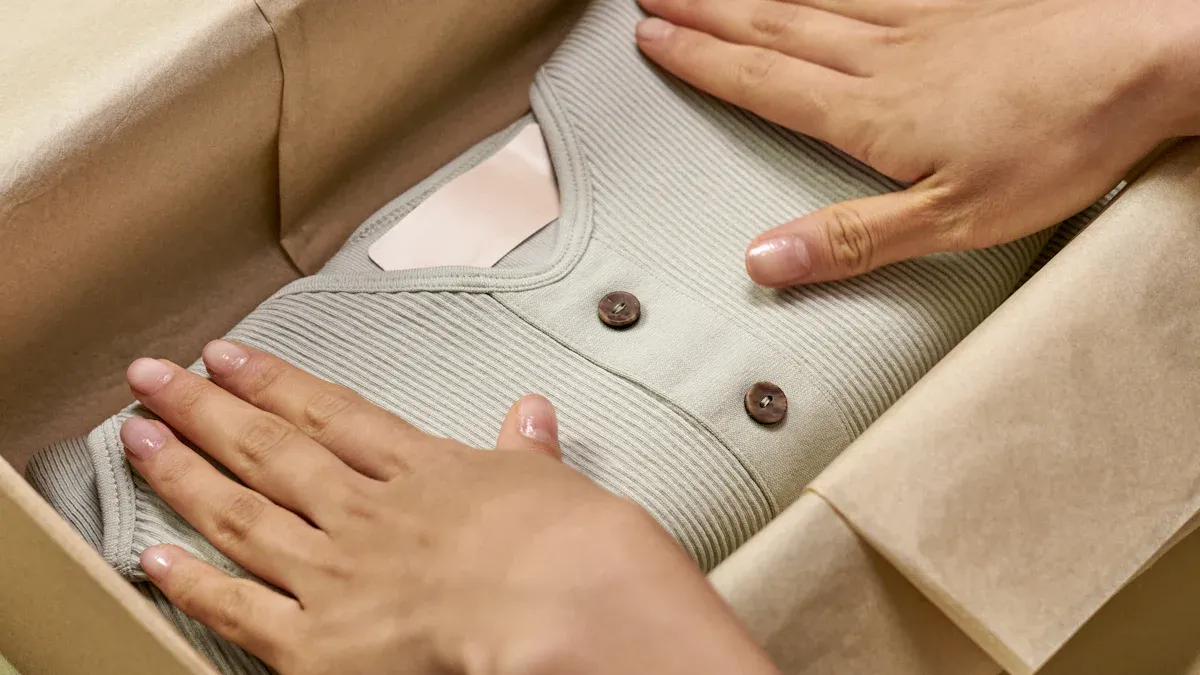
Layering and Cushioning
You want your knitwear to look nice when it arrives. Layering and cushioning help a lot with this. First, fold each piece. Folding stops sagging and keeps the knitwear’s shape. Here is a quick guide:
Recommendation | Why? |
|---|---|
Fold knitwear | Stops sagging and keeps the knit strong. |
After folding, put a soft layer of acid-free tissue or kraft paper on top. This soft layer protects the knitwear and stops rubbing during shipping. Put heavy items at the bottom and lighter ones on top. If you send more than one piece, use tissue to separate them. This way, you can ship clothes without wrinkles and keep everything tidy.
Preventing Damage
You can stop damage by picking the right materials. Use bubble wrap or extra tissue around the edges to protect the stitches. Fill empty spots in the box with packing peanuts or crumpled paper. This keeps things from moving and getting squished. Always shake the box gently to make sure nothing moves inside.
Sealing Techniques
Sealing your package the right way keeps your knitwear safe from water and people opening it. Here is a simple list to follow:
Use biodegradable mailers to keep your knits safe.
Put items in glassine bags to block water and dust.
Add tissue or kraft paper for extra padding.
Close the package with a sticker or gummed tape for a nice look.
Packing Tape Application
Pick strong packing tape for the last seal. Put tape on all seams and edges. Press down hard so the tape sticks well. If you want to make your package special, use tape or a sticker with your brand. This keeps the box closed and makes your brand easy to see.
Tip: Check all the seals before you send your package. A good seal keeps out dirt and water.
Including Care Instructions
Remember to put care instructions in your package. Clear rules help your customers keep their knitwear nice. Here is why care instructions are important:
Aspect | Explanation |
|---|---|
Transparency in Fiber Content | Telling the fabric type helps customers know what they get. |
Consumer Protection | Knowing the main fabric is important for people with allergies or special needs. |
Regulatory Compliance | Following label laws stops wrong info and builds trust. |
Easy Care Instructions | Simple rules help keep knitwear nice and stop damage. |
Buyer Trust | Good labels make buyers trust your knowledge of rules. |
Clear care instructions help stop shrinking or damage.
Good labels make buyers trust your product.
Customers are happier when they know how to care for what they buy.
Knowing how to care for knitwear helps it last longer. If your customer does not read or understand the care rules, they might ruin the item. You can help by giving easy-to-read care tips. This small step makes customers happier and means fewer returns.
Custom Knitwear Shipping & Insurance Guide
When you ship clothes to other countries, you want your custom knitwear to get there safe and on time. This custom knitwear shipping & insurance guide helps you pick a good carrier, look at service choices, and know when to use insurance. You will also learn how a freight forwarder can help with shipping.
Choosing International Carriers
Picking a carrier is an important part of shipping. You want a company that keeps your knitwear safe, delivers quickly, and helps with forms. Some popular carriers for shipping clothes are USPS, FedEx, DHL, and UPS. Each carrier has its own good points.
USPS, FedEx, DHL, UPS
You may not know which carrier to choose. Here are some things to think about:
Description | |
|---|---|
Fabric & Texture Protection | Anti-snag packaging, temperature-humidity control |
Route & Timeliness Reliability | Proximity to production hubs |
Bulk Transport Adaptability | Ability to handle large quantities |
Additional Services & Compliance | Assistance with luxury certification |
Insurance & Emergency Mechanisms | Comprehensive insurance coverage |
USPS is good for small packages and has low prices.
FedEx and UPS are fast and have strong tracking. They handle bigger boxes and offer more insurance.
DHL is great for international shipping. They have strong networks in Europe and Asia.
A freight forwarder helps with big orders or customs problems.
Tip: If you ship luxury knitwear or need extra care, ask about temperature and humidity control. Some carriers offer this for delicate items.
Comparing Service Levels
You need to choose how fast your custom knitwear should arrive. Carriers have different service levels for shipping clothes. The main choices are economy and express.
Economy vs. Express
Economy shipping costs less. It is good for orders that are not urgent. Delivery takes longer, but you save money.
Express shipping is faster. You pay more, but your knitwear arrives quickly. This is good for rush orders or special events.
Here is a quick look at starting costs for small boxes:
Carrier | Box Size | Starting Cost |
|---|---|---|
USPS | Extra Small | |
UPS | Extra Small | $9.45 |
FedEx | Small | $12.05-$166.55 |
TheBoxery | Flat Rate | Varies by weight/distance |
USPS is the cheapest for small packages. FedEx and UPS cost more but are faster and have better tracking. Freight forwarders may give better prices for big shipments.
Note: Always check delivery time and cost before you choose. Some carriers give discounts for shipping lots of clothes.
Insurance Options
You want your custom knitwear to be safe. Sometimes, things go wrong when shipping to other countries. Packages can get lost, stolen, or damaged. Insurance helps protect you and your customer.
When to Insure Shipments
Think about insurance for these reasons:
Your knitwear is valuable or special.
You ship a big order or use a freight forwarder.
The place you ship to has a high risk of loss or theft.
You want peace of mind for you and your customer.
Most carriers offer insurance for a small fee. You get coverage if something happens. If you use a freight forwarder, ask about their insurance. Some forwarders include basic coverage, but you may want more for expensive knitwear.
Tip: Keep your shipping receipts and take photos of your packed items. This helps you file a claim if you need to.
This custom knitwear shipping & insurance guide gives you tools to make smart choices. You can pick the best carrier, compare service levels, and know when to use insurance. With a good plan, shipping to other countries is easier and safer for your business. Shipping clothes does not have to be scary. You can use a freight forwarder for big orders or special needs. When you follow this guide, you protect your knitwear and keep your customers happy.
International Shipping: Customs and Documentation
When you start international shipping for your custom knitwear, you need to pay close attention to customs clearance. Every country has its own rules, but you can avoid most problems by preparing the right paperwork. If you skip a step, your package might get delayed or returned. Let’s break down the essential customs documentation and steps you need to follow.
Required Customs Forms
You must fill out customs forms for every international shipping order. These forms tell customs officers what’s inside your package and how much it’s worth. This is a big part of customs clearance. Even if you ship to U.S. territories or military bases, you still need to complete these forms. If you don’t, your knitwear could get stuck at the border.
Commercial Invoice, CN22/CN23
Most countries ask for a commercial invoice. This document lists the seller, buyer, price, and shipping requirements. For smaller packages, you might use a CN22 or CN23 form. These forms declare the contents and value of your knitwear. Customs officers use them to decide if you need to pay duties or taxes. If you fill out these forms wrong, you could face delays or extra charges.
Declaring Value and Contents
You need to be honest and clear when you declare the value and contents of your shipment. Customs clearance depends on this information. Here’s a quick look at the main documents you might need:
Document Type | Description |
|---|---|
Commercial Invoice | Shows the seller, buyer, price, and terms of the transaction. |
Packing List | Details the shipment’s contents, including quantities, weights, and dimensions per box. |
Bill of Lading / Air Waybill | The contract of carriage between you and the shipping company. |
Certificate of Origin | Proves where your knitwear was made, which can affect tariffs. |
Every product has a unique HS code. Knitwear falls under special codes for apparel. Using the right code helps you follow customs regulations and avoid penalties. If you use the wrong code, you might pay the wrong duty or face fines.
Tip: Double-check your HS codes and values before you ship. This helps your package move through customs clearance faster.
Attaching Documents
You need to attach your customs forms to the outside of your package. This step is key for smooth international shipping and customs clearance. Here’s how you can do it:
Use a “documents enclosed” pouch. Stick it to the outside of your box.
If you don’t have a pouch, use a clear plastic wallet or envelope. Tape it down well.
As a last resort, use a regular envelope. Write “Customs” on it and tape it securely.
Make sure the documents are easy to see and don’t cover any barcodes or shipping labels.
Place the pouch or envelope on the side of the box so customs officers can find it fast.
If you follow these steps, you make customs clearance easier and avoid delays. Good documentation is a big part of international shipping. It keeps your knitwear moving and your customers happy.
Shipping Costs, Duties, and Taxes
When you send custom knitwear to another country, you want to know the cost. The price depends on a few things. You need to check the weight, size, and where the package is going. Let’s look at these things so you can plan and not get surprised.
Estimating Fees
Weight, Size, Destination
Shipping prices change for many reasons. You can use online tools to guess the cost. Here is what you should check before you send your package:
Factor | Description |
|---|---|
Where the package starts and where it will end up. | |
Item value | How much the items are worth in money. |
Package weight | How heavy the package is, which changes the price. |
Package dimensions | The size of the box, like length, width, and height. |
Insurance | If you need extra insurance for your package. |
Shipping rates change with weight, box size, and money exchange rates. If you want fast shipping, it can cost more. Sending a small box is cheaper than sending a big, heavy one. Always check the country you are sending to because some places cost more.
Use online tools to guess shipping prices.
Prices change with weight, size, and money exchange rates.
You may have different shipping choices for your package.
Duties and Taxes
Sender vs. Recipient Responsibility
You should think about duties and taxes before you send knitwear to another country. These extra costs can surprise you or your customer. Sometimes you pay them, and sometimes the person getting the package pays. Always check the rules for each country.
Import duties for textiles in the U.S. can be from 0 to 25% of the value, depending on where it comes from. If it comes from China, there may be extra fees, which can make the duty as high as 50%. If you ship from Mexico or Canada, you might pay less because of special trade rules.
If you send knitwear to Europe, Asia, or Australia, you will see different duties and taxes. Some places add VAT or GST on top of other fees. You should tell your customer if they need to pay these when the package comes. This helps stop surprises and keeps your business fair.
Check who pays duties and taxes before you send the package.
Write clear notes on your invoice about extra fees.
Ask your shipping company if they can help with customs forms.
Online Calculators
You can use online tools to find out shipping prices and duties and taxes. These tools help you plan your shipment. You just type in your package details and get a quick answer.
Feature | Description |
|---|---|
Live Data | Uses up-to-date shipping info from many companies. |
Comprehensive | Looks at all extra fees, even trucking costs. |
Gives you a price in less than a minute. |
Most online tools show you the total price, including duties and taxes. You can compare prices and pick what works best for you. If you ship a lot, these tools save you time and money.
Tip: Always check your numbers before you send your package. A small mistake can mean extra fees or delays.
Labeling and Tracking Shipments

When you ship your custom knitwear to other countries, labeling and tracking are important. These steps help your package get to the right person, on time, and in good shape. Let’s see how you can do this in simple steps.
Address Formatting
Writing the address the right way is very important. If you make a mistake, your package might get lost or take longer to arrive. Here is how to write addresses for different countries:
There are four main parts to an international address: name, street address, city or province with postal code, and country.
Use the real name of the person getting the package. Write the full name, just like it is on their ID.
Add apartment or suite numbers if needed.
For some countries, you must include the province. This is true for the USA, Canada, Australia, Brazil, and Japan.
Write the country name in big, bold letters on the last line. Make sure you spell it right.
Tip: Always check the address with your customer before you send the package. Even a small mistake can cause big problems.
Tracking Numbers
Tracking numbers help you know where your knitwear is at all times. Most shipping companies give you a tracking number when you send a package. You can share this number with your customer by email or message.
Tracking numbers show when your package leaves, where it goes, and when it gets delivered.
If your package is late, you can look up the tracking number for updates.
Some companies let you see updates in real time.
Carrier | Tracking Service | How to Access |
|---|---|---|
USPS | USPS Tracking | Online or app |
FedEx | FedEx Tracking | Online or app |
DHL | DHL Express | Online or app |
UPS | UPS Tracking | Online or app |
Note: Keep your tracking number until your customer gets the package. It helps you fix problems quickly.
Handling Returns
Sometimes, customers need to send things back. A simple returns process makes everyone happy. Here is how to handle returns for international knitwear shipments:
Make your returns policy easy to understand.
Use simple words so no one gets confused.
Say which items can be returned and how long customers have (like 30 days).
Give more time for returns if shipping takes longer, like during holidays.
If the item is damaged because of your mistake, offer to pay for shipping.
Share your returns policy on social media and your website.
Keep track of why people return things to help make your products better.
You can talk to a shipping company to get better prices and service for returns.
You can also help your customers by:
Putting a return label in the package and taking the cost out of the refund.
Working with a local partner to make returns easier.
Using a return website to help both you and your customer.
A good returns process helps your customers trust you. They will feel safe buying from you because they know they can return things if needed.
Ensuring Safe and Timely Delivery
You want your custom knitwear to get to your customer fast and safe. This step is just as important as packing and labeling. Let’s see how you can set clear delivery times, talk with your customers, and follow up for a great experience.
Delivery Estimates
It is important to know when your package will arrive. Every shipping company has its own delivery speed. Some are quick, and some take longer. Here is a table that shows the most popular choices:
Courier Service | Estimated Delivery Time |
|---|---|
USPS Global Express Guaranteed | 1-3 days |
USPS Priority Mail Express International | 3-5 days |
USPS Priority Mail International | 6-10 days |
DHL Express Worldwide | 4 days |
UPS Worldwide Express | 1-3 days |
FedEx International Next Flight | Next day |
FedEx International First | 3 days |
FedEx International Priority | 3 days |
FedEx International Economy | 5 days |
You can also look at this chart to see delivery times:
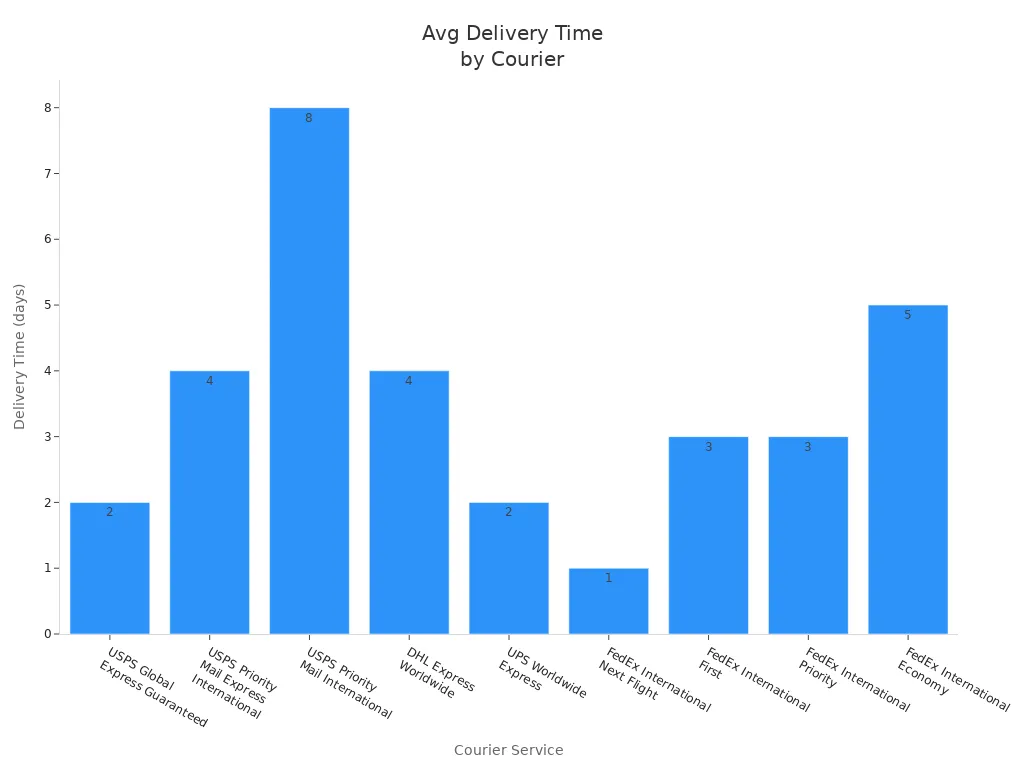
Knowing these times helps you tell your customers what to expect. Express shipping gets your knitwear there in a few days. Economy shipping takes longer but costs less money. Always check the newest delivery times before you send your package.
Tip: Tell your customer when their package should arrive. This helps them plan and worry less.
Communicating with Recipients
Talking with your customer is very important. You can stop problems by keeping them updated. Here are easy ways to do this:
Tell your customer when you ship their order.
Give them the tracking number so they can watch the package.
Share the expected delivery date. This helps them get ready and keeps the knitwear safe from weather or theft.
If you keep your customer informed, they trust you more. A quick message or email makes your customer feel special and confident.
Following Up After Delivery
Your work is not done when the package arrives. Checking in shows you care about your customer. Here is what you can do:
Use your customer’s name in emails. It feels personal.
Ask if the knitwear arrived safely.
Give easy return steps and a pre-paid label if you can.
Answer questions fast and help with any problems.
Offer special deals or rewards to thank your customer and make them want to buy again.
A friendly follow-up can turn a one-time buyer into a loyal fan. Happy customers often leave good reviews and tell friends about your shop.
You can make international shipping easy and worry-free. Clear delivery times, good communication, and caring follow-up help you stand out and keep your customers coming back.
Streamlining International Knitwear Shipping
Shipping your custom knitwear overseas can feel like a big job, but you can make it much easier with the right tools and habits. Let’s look at three ways to keep your shipping process smooth and stress-free.
Batch Shipping
Sending out many orders at once saves you time and money. When you group shipments, you cut down on trips to the post office and lower your shipping costs. You also keep your inventory organized and avoid running out of stock. Here are some smart strategies you can use:
Strategy | Description |
|---|---|
Just-in-Time (JIT) Inventory Management | Make only what you need. This stops you from having too much stock and lowers storage costs. |
Monitor Supplier Lead Times | Keep track of how long it takes to get your materials. This helps you avoid delays and shortages. |
Improve Warehouse and Inventory Tracking | Use barcodes and digital systems. You can see what you have and what you need, so you don’t overproduce. |
When you batch your shipments, you spend less time packing and more time growing your business. You also make sure your customers get their orders on time.
Shipping Software
You don’t have to do everything by hand. Shipping software can help you manage your orders, track packages, and fill out forms quickly. For example, Shipzy gives you tools to book containers, track your knitwear, and see when your shipments will arrive. This is great if you send lots of orders or ship to many countries.
Another helpful tool is Shipping Solutions. This software lets you create export forms fast and makes sure you follow U.S. export rules. You can file your paperwork through the Automated Export System (AES) and avoid mistakes that slow down your shipments. With these tools, you save time and keep your business running smoothly.
Tip: Try out different shipping software to see which one fits your business best. The right tool can make a big difference.
Staying Updated on Regulations
Rules for shipping knitwear change often. If you don’t keep up, you might face delays or extra costs. Here’s why staying updated matters:
If you use the wrong product code, you could get big fines or your shipment might get stuck.
Companies with good classification programs have 47% fewer customs delays.
Unclear rules can add 3-5% to your total shipping costs.
Other problems can pop up, too:
Customs holds can mess up your inventory and leave you with too much or too little stock.
Late shipments can upset your customers and hurt your reputation.
Surprise duty payments can cause cash flow problems, especially for small businesses.
You can avoid these headaches by checking for updates from your shipping carrier and customs office. Sign up for alerts or newsletters, and review your paperwork before every shipment. Staying informed keeps your knitwear moving and your customers happy.
You can send custom knitwear to any country if you use some smart steps. Begin with small orders so you can learn and feel more sure. Write down details for every order and see what works each time. Use easy-to-understand product descriptions and pick packaging that matches each country’s rules. Be honest with your customers about import problems that might happen. Always look for new updates from your carrier and changes in customs rules. Want to make your business bigger? Get your next international order ready now!
FAQ
How do I choose the best shipping carrier for my knitwear?
Pick a carrier that matches your budget and needs. Look at prices, delivery speed, and tracking. Ask other sellers which carrier they like. Try sending small packages with different carriers first.
What documents do I need for international knitwear shipping?
You need a commercial invoice, packing list, and customs form. Check the rules for the country you ship to. If you forget paperwork, your package may be delayed.
Can I ship knitwear in poly mailers?
Yes, poly mailers work for small or single items. They keep out water and save space. Use sturdy boxes for big or delicate knitwear.
How do I estimate shipping costs for my order?
Use online calculators from shipping companies. Type in the weight, size, and where it goes. You see the price before you ship. This helps you plan and avoid surprises.
What should I do if my package gets lost or damaged?
Call your carrier right away. Give them your tracking number and photos. If you have insurance, file a claim. Most carriers help you fix the problem fast.
Who pays duties and taxes on international shipments?
Most of the time, the person getting the package pays. Tell your customer about extra fees before you ship. Some carriers let you pay these costs ahead of time.
How can I make returns easy for my international customers?
Write a simple returns policy. Put a return label in the box. Give easy steps for returns. Help your customer if they have questions.
Do I need to include care instructions with my knitwear?
Yes, always add care instructions. This helps your customer keep their knitwear nice. Clear rules mean fewer returns and more trust.