

You might wonder how can I ensure quality when producing overseas? First, know that quality control is very important. It helps keep your brand safe and saves you money. Picture getting a shipment with broken items or late delivery. This can hurt your business name. Many business owners have these problems when making things in other countries.
Here are the most common problems with quality assurance:
Challenge | Description |
|---|---|
Communication Barriers | Time zones and language can cause confusion and mistakes. |
Quality That Isn’t Guaranteed | Factories may skip steps, so bad products arrive without anyone checking. |
Delays That Derail Schedules | Busy ports and customs can slow things down and hurt your money and reputation. |
Hidden Costs That Erode Margins | Cheap prices may hide extra costs like bad packaging and fixing mistakes. |
Tariffs and Compliance Risks | Changing tariffs and strict rules can cause big fines. |
Intellectual Property Concerns | Factories you do not know well may steal your product ideas. |
Think about which problems hurt your business the most. Do you have a way to fix them?
Key Takeaways
Quality control helps protect your brand and saves money. Bad quality can hurt your reputation and make you lose sales.
Set clear quality standards for your products. Use detailed checklists in English and the local language. This helps avoid confusion.
Make sure you and your suppliers agree on expectations. Learn about their culture and talk clearly. This builds trust and stops mistakes.
Watch production steps closely. Use technology for real-time updates and inspections. This helps you find problems early.
Pick reliable partners by checking suppliers carefully. Look at their history and safety records. Visit their factories to learn more.
Use strong quality control systems. Do audits before production and inspections during production. This makes sure products meet your standards.
Use third-party quality control agencies for fair inspections. They give honest reports and help keep quality high.
Keep talking with suppliers often. Give regular updates and clear expectations. This stops misunderstandings and helps improve quality.
Why Quality Matters in Overseas Manufacturing
Risks of Poor Quality
When you outsource, you want every product to be good. Bad quality from overseas can cause big trouble for your company. You might miss deadlines and lose money. Customers may get upset if things go wrong. Many companies have faced these problems before:
Delivery can be late because of mistakes at the factory.
You might get products with defects like wrong sizes or weak welds.
Sometimes, you only see these problems after the products arrive, so you must send them back.
These delays can stop your production and make it hard to help customers.
You can lose money if you cannot deliver on time.
Other problems are poor management, hidden ways to save money, and workers who are not trained well. If you do not have a good quality control plan, more mistakes can happen. Language barriers can make it hard to explain what you want. When you outsource, you need to watch for these risks to keep your business safe.
Brand Reputation Impact
Your brand needs customers to trust you. When you use outsourcing, you must protect your reputation. If you send out bad products, people will notice. They may stop buying from you. Your customer service team will spend more time fixing problems. This can make your brand look bad.
Here is how quality problems can hurt your brand:
Evidence | Description |
|---|---|
Quality Issues | Delays and defects make customers unhappy and hurt your brand. |
Customer Service | More complaints make your brand look less trustworthy. |
Regulatory Standards | Not following rules can damage your reputation. |
Cultural Differences | Misunderstandings can make it hard to keep quality high. |
Stakeholder Perception | Investors and partners may stop trusting your products. |
You need to pay attention to these risks when you outsource. Good quality helps your brand stay strong.
Cost of Quality Failures
Quality failures overseas can cost more than just money. You may need to pay to ship products back and forth. You might lose sales if you cannot fill orders on time. Your team will spend extra time fixing mistakes. These costs can add up fast.
When you outsource, you must plan for these risks. If you do not, your profits can shrink. You may also lose customers who want better service. Good quality control helps you avoid these problems and keeps your business healthy.
Tip: Always check your suppliers and set clear rules before you outsource. This helps you avoid costly mistakes and keeps your customers happy.
How Can I Ensure Quality When Producing Overseas?
If you want to make sure your products are good when made overseas, you need a plan. Many business owners have trouble with outsourcing. You want to stop mistakes and keep your brand safe. To do this, focus on three main things: set clear quality standards, make sure you and your suppliers agree, and watch the production process. These steps help you keep quality high and your business strong.
Set Clear Quality Standards
Start by making clear rules for each product. Tell your suppliers what you want. Write down all the details like size, color, materials, and packaging. Use checklists in English and the local language. This helps everyone know what to do.
Make a checklist for every product.
Add all the quality needs and inspection points.
Give these checklists to your suppliers before they start.
When you write down your quality rules, it is easier for suppliers to follow them. This cuts down on mistakes and stops problems later. Many companies use checklists that the factory agrees with. This way, everyone knows what good quality means. If you spend time on this step, you will have fewer problems when making things overseas.
Tip: Spend extra time on your product details. Clear instructions stop confusion and keep your quality high.
Align Expectations with Suppliers
You need to work with your suppliers so everyone knows the plan. When you start outsourcing, you may face cultural and language differences. These can cause mistakes. To make sure everyone agrees, follow these steps:
Learn about your supplier’s business culture and how they talk.
Write down your quality rules and share them.
Set fair timelines for each part of production.
Agree on prices, payment, and what happens if work is late or bad.
Write down every agreement.
Start with a small order to test your supplier.
Set up regular checks before shipping.
Build a system for updates and feedback.
Treat your supplier like a partner.
Listen to your supplier’s feedback to get better.
If you do these things, you build trust and stop problems. Clear talks and written deals help everyone understand. This makes it easier to keep quality high and avoid fights.
Monitor Production Processes
You need to watch your production closely to keep quality high. New technology makes this easier. Remote monitoring lets you see what is happening in real time. You can check equipment, spot problems early, and plan fixes before things get worse. Many factories use IoT and AI tools to work better and make good products.
Production display systems give you quick updates. Workers can fix problems fast. This keeps your production on track and stops delays. You should also check products at different times during production. These checks help you find and fix problems before shipping.
Use remote tools to watch production.
Plan checks during and after making products.
Ask your supplier for reports often.
By using these tools and steps, you can keep quality high even if your factory is far away. You will find problems early and keep your customers happy.
Note: Watching in real time and checking often are important for good quality when making things overseas.
If you follow these steps, it will be easier to keep quality high when outsourcing. You will protect your brand, save money, and keep your customers happy. When you ask, “how can I ensure quality when producing overseas?”, remember that planning ahead, clear rules, and checking often are your best tools.
Choosing Reliable Partners for Overseas Manufacturing
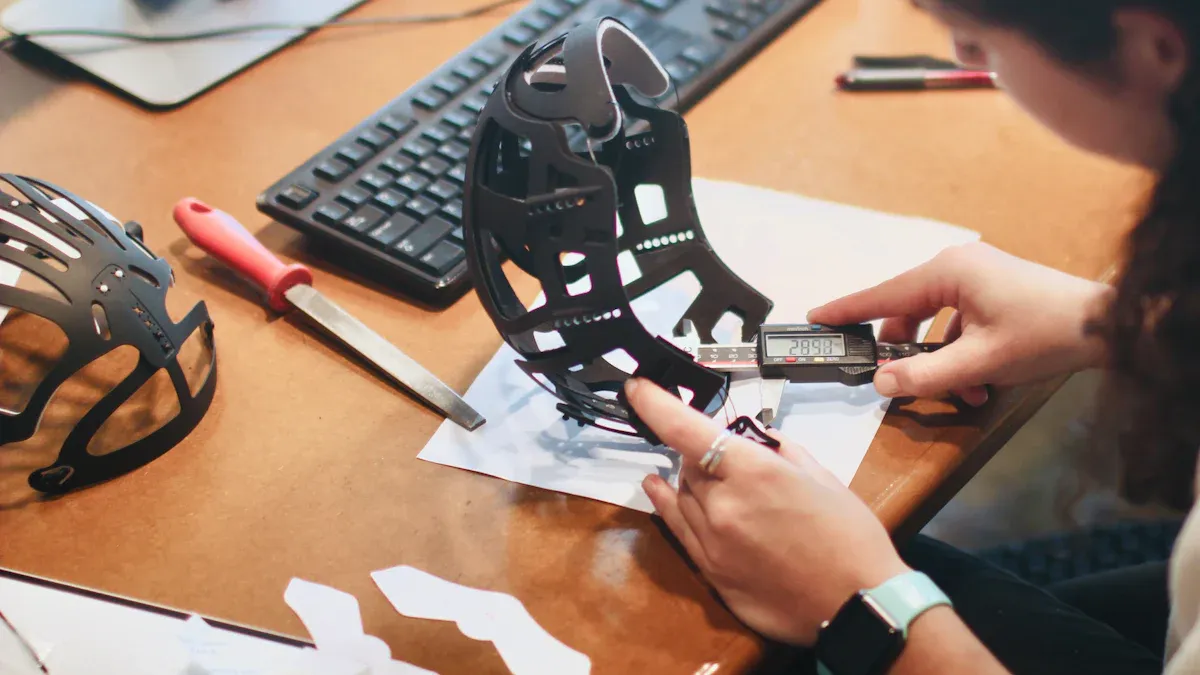
Picking the right partner is very important. You want someone who makes good products and ships on time. This helps your business grow. If you choose carefully, you will not make expensive mistakes. You can also build a strong relationship with your partner.
Supplier Vetting
You need a plan to check suppliers. This helps you find a partner who fits your needs. Here are some steps you can use:
Look for suppliers who match your company’s goals.
Give each supplier a grade for following rules and being reliable.
You should also look for these things in a partner:
They have a good history of doing good work.
They can handle changes if you need more or less.
Their factory is in a good place for shipping.
They talk clearly and understand your culture.
Tip: Make sure you and your partner agree on quality and safety rules. This helps everyone work together.
Reference Checks
Reference checks help you learn about a supplier. You can talk to other companies who worked with them. Here are ways to check references:
Listen to what others say about their work and products.
Hearing from other companies helps you find problems early. You can stay away from bad partners. You can pick someone who does a good job.
Factory Visits
Visiting the factory is very important before you sign anything. When you go, you see how the partner works. You can look at their machines and meet the workers. You can watch how they make things.
Meeting in person helps you trust each other.
You can see problems that you might miss on a video call.
You can check if they follow fair rules.
You might find ways to make better products together.
A visit shows you what is really happening. You can see if the partner is honest and ready to help you. This helps you make good choices when making things overseas.
If you do these things, you can find a good partner. Checking suppliers, talking to other companies, and visiting factories keeps your business safe. You will get the quality you want.
Quality Control Systems

A strong quality control system helps you avoid big mistakes. It keeps your products safe for your customers. You need to use different quality control methods. These steps help you find problems early. They help you deliver good products to your customers.
Pre-Production Audits
You should always begin with a pre-production audit. This step checks if your supplier is ready. You look at their equipment and materials before making anything. You also check their work process. This audit helps you find risks and fix them early.
Review the supplier’s quality management system.
Check if workers know the quality control measures.
Make sure the factory follows safety and environment rules.
Confirm that the supplier has the right materials and tools.
A pre-production audit shows if the factory can meet your standards. You can change your inspection plan if you find problems. This step saves time and money. It stops defects before they happen.
Tip: Training quality control inspectors often helps everyone stay up to date.
In-Process Inspections
You need to check your products while they are being made. In-process inspections help you find mistakes before finishing the order. You can use an inspection plan to check different stages.
Key Element | Description |
|---|---|
Critical Control Points | Check the most important steps in production for quality issues. |
Resource Availability | Make sure you have enough inspectors and tools for each inspection. |
Scale of Operation | Adjust your inspection plan for large or small orders. |
Type of Product | Some products, like food or medicine, need more checks than others. |
Production Methodology | Use real-time checks for continuous lines or end-of-batch checks for batch production. |
Advanced Technologies | Automated systems can help you find problems quickly and accurately. |
Continuous Improvement | Always look for ways to make your inspection process better. |
You can use statistical process control to watch for changes in quality. This helps you fix problems fast. It keeps your quality high.
Final Product Testing
After making your products, you must test them. Final product testing checks if your goods meet your standards. It also checks if they follow your country’s rules. You can use independent local auditing to make sure results are fair.
Aspect | Description |
|---|---|
They help with quality control and provide samples for review. | |
Quality Control Reports | These reports show if your products meet your quality standards. |
Relationship with Factories | Testing companies work with many factories to keep quality high. |
Compliance with Regulations | They make sure your products follow safety and import rules. |
You should always ask for a quality control report before shipping. This report proves your products are safe and ready to sell. Independent local auditing gives you extra peace of mind. It shows your supplier follows your quality control system.
Note: Good storage and shipping management also protect your products after testing.
By using these quality control systems, you can find problems early. You will deliver good products every time. You will build trust with your customers and keep your business strong.
Third-Party Quality Control
It can be tough to check every product made overseas. Third-party quality control agencies help with this problem. These agencies send trained inspectors to your factory. Inspectors look at products and how they are made. They check before, during, and after production. You get honest reports about what is happening.
Third-party quality control agencies do independent checks. They make sure products are good and follow rules. They hold suppliers responsible for their work. These agencies help lower risks from being far away. They give you real-time data and ideas to make things better.
You can trust these agencies because they do not work for your factory or supplier. Their job is to tell you the truth. They do not hide problems. Their reports are more trustworthy than factory reports.
Here are ways third-party quality control helps you:
They are independent and give fair reviews.
Their checks do not have conflicts of interest.
They make sure suppliers follow rules.
You can ask these agencies to check raw materials. They can watch the production line or test finished goods. They use checklists and tools to measure quality. You get photos, videos, and written reports. These reports show if your products meet your standards. If there is a problem, you can fix it before shipping.
You also feel less worried. You do not need to travel far or worry about language problems. The agency gives you updates in your own language. You see real-time data and make fast choices. This saves you time and money.
Many companies use third-party quality control for expensive or tricky products. You can use them for random checks or every order. Some agencies offer special tests for safety or legal rules. You can pick the service that works for you.
If you want customers to trust you, third-party quality control is a smart idea. You show you care about safety and quality. You also keep your supplier honest. Using these agencies lowers your risk and makes your products better.
Tip: Always read the agency’s reports and talk to your supplier about problems. This helps you fix issues fast and keep quality high.
Maintain Quality Through Communication
Good communication helps you keep quality high overseas. You must share your standards and updates clearly. Talking well stops mistakes and builds trust with suppliers.
Overcome Language Barriers
Language differences can make things confusing. This can lead to product defects. You can use different ways to help everyone understand:
Learn basic local words. A few phrases help you connect with your supplier.
Use simple language. Do not use slang or idioms. Clear words make your message easy to understand.
Rely on visual aids. Infographics, charts, and photos show what you want. Pictures help when words do not work.
Try AI translation tools. Tools like Google Translate or DeepL help you talk in real time.
Adapt your documents. Translate your checklists and instructions into the local language.
Work with local experts. Local staff or translators can explain your needs and spot problems early.
Tip: Keep your product specifications in one place. This helps avoid surprises and keeps everyone on the same page.
Address Cultural Differences
Cultural differences can change how your supplier sees quality. You need to respect local customs and laws. This helps you avoid misunderstandings and keeps your products the same.
Communication barriers make it hard to explain your standards. Time zones and language differences add to the challenge.
Inconsistent standards may happen with many factories. Some may not follow your rules as closely as others.
Legal and ethical issues can come up if local laws are different. Labor rules and environmental standards may not match your expectations.
You can build better relationships by learning about your supplier’s culture. Ask questions and listen to their feedback. This helps you find common ground and solve problems faster.
Note: Clear expectations about acceptable quality levels (AQL) help your supplier know what you want.
Use Technology for Updates
Technology helps you track orders and spot problems early. You can use different tools to get real-time updates from overseas partners.
Technology | How It Helps You Maintain Quality |
|---|---|
Cloud-based ERP systems | Let you monitor production and use predictive analytics remotely. |
Global cloud connectivity | Gives you real-time data from all your factories and suppliers. |
AI-powered operational systems | Analyze data and offer instant insights and recommendations. |
IIoT networks | Connect machines and devices for fast data sharing and alerts. |
Handles repetitive tasks and supports real-time updates. |
You can see what is happening at every step. If a problem comes up, you get an alert right away. This helps you fix issues before they reach your customers.
Using technology for updates keeps your quality high and your business running smoothly.
Handling Issues and Continuous Improvement
Issue Resolution Process
You need a simple way to fix quality problems. Talk to your supplier right away if you see an issue. Fast and honest talks help stop problems from getting worse. Use easy words so everyone understands. Write down what you and your supplier agree on. This helps everyone remember their job.
Try to see things from your supplier’s side. This helps you work together to fix things. If you have a supplier agreement, use it to help you decide what to do. Learn from each problem so you do not repeat it. Get involved early when picking a manufacturer. This helps you set up good quality checks from the start.
A strong quality assurance program is very important. Tell your suppliers what you want them to do. Use Acceptable Quality Limit (AQL) testing to check if batches are good. This keeps your quality high and stops small problems from growing.
Tip: Always share ideas to fix problems. Working with your supplier helps you get better results.
Defect Management
Defect management means stopping bad products from reaching customers. You can use some best practices to do this well.
Best Practice | Description |
|---|---|
Supplier Qualification Audits | Check suppliers before production to make sure they meet your standards. |
Product Sample Reviews | Look at samples before making a full order. |
Inspections at Various Stages | Check products during production to catch defects early. |
Clear Expectations with Suppliers | Tell suppliers exactly what you want to avoid mistakes. |
Define Penalties for Quality Defects | Set rules for what happens if there are too many defects. |
Verify New Manufacturers or Vendors | Always check new suppliers to avoid surprises. |
Identify and Address Defective Products | Use inspections to find and fix defects before shipping. |
DUPRO Inspection | Inspect during production to spot problems right away. |
Pre-shipment Inspection | Check goods before they leave the factory to make sure they are good. |
Always check for defects at different times. This helps you find problems early. Make clear rules with your suppliers. If you find too many defects, use penalties to push for better work. Always look at samples and inspect products before they ship.
Legal Protections
Legal protections keep you safe if you have quality problems overseas. You need strong contracts with your suppliers. These contracts should say who owns the products and how they can be used. Add a liquidated damages clause to your contract. This clause says what happens if there are quality failures.
Set up inspection systems and regular audits. These steps help you control quality. Make sure your standards match the rules in the country where you make your products. Protect your ideas and designs by guarding your intellectual property rights.
Note: Good legal protections give you power to act if your supplier does not meet your quality standards.
Ongoing Oversight
You need ongoing oversight to keep your overseas manufacturing quality high. This means you do not just check your products once. You keep watching and checking at every step. When you do this, you find problems early. You can fix them before they grow into bigger issues. Ongoing oversight helps you build a strong system for quality.
You should set up regular checks and reviews. These can happen at different times during production. You can use your own team or hire third-party inspectors. These inspectors look for defects and slowdowns. They give you honest reports. You get the chance to act fast if something goes wrong.
Ongoing oversight also helps you follow international standards. Many countries have strict rules for products. If you meet these standards, your products look more trustworthy. Customers and partners will see your brand as reliable. You protect your reputation and avoid legal trouble.
Here are some ways ongoing oversight helps you improve quality:
You spot issues early, so you can fix them before they become big problems.
You make sure your products meet international standards, which builds trust.
You use third-party inspectors to catch defects and slowdowns quickly.
You get frequent reports and test results at many points in production, so you always know what is happening.
You should ask for updates from your suppliers often. You can use technology to get real-time data. Many companies use cloud systems or special apps. These tools show you what is happening in the factory, even if you are far away. You can see photos, videos, and reports right on your screen.
You should also keep records of every check and test. These records help you see patterns. If you notice the same problem again and again, you can change your process. You can train your team or your supplier’s team to do better. This is how you keep getting better over time.
Ongoing oversight is not just about finding mistakes. It is about learning and improving. You build a habit of checking, fixing, and learning. Your products get better. Your customers stay happy. Your business grows stronger.
Tip: Make ongoing oversight part of your company culture. When everyone cares about quality, you will see fewer problems and more success.
You can make sure products are good by setting clear rules. Build strong relationships with your suppliers. Check your products often with audits. Talk with your suppliers to stop problems early. Use video calls and scorecards to watch progress. Try new things like AI-powered inspections. Use digital systems for real-time updates. These steps help you lower risks. They also keep your customers happy. Always pay attention and look for ways to improve. If you focus on quality and use new technology, you will do well in global manufacturing.
FAQ
What is the best way to check product quality overseas?
You should use third-party inspectors. They give honest reports and help you spot problems early. Ask for photos and videos of inspections. This keeps your products safe.
How often should I inspect my supplier’s factory?
You need to inspect before, during, and after production. Regular checks help you catch mistakes. You can use your own team or hire outside experts.
Can technology help me track quality?
Yes! You can use cloud systems and apps to get real-time updates. These tools show you photos, reports, and alerts from the factory.
What should I do if I find defects in my products?
Contact your supplier right away. Share clear photos and details. Ask for a fix or replacement. Use your contract to guide the solution.
How do I protect my ideas when producing overseas?
Sign strong contracts with your supplier. Register your designs and trademarks. Limit who can see your product plans. Use legal help if needed.
Why is communication important in overseas manufacturing?
Good communication helps you avoid mistakes. You share your standards and get updates. Clear talks build trust and keep your products high quality.
What is an Acceptable Quality Limit (AQL)?
AQL is a rule for how many defects you allow in a batch. You set this number with your supplier. It helps you decide if a shipment is good or bad.
How can I choose a reliable supplier?
Check their history and ask for references. Visit the factory if you can. Look for clear communication and strong safety records.