
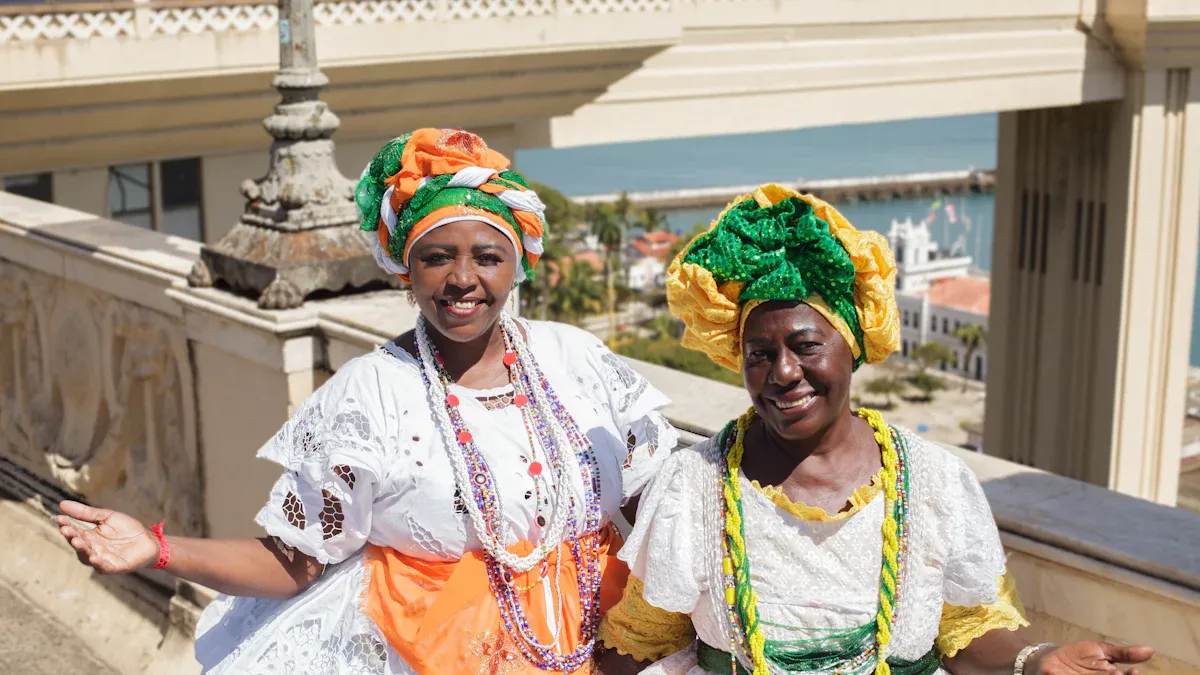
You can see many kinds of clothing in Brazil traditional to its diverse cultures. The Baiana dress is special because it features wide skirts and bright head wraps, showcasing Afro-Brazilian roots. Gaucho attire, originating from the south, includes baggy pants and boots designed for riding horses. Carnival costumes, worn by samba dancers and passistas, shine with feathers, sequins, and bold colors, representing the vibrancy of Brazilian festivities. Carmen Miranda’s costume, known for its fruit hats and colorful skirts, is iconic in Brazilian culture. Festa Junina outfits consist of plaid shirts and patchwork dresses, reflecting rural traditions. Indigenous attire incorporates natural materials and unique designs, emphasizing the cultural significance and rich diversity found in Brazil’s traditional celebrations.
Key Takeaways
Brazil’s traditional clothing shows its many cultures and long history. The Baiana dress stands for Afro-Brazilian roots with white cloth and bright accessories. Gaucho clothes, like bombachas and ponchos, show the life of skilled horse riders in southern Brazil. Carnival costumes are bright and fancy, mixing African, Indigenous, and European styles. Carmen Miranda made the Bahia costume famous, turning it into a sign of Brazilian happiness and pride. Festa Junina clothes honor country life with plaid shirts and patchwork dresses. Indigenous clothing changes by region, using things from nature and showing cultural beliefs. Traditional clothing in Brazil is more than just looks; it helps people feel close to their past and each other.
Baiana Dress: Icon of Traditional Clothing
African and Bahia Roots
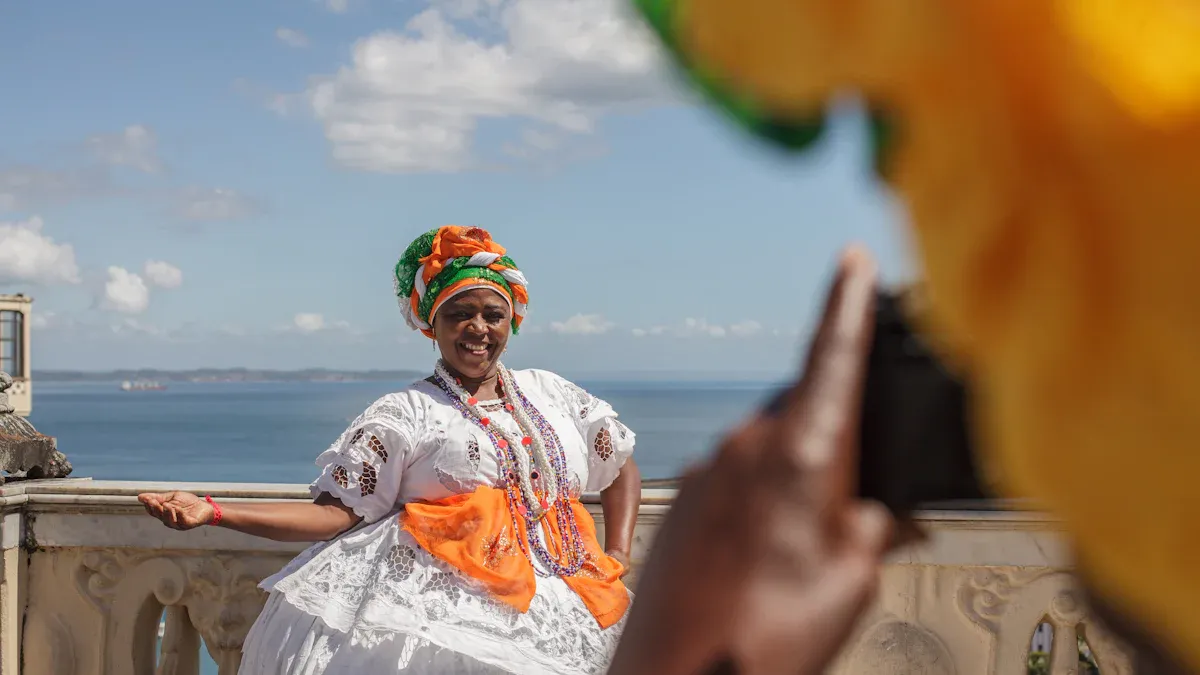
The bahiana dress started with African women in Bahia. These women came during the colonial period. They brought their own customs and clothing styles. These mixed with local traditions in Bahia. The bahiana dress is also called dress of the black woman or dress of the Baiana. It became a symbol of Afro-Catholic traditions. Black women wore this dress every day and for religious reasons. The dress is still used in African religions like candomblé. It honors African gods. Catholic groups, like the Irmandade da Nossa Senhora da Boa Morte, also use the dress. This shows how important it is for both religion and social life. The turban, bright skirt, and many accessories show a person’s status. This strong link to African heritage is still seen in Bahia.
Religious and Cultural Influence
“The Baianas are known for their special dress or ‘uniform’. They wear a white dress for Candomblé rituals. They also wear cloth turbans and beaded necklaces. The colors of the beads match their deities. All these things together show their craft, religious meaning, and history with slavery. It also shows the role of women in the Afro-Brazilian community. Because of this, people see them as a ‘symbol of resistance since slavery’.” (Gaspar, 2009)
The bahiana dress stands for pride and strength. It honors Black women in Bahia. The dress is important for religious events and the fight for respect.
Key Features of Baiana Dress
The bahiana dress is different from other clothes in Brazil. It celebrates Afro-Brazilian religion and culture. The dress is usually all white. This is not like the bright patterns in other places.
Head Scarves and Shawls
A scarf or turban is an important part of the dress. It is tied around the head. This shows respect for tradition. It often matches the rest of the outfit. Shawls, called shawl, sometimes finish the look. Today, shawls are not as common.
Embroidered Blouses and Jewelry
The blouse has lace or embroidery. This makes the outfit look fancy. There are many layers, like the petticoat (petticoat) and the long skirt (long skirt). Jewelry is very important. Baianas wear beaded necklaces in many colors. Each color stands for a different orixá, or god, in Afro-Brazilian religions.
The bahiana dress includes:
A white, balloon-like hoop skirt
Embroidered or lace blouse
Head scarf or turban
Beaded necklaces and other jewelry
Baiana in Modern Brazil
Today, you can see the bahiana dress at festivals and religious events. You will also see it on the streets of Salvador, Bahia. Baianas wear simple dresses for daily life. They wear fancier outfits for special days. The dress is seen at events like the Lavagem do Bonfim. It is also worn in candomblé and umbanda rituals.
Aspect | Description |
|---|---|
Cultural Significance | The bahiana dress is a big cultural symbol in Brazilian festivals and public celebrations, especially in Salvador, Bahia. |
Events | People wear it at many cultural events, like religious festivals and street parties. |
Traditional Use | The baiana pregoeira (street vendor) is seen during events like Candomblé and Umbanda rituals, and the Lavagem do Bonfim. |
You might see new styles, like shiny fabrics and bigger jewelry. The bahiana dress still shows the spirit and history of Bahia. It connects the past with today.
Gaucho Attire and Bombachas: Southern Traditional Clothing
Pampas and Gaucho Heritage
You can find gaucho attire in the southern region of Brazil, especially in the Pampas. This area has wide grasslands that stretch into Argentina and Uruguay. Gauchos lived here as skilled horsemen and cattle herders. They developed their own style of clothing to match the tough life on the open plains. Gaucho-type clothing helped them stay comfortable and safe while riding horses and working outdoors.
Here is a table that shows the main items of traditional gaucho attire and their uses:
Item | Description |
|---|---|
Bombachas | Loose trousers that let you move easily while riding horses. |
Poncho | A large piece of cloth that keeps you warm and can be used as a blanket. |
Facón | A strong dagger for daily tasks and protection. |
Rebenque | A leather whip for herding cattle. |
Chiripá | A cloth wrap worn around the waist, sometimes instead of trousers. |
Faja | A sash that holds the cloth wrap or poncho in place, often decorated with coins or buckles. |
Heavy wool ponchos | Thick ponchos for cold weather in the Pampas. |
Main Elements: Bombachas and Boots
When you look at gaucho attire, you see that every piece has a purpose. The most important part is the bombacha pants. These pants are baggy and comfortable. They let you ride horses and move freely. Gauchos also wear sturdy leather boots that protect your feet from mud and animals.
Other main elements include:
Poncho: A large cape with a hole in the center. It keeps you warm and dry.
Wide-brimmed hat: This hat protects you from the strong sun in the Pampas.
Accessories: Gauchos wear wide leather belts and carry a facón, which is a special knife. These items show both style and usefulness.
You can see how these items have changed over time. Today, people still wear bombacha pants and ponchos at festivals and rodeos. The style has become a symbol of pride for people in southern Brazil.
Here is a simple list of the main parts of gaucho attire:
Gaucho poncho: Shows pride and keeps you safe from the weather.
Wide-brimmed hat: Shields your face from the sun.
Bombacha pants: Give you comfort and freedom to move.
Symbolism in Modern Brazil
Gaucho attire is more than just clothing. It tells a story about the people who live in the Pampas. When you wear these clothes, you show respect for the land and the traditions of your family. Gaucho attire connects you to a long history of hard work and independence.
Today, you see gaucho attire at cultural events, parades, and even in daily life in the south. People wear these clothes to celebrate their roots and show pride in their culture. Gaucho attire stands for bravery, freedom, and a strong connection to the land. Each piece of clothing, from the bombacha pants to the poncho, carries meaning and history.
You can learn a lot about southern Brazil by looking at gaucho attire. It is a living symbol of the region’s heritage and spirit.
Carnival Costumes and Samba Outfits
Evolution of Carnival Costumes
Carnival costumes in Brazil have a long history. They started in the 1700s with Portuguese Entrudo parties. People threw water and food at each other for fun. In the 1800s, rich people wore masks and fancy clothes at balls. Later, street parties called ‘Ze Pereira’ let everyone join.
“Carnival in Rio began in the 1700s with Portuguese traditions. Over time, it changed. African, Indigenous, and other cultures added their own ideas. Now, Carnival is bright and exciting.”
In the 1900s, samba schools made costumes even brighter. They added feathers, beads, and bold colors. Carnival costumes now mix European, African, and Indigenous styles. Every year, new designs honor Brazil’s past and creativity.
Samba-Inspired Traditional Brazilian Costume
Samba parade costumes look different from other traditional brazilian costume styles. Samba costumes use special things like crystals and pheasant feathers. Designers make them strong so dancers can move easily. These costumes have bright feathers and shiny crystals that stand out.
Samba costumes help dancers stay cool. They show more skin than other outfits.
The usual samba look is a bikini-style set. Other traditional brazilian costume choices might be hot pants or see-through skirts.
Modern samba costumes mix old and new ideas. You see them at Rio Carnival and dance shows.
Bright colors and feathers in samba costumes honor Indigenous roots. Other carnival costumes may not use these as much.
Samba costumes are easy to spot. They celebrate dance, music, and Carnival’s fun spirit.
Colors, Feathers, and Sequins
Carnival costumes use colors, feathers, and sequins to stand out. Each part means something special. This table explains more:
Element | Significance |
|---|---|
Feathers | Stand for freedom and a link to nature, inspired by Indigenous and African cultures. |
Colors | Show happiness, energy, and creativity, and Brazil’s many cultures. |
Sequins | Make costumes sparkle and add to the fun of Carnival. |
Feathers mean freedom and being close to nature. Bright colors show joy and energy. Sequins make costumes shine under the lights. When you watch a parade, you see how these details tell a story. The costumes are not just for looks. They share Brazil’s history and people’s strength. Each design shows both hard times and happy times, making Carnival a true symbol of Brazil.
Carmen Miranda Costume: Pop Culture and Tradition
Origins and Influence
The Carmen Miranda costume comes from the clothes of Afro-Brazilian women in Bahia. These women wore bright and simple outfits every day. Carmen Miranda liked these styles and showed them in movies. She first wore her famous costume in the movie Banana-da-Terra in 1939. She made the look more fancy and fun. This made it popular in Brazil and other countries.
Here is a table that shows how the costume changed:
Origin | Description |
|---|---|
Cultural Roots | The costume connects to the attire of poor Afro-Brazilian locals from Bahia. |
Adoption | Carmen Miranda glamorized the style for her film debut in 1939. |
Cultural Impact | The costume became a symbol of Brazilian pop culture through her performances. |
When you see this costume, you can tell it helped Baiana women feel proud. Miranda sang “O Que É Que A Baiana Tem?” and made the costume famous. Now, people know the Bahia costume as a sign of Brazil because of her.
The costume gave women a way to be seen.
Miranda’s style showed Brazilian traditions to the world.
The look now means joy, music, and pride for Brazil.
Key Elements: Turbans and Fruit Accessories
The Carmen Miranda costume has many special parts. The most famous part is the turban. Miranda put fake fruit, flowers, and other things on her turban. This idea came from the women in Bahia.
“She wore decorative turbans topped with exotic fruits, flowers and other objects in the style of the dresses of women from Bahia.”
You also see lace tops, gold jewelry, and simple turbans. Women in Bahia carried fruit on their heads. This inspired Miranda’s style.
“These [women] wore lace tops, gold jewellery and simple cloth turbans, and carried trays of fruit and other produce on their heads.”
Miranda added shiny sequins and a small basket of fruit to her turban. She used shiny fabric to make it sparkle.
“Carmen added sequins and a small imitation basket of fruit to her turban, which was made of lamé fabric.”
People wear this costume to show Brazilian art and mixed cultures. The bright colors and fun decorations show the happy feeling of Carnival and samba.
Impact on Brazilian Identity
You see the Carmen Miranda costume in parades and movies. Her style, made famous by Hollywood, helped shape ideas about being Brazilian. Miranda became a star in Brazil in the 1930s. Her energy and style reached people in the United States and other places.
Miranda’s roles in American movies showed Brazil as exciting and different. Some people think these movies made Brazil look wild or strange. This shows her costume had both good and bad effects.
In Brazil, people see Miranda as a cultural star. Her costume stands for pride, music, and happiness in Brazil. You can see how she changed how people think about Brazil. The Carmen Miranda costume is still a strong sign of tradition, art, and national pride.
Northeastern Festa Junina and Rural Attire
Festa Junina is a bright and happy festival in Brazil. People in the Northeast wear special clothes for this event. These outfits honor farm life and old country traditions. The clothes help everyone feel part of the party. They also help people remember the history of the countryside.
Men’s Traditional Clothing: Plaid Shirts and Straw Hats
At Festa Junina, men dress like farmers from long ago. Their clothes are simple but have meaning. You will see these main things:
Bright plaid shirts
Straw hats with big brims
Pants with colorful patches
Plaid shirts and patched pants look like what farmers wore. Straw hats keep the sun away and show a link to farming. These clothes make the festival fun and friendly. Some men paint freckles on their faces. Others add fake missing teeth for a silly look. This tradition helps people remember hard work and the simple joys of country life.
Women’s Traditional Brazilian Clothing: Patchwork Dresses
Women’s Festa Junina outfits are bright and fun too. Girls and women wear dresses made from many colorful pieces of fabric. These patchwork dresses are called “vestidos de chita.” They have ruffles, lace, and ribbons. The dresses have puffed sleeves and wide skirts that spin when you dance.
Many women wear straw hats with flowers or ribbons. Some braid their hair and paint freckles on their cheeks. The patchwork style shows how people used every bit of fabric they had. This tradition celebrates making something pretty from simple things. Wearing these dresses means you honor old country customs and family parties.
Festa Junina and Forró Influence
Festa Junina clothes do more than look nice. They connect you to music and dance from the Northeast. Forró music is a big part of the festival. The songs talk about farm life, love, and friends. When you wear a plaid shirt or patchwork dress, you join these stories.
The outfits match the people in Forró songs and dances. Men dress as farm boys with big straw hats. Women wear red-checkered or patchwork dresses. These clothes help everyone feel the beat of the music and the joy of being together. You can dance the quadrilha, a group dance that copies planting and harvesting. The clothes and music together make the festival a real celebration of country life.
Festa Junina shows how traditional brazilian clothing brings people together. The bright colors, simple fabrics, and happy styles help everyone feel proud of their roots and glad to celebrate with friends and family.
Indigenous Traditional Clothing in Brazil
Regional Variations and Materials
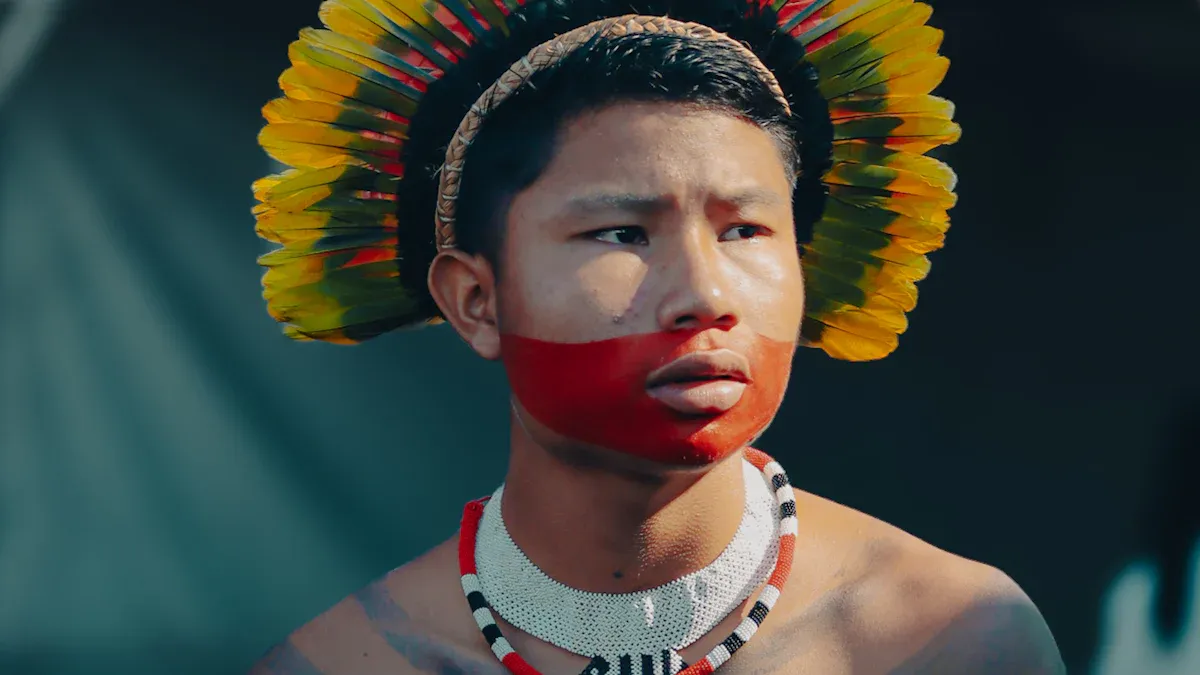
Indigenous amerindians in Brazil wear different clothes in each region. Every group uses things from nature around them. In the Amazon, people use tree bark, palm fibers, or cotton for clothing. Some decorate their clothes with bright feathers from birds. In the dry Cerrado, animal hides and seeds are common. These materials help people stay cool or warm.
You can see these materials in indigenous clothing:
Feathers for headdresses and necklaces
Seeds and beads for jewelry
Animal hides for skirts or belts
Plant fibers for weaving skirts, bags, and hats
Each tribe has its own way to make and decorate clothes. Some paint their bodies with dyes from plants. Others use shells or bones for decoration. These choices show how tribes connect to nature and their beliefs.
Ceremonial vs. Everyday Attire
Amerindians wear different clothes for daily life and for ceremonies. Ceremonial clothes are more colorful and have more details. People think feathers, seeds, and animal hides have special powers. These items help them feel close to their ancestors and spirits.
Ceremonial clothing stands out in these ways:
Special colors, like white, are used for purity in Ayahuasca ceremonies.
The clothes are handmade, showing care and effort.
Everyday clothes are simple and easy to wear. People might use store-bought items for daily life.
Ceremonial clothing tells a story. It shows respect for tradition and honors important events. Everyday clothes help people work, hunt, or walk in the forest.
Preservation of Indigenous Traditions
Many groups work hard to keep their clothing traditions alive. They teach young people how to weave, sew, and decorate clothes. Some groups help artisans sell their crafts. This helps families earn money and share their culture.
Here is a table showing ways people help keep these traditions:
Source | Type of Evidence | Summary |
|---|---|---|
Health In Harmony | Support for Indigenous artisans | Works with communities to sell crafts and keep traditions alive. |
Aventura do Brasil | Connects old skills with new fashion to build cultural identity. | |
Terra Lingua | Indigenous artist’s initiative | An artist’s brand brings attention to Indigenous culture and uses old meanings in new designs. |
You help keep these traditions alive when you learn about them and respect their meaning. Indigenous clothing is more than just what people wear. It shows pride, history, and a strong bond with nature.
Common Features of Clothing in Brazil Traditional Styles
Colors, Patterns, and Materials
When you see clothing in brazil traditional styles, you notice lots of colors and textures. Each piece uses special colors, patterns, and materials that tell stories. Festival costumes often have bright colors like red, yellow, and green. These colors show happiness and excitement. Sequins and feathers are common too. They make the outfits shine during parties. Many traditional clothes use natural things like cotton, wool, lace, and feathers. These materials help people stay cool or warm in Brazil’s many climates.
Traditional clothing has many different patterns. Some come from Indigenous art. Others use lace or embroidery. Every design means something. Feathers in headdresses connect people to nature and show their tribe. Renda de Bilro lace shows how skilled Brazilian artists are. Patchwork and ruffles in dresses show joy and movement.
Here is a table that lists some common items, their colors, materials, and meanings:
Item | Colors/Patterns | Materials | Symbolism |
|---|---|---|---|
Canga | Colorful, printed fabric | Fabric | Versatility, beach fashion |
Feathered Headdresses | Vibrant feathers | Feathers | Connection to nature, tribal identity |
Festival Costumes | Bright colors, sequins | Various fabrics | Festive spirit, celebration |
Renda de Bilro | Intricate lace patterns | Lace | Brazilian heritage |
Pano da Costa | Vibrant patterns | Cloth | Cultural pride, spiritual meaning |
Carimbo Dress | Colorful, ruffled designs | Cotton | Joy, dance, movement |
Fringed Ponchos | Indigenous patterns | Wool/Cotton | Protection, Indigenous culture |
You can see that brazil’s traditional clothing is more than just style. Each color and material has a reason. They help people feel proud of their culture and history.
Regional and Cultural Diversity
Brazil is a big country with many cultures. This shapes the clothing in brazil traditional styles. Each area has its own way of dressing. In Bahia, women wear the baiana dress. It is made of white cloth with African designs. People wear these dresses for religious events to honor ancestors. In the South, people wear gaucho clothes. They use wide hats and bombacha pants for farm work and rodeos. During Carnival, everyone wears bright costumes with feathers and sequins. These outfits show how much Brazilians love to celebrate.
In Bahia, the baiana dress uses white cloth and African designs for special events.
Carnival costumes have bright colors, feathers, and sequins to show joy and togetherness.
In the South, gaucho clothes with hats and bombachas are worn at rodeos and festivals.
Traditional clothing changes in each part of Brazil. The characteristics of brazil’s traditional clothing match the weather, history, and beliefs of each place. When you travel in Brazil, you see how every group uses clothing to share their story. Clothing in brazil traditional styles helps you learn about the country’s rich mix of cultures.
You can learn about Brazil’s history by looking at its traditional clothing. Each type, like bombachas and Baiana dresses, has its own special look and background:
Clothing Type | Influences | Key Features |
|---|---|---|
Bombachas | Indigenous, Portuguese | Baggy pants, cotton, comfort |
Baiana Dress | Portuguese | Decorated blouse, long skirt, shawl |
Carmen Miranda | Contemporary culture | Ornate turban, colorful skirt |
These outfits show off Brazil’s culture. You see them during Carnival, Festa Junina, and other festivals. They help people remember the past and honor their families. They also keep old traditions going.
Traditional clothing helps people feel close.
It keeps culture and community strong.
You help keep these traditions alive too.
FAQ
What is the most famous traditional Brazilian outfit?
The Baiana dress is the most well-known outfit. Women in Bahia wear it for festivals and religious days. The dress is made of white cloth, lace, and beads.
Where can you see traditional clothing in Brazil?
You can see these clothes at Carnival, Festa Junina, and special ceremonies. People wear them in Bahia, the South, and in Indigenous villages.
Why do Brazilians wear bright colors in their traditional clothing?
Bright colors mean joy and pride. Colors like red, yellow, and green show Brazil’s culture and make parties exciting.
Do men and women wear different traditional clothes?
Yes, they do. Men wear bombacha pants, plaid shirts, or straw hats. Women wear Baiana dresses, patchwork skirts, or lace tops. Each outfit fits the place and event.
How do Indigenous people make their clothing?
Indigenous people use things from nature. Their clothes have feathers, seeds, and plant fibers. They add beads and body paint for special events.
Can you buy traditional Brazilian clothing today?
You can buy these clothes at markets, craft shops, and online. Many designers mix old looks with new fabrics. When you buy them, you help keep the culture alive.