
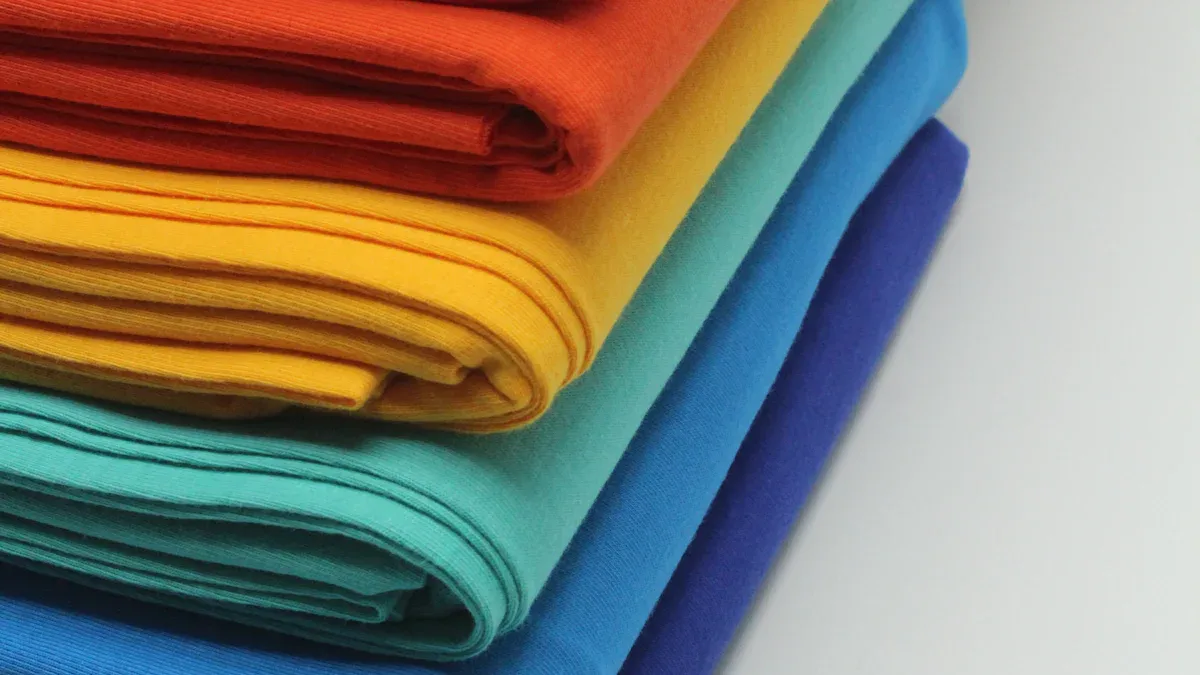
You see cotton and polyester blend fabrics almost everywhere now. This fabric mixes the soft feel of cotton with the tough nature of polyester. In 2025, you will see big changes in how people pick clothes. The price of raw cotton keeps going up, so makers search for better choices. Here are some reasons why these blends are very popular today:
Reason for Popularity | Description |
|---|---|
Cost Efficiency | Cotton prices rise because of weather, so people use more synthetics. |
Performance Features | Polyester stays strong in wet weather and fights off mold and sweat. |
Sustainability Trends | Most polyester is now made from recycled stuff, so fashion is more green. |
As you read, think about what is most important for your comfort and style.
Key Takeaways
Cotton-polyester blends are soft because of cotton. They are strong because of polyester. This makes them comfy and last a long time. Look for blends with recycled polyester or organic cotton. This helps the planet and lowers harm to nature. Pick a 50/50 or 65/35 blend for daily clothes. You will get softness, less wrinkles, and easy washing. Cotton-polyester blends dry fast and handle sweat well. They are great for active people and busy families. But blends can hold heat and sweat. Choose pure cotton if you want more air flow in hot weather.
What Is a Cotton and Polyester Blend?
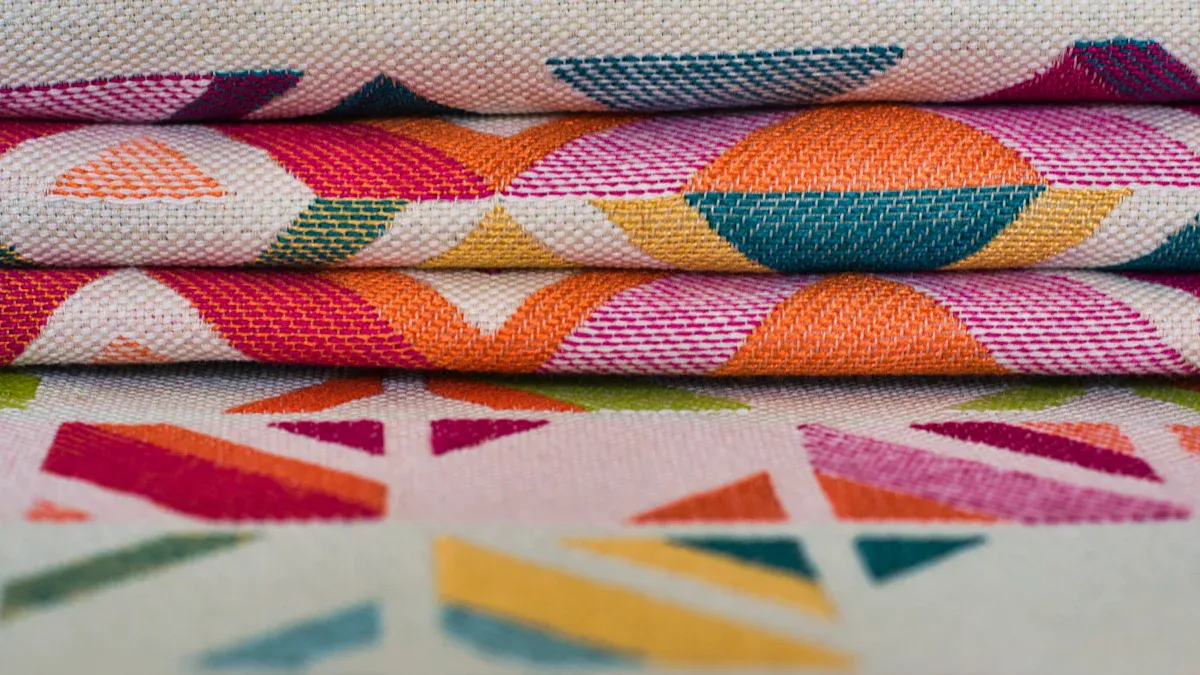
Blend Composition
You might wonder what makes a cotton polyester blend different from other fabrics. This fabric mixes natural cotton fibers with synthetic polyester fibers. You get the best of both worlds—cotton feels soft and breathable, while polyester adds strength and helps your clothes last longer. People often call this mix a poly-cotton blend.
You can find many types of cotton polyester blend fabrics. The most common blends use different percentages of each fiber. Here’s a quick look at some popular ratios:
Cotton Percentage | Polyester Percentage |
|---|---|
50% | 50% |
60% | 40% |
65% | 35% |
80% | 20% |
35% | 65% |
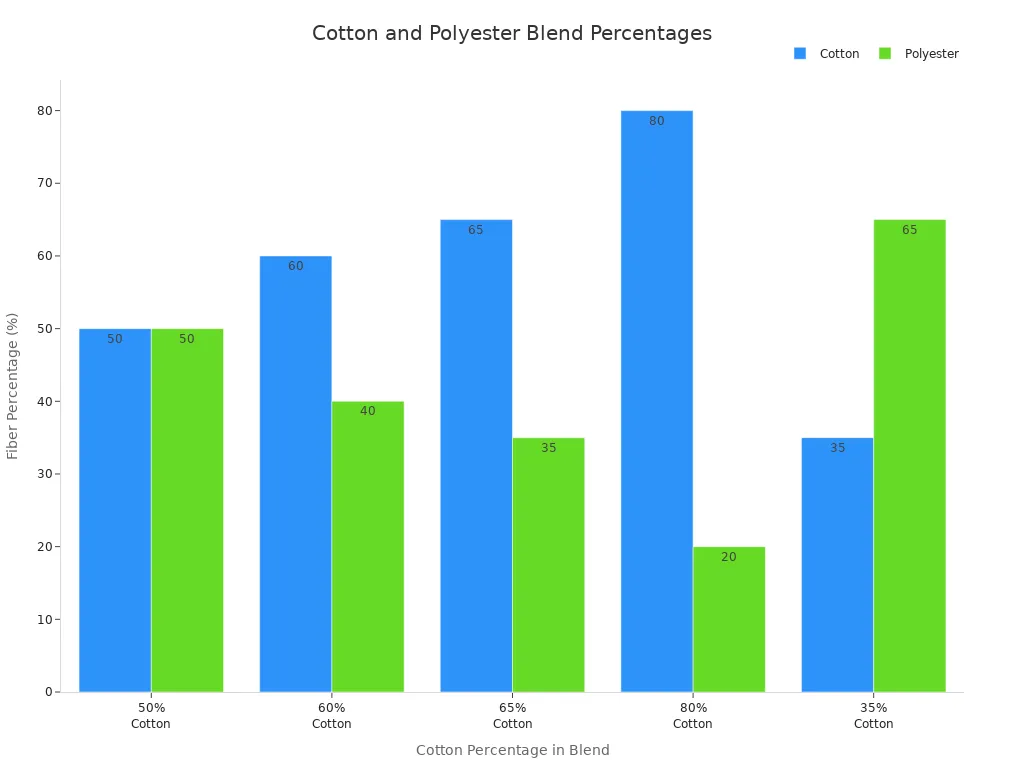
You might see shirts, sheets, or uniforms made from a 65% cotton and 35% polyester blend. Some brands use 80% cotton and 20% polyester for a softer feel. Others flip the ratio for more durability. If you ask, “what is cotton polyester blends used for?”—the answer is almost everything you wear or use at home.
Why Blends Matter in 2025
In 2025, you see more people caring about how their clothes impact the planet. Poly-cotton blend fabrics now use recycled polyester and organic cotton. This change helps reduce waste and saves resources. You also find new blends with hemp or Tencel, which are better for the environment.
Tip: If you want to shop green, look for blends with recycled or organic fibers. These choices help you support a cleaner world.
Here are some trends you might notice:
Organic cotton and recycled polyester blends are everywhere. They last long and use less plastic.
Hemp and organic cotton blends are popular for people who want eco-friendly farming.
Tencel and organic cotton blends feel soft and look stylish.
Recycled cotton and polyester blends help cut down on textile waste.
You can see that cotton and polyester blend fabrics are not just about comfort or price anymore. They are part of a bigger movement toward smarter, greener fashion.
Cotton and Polyester Blend Benefits
When you look at cotton polyester blends, you find a long list of pros. These fabrics combine cotton’s softness and natural comfort with the durability and strength of polyester. You get clothes that feel good, last longer, and are easy to care for. Let’s break down the main benefits so you can see why cotton-polyester blends are everywhere in 2025.
Durability and Easy Care
You want your clothes to last. That’s where cotton polyester blends shine. The polyester fibers boost the durability of your shirts, pants, and uniforms. You don’t have to worry about quick wear and tear. Check out this table to see how a 65/35 poly-cotton blend compares to pure cotton:
Metric | 100% Cotton Drill | 65/35 Poly‑Cotton Blend |
|---|---|---|
Wyzenbeek Rubs to Failure | 30,000 | 80,000 |
Elmendorf Tear Strength | 180 g | 260 g |
Shrinkage After 10 Wash | 5.2% | 2.1% |
Colorfastness Grade | 3 (fair) | 4 (good) |
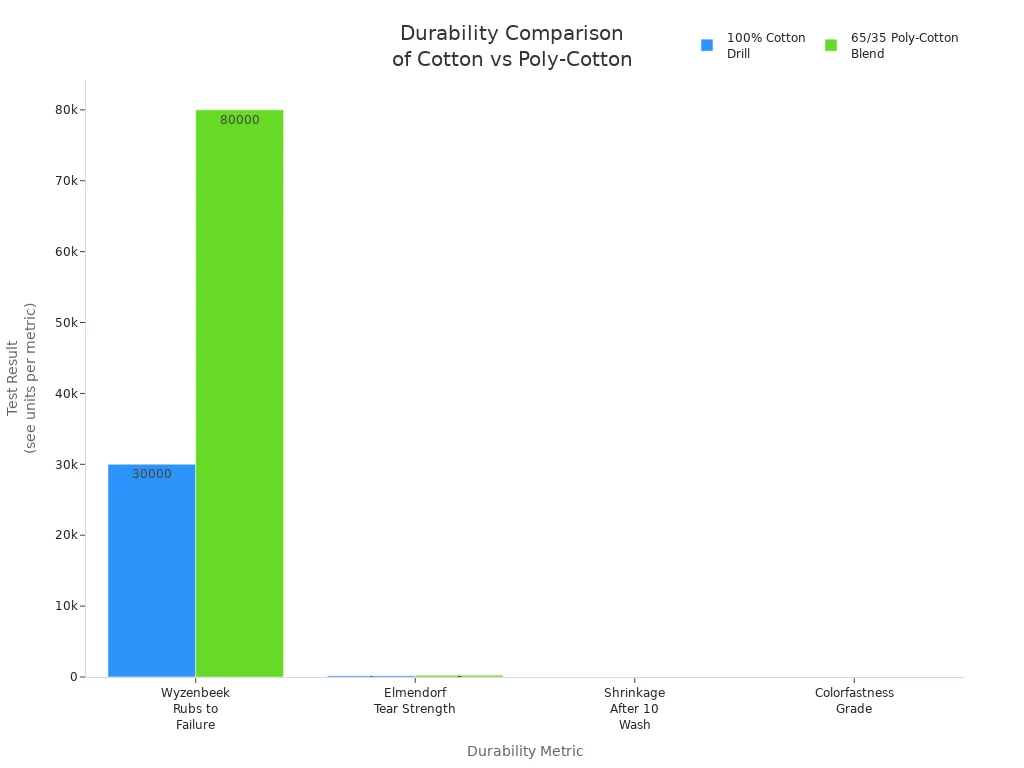
A poly-cotton blend keeps its shape and color after many washes. You can wash these fabrics up to 50% more times than pure cotton without seeing much fading or shrinking. Polyester helps repel stains, so spills stay on the surface. You get more time to clean up before they set in. This makes cotton polyester blends a smart pick for busy families and work uniforms.
Tip: If you want less ironing and fewer laundry headaches, choose a cotton polyester blend. These fabrics resist wrinkles and shrinkage, so you spend less time on chores.
Comfort and Breathability
You care about comfort and breathability, especially when you wear clothes all day. Cotton-polyester blends give you the best of both worlds. Cotton brings softness and lets your skin breathe. Polyester adds stretch and helps wick moisture away from your body. This means you stay cool and dry, even during busy days or workouts.
Here’s what wearer studies found:
A 60% cotton, 30% polyester, and 10% elastane blend lets more water vapor escape than a 90% polyester blend.
You feel more comfortable and less sweaty, especially when you move a lot.
Good moisture release keeps you feeling fresh.
Cotton polyester blends manage sweat better than pure cotton. Cotton absorbs moisture but dries slowly. Polyester wicks moisture away and dries fast. When you mix them, you get a fabric that dries quicker than cotton but still feels soft. You can wear these blends for sports, work, or just relaxing at home.
Wrinkle and Color Retention
No one likes wrinkled shirts or faded colors. Cotton-polyester blends solve both problems. Polyester fibers give the fabric wrinkle resistance, so your clothes look neat right out of the dryer. You don’t need to iron as much. The blend also holds color better than pure cotton, so your clothes stay bright and fresh after many washes.
Studies show that cotton blended with polyester resists wrinkles much better than pure cotton. The fabric keeps its smooth look, even after lots of use. You also get better color retention, which means your favorite shirt stays vibrant longer.
Note: If you want clothes that look good with little effort, cotton polyester blends are a great choice. You get wrinkle resistance, color retention, and easy care all in one.
The Bottom Line
The pros of cotton polyester blends include durability, easy care, comfort, softness, and wrinkle resistance. You get fabrics that last, feel good, and look sharp. These blends dry quickly and manage moisture well, making them perfect for everyday life. While there are some cons of polyester blends, like less breathability than pure cotton, the benefits often outweigh the cons for most people. When you weigh the pros and cons, you see why cotton and polyester blend fabrics are so popular in 2025.
Cotton Polyester Blend Drawbacks
Even though cotton polyester blends offer many pros, you should know about the cons before you buy. These blends have some issues that can affect your comfort, the look of your clothes, and even the planet. Let’s break down the main drawbacks so you can make a smart choice.
Reduced Breathability
You might notice that cotton polyester blends do not breathe as well as pure cotton. Polyester’s strength and wrinkle resistance come at a cost. The fabric traps more heat and moisture, especially when you sweat. This can make you feel sticky or clammy in hot or humid weather. Many people say that cotton and polyester blend shirts feel less comfortable than 100% cotton, especially during summer.
Here’s a quick look at how cotton polyester blends compare to pure cotton in hot conditions:
Metric | 100% Cotton | 65/35 Blend | Improvement |
|---|---|---|---|
53 minutes | 29 minutes | 45% faster | |
Sweat absorption | 142% | 93% | 35% less |
Heat retention index | 6.2 | 4.1 | 34% lower |
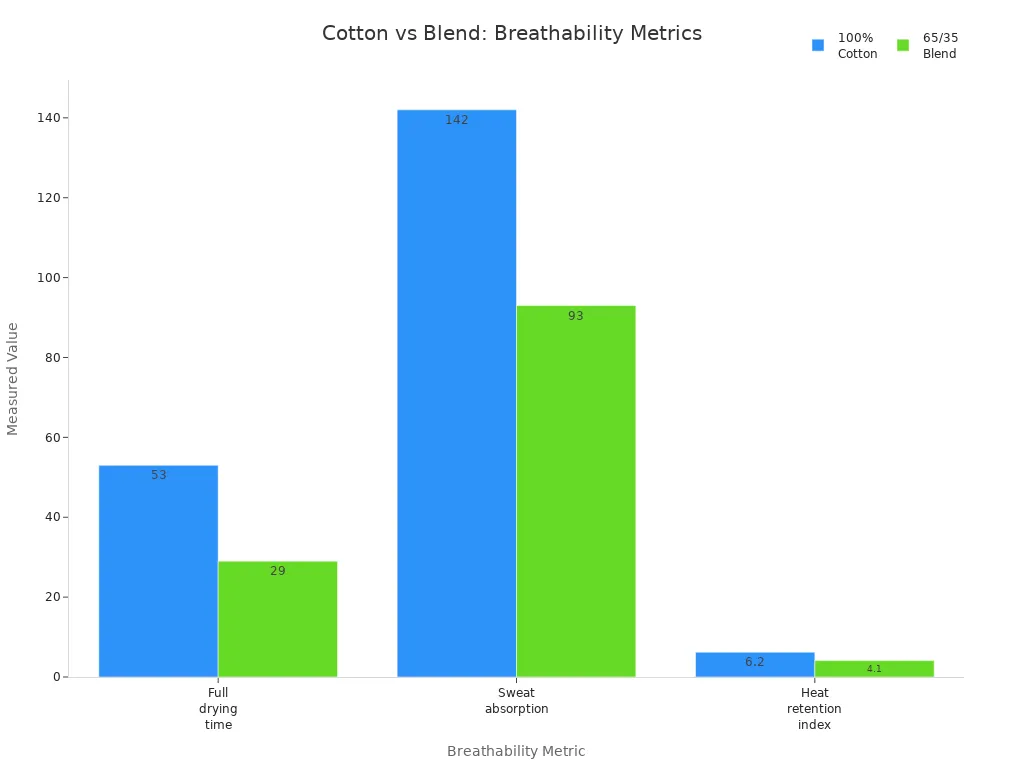
You get faster drying and less heat retention with a cotton polyester blend, but you lose some absorbent power. This means the fabric does not soak up sweat as well as pure cotton. If you live in a hot or humid place, you may find that cotton-polyester blends stick to your skin and feel less fresh. Some people also report that polyester holds onto odors, which can be a problem after a long day.
Note: If you want maximum comfort and breathability, pure cotton might be better for you, especially in summer.
Pilling and Static
Another drawback of cotton polyester blends is pilling. Pilling happens when tiny balls of fiber form on the surface of your clothes. These pills make your shirts and pants look old and worn out, even if you just bought them. Blends with more polyester tend to pill more than pure cotton. The smooth polyester fibers rub against each other and break, causing more pills to form.
Here’s what you might notice with cotton-polyester blends:
More pilling than 100% cotton, especially after washing and wearing.
Lower abrasion resistance, so the fabric can look tired faster.
Static cling, which makes clothes stick to your body or attract lint.
You might also feel more static electricity with these blends. Polyester’s durability and wrinkle resistance are great, but they also make the fabric hold onto static. This can be annoying, especially in dry weather. If you want to avoid pilling and static, you may need to wash your clothes inside out and use fabric softener.
Tip: Look for blends with a higher cotton percentage if you want less pilling and static.
Environmental Impact
Cotton polyester blends also raise some big questions about the environment. You might think that mixing natural and synthetic fibers is a good idea, but it creates new challenges. These blends are hard to recycle because you have to separate the cotton from the polyester. This process takes a lot of time and money, so most blended fabrics end up in landfills.
Let’s compare the environmental impact of cotton and polyester:
Criteria | Polyester | Cotton |
|---|---|---|
Origin | Synthetic (oil) | Natural (plant) |
Renewable | NO | YES |
Biodegradable | NO | YES |
Microplastics | YES | NO |
Land Degradation | NO | YES |
Affects Biodiversity | NO | YES |
10.2 kg CO₂ | 9.3 kg CO₂ | |
Energy Use (MJ-eq/1kg) | 184 MJ | 98 MJ |
Water Scarcity (m³/1kg) | 2.9 m³ | 124 m³ |
Water Pollution (PO₄-eq/1kg) | 0.0031 kg PO₄ | 0.0167 kg PO₄ |
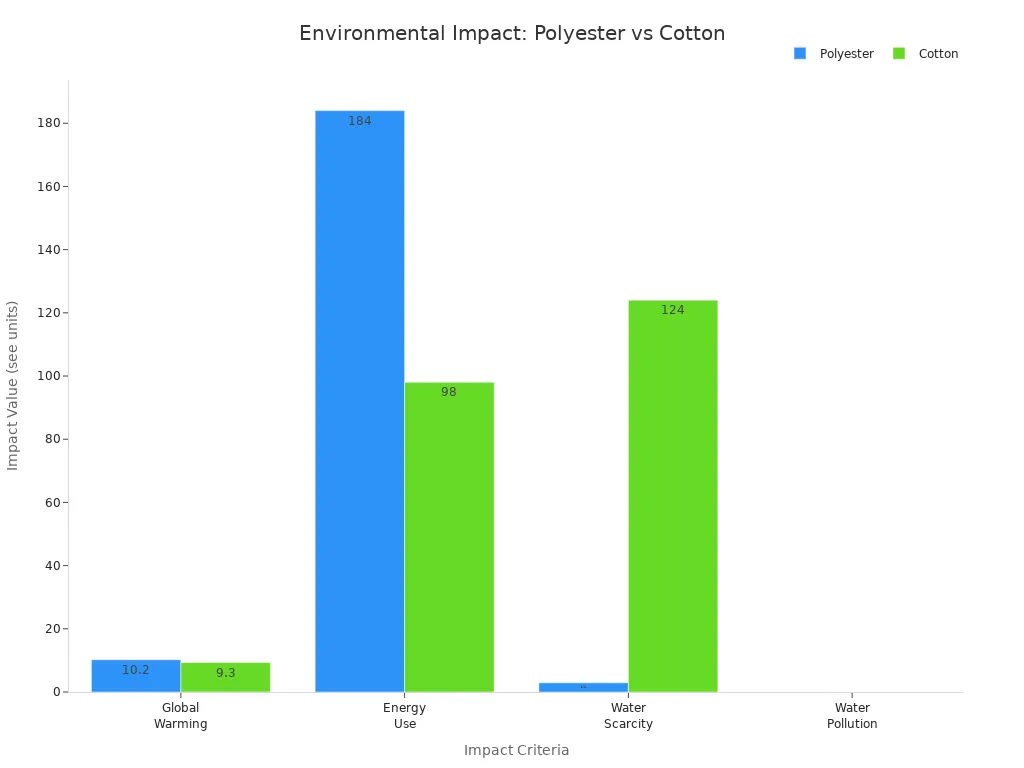
Polyester’s durability means your clothes last longer, but it also means more microplastics in the ocean. Cotton uses a lot of water and can harm the soil. When you mix the two, you get a fabric that is tough to recycle and can cause both plastic and farming problems. Many people now look for blends with recycled polyester or organic cotton to lower their impact.
Callout: If you care about the planet, check the label for recycled or organic fibers. This small step can help reduce waste and pollution.
The Bottom Line
Cotton polyester blends have some real cons. You get less comfort and breathability, more pilling and static, and bigger recycling challenges. Polyester’s strength and wrinkle resistance are great, but you trade off some softness and absorbent power. If you want to avoid potential shrinkage, pilling, or odor retention, think about when and where you wear these blends. Knowing the pros and cons helps you pick the right fabric for your needs.
Blends vs. Pure Cotton or Polyester
Performance Comparison
You might wonder how cotton polyester blends stack up against pure cotton or pure polyester. Let’s break it down with a simple table:
Cotton | Polyester | |
|---|---|---|
Durability | Durable but can shrink or wear out | Very durable, resists shrinking |
Comfort | Soft, breathable, gentle on skin | Less breathable, feels more synthetic |
Maintenance | Can shrink in the wash | Easy to care for, keeps its shape |
Cotton-polyester blends combine the best parts of both. You get a fabric that feels softer than pure polyester but lasts longer than pure cotton. These blends are easier to wash and dry. You do not have to worry much about shrinking or fading. Cotton polyester blends also breathe better than pure polyester, so you stay more comfortable. You can wear them for many activities, from school to sports.
Cotton-polyester blends are designed to boost texture, durability, and comfort. You will notice that your clothes stay looking new for longer. They also need less ironing and resist wrinkles. If you want a fabric that works for almost any situation, a cotton and polyester blend is a smart pick.
When to Choose a Blend
You might ask, “When should I pick a cotton polyester blend instead of pure cotton or polyester?” Here are some good times to choose blends:
You want clothes that balance comfort and durability.
You need better moisture management and less wrinkling than pure cotton.
You live an active life or need clothes for everyday use.
You want easy-care fabrics that do not shrink or fade quickly.
You like shirts, uniforms, or home textiles that last.
Cotton-polyester blends fit many needs. You can wear them to school, work, or the gym. They handle sweat and movement well. You also spend less time on laundry and ironing. If you want a fabric that keeps up with your busy life, cotton polyester blends are a great choice.
Tip: For the best mix of comfort and easy care, look for cotton polyester blends with a higher cotton percentage. You get softness and breathability, plus the strength of polyester.
Common Cotton Polyester Blend Ratios
You see a lot of different cotton and polyester blends in stores today. Each blend has its own feel, strength, and use. Let’s look at the most popular ratios and why you might pick one over another.
50/50 and 65/35 Blends
You probably notice 50/50 and 65/35 blends everywhere. These two ratios show up in t-shirts, uniforms, and even your bed sheets. The 50/50 blend gives you a nice balance. You get the softness of cotton and the toughness of polyester. This blend feels comfortable and lasts a long time.
The 65/35 blend leans more toward durability. You get more wrinkle resistance and better color holding. This blend works well for clothes you wash a lot, like uniforms or sportswear.
Here’s a quick look at how these blends perform:
Blend Ratio | Martindale Abrasion Cycles | Tear Strength (N) |
|---|---|---|
50/50 | 420 | |
65/35 | 22,500 | 510 |
You can see that the 65/35 blend stands up to more wear and tear. If you want something that lasts, this blend is a smart choice.
Tip: For everyday comfort, try a 50/50 blend. For work or sports, go for 65/35. You get more strength and less ironing.
Specialty Ratios
Some clothes need a special cotton polyester blend ratio. You find these in leggings, dresses, or high-performance sportswear. Brands use blends like 60/40 or 80/20 to get just the right mix of softness and strength.
Check out this table to see where you might find each blend:
Blend Ratio | Characteristics | Common Applications |
|---|---|---|
50% Polyester, 50% Cotton | T-shirts, sweatshirts, bed linens | |
60% Polyester, 40% Cotton | Extra durability, still comfy | Sportswear, uniforms, casual fashion |
65% Polyester, 35% Cotton | High durability, wrinkle resistance | Workwear, uniforms |
65% Cotton, 35% Polyester | Natural feel, added strength | Casual wear, home textiles |
80% Cotton, 20% Polyester | Breathable, soft, and tough | Leggings, dresses, casual apparel |
You see these blends in all kinds of clothes:
Sportswear for active days
Uniforms for school or work
Home textiles such as sheets and pillowcases
You get to pick the blend that fits your life. If you want something soft and cool, try a higher cotton blend. If you need clothes that last and look neat, go for more polyester.
Note: The right blend makes a big difference. Always check the label before you buy.
Care Tips for Cotton-Polyester Blends
Taking care of your cotton-polyester blends helps your clothes and bedding last longer and look better. You do not need fancy tools or special products. You just need a few smart habits.
Washing and Drying
You want to keep your sportswear and bedding fresh and bright. Try these easy steps:
Wash with cold or warm water. This keeps the fabric from shrinking.
Use a detergent made for color protection. Your colors stay bold and new.
Choose a gentle cycle for washing. This reduces wear and tear.
Dry on a low-heat or tumble-dry setting. High heat can damage the fibers.
Air dry by laying items flat or hanging them up. This helps keep their shape.
Take clothes out of the dryer while they are still a little damp. This stops over-drying.
Tip: Washing in cold water and air drying can make your clothes last up to 23% longer. You also save energy and help the planet.
Preventing Pilling and Static
Pilling and static can make your sportswear and bedding look old. You can fight both with a few tricks.
Choosing a gentle detergent helps prevent pilling. Look for one labeled “gentle” or “for fabrics.” Wash your clothes inside out and use a gentle cycle. Avoid high-heat drying to cut down on friction.
Use a fabric shaver to remove pills.
Steam your clothes to lower static.
Try a lint roller or brush for quick lint removal.
Rub a dryer sheet on your clothes to fight static.
Wipe with a damp cloth if static is strong.
Extending Fabric Life
You want your favorite sportswear and bedding to last. Here’s what experts suggest:
Factor | Recommended Practice | Effect on Fabric Life |
|---|---|---|
Water Hardness | Soften if over 120 ppm | Stops mineral buildup |
Wash Temp | 30–40 °C (86–104 °F) | Keeps fibers stretchy |
Drying Temp | Below 60 °C (140 °F) | Prevents shrinking |
Ironing Heat | Medium (cotton setting) | Avoids scorching and yellowing |
Every 10 °C increase in drying temperature can shrink your clothes by up to 1.5%. Keep the heat low to protect your blends.
With these simple steps, you can keep your cotton-polyester blends looking and feeling great for years.
Choosing the Right Cotton Polyester Blend
Everyday Wear
When you pick clothes for daily life, you want them to feel good and last. Cotton-polyester blends like 50/50 or CVC mixes give you the softness of cotton and the moisture-wicking power of polyester. These blends help your shirts and pants stay smooth and resist shrinking. You also get less wrinkling and more stain resistance than with pure cotton.
Think about what matters most to you. Do you want softness, breathability, or easy care? Maybe you care about how your clothes look after washing. Here are some things to consider:
What qualities do you want? (softness, breathability, moisture-wicking)
How will you use the item? (family event, school, sportswear)
What is your budget?
Who will wear it? (kids, adults, style needs)
If you plan to print on your clothes, blends work well for screen printing and embroidery.
Activewear and Workwear
You need clothes that keep up with your busy life. For sportswear and work uniforms, blends with more polyester give you extra strength and shape. These blends dry fast and hold their color, even after many washes. Check out this table for the best blends:
Product Category | Preferred Blend | Key Functional Reason |
|---|---|---|
Yoga Pants / Gymwear | 85/15 | Exceptional stretch & recovery |
Corporate Polo Shirts | 90/10 | Shape retention, professional look |
Workwear Uniforms | 90/10 | Durability and low maintenance |
Sportswear made with these blends feels light and moves with you. You can wash them often without worrying about fading or shrinking.
Home Textiles
You want your home to feel cozy and easy to care for. Cotton-polyester blends in bedding and curtains give you comfort and practicality. These fabrics last longer and resist wrinkles, so your bedding always looks fresh. You also spend less time ironing and more time relaxing.
Blended fabrics combine the best of both worlds. They feel soft but stay strong. You get comfort without losing durability. Your bedding and curtains stay looking new, even after many washes.
Tip: Choose blends for home textiles if you want easy care and long-lasting comfort.
You’ve seen that cotton-polyester blends give you comfort, durability, and easy care, but they can feel warmer and aren’t as eco-friendly as pure cotton. Here’s a quick look:
Pros | Cons |
|---|---|
Soft, durable, easy to wash | Less breathable, not biodegradable |
Holds color, resists wrinkles | May irritate sensitive skin |
When you shop, check the fabric label for blend ratios. Ask store staff if you need help. Think about how you’ll use the item, how much care you want to give, and how important the environment is to you. 👕
Tip: Choosing recycled polyester or organic cotton blends helps you care for the planet and your comfort.
FAQ
What is the best cotton-polyester blend for everyday clothes?
You want comfort and easy care. Try a 50/50 or 65/35 blend. These mixes feel soft, resist wrinkles, and last longer. You can wear them to school, work, or just hanging out.
Can you machine wash cotton-polyester blends?
Yes, you can! Use cold or warm water. Pick a gentle cycle. Dry on low heat or hang your clothes. This keeps your shirts and pants looking fresh.
Do cotton-polyester blends shrink?
You get less shrinking with blends than with pure cotton. Polyester helps the fabric keep its shape. If you follow care tips, your clothes stay the right size.
Are cotton-polyester blends good for sensitive skin?
Some people with sensitive skin prefer more cotton. Polyester can feel itchy for you. Look for blends with higher cotton content or organic fibers if you want extra comfort.
How do you reduce static in cotton-polyester clothes?
Tip: Toss a dryer sheet in with your laundry. You can also air dry your clothes or use a fabric softener. These tricks help stop static cling.