
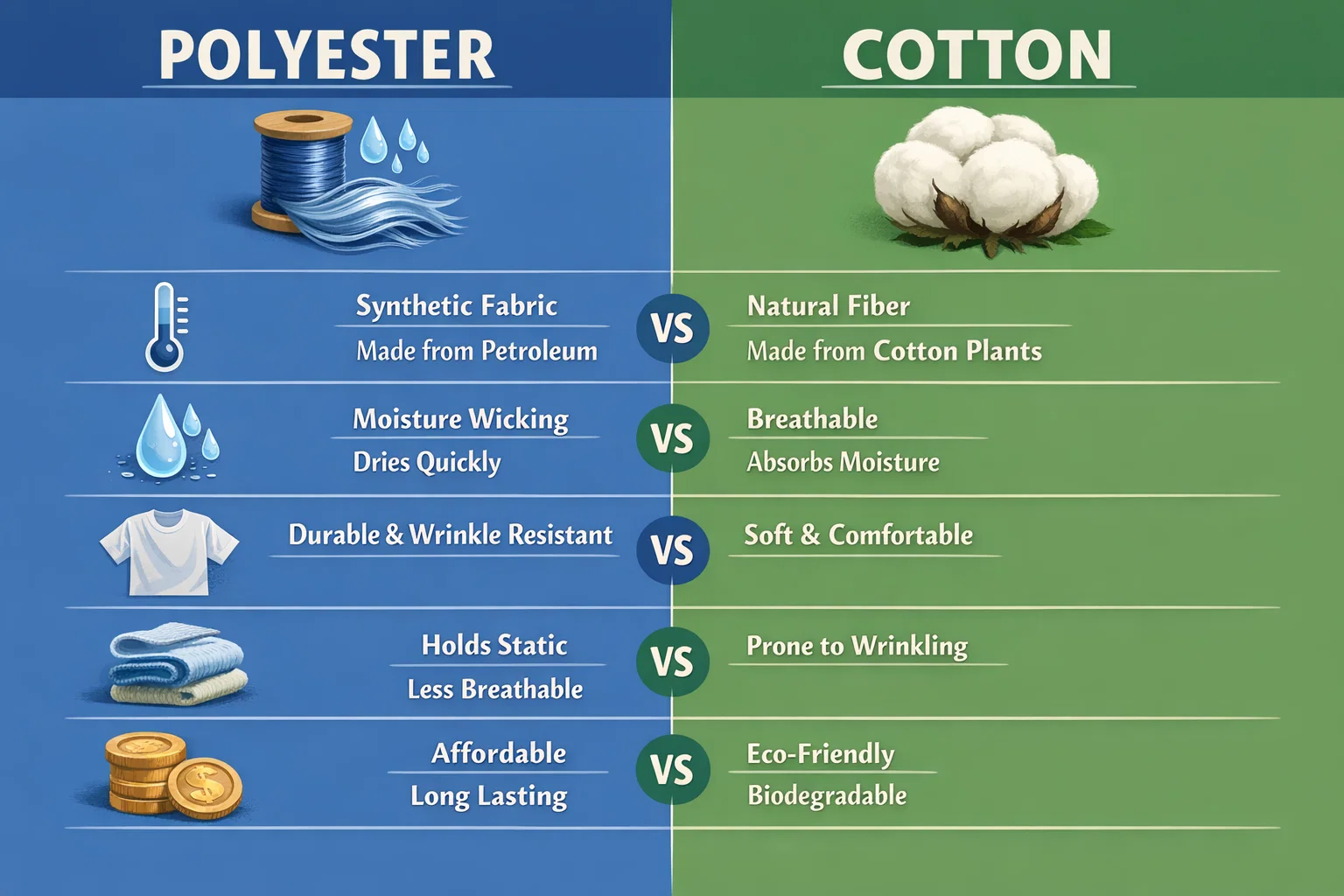
When considering polyester vs cotton, your choice depends on your needs. Cotton is soft and lets your skin breathe, while polyester vs cotton highlights that polyester is strong and dries quickly. You may prefer cotton for comfort, but when it comes to polyester vs cotton, polyester is often chosen for sports clothes because it lasts longer. Think about comfort, how easy it is to wash, and the cost when comparing polyester vs cotton. Also, consider how each fabric affects the earth before you make your decision.
Key Takeaways
Pick cotton if you want comfort and air flow. Cotton feels soft and is good for sensitive skin. – Pick polyester if you need strong and fast-drying clothes. Polyester lasts longer and works well for sportswear. – Think about the environment. Cotton breaks down and is better for the earth. Polyester can make tiny plastic pieces. – Think about how to care for your clothes. Polyester is simple to wash and take care of. Cotton can shrink and get wrinkled. – Think about your daily life. Wear cotton for normal days. Use polyester for sports or being outside.
Polyester vs Cotton Quick Comparison
Key Differences Table
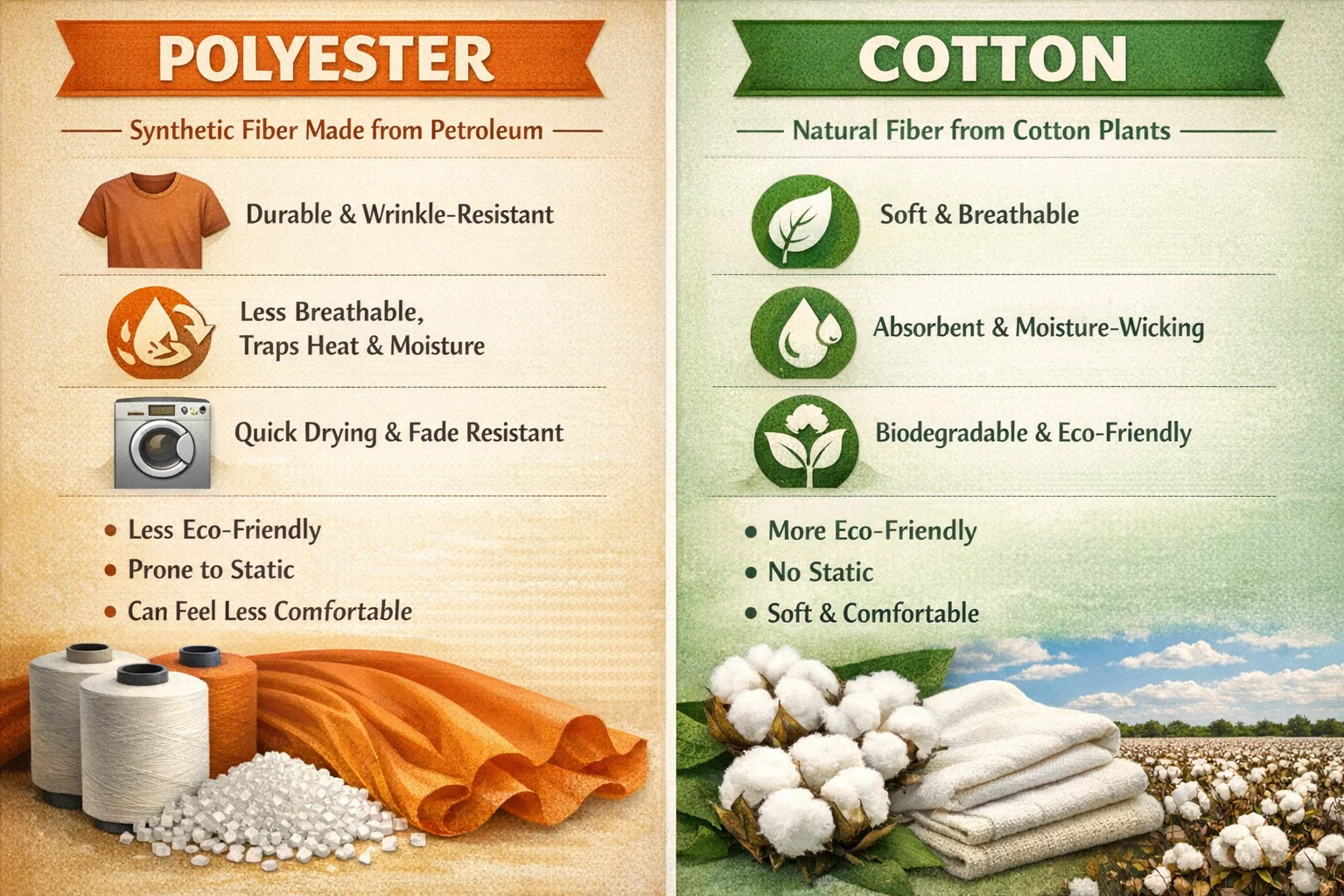
The table below shows how polyester and cotton are different. It compares things like comfort, how long they last, how to care for them, price, and how good they are for the planet. This table can help you pick which fabric is best for you.
Criteria | Polyester | Cotton |
|---|---|---|
Origin | Synthetic (oil) | Natural (plant) |
Renewable | No | Yes |
Biodegradable | No | Yes |
Microplastics | Yes | No |
Wear Resistance | High | Moderate |
Washing Requirements | Cold, quick wash | Hot, regular wash |
Drying Time | Quick | Longer |
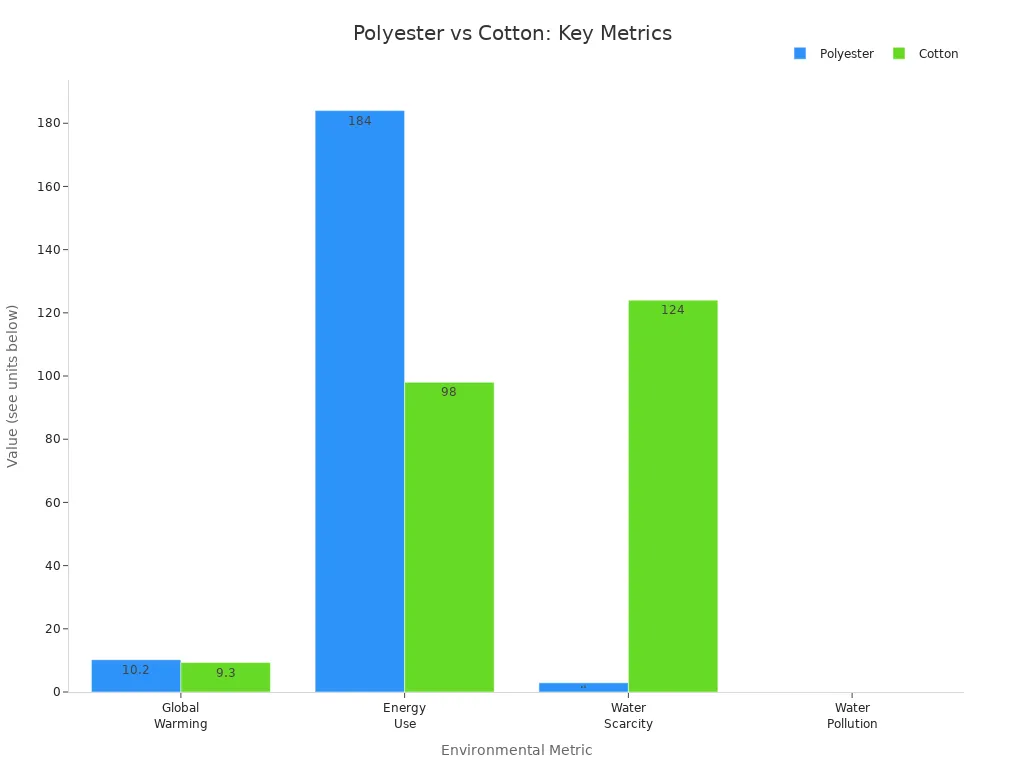
Energy Use (per 1kg) | 184 MJ | 98 MJ |
Water Use (per 1kg) | 2.9 m³ | 124 m³ |
Cost | Usually lower | Usually higher |
Comfort | Less breathable | Soft, breathable |
Eco-Friendliness | Lower | Higher |
Main Pros and Cons
When you look at polyester vs cotton, you see both have good and bad sides. Cotton feels soft and lets air move through. It is nice for people with sensitive skin. Polyester lasts a long time and dries fast. But it might not feel as nice and can hold sweat.
“Cotton does not last as long, but it is better for the earth because it breaks down and comes from plants. Polyester is strong, but it can hurt the planet more because it does not break down.”
Pros of Polyester:
Strong and keeps its shape
Dries quickly
Needs less energy and water for washing
Cons of Polyester:
Can feel less comfortable
Not biodegradable
Releases microplastics
Pros of Cotton:
Soft and breathable
Biodegradable and renewable
Cons of Cotton:
Wears out faster
Needs more water and energy to grow and wash
Takes longer to dry
This quick guide can help you pick the best fabric for your needs.
Polyester Overview
What Is Polyester?
Polyester is used in many things like shirts and curtains. Factories make polyester using chemicals. They use a process called polymerization. Ethylene comes from petroleum and is the main part. Workers mix purified terephthalic acid (PTA) and mono ethylene glycol (MEG). This makes the polyester polymer. Most of the polymer is PTA, and some is MEG. The process creates a strong and bendable fabric. Polyester lasts a long time.
Polyester Properties
Polyester has special features that make it useful. Look at the table below to see how these features help:
Property | Description |
|---|---|
High tensile strength | Polyester is very strong and does not tear easily. |
Chemical resistance | It can handle acids but not alkalis. |
Thermal stability | The fabric keeps its shape when temperatures change. |
Hydrophobic nature | Polyester does not soak up much water and dries fast. |
Elastic recovery | The fabric stretches and goes back to its shape. |
Dimensional stability | Polyester stays neat and does not change shape over time. |
These features make polyester good for clothes and other uses.
Polyester Pros and Cons
It is important to know the good and bad sides of polyester. Polyester is tough and keeps its color. It does not soak up water and stains. You can mix it with other fibers to make it softer. But polyester does not let air through and can feel sticky when it is hot. It can hold smells and lets out microplastics when washed. Making polyester uses harmful chemicals and oil, which can hurt nature.
Pros | Cons |
|---|---|
Not breathable: Can feel sticky | |
Water resistant: Keeps moisture out | Holds smells: Traps sweat and oils |
Holds shape and color: Stays bright | Bad for the planet: Not eco-friendly |
Mixes well with other fibers | Microplastics: Can pollute water |
Pollution from making: Uses toxic stuff |
Best Uses for Polyester
Polyester is used in lots of places. People use it for clothes because it lasts, costs less, and does not stain easily. Modern polyester is good for sports clothes and warm clothes. You see it in curtains and bedding because it is light and does not stain. Factories use polyester in tires, ropes, and belts to make them strong. Polyester is often mixed with natural fibers to stop wrinkles and make it more comfy.
Tip: Pick polyester for sports clothes, outdoor gear, and things that need to last and dry fast.
Cotton Overview
What Is Cotton?
Cotton is in many things you use every day. It comes from the cotton plant’s fluffy bolls. Farmers put cotton seeds in the ground. The plants need sun and water to grow well. When the bolls open, workers pick them. Machines pull the fibers away from the seeds. The fibers get cleaned and lined up. Spinning turns the fibers into yarn. Yarn is woven or knitted to make fabric. People make millions of tons of cotton each year. Cotton is one of the most used fibers in the world.
Put seeds in the soil.
Grow plants with sun and water.
Pick bolls when they open.
Use machines to separate fibers.
Clean fibers to remove dirt.
Line up fibers by carding and combing.
Spin fibers into yarn.
Weave or knit yarn into fabric.
Wash and dye the fabric.
Sew fabric into clothes.
Cotton Properties
Cotton fabric is soft and lets air move through. You feel cool because air passes easily. The fibers soak up water, so you stay dry. Cotton can hold a lot of water. This makes it good for towels and bandages. The fibers get stronger when wet. Your clothes last after many washes. Cotton is gentle and does not bother your skin. Its softness and warmth make it great for daily wear.
Cotton Pros and Cons
It is good to know what is great and not so great about cotton. Cotton feels soft and keeps you comfy. It helps control moisture and keeps you warm. Cotton is strong and can be washed and dyed. It is a natural fiber, so it is kind to your skin and the earth. Cotton breaks down and does not make microplastics.
But cotton has some downsides. It wrinkles and can shrink after washing. Cotton does not stretch, so it may lose its shape. It can pick up dust and hair, which makes cleaning harder. Acid can harm cotton, so be careful with cleaners.
Best Uses for Cotton
Cotton is used in lots of things. You wear cotton in shirts, underwear, jackets, and sports clothes. Cotton is in sheets, covers, and pillowcases. Towels, bathrobes, and mats are often made of cotton. Cotton is also used for bandages and other medical items.
Cotton is a great pick for home things like sheets, curtains, and tablecloths. You get comfort and air flow every night with cotton bedding.
Application | Description |
|---|---|
Clothing | Used for shirts, underwear, and t-shirts. |
Bedding | Good for sheets, quilts, and pillowcases. |
Home Furnishings | Used in towels, washcloths, and other home items. |
Industrial Products | Used for bandages, thread, and tarps. |
Difference Between Cotton and Polyester
Comfort and Breathability
You want clothes that feel nice and keep you cool. How a fabric handles air and sweat matters a lot. Cotton feels soft and lets air pass through. It soaks up sweat and keeps your skin dry. Tests show cotton holds water well but dries slowly. Polyester dries much faster than cotton. It moves sweat away from your skin. This helps you feel good during sports or hot days. Polyester cotton blends help with sweat, so many work clothes use them. Studies show cotton lets more air through than polyester. You sweat less and feel cooler in cotton. Polyester is better at moving sweat away, so it is good for sports.
Cotton: Soft, lets air in, soaks up sweat, dries slow
Polyester: Less air flow, dries fast, moves sweat, can feel sticky
Tip: Wear cotton for daily comfort and coolness. Use polyester when you need clothes to dry fast.
Durability and Longevity
You want clothes that last and look good after many washes. Polyester is very strong and lasts a long time. It does not stretch, shrink, or wrinkle much. Polyester does not tear or lose color easily. Cotton wears out faster, especially if you wash it a lot. Cotton can fade in the sun and look old. Polyester keeps its color, so prints stay bright. Cotton may fade but gets softer as you wear it.
Fabric Type | Durability | Resistance to Wear and Tear | Fading Resistance |
|---|---|---|---|
Cotton | Not as strong, wears out faster | Gets worn with washing | Fades more, especially in sunlight |
Polyester | Very strong, lasts longer | Does not stretch or shrink | Keeps color, does not fade easily |
Cotton: Wears out and fades faster, gets softer over time
Polyester: Lasts longer, keeps color, does not get damaged easily
Care and Maintenance
You want clothes that are easy to take care of. Both polyester and cotton need simple care. Air out your clothes after wearing them. Treat stains right away. Fold or hang clothes to stop wrinkles. Wash in cold or warm water with gentle soap. Do not use bleach or fabric softener. Dry on low heat or let air dry. Iron on low heat if you need to. Polyester needs less ironing and does not wrinkle much. Cotton can wrinkle and shrink, so be careful with heat.
Details | |
|---|---|
Machine wash | Cold or warm with gentle soap |
Cycle | Gentle or normal, depends on fabric weight |
Avoid | Bleach and fabric softener |
Drying | Low heat or air dry to keep safe |
Ironing | Low heat only if needed |
Note: Polyester is easier to care for and keeps its shape. Cotton needs more care to stop shrinking and wrinkling.
Cost Comparison
You want to save money and get good value. Polyester costs less than cotton most of the time. Polyester is about $3 to $7 for each yard. Cotton costs more, from $5 to $25 for each yard. Polyester is cheaper because it uses less expensive stuff and is easy to care for. Cotton prices change because of farming and weather. Polyester saves money over time because it lasts longer and needs less care.
Fabric Type | |
|---|---|
Polyester | $3 – $7 |
Cotton | $5 – $25 |
Tip: Pick polyester if you want to save money. Choose cotton if you want natural comfort and do not mind paying more.
Environmental Impact
You care about the earth and want to make good choices. The effect of polyester and cotton on nature is important. Cotton comes from plants and breaks down in the ground. It does not add to trash piles. Polyester is made from oil and does not break down. Cotton farms use lots of water and chemicals. This can hurt the soil and water. Water use for cotton is different in each country. For example, cotton in Kyrgyzstan uses 444.24 m³ per kg. In Turkey, it uses 188.61 m³ per kg. Cotton’s carbon footprint goes from 6.07 kg CO2e to 1.15 kg CO2e. Polyester uses less water but makes microplastics and needs lots of energy to make. Recycled polyester can be used again, but it still does not break down.
Fabric Type | Biodegradability | Recyclability |
|---|---|---|
Cotton | Breaks down in nature, less trash | Biodegradable, not recyclable |
Recycled Polyester | Does not break down, needs energy to make | Can be recycled many times |
Cotton: Breaks down, uses lots of water, can pollute, lower carbon footprint
Polyester: Does not break down, makes microplastics, can be recycled, uses more energy
Sustainability is important. Cotton is kinder to the earth but uses more resources. Polyester lasts longer but can hurt nature.
Suitability for Uses
You want the best fabric for what you need. The difference between cotton and polyester shows in how you use them. Cotton is great for everyday clothes, bedding, and medical things. It is soft and comfy for daily wear. Polyester is best for sports clothes, outdoor gear, and things that need to last. It is strong, light, and does not get damaged easily. Experts say cotton is good for shirts, underwear, and home items. Polyester is best for sportswear, jackets, and outdoor stuff.
Material | Characteristics | Specialized Use |
|---|---|---|
Cotton | Lets air in, comfy, good for soft things | Medical items, safety gear |
Polyester | Strong, light, bends easily, does not wear out | Outdoor uses |
Tip: Pick cotton for comfort and if you have sensitive skin. Choose polyester for sports, travel, and outdoor fun.
Polyester vs Cotton: How to Choose
Lifestyle and Activities
What you do every day helps you pick your fabric. If you play sports or go outside a lot, polyester is a good choice. It dries fast and does not wear out quickly. If you stay home or work in an office, cotton feels soft and keeps you comfy. Look at the table to see which fabric fits your life best:
Factor | Cotton | Polyester |
|---|---|---|
Comfort | Soft and breathable, cozy feel | Durable and quick-drying properties |
Durability | Tends to wear out faster | Outlasts cotton, better resistance |
Moisture Management | Absorbs moisture, suitable for sweaty conditions | Wicks away moisture, ideal for active lifestyles |
Care | Requires more care, may shrink and fade | Low-maintenance, retains shape well |
Style | Natural, relaxed look | Sleeker appearance |
Cotton is best if you want comfort and air flow.
Polyester is best if you want strong fabric and easy care.
Climate and Weather
Where you live changes how cotton and polyester work. In hot places, cotton helps you stay cool and soaks up sweat. Polyester is good for sports clothes in any weather because it moves sweat away. Blended fabrics work well in places with mixed weather. A study showed that mixing 65% cotton and 35% polyester helped people sweat less in humid air.
Climate Type | Recommended Blend | Performance Priority |
|---|---|---|
Hot & Humid | 60–70% cotton/30–40% polyester | Airflow + quick drying |
Dry & Arid | 50/50 balanced blend | UV resistance + moisture retention |
Mixed Conditions | 80% cotton/20% polyester | Versatile temperature regulation |
Cotton works best in hot, sticky weather.
Polyester is great for sports in any climate.
Blends give you both comfort and strength.
Allergies and Skin Sensitivity
If your skin is sensitive, think about how fabric feels. Cotton is gentle and does not bother most people. Polyester can make some people itch or get rashes. Chemicals and dyes in polyester may cause problems. Watch for signs like hives, swelling, or trouble breathing.
Symptom | Description |
|---|---|
Rashes | Skin irritation from contact with polyester. |
Skin tenderness | Sensitivity in areas where polyester touches skin. |
Itching | Mild to severe itching sensation. |
Tip: Pick cotton if you have allergies or your skin is sensitive.
Eco-Friendly Choices
If you want to help the planet, choose better fabrics. Organic cotton and recycled polyester are good for nature. Recycled polyester uses less energy and comes from old plastic bottles. This helps keep trash out of landfills. Organic hemp and other plant-based recycled fabrics are also good, but they cost more.
Recycled polyester uses much less energy than new polyester.
Organic cotton breaks down and does not harm nature.
Recycled polyester can be used again and again.
Quick Recommendations
Here are fast tips to help you choose:
For summer shirts, pick cotton or a cotton blend.
For sports clothes, choose polyester mesh to stay dry.
For bedding and towels, use cotton for softness.
For outdoor gear, pick polyester for strength and sun protection.
For work clothes, try a poly/cotton blend for easy care.
Polyester vs cotton depends on what you do, where you live, and what you need. Think about comfort, how well it works, and how it affects the earth before you decide.
You now know how polyester and cotton are different. Look at the table to see what is important:
Factor | Cotton | Polyester |
|---|---|---|
Comfort | Soft and lets air in | Light, not as airy |
Durability | Gets old faster | Stays strong and keeps shape |
Moisture-Wicking | Soaks up water | Dries fast |
Best Use | Good for daily clothes | Great for sports and outside |
Pick cotton if you want soft and comfy clothes. Choose polyester if you need tough and easy-to-clean fabric. Think about what you do each day and what feels good to wear. 😊 Now you can pick the right fabric for you!
FAQ
Is polyester better than cotton for hot weather?
You will feel cooler in cotton. Cotton lets air move through and absorbs sweat. Polyester dries fast but can feel sticky in heat. Choose cotton for hot days.
Does polyester shrink or wrinkle like cotton?
You do not need to worry about shrinking with polyester. Polyester keeps its shape and does not wrinkle much. Cotton can shrink and wrinkle after washing.
Can you be allergic to polyester or cotton?
You may get itchy skin from polyester, especially if you have allergies. Cotton is gentle and safe for most people. If you have sensitive skin, pick cotton.
Which fabric is easier to clean?
You will find polyester easier to clean. It dries quickly and resists stains. Cotton needs more care and can stain or shrink if you use hot water.