
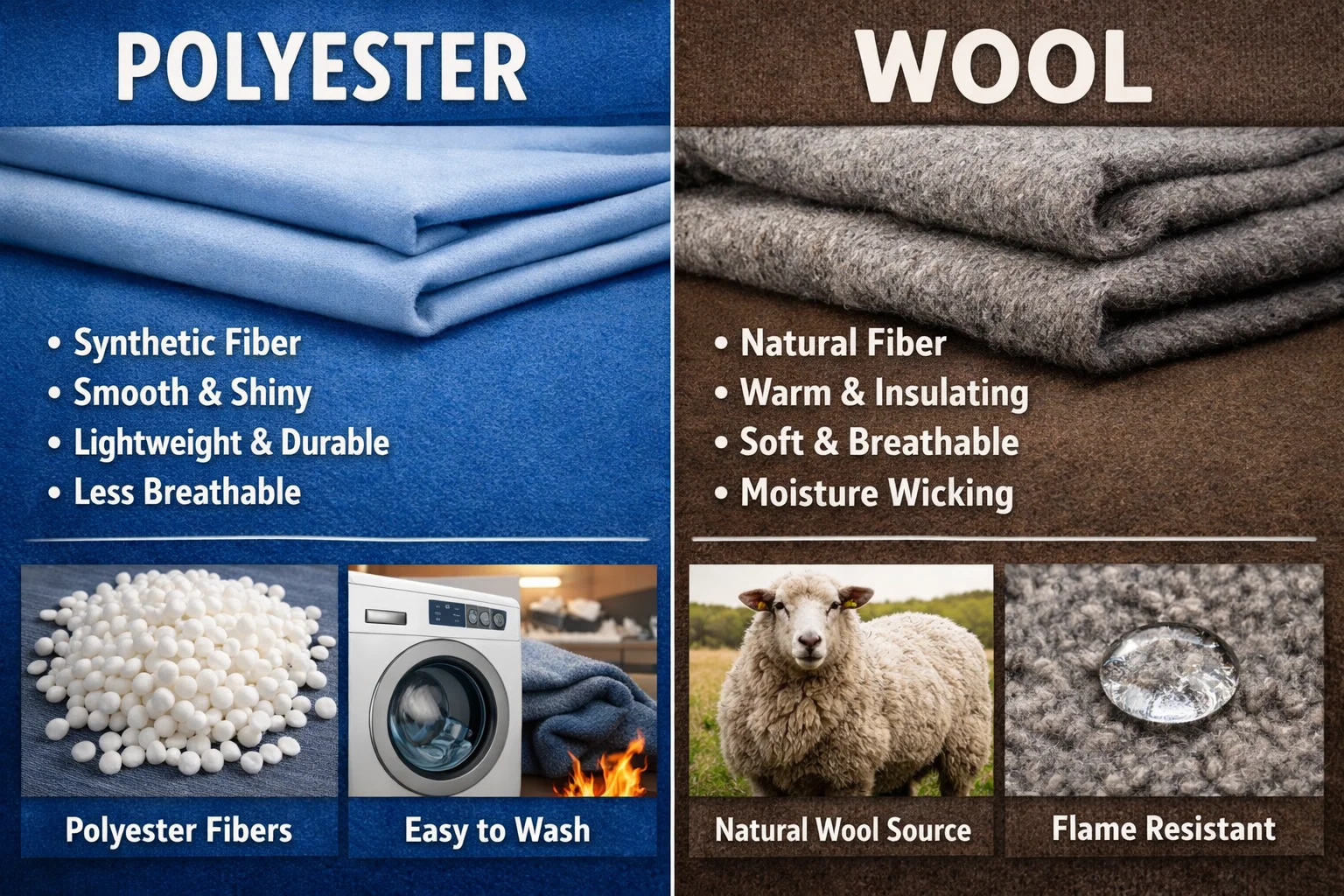
When comparing polyester vs wool, wool allows air to move through much more effectively. Wool is a natural fiber, while polyester is synthetic. In the polyester vs wool debate, wool lets both air and moisture pass through, helping you stay cool and dry. Breathability, which means air and water vapor can move through the fabric, is a key factor in comfort. With wool, your skin stays comfortable and you sweat less because your clothes breathe better. In terms of breathability, wool outperforms polyester. Experts measure this using air permeability and moisture vapor transmission rate, and the results are clear in the polyester vs wool comparison.
Fabric Type | Breathability Rating Comparison |
|---|---|
Wool | 96% better than polyester vs wool |
Cotton | 45% better than cotton |
Viscose | 26% better than viscose |
Key Takeaways
Wool lets air and moisture move through it. This helps you stay cool and dry.
Pick fabrics like wool for comfort when you are active. They help control your body temperature and lower sweat.
Polyester dries fast and is easy to care for. But it can hold heat and moisture when it is humid.
Wool’s natural fibers handle moisture well. They soak up sweat and let out heat. This makes wool good for many types of weather.
Think about what you will do and the weather before you pick polyester or wool. This helps you stay comfortable and do your best.
What Is Fabric Breathability?

Fabric breathability is how easily air and moisture pass through. If you wear breathable clothes, your skin feels cooler and stays dry. These fabrics let sweat and heat leave your body. This helps you feel good in many situations.
Scientists use tests to check how well fabric breathes. Two common ways are:
Test Method | Description |
|---|---|
ASTM D737-18 | Checks air flow by changing pressure across the fabric. |
ISO 11092 (EN 31092) | Looks at heat and moisture, and finds the Ret value for breathability. |
Why Breathability Matters
You want your clothes to keep you comfy all day. Breathability is very important for this. When fabric breathes well, it controls sweat and humidity. Your body needs to get rid of extra heat, especially when you move or play sports. Studies show breathable materials help sweat dry faster. This keeps your skin dry and stops you from feeling sticky or too hot. Good breathability also helps stop bad smells, so you feel fresh longer.
How Breathability Affects Comfort
Breathable fabrics do more than keep you cool. They help your body work better when you do things. Here are some ways breathability helps you:
Breathable fabrics control your body temperature and humidity. This keeps you comfy and stops heat stress.
When you exercise, heat and sweat can get trapped between your skin and clothes. This makes your skin feel hot and not comfortable.
If clothes do not let moisture out, you may get tired faster. Your body works harder to cool down.
Fabrics with good moisture-wicking help you stay balanced and comfy, even when you work hard.
If you pick clothes with high breathability, your body can stay cool, dry, and comfy every day.
Polyester vs Wool: Breathability Compared

Breathability of Polyester
Polyester breathability has some key points. The fibers are smooth and straight. This shape helps air move through. Some polyester uses mesh or open-knit designs. These make it easier for air to pass. Microfiber technology makes polyester finer and more porous. This helps air and moisture leave faster.
Polyester is synthetic. It does not soak up water well. It is hydrophobic, so water stays out. In hot, humid weather, polyester can trap heat and sweat. You might feel sticky or not comfortable. Even with new tech, polyester does not match wool’s airflow.
Polyester feels cool in dry, mild weather.
In hot, humid places, polyester traps heat and blocks air.
Polyester works best for short times or cooler days.
If you want a fabric that breathes in all cases, polyester may not be best. The polyester vs wool debate shows polyester often loses. This is true when you need comfort for sports or warm weather.
Breathability of Wool
Wool is different in the polyester vs wool comparison. Wool fibers have a natural crimp. This crimp makes tiny air pockets in the fabric. These pockets let air move and help your skin breathe. Wool handles moisture well. It soaks up sweat and lets it dry fast. This keeps you dry and comfy.
Wool changes with your body temperature. If you get hot, wool lets out heat and moisture. If you get cold, wool holds warm air. This makes wool good for many activities and weather.
Wool base layers give more comfort outdoors.
Wool keeps you comfy in dry and humid weather.
Wool helps your body in humidity from 45% to 80%.
Wool’s structure manages moisture and heat better than polyester.
The polyester vs wool debate often ends with wool winning. Wool’s special crimp and structure make it very breathable. You feel cooler, drier, and more comfy, even if you sweat or the weather changes.
Tip: If you want a fabric for many temperatures and activities, pick lightweight wool. It does better than polyester most of the time.
Moisture Management and Temperature Control
How Polyester Handles Moisture
Polyester works differently from wool when it comes to sweat and heat. You will notice that polyester does not soak up water. This is because polyester is hydrophobic. Sweat stays on the surface of the fabric instead of soaking in. The smooth fibers help move sweat away from your skin. This process is called wicking. It helps you feel dry during short activities or workouts.
Polyester dries quickly. You can see this in sports shirts and activewear. The fabric pushes sweat to the outside, where it can evaporate fast. Some polyester clothes use special treatments to improve this effect. These treatments make the fabric even better at moving moisture.
Note: Polyester’s moisture vapor transmission rate (MVTR) shows how well it lets sweat escape as vapor. This is important for comfort when you move a lot.
Here is a quick look at how polyester manages moisture:
Fabric Type | Wicking Behavior | Absorption Capacity | Drying Time |
|---|---|---|---|
Polyester | Superior | Poor | Short |
Polyester keeps you dry by moving sweat away.
The fabric does not hold much water, so it dries fast.
You may feel cool at first, but sweat can build up if you wear polyester for a long time.
How Wool Handles Moisture
Wool manages sweat and temperature in a unique way. The fibers have a crimped shape. This creates tiny air pockets that help with airflow and insulation. Wool can absorb up to 30% of its weight in moisture vapor before it feels damp. This means you stay dry even if you sweat a lot.
When wool absorbs moisture, it releases a small amount of heat. This helps keep your body temperature steady. If the air is dry, wool lets moisture out, which cools your skin. This process is called thermoregulation. It helps you feel comfortable in both hot and cold weather.
Here is a table that shows how wool’s properties help you:
Property/Process | Description |
|---|---|
Moisture Absorption | Wool fibers can absorb up to 30% of their weight in moisture vapor. |
Heat Release | Absorbing moisture releases heat energy, keeping you warm. |
Moisture Release | In dry air, wool releases moisture vapor, cooling your body. |
Thermoregulation | Wool balances heat and moisture, creating a stable climate near your skin. |
Wool’s structure helps you avoid overheating.
You can wear wool in many climates and stay comfortable.
Wool dries slower than polyester, but it keeps you warm even when wet.
Tip: If you want a fabric that manages sweat and keeps your temperature steady, wool is a top choice. You get comfort in all kinds of weather.
Everyday Comfort: Polyester vs Wool
Wearing Polyester Daily
Polyester feels light and smooth when you wear it. Many people pick polyester because it dries fast and does not wrinkle. You see polyester in sports clothes, uniforms, and casual shirts. Polyester moves sweat away from your skin. This helps you stay dry during short activities or warm days. Microfiber polyester is softer than older polyester.
Polyester pulls sweat away, so you feel cool in warm weather.
Sports polyester is good for workouts because it keeps you dry.
Microfiber polyester makes activewear feel soft on your skin.
But polyester is not always as comfy as natural fibers. In hot weather, polyester can trap heat and block air. Some people do not like how it feels, especially if their skin is sensitive. Polyester can also keep smells after you sweat.
Cons of Polyester for Hot Weather | |
|---|---|
Feels light, so clothes are not heavy | Air does not move well |
Dries fast, good for humid days | Thick polyester can trap heat |
Moves sweat away from skin | Can keep bad smells |
Does not wrinkle easily | May bother sensitive skin |
Lasts a long time | Not good for every activity |
A study in 2018 showed that “the 100% polyester fabric had the strongest smell” compared to other blends.
Wearing Wool Daily
Wool gives you a different kind of comfort. Merino wool changes with your body and the weather. Wool keeps you warm when it is cold by trapping heat. On hot days, wool moves sweat away and helps you stay cool. You can wear wool all year, so it is great for travel and daily use.
Merino wool keeps you warm in cold and cool in heat.
Wool moves sweat away, so you stay dry.
Wool does not keep smells, so you feel fresh after wearing it.
Wool controls sweat and heat, keeping your skin dry and stopping chills.
Athletes who wear wool use less energy to stay comfy.
You can count on wool to keep you comfy in many places. Wool breathes well and does not keep smells, so people like it for comfort all day.
When to Choose Polyester or Wool
Best Uses for Polyester
Polyester is good when you want clothes that last. It dries fast and is great for sports. Polyester moves sweat away from your skin. You see it in yoga pants, swimwear, and athletic shirts. The fabric stretches and keeps its shape. This helps you feel comfortable when you exercise. Polyester mixed with spandex gives more stretch and breathability.
Polyester is easy to wash. It does not wrinkle much. You can wear it when you travel or have busy days. The fabric does not stain easily. It costs less than many natural fibers. If you want clothes that look new after many washes, polyester is smart.
Here are some common ways people use polyester:
Sportswear and fitness clothes stretch and feel comfy.
Yoga pants and swimwear let air move during hard activities.
Everyday clothes last long and are easy to clean.
Application | Characteristics |
|---|---|
Clothing | Strong, low cost, resists stains, breathes better with blends |
Sportswear | Moves sweat away, good for sports and warm clothes |
Fitness Wear | Stretches and breathes for comfort when you move |
Swimwear | Mixed with spandex for stretch and air flow |
Tip: Pick polyester if you want clothes that dry fast and are easy to care for.
Best Uses for Wool
Wool is best when you want comfort in different weather. Wool keeps you warm when it is cold. It cools you down when it is hot. The fibers soak up sweat and let it out. You stay dry when you hike or ride a bike. Wool also blocks UV rays, so it protects your skin from the sun.
Wool is good for bedding. It helps control your temperature while you sleep. You can use wool for outdoor trips, travel, or daily wear. Wool is better for the planet than polyester. It feels soft on your skin.
Here are some common ways people use wool:
Application | Description |
|---|---|
Sportswear | Soaks up and lets out sweat, great for biking and hiking |
Bedding | Controls temperature, helps you sleep better |
Outdoor Activities | Protects from hot and cold, blocks UV rays, good for summer and winter |
Wool base layers are good for hiking, running, or biking.
Wool bedding helps you sleep better.
Wool outdoor clothes protect you in every season.
Note: Choose wool if you want natural comfort and better control of your body temperature.
Think about what makes you comfortable, the weather, and how you will use your clothes. Wool gives warmth and breathability. Polyester gives easy care and dries quickly. What feels best to you is most important.
Common Misconceptions
Myths About Polyester Breathability
Some people think polyester always feels hot. This idea comes from old polyester fabrics. Those did not let air move well and felt rough. Many still believe polyester is less comfy than natural fibers. But this is not true now. New polyester uses better technology. It feels softer and breathes better. You can find polyester clothes that move sweat away. Air can pass through these fabrics. These changes help you stay cool and dry when you are active.
Some also think polyester is always itchy or stiff. This belief started with early polyester, which was rough. Now, makers can make polyester soft and smooth. You can buy shirts and sportswear that feel gentle on your skin. Modern polyester helps control your body temperature. It also reduces sweat buildup. You get comfort like many natural fabrics.
Note: Not all polyester is alike. New types can feel soft, move moisture, and let air in. This makes them good for active wear.
Downsides of Wool
Wool has many good points, but it also has some problems.
Merino wool is not as soft as silk or cotton. Some people notice this right away.
Wool can get staticky, especially when the air is dry. It may stick to your body or pick up lint.
Some people have sensitive skin and find wool itchy. You may feel uncomfortable if you have allergies or skin problems.
Wool does not last as long as some synthetic fabrics. It can get holes or look worn after many uses.
Merino wool may lose its shape or get thin over time, especially if you wash it a lot.
If you want a fabric that stays soft and lasts longer, you might like cotton or synthetic blends more than wool.
Now you know wool lets air move better than polyester. Studies show Merino wool is 96% better at handling moisture than polyester. This helps you stay cool and dry when you wear wool.
Performance Aspect | Description |
|---|---|
Dynamic Breathability | Changes with heat and sweat to keep you comfy longer. |
Temperature Regulation | Helps you stay warm or cool as you move around. |
Pick wool if you want comfort and good airflow all day. Choose polyester if you need clothes that dry fast and are easy to wash.
FAQ
Is wool always more breathable than polyester?
You will find that wool breathes better than polyester in most cases. The natural fibers in wool allow air and moisture to move freely. Polyester can feel less breathable, especially in hot weather.
Can you wear merino wool in summer?
You can wear merino wool in summer. The fibers help regulate your body temperature. Merino wool moves sweat away and keeps you cool. Many people choose merino wool for hiking and outdoor activities in warm climates.
Does merino wool cause itching?
You may worry about itching, but merino wool feels soft on your skin. The fine fibers in merino wool reduce irritation. Most people find merino wool comfortable, even if they have sensitive skin.
How do you wash merino wool clothing?
You should wash merino wool with cold water and mild soap. Avoid using bleach or fabric softener. Lay your merino wool flat to dry. This helps keep the shape and softness of your clothing.
Is merino wool better for sports than polyester?
You get better moisture control and comfort with merino wool during sports. Merino wool absorbs sweat and releases heat. Polyester dries faster, but merino wool keeps you feeling fresh and dry for longer activities.