

You want clothes that feel good, last long, and help the planet. When comparing polyamide vs cotton, many people choose cotton because it feels soft, breathes well, and comes from nature. Polyamide vs cotton also highlights that polyamide gives you a strong fabric and dries quickly, but it does not offer the same comfort as cotton. Looking at polyamide vs cotton, you see more people care about how these fabrics affect the environment and their skin. You can make smart choices by thinking about comfort, durability, and how your clothes are made.
Key Takeaways
Pick cotton if you want comfort and air flow. Cotton feels soft on your skin. It works well for everyday clothes.
Choose polyamide if you want strong and fast-drying fabric. Polyamide does not tear easily. It keeps you dry when you move a lot.
Think about how your fabric choice affects the planet. Organic cotton helps the earth. Polyamide makes more pollution.
If you are active, polyamide is a good choice. It pulls sweat away from your skin. You stay dry and feel good when you exercise.
Both fabrics have good and bad sides. Pick what fits your needs for comfort, strength, and care.
Comparison Summary
Polyamide vs Cotton: Key Differences
You might wonder how polyamide and cotton are different for daily wear. This summary helps you see their main features in a simple way. The table below shows how each fabric works in important ways:
Property | Cotton | Polyamide |
|---|---|---|
Heat retention & breathability | Breathable but traps heat when wet | Moisture-wicking, helps regulate temperature |
Moisture absorption & drying time | Absorbs water quickly, stays wet | Repels water, dries quickly |
Durability in harsh terrain | Tears more easily | Resists abrasions and tears |
Insect protection & maintenance | No insect-repellent qualities | Can be treated for insect resistance |
Noise levels | Can be noisy when wet | Smoother and quieter |
Odor retention | Controls odors better, needs washing | May hold odors, some treated for odor |
Flexibility & mobility | Limited stretch, less flexible | Flexible, moves with your body |
Flammability & burn characteristics | Flammable, burns quickly | Less likely to catch fire, melts instead |
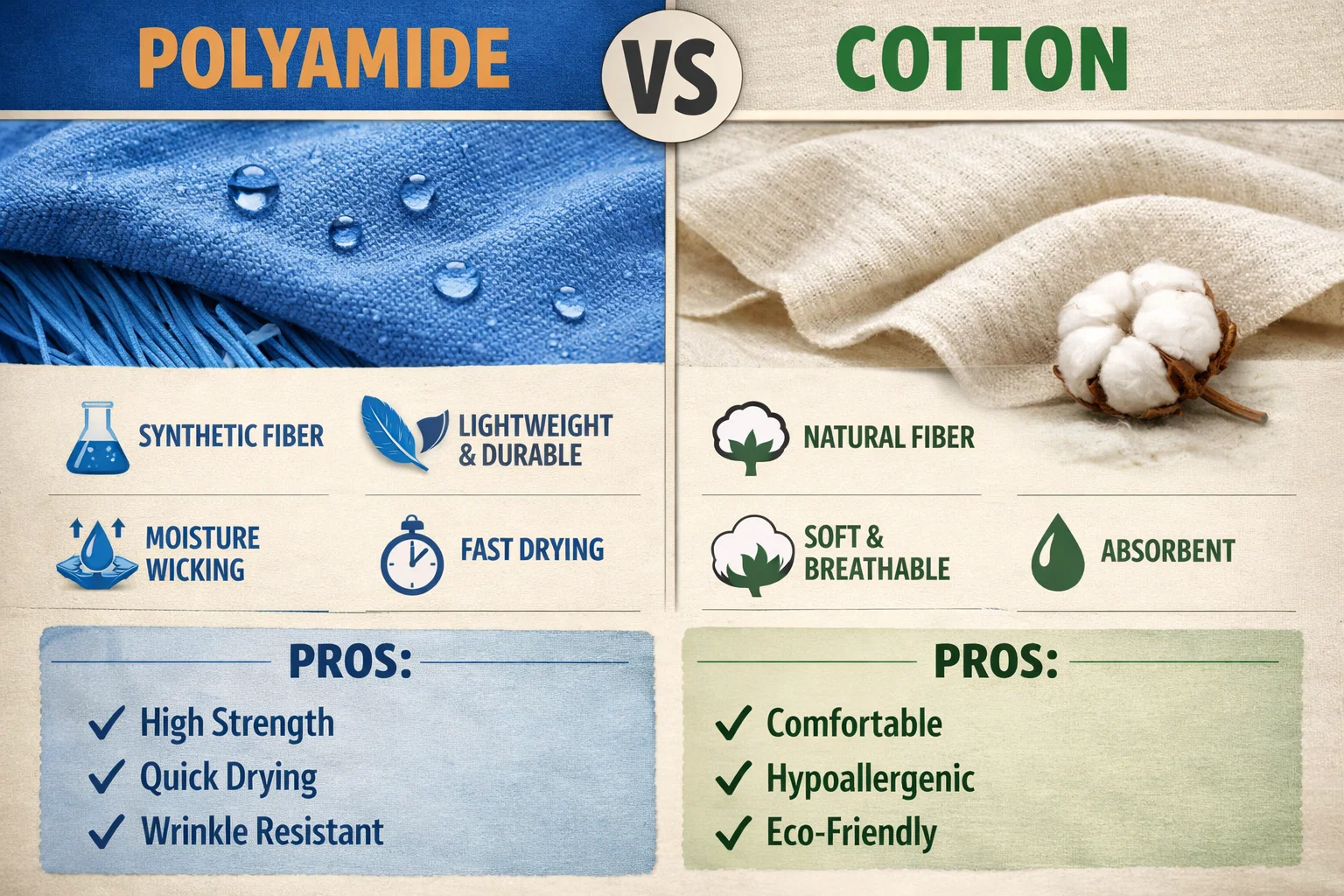
Polyamide dries fast, bends easily, and is strong. Cotton feels soft and lets air in, but it can stay wet and wrinkle. When you look at nylon vs cotton, you see both have good points for different uses.
Tip: If you play sports or go outside a lot, polyamide might work better. If you want comfort at home or in nice weather, cotton is a good choice.
Polyamide vs Cotton: Pros and Cons
You should think about the good and bad sides before picking a fabric. Here is a short list to help you choose:
Polyamide Pros:
Bends and moves with you
Feels light, not heavy
Pushes water away and dries fast
Keeps its color and shape after many washes
Polyamide Cons:
Can keep smells if not treated
Does not let air in as well as cotton
Made from man-made materials
Cotton Pros:
Feels soft and gentle on skin
Lets air in, keeps you cool
Stops smells better if washed often
Comes from plants
Cotton Cons:
Shrinks after washing, mostly in hot water
Gets wrinkled and creased easily
Tears faster than polyamide
When you look at polyamide vs cotton, you see polyamide is strong and dries fast. Cotton is comfy and lets air in. Polyamide also uses less water and makes less pollution than cotton, especially with new yarns. This makes polyamide a good pick if you care about saving resources.
This summary helps you see what is different and what is the same. Now you can pick the fabric that fits your needs for comfort, strength, and care.
Comfort & Breathability
Polyamide Comfort
When you wear polyamide, it feels smooth and light. Polyamide can stretch, so your clothes move with you. Many people like this, especially if they are active. Polyamide is not as soft as cotton, but it does not scratch your skin. You often see polyamide in sportswear because it keeps its shape. It does not sag or get baggy. Some people with sensitive skin might feel itchy, but most people do not. Polyamide dries fast, so you stay comfy if you sweat or get wet.
Cotton Comfort
Cotton feels soft and gentle on your skin. You feel cozy in cotton shirts and pants. Many people pick cotton for daily wear because it feels natural. Cotton does not bother most people’s skin. Cotton lets your skin breathe, so you stay cool. In tests, cotton woven fabric gets the highest comfort score. You can see this in the table below:
Fabric Type | Comfort Rating |
|---|---|
Cotton Woven Fabric | Best Comfort Properties |
Cotton/PES Woven Fabric | Poor Comfort Properties |
Cotton is good for people with allergies or sensitive skin. You can wear cotton all day and still feel good.
Breathability Comparison
Breathability is important when you choose clothes for every day. Cotton lets air in, but it holds water and dries slowly. Polyamide lets in some air, but it moves sweat away and dries fast. The table below shows how cotton and polyamide compare:
Factor | Cotton | Polyamide (nylon) |
|---|---|---|
Breathability | High, but holds moisture | Medium, moisture-wicking |
Drying time | Slow | Fast |
Durability | Medium, wears out faster | High, good for rough use |
If you want the best air flow, pick cotton for cool, dry days. Polyamide is better if you need your clothes to dry fast and not hold sweat. Both fabrics are comfortable, but your choice depends on what you need.
Durability & Longevity
Polyamide Durability
You want your clothes to last a long time. Polyamide is very strong and tough. This fabric does not tear or wear out easily. It is stronger than most natural fibers. In lab tests, polyamide beats cotton by a lot. Look at this table:
Fabric Type | Martindale Cycles | Other Tests (Cycles/Rubs) |
|---|---|---|
Cotton Broadcloth | 2500 | 1000 (Taber) |
Nylon | 4500 | 8000 (Wyzenbeek), 1500-2000 (Taber) |
You can see polyamide lasts through more cycles before it wears out. This means your polyamide clothes stay looking new for longer. Polyamide stays strong even after many washes. You will see less pilling and fewer holes as time goes on.
Cotton Durability
Cotton is soft and comfy, but not as tough as polyamide. Cotton fibers break down faster, especially with lots of washing. Hot water and strong soap can make cotton weak. Cotton can tear if you do rough things in it. Over time, you might see thin spots or frayed edges. But if you take care of cotton, it can still last a while.
Everyday Wear Longevity
When you compare polyamide and cotton, you see big differences. Polyamide does not get damaged easily from rubbing, washing, or stretching. Cotton wears out faster if you wash and dry it a lot. Clothes get old from rubbing, chemicals, and heat. Polyamide’s strong fibers help it last through these things. Cotton’s natural fibers are soft, but they break down faster when stressed.
If you want clothes that stay strong for years, polyamide is a good pick. Cotton feels nice, but you may need new ones sooner if you wear them every day.
Moisture Management
Polyamide Moisture Control
You want your clothes to keep you dry and comfy. Polyamide is great at handling sweat and water. This fabric does not soak up much water, so you do not feel heavy when you sweat. Polyamide only takes in about 4% water. That means it does not get wet easily. Even though it does not soak up much, polyamide can pull sweat away from your skin. The polar amide groups in the fibers help move sweat to the outside, so it can dry fast. You see polyamide a lot in sportswear because it helps you stay dry when you move.
Polyamide pulls sweat away from your skin.
It soaks up less water than cotton.
You stay dry and light, even if you sweat.
Cotton Moisture Absorption
Cotton acts different from polyamide. This fabric loves water and soaks it up fast. Cotton holds onto sweat and water. When you wear cotton underwear or shirts, they can feel wet after you exercise or on hot days. Cotton takes in about 8.5% water, which is more than polyamide. Because it soaks up so much, cotton can feel heavy and damp. Still, many people pick cotton because it is soft and feels nice.
Cotton soaks up sweat fast.
It can feel wet and heavy after you sweat.
Cotton underwear is comfy, but it might not keep you dry.
Odor & Drying Speed
Odor and drying time are important when you pick clothes for every day. Polyamide dries faster than cotton. You can see the difference in this table:
Fabric | Drying Method | Average Drying Time |
|---|---|---|
Polyamide | Air Drying | Recommended to air dry |
Cotton | Air Drying | Several hours to a day |
Cotton | Tumble Drying | About 15 to 30 minutes |
Polyamide dries fast, so you can wear your clothes again soon. Cotton takes longer to dry, especially if you hang it up. These fabrics also handle smells in different ways. Polyamide can hold onto smells, especially if you wear it for a long time. Some polyamide clothes get special treatments to help with this. Cotton is better at stopping smells, but you need to wash it a lot in hot, wet weather.
Fabric Type | Odor Retention Characteristics |
|---|---|
Polyamide | Can keep smells; some treated to help with this |
Cotton | Stops smells better but needs washing often in humid places |
Tip: If you want clothes that dry fast and pull sweat away, polyamide is a smart pick. For softness and less smell, cotton underwear and shirts are good, but you may need to change them more often.
Care & Maintenance
Caring for Polyamide
You want your polyamide clothes to last long and look nice. Wash polyamide in cool or warm water, between 30-40°C (86-104°F). Use a gentle cycle to protect the fibers. This keeps your clothes strong and looking good. If you see a stain, treat it before you wash. For delicate polyamide, handwashing is best. You can use normal laundry soap, but do not use strong chemicals. Polyamide dries fast, so you can hang it up to dry and save power. Fabric softener makes polyamide feel softer and helps stop static.
Wash in cool or warm water (30-40°C/86-104°F)
Use gentle cycle
Treat stains before washing
Handwash delicate items
Air dry for best results
Tip: Hanging polyamide to dry helps it keep its shape and stops shrinking.
Caring for Cotton
Cotton is easy to clean, but you need to follow some steps to keep it soft. Wash cotton in a machine with cold or warm water. This keeps the fibers strong and stops shrinking. You can use normal soap, and fabric softener makes cotton smoother. The softener puts a thin layer on the fibers, so cotton feels better and does not stick to you. You can dry cotton in a dryer, but hanging it up helps stop wrinkles.
Machine wash in cold or warm water
Use normal soap
Add fabric softener for softness and less static
Air dry or tumble dry
Note: Washing cotton in hot water can make it shrink and lose color.
Ease of Care Comparison
Polyamide and cotton are both easy to care for. Polyamide does not wrinkle much and dries fast, so you do not wait long for dry clothes. Cotton needs more care to stop shrinking and wrinkling, but it feels soft and natural. Both fabrics work well with fabric softener, which makes them comfy and cuts down on static. You can pick either one for everyday wear, knowing both are simple to clean and take care of.
Feature | Polyamide | Cotton |
|---|---|---|
Washing Temp | Cool/Warm (30-40°C) | Cold/Warm |
Drying | Air dry recommended | Air or tumble dry |
Wrinkle Resistance | High | Medium |
Shrinkage | Low | Medium to high |
Softener Effects | Softer, less static | Softer, less static |
If you want clothes that dry fast and do not wrinkle, polyamide is a smart pick. If you like a soft, natural feel, cotton is a good choice with regular care.
Environmental Impact

Polyamide Sustainability
You may ask how polyamide affects the earth. Polyamide is made from oil and needs a lot of energy. This makes a lot of carbon go into the air. Making 1 kg of polyamide cloth puts out 35.37 kg of CO2. This is much more than other fabrics. The table below shows the numbers:
Method | CO2 Emissions (kg CO2e/1000 kg PA66) |
|---|---|
EPD | 285 |
PCF | 160 |
Almost half of the carbon comes from using energy. Polyamide gives off more carbon than polyester. It gives off almost four times more than cotton. Making polyamide also uses lots of water and causes pollution. Polyamide is strong and lasts long, but it hurts the environment more.
Polyamide’s carbon footprint is 1.38 times more than polyester.
It is 3.91 times more than cotton.
Cotton Sustainability
Cotton can help the earth if grown the right way. Organic cotton farmers do not use fake fertilizers or bug sprays. They plant different crops to keep soil healthy. Regenerative farming helps the soil and brings back more plants and animals. These ways help trap carbon in the ground and lower greenhouse gases.
Cotton farming can make soil better and help nature, especially if it is organic or regenerative. Farmers do not use chemicals that hurt the soil. Polyamide is made from oil and can pollute the earth.
Organic cotton uses natural ways to grow.
Regenerative farming helps soil and animals.
Eco-Friendly Comparison
You should think about the earth when you pick clothes. Polyamide lasts longer and uses less water when washed. But making it puts out more carbon and pollution. Cotton, if organic or regenerative, helps the soil and animals. It uses more water to grow, but makes less carbon than polyamide. If you care about the earth, organic cotton is better for nature. Polyamide is tough, but it costs more for the planet.
Style & Appearance
Polyamide Style
Polyamide is used in many new clothing styles. Designers pick it for jackets, leggings, and sports clothes. Polyamide makes clothes look smooth and helps them keep their shape. It does not wrinkle much, so you look neat all day. Many brands use polyamide for sports and outdoor gear. Polyamide holds bright colors and bold prints well. Even after lots of washes, polyamide looks good and does not fade or stretch. This makes it a smart choice if you want your clothes to look new every day.
Cotton Style
Cotton gives you a classic style that always looks good. You see cotton in t-shirts, jeans, dresses, and shirts. The fabric feels soft and natural, so it is great for relaxed outfits. Cotton gets softer and more comfy after each wash. Cotton comes in many colors and patterns, but it usually looks matte. Cotton works well for casual and business clothes. You can dress up or down with cotton, and it always feels right for daily wear. Cotton is good for layering and mixing with other fabrics for different styles.
Tip: If you want a style that stays nice and gets better with time, cotton is a great pick for everyday wear.
Everyday Wear Options
You have lots of choices for everyday clothes, whether you like polyamide or cotton. Polyamide is best for sports, travel, and busy days when you need strong clothes. Polyamide dries fast and keeps its shape. Cotton is good if you want comfort and a natural feel. You can wear cotton to school, work, or just relaxing at home. Both fabrics work well, but each is best for different things.
Here is a quick look at how polyamide and cotton do after many washes:
Fabric Type | Comfort Level | |
|---|---|---|
Cotton | Gets softer and more comfy with each wash | Soft, natural, and comfortable |
Polyamide | Stays looking new and does not wear out easily | Comfy to wear, dries faster than cotton |
Cotton: Gets softer and more comfortable after each wash.
Polyamide: Stays looking new and does not wear out easily.
You can pick polyamide for clothes that last and look good. You can choose cotton for comfort and a style that gets better over time. What you wear every day depends on what matters most to you—style, comfort, or how well your clothes work.
You want to pick the best fabric for daily use. Cotton is a natural fiber that feels soft and helps your skin. Cotton lets air in and does not hold smells, but it dries slowly and soaks up a lot of water. Polyamide is strong and handles sweat well. Polyamide dries fast and is tough, but it might bother people with sensitive skin.
Here is how weather can change your choice:
Feature | Cotton | Polyamide |
|---|---|---|
Comfort in Humidity | Might feel sticky or hot | Helps you stay dry and comfy |
Some people get these things wrong:
Cotton does not smell bad easily.
Cotton can feel sticky when it is humid.
Polyamide dries quickly but can make skin itch.
Pick what matches your needs. You can feel sure about your choice.
FAQ
What makes nylon a good choice for tropical climates?
You find nylon works well in tropical areas. This fabric dries fast and feels light. Nylon resists water and keeps you comfortable. In tropical conditions, you want clothes that do not stay wet. Nylon helps you stay dry and cool when the weather is hot and humid.
Does cotton or nylon dry faster in tropical conditions?
Nylon dries much faster than cotton. In tropical conditions, you need quick drying clothes. Nylon does not hold much water. Cotton soaks up sweat and stays wet longer. You can wear nylon for outdoor trips or sports in tropical places because it dries quickly.
Is nylon comfortable for everyday wear in tropical weather?
You feel comfortable in nylon during tropical days. Nylon stretches and moves with you. It does not get heavy when wet. In tropical conditions, you want clothes that keep you dry. Nylon helps you avoid sticky skin and lets you enjoy your day.
How does nylon handle sweat and odor in tropical conditions?
Nylon pulls sweat away from your skin. In tropical weather, you sweat more. Nylon dries fast and helps you stay fresh. Some nylon clothes have treatments to stop odor. You can wear nylon for long hours in tropical places without feeling uncomfortable.
Can I use nylon for travel in tropical regions?
You can pack nylon clothes for trips to tropical places. Nylon is light and easy to wash. It dries fast, so you do not wait long after washing. In tropical conditions, nylon helps you stay dry and ready for your next adventure.
Tip: Nylon works best for travel, sports, and daily wear in tropical climates. You save time on drying and feel comfortable all day.
Fabric | Drying Speed | Best Use in Tropical Conditions |
|---|---|---|
Nylon | Very Fast | Sports, travel, daily wear |
Cotton | Slow | Casual, cool weather |