
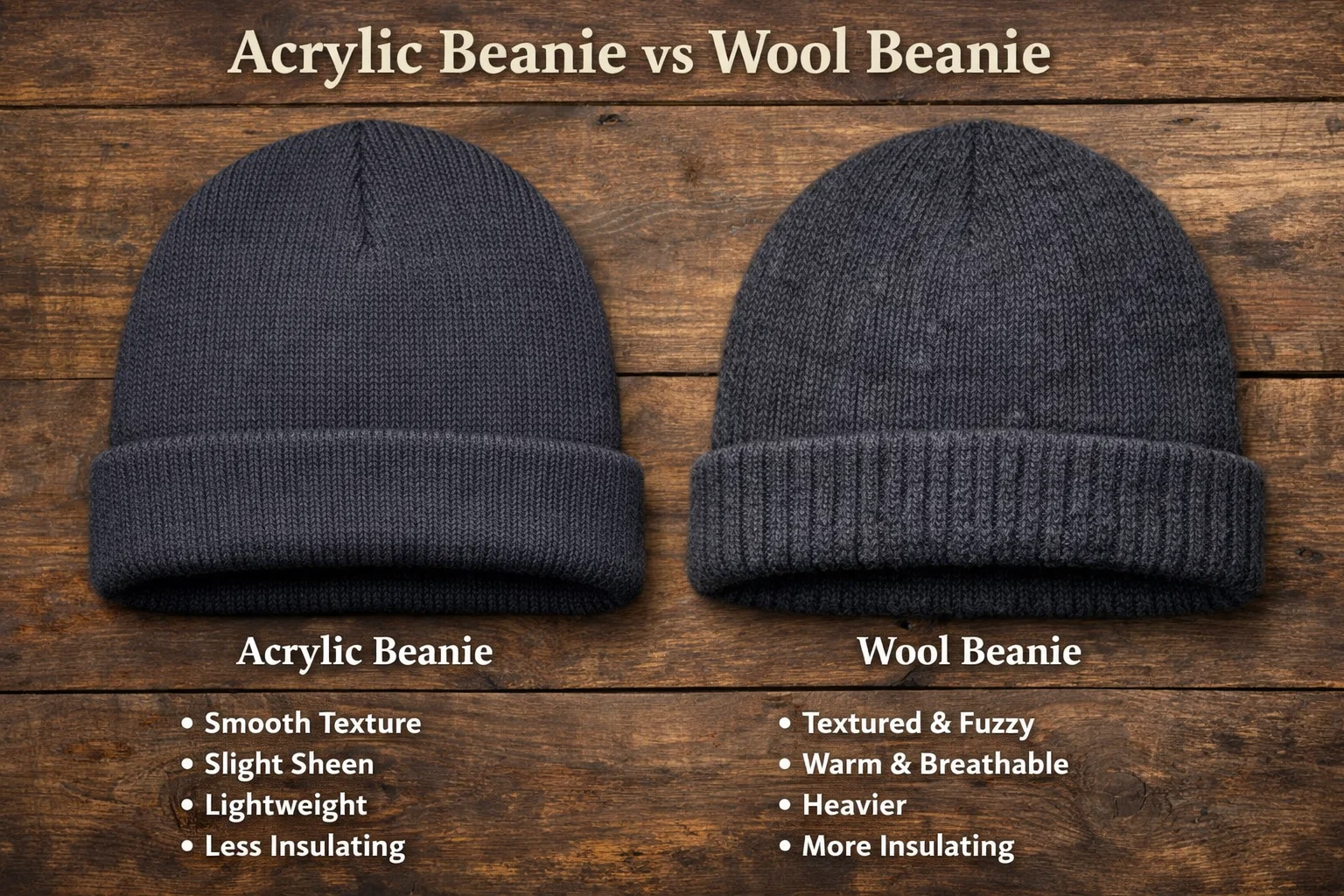
If you want to stay cozy this winter, you probably wonder which beanie works best for keeping warm. Wool beanies usually win because wool traps heat better than most materials. You might find an acrylic beanie vs wool debate, but wool’s natural insulation stands out. Your hat can make all the difference when you pick your winter essential. Let’s dive in and see what keeps you comfortable when the temperature drops.
Key Takeaways
Wool beanies keep you warmer because they insulate well. They are best for very cold weather.
Acrylic beanies cost less and are simple to wash. They work well for daily use and casual outfits.
Wool helps move sweat away and keeps your head dry. Acrylic can hold moisture and may feel wet.
If your skin is sensitive, pick acrylic or superfine merino wool beanies. These are less likely to bother your skin.
When picking a beanie, think about what you need. Consider warmth, comfort, price, and how to care for it. This helps you choose the right one for winter.
What Affects Beanie Warmth

Insulation Properties
When you pick a beanie, you want it to keep your head warm. The secret lies in the insulation. Insulation means how well the material traps air and keeps heat close to your body. Some fibers do this better than others. Take a look at this table to see how different materials stack up:
Material | Key Property | Warmth Influence |
|---|---|---|
Acrylic | Fluffy, curly fibers | Better warmth than wool fabrics |
Wool | Good moisture absorption | Traps air effectively, providing insulation |
Cashmere | Up to 8 times more insulating | Superior insulation due to adaptation to cold climates |
Wool stands out for its ability to trap air and hold heat. In lab tests, wool samples reached thermal conductivity values as low as 0.0339 W/mK. This means wool has a higher R-value than acrylic. You get better insulation and more warmth from wool, especially when the weather turns cold.
Breathability and Moisture
You don’t want your head to feel sweaty or damp. That’s where breathability comes in. Breathability lets air move through the beanie, so you stay comfortable. Wool does a great job here. It wicks moisture away from your skin and can absorb over 30% of its weight before it feels wet. Acrylic, on the other hand, only absorbs about 1.5-2% of its weight. This means acrylic doesn’t manage moisture as well.
If you value breathability and odor resistance, wool is a smart pick. Wool keeps your head dry and fresh, even if you wear your beanie all day. Acrylic can feel stuffy and may not handle sweat as well. So, when you want both warmth and comfort, pay attention to insulation and breathability.
Acrylic Beanies Overview

Material Features
Acrylic beanies have many good qualities for daily use. Acrylic is a man-made fiber. It feels soft and light. Look at this table to see how acrylic compares:
Feature | Description |
|---|---|
Warmth | Similar to wool, gives good insulation. |
Softness | Very soft, so it feels nice to wear. |
Lightweight | Not heavy, easy to carry and wear. |
Colorfastness | Keeps its color after lots of washing. |
Low Breathability | Air does not move through easily, so you may get hot or sweaty. |
Susceptibility to Pilling | Gets tiny balls of fiber on the surface after some time. |
Hypoallergenic | Good for sensitive skin, less likely to itch. |
Versatility | Used in clothes, accessories, and furniture. |
Low Moisture Absorbency | Dries fast, good for outdoor use. |
Mildew Resistance | Does not get moldy, lasts longer in wet places. |
Warmth and Comfort
You may ask if acrylic beanies keep you warm. Acrylic fibers hold heat by making small air pockets. This helps keep your body heat close. You stay warm. Many people think acrylic beanies are as warm as some wool hats. They work well in cool weather. The fluffy fibers give extra warmth but do not make the beanie heavy.
Acrylic beanies are warmer than many natural fibers.
Their man-made design helps trap heat, so they are good for cold days.
They feel soft and comfy, so you can wear them all day.
Tip: If you like outdoor activities, you will enjoy how light and warm an acrylic beanie is.
Durability and Care
Acrylic beanies last a long time. A good acrylic beanie can last five to ten years if you use it often. They do not get moldy and dry fast, so wet weather is not a problem. Acrylic beanies keep their color even after many washes. But they can get small balls of fiber on the outside. To keep your beanie nice, wash it gently and do not rub it on rough things.
If you want a beanie that is easy to care for and lasts long, acrylic beanies are a great choice.
Wool Beanies Overview
Material Features
You might wonder what makes a merino wool beanie so special. Wool comes from sheep, and merino wool is one of the softest types you can find. When you pick up a merino wool beanie, you notice how light and smooth it feels. Here are some features you get with merino wool:
Insulation: Merino wool keeps you warm, even if it gets wet. You can count on it during snow or rain.
Breathability: Air moves through merino wool, so your head stays dry and comfortable.
Odor resistance: Merino wool fights off smells, which helps if you wear your beanie every day.
Sustainability: Merino wool is natural and breaks down over time, but raising sheep can affect the environment.
Cost: Merino wool beanies usually cost more than acrylic ones.
Care: You need to wash merino wool gently to keep it in good shape.
You get a lot of benefits from merino wool. It works well for outdoor adventures or just walking to school.
Warmth and Comfort
A merino wool beanie gives you warmth that feels cozy but not heavy. The fibers trap heat close to your head. You stay warm, but you do not get sweaty because merino wool lets moisture escape. If you run or play outside, you will notice your head does not feel sticky. Merino wool feels soft against your skin. You do not get that itchy feeling that comes with some other types of wool. Many people with sensitive skin choose a merino wool beanie for this reason.
Tip: If you want a beanie that keeps you warm and dry, try a merino wool beanie. You will feel the difference right away.
Durability and Care
You want your beanie to last. Merino wool is strong and can outlast many synthetic hats. A merino wool beanie can handle about 150 wears before it shows signs of wear. That means you can use it for a long time if you take care of it. The fine fibers make it a bit delicate, so you should wash your merino wool beanie by hand or on a gentle cycle. Do not use hot water or a dryer. Lay it flat to dry. This keeps your merino wool beanie looking new and feeling soft.
Wool beanies give you warmth, comfort, and style. If you want a hat that works in many situations, a merino wool beanie is a smart choice.
Acrylic Beanie vs Wool: Which Is Warmer
When you stand in front of your closet on a cold winter morning, you might wonder which is warmer: an acrylic beanie or a wool beanie. This question pops up every winter, especially if you want maximum warmth for your head. Let’s break down the science and real-life experience behind these two popular hat choices.
Insulation Comparison
Insulation is the secret to staying warm. It’s all about how well your hat traps heat and keeps cold air out. In the acrylic beanie vs wool debate, both materials use air pockets to hold warmth, but they do it in different ways.
Wool beanies give you premium warmth because of their natural fibers. The structure of wool traps tiny air pockets, which act like a shield against the cold. Even if your wool hat gets wet, it still keeps you warm. That’s why you see so many people wearing wool hats on snowy winter days. Merino wool, in particular, stands out for maximum warmth. It keeps your head cozy, even during outdoor adventures like skiing or hiking.
Acrylic beanies also use air spaces to trap heat. The fibers are fluffy and soft, so you feel warm when you put on the hat. Acrylic beanies work well for most winter days, especially if you want something lightweight. However, when you compare acrylic beanie vs wool in extreme cold, wool wins. Acrylic hats can lose insulation power if they get damp, and they don’t hold heat as well as wool in freezing weather.
Here’s a quick look at how these hats stack up for insulation:
Hat Type | Insulation Power | Stays Warm When Wet | Best For |
|---|---|---|---|
Wool Beanie | Excellent | Yes | Maximum warmth, winter sports, wet weather |
Acrylic Beanie | Good | No | Mild winter, dry cold, everyday use |
If you want maximum warmth and need a hat that works in any winter condition, wool is the better choice. Acrylic beanies are good, but they can’t match the insulation of wool hats when the temperature drops.
Breathability and Moisture Management
You might think maximum warmth is all you need, but breathability and moisture control matter too. If your hat traps sweat, your head feels damp and cold. That’s where the acrylic beanie vs wool question gets interesting.
Wool hats shine in breathability. The fibers let air move through, so your head stays dry. Wool wicks away sweat and can absorb a lot of moisture without feeling wet. This means you get maximum warmth without overheating. If you’re active outdoors in winter, a wool beanie keeps you comfortable and dry. Even after hours of play or work, your hat won’t feel soggy.
Acrylic beanies feel warm at first, but they don’t breathe as well. If you sweat, the hat can trap moisture. This makes your head feel clammy, and you might lose warmth. For short trips outside or mild winter days, acrylic is fine. But if you want maximum warmth for long winter adventures, wool is the winner.
Let’s sum up the acrylic vs wool beanies for breathability and moisture:
Wool beanies keep your head dry and warm, even if you sweat or get caught in the snow.
Wool hats let moisture escape, so you don’t overheat during winter activities.
Acrylic beanies can trap sweat, making you feel less comfortable and reducing warmth.
For maximum warmth and comfort, especially in winter sports or long walks, wool is the better pick.
Tip: If you want a hat that gives you maximum warmth and keeps you dry, choose wool for your next winter beanie vs winter hat decision.
When you compare acrylic beanie vs wool, think about where and how you’ll wear your hat. For maximum warmth, insulation, and comfort in winter, wool beanies come out on top. Acrylic beanies are great for everyday use, but they can’t beat wool when you need the best protection from the cold.
Acrylic vs Wool Beanies: Comfort and Feel
Softness and Itchiness
When you pick a beanie, you want it to feel good on your head. You might wonder which one feels softer—acrylic or wool. Many people say both can feel soft, but there are some differences. Take a look at this table to see how they compare:
Material | Softness Rating | Additional Notes |
|---|---|---|
Wool | Soft (especially merino wool) | Can be itchy for sensitive skin |
Acrylic | Smooth and non-irritating | Mimics wool’s softness in high-quality variants |
You can see that merino wool feels soft, but some people notice itchiness, especially if they have sensitive skin. Acrylic beanies often feel smooth and gentle. High-quality acrylic can even copy the softness of wool. If you want a hat that feels nice right away, you might like acrylic.
Many users talk about itchiness when they wear wool beanies. Here’s what people often report:
Wool beanies can be itchy for sensitive skin.
Acrylic beanies are generally smoother and non-irritating.
Advanced processing technologies have made acrylics less itchy, softer, and smoother than wool.
If you hate the feeling of an itchy hat, you may want to try acrylic first. Wool can feel scratchy, but merino wool is much softer than regular wool.
Skin Sensitivity
Your skin matters when you choose a beanie. Some people have skin that reacts to certain fibers. If you have sensitive skin, you might notice redness or itchiness with wool, even if it feels soft at first. Acrylic beanies are usually a safe bet for most people. They rarely cause irritation and feel gentle on your head.
You should think about comfort and texture before you buy. If you want a beanie that feels soft and smooth, acrylic is a great choice. If you love natural fibers and want extra warmth, try merino wool. Always check the label and try the hat on if you can. Your head will thank you for picking the right beanie.
Durability, Cost, and Care
Longevity
When you pick a beanie, you want it to last. Wool beanies can stay in great shape for years if you treat them right. The natural fibers in wool resist wear and tear, so you can use your wool hat for many winters. Acrylic beanies also hold up well. They do not shrink or lose their shape easily. You might notice some pilling on acrylic hats after a while, but this does not affect warmth. If you want a beanie that keeps looking good, both wool and acrylic can work, but wool often wins for long-term durability.
Price Differences
You probably notice a big difference in price when you shop for beanies. Wool beanies cost more because the material is natural and takes more work to produce. Acrylic beanies are much cheaper. Here’s a quick look at what you can expect to pay:
Material | Price Range |
|---|---|
Acrylic | $8 – $15 |
Wool | $25 – $60 or more |
Wool beanies usually cost two to three times more than acrylic ones. If you want to save money, acrylic is the way to go. If you want a hat that lasts and feels extra warm, you might decide the higher price for wool is worth it.
Maintenance Tips
Taking care of your beanie helps it last longer. Always check the care label first. Wool needs gentle care. You should hand wash wool beanies in cold water with a little wool detergent. Swish the hat gently, rinse well, and press out water with a towel. Lay it flat to dry, away from heat. Acrylic beanies are easier. You can hand wash them or use a gentle machine cycle in a mesh bag. Dry them flat on a towel.
Tip: Never use hot water or a dryer for either type. This keeps your beanie soft and the right size.
If you follow these steps, your beanie will stay cozy and look great all winter long.
Choosing the Right Beanie
For Cold Weather
You want to stay warm when the temperature drops. If you face extreme cold weather, wool beanies are your best friend. Wool traps heat and keeps you cozy, even if it gets wet. Outdoor gear specialists say you should look for thick materials and a snug fit. Fleece-lined wool beanies add extra insulation. Some designs have ear flaps or visors for more protection. Breathable fabrics help you avoid overheating during winter activities. When you prioritize warmth and comfort, wool stands out among cold-weather accessories. If you plan to spend time outside in extreme cold weather, pick a wool beanie with good insulation and a comfortable fit.
Choose wool for maximum warmth.
Look for fleece lining for extra insulation.
Pick styles with ear flaps for added coverage.
For Sensitive Skin
If your skin gets itchy or red, you need a gentle beanie. Superfine merino wool feels soft and does not poke your skin. Dermatologists say it works well for people with eczema. Acrylic beanies are also a safe choice because they are hypoallergenic. You can wear them all day without worrying about irritation. A clinical trial showed that superfine merino wool helps people with eczema feel better. Ultra-fine merino is least likely to cause itching. When choosing your beanie champion for sensitive skin, try superfine merino wool or acrylic.
Acrylic beanies are hypoallergenic.
Superfine merino wool is soft and gentle.
Both options work for sensitive skin.
For Budget Shoppers
You want a warm hat without spending too much. Acrylic beanies are budget-friendly and give you good warmth. They cost between $15 and $40, while wool beanies can cost $60 or more. Acrylic beanies offer comfort and warmth at a lower price. If you want several colors or styles, acrylic is a smart choice. Here’s a quick look at prices:
Material | Price Range | Affordability |
|---|---|---|
Acrylic | $15-$40 | Budget-friendly |
Wool | $60-$200+ | More expensive |
Acrylic beanies help you save money and still stay warm in cold weather.
For Easy Care
You want a beanie that is simple to clean. Acrylic beanies are easy to wash in a machine. Use cold or warm water and a gentle cycle. You can tumble dry on low or lay flat to dry. Wool beanies need more care. Hand wash them in cold water with wool detergent and lay flat to dry. Laundry experts say both types should be dried flat and reshaped while damp. If you want easy care, acrylic is the way to go.
Care Method | Material Type | Instructions |
|---|---|---|
Machine wash | Acrylic | Cold/warm water, gentle cycle, tumble dry low |
Hand wash | Wool | Cold water, wool detergent, lay flat to dry |
Tip: If you want a beanie that is easy to clean and maintain, choose acrylic.
When you pick a beanie, think about your needs. For extreme cold weather, wool is best. For sensitive skin, try superfine merino wool or acrylic. If you want to save money, acrylic is a smart choice. For easy care, acrylic wins again. Use these tips to find the right beanie for you.
If you want the warmest hat for winter, pick wool. Wool beanies trap heat, wick moisture, and keep you cozy even when wet. Acrylic beanies feel soft, cost less, and are easy to wash, but they do not match wool’s warmth. Here’s a quick look at the key differences:
Feature | Wool Beanie | Acrylic Beanie |
|---|---|---|
Warmth | Superior | Good |
Comfort | Can itch | Smooth, no itch |
Durability | Long-lasting | May pill |
Cost | Higher | Budget-friendly |
Care | Needs gentle wash | Machine washable |
Think about how you use your hat. If you spend lots of time outside in winter, choose wool. If you want a hat for daily wear or easy care, acrylic works well. Your personal style, budget, and comfort matter most. Pick the beanie that fits your winter needs best!
FAQ
Do wool beanies always keep you warmer than acrylic beanies?
Most of the time, yes. Wool traps heat better and keeps you warm, even if it gets wet. Acrylic beanies work well for mild cold, but wool wins in freezing weather.
Can you wash wool and acrylic beanies the same way?
No, you can’t. Wool needs gentle hand washing and flat drying. Acrylic beanies handle machine washing better. Always check the care label before you wash your hat.
Are acrylic beanies good for people with allergies?
Yes! Acrylic is hypoallergenic. If you have sensitive skin or wool allergies, you can wear acrylic beanies without worry. They feel soft and rarely cause irritation.
Which beanie style looks best for everyday wear?
You have lots of choices! Here’s a quick look:
Style | Best For |
|---|---|
Slouchy | Casual outfits |
Cuffed | Classic look |
Pom-pom | Fun and playful |
Fisherman | Trendy streetwear |
Tip: Try different styles to see which one matches your personality and wardrobe.