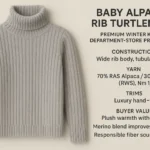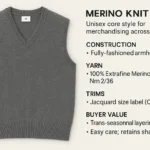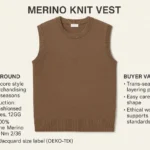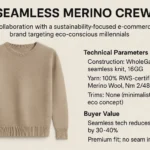

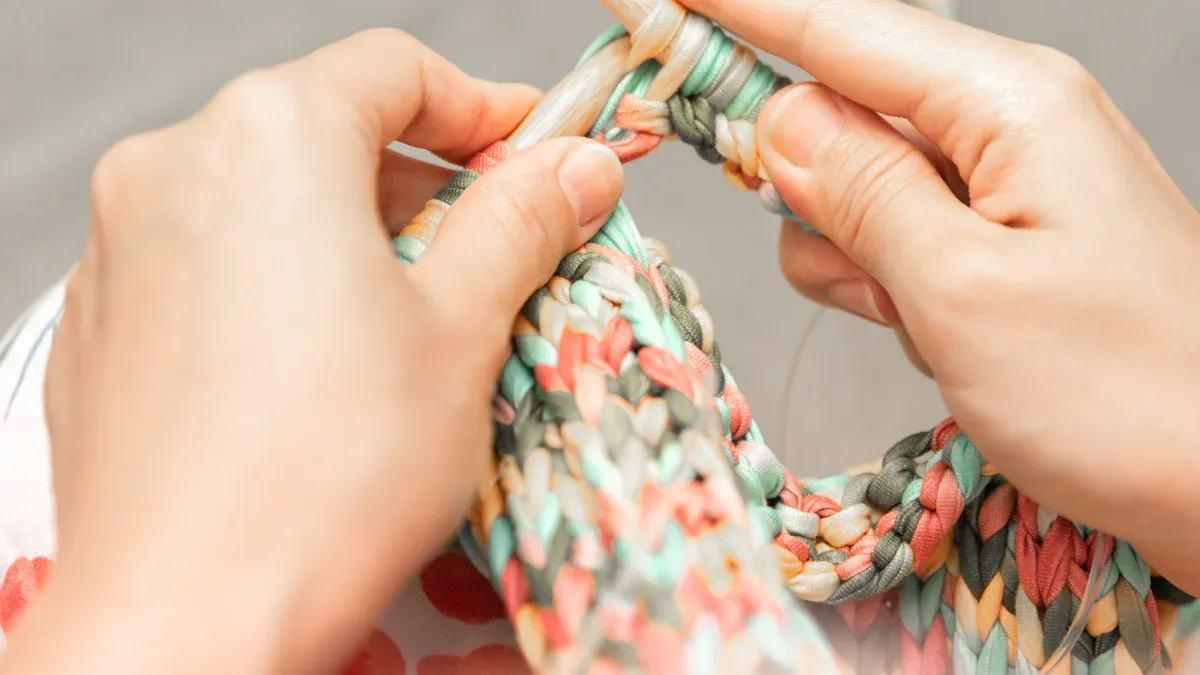
Ready to start knitwear order or maybe even try sweater knitting for the first time? You might feel excited and a bit nervous, but you can do this. Many beginners run into a few challenges, like:
Feeling confused by yarn weights
Dropping stitches
Struggling with tension
Choosing the right yarn and tools makes things easier. Mistakes will happen, but they help you learn. If you stay patient, you’ll enjoy the process and start knitting with confidence.
Key Takeaways
Think about what you need before you start. Choose what you want to make, like a sweater or scarf. This helps you pick the right pattern and materials.
Pick the best yarn and tools. Look at yarn types and weights. Make sure they feel good and fit your project.
Check out suppliers carefully. Read reviews and compare choices. Find a supplier that fits your budget and gives good quality.
Talk clearly with your supplier. Give them all the details they need. Ask about payment and when you will get your order. This helps you avoid problems.
Learn basic knitting skills first. Practice casting on, knitting, and purling. This will help you feel ready before you make your first sweater.
Start Knitwear Order
Set Needs
Before you start knitwear order, think about what you want to make. Do you want a cozy sweater, a light cardigan, or maybe a simple scarf? Knowing your style helps you pick the right pattern and supplies. When you set your needs, pay attention to a few important things:
Gauge (how tight or loose your stitches are)
Ply (the number of strands twisted together in your yarn)
Types of yarn (wool, cotton, blends)
Finishing processes (like washing or blocking)
If you’re new, start knitwear order with basic supplies. You only need yarn, needles, and scissors. Don’t worry if you make mistakes. Patience and practice help you get better every time.
Pick Materials
Choosing the right material makes a big difference. Organic cotton feels soft and gentle, so it works well for sensitive skin. Wool keeps you warm and wicks away moisture, but it can feel itchy unless you pick something like Merino wool. Cotton is light and lets your skin breathe, which is great for spring and summer. Wool gives you warmth for winter.
Here’s a quick look at some popular yarns:
Material | Type | Advantages |
|---|---|---|
Elite yarn | Synthetic fiber | Drape, durable, soft—great for summer clothes and accessories |
Viscose yarn | Semi-synthetic | Shiny, drape, soft—perfect for loungewear and summer garments |
Nylon yarn | Synthetic fiber | Smooth, durable, soft—good for accessories |
Polyester yarn | Synthetic fiber | Wrinkle resistant, durable—ideal for summer wear |
Plan Budget
You want to start knitwear order without breaking the bank. A worsted weight sweater can cost about $113.94. If your project needs 1200 yards of yarn, the price might go up to $324. Here are some tips to save money:
Borrow tools from a library
Buy yarn in bulk for discounts
Try budget-friendly yarns that still feel nice
Use free patterns from trusted websites
Tip: Start knitwear order with a small project. You’ll learn faster and spend less.
Find Supplier
Check Reviews
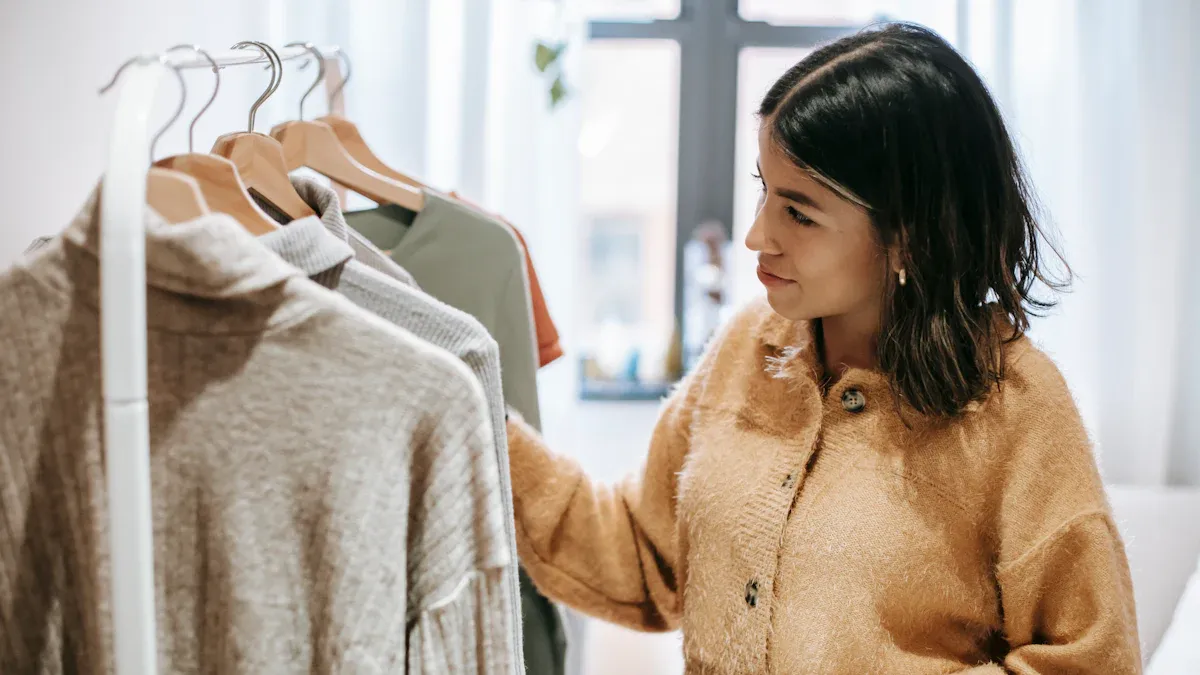
You want to feel sure before picking a knitwear supplier. Start by reading what other customers say. Look for comments about product quality and delivery speed. Also check if people mention good customer service. Reviews help you know if a supplier keeps promises. They also show if there are problems. Lots of good reviews mean the supplier is likely reliable. Bad reviews about late shipping or poor quality are a warning.
Check if the supplier has a strong online presence. A nice website and active social media show they care. You might see photos of finished products or customer stories. These things help you imagine what you will get.
Compare Options
Take your time before choosing a supplier. Compare different suppliers to see what each offers. Each one has something special. Here is a table to help you see what matters:
Factor | What to Look For |
|---|---|
Neat stitching and strong fabric | |
Materials & Sustainability | Eco-friendly yarns or special blends |
Production Capacity | Can handle big or small orders |
Customization & Design Support | Help with patterns or your ideas |
Lead Times & Reliability | Fast and on-time delivery |
Pricing & Costs | Fair prices for your budget |
Location & Logistics | Easy shipping and clear communication |
Tip: Ask for samples before making a big order. You can check the fabric, stitching, and fit yourself.
Look at how long the supplier has been in business. A company with many years and lots of clients is usually skilled. If you want extra confidence, ask for references. You can even visit their factory if you can.
Azknit as a reliable manufacturer
Azknit is a trusted knitwear manufacturer. They have many years of experience and work with many clients. You can see their focus on quality in every item. Azknit uses high-quality materials and offers classic and trendy designs. They support custom orders and help with design details.
Azknit cares about ethical practices. They follow industry rules and keep their process open. You can expect clear communication and reliable delivery times. Their team gives strong support. If you want a supplier who gives quality and peace of mind, Azknit is a good choice.
Request Samples
Send techpack or design pictures
When you want to see a sample of your knitwear, you need to share your ideas clearly. Most factories ask for a techpack or design pictures. A techpack is like a blueprint for your sweater or cardigan. It shows every detail the factory needs to make your sample just right.
Here’s what you should include in your techpack or design pictures:
Description | |
|---|---|
Fashion Flat Sketches | Show your design from different angles. |
Bill of Materials (BOM) | List all the yarns, trims, and labels you want to use. |
Garment Measurement Specs | Give exact measurements for each part of your knitwear. |
Garment Cost Sheet | Add up the costs for materials and labor. |
If you don’t have a techpack, clear photos and notes about your design can help. The more details you give, the better your sample will match your vision.
Review Quality
After you send your techpack, the factory will make a first prototype. You get to see and touch the sample. This is your chance to check if the yarn feels right and the stitches look neat. Look for strong seams and even knitting. If something feels off, write down your thoughts.
Here’s a simple process you can follow:
Ask the factory to make a first sample.
Compare the sample to your techpack or design notes.
Check if the sample matches your style and needs.
Share your feedback with the factory.
If needed, ask for another sample with your changes.
Tip: Always check the sample in good light. Small mistakes are easier to spot.
Assess Fit
Fit matters a lot in knitwear. Try on the sample or ask someone to wear it. Move around, stretch, and sit down. Notice if the sweater feels too tight or loose. Check the sleeves, shoulders, and length. Write down anything that feels wrong.
You can use this checklist:
Look at the overall fit and shape.
Check for tight spots or loose areas.
Move your arms and see if the sweater pulls or bunches.
Write down all your comments and ideas for changes.
Update your techpack with these notes.
When you take time to review and adjust, you get a knitwear order that fits just right and feels great to wear.
Share Details
Give Specs
Now that you have your sample, you need to share all the important details with your supplier. Clear specs help you get exactly what you want. If you skip something, you might end up with surprises you do not like. Here’s what you should always include:
Your design ideas or sketches
The type of yarn and color you want
The size and measurements for each piece
Any special patterns or textures
The number of pieces you need
Labels, tags, or packaging requests
Your budget and target price
You should also talk about how you want to work together. Many suppliers offer design help, custom pattern development, and even sample production before making the full order. Ask about their quality control process. You want every sweater to look and feel just right. If you care about the planet, check if they use eco-friendly yarns and sustainable practices.
Before you place your order, ask your supplier about these important points:
Extra costs for custom designs or shipping
Payment terms and options
Shipping choices and rates
Support after the sale
Their experience and references
Tip: The more details you share, the fewer problems you will face later.
Confirm Timeline
You want to know when your knitwear will arrive. Timelines help you plan for launches, gifts, or events. Most suppliers follow a simple schedule. Here’s what you can expect:
Stage | Estimated Time |
|---|---|
Production | |
Shipping – Economy | 7–14 days |
Shipping – Express | 3–5 days |
Total Timeline | 2–4 weeks |
Always confirm the timeline before you pay. Ask if they can meet your deadline. If you need your order fast, choose express shipping. Some suppliers can rush orders, but it may cost more. Stay in touch with your supplier. Updates help you track your order and avoid surprises.
Remember: Good planning and clear details make your knitwear order smooth and stress-free.
Place Order
Payment Terms
When you are ready to place your knitwear order, you will need to agree on payment terms with your supplier. Most knitwear manufacturers offer several options. Here are some of the most common payment terms you might see:
Letter of Credit (L/C)
T/T (Telegraphic Transfer), which can include Advance T/T or Balance T/T
Open Account
Documentary Collections (D/P and D/A)
Cash in Advance (CIA)
Consignment
Net Terms, like Net 30 or Net 60
CAD (Cash Against Documents)
Revocable or Irrevocable L/C
Confirmed or Unconfirmed L/C
You should ask your supplier which payment methods they accept. Some suppliers prefer a deposit before production starts, then the rest when your order is ready to ship. Always read the payment agreement carefully. If you have questions, ask before you pay.
Bulk order shipping
Shipping your knitwear in bulk can feel confusing, but you have choices. The right shipping method depends on how fast you need your order and how much you want to spend. Here’s a quick look at the most popular options:
Shipping Method | Delivery Time | Cost Level |
|---|---|---|
Express Shipping | 3-5 days | High |
Sea Freight | 20-30 days | Low |
Weight Optimization | Varies | Ton |
Express shipping gets your knitwear to you fast, but it costs more. Sea freight takes longer, but you save money, especially for large orders. Some suppliers offer weight optimization to help you get the best price for heavy shipments. You can ask your supplier to help you pick the best option for your needs.
Tip: Always check if your supplier provides tracking numbers. This helps you follow your order every step of the way.
Delivery Info
To make sure your knitwear arrives safely, you need to give your supplier the right delivery details. Here’s what you should remember:
In-stock items usually ship within 2-3 business days.
Handmade or custom items may take 3-15 business days, depending on how busy the factory is.
Orders in stock can be dispatched within 15-20 working days.
You will get tracking information once your order ships.
Standard shipping is often free, but express options are available if you need your order sooner.
For UK orders, delivery uses Royal Mail 2nd Class Tracked and Signed For, costing £4.95. Orders over £150.00 ship free in the UK.
International shipping costs £18.95, with delivery times from 5-12 working days, depending on your location.
Always provide any special delivery instructions if you have them.
If you double-check your address and instructions, you help your order arrive on time and without problems. 😊
Track & Receive
Monitor Progress
You want to know where your knitwear order is. Tracking helps you stay calm. It also helps you spot delays early. Many suppliers send updates by email. Some use their website to share news. You can use apps to check your order. These apps also help with your knitting projects.
Here are some tools you might like:
KnitCompanion lets you count rows and add notes.
Pocket Knitting imports patterns and tracks projects.
Yarnbook gives you patterns with a subscription.
Knit&Note tracks your patterns and materials.
Stitch Fiddle helps you make knitting charts.
You can find these apps in the App Store. They are also in the Play Store. Some have web versions for computers. If you like keeping records, Ravelry is a favorite. It helps you track patterns, yarn, and changes after you start knitting.
Tip: Ask your supplier for a tracking number when your order ships. This helps you follow your package and plan ahead.
Inspect Order
Your knitwear order arrives. Now you need to check everything. Make sure the quality matches what you wanted. Use a checklist to inspect each item. Look for color, fit, and finish. If you see problems, write them down. Contact your supplier if you find issues.
Here is a table showing the main steps for checking your knitwear order:
Step | What It Involves | Why It’s Critical | Common Issues Detected | Best Practices |
|---|---|---|---|---|
Yarn Check | Check color and strength | Yarn quality is important | Color changes, weak yarn | Match yarn color to standards |
Pre-Production Sample Eval | Review fit and measurements | Ensures accuracy | Tension errors, wrong size | Use same yarn lot and settings |
Size Set Checking | Inspect samples in all sizes | Consistent fit | Uneven sizes, fit issues | Fit checks on mannequins |
Inline Panel Check | Random checks during knitting | Early defect detection | Missed loops, holes | Visual inspection during production |
Final Panel Checking | Inspect finished panels | Prevents defects | Size, shade issues | Use lightbox stations |
Inline Linking Check | Check seams during linking | Detect seam issues early | Bad seams, broken stitches | Semi-automated equipment |
Final Linking Check | Inspect after linking | Avoid expensive rework | Puckering, loose threads | Double-check measurements |
Hand Hemming Check | Review hand-hemmed edges | Flaws are easy to see | Loose threads, bad finish | Standard guidelines for artisans |
Light Check | Inspect under bright light | Spot surface flaws | Holes, yarn lumps | Use LED lights |
Wet Processing & Finishing | Review after washing | Simulates real use | Shrinkage, color bleeding | Follow ISO wash protocols |
Measurement Check | Compare to size sheet | Customer satisfaction | Length/width problems | Digital measurement tools |
Final Quality Check | Internal inspection of cleaned garments | Last checkpoint | Stains, holes, label errors | Layered inspection methods |
Final Inspection | Carton-wise inspection (AQL standards) | Builds buyer confidence | Mixed sizes, wrong items | Audit with AQL standards |
Client/Third-Party Inspection | External QA team review | Final approval before shipment | Missed flaws | Pre-inspection mock audits |
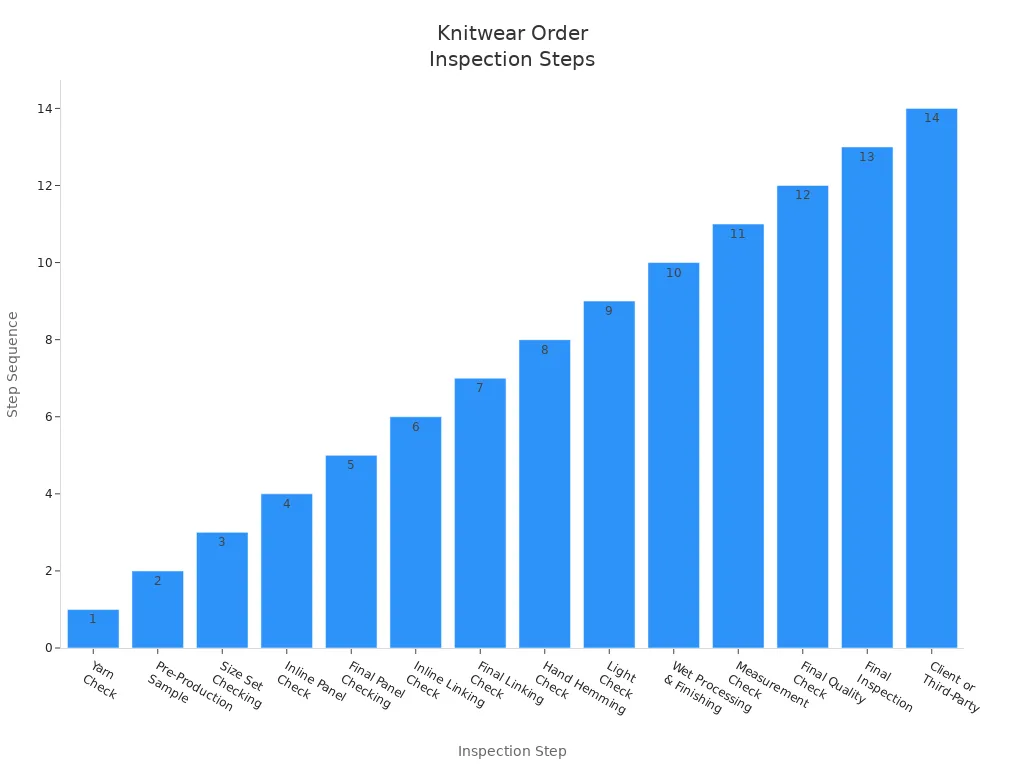
Note: If you find any problems, take photos and contact your supplier fast. Quick action helps you get replacements or fixes sooner. 😊
Knit Your First Sweater
First Sweater Basics
You want to knit your first sweater. This is a big step, but you can do it. Start with the basics. You need to know how to cast on, knit, and purl. These are the building blocks for every sweater pattern. You also need to learn how to bind off when you finish a piece.
Here are the essential skills you should practice before you begin your first sweater:
Cast on and bind off stitches
Knit and purl stitches
Read a simple sweater pattern and understand basic knitting words
Make increases and decreases, like k2tog, ssk, mL1, and m1R
Mistakes happen when you knit your first sweater. You might forget to check your gauge, which means your sweater could turn out too small or too big. Sometimes, you ignore the fabric and end up with a sweater that feels wrong. You may not try the sweater on as you go, so the fit is off. Picking the wrong size or following the pattern without thinking about your body shape can also cause problems.
Here’s a list of common mistakes beginners make:
Not checking gauge before starting
Ignoring how the fabric feels and looks
Forgetting to try the sweater on while knitting
Choosing a size without measuring yourself
Following the pattern exactly, even if it doesn’t suit your body
Picking a style that doesn’t match your shape or taste
Tip: Take notes as you knit. Write down what works and what doesn’t. This helps you learn faster and avoid repeating mistakes.
Great First Sweater Pattern
Picking a great first sweater pattern makes everything easier. You want a pattern that matches your skill level. Simple designs like boat neck or crew neck sweaters work best. Look for patterns with easy ribbing and lots of garter stitch or stocking stitch. If a full-size sweater feels too hard, try a smaller project first.
Here are features to look for in a great first sweater pattern:
Choose a pattern that fits your knitting skills
Simple shapes, like boat neck or crew neck
Easy ribbing and lots of garter or stocking stitch
Patterns worked in the round, so you do less sewing
Simple shaping, not too many tricky steps
Stockinette or other basic stitch patterns
You can find many beginner-friendly patterns online. Some patterns use chunky yarn and big needles, which makes knitting faster and easier. If you want to finish quickly, pick a pattern with fewer pieces and less sewing.
Note: Try on your sweater as you knit. This helps you catch fit problems early.
Practice Stitches
Before you start your first sweater, practice the basic stitches. You want your hands to feel comfortable with each move. Try to knit three times a week. This builds muscle memory and helps you get better. Use larger needles if you want to see your stitches more clearly and finish faster.
Here’s a table with simple stitch instructions:
Stitch Type | Instructions |
|---|---|
Garter Stitch | Cast on any number of stitches. Knit every row. |
Stockinette Stitch | Cast on any number of stitches. Row 1: Knit. Row 2: Purl. Repeat rows 1 and 2. |
Basic Ribbing | Alternate rows of knit and purl stitches. For K1, P1: Cast on an odd number. Row 1: Knit one, purl one; repeat. Row 2: Purl one, knit one; repeat. |
Seed Stitch | Row 1: Knit one, purl one; repeat. Row 2: Purl one, knit one; repeat. |
Tip: Practice each stitch on a small swatch before you start your first sweater. This helps you spot mistakes and fix them easily.
If you learn best by watching, tutorials can help a lot. YouTube channels like Very Pink Knits show you every step, from casting on to finishing your sweater. KnittingHelp.com has videos for both American and Continental styles. Knit Picks offers beginner playlists and free classes. Craftsy has high-quality tutorials for specific techniques and projects. You can also find pattern libraries with video guides for each step.
Very Pink Knits: YouTube tutorials for beginners
KnittingHelp.com: Videos for different knitting styles
Knit Picks: Beginner playlists and free classes
Craftsy: Classes for techniques and projects
Pattern libraries: Free and paid patterns with step-by-step tutorials
Note: If you get stuck, watch a tutorial. Seeing someone knit makes learning much easier.
You can knit your first sweater with patience and practice. Try new stitches, follow a simple sweater pattern, and use tutorials when you need help. Every mistake teaches you something new. Soon, you’ll wear your first sweater with pride. 😊
You can start your knitwear journey with confidence. Here are some simple steps to help you succeed:
Pick a simple sweater design, like raglan or drop shoulder.
Choose an easy pattern without tricky details.
Enjoy the process and don’t rush.
Accept mistakes and focus on learning.
Reach out for help when you need it.
Joining a friendly knitting group can make your project more fun. Celebrate your progress and remember—patience and practice lead to success. Try your first sweater pattern or place your order today! 😊
FAQ
How do I choose the right yarn for my first sweater?
You want yarn that feels soft and is easy to work with. Try medium-weight yarn, like worsted or aran. These yarns show stitches well and help you spot mistakes. Pick a color you love!
What if I make a mistake while knitting?
Mistakes happen to everyone. You can use a crochet hook to fix dropped stitches. If you get stuck, watch a video or ask a friend for help. Don’t worry—every mistake helps you learn.
How long does it take to receive a knitwear order?
Most orders arrive in 2–4 weeks. The timeline depends on production and shipping speed. Ask your supplier for updates and tracking info. Express shipping gets your order to you faster, but it costs more.
Can I order custom designs from a knitwear supplier?
Yes! Many suppliers let you send your own designs or techpacks. You can choose colors, patterns, and sizes. Always share clear details so your order matches your vision.
What tools do I need to knit my first sweater?
You need yarn, knitting needles, scissors, and a measuring tape. Stitch markers and a tapestry needle help too. Start with these basics, and you’ll be ready to cast on your first project!