1. Introduction: Why “Cashmere Goat Profitability” Is Often Misunderstood
In the global textile market, cashmere is synonymous with luxury.1 With retail sweaters often commanding prices from $300 to over $1,000, outside observers frequently draw a straight line from high retail value to high farm-gate profitability.
This is a dangerous misconception.
As an analyst who has walked the supply chain from the arid steppes of Inner Mongolia to the spinning mills of Italy, I have seen more small-scale cashmere operations fail than succeed. The disconnect lies in the “Value Chain Gap.” The vast majority of the value in a cashmere garment is added after the fiber leaves the farm—in the dehairing, spinning, dyeing, and branding phases.
The Analyst’s Stance: Cashmere goats can be profitable, but they are not a “get rich quick” scheme. They are a low-margin, high-volume game that requires specific climatic conditions, rigorous genetic management, and economies of scale. For the unprepared farmer, they are often a liability masked by prestige.
2. What Makes Cashmere Valuable (From a Market Perspective)
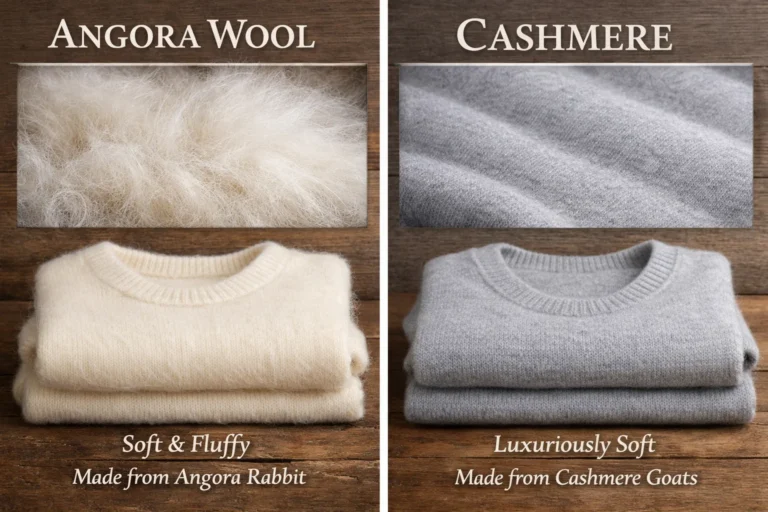
To understand profitability, you must understand what you are actually selling. You are not selling “hair”; you are selling a specific morphological trait that acts as a biological insulator.
The Technical Reality:
-
Diameter (Micron): To command a premium, fiber must be under 16 microns.2 Once you drift into the 19+ micron range (often called “Cashgora”), the value collapses, competing with fine wool but with higher processing costs.
-
Length: Spinners demand fiber length of 34mm–36mm+. Short fibers (noils) are waste products used for cheap blends or felting.
-
Yield: This is the profit killer. A raw fleece includes distinct guard hairs (coarse) and down (fine).3
The Math of Production:
It takes approximately 4 to 5 goats to produce enough raw fiber for a single standard-weight sweater. When you see a $400 sweater, the farmer likely received less than 5% of that final price.
3. Real Cost Breakdown of Raising Cashmere Goats
Profit is not determined by revenue, but by the delta between yield and overhead. The operational costs of cashmere are distinct from sheep or cattle.
| Cost Center |
The Reality |
Impact on Margin |
| Feed & Pasture |
Goats are browsers, not grazers. They require high-protein forage to produce quality fiber. Supplemental feeding during winter (when fiber grows) is the highest cost. |
High. If you are buying >40% of your feed, you are likely unprofitable. |
| Fencing & Infrastructure |
“If it won’t hold water, it won’t hold a goat.” Goats require significantly more robust fencing than sheep to prevent escape and predation. |
High (CapEx). Front-loaded cost that extends ROI timeline. |
| Harvesting (Labor) |
Cashmere must be combed (traditional/high quality) or sheared and heavily processed. Combing is incredibly labor-intensive. |
Critical. High labor costs in Western nations often make combing unfeasible, forcing shearing, which lowers yield quality. |
| Dehairing Loss |
Raw fleece must be processed to remove guard hair. Farmers are paid on yield, not raw weight. |
Hidden Cost. You pay to feed the goat to grow guard hair you can’t sell. |
| Veterinary |
Goats are susceptible to internal parasites (worms) which thrive in many pastures. |
Medium. Parasite resistance is a key genetic factor for profitability. |
4. Profitability Scenarios
Here is where the data separates the hobbyists from the businesses. We will assume a market context where the farmer sells raw fiber to a depot or cooperative.
Scenario A: The Smallholder (50–100 Goats)
-
Economics: At this scale, the revenue from fiber rarely covers the cost of feed and veterinary care, let alone the farmer’s labor.
-
Net Margin: Usually Negative.
-
Reality: This is a lifestyle choice or a tax write-off, not a business. Profit is only possible if the farmer processes the fiber themselves (value-added spinning/knitting), effectively becoming a micro-manufacturer, not just a farmer.
Scenario B: The “Valley of Death” (300–800 Goats)
-
Economics: This size is treacherous. It is too large for family labor (requiring hired help) but too small to command bulk pricing on feed or leverage with fiber buyers.
-
Net Margin: Break-even to Low Single Digits (3–5%).
-
Risk: One bad winter or a drop in global prices can bankrupt the operation.
Scenario C: Industrial / Cooperative Scale (1,000+ Goats)
-
Economics: At this level, unit costs drop. Fencing cost per acre decreases; labor is specialized. These operations often integrate meat production (culling older goats) to subsidize fiber costs.
-
Net Margin: Moderate (8–15%).
-
Success Factor: Volume allows these producers to weather price volatility and negotiate direct contracts with scouring mills.
5. Key Risk Factors That Determine Success or Failure
Why do farms fail after 3 years?
-
Climate Mismatch: Cashmere growth is a response to cold. If you raise these goats in a temperate or warm climate, fiber production drops, and micron count coarsens. No cold stress = No profit.
-
Genetic Dilution: Without rigorous culling, a herd reverts to producing coarse hair. Farmers often hesitate to cull “pretty” goats that produce worthless fiber.
-
The “Middleman Trap”: If you cannot aggregate your fiber into 1-ton lots, you are at the mercy of local aggregators who pay bottom-dollar spot prices.
-
Market Volatility: Cashmere prices are cyclical, tied to the luxury goods market. A recession in Europe or China depresses raw material prices instantly, while your feed costs remain fixed.
6. Who Should (and Should Not) Raise Cashmere Goats
Best-Fit Profile (Likely Profitable):
-
Location: High altitude or latitude, arid/semi-arid climate (natural cold stress).
-
Land: Owns extensive brush/scrub land unsuitable for cattle or crops (low opportunity cost).
-
Strategy: Vertically integrated (selling yarn/goods) OR part of a massive cooperative.
-
Diversification: Uses goats for weed abatement or meat alongside fiber.
Poor-Fit Profile (Likely Unprofitable):
-
Location: Wet, humid, or warm regions (parasite load will be high; fiber yield low).
-
Investor: Absentee owners expecting passive returns.
-
Expectation: Farmers planning to buy 100% of their feed/hay.
7. Cashmere Goats vs. Other Livestock: Opportunity Cost
As an analyst, I must ask: Is this the best use of capital?
-
Vs. Meat Goats (Boer): Meat goats have a faster turnover (kid to market in 6–8 months). Cashmere generates revenue once a year. Meat goats generally offer better cash flow and faster ROI.4
-
Vs. Fine Wool Sheep (Merino): Sheep are easier to handle, fence, and shear mechanically. The global wool supply chain is more robust and standardized than cashmere.
-
Vs. Cattle: Cattle require less labor per animal unit but more expensive land.
Verdict: Cashmere has a higher labor-to-revenue ratio than almost any other commercial livestock. You work harder for every dollar earned.
8. Long-Term Outlook: Is Cashmere Still a Good Business in 10–20 Years?
The future presents significant headwinds:
-
Climate Change: As traditional cashmere regions (Mongolia/China) face desertification and warming, grazing is being restricted. This creates a supply squeeze. While this may raise prices, it also raises the cost of sustainable grazing land.
-
Traceability Pressures: Luxury brands (LVMH, Kering) are demanding certified sustainable supply chains (e.g., The Good Cashmere Standard). Farms that cannot digitize their data and prove animal welfare will be locked out of the premium market.
-
Recycled Cashmere: The rise of high-quality mechanical recycling is creating a substitute for low-grade virgin fiber, putting downward price pressure on average-quality farms.
9. Final Verdict: Are Cashmere Goats Profitable?
Short Answer: For 90% of new entrants, No.
The Nuanced Reality:
Cashmere farming is profitable only if you treat it as an industrial raw material operation or a boutique vertical brand—not as a standard livestock farm.
If you have cheap, arid land, the ability to scale to 1,000+ head, and the discipline to manage genetics aggressively, there is margin to be made. However, if you are a smallholder expecting to sell raw fleece to the commodity market, you will likely find that the cost of feed and fencing exceeds the check you receive at the scouring mill.
Investment Grade: C- (High Risk, Labor Intensive, Low Liquidity)