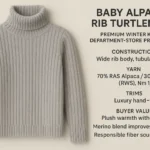
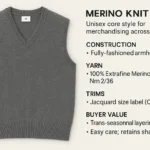
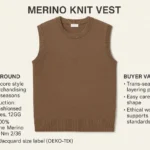
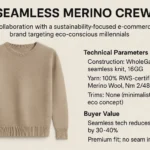
The term “loose knit sweater” is frequently misused in retail and fashion marketing, often conflated with silhouette descriptions like “oversized” or “slouchy.” However, to a knitwear technician or product developer, a loose knit refers strictly to the structural engineering of the fabric, not the cut of the garment.
Understanding this distinction is critical for assessing quality. A sweater can be structurally dense yet cut in a voluminous shape, just as a sweater can be form-fitting but constructed with an open, airy tension. When we discuss loose knit sweaters, we are analyzing a specific relationship between the yarn diameter and the stitch size—a relationship that dictates how the garment breathes, moves, and endures wear.
This article examines the mechanical reality of loose knit construction, separating visual aesthetics from the structural physics that define the garment’s performance.
What Does “Loose Knit” Actually Mean?
From a technical perspective, a loose knit is defined by its cover factor and loop tension. In knitting, every stitch is a loop of yarn pulled through a previous loop. “Looseness” is achieved when the loop length is intentionally elongated relative to the thickness of the yarn being used.
The Yarn-to-Space Ratio
In a standard or “tight” knit, the loops are small enough that the yarn strands sit closely together, creating a cohesive, opaque surface. The friction between these loops provides structural stability.
In a loose knit, the technician adjusts the knitting machine (or hand tension) to draw a longer loop. This creates visible negative space between the strands. The ratio of yarn to open air shifts. Consequently, the fabric relies less on inter-loop friction for stability and more on the inherent tensile strength and cohesion of the yarn itself.
Distinguishing Construction from Silhouette
It is vital to separate two concepts that consumers often confuse:
-
Oversized/Relaxed Fit: This refers to the pattern dimensions (e.g., a chest width of 24 inches for a size Medium). An oversized sweater can be knit very tightly, creating a heavy, stiff, blanket-like shell.
-
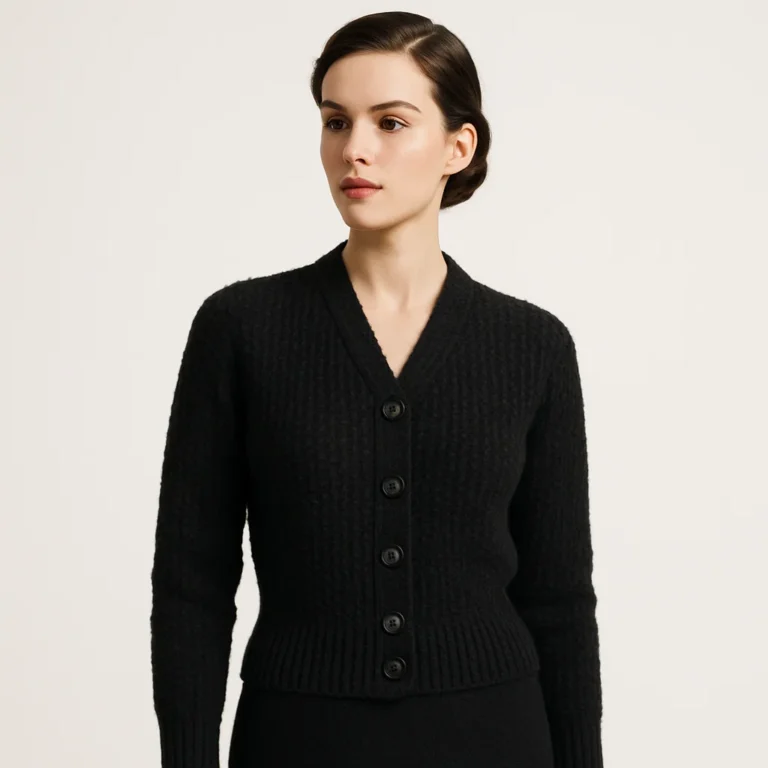
Loose Knit Structure: This refers to the density of the fabric. A loose knit sweater can be cropped and fitted, yet the fabric itself is pliable, airy, and potentially sheer.
When a garment is labeled “loose knit,” you should look for the daylight between the stitches, regardless of whether the sweater hangs off the shoulder or fits close to the body.
How Loose Knit Sweaters Are Made
The creation of a loose knit requires specific manipulation of gauge and tension.
Understanding Gauge (GG)
Gauge refers to the number of needles per inch on the needle bed of a knitting machine.
-
High Gauge (12GG–18GG): Fine needles packed closely together. Used for lightweight merino crewnecks or T-shirts.
-
Mid Gauge (7GG–10GG): The standard for most everyday sweaters.
-
Low Gauge (3GG–5GG): Large needles spaced far apart. This is the domain of chunky knits.
While loose knits are often associated with low gauge (chunky) machines, a loose structure can be achieved on any machine by manipulating the tension dial. A factory can take a fine 12-gauge machine and lower the tension settings to create a sheer, spiderweb-like cashmere sweater. Conversely, they can take a 3-gauge machine and knit so tightly the fabric stands up on its own.
The Role of Yarn Selection
Engineering a successful loose knit is more difficult than a standard knit because the yarn has to do more work. Without tight loops to hold the shape, the fiber characteristics become the primary structural support.
-
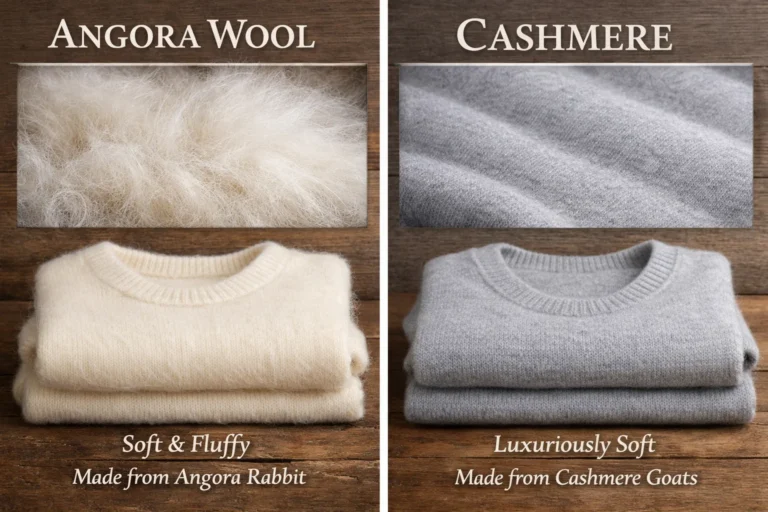
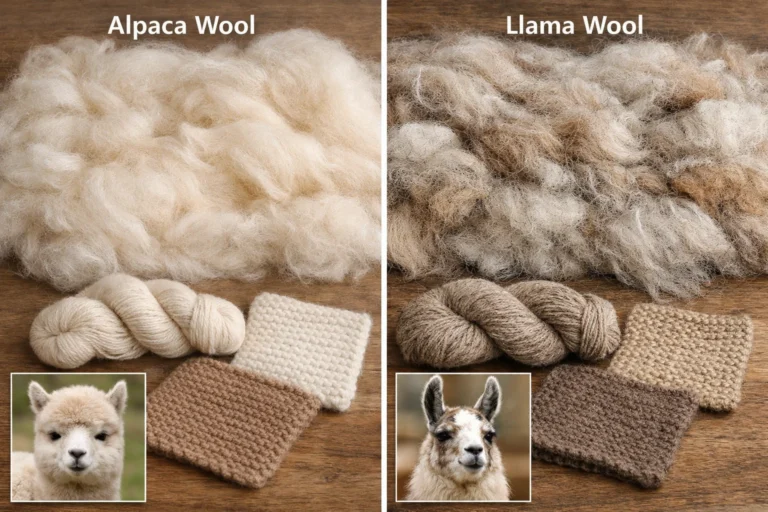
Alpaca and Mohair: These are the gold standards for loose knits. The long fibers create a “halo” (fuzz) that fills the visual gaps between loose stitches without adding weight. The microscopic scales on these fibers grip each other, preventing the loose structure from falling apart.
-
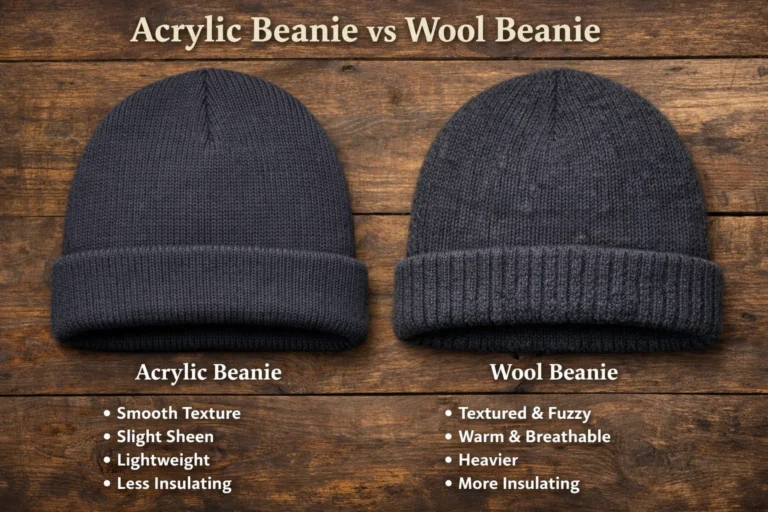
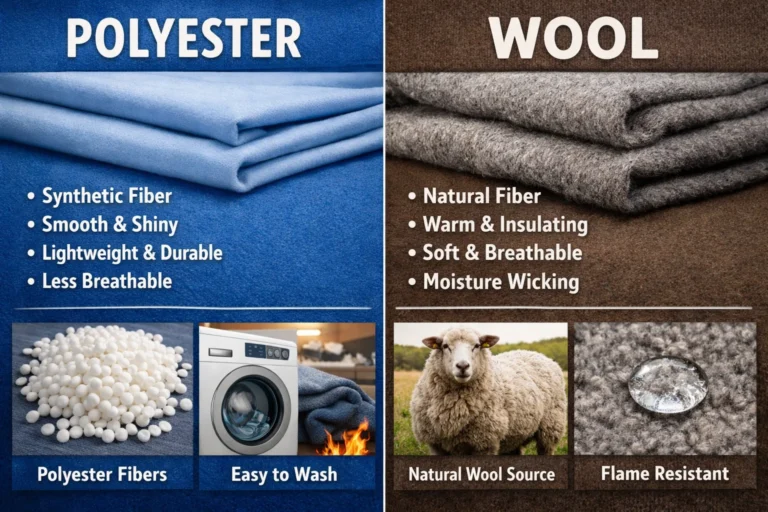
Wool: Standard wools work well if they are “lofty” (spun with air). Dense, worsted wools can look stringy and untidy in a loose tension.
-
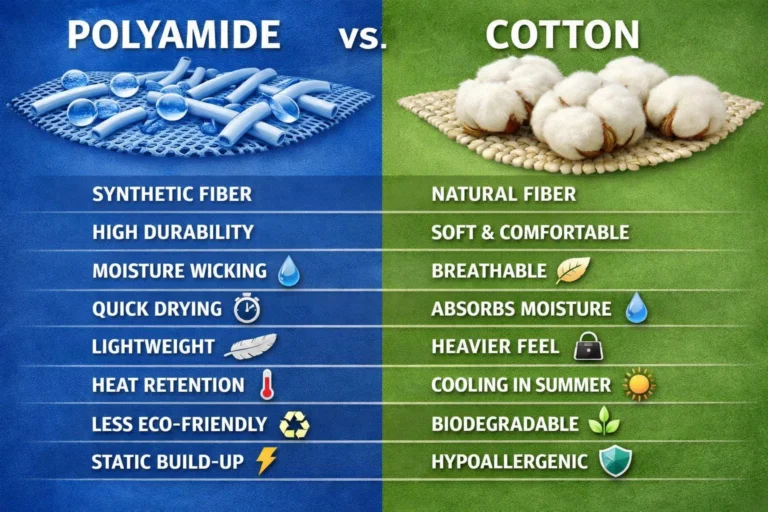
Cotton and Linen: These are risky for loose knits. Plant fibers lack elasticity and memory. A loose knit cotton sweater will often grow vertically due to gravity, as there is no crimp in the fiber to snap the loop back into a round shape.
Loose Knit vs. Tight Knit: Structural Differences
The difference between a loose and tight knit is not merely aesthetic; it fundamentally changes the physics of the garment.
Warmth and Insulation
There is a misconception that heavy equals warm. In reality, warmth comes from trapped, still air.
-
Tight Knits: Excellent at blocking wind. However, if the knit is too tight, it compresses the yarn, reducing its ability to trap air.
-
Loose Knits: Excellent at trapping still air if layered. The air pockets between the loose stitches act as insulators. However, without a shell or base layer, wind passes directly through, rendering the insulation useless.
Drape and Movement
A tight knit creates a fabric that acts somewhat like a woven textile—it has structure and rigidity. It tends to stand away from the body or create sharp folds.
A loose knit has high “shear,” meaning the vertical columns of stitches can slide against each other easily. This results in a fluid drape that conforms to the body. The fabric collapses into itself rather than holding a rigid shape.
Shape Retention and Recovery
This is the most significant trade-off. Tight knits have high elastic recovery; if you stretch the cuff, it snaps back. Loose knits have low recovery. Because the loops are large and the friction between them is low, once the yarn is stretched, it takes very little force to distort the fabric permanently. This is why loose knits are prone to “bagging out” at the elbows.
Common Types of Loose Knit Sweaters
Within the category, there are several sub-varieties defined by how the looseness is applied.
1. Chunky Loose Knits
These utilize thick yarns (often bulky weight or roving) on low-gauge machines. The stitches are massive.
-
Structure: High volume, heavy weight.
-
Use Case: Winter outerwear.
-
Note: While the yarn is thick, the tension is relaxed to keep the garment from becoming essentially bulletproof and too heavy to wear.
2. The “Cobweb” or Sheer Knit
These use very fine yarns (like lace-weight mohair or cashmere) knit on mid-to-large needles.
-
Structure: Extremely delicate, semi-transparent.
-
Use Case: Fashion layering pieces.
-
Note: These rely entirely on the “halo” of the fiber for cohesion. They offer surprisingly high warmth-to-weight ratios due to air trapping.
3. Open-Stitch or Mesh Knits
This is a variation where the looseness is created via stitch transfers (moving loops to create holes) rather than just loose tension.
-
Structure: Organized holes or geometric patterns (like eyelets).
-
Use Case: Summer knits or breathability.
-
Note: These are often more stable than tension-based loose knits because the surrounding stitches are locked off to create the hole.
Why Loose Knit Sweaters Feel Different When Worn
The tactile experience of wearing a loose knit is distinct from standard knitwear due to airflow and contact points.
The “Insecure” Fit
Consumers used to dense sweatshirts or tightly knit merino often report feeling “exposed” in loose knits. Because air circulates through the fabric, the wearer feels ambient temperature changes more acutely. This requires a shift in how one dresses; the sweater is no longer a barrier, but a climate regulator.
Mechanical Deformation (Bagging)
When you bend your arm in a tight knit, the elasticity of the rib structure expands and contracts. In a loose knit, the yarn strands simply slide to accommodate the elbow. When you straighten your arm, there is insufficient tension to pull those strands back immediately. Over a day of wear, a loose knit sweater may physically lengthen by 1–2 inches due to the weight of the garment pulling on the relaxed loops. This is normal behavior for this construction, not necessarily a defect.
Pros and Cons of Loose Knit Sweaters
The Advantages
-
Breathability: Unmatched airflow makes them ideal for transitional weather where a dense sweater would induce sweating.
-
Comfort: The lack of structural rigidity means zero constriction. It is the closest a structured garment can get to feeling like a blanket.
-
Visual Texture: The visible separation between stitches creates depth and shadow, offering a richer visual experience than flat, opaque knits.
The Limitations
-
Snagging: This is the primary failure point. Large loops act as hooks for jewelry, zippers, and furniture corners. A snag in a loose knit can pull a long run of yarn, distorting a large section of the sweater.
-
Pilling: Because the yarn is not held tightly in place, surface fibers are free to rub against each other. This friction accelerates pilling, particularly under the arms.
-
Shape Instability: As noted, they grow. A loose knit bought in October may fit differently by February if not cared for meticulously.
How to Care for a Loose Knit Sweater
The care requirements for loose knits are dictated by their lack of structural integrity. Standard laundry habits will destroy them.
1. The Gravity Rule
Never hang a loose knit sweater. Period.
The weight of the yarn combined with the loose loop structure means gravity will stretch the shoulders and lengthen the torso permanently. Always fold them.
2. Washing and Wet Weight
When wool or cotton gets wet, it becomes heavy. If you lift a wet loose knit sweater by the shoulders, the weight of the water will stretch the torso aggressively, often beyond the point of repair.
-
Wash: Gentle soak in a basin. Do not agitate (which causes felting in loose wool).
-
Lift: Support the entire garment from underneath into a ball when removing it from water.
-
Dry: Roll in a towel to press water out. Lay completely flat on a mesh rack. You must reshape the sweater to its original dimensions while wet. The shape it dries in is the shape it will keep.
3. Depilling
Because loose knits pill more easily, they require maintenance. However, electric fabric shavers can be dangerous here. Because the fabric is uneven and flexible, it is easy to accidentally push a loose loop into the shaver blades, cutting the yarn and creating a hole. Use a manual pill comb or gentler touch.
When a Loose Knit Sweater Is the Right Choice
Choosing this construction is a lifestyle decision as much as a style one.
It is the right choice when:
-
You are dressing for sedentary or low-impact activities (office, dinner, lounging).
-
You need a layering piece that regulates temperature without causing overheating indoors.
-
You prioritize texture and drape over crisp, tailored lines.
It is the wrong choice when:
-
You are carrying heavy shoulder bags or backpacks (abrasion and snagging risk).
-
You are in a high-friction environment (outdoor labor, hiking).
-
You require a garment that looks identical at 8:00 PM as it did at 8:00 AM (due to the stretching factor).
Conclusion
A loose knit sweater is not inherently lower quality than a tight knit; it is a different engineering approach designed to prioritize drape, breathability, and softness over structure and durability.
When shopping, ignore the trend descriptions and look at the fabric. Pull the knit slightly. Look at the yarn. If the loops are open and the yarn is soft, you are buying a garment that requires gentle handling and strategic layering. Understanding this structure allows you to appreciate the comfort of the garment without being disappointed by its natural tendency to stretch and evolve with wear.