1. Executive Summary
For men’s overalls, the optimal under-garment selection is determined by a balance of thermal regulation, moisture management, and the mitigation of mechanical friction caused by the garment’s strap-and-bib architecture. Technically, the most effective base layers are high-recovery knits, such as mid-weight T-shirts, long-sleeve Henleys, or performance thermals, which provide a buffer between the skin and the heavy-duty fabrics typically used in overall construction. The primary factors influencing this choice include the specific use-case environment (industrial vs. lifestyle), the fabric’s moisture vapor transmission rate (MVTR), and the ergonomic fit required to prevent fabric bunching under the fixed points of the bib. This analysis provides a framework for apparel professionals to evaluate under-layer compatibility within a functional layering system.
2. Understanding Overalls as a Garment System
From a product development perspective, overalls—historically referred to as “bib and brace” garments—represent a unique category of protective apparel that functions as a continuous shell from the ankles to the mid-chest. Unlike standard trousers that terminate at the waist, overalls eliminate the traditional waistband, shifting the garment’s weight distribution to the shoulders via adjustable straps.
This structural shift fundamentally alters the requirements of the base layer. Because the torso is partially enclosed by a “bib,” a microclimate is created against the wearer’s chest and abdomen. This area often experiences reduced ventilation compared to standard shirts. Furthermore, the open lateral sides of the overalls increase exposure to external elements, while the back and shoulder regions are subject to constant friction from the straps. Consequently, the under-layer is not merely a stylistic choice; it is a critical functional component that must manage heat dissipation at the core while protecting the skin from the high-denier fabrics (such as 12oz duck canvas or heavy denim) common in overall manufacturing.
3. Base Layer Categories That Work Best
The selection of an under-layer must be predicated on its ability to remain stable under the shifting weight of the overalls. Three primary categories dominate the professional and functional landscape:
T-Shirts (Short-Sleeve Knits)
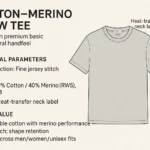
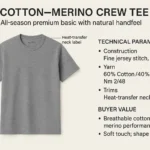
The T-shirt is the most common base layer for moderate climates and indoor industrial environments. For overall compatibility, the construction should prioritize a crew-neck design with a reinforced rib-knit collar. This ensures that the straps of the overalls do not rub directly against the trapezius muscles or the neck. In professional settings, a weight of 180–220 GSM (grams per square meter) is preferred to provide a sufficient barrier against the coarse interior of workwear-grade denim or canvas.
Long-Sleeve Knit Tops and Henleys
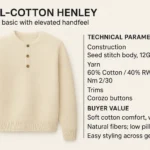
In transitional seasons or high-activity work environments, long-sleeve knits offer extended protection. The Henley, specifically, is a staple in the “utility” category due to its placket, which allows for manual thermoregulation (unbuttoning for ventilation). From a manufacturing standpoint, long-sleeve layers used under overalls should feature high-quality ribbing at the cuffs to prevent the sleeves from riding up when the wearer reaches overhead—a common ergonomic challenge in bib-style garments.
Thermal Base Layers
For cold-weather applications, thermal layers utilizing waffle or honeycomb knit structures are essential. These fabrics are engineered to trap air within their recessed pockets, providing insulation without excessive bulk. When designed for use under overalls, these garments should maintain a “compression-adjacent” fit to ensure that the fabric does not fold or crease under the bib, which could lead to pressure sores or skin irritation during extended wear.
4. Fabric Selection Logic
The performance of a base layer under overalls is dictated by its fiber composition and knit structure. Because the bib acts as an additional layer of insulation, the base layer must excel in moisture management.
-
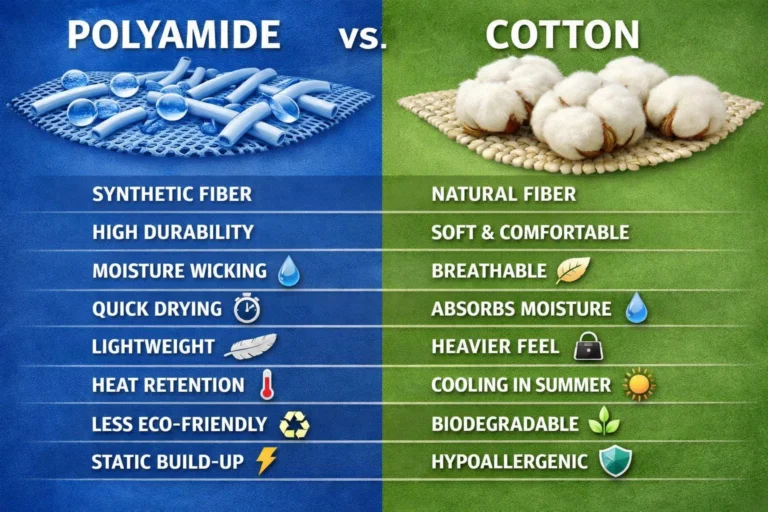
Cotton Jersey and Blends: 100% cotton remains the industry standard for skin comfort and durability. However, in high-exertion scenarios, cotton’s tendency to retain moisture can lead to post-exercise chill. CVC (Chief Value Cotton) blends—typically 60% cotton and 40% polyester—are often preferred by product developers for their improved dimensional stability and faster drying times.
-
Modal and Viscose Blends: For lifestyle or fashion-forward utility brands, modal blends offer a “second-skin” feel with superior drape. These are ideal for slim-fit overalls where minimizing bulk is the primary objective. However, they lack the abrasion resistance required for industrial use.
-
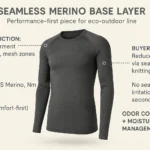
Merino Wool: In the premium and outdoor sectors, Merino wool is the gold standard. Its natural ability to regulate temperature and resist odors makes it ideal for multi-day wear. A 150–200 GSM Merino knit provides the necessary thermal protection under heavy canvas without causing the core to overheat.
-
Performance Synthetics: Polyester and elastane blends with antimicrobial treatments are necessary for high-intensity manual labor. The inclusion of elastane (3%–5%) is critical for “mechanical stretch,” allowing the base layer to move in tandem with the wearer’s body and the overalls’ suspension system.
5. Fit and Silhouette Considerations
The interaction between the silhouette of the base layer and the volume of the overalls is a primary driver of wearer comfort.
Bulk Management
Overalls are inherently voluminous. Adding a bulky or oversized sweatshirt as an under-layer often results in “fabric stacking” at the waist and hips, where the overalls are typically most fitted. This creates discomfort and restricts the wearer’s range of motion. Therefore, a “Regular” or “Athletic” fit is technically superior to a “Relaxed” fit for under-garments.
Sleeve and Armhole Ergonomics
The armhole of the base layer should be cut high enough to avoid interference with the side openings of the overalls. If the armhole is too low, the fabric will bunch in the axilla (armpit) area, especially when the overall straps are tightened.
Neckline Interaction
The height of the neckline is a critical technical detail. Low-cut necklines (such as deep V-necks) are unsuitable because they expose the chest and collarbone to the metal hardware (buckles and sliders) of the overalls. A high crew neck or a mock-neck provides a protective interface that prevents metal-to-skin contact and protects against UV exposure in outdoor work.
6. Seasonal and Climate Variables
Layering logic must shift according to the environmental context to maintain the wearer’s homeostatic balance.
-
Hot and Humid Conditions: In these environments, the “chimney effect” of the overalls (air entering through the leg openings and exiting through the sides) must be maximized. Lightweight knits (140–160 GSM) with high breathability are required. Open-knit structures like pique or bird’s-eye mesh can improve airflow.
-
Cool/Transitional Weather: Mid-weight interlock knits provide a balance of wind resistance and breathability. This is the optimal time for 100% cotton garments that offer a substantial “hand feel.”
-
Cold Environments: The “system” approach is required here. A moisture-wicking synthetic base layer should be paired with a mid-weight thermal. Sourcing managers should look for brushed-back fabrics (fleece-lined) that provide high clo-values (thermal resistance) without increasing the diameter of the torso significantly, ensuring the overalls can still be buckled comfortably.
7. Use-Case Breakdown
Optimal layering choices vary significantly depending on the end-user’s primary activity.
Workwear and Industrial Use
In these settings, the priority is durability and protection. Base layers must withstand frequent high-temperature industrial laundering. Fabrics should have high burst strength and pilling resistance. Aesthetics are secondary to the garment’s ability to act as a sacrificial layer against grease, sparks, or abrasion.
Casual Daily Wear
For the general consumer, the priority is comfort and ease of movement. The base layer is often a standard wardrobe staple, such as a high-quality combed cotton T-shirt. The focus here is on skin-feel and the “dry” touch of the fabric.
Lifestyle and Utility Fashion
In the fashion sector, the “overalls system” is often used to showcase texture and layering depth. Designers may opt for heavier-weight knits or even lightweight woven shirts (like chamois or flannel) as under-layers. While woven shirts are technically more restrictive than knits, they provide a structured silhouette that complements the rugged aesthetic of fashion-grade overalls.
8. Common Mistakes Men Make
From a functional garment analysis perspective, certain layering choices lead to system failure:
-
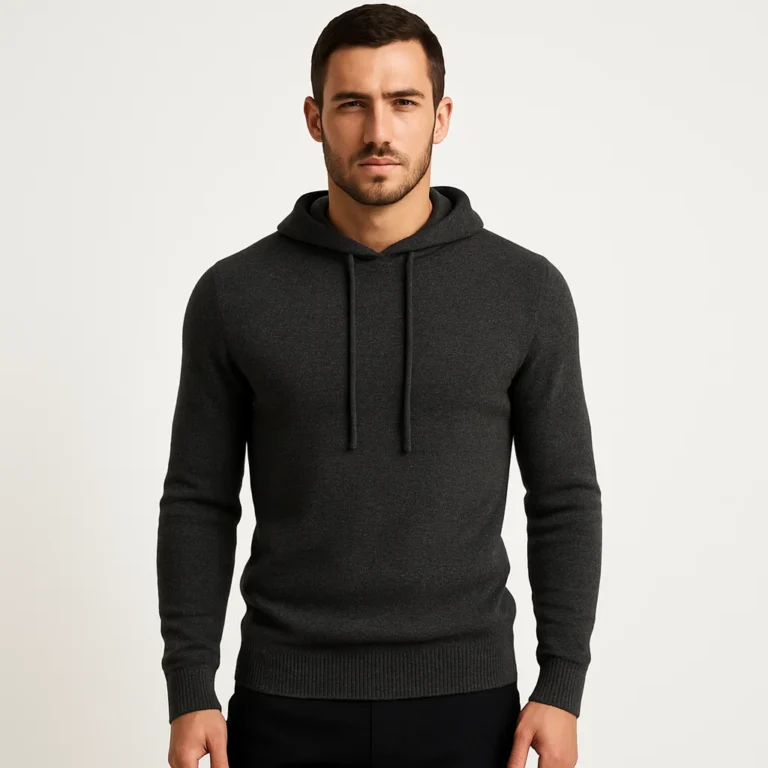
Excessive Weight/Thickness: Wearing a heavyweight “pro-club” style hoodie under overalls often creates too much pressure on the shoulders. The combined weight of the heavy fleece and the denim/canvas overalls can lead to fatigue.
-
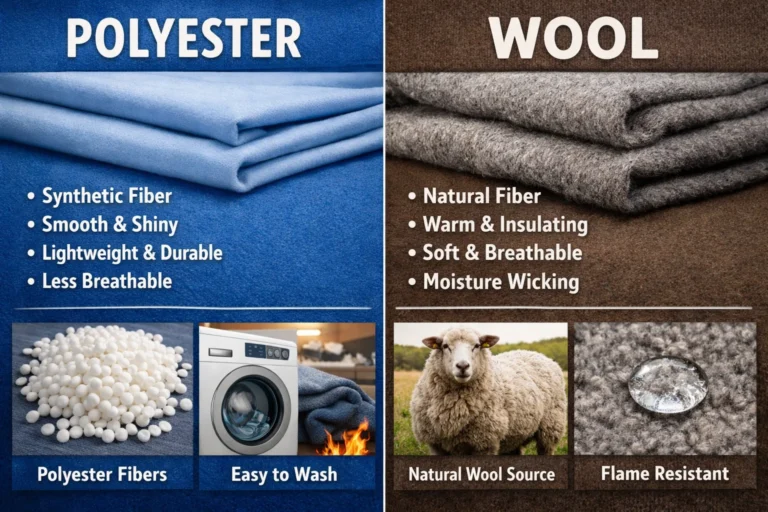
Low-Quality Synthetics: Using non-breathable polyester can turn the bib area into a “sauna,” trapping sweat against the chest and leading to dermatitis or general discomfort.
-
Incompatible Seam Placement: If the base layer has thick, prominent shoulder seams, the compression from the overall straps will drive those seams into the skin. “Flatlock” or “offset” shoulder seams are the technical solution to this problem.
9. Practical Recommendation Matrix
| Overall Use Case |
Climate/Season |
Recommended Under-Layer |
Fabric Characteristics |
| Industrial/Trade |
Summer/Heat |
Performance Tee |
140 GSM, Poly-blend, Wicking, Antimicrobial |
| Industrial/Trade |
Winter/Cold |
Heavy Thermal |
250+ GSM, Waffle Knit, Cotton/Poly Blend |
| Casual/Lifestyle |
Spring/Autumn |
Henley |
200 GSM, 100% Combed Cotton, Ribbed Cuffs |
| Outdoor/Utility |
Transitional |
Long Sleeve Knit |
180 GSM, Merino Wool, Flatlock Seams |
| Fashion/Street |
Mild |
Mid-weight Tee |
220 GSM, Organic Cotton, High Crew Neck |
10. Product Development and Sourcing Takeaways
For brands and manufacturers, the relationship between overalls and their base layers offers significant opportunities for product optimization:
-
Integrated Design: When developing overalls, designers should conduct fit tests using the heaviest recommended base layer to ensure the hardware and side-entry points accommodate the added volume.
-
Education as Value-Add: Brands that provide “system” recommendations (e.g., “Best paired with our 180 GSM Crew”) reduce consumer dissatisfaction and return rates caused by “poor fit” which is often just poor layering.
-
Hardware Selection: Sourcing managers should prioritize low-profile, smooth-surfaced buckles to minimize damage to the delicate knit fabrics of the base layers.
-
Market Expansion: There is a growing opportunity for “Base-Layers for Overalls” as a sub-category, featuring offset shoulder seams, elongated hems (to stay tucked in), and reinforced high-friction zones.
By treating the overall and the under-layer as a singular, integrated garment system, manufacturers can ensure maximum ergonomic performance and wearer comfort across all use cases.