1. Executive Summary
Cashmere is technically superior to wool in specific performance dimensions, primarily due to its significantly lower fiber diameter and unique biological structure. From a textile engineering perspective, cashmere offers a higher warmth-to-weight ratio, superior next-to-skin comfort, and enhanced drape compared to standard sheep’s wool. However, “better” is a subjective term in manufacturing; while cashmere excels in insulation and softness, wool often provides superior tensile strength, abrasion resistance, and cost-efficiency. This analysis establishes that cashmere’s superiority is rooted in material science—specifically micron count and air-trapping efficiency—while its application remains dependent on the desired durability and price point of the end product.
2. Fiber Origin and Biological Differences
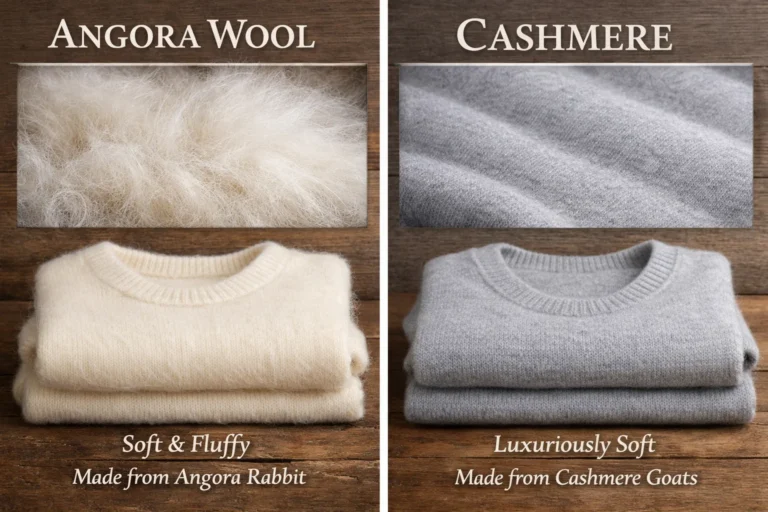
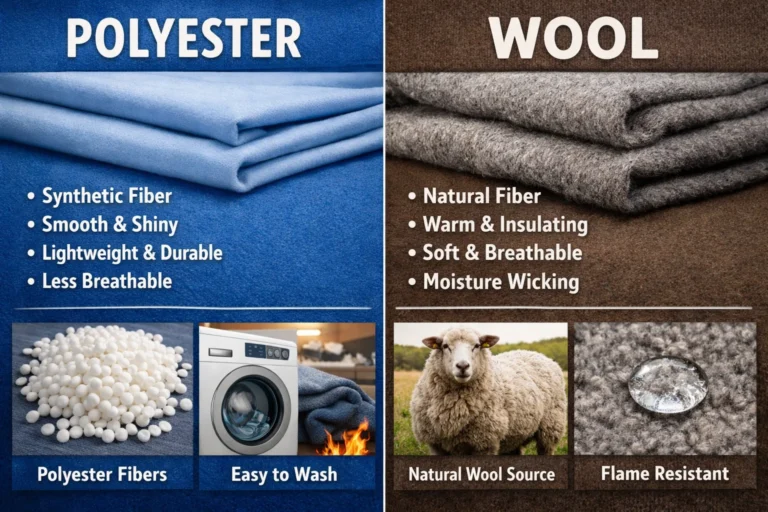
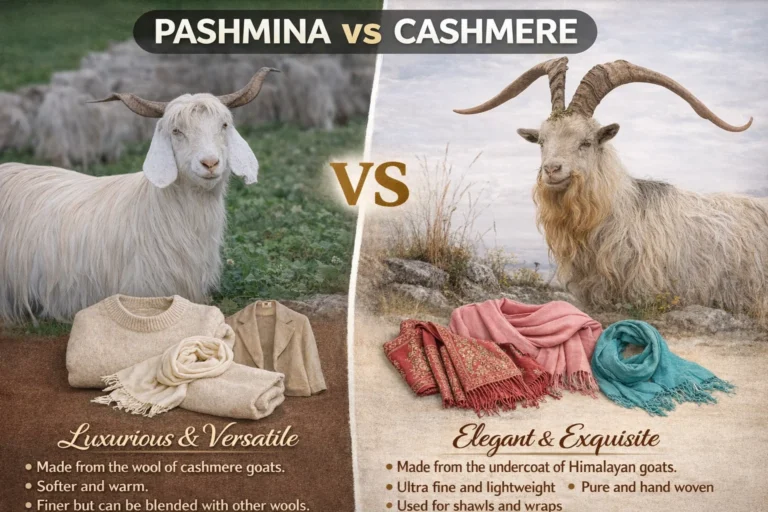
To understand the performance gap between cashmere and wool, one must first analyze their biological origins. Wool is a terminal hair fiber harvested from various breeds of sheep (Ovis aries). It grows continuously and covers the majority of the animal’s body. In contrast, cashmere is not a standard hair but a “down” or undercoat produced by the cashmere goat (Capra hircus laniger).
The biological function of these fibers dictates their physical properties. Sheep wool is designed to protect the animal from moisture and external elements, often resulting in a more rugged, thicker fiber. Cashmere goats, inhabiting the high-altitude plateaus of Inner Mongolia, China, and Mongolia, develop a dual-coat system. They possess a coarse outer “guard hair” to repel water and a fine, soft undercoat to provide extreme thermal insulation against temperatures that can drop to -40°C. This undercoat is what we identify as cashmere. Because the goat uses this fiber specifically for heat retention rather than structural protection, the fiber has evolved to be much finer and more thermally efficient than the wool of a sheep.
3. Fiber Diameter and Hand Feel
The primary metric used by textile specialists to grade quality is the mean fiber diameter, measured in microns (µm). This measurement is the single most significant factor in determining the “hand” or tactile sensation of a fabric.
-
Wool: Standard wool typically ranges from 24µm to 35µm. “Fine” wool, such as Merino, generally sits between 18.5µm and 23µm.
-
Cashmere: To be legally classified as cashmere in most jurisdictions (such as under the U.S. Wool Products Labeling Act), the average fiber diameter must not exceed 19µm, with high-grade cashmere typically falling between 14µm and 15.5µm.
The “itch” factor in knitwear is caused by the “Prickle Effect.” When a fiber is thicker than 30µm, it lacks the flexibility to bend when pressed against the skin; instead, it activates the skin’s pain receptors. Because cashmere is consistently below the 19µm threshold, it lacks the rigidity required to cause irritation. This makes cashmere scientifically softer than wool. Furthermore, the cuticle scales on a cashmere fiber are smoother and more spaced out than those on wool, which reduces friction and creates a silk-like surface texture.
4. Thermal Performance and Insulation Efficiency
The insulating capacity of a textile is determined by its ability to trap “dead air,” which acts as a thermal barrier between the body and the environment. Cashmere outperforms wool in this regard due to its fiber density and three-dimensional crimp.
Cashmere fibers possess a very fine, wavy structure (crimp). When spun into yarn, these tiny waves create millions of microscopic air pockets. Because the fibers are so fine, a manufacturer can pack more fibers into a specific cross-section of yarn without increasing the weight. This results in a “loft” that provides up to three times the insulating power of sheep’s wool of the same weight.
From a product development standpoint, this allows for the creation of lightweight, high-performance garments. A 200-gram cashmere sweater can provide the same thermal protection as a 600-gram heavy wool jumper. This high warmth-to-weight ratio is the technical cornerstone of cashmere’s status as a premium material.
5. Fabric Weight, Drape, and Luxury Feel
The physical behavior of a finished fabric—its drape and fluidity—is a direct result of the fiber’s bending stiffness. Technically, bending stiffness is proportional to the fourth power of the fiber diameter. Consequently, even a small reduction in microns leads to a massive increase in flexibility.
Because cashmere fibers are significantly thinner than wool, the resulting fabric is much less rigid. In knitwear manufacturing, this manifests as a garment that follows the contours of the body and moves fluidly. Wool, particularly in higher micron counts, has a “stiffer” handle and tends to hold a more structured, boxy shape. For OEM/ODM developers, cashmere is the preferred choice for elegant, fluid silhouettes, while wool is often chosen for structured outerwear where volume and form-retention are required.
6. Breathability and Moisture Regulation
Both wool and cashmere are protein-based fibers (keratin), making them naturally hygroscopic. They can absorb moisture vapor (sweat) into their internal structure while remaining dry to the touch on the surface. However, cashmere’s finer structure enhances this process.
Cashmere has a high moisture regain, typically around 15% to 17%. Its ability to transport moisture away from the skin and release it into the atmosphere is superior to many coarser wools. This regulates the wearer’s microclimate, preventing the “clammy” feeling often associated with synthetic fibers. In close-to-skin applications, such as base layers or lightweight knitwear, cashmere provides a more stable thermal environment, making it comfortable across a wider range of temperatures compared to standard wool.
7. Durability, Pilling, and Longevity Trade-Offs
While cashmere excels in comfort, it faces technical challenges in durability. There is an inverse relationship between fiber fineness and tensile strength.
-
Tensile Strength: Wool fibers are generally longer and thicker, providing higher breaking strength. This makes wool garments more resistant to tearing and mechanical stress.
-
Abrasion Resistance: Cashmere is susceptible to surface wear. In high-friction areas (underarms, elbows), the fine fibers can break or migrate.
-
Pilling: Pilling occurs when short, loose fibers migrate to the surface of the fabric and entangle into small balls. Because cashmere is harvested by combing (yielding shorter fibers than sheared wool) and because the fibers are so smooth, they can slip out of the yarn twist more easily.
In industrial testing, wool typically scores higher on Martindale abrasion tests than cashmere. Therefore, for products like uniforms, workwear, or heavy-duty outerwear, wool is the technically superior choice for longevity.
8. Processing Complexity and Cost Structure
The cost of cashmere is not merely a result of luxury branding but a reflection of the labor-intensive supply chain and low yield.
-
Harvesting: Sheep are sheared, a process taking minutes per animal and yielding 3kg to 5kg of wool. Cashmere goats must be hand-combed during their spring molting season, yielding only 150g to 250g of “greasy” cashmere per goat.
-
Dehairing: This is a critical mechanical process unique to cashmere. The fine down must be separated from the coarse guard hairs. This process is slow, requires specialized machinery, and results in a significant loss of weight (yield often drops by 50% after dehairing).
-
Scouring and Sorting: Cashmere requires more delicate chemical processing to remove lanolin and impurities without damaging the fragile fiber scales.
These factors create a high floor for the cost of raw materials. While wool production is industrialized and high-volume, cashmere remains a low-yield, high-input commodity.
9. Use-Case Comparison: Suitability by Application
| Feature |
Cashmere |
Wool (Merino/Standard) |
| Next-to-skin wear |
Excellent (Non-irritating) |
Good to Moderate (Can itch) |
| Active/Outdoor Use |
Low (Delicate) |
High (Durable/Resilient) |
| Warmth-to-Weight |
Highest |
Moderate |
| Drape/Fluidity |
High (Soft) |
Moderate to Low (Structured) |
| Cost Efficiency |
Low |
High |
| Industrial Laundering |
Not Recommended |
Possible (with treatments) |
-
When Cashmere is Better: High-end boutique knitwear, luxury loungewear, lightweight travel wraps, and garments where thermal efficiency and tactile prestige are the primary KPIs.
-
When Wool is Better: Technical outdoor apparel (base layers for hiking), tailored suiting, heavy overcoats, upholstery, and commercial uniforms where the garment must withstand frequent friction and laundering.
10. Manufacturing and Product Development Implications
For brands and factories, the selection between cashmere and wool should be driven by the “Engineered Performance” model rather than price alone.
The Role of Blending:
A common strategy in modern knitwear manufacturing is the use of wool/cashmere blends (e.g., 90/10 or 70/30). This allows product developers to capture the softness and marketing appeal of cashmere while utilizing the structural integrity and lower cost of wool.
Quality Control Priorities:
When sourcing cashmere, factories must prioritize Fiber Length and Micron Consistency. A low micron count is useless if the fiber length is too short, as it will lead to excessive pilling. For wool, the focus is often on VM (Vegetable Matter) content and the Comfort Factor (the percentage of fibers under 30µm).
In conclusion, cashmere’s superiority is a measurable reality in terms of insulation and skin comfort. However, wool remains the workhorse of the textile industry, offering a level of durability and versatility that cashmere cannot match. Successful product development requires a clear understanding of these fiber-level trade-offs to ensure the material choice aligns with the garment’s intended lifecycle and performance requirements.