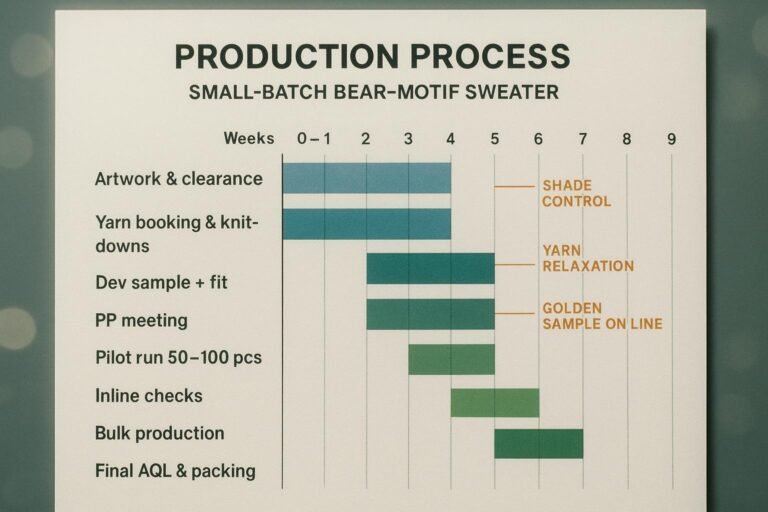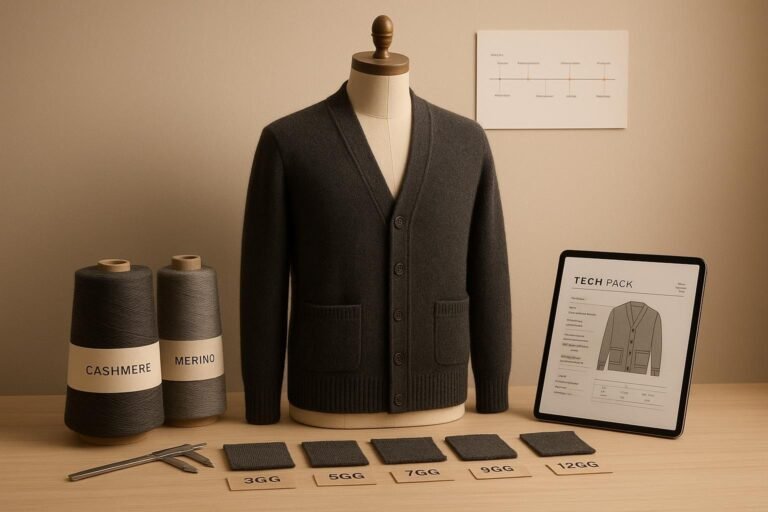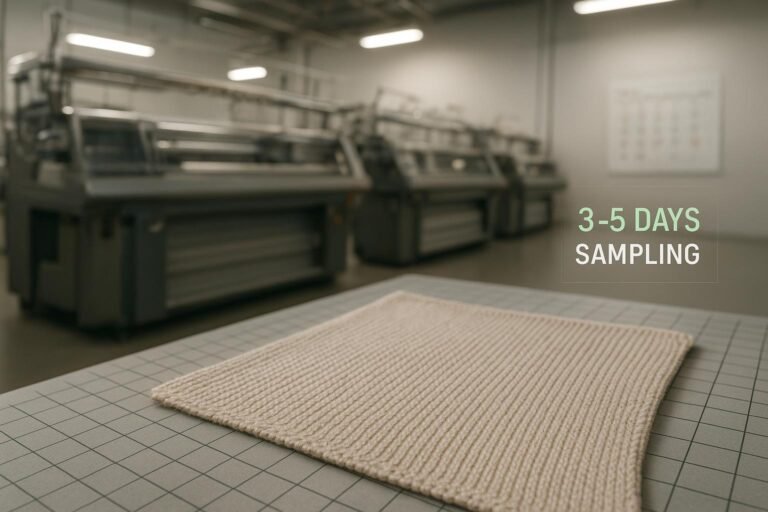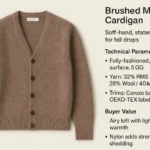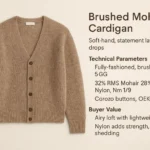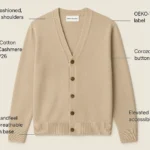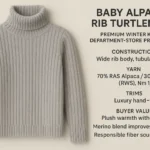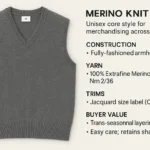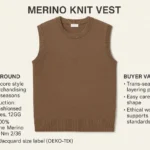

TL;DR — Quick answer: The fastest path for brushed cashmere is typically unlocked when you use stock‑supported yarn shades, pre‑book factory capacity, keep colorways tight, and align tests in parallel. As an illustrative planning example (not a universal promise), teams often target development samples in 3–5 business days and bulk production in roughly three weeks after approvals—subject to yarn availability, gauge/weight, brushing intensity, and peak‑season loading. Treat these figures as conditional and confirm with your supplier’s documented evidence.
Key takeaways
“Brushed cashmere MOQ and lead time” are mostly determined by yarn availability (stock vs custom dye), dye‑lot rules per color, gauge/weight, brushing intensity, and early capacity booking.
A single MOQ has three layers: per‑style, per‑color, and per‑size minimums. Stock‑service yarns often reduce per‑color constraints; custom shades add time and may raise per‑color floors.
Compress calendars by reusing proven blocks/gauges, fixing brushing intensity early, running lab tests in parallel, and pre‑reserving capacity. Replenishments move fastest when yarn remains on hold.
QA and compliance are non‑negotiable: plan pilling, dimensional stability, and color fastness methods up front, and align EU/UK labeling and chemical‑safety duties with your test matrix.
What drives the brushed cashmere MOQ and lead time?
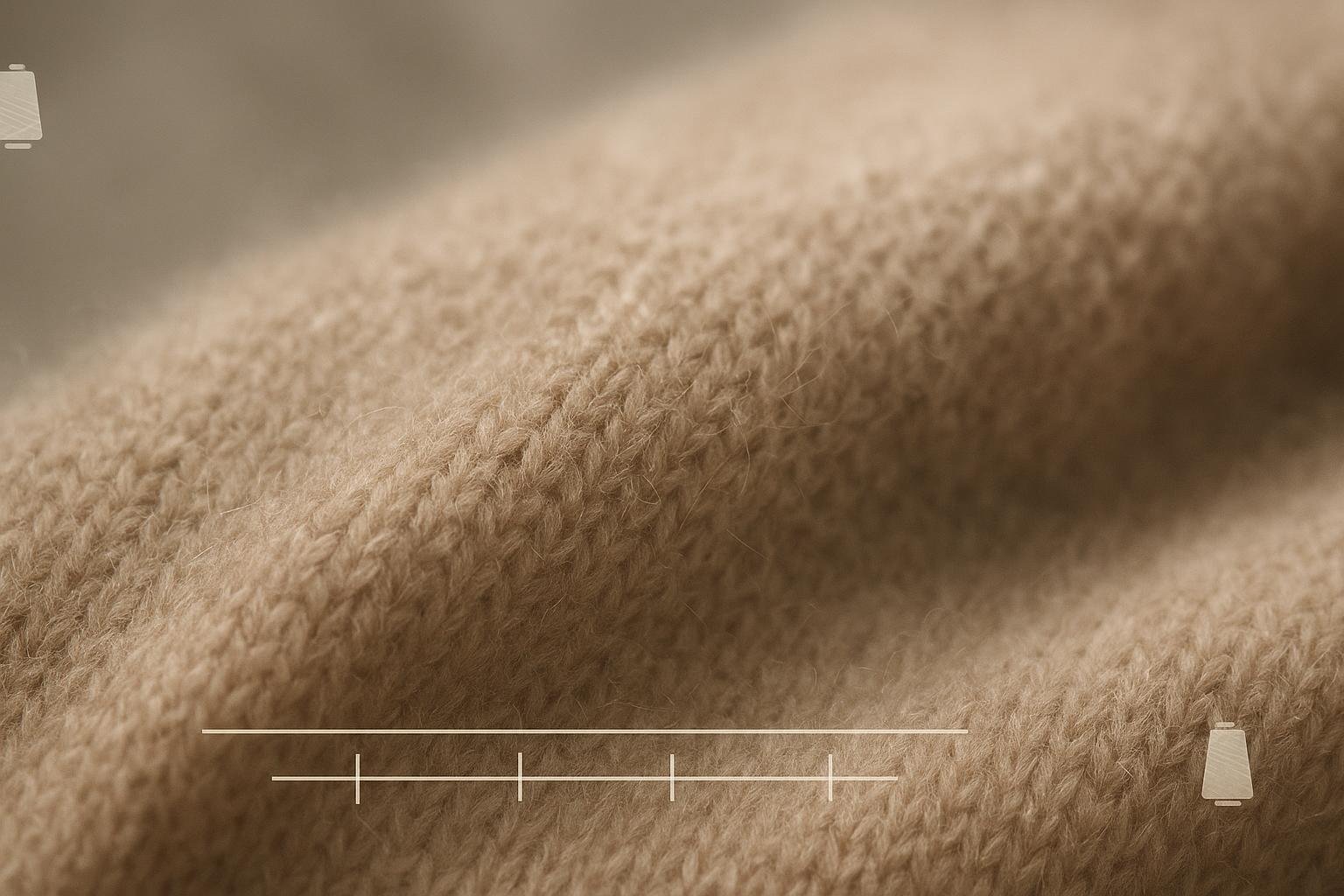
Think of your calendar as a chain with five strong links: yarn, knitting, finishing, QA/tests, and logistics. For brushed cashmere specifically, the brushing (raising) step happens during finishing to lift surface fibers and create the soft loft we expect. The Woolmark Company explains that woollen fabrics and knits are often “mechanically brushed or raised” during finishing to develop handfeel—an aesthetic boost that, if overdone, can also increase surface fibers and potential pilling without proper controls. See the process context in the Woolmark finishing explainer: Woolmark on woollen finishing and brushing.
In practice, brushing adds setup and approval checkpoints (e.g., brushing intensity confirmation) but usually isn’t the main bottleneck; yarn sourcing/dyeing and peak‑season capacity are. That’s why brands push to secure stock‑service yarns where possible and lock a production slot early. When stakeholders ask about “brushed cashmere MOQ and lead time,” the most accurate answer is, it depends—on shade source, dye‑lot rules, gauge, garment weight, and how quickly you can freeze specs and pass PP.
One‑page MOQ ladder (style, colorway, size ratio)
Below is an illustrative, supplier‑confirmable framework to structure conversations. Replace ranges/notes with your vendor’s policy.
Style complexity | Gauge | Garment weight | Finish | Yarn source | MOQ per style | MOQ per color | Min per size | Notes |
|---|---|---|---|---|---|---|---|---|
Simple pullover block | Mid (e.g., 7–12 gg) | Light–medium | Brushed | Stock shade | Lower baseline | Lower per color | Flexible ratio | Stock‑service shades often allow lower per‑color commitments; confirm lot allocation policy. |
Simple pullover block | Mid | Light–medium | Brushed | Custom dye | Baseline unchanged | Higher per color | Fixed ratio | Custom shades introduce dye‑lot minimums and lab‑dip approvals; plan extra calendar. |
Textured/cardigan with trims | Mid–coarser | Medium | Brushed | Stock shade | Moderate baseline | Moderate per color | Fixed minimums | Trims and linking complexity drive per‑style MOQ and throughput; align BOM early. |
Heavy gauge/oversized | Coarser (e.g., ≤7 gg) | Heavy | Brushed (intense) | Any | Higher baseline | Higher per color | Higher per size | Heavier yarn consumption and intense brushing increase risk of GSM drift; add PP guardrails. |
Accessories (scarves/hoods) | Varies | Light–medium | Brushed | Stock shade | Lower baseline | Lower per color | N/A or one‑size | Useful for color testing before committing to apparel per‑color MOQs. |
Two planning notes:
Per‑style vs per‑color: Even when a supplier accepts a low per‑style MOQ, per‑color minimums can dominate because of dye‑lot constraints. Stock shades mitigate this.
Size ratio: Many factories allow ratio packing to meet per‑style MOQ without over‑buying extreme sizes. Confirm minimum units per size upfront.
Lead‑time scenarios for OEM/ODM knitwear
Use this table to align calendars with stakeholders. Timings are indicative and should be validated against your supplier’s evidence and lab service levels.
Scenario | Yarn availability | Sample rounds | Lab tests | Bulk window | Total calendar (indicative) | Risks/Notes |
|---|---|---|---|---|---|---|
Fast‑track stock shade (speed path) | Stock‑service shade allocated | Dev + 1 PP + TOP | Submit in parallel (express as needed) | Compressed, pre‑booked | Shortest realistic path | Capacity must be pre‑reserved; ensure brushing intensity is approved on PP to avoid rework. |
Custom dye (new shade) | Lab dips → dye lot | Dev + PP (possibly 2) + TOP | Serial + parallel mix | Standard window | Longer baseline | Dye‑lot MOQs apply; lab‑dip/approval adds calendar; color matching can require iterations. |
Replenishment repeat run | Same yarn/lot held | TOP only (if no spec drift) | Minimal (verification only) | Short, scheduled | Near‑fastest path | Keep yarn on hold and freeze specs; any BOM change reintroduces PP/tests. |
How do yarn reservation and dye‑lot rules affect timelines?
Yarn is the single biggest lever. Stock‑supported shades at established mills can be pulled faster than custom dye; custom shades trigger lab‑dip approvals and dye‑lot minimums, which affect both per‑color MOQ and calendar. To avoid schedule slip, brands often:
Secure a provisional production slot pending PP approval.
Place a yarn deposit to reserve stock or queue custom dye, with a defined lock window and release clause.
Document per‑color MOQs and allocation rules in the PO/SLA.
Sample clause language you can adapt: “Supplier reserves [shade name] [yarn count] [fiber spec] for [X] days upon receipt of [Y%] deposit; beyond this lock window, reservation may be released without liability. Any switch to custom dye resets calendar per agreed lab‑dip process.”
Disclosure and neutral example: Disclosure: AzKnit is our product. In practice, AzKnit and similar OEM/ODM partners document yarn reservation mechanics (e.g., how to lock stock shades, what deposit triggers a hold, and when reservations expire). Avoid assuming numeric promises; request the written policy and attach it to your PO to bind timelines to yarn allocation.
What QA and compliance checks should be planned for brushed cashmere?
Brushing changes the handfeel and the surface‑fiber profile; that’s why pilling control, wash stability, and color fastness must be planned, not guessed. For chemical and labeling compliance in the EU/UK, align up front on obligations and documents.
Harmful substances and product safety: OEKO‑TEX STANDARD 100 verifies that components are tested for selected harmful substances across product classes; see the official explainer at OEKO‑TEX STANDARD 100.
Fiber‑content labeling: The EU’s textile labelling regulation defines how to name fibers and state percentages; review the consolidated regulation on EUR‑Lex: Textile fibre labelling Regulation (EU) No 1007/2011. UK‑market guidance is similar in practice; importers and retailers share label responsibility.
Chemical restrictions: REACH Annex XVII restrictions and SVHC duties apply; confirm current scopes via ECHA restrictions and SVHC duties.
Pilling method reference: Many brands specify ISO 12945‑2 (modified Martindale) for knitwear pilling grades; see the standard listing at ISO 12945‑2 overview.
Process impact: Woolmark notes the role of mechanical brushing/raising in finishing—use that as a cue to verify brushing intensity approvals and post‑wash appearance; reference: Woolmark finishing explainer.
QA & compliance matrix (illustrative, confirm with your lab and brand standards):
Test/Check | Method reference | Milestone (Dev/PP/Bulk) | Responsibility | Typical lab TAT | Acceptance notes |
|---|---|---|---|---|---|
Pilling resistance | ISO 12945‑2 (modified Martindale) | PP and Bulk | Brand or Supplier lab | Varies by lab; expedited options often available | Set grade target per end‑use; confirm after brushing intensity is frozen. |
Dimensional stability | ISO 6330 (domestic washing/drying) | Dev (screen) and PP | Supplier lab (screen), Brand for PP | Varies by lab; confirm site TAT | Control shrinkage and torque; re‑verify if finish recipe changes. |
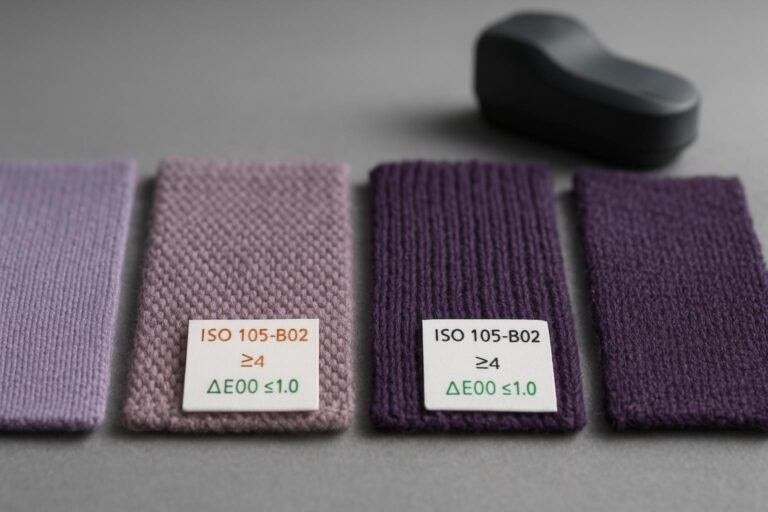
Color fastness to laundering | ISO 105‑C06 or AATCC TM61 | PP | Brand or appointed lab | Varies; express services possible | Watch pastel/brights; align detergent/temperature protocol to market care labels. |
Color fastness to light | ISO 105‑B02 (xenon arc) | As required by brand | Brand or lab | Longer; plan early | Outdoor/bright displays may require higher grade; schedule early due to TAT. |
Perspiration fastness | ISO 105‑E04 | PP (as required) | Brand or lab | Varies | Important for next‑to‑skin items. |
Final random inspection | ISO 2859‑1 (AQL attribute sampling) | Bulk (pre‑ship) | Third‑party or brand QA | Scheduling based | Align AQL levels and defect classification before production. |
How should I build size ratios and colorways to hit MOQs without inflating stock?
Start with the per‑style MOQ, then map the per‑color limits that stem from yarn lot rules. If stock shades are available, collapse long‑tail colors into one “trial color” and focus depth on the expected winners. Use ratio packing (for example, S:M:L:XL = 1:2:2:1) to meet per‑style MOQ without over‑buying fringe sizes. For brushed cashmere, watch GSM drift after finishing; when you change gauge or brushing intensity, reconfirm weight and measurements before committing to large size‑curve volumes.
What negotiation levers can compress calendar time without compromising quality?
Pre‑book a knitting/finishing slot early, with a cancellation or rescheduling clause tied to PP approval dates.
Place a yarn deposit to lock stock shades or to enter the custom‑dye queue with a defined reservation window.
Reuse proven blocks, gauges, and a fixed brushing intensity to reduce PP rounds.
Run core lab tests in parallel and use express services judiciously; update care labels only after methods and limits are confirmed.
Rationalize colorways for launch, and plan a rapid replenishment path once a winner emerges.
Quick glossary
Brushed vs raised: Mechanical finishing that lifts surface fibers for loft and softness; synonymous terms are used in knit finishing.
PP sample (pre‑production): The approval checkpoint where construction, materials, measurements, and finishing settings (including brushing intensity) are frozen prior to bulk.
TOP (top of production): A sample pulled from the live line for final validation that bulk matches the approved PP.
AQL: “Acceptable Quality Limit” sampling framework used in final random inspection to statistically accept or reject a lot.
Planning note on evidence and variability: This FAQ provides decision frameworks for brushed cashmere MOQ and lead time, plus OEM/ODM knitwear lead times more broadly. Numeric examples here are illustrative for planning and should be confirmed against your supplier’s capacity sheet, yarn reservation policy, and lab service levels before you set calendar commitments.