
If you’re writing a tech pack or planning a seasonal buy, you’ll face a core choice: cable knit accents or full Aran panels. Here’s the short version: choose cable accents when you need speed and accessible costs; choose dense Aran when you want heritage impact and are prepared for more yarn, programming, and linking time.
Key takeaways
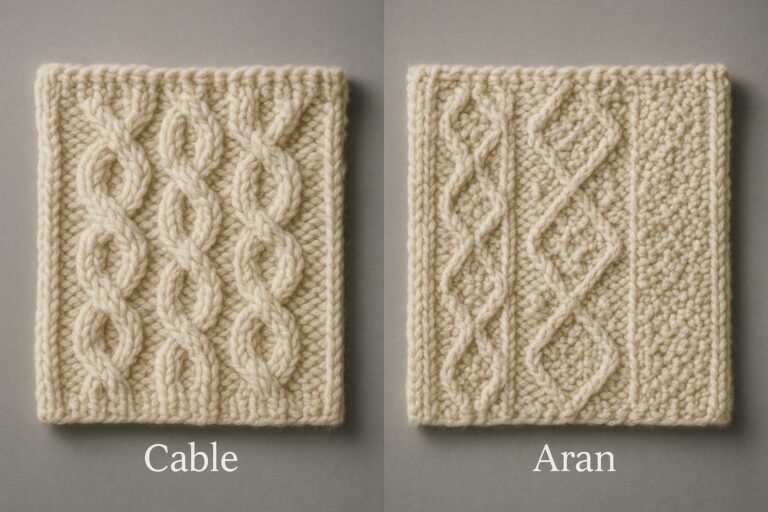
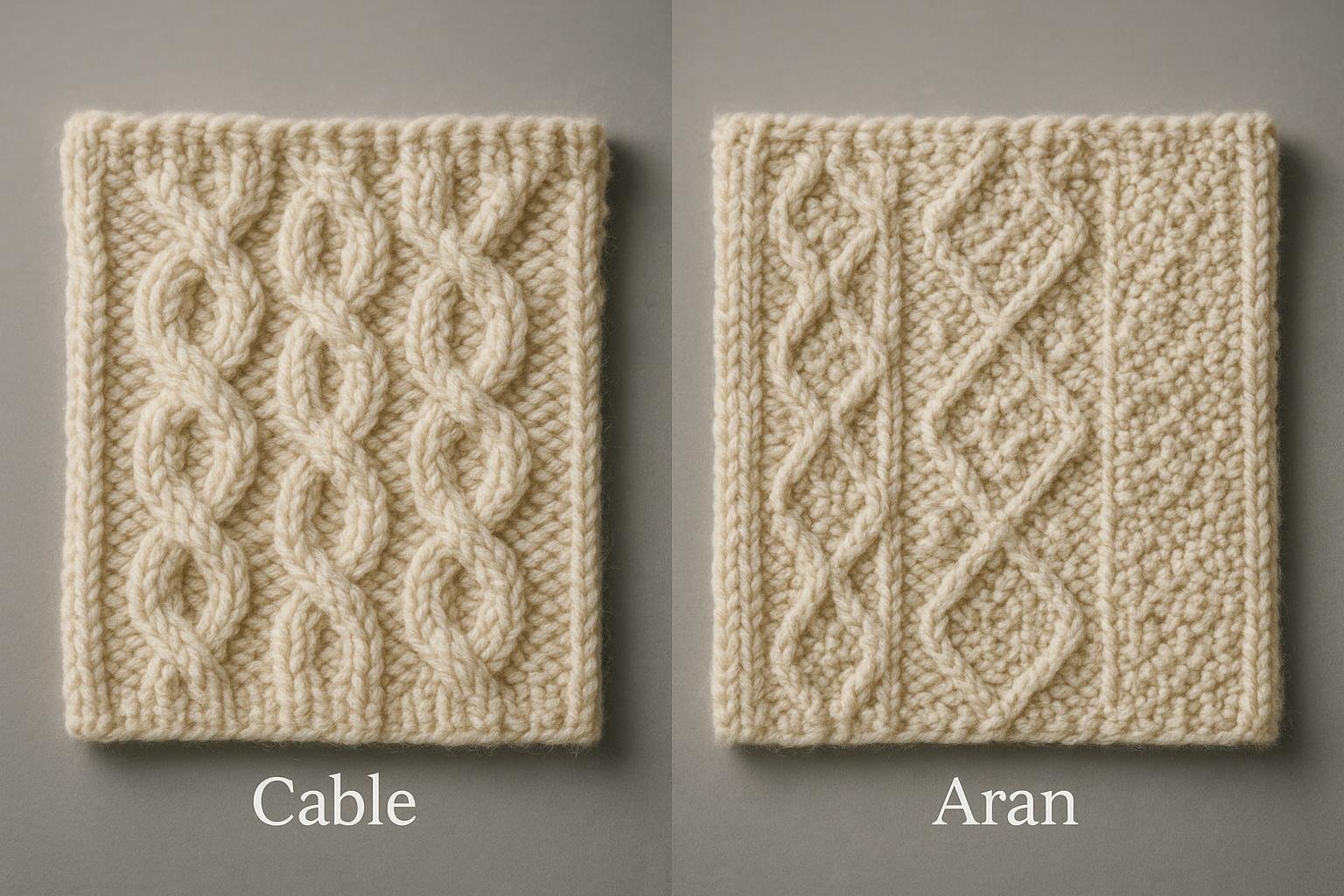
Cable knit is a technique (crossing stitches into rope-like textures); Aran knit is a cultural style that combines multiple motifs—cables, diamonds, honeycomb, moss/seed—often on a purl ground.
For production on computerized flat-beds (Stoll/Shima), both are feasible. Cable accents usually program and run faster; dense Aran slows carriage speed, raises drop risk, and adds linking/finishing minutes.
Yarn consumption rises with texture. Expect a modest lift for cable accents and a bigger lift for dense Aran; always confirm via in-pattern swatch yield tests.
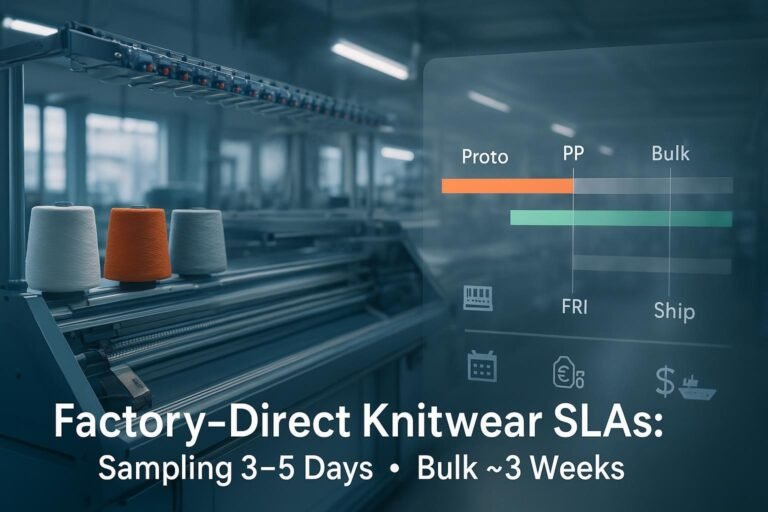
Lead times diverge: simpler cable garments suit 3–5 day protos and shorter bulk cycles; Aran often needs extra swatch iterations and more careful QC.
Pricing follows grams and minutes. Motif density, gauge, and fiber choice dominate unit cost and freight. Build a dated cost matrix per yarn/gauge/density.
For wholesale OTIF on first orders, start with limited motifs or simplified Aran, then scale once stability is proven.
Cable knit vs Aran knit — what they actually mean
Many teams use “cable” and “Aran” interchangeably, but they’re not the same. Cable knit is a broad technique that forms raised, rope-like textures by crossing stitches. Aran knit refers to a 20th‑century Irish sweater tradition whose visual language layers multiple motifs—cables alongside diamonds, honeycomb, and moss/seed—often on purl backgrounds. The Victoria and Albert Museum clarifies this distinction in its heritage overview of British knitting, noting Aran’s regional origin and multi‑motif grammar: see the museum’s explainer in the British knitting traditions article (2025 update) under “Aran jumpers.” Read the background in the V&A’s British knitting traditions article.
Side-by-side: structure, gauge, cost and lead time
Below is a practical view for tech packs and sourcing. Values vary by yarn, gauge, and motif density; treat them as directional and validate with swatches and factory trials (as of 2026-03-04).
Dimension | Definition | Cable Knit (typical) | Aran Knit (typical) | Impact on cost & lead time |
|---|---|---|---|---|
Structural scope | What the term denotes | Technique: rope-like textures from crossing stitches | Cultural style: multi-motif Irish tradition using cables + diamonds/honeycomb/moss on purl grounds | Aran implies higher panel density, more minutes per piece |
Motif complexity/density | Variety and frequency of textured panels | Low–medium; accents or select panels | Medium–high; all-over multi-motif panels | Higher density increases yarn grams and QC touchpoints |
Typical gauge / yarn weight | Needle gauge and yarn category | Broad, often Medium Weight (CYC 4: worsted/aran) | Often Medium Weight (CYC 4), sometimes chunkier | Heavier yarns and relief raise grams/unit and freight |
Yarn consumption vs stockinette | Extra grams relative to jersey | Modest increase; verify in swatch | Significant increase; verify in swatch | Add 10–20% buffer pending swatch yields |
Machine feasibility (flat-bed) | Program/transfer practicality | Feasible via transfers; watch width/cross limits | Feasible but slower; bobbles/frequent crosses add risk | Slower carriage speeds; linking becomes bottleneck |
Programming complexity | Time and expertise to chart/code | Low–medium (e.g., C2/2L, C4R) | Medium–high (mixed motifs, bobbles) | More dev iterations and operator time |
Sample lead time | Proto development timeline | Faster (fewer iterations) | Slower (more swatch cycles) | Yarn availability also critical |
Bulk lead time (1k units) | Production throughput | Shorter (simpler linking) | Longer (dense linking/finishing) | Capacity planning required |
QC risk profile | Typical failure modes | Tension lines, seam bulk at joins | Add shrinkage/distortion, misaligned panels | More in-line checks; tighter AQL for premium |
Wear/warmth | Thermal and handfeel tendency | Moderate–warm (by yarn/gauge) | Warm–very warm (dense relief) | Seasonality and freight weight impact pricing |
Sustainability/certification path | Verification options | Depends on supply chain | Depends on supply chain | Use OEKO-TEX Label Check; verify ISO via issuing CBs |
Indicative FOB/unit band | Relative unit cost tendency | Lower than dense Aran | Higher than cable accents | Build a live matrix by yarn/gauge/density |
References for norms and tendencies: CYC gauge categories for aran/worsted weights; yarn-usage tendency for textured work from Tin Can Knits and SweetGeorgia; and transfer knitting feasibility from Stoll brochures (citations appear below in context blocks).
Manufacturability on computerized flat knitting
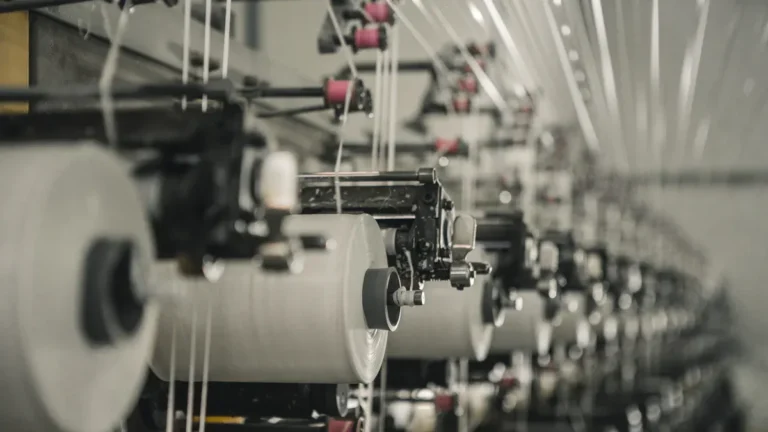
Modern flat-bed machines can execute cables through needle-to-needle transfers, with practical limits by gauge, yarn, and model. Stoll documentation highlights knitting-plus-transfer systems and knit-and-wear classes that enable structured fabrics and complex shaping. See Stoll’s overview of transfer-capable systems in the 2021 Performer brochure and Knit & Wear class materials: consult the Stoll Performer overview and the Knit and Wear class brochure.
What this means for production:
Cable accents: Efficient on-program with moderate crossing widths (e.g., C2/2L, C4R), fewer drop risks, and faster carriage speeds. Good candidates for 3–5 day protos when yarn is on hand.
Dense Aran panels: Feasible but slower. Frequent transfers, honeycomb/diamond combinations, and bobbles may require slower passes, additional racking, and meticulous yarn tensioning. Expect more time at the linking stage and tighter in-line QC.
Hybrid construction: Many premium styles knit panels on machines and finish with stitch-by-stitch linking. WHOLEGARMENT can reduce seams on certain models, but motif limits and yarn behavior still apply; confirm on your specific machine.
Scenario picks — choose by speed, heritage, season, and OTIF risk
If speed-to-market and accessible cost are your priorities, choose cable accents. You’ll retain tactile interest with fewer transfers and shorter linking time, keeping protos within 3–5 days when materials are ready and programs are straightforward.
If your brand narrative leans heritage and you can price at a premium, choose dense Aran. The multi-motif grammar communicates craft value and warmth; plan for heavier grams, slower carriage speed, and more in-line checks.
For trans-seasonal or warm-market capsules, favor lighter-gauge cable detailing. You’ll get texture without overheating the garment or your freight bill—think of it as “visual weight without thermal weight.”
If you’re targeting strict wholesale OTIF on a first PO, pilot with simplified Aran (larger repeats, fewer bobbles) or limit motifs to key panels. Establish stability first, then escalate complexity in later drops once DHU and cycle-time variance are under control.
Sampling brief (3–5 day protos) — checklist
Use this checklist to accelerate approvals. Adapt to your yarn and machine.
Swatch specs: size, in-pattern gauge after blocking, yarn lot ID.
Stitch charts: include cable notations (e.g., C2/2L, C4R), repeat size, crossing frequency.
Machine & gauge: target needle gauge (e.g., 3G–16G) and acceptable alternates.
Construction notes: panel map, intended linking points, acceptable seam bulk.
Finishing: wash/steam method, blocking dimensions, shrinkage tolerance (%).
QC acceptance: measurement tolerances, required lab tests (ISO/AATCC for shrinkage/pilling), visual criteria for cable definition.
Photos for sign-off: required angles and close-ups of key motifs.
Note: Timelines and grams are volatile with yarn market conditions; date-stamp approvals and keep swatch yield data attached to the tech pack (as of 2026-03-04).
Yarn, cost and logistics considerations (2026)
Texture consumes more yarn than plain jersey because cables “pinch in” and textured motifs add stitches. Trade sources recommend budgeting extra yardage and validating with in-pattern swatches. For practical planning, start with a 10–20% buffer and adjust once you have grams from swatch yield tests. See designer guidance in the 2024 note by Tin Can Knits on yardage for cables and the planning overview from SweetGeorgia Yarns: review the discussion in the Tin Can Knits ‘Yarn for Cables’ explainer (2024) and the SweetGeorgia Yarns yardage planning guide.
Unit cost follows grams and minutes. Dense Aran raises both through additional transfers, carriage passes, and linking. Keep a live cost matrix segmented by yarn (cotton, merino, wool blends, cashmere), gauge, and motif density; mark it “subject to change” with the current date.
On duties and import planning, most knit sweaters fall under HS heading 6110. Duty rates vary by fiber and origin, so simulate landed cost by exact subheading and trade program. Consult the U.S. Harmonized Tariff Schedule entry for heading 6110 as a starting point via the official database: reference the USITC HTS search for 6110.
For compliance signaling, ask vendors for verifiable certificate numbers and check them via the issuing bodies. OEKO‑TEX provides a public Label Check for STANDARD 100 and MADE IN GREEN labels: see the OEKO‑TEX Label Check portal. ISO certifications are verified with the accredited certification body noted on the certificate.
FAQs (snippet-ready)
Is Aran knit the same as cable knit?
No. Cable is a technique (crossing stitches), while Aran is a cultural style combining multiple motifs; the V&A documents Aran’s distinct multi‑motif tradition.
Which is better for small-batch production: cable or Aran?
Cable accents generally suit small batches better due to lower yarn consumption and faster programming/linking, reducing unit minutes versus dense Aran.
How much more yarn does an Aran sweater use compared with a cable‑accent sweater?
It varies by chart and gauge, but dense Aran typically requires materially more grams; plan a 10–20% buffer and confirm via in‑pattern swatch yields.
Can computerized flat‑bed machines knit Aran patterns?
Yes, within model and yarn limits. Transfers can render cables and many textures, but dense motifs and bobbles slow carriage speed and elevate drop risk.
Which knit is warmer: cable or Aran?
Dense Aran tends to be warmer due to thicker, more textured fabric; gauge, fiber, and motif density ultimately determine thermal feel.
Also consider
If you need a factory partner to execute either path, AzKnit supports factory‑direct sampling and flexible MOQs suitable for textured knits; see the homepage at AzKnit for capability context.
How to choose — a quick recap
Pick cable accents when you need speed, lower grams, and consistent throughput on computerized flat beds.
Pick dense Aran when heritage storytelling and warmth justify a higher MSRP and longer lead times.
Whichever you choose, build a dated swatch‑based cost matrix and include a sampling brief with gauge, charts, and blocking instructions. That’s how you keep approvals crisp and OTIF on track.