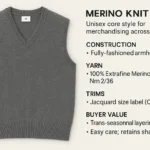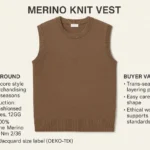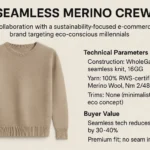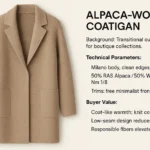
Merino Wool Knitwear – Softness, Performance, and Sustainability for Modern Brands

Merino wool is prized for its fine fibers, natural stretch, and temperature regulation, making it ideal for sweaters, hoodies, cardigans, and premium knitwear collections.

What is Merino Wool?

wool fabric

Merino wool comes from Merino sheep, primarily raised in Australia and New Zealand. Known for its fine fibers (17–21 microns), it offers exceptional softness, breathability, and natural moisture control. Unlike regular wool, Merino feels smooth against the skin and adapts to both luxury fashion and high-performance knitwear.

  • Origin: Fine wool from Merino sheep, mainly raised in Australia and New Zealand.

  • Fiber properties: 17–21 microns (superfine grades), soft hand-feel, moisture-wicking, odor resistant.

  • Distinction: Unlike regular wool, Merino is lightweight, breathable, and comfortable against the skin, making it suitable for both luxury and performance knitwear.

Check Widely Used Fabric

Merino Wool in Knitwear Styles

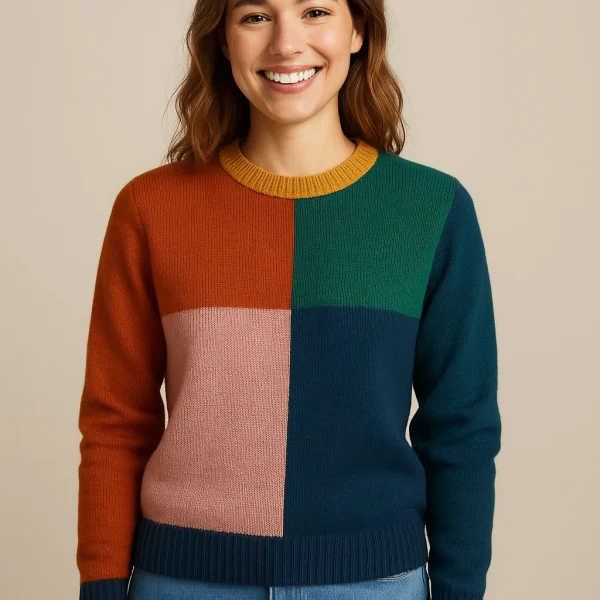
Merino Wool Sweaters

merino wool sweaters
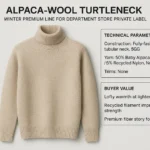
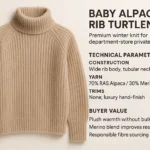
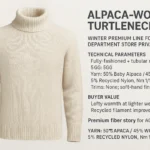
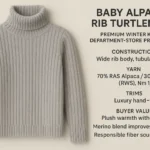
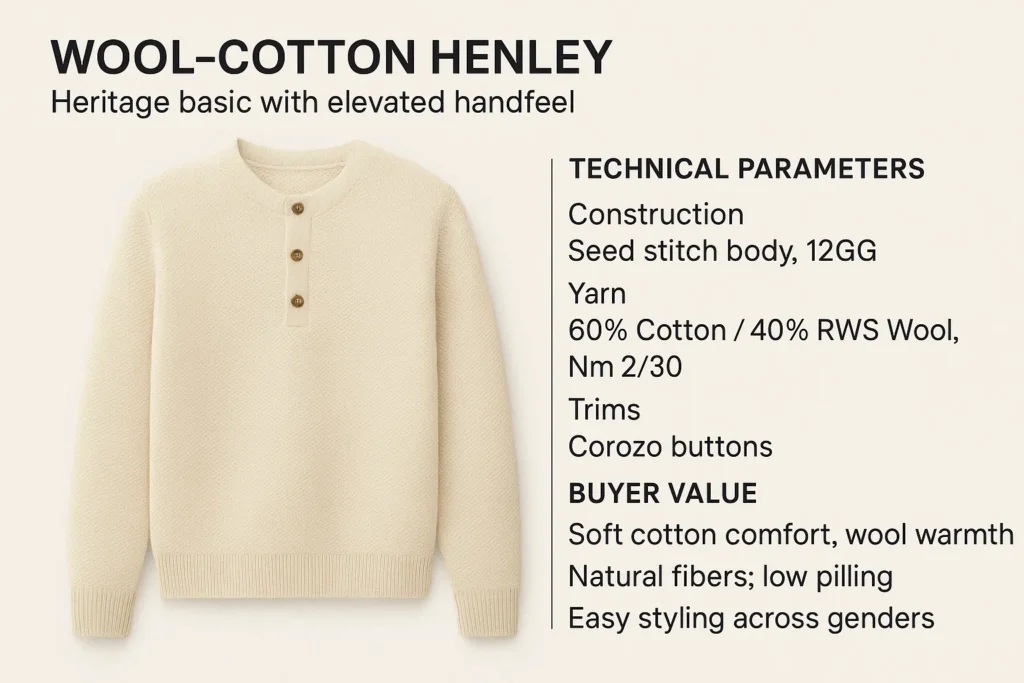
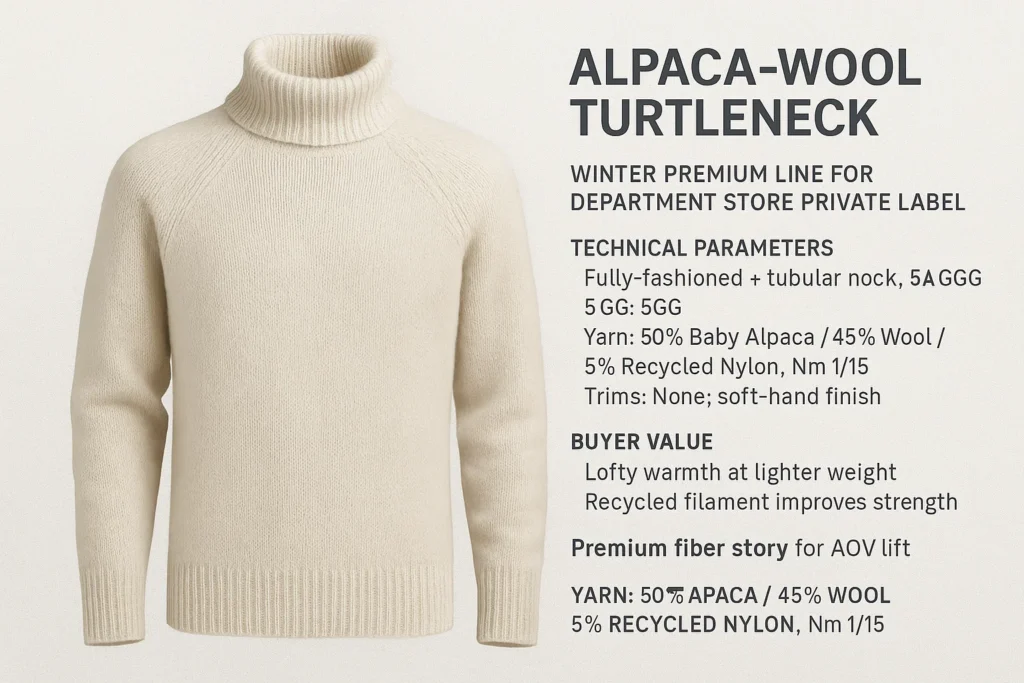
  • Crew necks, V-necks, and turtlenecks.

  • Perfect for both luxury retail lines and corporate wear.

  • Available in fine-gauge lightweight or chunky winter styles.

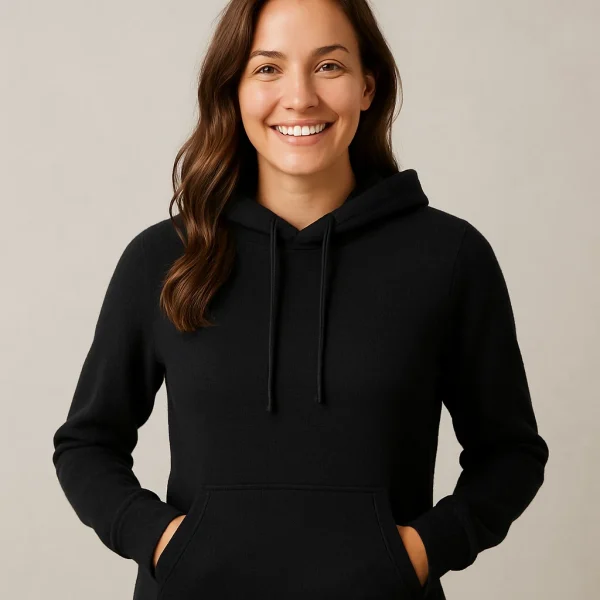
Merino Wool Hoodies

merino wool hoodie
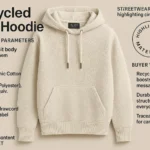
  • Premium upgrade to casual wear.

  • Combines softness with natural temperature regulation.

  • Popular for sportswear and urban lifestyle collections.

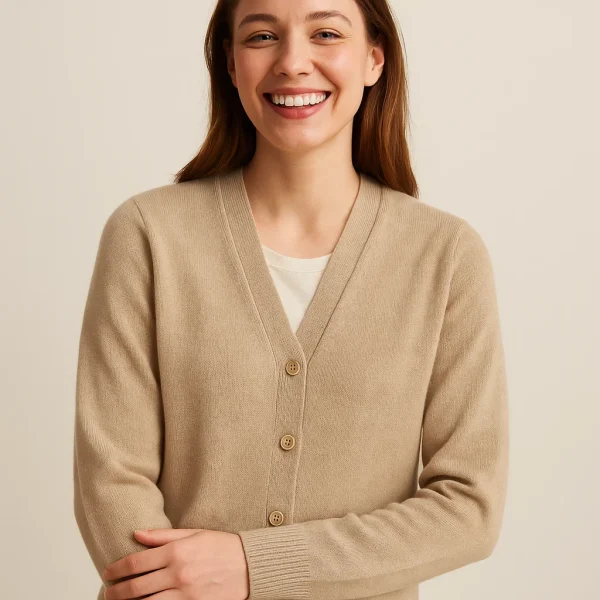
Merino Wool Cardigans

merino wool cardigan
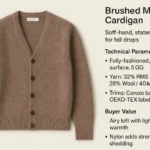
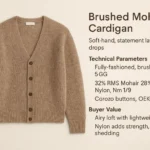
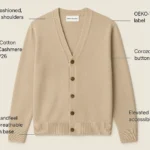
  • Longline, cropped, and button-down designs.

  • Smooth drape with natural elasticity for comfort.

  • Fits well in professional and fashion-forward collections.

Merino Wool Dresses & Tops

merino wool dresses tops
  • Fine-gauge dresses, breathable tops, layering tanks.

  • Suitable for all-season wear due to thermo-regulating fibers.

Merino Wool Accessories

merino wool accessories
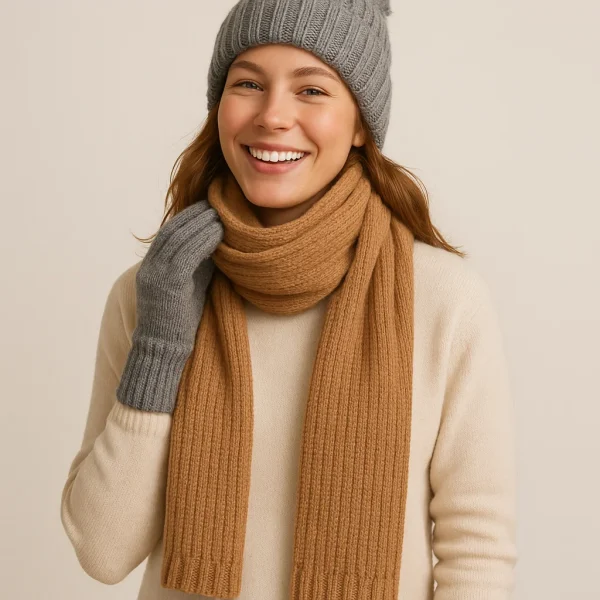
  • Scarves, hats, socks, gloves.

  • High demand in both retail and promotional B2B orders.

Other Styles

merino wool other style
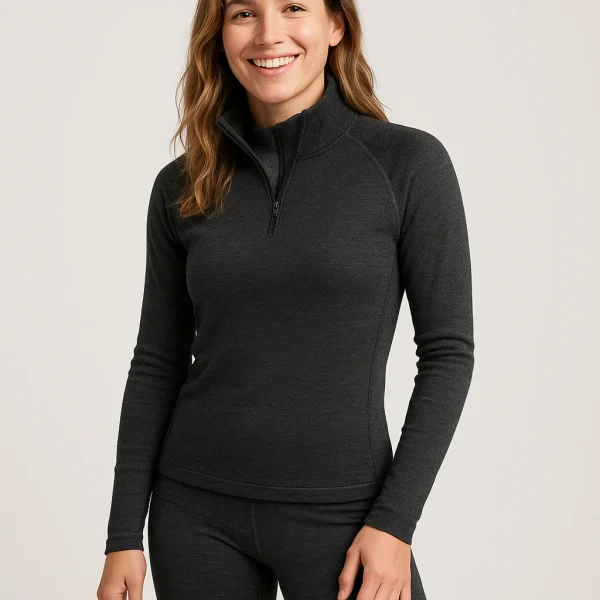
  • Activewear (leggings, base layers, performance knits).

  • Jackets and outerwear blends.

  • OEM/ODM options for both luxury and mass retail.

Merino Wool Technical Parameters


ParameterDetail Example
Fiber Diameter17–21 microns (Superfine, Extra Fine)
Yarn Count (Nm)2/30, 2/48, 2/60
Gauge Options5GG, 7GG, 12GG, 16GG
Ply Options1–4 ply
Blends100% Merino, Merino + Nylon, Merino + Cashmere, Merino + Tencel
PerformanceMoisture-wicking, thermo-regulating, odor resistant
CertificationsRWS (Responsible Wool Standard), OEKO-TEX

Merino Wool Case Studies

Merino Wool FAQs

Merino fibers are much finer (17–21 microns) than regular wool, making them softer, lighter, and more comfortable against the skin. This allows brands to use Merino not only in sweaters and cardigans but also in performance layers and luxury basics without the itchiness of coarse wool.

Yes, we source Responsible Wool Standard (RWS) certified yarns upon request. This certification ensures animal welfare, sustainable land management, and full supply-chain traceability, which helps brands meet eco-compliance requirements and build trust with conscious consumers.

Absolutely. Many activewear brands blend Merino with nylon, polyester, or elastane to improve stretch, durability, and shape retention. This way, your collection benefits from Merino’s natural breathability and odor resistance while meeting performance expectations for sports and outdoor use.

Our standard MOQ starts at 100 pieces per design per color. For brands testing a new line or launching a capsule collection, we can also discuss smaller runs or flexible solutions, so you don’t carry excess stock risk.

We pre-treat and condition the yarns to improve dimensional stability, then run wash and wear tests on samples before mass production. This ensures garments maintain their fit and softness, reducing the risk of returns for your retail partners.

Merino Wool Blends

Elevate with Merino Wool

Position your factory as a trusted partner for premium and sustainable Merino production.

Latest Blogs

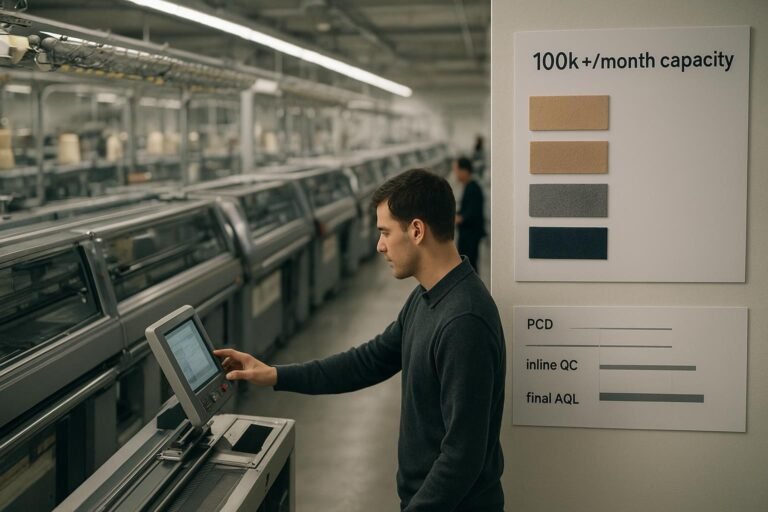
High-volume knitwear factory floor with parallel flat knitting machines and QC milestones visualized
Enterprise buyer’s ultimate guide to selecting a knitwear manufacturer for large orders (50,000+ units)
Comprehensive guide to selecting a knitwear manufacturer for large orders—prove 100k+ capacity, optimize...
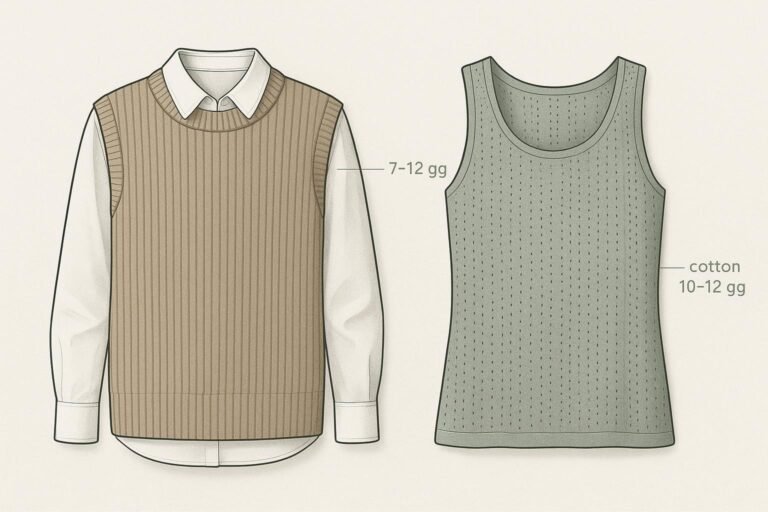
Editorial technical cover illustration of a women’s ribbed sweater vest (7–12 gg) and a cotton knit tank top with openwork, showing trim callouts.
2026 Women’s Sleeveless Knitwear: Trend & Merchandising Guide for Sweater Vests (7–12 gg) and the Knit Tank Top
Comprehensive 2026 guide for sourcing, specs, and merchandising of knit tank top and 7–12 gg sweater...
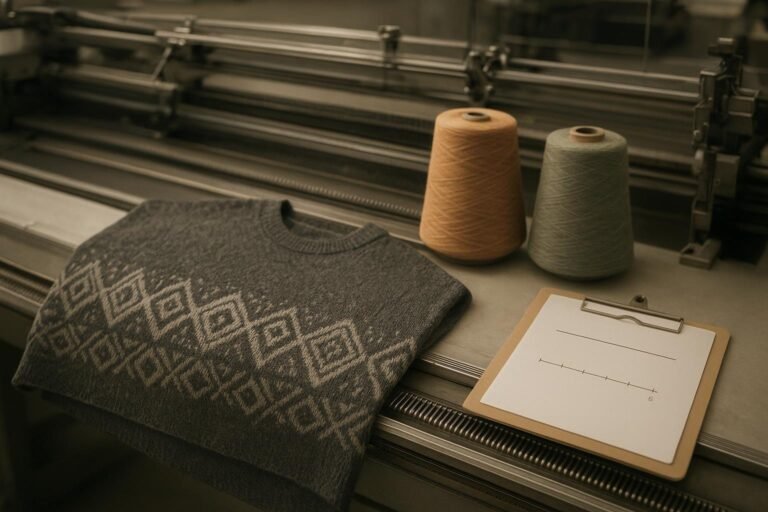
Flat knitting of a poncho-style sweater panel with digital jacquard on a factory machine, yarn cones nearby
Poncho Sweater Manufacturing: The Complete DTC Guide
Complete guide to designing, sourcing, and manufacturing poncho sweaters for DTC brands—sampling, 5G...
Knitwear production timeline with 3–5 day sampling and ≈3-week bulk lead time visualized on a Gantt chart
OEM vs ODM Knitwear: Comparison and Lead Time Guide
Comprehensive guide comparing OEM vs ODM knitwear manufacturers, lead times, 3–5 day sampling, ≈3‑week...
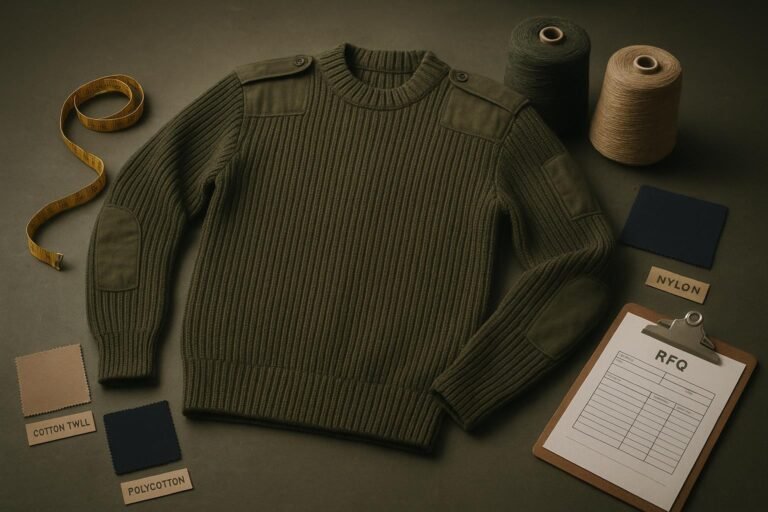
Photorealistic army-style commando sweater with reinforcement patches on a sourcing worktable
Commando Sweaters (Military/Army-Style): Procurement, Specifications, and OEM/ODM Manufacturing Guide
Comprehensive OEM/ODM ultimate guide to commando sweater specs, sourcing, sampling timelines, MOQs, and...
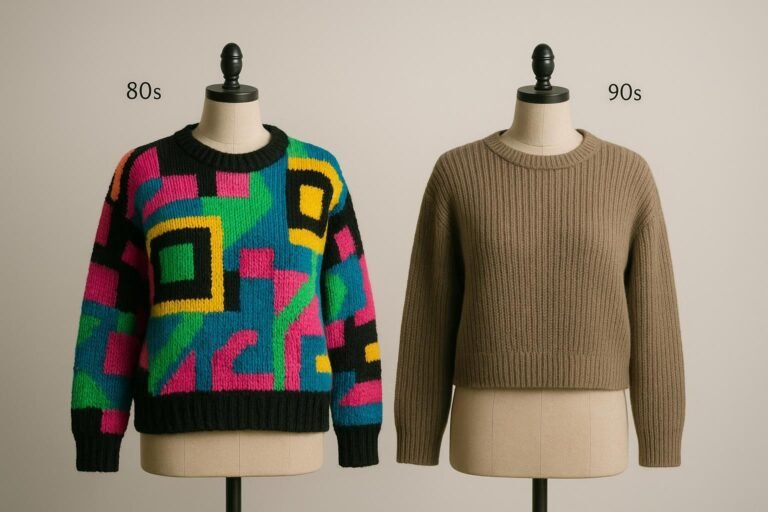
Side-by-side 80s graphic intarsia sweater and 90s minimalist ribbed sweater on dress forms
80s vs 90s Sweaters (2026): A Buyer’s Guide from Sampling to Mass Production
Compare 80s vs 90s sweaters—yarns, gauges, intarsia vs jacquard, sampling-to-bulk timelines, MOQs, and...
From sketch to sweater – AZ Knit brings ideas to life.