
Bringing on a new knit supplier for infant apparel is exciting—but you can’t skip certificate validation. This FAQ walks you through quick, field-level checks for a GOTS Scope Certificate, shipment-specific Transaction Certificates, and OEKO‑TEX STANDARD 100 Product Class I. You’ll find official tools, what to match, common red flags, and a compact trim matrix tailored to baby cardigans. If you follow the steps below, GOTS and OEKO-TEX verification becomes a fast, repeatable part of onboarding.
Key takeaways
Use the official GOTS Certified Suppliers Database and OEKO‑TEX Label Check to validate status and scope in minutes.
A GOTS Scope Certificate proves a facility’s approval; a Transaction Certificate is shipment-specific evidence. Don’t confuse them.
For baby garments, OEKO‑TEX must indicate Product Class I and be in date; names and article details must match.
Trims don’t count toward organic fiber percentage under GOTS, but they must meet toxicological and materials rules—track them in a trim matrix.
Keep a pre‑PO checklist and request typical audit trail docs to reduce back‑and‑forth and mitigate risk.
What is the difference between a GOTS Scope Certificate and a Transaction Certificate?
A GOTS Scope Certificate (SC) is issued to a certified entity by an approved certification body. It lists the company name and address, licence/scope ID (often called the Scope ID or licence number), validity dates, approved processing/manufacturing/trading activities, and product categories. It confirms the organization is approved to perform those activities for the listed product groups. See the formal definitions in the Global Organic Textile Standard v7.0. The GOTS site’s section on traceability explains how certification underpins end‑to‑end coverage.
A GOTS Transaction Certificate (TC) is issued for a specific shipment or batch to maintain traceability as certified goods move through the chain. It references previous certificates and includes shipment details (seller/buyer, product description and composition, quantities/weights, and invoice or packing references). Every product line on a TC must be allowable under the supplier’s SC. For examples of the data boxes, review the official TC template. Also see the GOTS traceability explainer for how TCs link the chain.
Authoritative sources: the Global Organic Textile Standard v7.0 and the GOTS traceability page.
How do I confirm a supplier is currently GOTS‑certified and in scope for baby cardigans?
Follow these steps during supplier onboarding:
Go to the GOTS Certified Suppliers Database on the Global Organic Textile Standard website. Use the licence number from the supplier’s SC to search the public record and open the company entry.
Confirm the certified entity’s legal name and address match the SC PDF; verify that the issuing certification body appears on the GOTS list of approved CBs for the relevant country; check that the validity dates are current.
Review product categories to ensure they cover the goods (e.g., yarns/fabrics/garments relevant to knit baby cardigans) and that the listed processing/manufacturing activities include the steps the supplier will perform (e.g., knitting, linking, washing, trading). Request the SC PDF and ensure the production sites/subcontractors listed align with actual plans.
Helpful links:
GOTS Certified Suppliers Database: see the “Certified Suppliers Database” on the official site: GOTS Certified Suppliers
GOTS Standard v7.0 (official PDF): Global Organic Textile Standard v7.0
GOTS Traceability overview: GOTS key features: traceability
Approved Certification Bodies directory: GOTS Approved Certification Bodies
At onboarding, what TC details should I ask for and which fields must match the SC?
Even before your first PO, ask the supplier for a recent sample TC (redacted is fine) to familiarize your team with fields. At shipment time for certified goods, you’ll need a TC that:
Is issued by a GOTS‑approved certification body aligned with the supplier’s SC.
Shows the supplier’s legal name/address matching the SC.
Lists products and compositions that fall within the SC’s approved product categories and label grade.
References buyer/seller, invoice or packing list numbers, and includes quantities/weights that are plausible.
High‑level TC workflow expectation: The supplier requests a TC from its certification body after assembling supporting evidence (prior SCs/TCs for inputs, invoice/packing references, and product approvals). Many CBs provide guidance and a request form outlining boxes such as seller/buyer, consignee/shipment, product lines, compositions, and previous certificate references. A representative guide from a major CB shows the typical fields and timelines: Guidance to completing a GOTS TC request (PDF).
For the official data layout of a TC, see the template: GOTS Transaction Certificate template.
How do I verify OEKO‑TEX STANDARD 100 and confirm Product Class I for baby garments?
Use the official OEKO‑TEX Label Check tool:
Enter the certificate/label number or scan the QR code.
Confirm the company name and address match the supplier’s certificate.
Check that the validity period covers your production window.
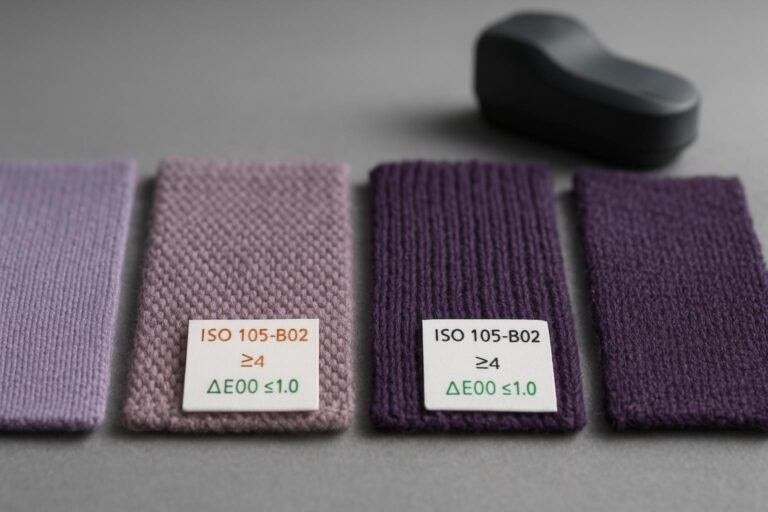
Ensure Product Class equals Class I (required for babies up to 36 months and items with intensive skin contact).
Review the article or product group field to ensure it aligns with your material (e.g., dyed cotton yarn, knitted fabric, finished garment).
Helpful links:
OEKO‑TEX Label Check: Verify a STANDARD 100 label
STANDARD 100 (official English standard PDF): OEKO‑TEX STANDARD 100
What are common red flags that require extra due diligence?
GOTS (SC/TC):
SC expired or the certification body is not on the GOTS‑approved list.
Product category or processing step missing on the SC for the claimed goods.
TC lists products not found on the SC, or quantities seem inconsistent with inputs.
Buyer/seller names or addresses don’t match business records; unusual or outdated certificate templates.
OEKO‑TEX STANDARD 100:
Certificate number not found in Label Check or holder name mismatch.
Validity expired or Product Class not equal to Class I for baby goods.
Certificates claiming “organic/GMO‑free” under STANDARD 100 (recent updates removed such claims; organic content is covered under different OEKO‑TEX programs).
If any red flag appears, pause onboarding and contact the certification body or the scheme owner for clarification.
How should I handle trims, labels, and packaging for baby cardigans?
Principles for GOTS compliance on infant knitwear:
Trims and accessories don’t count toward the organic fiber percentage but must meet GOTS toxicological and materials requirements. Pre‑applied adhesive labels are treated as accessories.
Packaging should avoid chlorinated plastics such as PVC and favor recycled or responsibly sourced paper/cardboard. Hangers and auxiliary items should follow sustainability criteria.
Maintain evidence for each trim/accessory: certificates if applicable, restricted substance declarations, chemical Safety Data Sheets, and any letters of approval from the certification body.
Trim compliance matrix (example fields):
Trim item | Material | Supplier | Evidence reference | Applicable GOTS clause | Class I risk notes |
|---|---|---|---|---|---|
Buttons | Bio‑based or approved polymer | ABC Trims | SDS + residue declaration | Accessories rules and residue limits | No sharp edges; saliva exposure |
Zipper | Approved metal alloy + nickel‑safe finish | XYZ Zips | Supplier declaration + finish spec | Accessories and metal component rules | Nickel migration risk; use covered placket |
Care label | Cotton or approved fiber | LabelCo | Material spec + chemical inputs list | Labeling materials and inks | Low‑migration ink; seam not scratchy |
Hangtag | Recycled paper | PaperWorks | Recycled content statement | Packaging and sustainability criteria | Remove before use note for infants |
What document pack should I request from suppliers before issuing a PO?
Use this generic pre‑PO checklist focused on validity and authenticity: request the current GOTS Scope Certificate PDF with licence number and confirm status via the public database; add one or two recent sample GOTS Transaction Certificates for similar materials or garments; include the OEKO‑TEX STANDARD 100 certificate that clearly shows Product Class I and attach a screenshot or PDF from Label Check; ask for a trim/accessory evidence pack listing materials, SDS, restricted substance declarations, and any available approvals; request a brief SOP excerpt showing who requests TCs and how they’re stored; and obtain written confirmation that production sites and subcontractors match the SC and that no banned subcontractors are used.
Disclosure: AzKnit is our product. As an OEM/ODM knitwear manufacturer, AzKnit typically provides buyers with certificate PDFs, sample TCs, and a trims evidence pack during onboarding; use these materials to perform your independent checks.
If something doesn’t match, what’s the escalation path for GOTS and OEKO-TEX verification?
Ask the supplier for clarification and updated documents. Keep all correspondence in your onboarding file.
Contact the issuing certification body noted on the SC/TC for verification if doubt persists, using the CB name shown on the documents and the GOTS approved CB directory to identify contacts.
For OEKO‑TEX questions, use the Label Check details to identify the institute and request confirmation.
Pause orders for certified claims until discrepancies are resolved; if necessary, adjust your labeling and marketing to remove claims.
Document your checks, save PDFs and screenshots to a shared drive, and keep your trim matrix current as styles change. Think of it as a living SOP—done well, GOTS and OEKO-TEX verification becomes fast, consistent, and audit‑ready.