When you ask, how do factories calculate bulk knitwear pricing?, you need to look at every part of the process. Each garment starts with a clear breakdown of costs. You often use a cost sheet for a clothing garment factory to track these details. The cost sheet for garment manufacturing lists fabric, labor, overhead, trims, and packaging. Factories use a garment costing sheet to keep things accurate. Here is a typical cost sheet for a clothing garment factory:
Cost Component | Description |
|---|---|
Fabric Costs | This is 40% to 70% of total costs. It includes base price, import duties, and freight. |
CM (Cut and Make) Costs | Labor costs for cutting and making the garments. |
Overhead Costs | These are general costs like utilities and rent. |
Logistics | These are costs for shipping and handling finished products. |
Trims and Packaging | These are extra costs for accessories and packaging materials. |
Testing Fees | These are costs for quality checks and compliance testing. |
Discounts | These are savings from bulk orders or minimum order quantities. |
Seasonal Pricing | These are changes in fabric costs from market trends and supplier availability. |
If you want to answer, how do factories calculate bulk knitwear pricing?, you must study each cost sheet for a clothing garment factory. Every garment has its own needs. The costing sheet helps you see changes in manufacturing costs. You should also use a garment costing sheet to compare with industry benchmarks. When you ask, how do factories calculate bulk knitwear pricing?, remember the answer depends on careful tracking and analysis. How do factories calculate bulk knitwear pricing? They check every garment, update each cost sheet for a clothing garment factory, and use a costing sheet to make pricing fair and competitive. How do factories calculate bulk knitwear pricing? They focus on each step, from fabric to packaging, to keep prices right and profits strong. You can use these steps to improve your own manufacturing costing in garment industry work.
Key Takeaways
Learn about the cost parts of bulk knitwear pricing. These include fabric, labor, overhead, and logistics.
Use a garment costing sheet to keep track of all costs. This helps you make sure prices are fair.
Check your costing sheet often and update it. This is important when material prices or labor rates change.
Build trust with buyers by showing your costing sheet. Explain how you figure out the prices.
Talk with suppliers to get better prices. Buying in bulk can help you pay less.
Watch for seasonal trends to change prices. This helps you manage costs during the year.
Use technology and machines in production. This makes work faster and lowers costs.
Choose a profit margin that covers all your costs. Make sure your prices are still good for the market.
Why Bulk Knitwear Pricing Accuracy Matters
Impact on Factory Profitability
It is important to know how pricing affects profit. Setting the right price for each garment keeps your business safe. A detailed costing sheet shows every cost in bulk manufacturing. You list the price of yarn, labor, trims, and overhead. When you figure out the cost for each garment, you make sure all expenses are covered. You also add a profit margin to keep your business strong. If you forget a cost, you might sell bulk orders at a loss. Good pricing helps you plan for growth and buy better equipment. Using smart costing keeps your price fair and your profit steady.
Buyer Trust and Long-Term Relationships
You earn trust from buyers by showing clear pricing. Buyers want to know how you figure out the cost for each garment. A clear costing sheet helps buyers see every part of the price. You show the cost of bulk manufacturing, trims, packaging, and logistics. When buyers see your cost calculation, they feel sure about your price. This stops surprises that could hurt your relationship. Buyers come back for more bulk orders when they trust your pricing. Fair prices and honest costing help you build long-term partnerships. You also get a good name for being reliable in the garment industry.
Tip: Always share your costing sheet with buyers. This makes it easy to answer price questions and build trust.
Preventing Cost Overruns
You stop cost overruns by using correct costing methods. Many factories have trouble when they guess the cost of bulk manufacturing wrong. You need to track every cost in your calculation. If you miss a cost, you might face extra expenses. Here are some common reasons for cost overruns in bulk knitwear production:
Cause | Explanation |
|---|---|
Underestimating project costs | Not guessing costs right can lead to spending too much, because surprise expenses come up without a good budget. |
Scope creep | Changes outside the first agreement can cause delays and more costs, leading to overruns. |
Bad risk management | Without a risk plan, companies may not see surprise costs coming, which leads to overruns. |
Poor communication | Not talking well can mean changes are missed, which can hurt the budget and cause overruns. |
You avoid these problems by updating your costing sheet for every bulk order. You include all costs, from garment materials to logistics. You use cost calculation to set the right price and avoid losses. You also check your costing often to spot market changes. When you control your costs, you keep your price steady and protect your profit.
Bulk Knitwear Cost Components
Yarn and Fabric
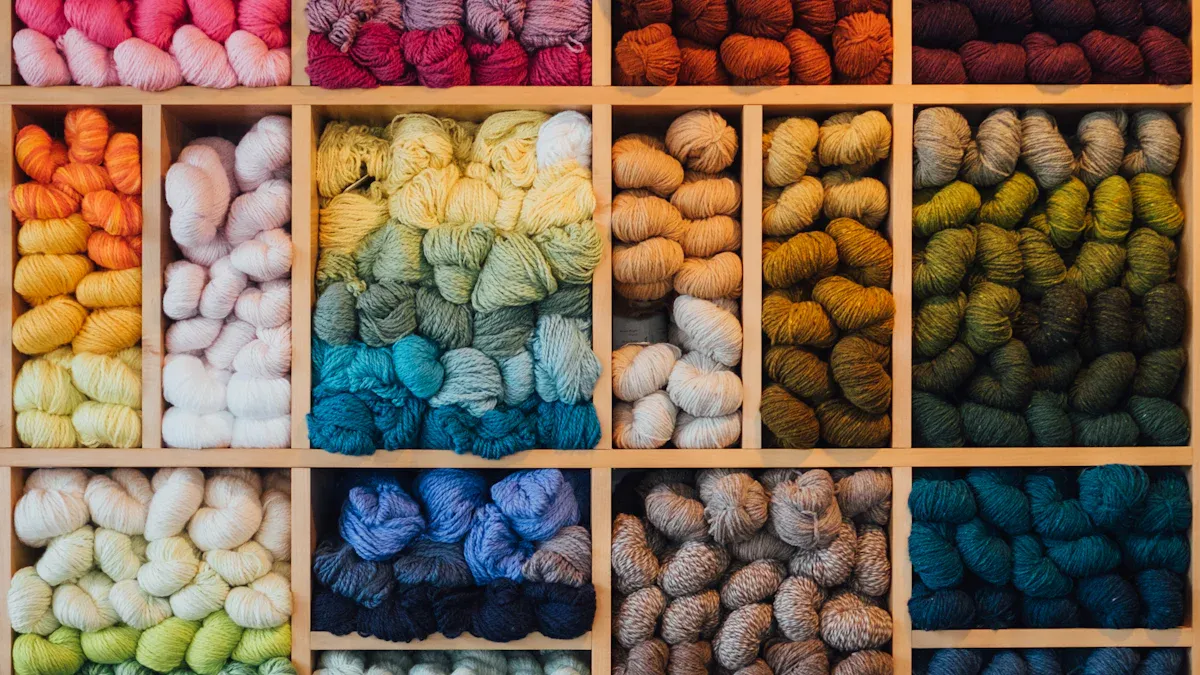
When you start pricing a knitwear garment, you need to look at yarn and fabric first. These materials make up the largest part of your cost price. The cost of fabric depends on the type, quality, and source. You might choose cotton, wool, or synthetic yarns. Each one has a different price and affects your total fabric cost. Market changes can make yarn prices go up or down. If the cost of fabric rises, your total fabric cost will increase. You must watch for changes in trade policies and shipping fees. These can change your price quickly.
Types and Sourcing
You can buy yarn and fabric from local or international suppliers. Local sourcing may lower your logistics price, but sometimes you need to import special yarns. Imported yarns can add to your cost price because of tariffs and shipping. You should always check the quality and price before you buy. The total fabric cost includes the base price, wastage, and any extra fees for dyeing or finishing. When you plan your costing, you must include all these details to get the right cost price for each garment.
Note: Fluctuations in yarn and fabric prices can change your production budget. Always update your costing sheet to reflect the latest price.
Trims and Accessories
Trims and accessories add value and style to your knitwear. You need to count every button, label, and zipper in your costing. These items may seem small, but they can make up 6% to 7% of your total cost price for a garment.
Category | Percentage |
|---|---|
Trims & Accessories | 6% – 7% |
You must include the price of labels, hangtags, and polybags in your cost sheet. If you miss these, your cost price will not match your real expenses. Always check the price of trims with your suppliers before you set your final price.
Buttons, Labels, Zippers
You should list every button, label, and zipper in your costing sheet. Each item has a price that adds to your cost price. Some garments need special trims, which can raise your total cost. Always ask your supplier for the latest price and add it to your cost sheet.
Labor
Labor is a key part of your cost price. You need to know how much you pay for sewing time and labor costs. Labor costs include both direct and indirect labor. Direct labor covers the workers who sew and finish the garment. Indirect labor includes supervisors and maintenance staff. Both types affect your total cost price.
Direct vs. Indirect Labor
Direct labor costs come from the people who make the garment. Indirect labor costs come from support staff. You must add both to your costing sheet. If you miss any labor costs, your price will not cover your real expenses. Always check your labor costs and update your costing to keep your price fair and competitive.
Tip: Accurate labor costing helps you set the right price and avoid losses in bulk orders.
Primary Cost Components Table
Description | |
|---|---|
Fabric Cost | Includes type, GSM, consumption, wastage, and price per kg based on yarn type. |
Trims and Accessories | Costs for labels, hangtags, polybags, and other accessories. |
Printing or Embroidery | Costs based on type, size, colors, and placement of prints or embroidery. |
Washing Cost | Costs for various washing processes, calculated per piece. |
CM (Cutting & Making) Cost | Labor and overhead costs for manufacturing, including sewing and finishing. |
Overhead and Commercial Cost | In-house overhead, bank charges, and inspection/testing costs. |
Overhead
Overhead means all the extra costs to run your factory. You must add these costs to your costing sheet for each garment. Overhead is made up of things that are not part of the garment but still change your price.
Salaries and pay for staff
Bills for electricity, phone, and internet
Money spent on transport
Things like diesel and chemicals for finishing
Costs for managers and office leaders
Money for employee welfare
Paper, pens, and printing
Fees for lawyers and other professionals
Pantry and cleaning costs
Extra pay for overtime
You should get numbers from your accounts team for the last six months. Use the same fixed overheads for each month. Find the average for costs that change. To get the overhead for each garment, divide the total overhead by the number of garments made. For example, if your factory pays $25,000 for rent, $12,000 for electricity, $5,000 for maintenance, and $10,000 for other things each month, your total overhead is $52,000. If you make 30,000 garments, the overhead for each one is $1.73. This helps you set the right price and not miss any costs.
Utilities, Maintenance
Utilities and maintenance are big parts of overhead. You must add bills for electricity, water, and internet to your costing. Maintenance means fixing machines and checking them often. If you forget these, your cost price will not be correct. Always update your costing sheet with the newest utility and maintenance costs to keep your price right.
Packaging
Packaging keeps your garment safe and makes it look nice for buyers. The kind of packaging you pick changes your cost price. Bulk packaging costs less. Individual packaging costs more but can make your product special.
Packaging Type | Description | |
|---|---|---|
Custom Polybags | $0.03–$0.08 | With logo or size print |
Hangtags | $0.05–$0.12 | With string, barcode, or QR code |
Retail Packaging Box | $0.30–$0.70 | For premium segments |
Bulk packaging is good for big orders and keeps costs low. Individual packaging, like boxes, costs more but helps you sell in fancy stores. Always add the packaging cost to your costing sheet for each garment.
Bulk vs. Individual
Bulk packaging means packing many garments together. This lowers your cost price and helps you give buyers a better deal. Individual packaging means each garment gets its own bag or box. This costs more but can make your product look better. Pick the packaging that fits your buyer’s needs and your price goal.
Logistics
Logistics means the cost to move your garment from the factory to the buyer. This cost changes depending on where you ship and how fast you need it there. Shipping inside your country usually costs less and is safer. Shipping to other countries can cost more because of longer trips, tariffs, and customs.
Factor | South America | Asia-Pacific |
|---|---|---|
Cost-effective but slower | Shorter and more predictable | |
Port Efficiency | Lower TEU handling | Higher TEU handling |
Tariff Uncertainty | Potential reductions by 2026 | Stable tariffs |
Sustainability Considerations | Longer routes increase carbon | Closer sourcing reduces impact |
You must add all logistics costs to your costing sheet. If you ship to Asia-Pacific, you may get faster delivery and steady tariffs, which helps keep your price the same. Shipping to South America may cost less but takes longer and has more risks. Always check logistics costs before you set your final price for each garment.
Domestic vs. International
Domestic logistics means shipping inside your own country. This keeps your cost price low and makes delivery faster. International logistics means shipping to other countries. This adds to your cost and can change your price because of tariffs and shipping time. Always update your costing sheet with the newest logistics costs to keep your price fair.
Profit Margin
When you set the price for a bulk knitwear garment, you must include a profit margin. This margin is the extra amount you add to your cost price. It helps your factory stay healthy and grow. You need to know your total cost before you add the profit margin. The cost price includes yarn, labor, trims, overhead, packaging, and logistics. If you miss any part of the cost, your profit margin will not be correct.
You should always use a clear costing method. Start by listing every cost for the garment. Add up the cost price for each part. Once you have the total cost, you can decide on the profit margin. Most factories use a set percentage for the profit margin. This keeps your price fair and helps you compete in the market.
Industry Standards
Factories often follow industry standards for profit margins. These standards help you set a price that covers your cost and gives you a good return. In the knitwear industry, the profit margin usually ranges from 8% to 15%. Some factories use higher margins for special garments or small orders. For large bulk orders, you might use a lower profit margin to offer a better price.
Here is a simple table to show how you can calculate the final price for a garment:
Step | Example Amount ($) | Description |
|---|---|---|
Total Cost Price | 10.00 | All costs for one garment |
Profit Margin (10%) | 1.00 | 10% of the cost price |
Final Price | 11.00 | Cost price plus profit margin |
You must check your margins often. If your costs go up, you need to adjust your price. If you keep your profit margin too low, you may not cover all your costs. If you set your price too high, buyers may look for other suppliers. Always balance your profit margin with the market price.
Tip: Review your costing sheet every month. This helps you spot changes in cost price and keep your profit margin strong.
You can also compare your price with other factories. This helps you see if your profit margin matches industry standards. If you want to grow your business, you must protect your margins. Good costing and a fair profit margin help you build trust with buyers and keep your factory running well.
How Do Factories Calculate Bulk Knitwear Pricing?

Factories use different methods to set the price for bulk knitwear. You can choose manual calculation or software tools. Each method helps you track every cost and keep your price accurate. You need to understand the anatomy of a garment costing sheet before you start. This sheet shows every part of the cost price for each garment. You use it to make sure your calculation covers all expenses and helps you set a fair price.
Manual vs. Software Methods
You can use manual methods for calculation. You write down each cost on paper or in a spreadsheet. This lets you see every detail in your costing sheet. Manual calculation works well for small factories or simple orders. You check each cost price and update your garment costing sheet by hand.
Software methods use special programs for calculation. These tools help you fill out your costing sheet faster. You enter the cost for fabric, trims, labor, and overhead. The software adds up the cost price and shows you the final price. Many factories use software to avoid mistakes in calculation. You can also use CAD systems to track every cost and update your fashion design garment cost sheet quickly.
Tip: Start with manual calculation if you have a small team. Move to software when your orders grow and you need faster updates to your costing sheet.
Using a Garment Costing Sheet
You need a garment costing sheet for every bulk order. This sheet helps you track each cost and set the right price. The anatomy of a garment costing sheet includes all the main cost price parts. You list fabric, trims, labor, overhead, packaging, and logistics. You also add office expenses and selling costs. The costing sheet helps you see where your money goes and how to set your price.
A standard garment costing sheet includes these elements:
Prime price: You list direct materials, direct labor, and direct expenses.
Manufacturing or labor costs: You add prime cost and factory overhead.
Office expenses: You include manufacturing costs and administrative overheads.
Total expense: You add selling and distribution expenses.
You use the costing sheet to compare your cost price with other factories. This helps you keep your price competitive. You also use the fashion design garment cost sheet to track changes in cost and update your calculation.
Note: Always fill out your costing sheet before you set the final price. This keeps your calculation accurate and helps you avoid missing any cost.
Calculate the Cost of a Garment: Step by Step
You need to follow clear steps to calculate the cost of a garment. Each step helps you fill out your costing sheet and set the right price. You use the fashion design garment cost sheet to track every cost price part. Here is how you do the calculation:
Gathering Cost Data
You start by gathering cost data for your costing sheet. You check the price for fabric, trims, labor, and overhead. You also look at packaging and logistics costs. You need to know the cost price for each part before you start your calculation.
Fabric usage and wastage: You budget for extra fabric to cover waste. If you need 1 yard, you plan for 1.05 yards.
Sewing time and labor costs: You multiply labor time by wage rates. For example, 20 minutes at $15 per hour equals $5.
Packaging, logistics, and hidden costs: You add costs for shipping materials and customs fees.
Raw materials and fabric costs: You check fabric consumption and add a percentage for waste.
Trims and findings: You list costs for buttons, zippers, and other direct costs per unit.
Labor costs (CMT): You estimate labor costs based on time and factory rates.
Overhead costs: You add indirect expenses like rent and utilities as a percentage of costs.
Other costs: You include finishing, packaging, freight, and testing costs.
Profit margin: You add your desired profit margin, usually 30-50% of total costs.
You write each cost on your costing sheet. This helps you see the total cost price for each garment.
Applying Costing Formulas
You use simple formulas for calculation. You add up each cost from your costing sheet. You use the fashion design garment cost sheet to check your numbers. Here is a basic formula:
Total Cost Price = (Fabric Cost + Trims Cost + Labor Cost + Overhead Cost + Packaging Cost + Logistics Cost + Other Costs) × (1 + Profit Margin %)
You fill in each cost from your costing sheet. You check your calculation to make sure you did not miss any cost. You use the costing sheet to compare your cost price with market rates.
Tip: Double-check your calculation before you set your final price. This helps you avoid mistakes and keeps your costing sheet accurate.
Sample Costing Sheet Breakdown
You can use a sample costing sheet to see how the calculation works. Here is a simple breakdown for a knitwear garment:
Costing Sheet Item | Example Cost ($) | Description |
|---|---|---|
Fabric Cost | 5.00 | Includes usage and wastage |
Trims & Findings | 0.80 | Buttons, zippers, labels |
Labor Cost (CMT) | 2.50 | Sewing and finishing |
Overhead Cost | 1.20 | Rent, utilities, admin |
Packaging Cost | 0.40 | Polybags, hangtags |
Logistics Cost | 0.60 | Shipping and customs |
Other Costs | 0.50 | Testing, finishing |
Total Cost Price | 11.00 | Sum of all costs |
Profit Margin (40%) | 4.40 | 40% of total cost |
Final Price | 15.40 | Cost price plus profit margin |
You fill out each part of the costing sheet. You use the fashion design garment cost sheet to track every cost. You check your calculation to make sure your price covers all expenses. You use the costing sheet to set a fair price for bulk orders.
Callout: Always update your costing sheet with new cost data. This helps you keep your calculation current and your price competitive.
You need to use the costing sheet for every bulk order. You check each cost price and update your calculation often. You use the garment costing sheet to compare your price with other factories. This helps you stay competitive and protect your profit.
Factors Influencing Pricing
Order Quantity
Order quantity is important for pricing each garment. If you order more garments, the factory can lower the cost for each one. Factories spread setup costs over many garments. This makes each item cheaper to make. Small orders may cost more because costs are not shared as much.
Bigger orders mean lower prices for each unit:
100 meters: $3.80/m
300 meters: $3.30/m
500 meters: $2.90/m
1000 meters: $2.50/m
More units help spread fixed costs and lower prices.
New brands often order less, but bigger orders save money.
Lower costs per item help you give better deals.
Bulk orders help you bargain with suppliers.
Think about how many garments you want to make. Large orders let you set better prices and keep costs down.
Production Efficiency
Production efficiency changes the price of each garment. Factories with good machines work faster and make more clothes. This lowers the cost for each item. Automated systems use less fabric and waste less. Lean manufacturing helps workers do more in less time.
Evidence Type | Description |
|---|---|
Production Efficiency Improvement | Better technology can make factories over 80% more productive. |
Cost Reduction | Automation can save up to 10% of fabric, cutting costs. |
Labor Productivity | Lean manufacturing can make workers 40% more productive, lowering costs. |
Better efficiency lets you offer lower prices to buyers. It also keeps your costs steady and makes your pricing more accurate. Efficient factories make clothes faster and cheaper.
Tip: Buy new machines and train workers to improve efficiency. This helps you keep prices low and costing correct.
Market Segment
Market segment affects how you set your prices. You need to know if you sell to budget, luxury, or value buyers. Each group wants different prices and quality. Budget buyers want cheap clothes and buy a lot. Luxury buyers want special clothes made with the best materials. Value buyers want good quality at a fair price.
Market Segment | Pricing Strategy | Key Characteristics |
|---|---|---|
Budget | Low prices for lots of sales | Good for shoppers who want to save money, keeps quality okay |
Luxury | High prices for special items | Fancy products, small batches, best materials, and great skill |
Value | Prices between cheap and expensive | For people who want quality but not luxury, sold in bigger amounts |
Set your price to match your market segment. Luxury buyers want better materials and more value. Budget buyers want low prices and simple styles. Value buyers want good quality and fair prices. Your pricing should fit what your buyers want and the market you choose.
Incoterms and Delivery Terms
You have to know about Incoterms and delivery terms when setting prices. These rules tell you who pays for shipping, insurance, and customs. They also change the final cost you give to buyers. If you pick the wrong Incoterm, you might lose money or pay extra.
Incoterms like FOB and DDP change how you figure out costs. With FOB, you pay to make the garment and get it to the port. The buyer pays for shipping and customs after that. With DDP, you pay for everything, including shipping, customs, and delivery to the buyer’s door. DDP costs more, but buyers get a simple price.
You need to write all delivery terms in your costing sheet. The total landed cost has fabric origin, Incoterms, shipping method, HTS code, and customs fees. If you guess freight costs wrong or pick the wrong Incoterm, you could lose money. Always check every detail before setting your final price.
The total landed cost has fabric origin, Incoterms, shipping method, HTS code, and customs fees.
DDP means you pay for everything, so add all costs to your price.
FOB lets buyers pay for shipping and duties, so your price is lower.
Picking the wrong Incoterm or missing freight costs can cause big money problems.
Tip: Go over Incoterms and delivery terms with your buyer before you agree on a price. This helps you avoid mistakes and keeps your profit safe.
Seasonal Trends
Seasonal trends change the price and cost of bulk knitwear. Demand goes up and down at different times of the year. Weather, holidays, and events all change how many garments buyers want. You need to watch these trends to set the right price and manage your costs.
During busy seasons, prices for close knit fabrics often go up. You should change your cost price when demand is high. If you ignore these changes, you might run out of stock or lose money. You can look at old data to guess when prices will go up or down. This helps you plan your costs and keep your price good for buyers.
Seasonal trends in clothing make demand change at different times.
Weather, holidays, and events change how many garments buyers order.
Prices for close knit fabrics go up during busy times.
You can use old data to guess price changes and make more money.
Market changes match seasonal demand, so you can change your price and improve fabric quality.
You should update your costing sheet with new prices each season. This helps you set the right price and avoid surprises. If you plan ahead, you can buy fabric early and get a better price. You also keep your costing right and protect your profit.
Note: Watch seasonal trends and use old data to plan your costs. This keeps your price fair and helps you meet what buyers want.
Effective Garment Costing Tips
Supplier Negotiation
You can save money by talking smart with suppliers. Always check prices from different suppliers before you buy. Show your supplier what other factories charge. Ask if they can give you the same price. This helps you get a good deal and keeps your price low.
If you want to order many times, tell your supplier. Let them know you want to work together for a long time. Suppliers may give you a better price if you keep buying from them. You can also ask if using different fabric or ordering more will lower your cost. Sometimes, the supplier cannot make the price lower. But they might help in other ways, like sending your order faster or giving you better packaging.
Here are some ways to talk with suppliers:
Show what other suppliers charge and ask for the same price.
Tell them you will order again to get a better deal.
Ask if changing fabric or order size can make it cheaper.
If the price cannot go down, ask for extra help or services.
Tip: Good talks with suppliers help you keep your costs low and your prices fair for each garment.
Streamlining Production
You can make your factory work better to save money. Try to make each step, like cutting and finishing, faster. When you save time, you use less labor and spend less money. Always check your garments for good quality. If you have fewer mistakes, you do not waste materials or lose money on returns.
Set time goals for every team, not just sewing. This helps everyone work faster and better. Take care of your machines and use robots or machines when you can. Machines help you make more clothes in less time and keep your costs steady. Watch your money closely so you know where every dollar goes.
Description | |
|---|---|
Optimize timing | Make each step faster to save money. |
Ensure product quality | Fewer mistakes mean you save money. |
Design effective processes | Set time goals for all teams to help costing. |
Asset utilization | Take care of machines to avoid extra costs. |
Automation | Use machines to make more clothes for less money. |
Financial management | Watch your spending to keep prices right. |
Note: Making your factory work better helps you keep prices low and makes your costing more accurate.
Reducing Overhead
You can save money by lowering extra costs. Start by keeping only the supplies you need for your orders. This stops waste and keeps costs down. Use planning to guess how many clothes you need to make. This helps you not make too many or too few.
Make your factory run better. Use things like LED lights or solar power to save on bills. Smart sensors can help you see how much energy you use and find problems early. Try to send more clothes in one shipment to save on shipping.
Keep only what you need to stop extra costs.
Use planning to know how many clothes to make.
Make your factory work better to save money.
Pick things like LED lights or solar power to save on bills.
Use smart sensors to watch and lower energy use.
Ship more clothes at once to save on shipping.
Callout: Lowering extra costs helps you keep prices down and lets you give buyers a better deal for each garment.
Bulk Discounts
You can lower the cost of each garment by using bulk discounts. When you order more pieces, suppliers often give you a better price. This helps you keep your cost price down and makes your costing more accurate. Bulk discounts work best when you plan your orders ahead and commit to larger quantities.
Suppliers usually offer lower prices for bigger orders. You might see a price drop of 10% to 30% when you reach higher minimum order quantities. If you book your production slots early, you can lock in lower fiber prices. This also helps you get priority in scheduling, so your garments get made on time.
Factories spread fixed costs across more garments when you order in bulk. This lowers the FOB cost per piece and helps you offer better prices to buyers. You can use bulk purchasing to stabilize your quotes for high-volume orders. When you commit to a 12-month volume plan, mills can lock in raw acrylic fiber at favorable bulk rates. This reduces material volatility and keeps your unit cost steady.
Here are some ways bulk discounts impact your cost structure:
You pay less for each garment when you order more.
Fixed costs get spread across a larger output, lowering the cost price.
Early booking helps you secure lower fiber prices.
Bulk purchasing lets you stabilize your price quotes for big orders.
Committing to long-term plans helps mills offer better rates and reduces cost volatility.
Order Size | Price Reduction | Impact on Cost Price |
|---|---|---|
Small (Low MOQ) | None | Higher cost per garment |
Medium | 10% off | Lower cost price |
Large (Bulk Order) | 30% off | Lowest cost for each piece |
Bulk discounts also help you manage risk. Factories can spread risk among several clients when they handle high-volume orders. This keeps your price stable and protects your profit margin. You should always ask suppliers about bulk discount options before you set your final price.
Tip: Plan your orders in advance and talk to suppliers about bulk discounts. This helps you keep your cost price low and your costing accurate for every garment.
Regular Cost Reviews
You need to review your cost structure often to keep your pricing competitive. Regular cost reviews help you spot changes in material prices, labor rates, and overhead. When you check your costing sheet every month, you can update your cost price and make sure you do not miss any expenses.
Start by looking at your costing sheet for each garment. Check the price of fabric, trims, labor, and packaging. Compare these costs with your last review. If you see a price increase, update your costing right away. This keeps your cost price current and helps you avoid surprises.
You should also review supplier quotes and bulk discount offers. Sometimes, suppliers change their prices or offer new deals. By reviewing these options, you can adjust your cost price and keep your costing competitive. Use a simple checklist to make your reviews easy:
Check fabric and yarn prices for changes.
Review labor rates and overhead costs.
Update packaging and logistics prices.
Compare supplier quotes and bulk discount offers.
Adjust your costing sheet for every garment.
Regular cost reviews help you keep your price fair and protect your profit. You can also spot trends in the market and plan your orders better. When you review your costing often, you stay ahead of changes and keep your garment pricing strong.
Note: Set a reminder to review your costing sheet every month. This helps you catch price changes early and keep your cost price accurate.
Ensuring Competitive Pricing
Benchmarking Industry Rates
You should check your price against other factories to stay competitive. Benchmarking helps you know if your cost price is like others in the industry. There are different ways to compare your garment pricing. Some factories use group measurements to see how their costs match up. Others use result benchmarking, which means looking at numbers like cost and price and comparing them to other companies.
Here is a table that shows common types of benchmarking:
Benchmarking Type | Description |
|---|---|
Industry Group Measurements | Compare your operations with similar factories. |
Result Benchmarking | Check your cost and price data against other companies. |
Product Benchmarking | See how buyers view your garment compared to competitors. |
Process Benchmarking | Compare your production steps with leaders in the industry. |
Competitive Benchmarking | Study a competitor’s price and cost without their help. |
Cooperative Benchmarking | Work with another company to compare cost price and methods. |
Benchmarking Centre | Use shared data from an exchange to see key results. |
Best Practice Study | Find and use the best ways to lower cost and improve price. |
Internal Benchmarking | Compare your own departments to find better cost price strategies. |
Strategic Benchmarking | Evaluate different ways to set your garment price. |
The International Textile Manufacturers Federation (ITMF) shares reports with cost and price benchmarks for spinning, weaving, knitting, and finishing. These reports show details about cost price parts like labor and overhead. You can use these benchmarks to change your garment costing and keep your price fair.
Transparent Buyer Communication
You build trust when you share costing details with buyers. Buyers want to know how you set the price for each garment. You should explain your cost price, including fabric, labor, overhead, and packaging. Clear talks help buyers understand your costing and accept your price.
Use simple tables or lists to show your cost price breakdown. Answer questions about your garment costing quickly. If buyers see your cost price is fair, they will order more garments from you. You can also use feedback from buyers to make your costing and price better.
Tip: Always keep your costing sheet ready to share with buyers. This makes your price clear and helps you avoid misunderstandings.
Technology in Cost Management
You can use new technology to manage your cost and keep your price competitive. Smart knitting machines use AI to cut mistakes and lower labor cost. 3D knitting technology helps you make seamless garments, which saves fabric and cost price. CAD and digital design tools help you make better patterns, saving time and cost.
Here are some top technologies for cost management in garment factories:
Smart and automated knitting machines boost productivity and lower cost.
3D knitting technology reduces fabric waste and labor cost price.
CAD and digital design integration improves pattern accuracy and costing.
Sustainable knitting techniques use recycled materials and save energy, lowering cost.
On-demand manufacturing lets you make garments as needed, reducing inventory cost price.
You can also use smart drive systems to cut energy use by up to 40%. Regenerative braking saves energy when machines stop, lowering your cost. Better heating systems stop heat loss, which can cut energy cost by half. These tools help you control your cost price and improve your garment costing.
Note: Using technology helps you lower your cost, improve your costing, and offer a better price for every garment.
Now you know how to figure out bulk knitwear pricing. Use a garment costing sheet to write down every cost. This helps you make fair prices and keep your profit safe. Check your costs often and see how they match with other factories. Use these ideas to keep your prices right and stay ahead of others.
Tip: Begin updating your costing sheet now. Find ways to manage your costs better and help your factory do well.
FAQ
What is a garment costing sheet?
A garment costing sheet helps you list every cost for making a knitwear item. You use it to track fabric, labor, trims, overhead, and more. This sheet helps you set the right price.
Why do yarn prices change so often?
Yarn prices change because of supply, demand, and market trends. Weather, trade rules, and shipping costs also affect prices. You need to check prices often to keep your costing accurate.
How can you lower the cost per garment?
You can order in bulk, improve factory efficiency, and negotiate with suppliers. Using less packaging and reducing waste also helps. Regular cost reviews let you spot savings.
What is the difference between FOB and DDP?
FOB means you pay to get goods to the port. The buyer pays for shipping and customs. DDP means you pay for everything, including delivery to the buyer’s door. DDP costs more but is simpler for buyers.
How do you handle seasonal price changes?
You watch market trends and update your costing sheet each season. Buying materials early can help you get better prices. Planning ahead keeps your costs steady.
Why is profit margin important in pricing?
Profit margin makes sure your factory earns money after covering all costs. You add it to your total cost to set a fair selling price. Without a margin, you risk losing money.
Can technology help with garment costing?
Yes! Technology like costing software, smart machines, and digital design tools helps you track costs, reduce mistakes, and save time. This keeps your pricing accurate and competitive.
What should you do if a buyer asks for a lower price?
You can review your costing sheet to find savings. Try to negotiate better rates with suppliers or offer bulk discounts. Always explain your costs clearly to the buyer.