
You want to know how do factories ensure size accuracy in knitwear? Getting the size right is important. Over half of people send clothes back because the size is wrong. When you buy knitwear, you want the size to be the same every time. You also want the measurements to be correct. Factories use checks to make sure sizes are right. This helps keep customers happy. The table below explains why having the same size is important for brands:
Key Point | Explanation |
|---|---|
Accurate Sizing | Needed so customers are happy with their clothes. |
Miscommunication | Can cause clothes to not fit and cost money to return. |
Standardization | Helps stop size mistakes and keeps the brand strong. |
Customer Trust | Good fitting clothes make people want to buy again. |
Key Takeaways
Getting the right size is very important for happy customers. It helps stop returns and makes people trust your brand.
Using the same size charts and tech packs keeps sizes the same for all knitwear.
Doing fit tests and checking quality during production finds and fixes size problems early.
Using machines and digital measuring tools makes sizes more exact and lowers mistakes by people.
Teaching workers how to measure right and talk clearly stops errors and makes things better.
Watching things like humidity and temperature is needed to keep fabric the same.
Always trying to get better and listening to feedback helps factories fix and improve their sizing over time.
Standardizing Size Specifications
You want every knitwear piece to fit the same way. Factories use sizing standards to help with this. These rules make sure you get the right fit each time. Sizing standards stop surprises and keep customers happy.
Creating Size Charts
Factories make size charts first. They use ASTM International guidelines for these charts. These are the most common sizing rules for knitwear. There are size charts for babies, kids, men, and women. Each chart lists places to measure, like bust, chest, neckline, back, waist, and sleeve length. Patterns show these spots with simple drawings. This helps you know where to measure.
Measurement Points
Measurement points are the places you check on the garment. You measure the chest, waist, hips, and sleeves. These points help you match the garment to the chart. Using the same points each time keeps sizes the same.
Tolerances
Tolerances tell you how much a measurement can change and still be okay. For example, a sleeve can be 0.5 cm longer or shorter than the chart. Tolerances help you find mistakes before customers do.
Tip: Always check tolerances while making the clothes. This step helps you stop returns and keeps your brand strong.
Tech Packs for Knitwear Production
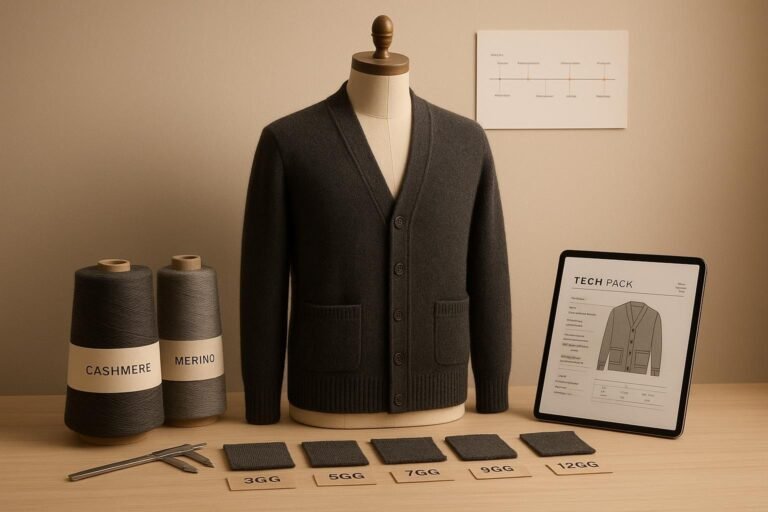
Factories use tech packs to share all the details about each item. A tech pack has size charts, grading rules, and tolerance levels. You see all the rules in one place. This makes it easier to follow steps and avoid mistakes.
Component | Description |
|---|---|
Size Charts | Show main measurements like chest width, waist width, hip measurement, sleeve length, and inseam. |
Grading Rules | Explain how sizes change, so each item fits well in every size. |
Tolerance Levels | Set the limits for measurement changes during knitwear production. |
Detailing Specifications
You need clear rules to make sure each piece matches the design. Tech packs give you all the details. You can check each measurement and follow the grading rules.
Minimizing Errors
Tech packs help you stop mistakes. When you use them, you make fewer sizing errors and better quality. Your team can also follow the same steps every time.
Aligning Grading Rules
Grading rules show how to change measurements between sizes. These rules keep the shape and fit the same for all sizes. You need to know grading to make collections that look and feel right.
Aspect | Description |
|---|---|
Purpose | Grading rules set how measurements change for each size. |
Impact on Fit | They help keep the shape and fit the same for every size. |
Importance for Designers | Designers use grading rules to make sure every item fits as planned. |
Grading rules tell you how much each measurement changes between sizes.
They help you keep the shape and fit for all sizes.
You need to know these rules to make good knitwear collections.
When you use size standards, tech packs, and grading rules, you make sure every step in knitwear production is correct and high quality.
Quality Control & Fit Validation
You want each knitwear piece to fit right and be the right size. Factories use many steps to check quality and size. These steps help you find problems early. They also help keep measurements the same.
Pre-Production Fit Tests
Before making lots of pieces, you test fit samples. You measure these samples and check if the size is right. Fit sessions show how the clothes feel on people or mannequins.
Prototype Measurements
You measure each sample and look at the grading rules and size chart. This helps you find mistakes before making many pieces. Fit samples show if the grading rules work for all sizes.
Evidence | Description |
|---|---|
Pinpointing Discomforts | Fit testing helps you find places that feel bad or tight. |
Aligning with Size | You make sure the piece matches the size you want. |
You find problems in samples and fix them before making more. |
Fit Sessions
Fit sessions give you feedback from people who try on the clothes. You check if the clothes fit well and feel good. You use fit samples to see if the grading rules work for all sizes. Feedback helps you make the design better and stop returns.
Tip: Fit sessions help you stop bad fits and save money on returns.
In-Process Checks
While making the clothes, you check size and fit at different times. You use quality control steps to keep sizes right. Checking often helps you find mistakes early.
Measuring Tools
You use special tools to measure the clothes. These tools help you check width, length, shoulder slope, neckline curve, sleeve length, and rib height. They help you keep sizes the same.
Proportion Verification
You check the shape using fit samples and grading rules. Size set checking lets you look at samples in every size. You compare how they fit on mannequins and check with tech pack rules. This makes sure grading and sizing are right.
Quality Check | Description | Importance | Best Practices |
|---|---|---|---|
Size Set Checking | Look at samples in every size | Makes sure grading is right | Use fit mannequins and tech pack rules |
Final Fitting & Inspection
At the end, you do a last fitting and check. You want every piece to match the design and size rules.
Measurement Audits
You do careful checks of measurements. You look for loose threads and bad stitches. You check the size against the product specs. You make sure fitting and grading rules are right for all sizes.
Reporting Results
You write down what you find in the fitting and measurement checks. You share this feedback with your team. This helps you keep quality high and sizes the same in the future.
Note: Using many quality checks and checking sizes often helps you make knitwear that fits well and is high quality.
Gauge, Metrology & Measurements
You must control gauge, metrology, and measurement steps to get the right size in knitwear. These steps help you make every piece the same and good quality.
Gauge Control in Knitwear Production
Gauge control means counting how many stitches and rows fit in a space. This step changes how thick the fabric is and the final size of your knitwear.
Ensuring Design Dimensions
You want your knitwear to look like the design. Gauge control helps by keeping the fabric thickness the same. Using a bigger swatch, like 4×4 or 6×6 inches, shows how the yarn and tension work. Small swatches can give wrong numbers. This can cause mistakes in the finished piece.
Preventing Sizing Errors
If the gauge is not the same, you get problems. If the gauge changes, the size will not match your chart. You might get sleeves that are too long or bodies that are too short. To stop these problems, always check your gauge before you start making clothes.
Gauge control changes fabric thickness, which is important for the right size.
If the gauge is not the same, the final size can be wrong.
A bigger swatch gives a better idea of yarn and tension.
Small swatches can cause big mistakes in size, which changes the final knitwear.
Metrology in Garment Manufacturing
Metrology is the science of careful measuring. You use it to make sure every piece is made to your rules.
Tolerance Assessment
You must set clear tolerances for each place you measure. This means you decide how much a measurement can change and still be okay. Metrology helps you keep these limits close, so you get the same results every time.
Cutting & Stitching Accuracy
Good measuring tools help you cut and sew each piece right. If you measure wrong, the pieces will not fit together. Metrology helps you control every step, from fabric weight to width, so you keep sizes the same and protect your brand.
Metrology is very important in making clothes because it keeps measurements correct all the way through. This careful measuring changes the quality, fit, and how the clothes work. It means measuring fabric size and keeping tolerances. For example, fabric weight changes how it hangs, and width tells you how much fabric you need. Using the same measuring rules keeps sizes the same for all clothes. This is important for your brand and for people to trust your clothes.
Measurement Tools & Techniques
You need the right tools and ways to measure to get the right size every time. Good tools and habits help you stop mistakes.
Needle size and what it is made of can change stitch size.
Yarn weight and fiber type change the gauge.
Stitch pattern can change the gauge.
How you knit and how tight you pull the yarn also change the gauge.
Gauge swatching lets you check your gauge before and after blocking. This step shows how the fabric will act after washing.
Blocking your swatch like you will wash the finished piece helps you see changes in the fabric.
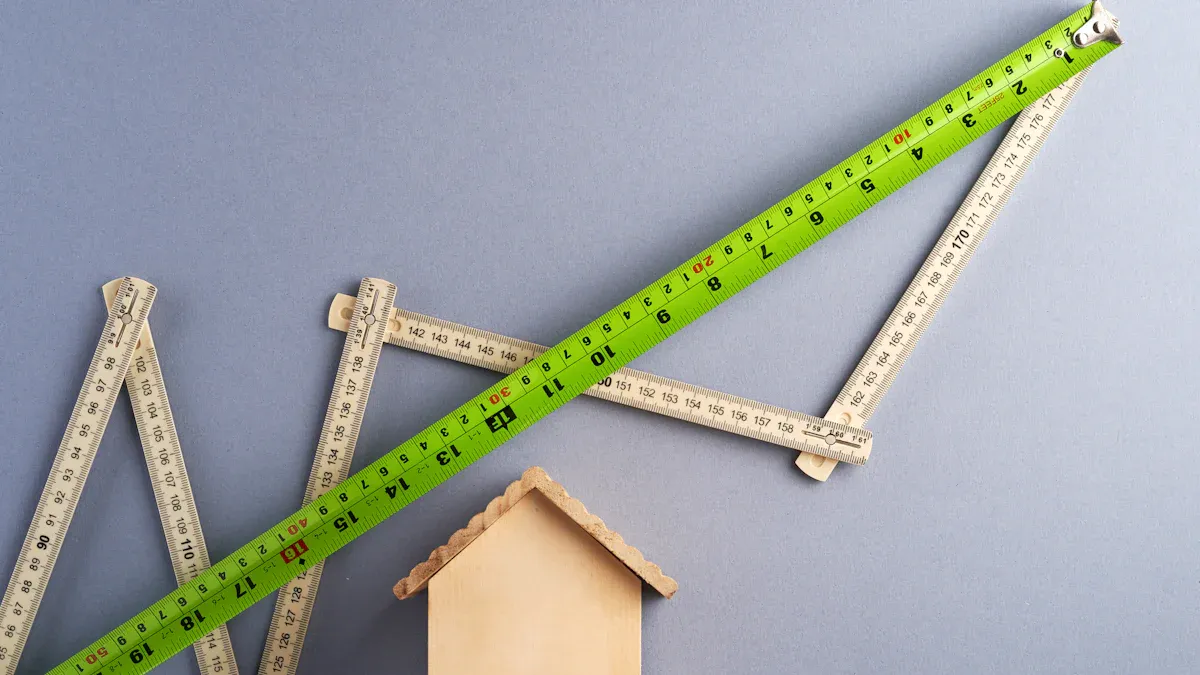
Use a good tape measure or ruler. Make sure it is right and not stretched or printed wrong.
Measure the piece flat on a table. Do not measure over your leg or chair, as this can give you the wrong size.
Getting the right measurements is very important in knitwear, especially for pieces that need a certain shape or fit. If the measurements are wrong, the clothes will not fit right. You might also run out of yarn or have pieces that do not match when you sew them together. You must check the important measurement spots to keep sizes the same and make sure every piece is good quality.
Tip: Always check your measurement spot and use good measuring tools to keep your sizes right and the same every time.
Tech & Automation for Accurate Sizing
Factories use new technology to help clothes fit better. Automation, artificial intelligence, and digital measuring systems work together. These tools help make sizes more accurate and stop mistakes.
Automation in Knitwear Production
Modern factories use smart machines and software. These machines help make each piece the way you want. They make work easier and give better results.
AI Tools for Scaling
Artificial intelligence helps change patterns for different sizes. AI can guess how yarn and fabric will act. This helps you get the right fit for every size. AI also finds problems before they happen. This saves time and materials.
Reducing Human Error
Automation helps stop mistakes people might make. Machines follow set instructions every time. This means you get the same size each time. Your products have fewer sizing mistakes and are more alike.
Description | |
|---|---|
Advanced Software Integration | Uses special software for exact loop making and easy programming. |
Artificial Intelligence | Makes structure better and finds problems in production. |
Digital Twin Technologies | Helps check quality and guesses sizing results. |
Automated Production Systems | Watches important steps in real-time for better quality. |
IoT sensors in knitting machines collect data as you work. This helps you find problems early.
AI checks yarn quality and the room’s conditions. Machines change settings for the best results.
Fully automatic knitting machines work faster and make more pieces.
Tip: Automation lets you spend more time on design. Machines take care of the details.
Digital Measuring Systems
Digital measuring systems, like 3D scanning, help you get exact sizes. These systems fix sizing problems by giving you correct numbers.
3D Scanning
3D body scanning gives you the right measurements for each person. This helps you make knitwear that fits and feels good. 3D scanning means fewer returns because clothes fit better.
Automated Machines
Automated machines use set programs to measure and cut fabric. They check each piece for the right size. These machines also check important spots during production. This helps keep quality high.
Note: Digital measuring systems make shopping easier. They help your customers trust your brand.
Data Tracking & Analytics
Data tracking and analytics help you find sizing problems fast. You look at what people buy and what they say. You can change your sizing to fit what people want. Machine learning tools guess which products might have problems. You can fix these before customers get them. This helps keep sizes the same and makes quality better.
When you use tech and automation, your knitwear meets high standards. You get the right size, good measurements, and the same results every time. These tools help you make good products and keep customers happy.
Staff Training & Communication
You help make sure knitwear sizes are correct. Staff who are trained well and talk clearly make fewer mistakes. This helps you make good products. When everyone knows how to measure and share news, you build trust. You also keep your work the same each time.
Training for Measurements
Proper Techniques
You must learn the right way to measure each piece. Training classes show you how to use tools and size charts. You also learn to check every measurement spot. On-the-job training gives you practice with real clothes. You measure sleeves, bodies, and necklines many times. You keep practicing until you get it right.
Attention to Detail
You need to watch every step closely. Small mistakes can make clothes fit badly. Good training helps you find errors before customers do. You learn to check your work twice and follow tech pack rules. This careful work keeps your products high quality.
Description | |
|---|---|
Collaborating with AI vendors | Special training for your factory needs and easy AI use. |
Engaging AI consultants | Experts give advice and training for using AI well. |
Fostering continuous learning | Workers keep learning about AI and get more education. |
Tracking employee progress | Check how well workers learn with tests and reviews. |
Structured training roadmap | Shows steps to learn skills like tech, data, and teamwork. |
On-the-job training | Practice with AI at work to get better and feel sure. |
Communication of Size Specifications
Sharing Updates
You must tell your team about size changes. Sharing news fast helps everyone know what to do. Meetings and clear messages make sure no one misses details.
Good communication helps everyone understand the rules.
Sharing updates often stops mistakes and delays.
Clear talk helps people work together and keeps sizes the same.
Reporting Issues
You should tell your boss if you see a problem. If you find a size mistake, report it right away. Fixing problems fast stops them from getting worse. This keeps your work moving well.
A good, graded spec sheet helps a lot in making clothes. When you check sizes early, you make fewer mistakes, work faster, and give customers clothes that fit well.
Continuous Improvement
You can always get better at your job. Continuous improvement means you try to do things better each time. You look at what worked and what did not. You learn from mistakes and try new ideas. This helps you keep up with new tech and make every batch the same.
When you focus on training and talking clearly, you help your factory make knitwear that fits and is good quality. You build a strong team that cares about doing things right and works together for the best results.
Monitoring Fabric & Production Tolerances
You have to watch fabric and production tolerances very carefully. This helps stop size problems in knitwear. Checking often keeps every piece the same and high quality.
Yarn & Fabric Testing
Testing yarn and fabric is the first thing you do. You check how strong and stretchy the yarn is before making anything. This helps you find problems early, so you can fix them.
Shrinkage & Stretch
You test how much the fabric shrinks or stretches after washing. If the yarn stretches too much, the finished piece will not match the size chart. Shrinkage tests show how the fabric changes. You can then change your process to keep sizes right.
Consistency Checks
You check every batch of yarn to make sure it acts the same. These tests help you find differences in the yarn. When you use these results, you stop problems and keep your knitwear the same.
Sizing steps help yarns weave well, which makes knitwear better.
Testing yarn helps you find size problems before customers do.
Using test results helps you fix problems and stop mistakes.
Environmental Factors
You need to control the factory’s environment to keep sizes steady. Yarn and fabric can change if humidity or temperature changes.
Humidity & Temperature
You keep the temperature between 24°C and 26°C. You keep humidity between 55% and 65%. These levels help yarn stay strong and stretchy. Good conditions stop yarn from breaking and keep fabric smooth.
More humidity makes fibers take in more water, which changes them.
Cotton gets stronger when humidity is between 44% and 70%.
Good conditions help you avoid yarn and fabric problems.
Managing Tolerances
You set clear rules for how much size can change. These rules help you keep every piece in the right range.
Allowable Variations
You use size grade rules and tolerances to guide making clothes. For example, a Medium can be between 44.5 cm and 47.5 cm. This keeps sizes steady and stops sizes from mixing.
Aspect | Description |
|---|---|
Size Grade Rule | The steady measurement change between sizes, like a 3 cm jump from Medium to Large. |
Tolerance | The allowed change in size, like a Medium at 46 cm can be from 44.5 cm to 47.5 cm. |
Importance | Managing these rules stops size mixing and keeps fit the same. |
You also follow industry rules for shrinkage. For knitted fabrics, AATCC allows up to 7% shrinkage. ISO says the limit is 5%.
Organization | Maximum Shrinkage (Woven Fabrics) | Maximum Shrinkage (Knitted Fabrics) |
|---|---|---|
AATCC | 5% | 7% |
ISO | 3% | 5% |
Tip: Always check your tolerances and factory conditions. This helps you keep every knitwear piece the same and makes people trust your brand.
How Do Factories Ensure Size Accuracy in Knitwear?
Factories follow certain steps to make sure knitwear fits right. These steps help every piece be the size you want. If you ask, “how do factories ensure size accuracy in knitwear?”, the answer is planning, talking clearly, and checking often.
Best Practices Checklist
Factories use a checklist to help with size accuracy. This list helps you remember each important step. You can use it to guide your team and stop mistakes.
Pre-Production Steps
Make size charts and tech packs for each style.
Change grading to fit your market.
Make test pieces and check samples in all sizes.
Compare real samples with your size charts.
Tell everyone what size you want.
Tip: Let your fabric rest for 8 hours before measuring. This gives you the best measurement and stops mistakes early.
Production Controls
Use machines to check width and thickness as you knit.
Test each batch of yarn and fabric to keep them the same.
Try on samples and check sizes during production.
Change machine settings if you see a problem.
Make sure scales are at zero before weighing fabric.
Step | What You Do | Why It Matters |
|---|---|---|
Real-Time Monitoring | Catch problems early | |
Batch Checks | Test yarn and fabric for consistency | Keep sizing steady |
Fit Sessions | Try on samples during production | Fix fit issues right away |
Post-Production Audits
Check finished clothes for the right size and fit.
Compare measurements with your tech pack and size chart.
Write down problems and fix them before shipping.
Look at customer feedback and returns to find patterns.
Note: Post-production audits help you answer, “how do factories ensure size accuracy in knitwear?” by making sure only the best pieces go to customers.
Common Pitfalls
Mistakes can still happen even with good plans. You need to know what to watch for so you can stop size and fit problems.
Incomplete Specifications
If you do not give clear size charts or grading rules, your team will guess. This causes mistakes and unhappy customers. Always check your tech packs for all details.
Bad measuring can cause mistakes. Let fabric rest before measuring.
Not using the scale right can give wrong grammage. Set the scale to zero first.
Not knowing fabric defect rules can make you miss problems. Learn rules like ABNT NBR 13378 and ABNT NBR 13175.
Poor Communication
If you do not share updates, mistakes get worse. You must talk to your team often. Share size changes and report problems right away. This keeps everyone working together and helps answer, “how do factories ensure size accuracy in knitwear?”
Alert: Poor communication and missing details are the main reasons for size mistakes in knitwear.
Continuous Monitoring
You need to check your process from start to finish. Checking all the time helps you find problems before they get big.
Watching width and thickness as you knit shows size changes right away.
Finding size changes early lets you fix problems fast and waste less.
In-line measuring systems help you keep every piece in your quality range.
When you ask, “how do factories ensure size accuracy in knitwear?”, remember it is not just one thing. You need a full system for planning, making, and checking. Use the right tools, train your team, and watch every detail. This is how you keep your sizes and quality high and make customers trust your brand.
You can make sure knitwear sizes are right by following easy steps. Use the same rules for sizing and check measurements at every step. Mix quality control, gauge management, automation, and staff training to keep sizes steady. For better sizing, try these ideas:
Look at samples before making lots to find mistakes.
Use digital tools to help design and cut down on extra samples.
Learn about new trends and talk with makers for fresh styles.
Ask suppliers how they check quality.
Make sure fabric is checked and samples are tested before making clothes.
Watch production and check each piece to match your order.
Keep checking your process to make sizes steady and give customers good knitwear every time.
FAQ
What is the most important step for accurate size in knitwear?
You need to start with a clear size chart. This chart guides every part of production. When you follow it, you help your team make clothes that fit well and match your brand’s promise.
How do factories keep sizing consistent across different batches?
Factories use the same tech packs and grading rules for every batch. They check samples and compare them to the original standards. This process helps you get consistency in every order.
Why does measurement matter so much in knitwear?
Measurement affects how your clothes fit and feel. If you measure wrong, the pieces will not match. You can avoid returns and unhappy customers by checking each measurement carefully.
How do you test the quality of knitwear before shipping?
You check each piece for defects, loose threads, and correct fit. Fit sessions and audits help you find problems early. This step ensures you send out only high-quality knitwear.
What tools help with fit and sizing accuracy?
You use tape measures, rulers, and digital scanners. These tools help you check every detail. When you use the right tools, you improve sizing and reduce mistakes.
Can environmental changes affect knitwear production?
Yes. Changes in humidity or temperature can change yarn and fabric. You control these factors in your factory to keep your knitwear the same every time.
How do you handle customer feedback about sizing?
You listen to feedback and look for patterns in returns. You use this information to improve your size charts and production steps. This helps you build trust and keep customers happy.
Tip: Always review your process after each production run. Small changes can make a big difference in fit and consistency.