
You may wonder how many revisions are allowed in knitwear sampling? Usually, you get 1 to 2 chances to revise at the fit sample stage. Clear feedback helps you reduce extra changes and keeps the process smooth. When you send the pre-production sample back to the supplier, you should focus on giving specific notes. Good communication lets you make the most of your revision rounds.
Key Takeaways
Most knitwear suppliers let you make 1 or 2 changes during the fit sample stage. Giving clear feedback helps make the sampling process faster and means you need fewer changes. Supplier rules are different, so always look at your agreement to know how many changes you can make. Talking well with your supplier can help you get better samples and need fewer changes. Using a detailed tech pack can stop confusion and make samples more correct. Get ready to pay more and wait longer if you need more changes than allowed. Fast feedback is very important, so check samples quickly to keep things moving. Always keep your approved sample safe because it shows how the final product should look.
How Many Revisions Are Allowed in Knitwear Sampling?
Standard Revision Limits
You might ask how many times you can change your knitwear sample. Most suppliers let you make one or two changes at the fit sample stage. This rule helps the process stay simple and quick. When you begin, you get a fit sample. This is the first version of your garment sample. Factories use yarn or fabric that is close to what you want. You check the fit, shape, and size. You give your thoughts, and the supplier makes changes. There is only one fit sample, so you must send it back for updates.
Here is what happens during the fit sample stage in knitwear sampling:
You get the first sample made with similar yarn or fabric.
You look at the sample to check fit and shape.
You send your thoughts to the supplier.
The supplier makes changes and sends a new sample.
You do this up to two times.
You need to know how many changes you can make in knitwear sampling. The answer is almost always one or two times at this stage. This helps the process move fast and lets you go to the next step soon.
Why 1 to 2 Revisions Are Typical
You might wonder why suppliers limit how many changes you can make in knitwear sampling. The main reason is to save time and materials. Factories want to finish samples fast so you can approve them and start making your clothes. If you ask for too many changes, the process takes longer. Suppliers also do not want to waste yarn or work on too many samples.
Most brands and suppliers agree on the number of changes before they start. You should always check your contract or agreement. Clear talking helps you avoid problems. You can send a simple email to say how many changes you can make in knitwear sampling. This helps everyone know the rules.
Here are some tips for setting change limits:
Write the number of changes in your contract.
Use easy words so everyone understands.
Add a rule for fast changes to keep the project on time.
List any costs for extra samples.
You should always know how many changes you can make in knitwear sampling. This helps you plan your feedback and avoid waiting.
Supplier Policy Variations
Not every supplier has the same rules for garment samples. Some factories let you make only one change, while others let you make two. A few may let you ask for more changes, but they often charge extra money. You need to ask your supplier about their rules before you start.
Supplier rules can change based on the type of sample, how hard your design is, and how many you order. If you order many garment samples, some suppliers may let you make more changes. If your design is easy, you may need fewer changes. Always ask how many changes you can make in knitwear sampling. This helps you avoid surprises.
You should also know that suppliers want you to send the fit sample back for changes. If you keep the sample, the factory cannot make updates. Always send the sample back fast to keep the process moving.
Here is a quick table to show supplier rule differences:
Supplier Type | Typical Revision Limit | Extra Fees for More Revisions |
|---|---|---|
Small Factory | 1 | Yes |
Large Manufacturer | 2 | Sometimes |
Premium Supplier | 2+ | Often |
You should always check with your supplier and make sure how many changes you can make in knitwear sampling. This helps you manage your garment samples and finish on time.
Factors Affecting Revision Allowance
Supplier Agreements
Supplier agreements are very important for how many changes you can make. Each supplier has their own rules for garment samples. Some let you change your sample once. Others let you change it two or more times. The rules depend on what kind of samples you order. They also depend on how much quality control you want. If you use a premium supplier, you might get more chances to change your samples. But you may have to pay more money. Always read your agreement before you start sampling. This helps you not get confused and keeps your project moving. When you know the rules, you can plan your feedback. You can also make sure your garment samples are good quality.
Order Size and Complexity
How many samples you order and how hard your design is also matter. If you order a lot of samples, some suppliers give you more chances to make changes. Big orders mean more checks for quality and more chances to fix things. If your design is easy, you may not need many changes. If your design is hard and has lots of details, you may need more rounds of sampling. You should always talk to your supplier about how many samples you want and how hard your design is. This helps you set clear rules and not have delays.
Here is a quick table to show how order size and complexity can change how many times you can make changes:
Order Size | Design Complexity | Typical Revision Rounds |
|---|---|---|
Small | Simple | 1 |
Large | Simple | 2 |
Small | Complex | 2 |
Large | Complex | 2+ |
Communication and Feedback
Good talking and clear feedback help you need fewer changes in sampling. When you give clear notes, your supplier knows what you want. Brands that use detailed tech packs and clear steps finish sampling faster. They also send fewer emails. For example:
Brands with detailed tech packs send about 4 emails per sample round.
Brands with only simple notes send about 19 emails per round.
This makes sampling 55% faster and costs 40% less.
If you say things like “add 1 inch to the chest” or give a Pantone number, your supplier can make the right changes. If you say “the fit is off,” it is not clear and can cause more rounds of sampling. One activewear brand in San Francisco cut their sampling changes by 60% by using tech packs with 45 to 60 measurements for each style. Brands that use detailed tech packs can lower their sampling rounds from 4.5 to just 1.8. This saves a lot of money for each design.
Tip: Use the same way to measure each time, add both relaxed and stretched measurements, say what is okay for mistakes, and put pictures in your tech packs. These steps help you check quality and need fewer extra samples.
Good talking saves time and helps you get better garment samples. If you give clear feedback and instructions, the sampling process is easier and faster. This helps you get good quality at every step.
Knitwear Sampling Process Overview

Fit Sample Stage
You start the knitwear sampling process by getting your first development sample. This sample shows how your garment samples look and fit. You check the size, shape, and movement. The fit sample stage helps you spot problems early. You can see if the garment samples match your knitwear design process. When you review the fit, you can find issues with comfort or style. The fit sample stage lets you fix problems before you move to the next step. You save time and money by making changes now. You also learn how the samples behave when worn. This stage helps you improve quality and avoid mistakes in later samples.
Here is how the fit sample stage helps you:
You find fit issues early in the knitwear sampling process.
You make changes before full production starts.
You see how the samples move and fit on a real person.
Revision Request Steps
After you check your development sample, you may want to ask for changes. The knitwear sampling process has clear steps for revision requests. You need to look at your garment samples and compare them to your tech pack. If you see problems, you write down your comments. You take photos of any issues and add notes for each area. You send your feedback to the factory by email or update your tech pack with the date. The factory uses your notes to make new samples. You repeat this process until you like the garment samples.
Here are the steps for requesting a revision:
Review your development sample against your tech pack.
Write comments about what needs to change.
Take photos of any problems.
Send your feedback to the factory or update your tech pack.
The factory makes new samples based on your notes.
Repeat until you are happy with the samples.
This process helps you keep track of changes and makes sure your samples match your knitwear design process.
Feedback and Implementation
Giving clear feedback is key in the knitwear sampling process. You need to share your thoughts with the factory so they can improve your garment samples. You should involve your designer and quality team early. You keep records of every sample check. You note what needs to change and what works well. Fast feedback helps you get better samples quickly. You create a loop where you send feedback, get new samples, and check them again. This loop helps you reach high quality and finish your development sample faster.
Here is a table with tips for feedback and implementation:
Tip | Step | Example |
|---|---|---|
Engage Early Feedback | Involve all teams from the start | Include designer and quality team in first sample review |
Document Everything | Keep records of sample checks | Write notes about fit review and corrections |
Iterate Faster | Speed up revision process | Send feedback quickly to get new samples sooner |
You improve your garment samples by following these steps. You make sure your knitwear sampling process leads to high quality and fewer mistakes. You use fit review and corrections to guide each round of samples. You reach your goals for style and comfort by working closely with your factory.
Timeline for Revisions
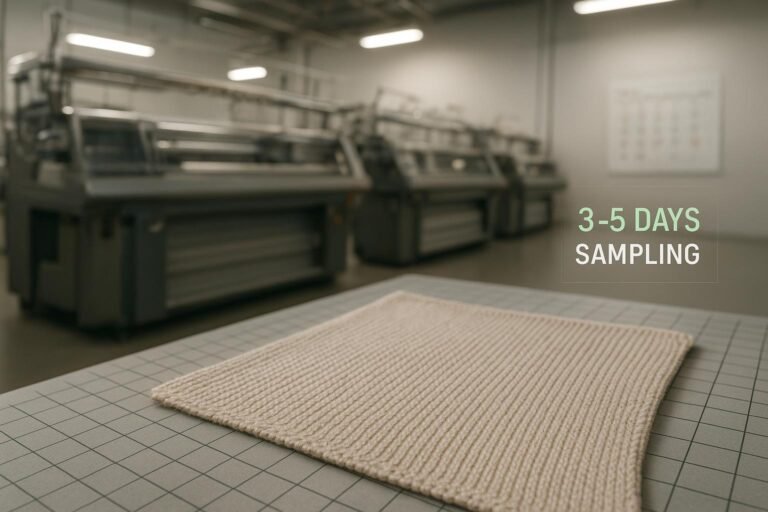
You need to understand the timeline for revisions in the knitwear sampling process. Each step has a set time, and knowing this helps you plan your project. When you start the knitwear sampling process, you usually get your first samples in about two to three weeks. Factories need this time to knit, assemble, and check the samples for basic quality.
After you receive the samples, you should review them right away. Most brands take three to five days to check the samples and write feedback. If you wait too long, you slow down the knitwear sampling process. Fast feedback helps you keep the process on track and improves the quality of your samples.
Once you send your comments back, the factory starts the next round. Making changes to the samples often takes another one to two weeks. The timeline depends on how many changes you request and how complex your design is. If you ask for small changes, the knitwear sampling process moves faster. Big changes or many details can add extra days.
Here is a simple table to show a typical timeline for revisions in the knitwear sampling process:
Step | Time Needed |
|---|---|
Factory makes first samples | 2-3 weeks |
You review samples | 3-5 days |
Factory revises samples | 1-2 weeks |
Shipping samples to you | 3-7 days |
You should always talk to your supplier about the timeline. Some factories can make samples faster, but others need more time for quality checks. If you want high quality, you should not rush the knitwear sampling process. Rushing can lead to mistakes and lower quality in your samples.
Tip: Set clear deadlines for each step in the knitwear sampling process. Use a calendar or project tracker to follow your samples. This helps you avoid delays and keeps your project moving.
You can also speed up the knitwear sampling process by giving clear feedback and sending samples back quickly. If you keep samples too long, you lose time. Always plan for shipping time, especially if your factory is far away. Good planning helps you get better quality and finish your samples on time.
The timeline for revisions in the knitwear sampling process can change if you need extra rounds. Each extra round adds one to two weeks. You should try to keep the number of revisions low by giving detailed feedback. This saves time and helps you reach the quality you want in your samples.
Managing Extra Revisions in Knitwear Sampling
Options for Additional Rounds
Sometimes you need more changes than usual. Many brands want extra changes to make their knitwear samples better. You can ask your supplier for more changes, one at a time. This helps you fix your design without starting over. You can change things like your brand name or color palette during these extra rounds. Some suppliers, like Logomax, let you have more flexible changes. You can take your time and focus on making your sample better.
Here are some options you can try:
Ask for more changes one by one to keep improving.
Change important things like your brand name or colors.
Pick suppliers who let you have more flexible changes.
Use each round to make your sample better and higher quality.
Tip: Always ask your supplier about their rules for extra changes before you start. This helps you plan and stops surprises.
Costs and Timeline Impact
Extra changes can slow down your project. Each extra round can add three to seven days. You need to plan for these delays to stay on track. More changes also cost more money. You might pay rush fees or need more help to finish your samples. These costs can get high, especially if you want every sample to be great. You should think about if extra changes are worth the extra time and money.
This table shows how extra changes can affect your project:
Revision Round | Added Time (Days) | Possible Extra Costs |
|---|---|---|
1 | 3-7 | Rush fees |
2 | 6-14 | More resources |
3+ | 9-21 | Higher costs |
You should always think about quality, time, and money. Planning ahead helps you avoid delays and keeps your samples as good as you want.
Negotiating with Suppliers
You can talk to your supplier if you want more changes. Good talking helps you get the quality you want without problems. You should not be rude or pushy. Treat your supplier kindly and work toward the same goals. This builds trust and makes your supplier more willing to help. Being honest about what you need helps you get fair prices and better teamwork. Suppliers like it when you share your goals for quality and time.
Here are some ways to talk well with your supplier:
Be kind and work together for good results.
Say what you want and need clearly.
Build trust by being honest about your needs.
Ask for fair prices and help with extra changes.
Note: Suppliers want to help you get the best quality. When you work together, your samples get better and your project goes smoothly.
You can get better knitwear samples by handling extra changes the right way. Use clear talking, plan for time and money, and build good relationships with your suppliers.
Tips for Effective Knitwear Revision Management
Preparing Detailed Tech Packs
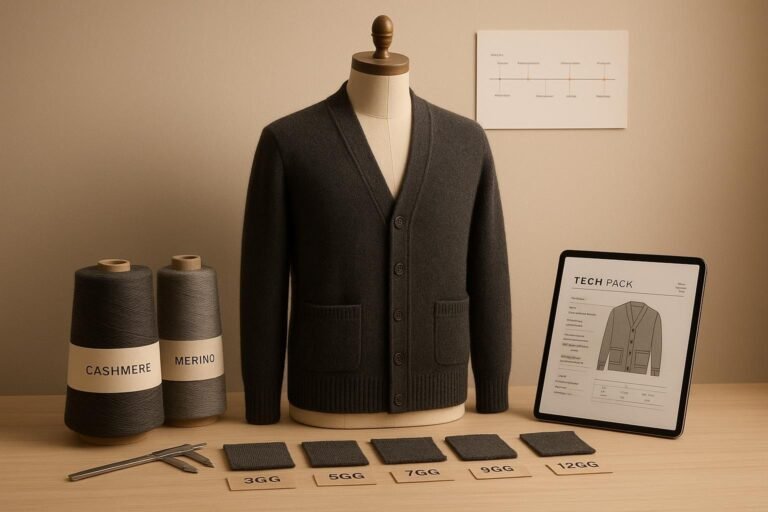
You can make the knitwear sampling process easier with a detailed tech pack. A tech pack is like a plan for your design. It helps your supplier know what you want. If you add clear drawings, exact sizes, and a list of materials, you stop confusion. This helps your supplier give you better samples.
Here is a table that shows what to put in your tech pack to avoid extra changes:
Element | Description |
|---|---|
Precise flat sketches | Clear vector art, not stylized illustrations. |
Comprehensive measurement specs | Every size, every POM, realistic margins with tolerances. |
Detailed, prioritized BOM | Main fabrics, trims, labels, and packaging listed with codes and colors. |
Construction notes | Match factory capabilities, including stitch types and seam finishes. |
Compliance and packaging instructions | Fiber content, care symbols, country-of-origin labels, and folding guidelines. |
Change log | Records each revision, who authorized it, and why to prevent contradictory edits. |
Pre-flight checklist | Ensures all essentials are included before sending the pack, saving time on revisions. |
If you use a tech pack with these things, your supplier can meet your quality needs. It also helps you keep track of changes and stop mistakes.
Communicating Clearly
Talking clearly with your supplier means fewer changes. You should share your ideas in simple words. If you use detailed virtual samples and look at them with your manufacturer, you stop mix-ups. This makes the process faster and helps you get better samples.
Some ways brands talk clearly are:
Making a detailed virtual sample for review and fixing.
Giving a full tech pack so the manufacturer can make a good first sample.
You can send pictures, notes, and sizes to show what you want. When you do this, your supplier knows your needs. This helps you get samples that match your ideas and quality goals.
Tip: Always check your notes before you send them. Make sure your feedback is easy to read and covers the most important things.
Prioritizing Changes
You should pick which changes matter most to save time and get better samples. Not every change is needed right away. You can sort changes by sample type and how important they are. For example, you may fix fit and comfort first, then look at trims and labels later.
Here are some sample types you might see:
Development (Proto) Samples: First real version of your sketches or tech packs.
Fit & Size Set Samples: Make sure comfort, shape, and size are right.
Salesman & Pre-Production Samples: Get products ready for buyers and final checks.
Photo & Wash Samples: Check how samples look and feel after special treatments.
Shipping / Gold Seal & Counter Samples: Make sure bulk orders and repeat orders are the same.
You can follow these steps to pick your changes:
Measure all samples with your spec sheet and write down changes.
Check seams, hems, and stitching to see if they match.
Test fit and movement by sitting, stretching, and lifting arms.
Look at trims and labels to see if they are in the right place and look good.
Write down changes with clear pictures and notes.
If you focus on the most important changes first, your supplier can give you better samples. You also stop delays and keep your project moving.
Note: Good planning and clear choices help you reach your quality goals faster.
Final Sample Approval in Knitwear
Approval Criteria
You need to check several things before you give approval for your knitwear sample. Factories and brands use clear steps to make sure the sample matches your needs. When you look at the final sample, you should follow these criteria:
Testing Design and Fit: Try the sample on a model or mannequin. See if the fit matches your tech pack. Look for any design flaws or mistakes in the shape.
Assessing Fabric Quality: Touch the fabric and stretch it. Make sure it feels soft and strong. Check if the yarn or knit matches your standards for durability.
Customer Approval: Show the sample to your team or client. Ask for feedback. Make sure everyone agrees before you move forward.
You should use a checklist to help you remember each step. If you find any problems, write them down and share them with your supplier. You want to make sure every detail is correct before you give approval. This helps you avoid mistakes in bulk production.
Tip: Always take photos of your final sample and keep notes about your approval process. This helps you compare future samples and keep quality high.
Moving to Production
After you finish the final sample approval, you can start mass production. This step is important because it sets the standard for every piece your factory will make. You need to make sure the approved sample matches your design in fit, texture, and color.
Final sample approval makes sure your sample meets all your specifications for bulk orders.
You can find and fix problems early, so you do not waste time or money during production.
The approved sample becomes the reference for quality control. Your factory uses it to check every item they make.
You should talk with your supplier about the production timeline. Ask how they will use your approved sample to guide their work. Make sure they understand your quality needs. If you set clear rules, you help your supplier avoid mistakes.
Here is a simple table to show how final sample approval helps you move to production:
Step | What You Do | Why It Matters |
|---|---|---|
Approve the final sample | Check fit, fabric, and design | Sets the standard for quality |
Share feedback | Tell supplier what to fix or keep | Prevents costly errors |
Start production | Begin making bulk order | Matches your approved sample |
Note: You should always keep your approved sample in a safe place. Use it to check bulk orders and make sure every item matches your standards.
Final sample approval gives you confidence to move forward. You know your knitwear will look and feel the way you want. You help your supplier make high-quality products every time.
You can usually make changes one or two times in knitwear sampling. Giving clear feedback and having good supplier agreements help you save money and time. If you plan your budget, use digital tech packs, and try new ways to cut patterns, you can handle changes better. Here are some smart ways to help you:
Strategy | Description |
|---|---|
Budget Planning | Add 25-50% extra money to your budget for surprise sample costs. |
Digitize Your Tech Packs | Use 3D pictures to find problems before making real samples. |
Change Your Pattern Cutting Technique | Use CAD and laser cutting to make less waste and get better results. |
Keep your work neat and talk clearly with your team. This will help you get better samples and make the process easier.
FAQ
How many revisions do most knitwear suppliers allow?
Most suppliers let you change your sample once or twice. You should look at your agreement before you begin. Some suppliers let you make more changes, but they charge extra money.
What happens if you need more than two revisions?
You can ask for more rounds, but it may cost more and take longer. Always check for extra fees and plan your feedback so you do not need many changes.
Do all suppliers have the same revision policy?
No, every supplier has their own rules. Some let you change your sample only once. Others let you change it two times or more. Always ask your supplier about their rules before you start.
How can you reduce the number of revisions needed?
You can make a detailed tech pack, give clear notes, and check samples fast. This helps your supplier know what you want and stops mistakes.
Tip: Add pictures and measurements to your notes for better results.
Will extra revisions delay your production timeline?
Yes, each extra change can add one or two weeks to your schedule. Giving fast feedback and clear instructions helps you avoid delays.
Are there extra costs for additional sample revisions?
Many suppliers charge more if you want extra changes. You should ask for a price list before you begin. This helps you plan your money.
What should you check before approving the final sample?
You should check the fit, fabric, and design details. Use a checklist to make sure everything matches your tech pack. Ask your team for their thoughts before you say yes.