
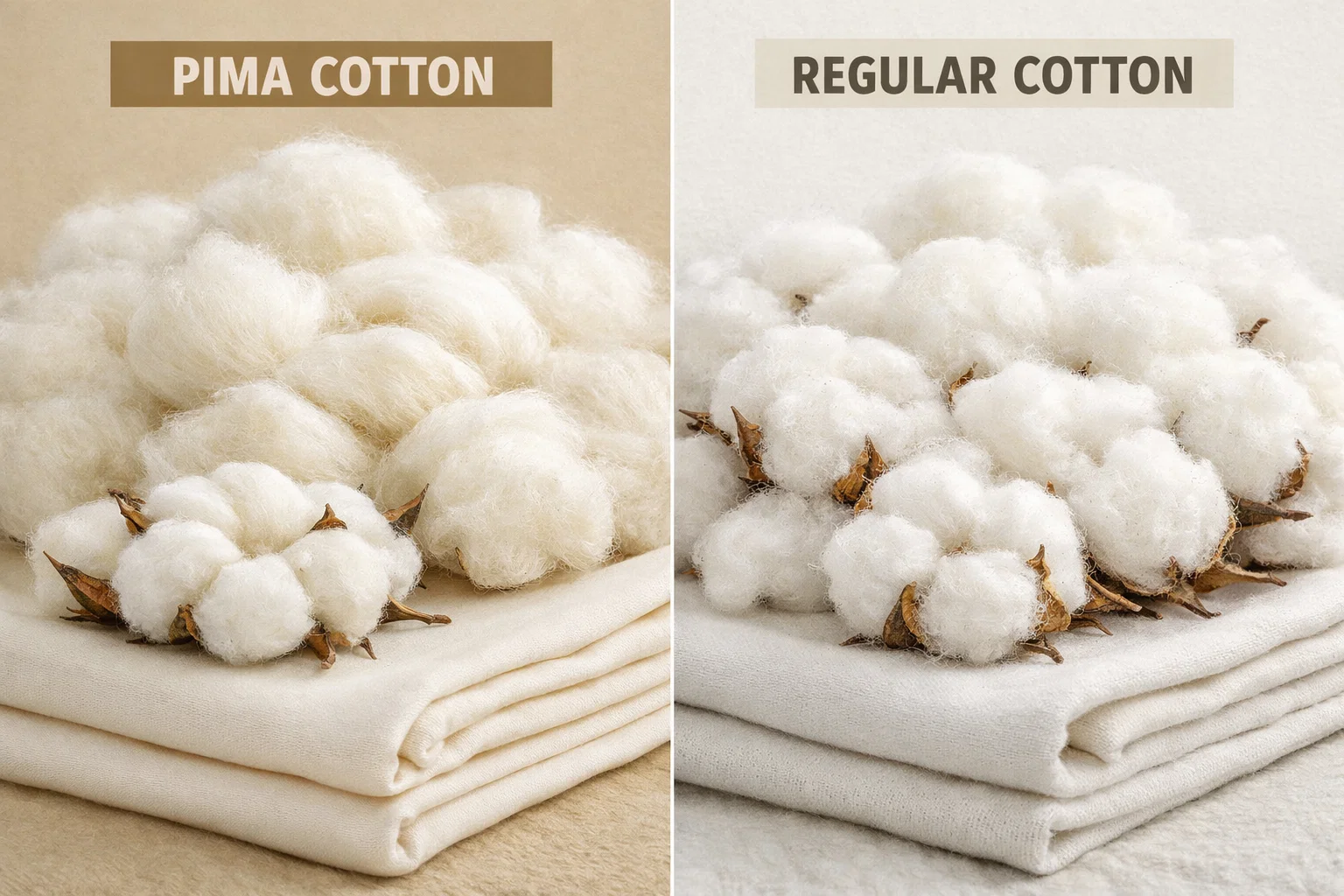
When comparing pima cotton vs cotton, there are some clear differences you can both feel and see. Pima cotton vs cotton comes down to the type of fibers used—pima cotton uses extra-long fibers, which make it especially soft and smooth. In the pima cotton vs cotton debate, regular cotton has shorter fibers, so it feels less soft than pima cotton. Another key point in pima cotton vs cotton is strength: pima cotton is about twice as strong as regular cotton, so it doesn’t fray or tear easily. This means that when you choose pima cotton vs cotton, your items made from pima cotton will last longer and stay comfortable over time. The table below highlights the main differences in the pima cotton vs cotton comparison:
Attribute | Pima Cotton | Regular Cotton (Upland) |
|---|---|---|
Fiber Length | Longer fibers (extra long staple) | Shorter fibers |
Softness | Extra soft | Moderate softness |
Durability | Strong, resistant to fraying, tearing | Good durability |
Price | Higher due to processing costs | More cost-effective |
When deciding between pima cotton vs cotton, you might choose pima cotton for its luxurious feel and long-lasting quality. On the other hand, regular cotton is a good choice if you want to save money and need something for everyday use. So, when thinking about pima cotton vs cotton, consider what matters most to you—softness, strength, or price.
Key Takeaways
Pima cotton has extra-long fibers. This makes it softer and stronger than regular cotton. Regular cotton has shorter fibers.
Picking Pima cotton means you get something that lasts longer. It can last up to three times longer than regular cotton. This makes it a better choice for the long run.
Pima cotton lets air pass through and pulls sweat away. It helps keep you cool when it is hot. Regular cotton soaks up sweat but can feel wet.
Pima cotton costs more because it is high quality. It feels fancy and comfortable. This makes it great for bedding and nice clothes.
Regular cotton costs less and is good for daily use. It is comfy and works well for things like shirts and towels.
What Is Pima Cotton
Pima Cotton Origins
You may ask where pima cotton comes from and why it is special. Pima cotton has a long history.
People started growing pima cotton in ancient Peru.
The name “pima cotton” comes from the Pima tribe. They were the first to grow this cotton in the United States.
Archaeologists found pima cotton cloth in old tombs from the Paracas culture. These tombs are from about 4500 BC.
Today, pima cotton grows in a few places:
United States
Peru
Australia
These areas have good weather and soil for pima cotton.
Pima Fiber Qualities
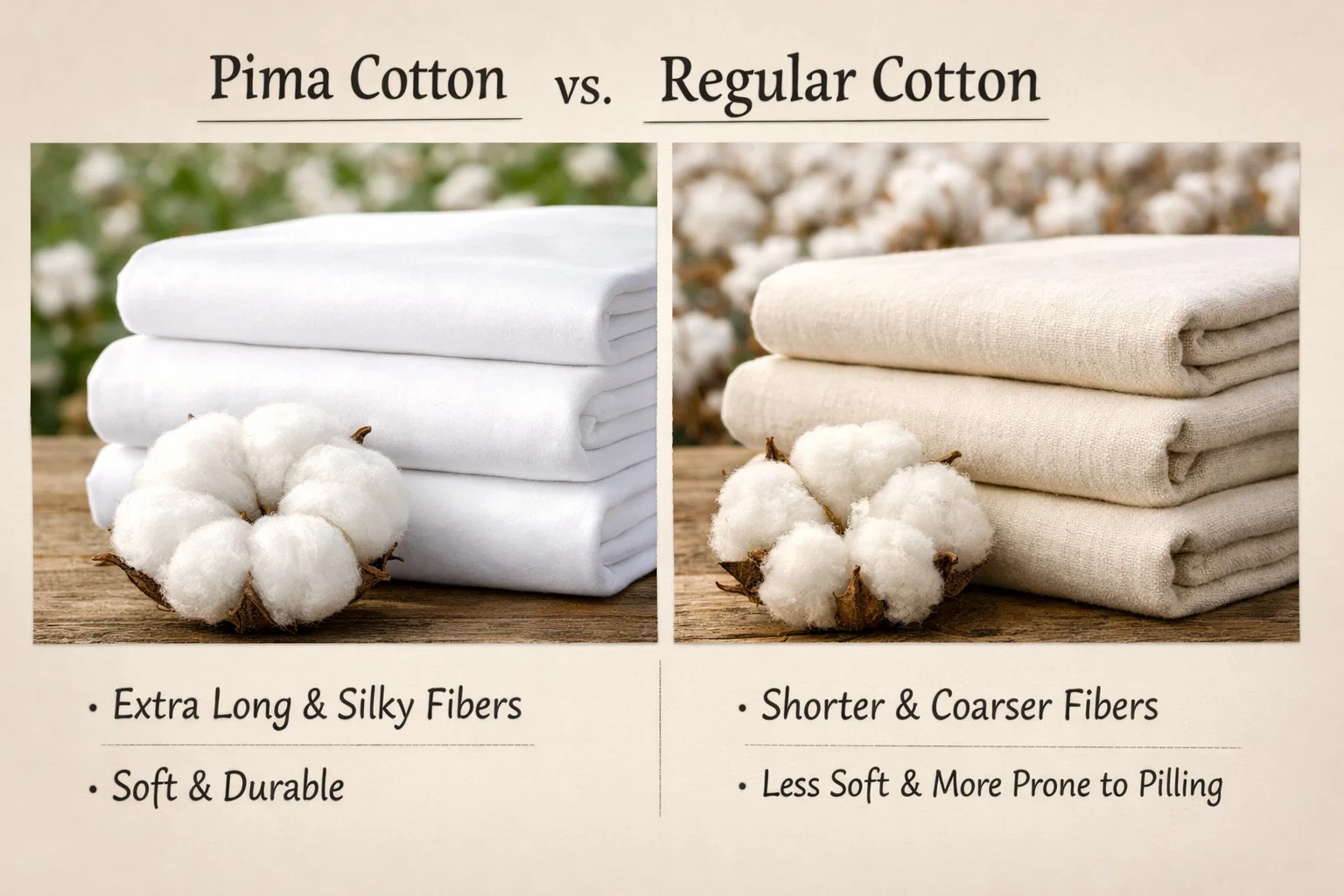
Pima cotton is different because it has extra-long staple fibers. These fibers help make the fabric better for daily use. Pima cotton fibers are longer than regular cotton fibers. This makes pima cotton strong and smooth. Pima cotton does not pill easily and keeps its shape after many washes. The fiber quality makes pima cotton great for bedsheets, towels, and clothes you use often. If you pick pima cotton, you get a fabric that lasts a long time.
Tip: If you want fabric that feels smooth and stays strong, choose pima cotton with extra-long staple fibers.
Pima Softness and Durability
Pima cotton feels very soft. The long fibers make the fabric smooth and gentle on your skin. Pima cotton lets air pass through and pulls moisture away. This helps you stay cool on hot days. Pima cotton lasts much longer than other cotton types. It can last up to three times longer than regular cotton. You get more for your money. You can wash pima cotton many times, and it will stay soft and keep its shape. Many people pick pima cotton for fancy clothes and bedding because it feels nice and lasts a long time. If you want fabric with great qualities, pima cotton is a good choice.
What Is Regular Cotton
Common Cotton Types
You see regular cotton in lots of things you use. Most people call it traditional cotton. Farmers grow different kinds of traditional cotton all over the world. You find these types in clothes, sheets, and towels. Here are the main types of regular cotton:
Gossypium hirsutum (Upland Cotton): This kind is about 90% of all cotton grown. It grows well in many places. Most regular cotton products use this type.
Gossypium barbadense (Extra Long Staple Cotton): This kind is about 8% of cotton grown. Its fibers are longer and softer than other regular cotton types. Some fancy traditional cotton items use this cotton.
Gossypium arboreum: Less than 2% of cotton comes from this plant. Its fibers are shorter and rougher. Cotton from this type feels less soft.
Gossypium herbaceum (Levant Cotton): This kind is also less than 2% of cotton grown. You find it in rougher traditional cotton fabrics.
Tip: When you buy traditional cotton, you usually get upland cotton. This type gives you comfort and a good price.
Regular Cotton Properties
Regular cotton has special features that make it popular. Traditional cotton fibers can be different lengths, softness, and strength. You can see these features in the table below:
Property | Description |
|---|---|
Fiber Length | Changes with each plant, measured as upper half mean length. |
Softness | Longer fibers make the fabric feel softer. |
Durability | Longer fibers make the fabric stronger and last longer. |
Regular cotton lets air pass through and soaks up sweat. This helps you stay cool when it is hot. Traditional cotton feels nice on your skin. Many people with sensitive skin pick traditional cotton because it does not cause allergies. Traditional cotton is strong, so you can use it every day and not worry.
Property | Description |
|---|---|
Typical Length | Goes from 0.90 to 1.5f/tex (2.7–3.9f/denier). |
Breaking Elongation | Usually goes from 4% to 6%. |
You see traditional cotton in many things. You use it for shirts, sheets, towels, and more. Traditional cotton feels soft and stays nice after many washes. You get comfort and good value from traditional cotton.
Note: If you want fabric that is easy to wash and gentle on your skin, traditional cotton is a smart pick.
Pima Cotton vs Cotton: Key Differences
When you look at pima cotton and regular cotton, you see many differences. These differences change how the fabric feels, lasts, and works. Knowing these facts helps you pick the best fabric for you.
Fiber Length Comparison
Fiber length is a big difference between pima and regular cotton. Pima fibers are much longer than regular cotton fibers. Longer fibers make the fabric smoother and stronger. Regular cotton has shorter fibers. This can make the fabric rougher and less strong.
Pima fibers can be up to 1.5 inches long.
Regular cotton fibers are usually less than 1 inch.
Longer fibers in pima mean fewer ends stick out. This makes the fabric softer and tougher. Shorter fibers in regular cotton can make it feel less smooth. It may pill after you wash it.
Softness and Feel
Softness is a big reason people pick pima cotton. Pima feels very soft because of its long fibers. When you touch pima, you feel smoothness right away. Regular cotton feels soft too, but not as fancy as pima. Pima’s softness is great for bedding and clothes that touch your skin.
Tip: If you want the softest and most comfy fabric, pick pima.
Durability and Strength
Durability is another big difference between pima cotton and regular cotton. Pima is very strong and lasts a long time. Studies show pima is up to 30% stronger than regular cotton. This means pima can handle lots of use without tearing. Regular cotton is strong but may wear out faster after many washes.
Pima stands up to lots of washing and use.
Regular cotton may wear out sooner.
If you want sheets, towels, or clothes to last, pima is the better choice.
Breathability and Comfort
Breathability and comfort are important for clothes and bedding. Pima cotton is very breathable and pulls sweat away from your skin. This keeps you cool. Regular cotton is less breathable and does not pull moisture away as well.
Pima keeps you cool in hot weather.
Regular cotton soaks up sweat but may feel wet.
Pima’s breathability makes it great for sports clothes and summer wear.
Appearance and Luster
Pima cotton and regular cotton look different. Pima has a shiny, smooth surface. This makes clothes and sheets look bright and fancy. Regular cotton looks more dull and may feel rougher. Pima’s shine makes it look special.
Attribute | Pima Cotton | Regular Cotton |
|---|---|---|
Shine | Natural shine | Dull finish |
Texture | Smooth | A little rough |
If you want your fabrics to look shiny and new, pima is best.
Price and Value
Price is important when you pick cotton. Pima costs more because it needs more care to grow and make. Regular cotton costs less and is easy to find.
Cotton Type | Price (USD/KG) | Price (USD/lb) |
|---|---|---|
Pima Cotton | 3.88 | 1.76 |
Regular Cotton | 0.64 | 0.64 |
You pay more for pima, but you get better quality and softness. Regular cotton gives you good value for daily use and costs less.
Sustainability Factors
Sustainability matters when you pick cotton. Organic cotton uses less water and no fake pesticides. This helps the earth and keeps farmers safe. Organic cotton also has a smaller carbon footprint and helps nature.
Organic cotton uses up to 75% less water.
No fake pesticides means cleaner soil and water.
Lower carbon footprint helps the planet.
Pima cotton can be grown organic, so it is good for the earth. Regular cotton often uses more chemicals, which can hurt nature. If you care about the earth, pick organic pima or regular cotton.
Note: Pima is hypoallergenic, so it is gentle on sensitive skin and less likely to cause allergies.
When you look at pima cotton and regular cotton, you see big differences in fiber length, softness, strength, breathability, look, price, and sustainability. Pima gives you luxury, comfort, and lasts a long time. Regular cotton gives you good value and comfort for every day. Pick the one that fits what you need most.
Pima Cotton Benefits and Drawbacks
Pima Cotton Benefits
When you pick pima, you get many good things. People like pima cotton because it feels different right away. Here are the main benefits you get:
Pima feels very soft when you touch it. The extra-long fibers make it gentle on your skin.
Pima is strong and lasts a long time. Your clothes and sheets do not tear or fade easily.
Pima keeps you comfortable in every season. Air moves through the fabric, so you stay cool in summer and warm in winter.
If your skin is sensitive, pima is a good choice. It does not use harsh chemicals, so it helps with allergies.
Pima is better for the earth. Certified pima cotton uses safe farming and helps nature.
Tip: If you want soft and strong clothes, pima is a great pick.
You find pima in fancy knitwear, bedding, and towels. These things feel nicer than regular cotton. Many people choose pima for daily use because it gives quality and lasts longer.
Pima Cotton Drawbacks
Pima has some downsides you should know. Pima costs more than regular cotton. The price is higher because farmers grow less pima and it needs more work. You may not find many choices for everyday clothes since pima is used for fancy items.
Pima grows in only a few places, like Peru and the southwest United States. This makes it harder to find than regular cotton.
You must care for pima in special ways. Wash pima in cold water and do not use bleach or softeners. Dry it on low heat or let it air dry to keep it soft.
Note: If you want easy-care or cheaper fabric, regular cotton may be better.
Think about these downsides when you compare pima to regular cotton. Pima has many good things, but it may not fit every budget or need.
Regular Cotton Benefits and Drawbacks
Regular Cotton Benefits
You see regular cotton in lots of things you use. This fabric gives you comfort and can be used in many ways. People like regular cotton because it has many good points.
Regular cotton feels soft and gentle on skin. Many people with sensitive skin choose cotton. It does not hold dust or things that cause allergies.
Cotton lets air move through the fabric. This keeps you cool and dry when it is warm.
Regular cotton soaks up moisture fast. Your clothes and sheets stay fresh and dry.
Cotton is strong and lasts a long time. You can wash it many times. It keeps its shape and does not get weak.
Growing cotton helps farmers and their families. It gives jobs to many people.
Cotton fabrics show bright colors. Cotton holds dye well, so clothes look new for longer.
Cotton is all natural and good for the earth. It breaks down easily and does not hurt nature.
You can use regular cotton for many things. It works for shirts, sheets, towels, and more.
Tip: If you want fabric that is comfy, useful, and gentle, regular cotton is a smart pick.
Regular Cotton Drawbacks
Regular cotton has some problems you should know. You might see these after using cotton for a while.
Regular cotton can shrink. This happens if you wash it in hot water or dry it with high heat. Wash with cold water and use low heat to stop shrinking.
You may see small balls on cotton after many washes. These balls make the fabric look old and less smooth.
Regular cotton sometimes needs to be replaced more often. It may not last as long as other fabrics, so you might buy new things sooner.
Cotton farming uses lots of water and chemicals. This can hurt the earth if farmers do not use safe ways.
Cotton fibers can get bigger in some soaps. This can change the fabric and make it shrink.
Note: If you want fewer problems, pick pre-washed or organic regular cotton. These choices help the earth and make cotton last longer.
Best Uses and How to Choose
Bedding and Sheets
You want bedding that feels soft and lasts a long time. Pima sheets offer a smooth texture and keep their shape after many washes. The long fibers in pima help your sheets stay soft and resist pilling. Regular cotton sheets give you comfort and value for everyday use. If you want luxury and durability, pima is a smart choice for bedding. For guest rooms or budget-friendly options, regular cotton works well.
Clothing and Apparel
When you shop for clothes, comfort matters. Pima makes T-shirts, dresses, and high-quality knitwear feel extra soft and breathable. You notice that pima clothing keeps its shape and resists pilling, so it looks new longer. Regular cotton is good for casual wear and basic shirts. If you want clothes that last and feel smooth, pima is the better pick. You might choose between pima cotton and regular cotton based on how often you wear the item and your budget.
Pima uses long fibers for softness and durability.
Organic pima has a smoother texture and resists pilling.
Regular cotton is affordable and easy to care for.
Towels and Home Textiles
Towels made from pima feel plush and absorb water quickly. The careful weaving of pima cotton creates towels that stay soft and strong. You see less pilling and fading with pima towels. Regular cotton towels work for everyday use and cost less. If you want towels that last and look nice, pima is a great choice. For kitchen towels or items you replace often, regular cotton is practical.
Children’s Sleepwear
Children need sleepwear that feels gentle and safe. Pima offers softness and breathability, making it ideal for sensitive skin. You find that pima sleepwear keeps its shape and stays comfortable after many washes. Regular cotton is also soft and easy to clean. If you want extra comfort for your child, pima is a good option. For play clothes or items that get messy, regular cotton is a smart pick.
Choosing the Right Cotton
You should think about how you will use the cotton product. Softness matters for bedding and clothing. Durability is important for towels and high-quality knitwear. Price helps you decide if you want luxury or value. Personal preference plays a big role when you choose between pima cotton and regular cotton. For items like curtains, regular cotton is enough. For clothes and bedding, pima gives you comfort and longevity.
Tip: Match your needs with the cotton type. Pima is best for luxury and lasting quality. Regular cotton is great for everyday use and saving money.
Care Tips for Pima and Regular Cotton
Washing Guidelines
You want your pima and regular cotton items to stay fresh and last longer. Start by checking the label for washing instructions. Some fabrics need machine washing, while others do better with hand washing or dry cleaning. Use warm or cool water to wash both types. This helps prevent shrinking and fading. Avoid fabric softeners because they can change the finish of the fabric. Air-dry your clothes or use a dryer on moderate-to-low heat. This keeps the fibers strong and stops shrinkage. If you need to iron, do it while the fabric is slightly damp. Use high heat and steam for best results.
Tip: Caring for pima cotton means using gentle cycles and mild detergents. This keeps your items soft and looking new.
Maintaining Softness and Durability
You can help your pima and regular cotton items stay soft and last longer with a few simple steps. Pima has extra-long fibers, so it resists wear and tear better than regular cotton. You still need to treat both fabrics with care.
Care Tip | Description |
|---|---|
Hang garments | Air out naturally after use to keep them fresh. |
Spot clean | Remove minor stains quickly to avoid frequent washing. |
Store properly | Use breathable hangers or fold to keep the shape. |
Use refreshing spray | Help fibers stay soft and vibrant for longer. |
Wash | Use cold or lukewarm water on a gentle cycle. Turn items inside out. |
Detergent | Choose mild detergents. Skip bleach and fabric softeners. |
Drying | Lay flat or hang to dry. If you use a dryer, pick low heat. |
You can keep your cotton items looking and feeling great by following these tips. Hang your garments after wearing them to let air flow through. Spot clean stains so you do not need to wash as often. Store your clothes in a cool, dry place. Use a refreshing spray to keep the fibers soft. Wash with cold or lukewarm water and turn items inside out. Pick mild detergents and avoid bleach. Dry your clothes flat or hang them up. If you use a dryer, choose a low-heat setting.
Note: Pima cotton lasts longer because of its strong fibers. Regular cotton stays soft if you care for it the right way.
Cotton is soft, strong, and lets air pass through. Regular cotton is good for things you use every day, like curtains and simple sheets. Pima cotton feels even softer and lasts longer. It is great for clothes and sheets you use a lot. Experts say cotton does not cause allergies and breaks down in nature. This makes it safe for your skin and the earth.
Pick regular cotton if you want something easy to care for and not expensive.
Choose Pima cotton if you want something fancy and tough.
Tip: If you want to help the earth, pick natural fibers like cotton instead of fake ones.
FAQ
What makes Pima cotton different from regular cotton?
You get longer fibers with Pima cotton. These fibers make your fabric softer, stronger, and less likely to pill. Regular cotton uses shorter fibers, so it feels rougher and may wear out faster.
Is Pima cotton worth the higher price?
You pay more for Pima cotton, but you receive extra softness and durability. If you want luxury and long-lasting quality, Pima cotton gives you good value for your money.
Can you wash Pima cotton and regular cotton the same way?
You should use gentle cycles and mild detergent for both types. Pima cotton needs cold water and low heat to keep its softness. Regular cotton can handle warm water, but avoid high heat to prevent shrinking.
Which cotton is best for sensitive skin?
You can choose Pima cotton if you have sensitive skin. The smooth fibers feel gentle and rarely cause irritation. Regular cotton also works well, especially if you pick organic options.
Does Pima cotton last longer than regular cotton?
You get more years from Pima cotton. The strong, long fibers help your clothes and sheets stay soft and keep their shape after many washes. Regular cotton may show wear sooner.