
If you’re curious about polyester is it stretchy, you should know that spandex stretches much more than polyester. The way a fabric stretches affects both your comfort and the fit of your clothes. When you ask, “polyester is it stretchy,” you’ll find that polyester does not offer as much stretch as spandex. This difference is noticeable when you wear sportswear or everyday outfits. Stretchy fabrics, like spandex, allow for easier movement and greater comfort.
Key Takeaways
-
Spandex can stretch much more than polyester. It can stretch up to 600%. This makes it great for sports and active clothes.
-
Polyester by itself only stretches about 5-10%. But when mixed with spandex, it can stretch 200-400%. This makes the fabric more comfy and flexible.
-
For the best movement in sports, pick fabrics called ‘4-way stretch.’ You can also choose blends with 12-14% spandex.
-
To take care of polyester-spandex blends, wash them in cold water.
-
Do not use fabric softeners. This helps keep their stretch and shape.
-
Think about the environment when picking polyester.
-
Try to choose recycled polyester or blends with natural fibers. This helps cut down on waste.
What Is Fabric Stretchiness
Definition and Importance
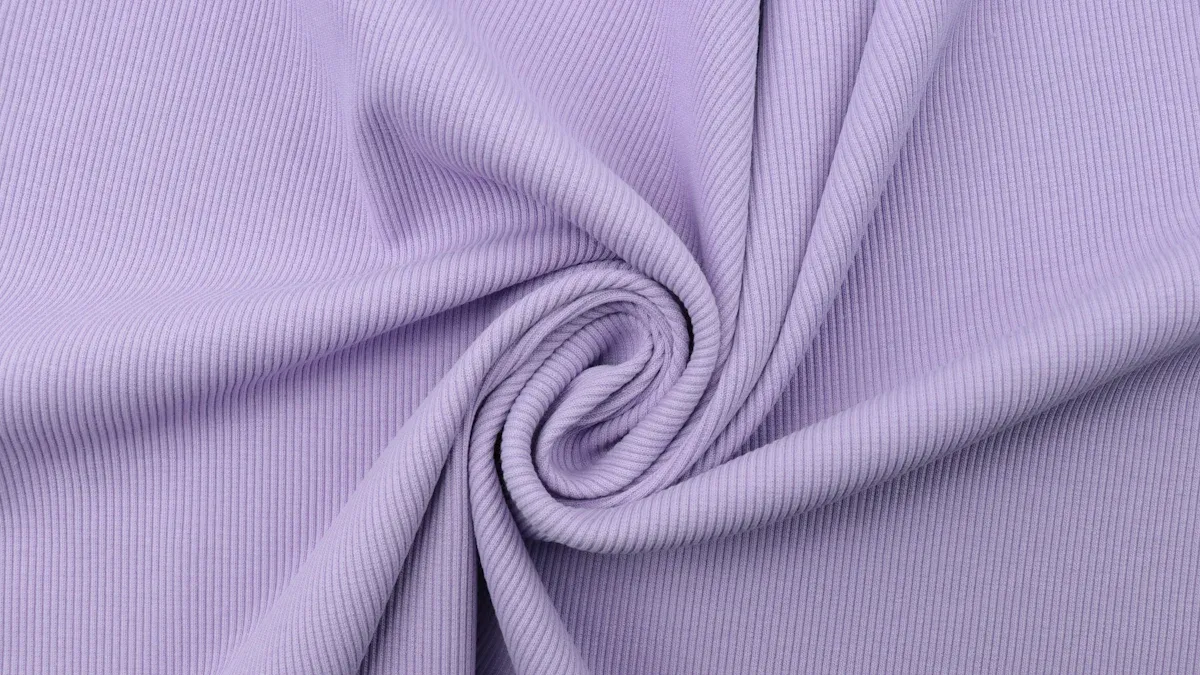
You might wonder what fabric stretchiness means when you shop for clothes. In textile engineering, stretchiness describes how much a fabric can extend and return to its original shape. This property helps you move freely and feel comfortable in your clothing. Fabrics with good stretch and flexibility let you bend, twist, and reach without feeling restricted.
Take a look at this table to see how experts define stretch fabrics:
|
Term |
Definition |
|---|---|
|
Stretch Fabric |
A synthetic fabric that stretches, available in 2-way or 4-way stretch types. |
|
2-way Stretch |
Stretches in one direction, usually from edge to edge. |
|
4-way Stretch |
Stretches in both directions, crosswise and lengthwise, like spandex. |
Elastic fabrics often contain elastane, which gives them special properties. These materials can press gently against your skin and may lose tension over time. Most elastic fabrics use elastomers such as rubber or polyurethanes. You will notice that these fabrics feel soft or rubbery at room temperature. After you stretch them, they usually return to their original shape, unless you stretch them for a long time.
Tip: If you want clothes that move with you, look for fabrics labeled as “4-way stretch.” These offer the most freedom for activities like sports or dance.
How Stretch Is Measured
You can measure fabric stretchiness in several ways. Scientists use tests to find out how much a fabric can stretch and how well it recovers. Here are some common methods:
-
Measure how much the fabric changes size after being stretched for a long time.
-
Check how much force you need to stretch the material.
-
Calculate the percentage of stretch the fabric can achieve.
Laboratories often use the CRE Method to test stretch and growth. This method shows how much a garment will stretch and how it behaves after you wear it for a while. The CRE Method also helps you understand how much the fabric grows after being held in a stretched position.
When you know how stretch is measured, you can choose the right fabric for your needs. Whether you want comfort for everyday wear or extra movement for sports, understanding stretchiness helps you make smart choices.
Polyester Is It Stretchy?
Natural Stretch of Polyester
If you ask, “is 100% polyester stretchy,” you learn pure polyester does not stretch much. Most polyester fabrics stretch only about 5-10% when pulled. This means there is a little give, but not enough for lots of movement. How polyester is made changes its stretch. Knit polyester, like jersey, feels more flexible than woven polyester. The way it is woven, like plain weave or twill, also changes how much it can stretch.
-
The makeup of polyester, including blends, affects its stretch.
-
Ways of weaving, like twills and plain weaves, change fiber movement.
-
Knit polyester fabrics are more flexible than woven ones.
-
How the fabric is made, woven or knitted, matters for elasticity.
If you want clothes that move with you, polyester alone may not stretch enough for sports or dance. You might feel tightness when wearing pure polyester clothes.
Polyester Blends and Stretch
Many people ask, “polyester is it stretchy,” when buying activewear. The answer changes if polyester is mixed with spandex. A polyester spandex blend gives much more stretch and comfort. The amount of spandex in the blend matters a lot. Blends with 8-10% spandex give good flexibility and a soft feel. Blends with 12-14% spandex give the most stretch and strong support for muscles.
|
Spandex Percentage |
Effect on Stretch and Compression |
|---|---|
|
8-10% |
Good flexibility, easy movement, soft feel |
|
12-14% |
Most stretch, strong compression, supportive fit |
A polyester spandex blend can stretch up to 200-400%, much more than pure polyester. You get better shape holding and longer-lasting fabric, even during hard workouts. Poly spandex leggings keep their shape longer than pure spandex leggings. Polyester fibers make the fabric stronger and help it last longer.
Tip: For sports or exercise, pick a polyester spandex blend. You get the best mix of stretch, comfort, and strength.
When you compare polyester is it stretchy to a polyester spandex blend, blends are better for flexibility and movement.
Spandex vs Polyester Stretch
How Much Can Spandex Stretch
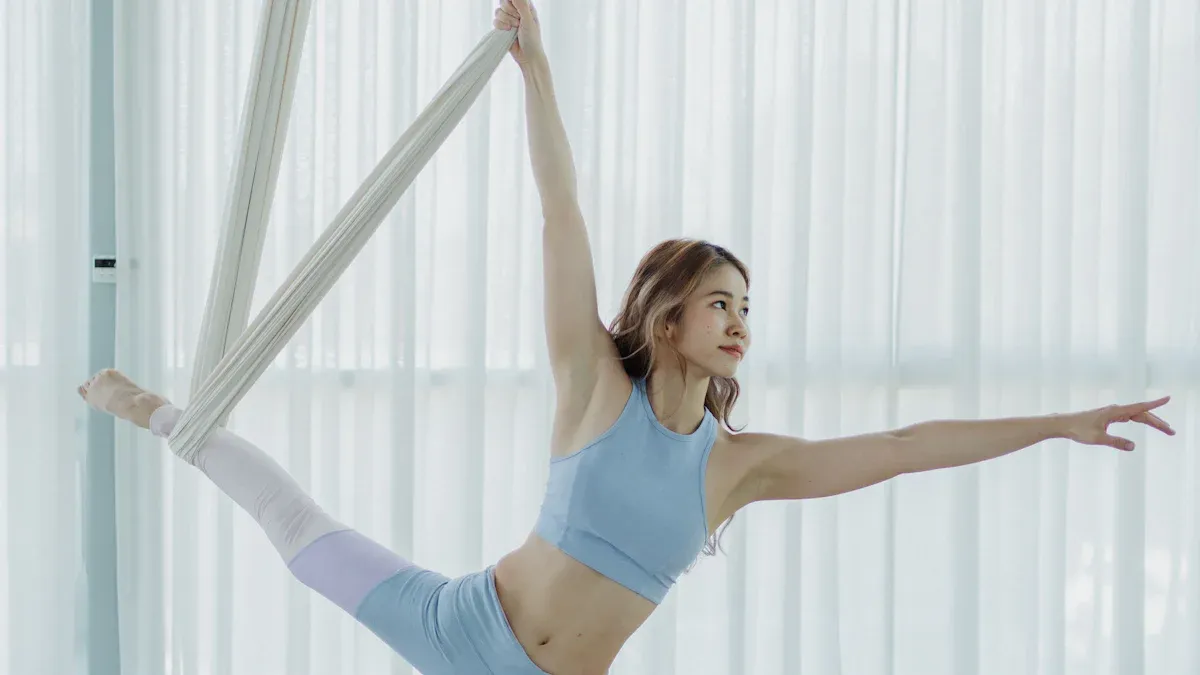
When you look at polyester vs spandex, you see they stretch very differently. Spandex can stretch a lot. You can pull it far, and it goes back to its shape. You find spandex in sports clothes, dance outfits, and swimsuits. It can stretch up to 600% of its length. Polyester does not stretch much unless mixed with elastic fibers.
Check out this table to see how much spandex stretches at different amounts:
|
Spandex % |
Stretch (%) |
|---|---|
|
5% |
25 |
Most clothes use only a little spandex, but even a small amount helps. If you see a polyester spandex blend on a tag, the fabric will stretch more than pure polyester. The way spandex fibers are made lets them stretch easily. Polyester fibers do not stretch much unless they are knitted or mixed with spandex.
Here is another table that shows how fiber structure changes stretch:
|
Fiber Type |
Structure Description |
Stretch Properties |
|---|---|---|
|
Spandex |
Segmented polyurethane with alternating soft and hard segments |
High elongation (500–700%), excellent recovery |
|
Polyester |
Engineered through knitting techniques and blends |
Varies based on construction (knit vs woven) |
Knit polyester fabrics are more flexible than woven ones. Still, when you compare spandex vs polyester, spandex always stretches more.
Note: If you want clothes that move with you, pick fabrics with spandex. You will feel more comfortable when you play sports or move around.
Stretch Recovery and Durability
When you compare polyester vs spandex, think about how well each fabric goes back to its shape. Spandex can stretch many times and still return to its original form. Polyester loses its shape more easily unless mixed with spandex. This makes spandex best for tight clothes that need to move with your body.
Here is a table that compares stretch recovery and best uses:
|
Fabric Type |
Stretch Capacity |
Shape Recovery |
Ideal Use |
|---|---|---|---|
|
Spandex |
Up to 500% |
Excellent |
Athletic wear, compression garments |
|
Polyester |
Minimal |
Poor |
Everyday clothing, home fabrics |
Spandex keeps its stretch and flexibility after many washes. Polyester is strong and does not wrinkle, but it does not recover well from stretching unless blended with spandex.
Let’s look at how durable each fabric is:
-
Spandex can stretch up to 600% and return to shape. It stays stretchy for a long time.
-
Polyester is strong and does not wrinkle. It does not stretch much unless mixed with elastic fibers.
-
Spandex has a high elastic recovery rate. It keeps its shape and stretch after many washes and wears.
-
Polyester can be washed often without losing shape, but it does not stretch or flex much.
New textile ideas have made both fabrics better. Four-way stretch fabrics use spandex fibers in more directions for easier movement. Flatlock stitching and seamless designs help stop chafing. Extra stretch panels in leggings let you move more freely.
When you compare polyester vs spandex, you see spandex is better for stretch and flexibility. Polyester spandex blend fabrics give you both strength and stretch. They are great for sports, activewear, and any clothes where you want comfort and movement.
Polyester vs Spandex in Clothing
Activewear and Sportswear
When you buy sports clothes, you want them to feel good. Spandex lets your clothes stretch and snap back. This means your clothes move with you and keep their shape. Polyester helps pull sweat away from your skin. It also lets air flow, so you stay dry when you exercise. Many brands mix polyester and spandex for sportswear. These blends dry fast and give strong support.
Here is a table that shows what athletes think about these fabrics:
|
Material |
Performance Metric |
Athlete Feedback |
|---|---|---|
|
Spandex |
High-stretch recovery |
Needed for flexibility and performance in sports clothes. |
|
Polyester |
Moisture-wicking and breathability |
Makes you feel better during exercise. |
|
Spandex |
Post-workout comfort |
Scored 9 out of 10 for comfort after a long run. |
|
Spandex |
Reduction in muscular fatigue |
Athletes felt 30% less tired with 22% spandex jerseys. |
|
Spandex |
Fit retention |
42% fewer returns for bad fit after adding more spandex. |
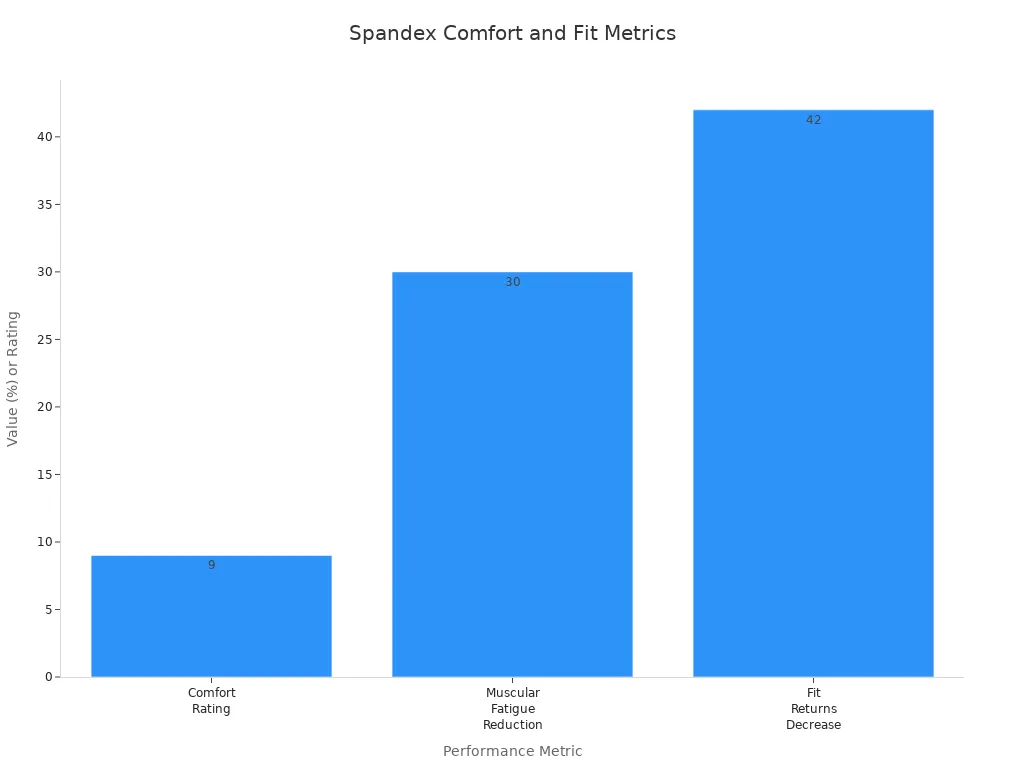
Spandex helps clothes fit better and feel nice. Polyester keeps you cool and dry. Most sports clothes use blends like 85/15 poly-spandex or 80/20 nylon-spandex. These blends stretch well and bounce back fast.
Everyday and Casual Wear
You want clothes that feel good all day long. Stretchy clothes make everyday outfits more comfy and easy to wear. Elastic fibers help you move without feeling tight. This is great for relaxed styles. Fashion and social media make brands use more stretchy fabrics. Cotton mixed with spandex gives you soft, stretchy clothes for daily wear.
-
Stretchy clothes feel better and fit well.
-
Elastic fibers let you move easily.
-
Cotton-spandex blends are good for everyday outfits.
Polyester spandex fabric is also used in casual clothes. It dries quickly and keeps its shape. This makes it a smart pick for busy days.
Special Uses (Swimwear, Dancewear)
Swimwear needs extra stretch. Most swimsuits use 80-90% polyester or nylon with 10-20% spandex. This mix lets you move easily in water and keeps your suit snug. Dancewear uses spandex for lots of stretch. You can jump and spin without feeling tight.
-
Swimwear has polyester or nylon and spandex for stretch.
-
Spandex helps dancewear fit close and move with you.
-
Some fabrics, like double-brushed poly, are not good for swimwear.
When you sew swimwear, use a stretch needle and a zig-zag stitch. This helps the seams stretch and stops them from breaking. Do not use straight stitches because they do not stretch.
Tip: For swimwear and dancewear, always check the fabric blend. Look for spandex to get the best stretch and fit.
Polyester spandex fabric works well for many things. It gives you comfort, stretch, and lasts a long time in sports clothes, casual wear, and special outfits like swimwear.
How a German Brand Used Stretchy Polyester Knit Polos to Win Outdoor Customers
A mid-sized German sportswear brand wanted an outdoor polo that kept its shape, handled frequent washing, and offered light stretch for golf and weekend hiking. The team chose a polyester-based knit fabric with a small amount(3%) of spandex, combining polyester’s durability and moisture-wicking with just enough elasticity for easy movement.
After one full season, retailers reported lower return rates for misshapen collars and cuffs, and customers highlighted the polos’ comfortable, “not too tight, not too loose” stretch in reviews.
Encouraged by strong reorder demand from German retailers, the brand decided to place a larger follow-up order for the next outdoor season and expand the same polyester knit concept into long-sleeve polos and light mid-layer tops. This case shows that while 100% polyester is not very stretchy on its own, a polyester knit with a small spandex content can deliver reliable stretch, better fit retention, and strong market feedback for outdoor polo shirts.
Our customers loved that the outdoor polos stayed in shape but still had a gentle stretch. The polyester knit fabric feels light, dries quickly, and after a full season we saw fewer returns and strong repeat orders, so we’re expanding the line with new colors next year.- By German Client
Other Factors to Consider
Breathability and Comfort
You want clothes that feel nice and let air in. Breathability means air and sweat can move through the fabric. Polyester blends help pull sweat away and dry fast. Lycra spandex sometimes holds sweat, but it can let air in too. How the fabric is made changes how much air gets through.
-
Polyester blends are better than Lycra Spandex for drying fast and moving sweat away.
-
How well air moves depends on the blend and how the fabric is knit.
-
Lycra can let more air in sometimes, even if it holds sweat.
Some people get itchy skin or rashes from polyester. Kids and people with sensitive skin notice this more. Polyester uniforms cause more skin problems for kids than cotton. If your skin is sensitive, pick clothes with more natural fibers.
Care and Maintenance
You want your clothes to last and stay stretchy. Washing and drying them the right way helps a lot. Polyester is tough, but you should follow care tips to keep it nice. Here is a table with ways to care for stretch fabrics:
|
Fabric Type |
Care Instructions |
|---|---|
|
Stretch Cotton |
Wash in cold water on gentle or by hand. Use bleach that does not have chlorine if needed. Dry on low heat or hang up. Do not iron or dry clean. |
|
Dry Stretch |
Wash in cold water on gentle with similar colors. Do not use fabric softener. Use bleach without chlorine if needed. Dry on low heat. |
Always wash stretchy fabrics in cold water and use gentle cycles. Do not use fabric softeners because they can hurt elastic fibers. Hang clothes to dry or use low heat in the dryer.
Cost and Value
You want good clothes for your money. Polyester and spandex are made from oil, which cannot be replaced. Making these fabrics uses lots of energy and can hurt nature. Polyester does not break down in landfills and can make tiny plastic pieces when washed. Some brands use recycled polyester to help the planet, but it still makes microplastics and is hard to recycle many times.
|
Impact Type |
Description |
|---|---|
|
Petroleum-based production |
Polyester comes from oil, which is not renewable. This uses up natural resources and hurts the environment. |
|
High energy use |
Making polyester uses lots of energy and makes greenhouse gases. |
|
Non-biodegradability |
Polyester does not break down, so it stays in landfills for hundreds of years. |
|
Microplastic shedding |
Washing polyester makes tiny plastics that can pollute water and get into animals. |
|
Recycled polyester |
Using recycled polyester helps use less new plastic and cuts down on waste. |
|
Limits of recycling |
Recycled polyester still makes microplastics and is hard to recycle many times. |
Think about how long your clothes will last and how they affect the earth. Polyester is strong, so your clothes may last longer. If you want to help nature, pick recycled polyester or blends with natural fibers.
Spandex can stretch a lot more than polyester. Spandex can stretch up to five times its size. It goes back to its shape after many wears. Polyester gets much stretchier when mixed with spandex. For yoga or pilates, nylon-spandex blends feel comfy and let you move. For running or gym, polyester-spandex blends help control sweat and give support. Blended fabrics are stretchy and strong, so clothes last longer and fit well. Pick the fabric that works best for you, and you will feel good every day!
FAQ
Can you stretch polyester as much as spandex?
No, you cannot stretch polyester as much as spandex. Polyester stretches a little, usually up to 10%. Spandex can stretch up to 600%. You feel more freedom of movement with spandex.
Why do brands blend polyester with spandex?
Brands blend polyester with spandex to make clothes more flexible and comfortable. You get better stretch, shape retention, and durability. Blended fabrics work well for sports, dance, and everyday wear.
How do you care for polyester-spandex clothes?
You should wash polyester-spandex clothes in cold water on a gentle cycle. Avoid fabric softeners. Hang dry or use low heat. This helps keep the stretch and shape.
Which fabric is better for sportswear?
You get better performance with polyester-spandex blends. Polyester wicks sweat and dries fast. Spandex gives stretch and comfort. Together, these fabrics help you move easily during sports.