
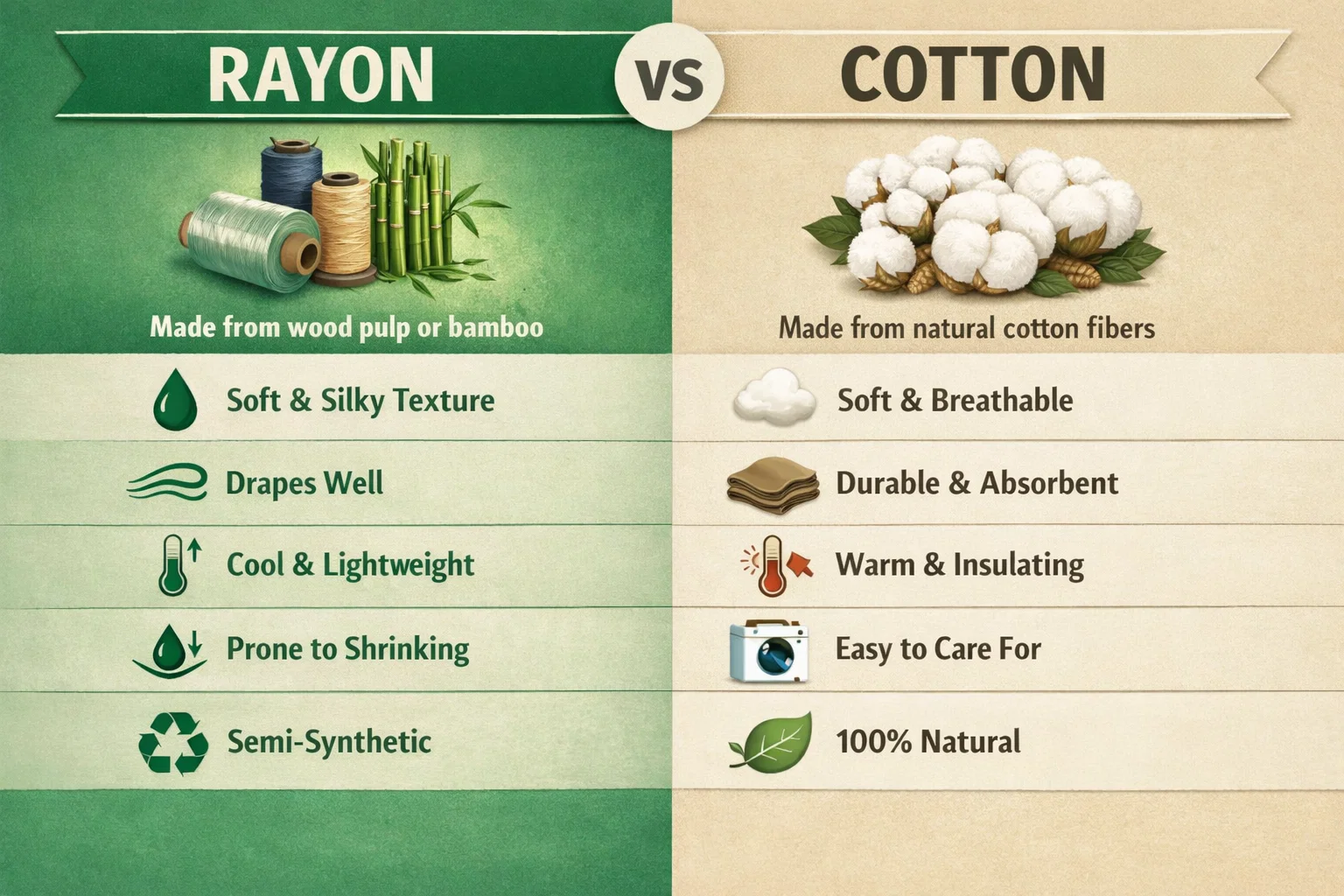
You want a fabric that fits your life, right? When considering rayon vs cotton, think about your priorities. If you love cool comfort and need something tough for everyday wear, cotton often works best. For a softer, dressier look, rayon feels smooth and drapes well, though it needs gentle care. Both have their ups and downs—cotton keeps its color and stays strong when wet, while rayon can fade and feels weaker if soaked. So, when you compare rayon vs cotton, consider how you live and what matters most to you.
Key Takeaways
Cotton is strong and simple to wash. This makes it great for daily clothes like t-shirts and jeans. Rayon feels soft and smooth. It hangs nicely and is good for fancy clothes in hot weather. Think about your life when you pick fabric. Choose cotton if you move a lot. Pick rayon for special events. Both fabrics can affect the environment. Organic cotton is better for nature. Always read the care tags. You can wash cotton in a machine. Rayon needs careful washing.
What Is Rayon?
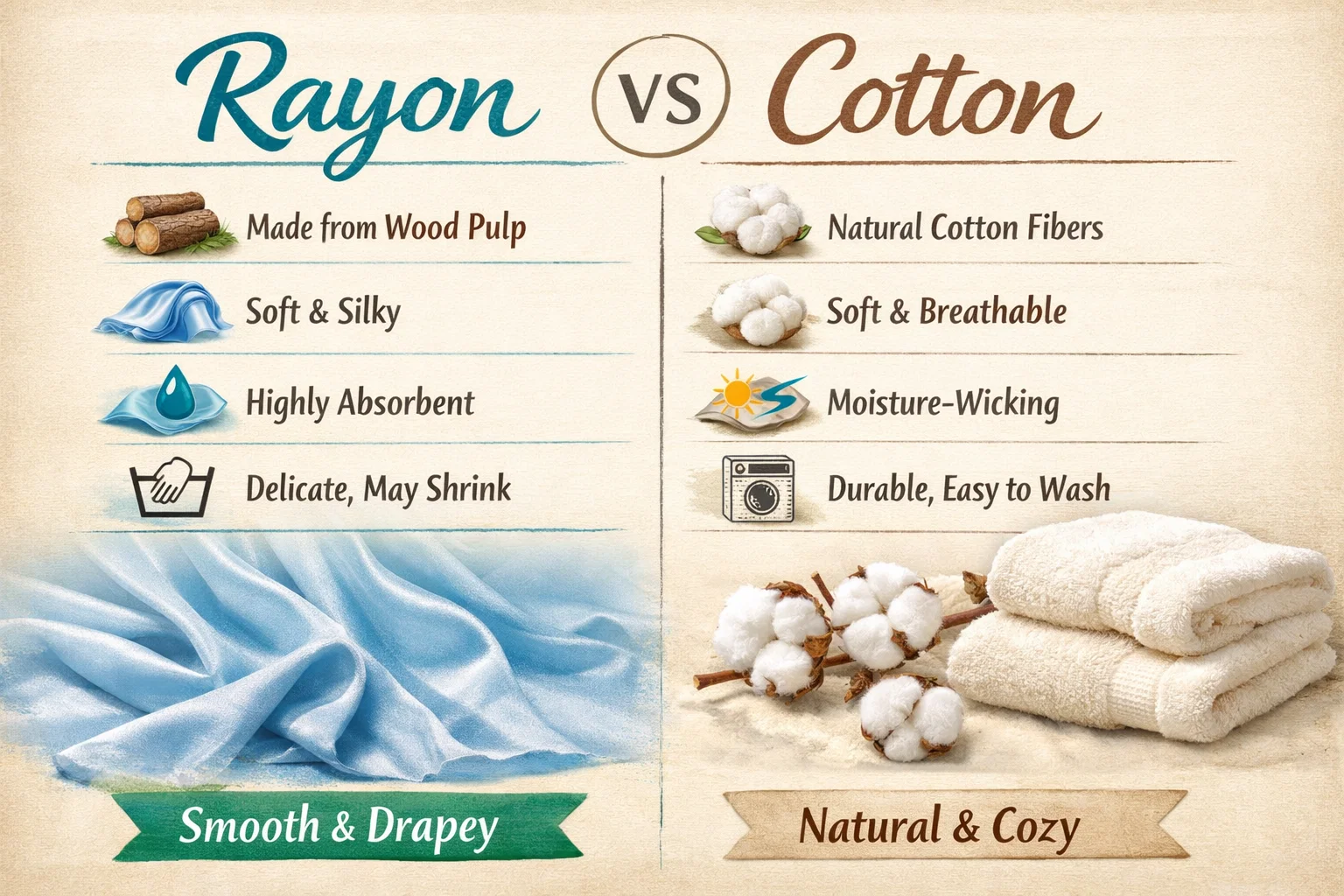
Rayon is a fabric used in lots of clothes. You see it in shirts and dresses. When you look at rayon vs cotton, rayon feels silky and smooth. Rayon looks fancy but is light to wear. Rayon comes from natural cellulose found in wood pulp. It goes through many chemical steps before becoming soft fabric.
How Rayon Is Made
Rayon starts with wood pulp from trees. Eucalyptus and pine are common sources. Here’s how manufacturers make rayon:
Pulp and Clean: Workers mix wood pulp with water. They clean it to get rid of dirt.
Dissolve and Spin: Sodium hydroxide and carbon disulfide dissolve the pulp. This makes a thick liquid.
Extrude and Coagulate: The liquid is pushed through tiny holes. It goes into a bath with sulfuric acid. This turns the liquid into solid fibers.
Drawing and Drying: The fibers are stretched and dried. This makes them strong and smooth.
Finishing: The rayon fibers are washed and treated. This helps them feel better and work well.
Did you know? Rayon is called semi-synthetic fiber. It starts with natural cellulose but needs chemicals to become fabric. This is different from cotton, which comes straight from plant fibers.
Rayon’s Main Features
Rayon has qualities people like. It feels soft and gentle on your skin. Rayon drapes nicely, so designers use it for stylish clothes. Here are some good things about rayon:
Softness: Rayon feels smooth and comfy, almost like silk.
Breathability: Rayon keeps you cool, even when it’s humid.
Versatility: Rayon works for casual, office, and fancy clothes.
Absorbency: Rayon soaks up moisture, so you don’t feel sticky.
Fashion Appeal: Rayon holds dyes well, so colors look bright.
Rayon vs cotton is a common choice. Rayon gives a soft feel and fancy look. Cotton is strong and easy to care for. If you want light and elegant fabric, rayon could be right for you.
What Is Cotton?
Cotton is a natural fiber that you probably wear every day. You find it in T-shirts, jeans, towels, and even bedsheets. People love cotton because it feels soft and gentle on your skin. When you compare rayon vs cotton, you notice the soft touch of cotton right away. Cotton comes from the fluffy bolls of the cotton plant. Farmers grow these plants in warm climates all over the world.
How Cotton Is Produced
You might wonder how cotton goes from plant to fabric. The process starts in the field. Farmers pick the cotton bolls by hand or machine. Workers clean the cotton to remove seeds and dirt. The cleaned cotton goes through machines that spin it into long threads. Factories weave or knit these threads to make cotton fabric. You see the final product in clothes, sheets, and many other items.
Cotton farming uses a lot of water and energy. The environmental impact depends on where and how farmers grow it. Take a look at this table to see how different types of cotton compare:
Cotton Type | Carbon Emissions (kg CO2eq/kg) | Water Usage (m³ deprived) |
|---|---|---|
Conventional (USA) | 6.07 | 87.28 |
Conventional (China) | 7.48 | 87.28 |
Conventional (Brazil) | 5.73 | 87.28 |
Organic (Kyrgyzstan) | 1.15 | 444.24 |
Organic (Turkey) | 3.18 | 188.61 |
Organic (Tajikistan) | 1.15 | 464.23 |
Global Average | Higher for Conventional | 125.6 |
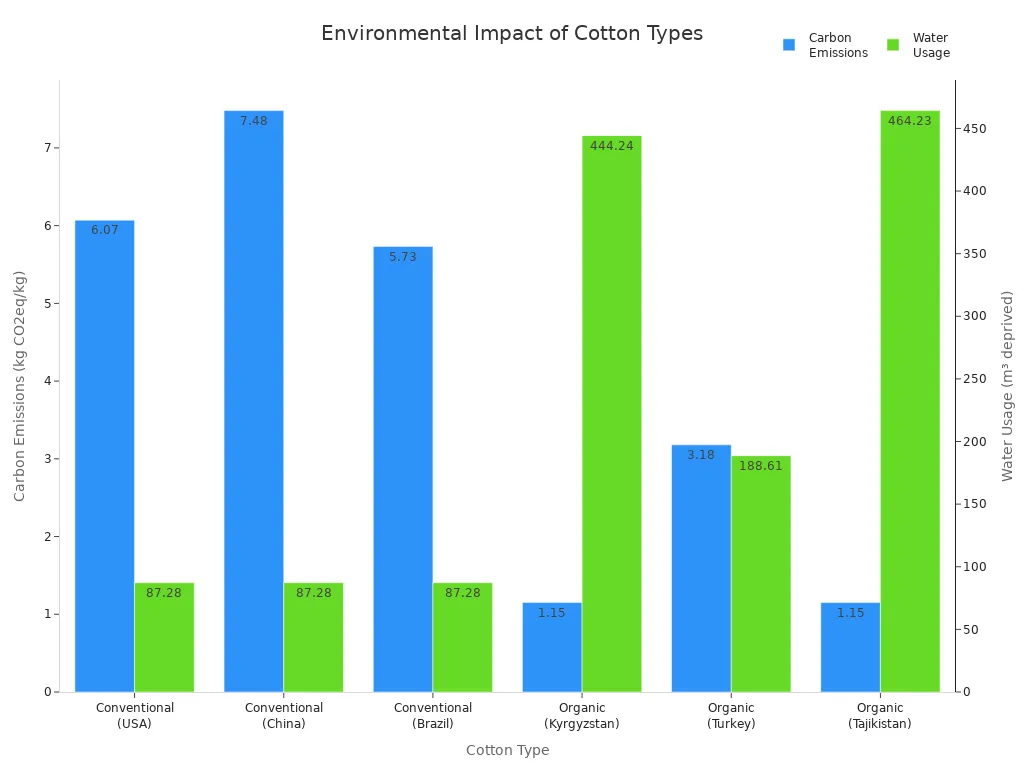
Tip: If you want to lower your carbon footprint, you can choose organic cotton. It uses less energy but needs more water.
Cotton’s Main Features
Cotton stands out for its comfort and versatility. You get many benefits of cotton when you wear it. Here are the main features you should know:
Cotton fabric is made mostly of cellulose.
You stay cool because cotton is breathable and wicks moisture.
Cotton keeps you warm in mild weather.
You can stretch knitted cotton more than woven cotton.
Cotton can shrink or pill after washing.
You can wash cotton at high temperatures.
Cotton drapes well on your body.
You need chemical treatments for flame resistance and crease resistance.
Cotton is flammable without treatment.
You get antimicrobial properties with special finishes.
Cotton can look brighter with chemical treatments.
You feel the soft touch of cotton every time you wear it. Cotton works for almost any occasion. You can dress it up or keep it casual. If you want comfort, durability, and easy care, cotton is a smart choice.
Rayon vs Cotton: Key Differences
When you compare rayon and cotton, you see each fabric is special. Let’s look at how they are different in comfort, breathability, durability, care, cost, and how they affect the planet. This will help you choose the best one for your life.
Comfort & Feel
You want your clothes to feel nice and soft. Both rayon and cotton are soft, but not in the same way. Rayon feels smooth and silky, almost like a fancy fabric. Cotton feels cozy and soft, which is great for everyday clothes.
Here’s a simple chart about comfort:
Feature | Rayon | Cotton |
|---|---|---|
Sweat Absorption | Faster | Slower |
Skin Temperature | Dropped measurably | Not specified |
Garment Dryness | Felt drier during movement | Not specified |
Underarm Cling | Greatly reduced | Not specified |
Worker Fatigue | Less fatigue from heat buildup | Not specified |
Comfort in Humid Climates | Feels 2–3°C cooler than cotton | Not specified |
Rayon is very soft and soaks up sweat fast. You might feel cooler and drier in rayon, especially if you sweat or live where it’s humid. Cotton is soft and comfy, so people like it for T-shirts and pajamas. If you want a fancy, soft feel, pick rayon. If you like a warm, familiar feel, choose cotton.
Breathability & Climate
Breathability helps you stay comfy all day. Cotton lets air move through, so you stay cool when it’s hot. Rayon also lets air in, but it is better in sticky weather because it dries sweat quickly.
Here’s how they do in tests:
Parameter | Rayon Microfiber | Cotton Blend |
|---|---|---|
Air Permeability | 75–110 L/m²/s | 120–180 L/m²/s |
Porosity | Lower | Higher |
Overall Heat Retention | Lower | Moderate |
Rayon Microfiber | Cotton Blend | |
|---|---|---|
Wicking (35%) | 34 | 22 |
Drying Speed (35%) | 33 | 20 |
Breathability (20%) | 14 | 18 |
Touch Feel (10%) | 10 | 8 |
Total SCI Score | 91 | 68 |
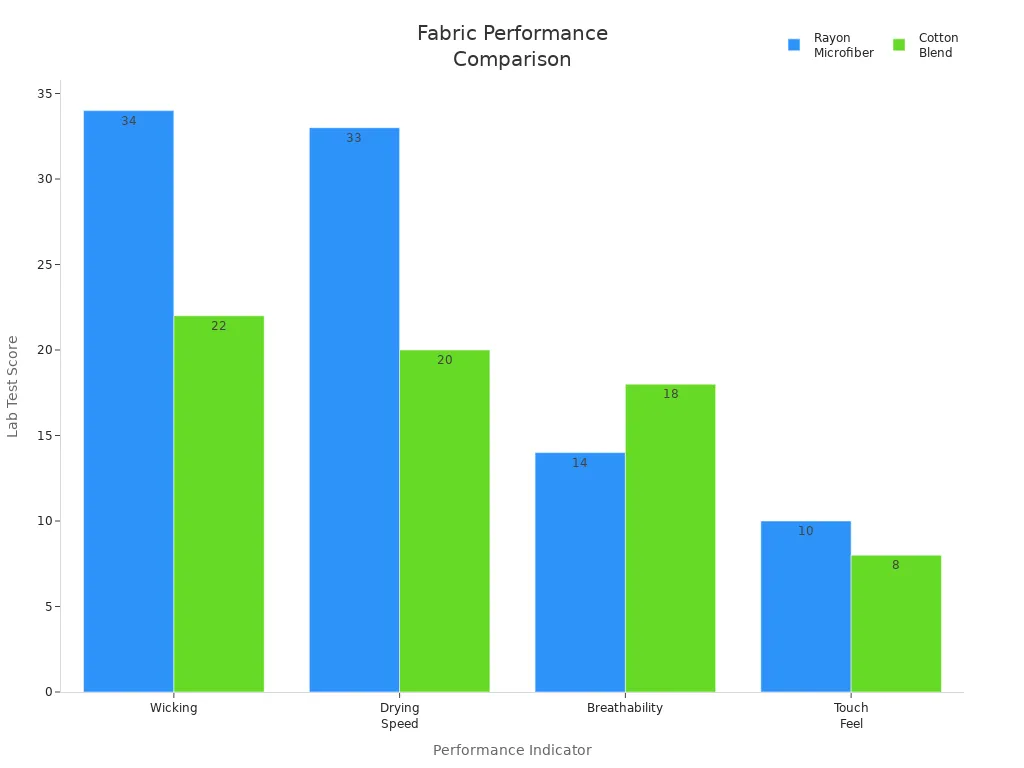
Rayon dries fast and pulls sweat away, so you feel good even when you move a lot. Cotton lets more air in, which is nice in dry heat. If you live somewhere hot and dry, cotton is a smart pick. If you live where it’s sticky and humid, rayon helps you stay fresh.
Durability & Longevity
You want your clothes to last a long time. Cotton is strong and lasts through many washes. Rayon feels soft and fancy, but it is not as strong, especially when wet.
Feature | Cotton | Rayon |
|---|---|---|
Durability | Highly durable when dry | Weaker when wet, less durable in moisture |
Cotton is very strong, especially when dry.
Cotton can handle lots of use, so it’s good for daily wear.
Rayon is weaker when wet, so it can get damaged in damp places.
If you want clothes that last, pick cotton. Rayon is nice for special outfits, but you need to be careful with it.
Care & Maintenance
It’s nice when clothes are easy to wash. Cotton is simple to clean and can take hot water. You can put most cotton clothes in the washing machine. Rayon needs gentle care. You may need to hand wash or use a gentle cycle. Rayon can shrink or change shape if you wash it too hard.
Tip: If you want easy-care clothes, go with cotton. If you like rayon, just remember to be gentle.
Cost & Value
You might wonder which fabric costs less. Rayon is usually cheaper by the yard, but prices can change with quality.
Fabric Type | Price Range (per yard) |
|---|---|
Rayon | $4 – $12 |
Cotton | $5 – $25 |
Rayon is good for your budget and looks nice, but it might not last as long if you wear it a lot. Cotton costs more, especially if it’s high-quality or organic, but it lasts longer. Experts say cotton is smart for everyday clothes, while rayon is great for soft, stylish pieces you don’t wear all the time.
Environmental Impact
You may care about how your clothes affect nature. Both cotton and rayon have problems for the environment. Cotton farming uses lots of water and chemicals, which can hurt nature. But making cotton has gotten better, using less land, water, and energy. Many people think cotton is safer for the earth.
Cotton farming now uses 30% less land and has 68% less soil loss than before.
Water for irrigation is down by 75%, energy use by 31%, and greenhouse gases by 22%.
89% of people in the USA think cotton is safe for the environment, but only 46% think that about rayon.
Rayon is made with strong chemicals that can pollute water and air. Workers can get sick from these chemicals. Rayon also causes trees to be cut down because it comes from wood pulp.
It takes about 2,700 liters of water to make one cotton T-shirt.
Cotton farms use pesticides that can get into water.
Making rayon uses toxic chemicals, and some factories dump dirty water.
Dyeing fabrics, especially rayon, wastes a lot of dye in water.
If you want to help the planet, look for organic cotton or rayon made in safer ways. Always check tags and pick brands that care about nature.
When you compare rayon and cotton, you see the differences matter for comfort, price, and the planet. Think about what is most important to you—softness, strength, easy care, or helping the earth. These key differences will help you pick the right fabric for your life.
Best Fabric for Your Lifestyle
For Active Lifestyles
If you like to move a lot or play sports, you need clothes that can keep up. When you compare rayon and cotton, cotton is better for activewear. Cotton and cotton blends are strong and soft. They let your skin breathe. You can sweat and move without feeling sticky. Cotton soaks up sweat, so you stay comfy when you work out. Here’s a quick chart:
Lifestyle/Use Case | Recommended Fabric |
|---|---|
Fitness / Activewear |
Rayon feels cool and soft. But it can rip when wet and does not last through hard workouts.
For Sensitive Skin
If your skin is sensitive, you want fabric that feels gentle. Cotton is a good choice for people with eczema or allergies. It is soft and lets your skin breathe. You can wash cotton in hot water to get rid of things that bother your skin. Organic cotton is even better because it does not use harsh chemicals. Rayon feels smooth, but the chemicals used to make it can make some people’s skin red or itchy. Here’s what experts say:
Material | Recommendation for Sensitive Skin | Key Points |
|---|---|---|
Cotton | Recommended | – Doctors say it is good for eczema. |
Viscose Rayon | Mixed Recommendation | – Smoother than cotton but can still bother skin. |
Tip: If you have skin problems, pick organic cotton for the softest feel.
For Eco-Conscious Choices
If you care about the earth, you want to know which fabric is better for nature. Most people think organic cotton is the safest for the planet. It uses fewer chemicals and makes less pollution than rayon. Rayon comes from wood pulp, which can hurt forests and make more pollution. Here’s what people who care about the earth look for:
71% say cotton is safest for the environment.
Only 45% say the same about rayon.
Organic cotton is best for the planet.
Note: If you want to help the earth, choose organic cotton and buy from brands that use green methods.
For Fashion & Style
Do you like to follow fashion trends? Rayon is a top pick for stylish clothes. Designers call it the “fabric for every occasion” because it hangs nicely and feels soft. Rayon is great for shirts, dresses, and cool prints. Rayon mixed with cotton is extra comfy and lets air in. Fashion magazines say rayon is charming, light, and shows off bright colors well. You can wear rayon for both casual and fancy outfits.
Rayon shirts look nice and are easy to style.
Rayon blends are good for summer clothes.
Cotton is still popular for classic, comfy looks.
For Everyday Use
For daily wear, you want something soft, comfy, and easy to wash. Cotton is best for basics like T-shirts, underwear, and pajamas. Organic cotton feels even softer and keeps its shape after many washes. Cotton lets air in and lasts a long time, so it is good for busy days. Rayon feels silky and nice, but you must be careful when washing it and it may not last as long. Here’s a quick chart:
Consideration | Best Choice | Reasoning |
|---|---|---|
Breathability | Cotton | Lets air in very well |
Durability | Cotton | Stays strong and keeps its shape |
Care Requirements | Cotton | Easy to wash and dry |
Moisture Absorption | Rayon | Soaks up sweat well |
Remember: Pick the fabric that feels best to you. Try both to see which one fits your life and comfort needs.
Rayon vs Cotton: Pros and Cons
Rayon: Pros & Cons
When you look at rayon, you notice it feels soft and smooth. You might love how it drapes and moves with you. Many people pick rayon for its breathability and light weight. You can wear it for many occasions, from casual to dressy. Rayon often costs less than other fabrics, so it fits many budgets.
But rayon has some downsides. You need to handle it with care. It can pill or wear out faster than you expect. If rayon gets wet, it loses strength and may tear. Sunlight and mildew can damage it, so you need to store it well. The process to make rayon uses chemicals that can harm the environment, even though some brands market it as sustainable.
Here’s a quick look at the pros and cons of rayon:
Pros | Cons |
|---|---|
Softness | Needs delicate care |
Breathability | Pilling and wear |
Multiple uses | Susceptible to moisture |
Drapes well | Chemical processing |
Affordable | Poor resistance to mildew and sunshine |
Tip: If you want a fabric that feels fancy and cool, rayon is a great pick, but remember to wash it gently and keep it out of the sun.
Cotton: Pros & Cons
Cotton stands out for comfort and breathability. You probably wear cotton every day because it feels good on your skin. It soaks up moisture, so you stay dry. Cotton works well for all ages and seasons. You can wash it easily, and it lasts a long time if you care for it right.
Still, cotton has a few drawbacks. It can shrink or wrinkle after washing. Sometimes, cotton fades over time. Traditional cotton farming uses a lot of water and chemicals, which can hurt the planet. If you want to help the earth, you might look into the pros and cons of organic cotton. Organic cotton uses fewer chemicals but may need more water.
Here’s a table to help you compare:
Pros | Cons |
|---|---|
Excellent moisture absorbency | Shrinkage |
Breathability | Wrinkling |
Easy to care for | Absorbency issues |
Durable | Fading |
Good for sensitive skin | Environmental effects |
Note: Cotton is a classic choice for comfort and durability. If you want a greener option, try organic cotton and check how the brand grows it.
When you compare rayon vs cotton, you see both have strong points and weak spots. Think about what matters most to you—softness, easy care, or helping the environment. Knowing the pros and cons of rayon and cotton helps you pick the best fabric for your lifestyle.
You’ve seen how cotton and rayon each shine in their own way. Cotton gives you durability and comfort, perfect for daily wear like t-shirts, jeans, and even towels. Rayon feels smooth and drapes beautifully, making it a top pick for stylish, flowy outfits in warm weather.
Quick checklist to help you choose:
Want long-lasting, easy-care basics? Go with cotton.
Love soft, lightweight, and dressy looks? Try rayon.
Pick what fits your lifestyle and feels best on your skin. Your comfort matters most! 😊
FAQ
What’s the main difference between rayon and cotton?
Rayon feels silky and smooth. Cotton feels soft and cozy. You get more durability from cotton. Rayon gives you a dressier look. Both work well for everyday wear, but you need to treat rayon gently.
Can you wash rayon and cotton in the same way?
You can toss most cotton clothes in the washing machine. Rayon needs gentle care. Hand wash or use a delicate cycle. Always check the label before you wash either fabric.
Are rayon and cotton considered sustainable fabrics?
You find some cotton labeled as sustainable fabrics, especially organic cotton. Rayon can be sustainable if made from responsibly sourced wood pulp. Always look for certifications when you shop.
Is either rayon or cotton a biodegradable fabric?
Yes, both rayon and cotton are biodegradable fabrics. They break down over time. You help the planet when you choose natural fibers and avoid synthetic blends.
Which fabric is better for hot weather?
Cotton lets air flow and keeps you cool. Rayon dries sweat quickly and feels light. You stay comfortable in both, but rayon works best in humid climates.