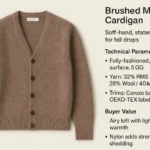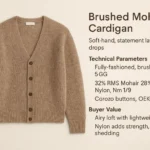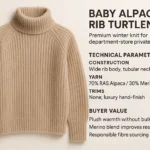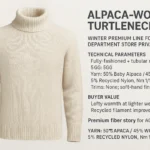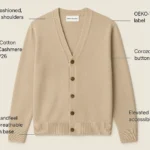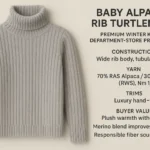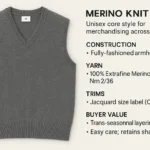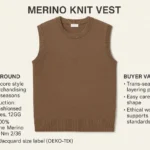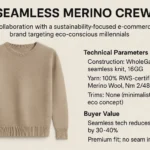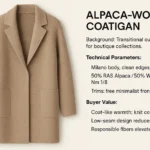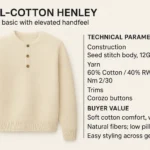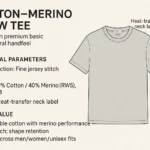

If your spring capsule needs to land fast and cash-flow can’t absorb big inventories, choosing the right spring knitwear manufacturer isn’t just about price—it’s about predictable speed, flexible low MOQs, and consistent quality on lightweight constructions. This guide gives you buyer-grade criteria, vendor-dependent lead-time ranges, MOQ optimization tactics for multi-style orders, yarn and gauge guidelines for warm weather, the QC stack to prevent rework, and the compliance checks that pass audits.
Key takeaways
Prioritize factories that publish clear SLAs: rapid sampling (often 3–10 working days depending on yarn availability) and realistic bulk windows (~3–6+ weeks, vendor- and material-dependent) with buffers.
Control costs under multi-style, small-batch buys by consolidating yarn programs, sharing trims/labels/packaging, and staging colorways—this is the fastest path to low MOQ knitwear without waste.
For spring-weight pieces, target higher gauges with breathable stitches; align yarn counts with GSM goals and lock shrinkage/pilling targets in the test plan before POs.
Use an AQL-based inspection plan and track RFT, DHU, OTIF, and PCD so defects and delays don’t silently erode margins.
Verify compliance: ask for OEKO-TEX Standard 100 certificate numbers, ISO 9001 QMS scope statements, and amfori BSCI audit status—and validate on official portals.
When comparing geographies or OEM vs ODM, match the model to your launch timing, exclusivity needs, and MOQ budget—not to generic “country averages.”
What to require from a spring knitwear manufacturer
The right partner for spring styles should demonstrate capability in four areas: machines and gauges, stitch repertoire, yarn access, and fast sampling.
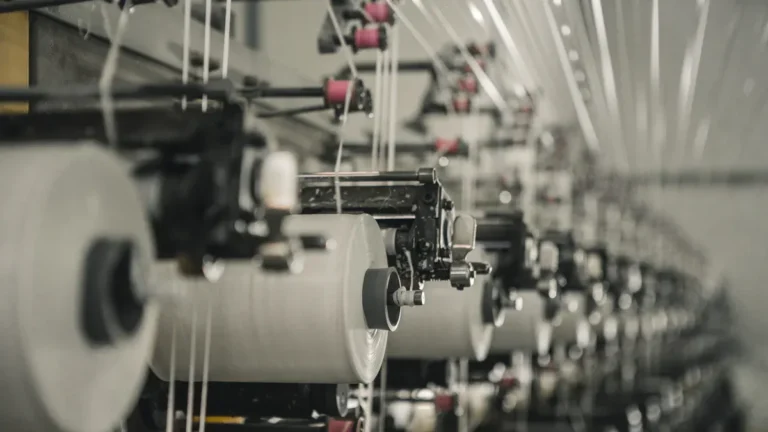
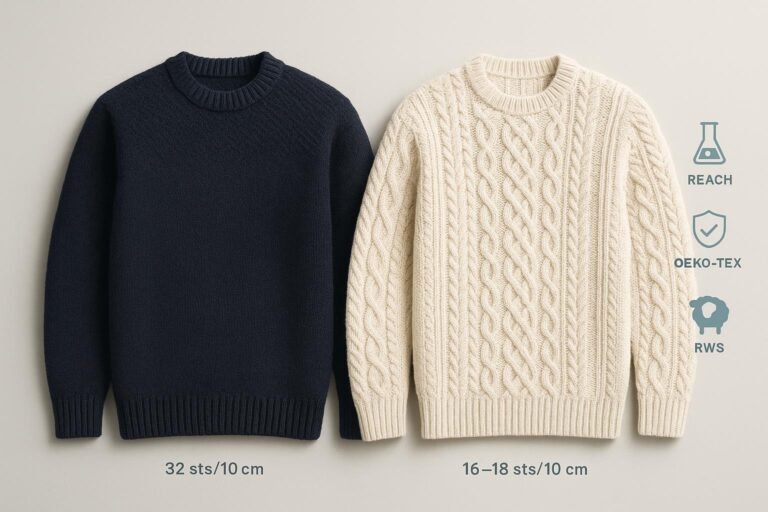
Machines and gauges: Ensure coverage from roughly 12–16 GG for lightweight cardigans, tees, and fine merino layers. Ask for machine lists and available needle beds.
Stitch repertoire: Look for stable, breathable structures (single jersey, rib, pointelle, meshes) and the ability to mitigate torque/twist bias and seam slippage in light yarns.
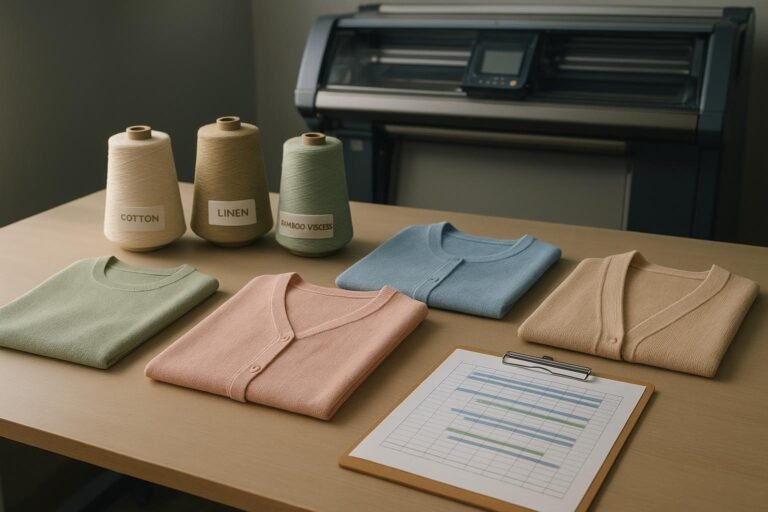
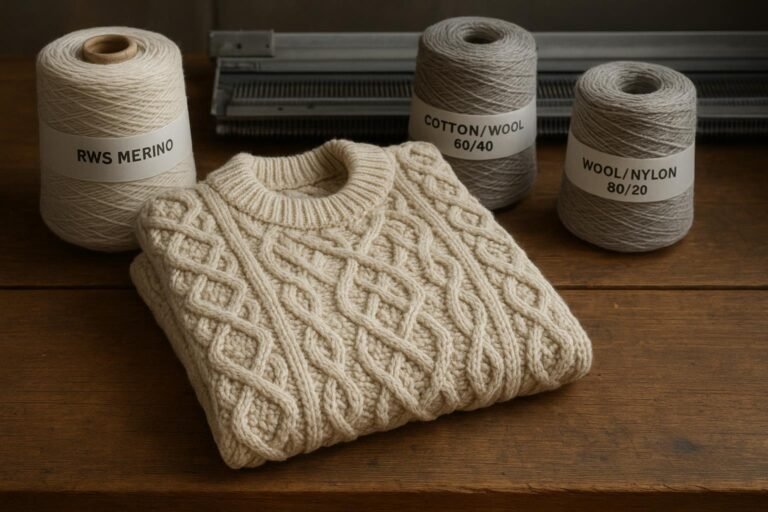
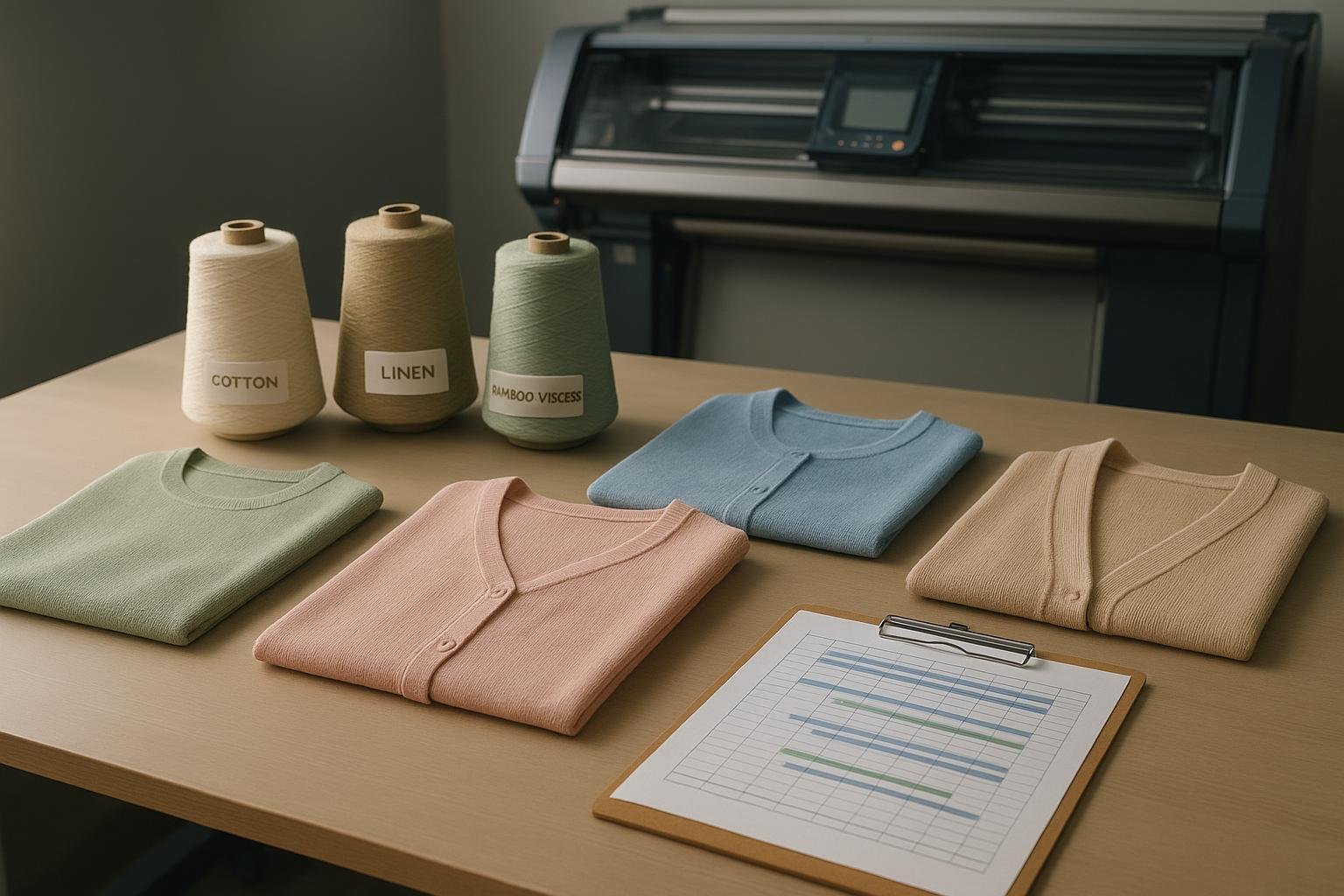
Yarn access: Prioritize libraries with cotton, cotton-modal, cotton-poly, linen and linen blends, bamboo-viscose, and fine merino. Stock-service programs can compress sampling calendars.
Fast sampling lab: A responsive sample room with blocking/finishing and quick trim sourcing shortens loops and reduces hidden costs.
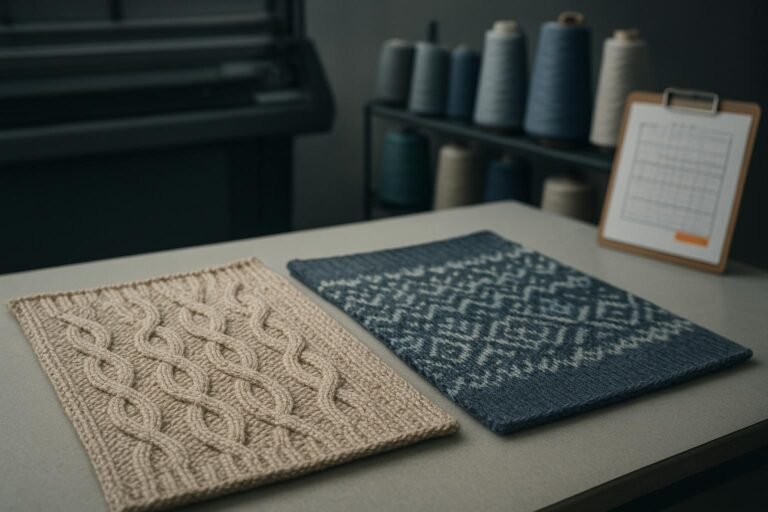
Tip: Request a swatch board tied to machine gauge, yarn count, and measured GSM. It’s the easiest way to align design intent with manufacturable specs.
Lead times and low MOQs without hidden cost blowups
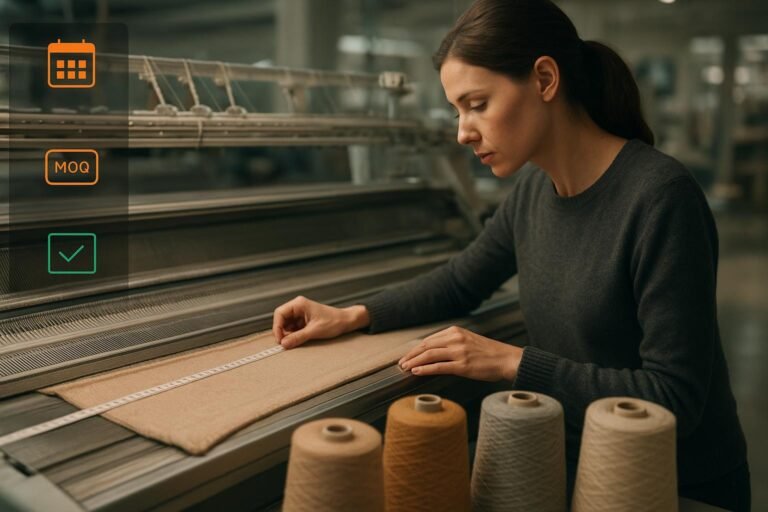
Frame your SLAs with vendor-dependent windows (and add buffers): sampling about 3–10 working days depending on yarn availability, stitch complexity, and trim readiness; bulk about 3–6+ weeks from PP approval to final inspection using in-stock yarns, or 6–10+ weeks if spinning/dye queues, seasonal peaks, or complex finishing steps apply.
Cost and MOQ levers for multi-style, small-batch buys (combine these to unlock value):
Aggregate by yarn program and normalize trims/labels/packaging across SKUs to reduce setup waste and meet dye-lot minimums more efficiently.
Stage colorways—launch 1–2 core colors first, defer long-tail hues to a second PO once demand validates.
Choose stitches with favorable knit time vs stability (e.g., single jersey/rib for pilots instead of time-heavy jacquards) and calibrate size curves to real demand.
Approve lab dips and care instructions early, and document yarn wastage factors, courier terms, compliance document fees, and any small-lot dyeing surcharges directly in the RFQ.
Illustrative ladder (for understanding only; request quotes to validate): If Style A and B share the same cotton-linen yarn and trims, a 2×150-piece buy can often price closer to a single 300-piece run than two isolated 150-piece runs because setup time and dye lots are shared.
Lightweight spring yarns and gauges that breathe—and behave
Use these vendor-dependent, buyer-safe bands as starting points and always confirm with factory swatches and test reports.
Cotton and cotton-rich: 12–14 GG using roughly Ne 24s–40s (Nm ~40/1–68/1) for airy single jerseys and ribs, targeting around 120–180 gsm.
Bamboo viscose/modal blends: Similar counts to cotton for drape and softness; typical 120–160 gsm for tops/cardigans. Manage pilling with tighter twist/finishing.
Linen or cotton–linen: Crisp hand with slightly higher GSM for opacity (about 130–190 gsm). Watch torque and seam slippage.
Fine merino (approx. 18–22 μm): 14–18 GG with fine counts, roughly 140–180 gsm for spring layers. Specify anti-shrink finishes and blocked measurements.
Lock the test plan alongside yarn decisions:
Shrinkage: Use ISO 6330 domestic laundering cycles with dimensional change targets around ≤3–5% depending on fiber and end-use.
Pilling: Request ISO 12945-2 Modified Martindale tests with targets around grade ≥3.5–4 for exterior surfaces.
Background reading and method references: see ISO’s quality management hub and test method summaries at the links cited later in this guide.
Quality control for lightweight knits that saves you rework
Pair an AQL-based inspection plan with a handful of KPIs to keep defect density and rework under control.
AQL plan: Use ANSI/ASQ Z1.4 (also ISO 2859-1). Typical acceptance levels many buyers set: Critical 0.0; Major 1.5–2.5; Minor 4.0. Practical explainer: the AQL guide from Renaud Anjoran’s team at QualityInspection.org.
Track the right KPIs:
RFT (Right First Time): the percent of garments passing without rework.
DHU (Defects per Hundred Units): your defect density.
OTIF (On-Time In-Full): delivery reliability.
PCD (Production Completion Date) adherence: whether production exits on the booked date.
Test reports to request by method:
ISO 12945-2 for pilling resistance (Modified Martindale)
ISO 6330 for home laundering cycles and post-wash measurements; pair with the factory’s dimensional change method (often referencing ISO 23231)
Why it matters: Lightweight gauges magnify small process drifts—needle wear, stitch density, finishing time—into visible defects. A tight QC loop is your insurance policy.
Certifications and compliance you can verify in minutes
Ask for certificates and audit details up front, then verify them on official portals.
OEKO-TEX Standard 100: Confirms components have been tested for harmful substances; certificates are typically valid for one year and tied to product classes. See the official overview and factsheet from OEKO-TEX Standard 100 and instructions on label verification in OEKO-TEX’s labelling guidance.
ISO 9001 (QMS): Demonstrates a process-based quality management system with continuous improvement. Refer to ISO’s quality management hub and the ISO 9001 overview for what to check.
amfori BSCI: A due-diligence framework (not a product certificate) rating factories on labor/H&S/ethics dimensions with corrective action plans. See amfori’s BSCI Code of Conduct resources and its verification methodology.
Verification workflow you can add to your SOP:
Collect certificate numbers and scope statements during RFQ.
Validate via OEKO-TEX Label Check, ISO CB portals or scope statements from accredited bodies, and amfori Platform membership/audit pages.
Record expiry dates and re-audit windows in your vendor master to avoid surprises.
OEM vs ODM and which regions make sense this season
Model choice affects speed, exclusivity, and MOQ.
OEM knitwear: You control the tech pack and IP. It’s ideal for proprietary stitches/gauges and brand DNA. Expect more development effort and higher setup costs per style.
ODM knitwear: You adapt existing designs from a factory library. It reduces upfront cost and accelerates sampling, but others may buy similar designs.
Region highlights (neutral, vendor-dependent):
China: The broadest capability and yarn libraries; speed and MOQ flexibility vary widely by factory tier and booking strategy.
Turkey: Nearshore to Europe with faster transit; anecdotal examples cite 3–4 weeks using stock materials for simple runs, but always confirm with SLAs.
Vietnam: Competitive for program basics and improving infrastructure; performance varies with upstream material pipelines.
Choose based on your delivery window, MOQ budget, and fiber/stitch needs—not country stereotypes.
Practical example workflow with a low-MOQ OEM partner
Here’s a neutral, illustrative workflow showing how an OEM factory that supports rapid sampling and compact bulk windows might run a spring capsule. Facts marked below derive from the brand’s internal materials and are included as context.
Day 0: RFQ with full tech pack; choose yarn from stock palette or submit lab-dip brief.
Day 1–2: Lab dips or yarn lot confirmation; trims approved.
Day 2–4: Proto knitting/linking; initial QC; blocking/finishing.
Day 3–5: Sample dispatch; feedback; PP scheduling.
Bulk T0: PP approval and PO confirmation; yarn allocated; knitting booked.
Bulk T0+1–2 weeks: Knitting/linking; inline QC; washing/finishing.
Bulk T0+2–3+ weeks: Final AQL, packing, booking, dispatch.
Reference example: An OEM/ODM supplier like AzKnit supports 3–5 working days for standard samples (contingent on yarn availability and design complexity) and around a three‑week bulk lead time after PP approval, with flexible MOQs from 50–1000 pieces depending on style and program design (Knowledge Base Source). See brand site: AzKnit.
Next steps checklist
Finalize your tech pack with accurate measurements, tolerances, stitch maps, and finishing notes.
In your RFQ, require SLAs for sampling and bulk with explicit buffers and change‑order rules.
Consolidate yarns, trims, and colorways across styles to unlock lower MOQs without waste.
Lock a QC plan with AQL levels and target RFT/DHU; request test reports for ISO 6330 and ISO 12945‑2.
Collect and verify OEKO-TEX, ISO 9001, and amfori BSCI documentation before PO.
If you need an OEM/ODM partner that supports rapid sampling, flexible low MOQs, and spring yarn libraries, review the capabilities at AzKnit to benchmark your RFQ and SLA structure (Knowledge Base Source).