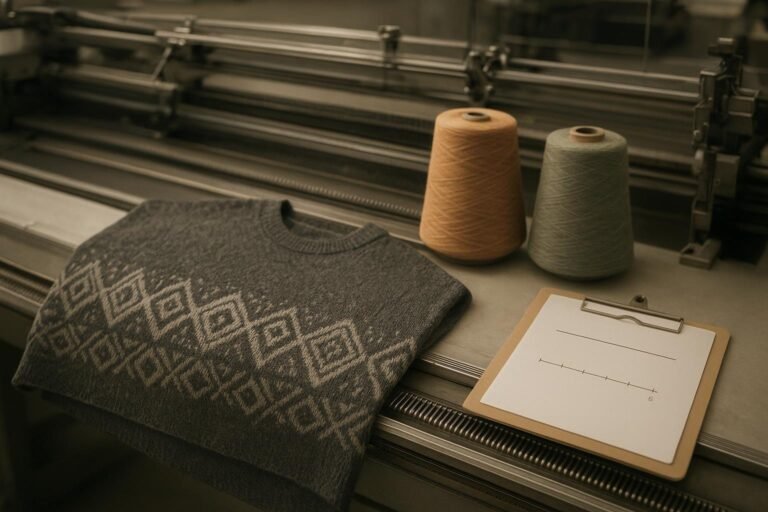

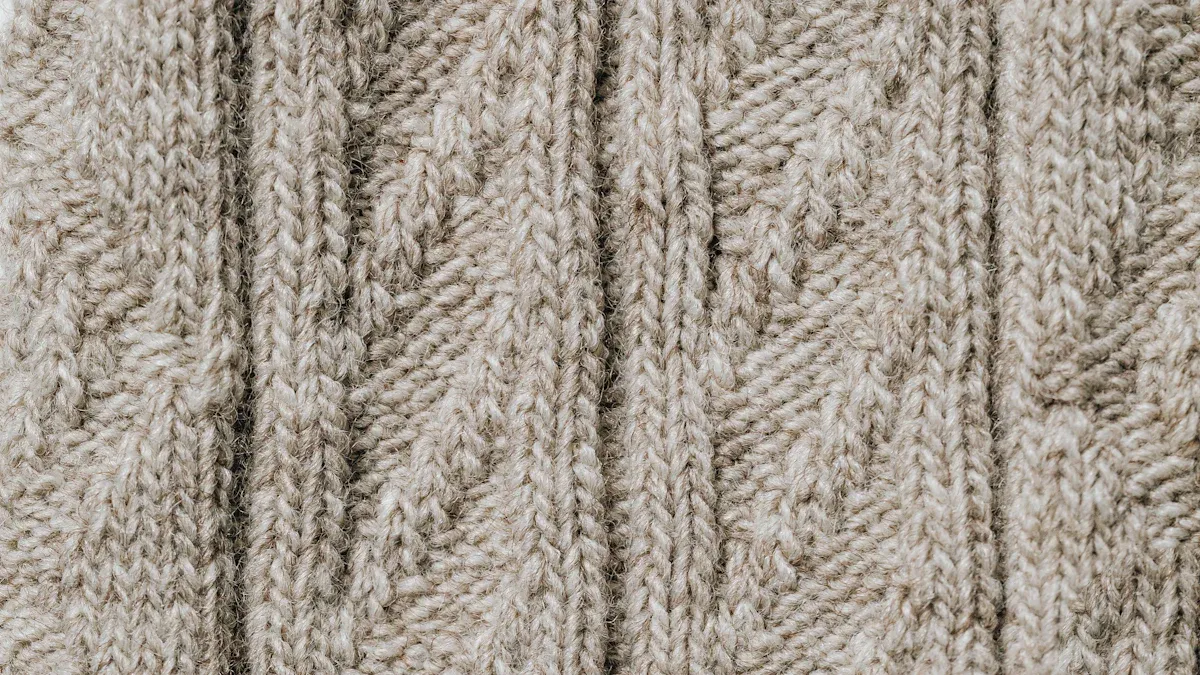
You might wonder, what gauge should I choose for my custom knitwear? Gauge shapes everything about your project, from the way a sweater hugs your shoulders to how a scarf drapes around your neck. Textile research shows that making a swatch in stocking stitch helps you see how your yarn and stitches work together, which affects the fit and look of your piece. Anyone can learn to master gauge with a little practice and patience.
Key Takeaways
Gauge determines the size and fit of your custom knitwear. Always check your gauge to avoid surprises.
Knit a gauge swatch before starting your project. This helps you see how your yarn and needles work together.
Use the same yarn and needle size for your swatch as you plan to use for your project. This gives you the most accurate gauge.
Adjust your needle size if your gauge swatch does not match the pattern. Larger needles create a looser fabric, while smaller needles make it tighter.
Pay attention to your knitting style. It affects your gauge, so practice to find what works best for you.
Always wash and block your gauge swatch. This shows how your yarn behaves and helps you get the right fit.
Keep a gauge notebook to track your yarn, needle sizes, and gauge results. This helps you learn from each project.
Experiment with different yarns and techniques. Each project teaches you something new about gauge and fit.
Gauge Basics for Custom Knitwear
What Is Gauge
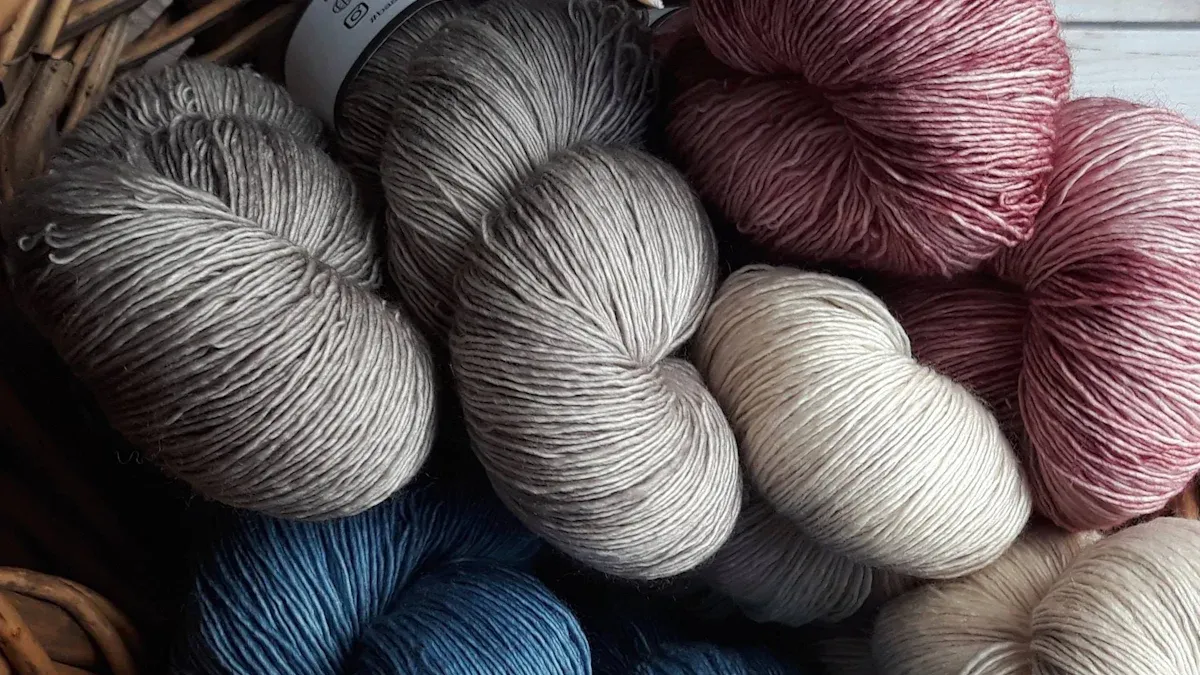
When you start a knitting project, you’ll hear the word gauge a lot. Gauge means how many stitches and rows fit into a certain area of your knitted fabric. You measure gauge to make sure your finished piece turns out the right size. If you want a sweater that fits or a scarf that hangs just right, you need to pay attention to gauge.
Here’s what you’ll check:
Stitch gauge: the number of stitches per inch or centimeter.
Row gauge: the number of rows per inch or centimeter.
Gauge swatch: a small sample you knit before starting your project to check your gauge.
Checking gauge: measuring your swatch to see if it matches the pattern.
Getting gauge: making sure your stitches and rows match the numbers in your pattern.
Gauge basics for custom knitwear help you avoid surprises. If your gauge is off, your project might end up too big or too small. You can change your needle size or adjust your tension to get the right gauge.
Why Gauge Matters
Gauge matters because it controls the size, shape, and feel of your finished knitting. If you use the wrong gauge, your sweater might not fit, or your hat could turn out floppy. Yarn and gauge work together to create the fabric you want. When you use thicker yarn, you usually get fewer stitches per inch. Thinner yarn gives you more stitches per inch.
You need to match your gauge to the pattern. If you don’t, your project might look different than you expect. Gauge also affects how your fabric feels. A tight gauge makes a firm fabric. A loose gauge makes a soft, drapey fabric.
Tip: Always knit a gauge swatch before you start. This helps you see how your yarn and needles work together.
Gauge and Fit
Fit is one of the most important reasons to check your gauge. If you want your custom knitwear to fit well, you need to measure your gauge carefully. Experts say you should always swatch when making a fitted garment. Knit a swatch about 6-8 inches square in the stitch pattern you plan to use. Wash and dry the swatch just like you’ll treat your finished piece. This gives you the most accurate gauge.
Here’s a quick look at how stitch patterns affect fit:
Stitch Pattern | Effect on Fit |
|---|---|
Stockinette | Stretches sideways, can make a shorter piece if you knit tightly. |
Rib | Stretches sideways, gets wider and shorter when stretched. |
Garter | More compressed, stretches under weight, changes length and tightness. |
Seed Stitch | Lays flat, stretches evenly, gives stability. |
If your stitch gauge matches but your row gauge doesn’t, you can often adjust the length of your project. For fitted pieces or complex shapes, try to use yarn that gives you both the right stitch and row gauge. Swatching is key to matching your measurements. Sometimes, hanging your swatch with weights helps you see how gravity will affect your finished garment.
Gauge and Drape
When you think about custom knitwear, drape makes a big difference in how your project looks and feels. Drape means how your fabric hangs or moves. You control drape with gauge, yarn, and your knitting technique. If you want a scarf that flows or a sweater that hugs your body, you need to pay attention to these details.
Gauge affects drape more than you might expect. If you use a tight gauge, your fabric feels stiff and holds its shape. If you use a loose gauge, your fabric feels soft and moves easily. You can change the drape by switching your needle size or adjusting your tension. Yarn choice also matters. Some yarns feel light and airy, while others feel heavy and dense. You need to match your yarn to your project and your gauge.
Let’s look at how different yarns and gauges change drape:
Yarn Type | Gauge (Stitches/Inch) | Drape Effect |
|---|---|---|
Lace | 8-10 | Very fluid, light |
Fingering | 7-8 | Soft, gentle |
Worsted | 5-6 | Balanced, medium |
Bulky | 3-4 | Heavy, structured |
If you want a shawl that floats, pick a lace yarn and a loose gauge. If you want a cozy blanket, choose bulky yarn and a tighter gauge. You can test drape by making a gauge swatch. Knit a square with your chosen yarn and needles. Hold it up and see how it hangs. Does it move the way you want? If not, try a different needle size or yarn.
Tip: Always wash and block your gauge swatch before you decide. Wet yarn changes shape and feel. Blocking shows you the true drape.
Knitting style also changes drape. If you knit tightly, your fabric feels firm. If you knit loosely, your fabric feels soft. You can practice different styles to see what works best for your project. Yarn fiber matters too. Wool yarn gives bounce and memory. Cotton yarn feels smooth and drapes well. Silk yarn shines and flows.
You can mix yarns for special effects. Try holding two yarns together or using textured yarn. Gauge helps you control the final look. If you want more movement, use a looser gauge. If you want structure, use a tighter gauge.
Drape gives your custom knitwear personality. You decide how your project feels and moves. Gauge, yarn, and knitting style work together. You can experiment and find the perfect combination. Every project teaches you something new about drape and gauge.
What Gauge Should I Choose for My Custom Knitwear
Reading Pattern Gauge
When you look at a knitting pattern, you’ll see a section called “gauge.” This part tells you how many stitches and rows you should have in a certain area, usually four inches square. You need to match this gauge to make sure your project turns out the right size. If you wonder, what gauge should I choose for my custom knitwear?, start by checking the pattern’s gauge instructions. Patterns often list the stitch pattern, the number of stitches and rows, and the recommended needle size. Some patterns also mention if the gauge was measured after blocking. Blocking means washing and shaping your swatch, which can change the size. Always read these details carefully.
Here’s what you should look for in a pattern’s gauge section:
Stitch count per inch or per four inches
Row count per inch or per four inches
Stitch pattern used for the gauge swatch
Needle size recommended
Blocking instructions
If you match the gauge in the pattern, your finished piece will fit as expected. If you don’t, gauge affects the size and shape, so your project might end up too big or too small.
Choosing Yarn Weight
Yarn weight plays a big role in answering the question, what gauge should I choose for my custom knitwear?. Yarn comes in different thicknesses, like lace, fingering, worsted, and bulky. Each weight gives you a different number of stitches and rows per inch. Lighter yarns show more stitch detail, while heavier yarns make thicker, warmer fabrics. When you pick your yarn, think about the look and feel you want. Do you want a soft, drapey scarf or a chunky, cozy sweater? The yarn you choose will help you get the right gauge.
Lighter yarns: More stitches per inch, finer detail
Heavier yarns: Fewer stitches per inch, bulkier fabric
Before you start your project, knit a gauge swatch with your chosen yarn. This lets you see how the yarn works with your needles and helps you decide if you need to change anything. Swatching also lets you try different yarn fibers before you commit to your whole project.
Selecting Needle Size
Needle size is another key factor when you ask, what gauge should I choose for my custom knitwear?. Patterns suggest a needle size, but you might need to adjust it to match the gauge. Every knitter has a unique style and tension. You could use the same yarn and needles as someone else and still get a different gauge. The most important thing is to match the gauge, not just the needle size.
Focus on the gauge, not the needle size listed in the pattern
Adjust your needle size if your swatch doesn’t match the pattern’s gauge
Remember, your knitting style affects your gauge
If you knit tightly, try a larger needle. If you knit loosely, use a smaller needle. The right combination of yarn and needle size helps you achieve the perfect gauge for your custom knitwear. Always check your gauge before you start your project. This step saves you time and helps you create something that fits and looks great.
Considering Knitting Style
Your knitting style plays a huge role in the final look and feel of your custom knitwear. You might not realize it, but the way you hold your needles, wrap your yarn, and move your hands can change your gauge. Some people knit tightly, pulling the yarn snug with every stitch. Others knit loosely, letting the yarn glide with less tension. Both styles work, but each one gives you a different gauge.
When you start a new project, you need to think about your own habits. Do you notice your stitches look smaller or bigger than the ones in the pattern? That’s your knitting style at work. If you knit tightly, you will get more stitches per inch. If you knit loosely, you will get fewer stitches per inch. This difference can change the size of your finished piece. Gauge is not just about the yarn or the needles. It is about how you knit.
Let’s look at some common knitting styles and how they affect gauge:
Knitting Style | Gauge Effect | What to Try |
|---|---|---|
Tight Knitter | More stitches per inch | Use larger needles or lighter yarn |
Loose Knitter | Fewer stitches per inch | Use smaller needles or heavier yarn |
Even Tension | Matches pattern gauge easily | Stick with pattern suggestions |
You can test your style by making a gauge swatch. Knit a square with your chosen yarn and needles. Measure how many stitches and rows you get. If your gauge does not match the pattern, try changing your needle size. Sometimes, just relaxing your hands or adjusting how you hold the yarn can help. You might need to practice a few times to find what works best for you.
Tip: Always use the same yarn and needles for your swatch as you plan to use for your project. This gives you the most accurate gauge.
Knitting style can also change with different yarns. Some yarns feel slippery, while others grip the needles. You might knit tighter with a smooth yarn and looser with a fuzzy one. Pay attention to how each yarn feels in your hands. If you switch yarns, always check your gauge again.
You can also try different ways of holding your yarn. Some knitters wrap the yarn around their fingers for more control. Others let the yarn flow freely. There is no right or wrong way. The best style is the one that helps you get the gauge you want.
Remember, your knitting style is unique. It is part of what makes your custom knitwear special. Take time to experiment with yarn, needles, and tension. You will learn how to control your gauge and create pieces that fit and feel just right.
How to Knit a Gauge Swatch
Swatch Size and Pattern
You want your custom knitwear to fit perfectly, so you need to start with a good gauge swatch. The size of your swatch matters. If you make it too small, you might not get an accurate reading. Most knitters recommend making your swatch at least 6 to 8 inches square. This gives you enough space to measure stitches and rows without edge distortion. You can cast on 40 stitches and knit 40 rows to create a solid piece of fabric for checking gauge.
When you choose a pattern for your swatch, use the same stitch pattern as your project. If your sweater uses stockinette, knit your swatch in stockinette. If your scarf uses ribbing, use ribbing for your swatch. Always use the same yarn and needles you plan to use for your project. This helps you see how your yarn behaves and how to determine your gauge size.
Tip: Make your swatch bigger than the area you plan to measure. This way, you avoid counting edge stitches, which can be tighter or looser than the middle.
Knitting Flat vs. In the Round
You need to think about how you will knit your project. If you knit flat pieces, like scarves or blankets, you can make your gauge swatch flat. Cast on enough stitches and knit back and forth. If your project is knit in the round, like hats or sleeves, you should make your swatch in the round. Knitting in the round can change your gauge because you only work on the right side of the fabric.
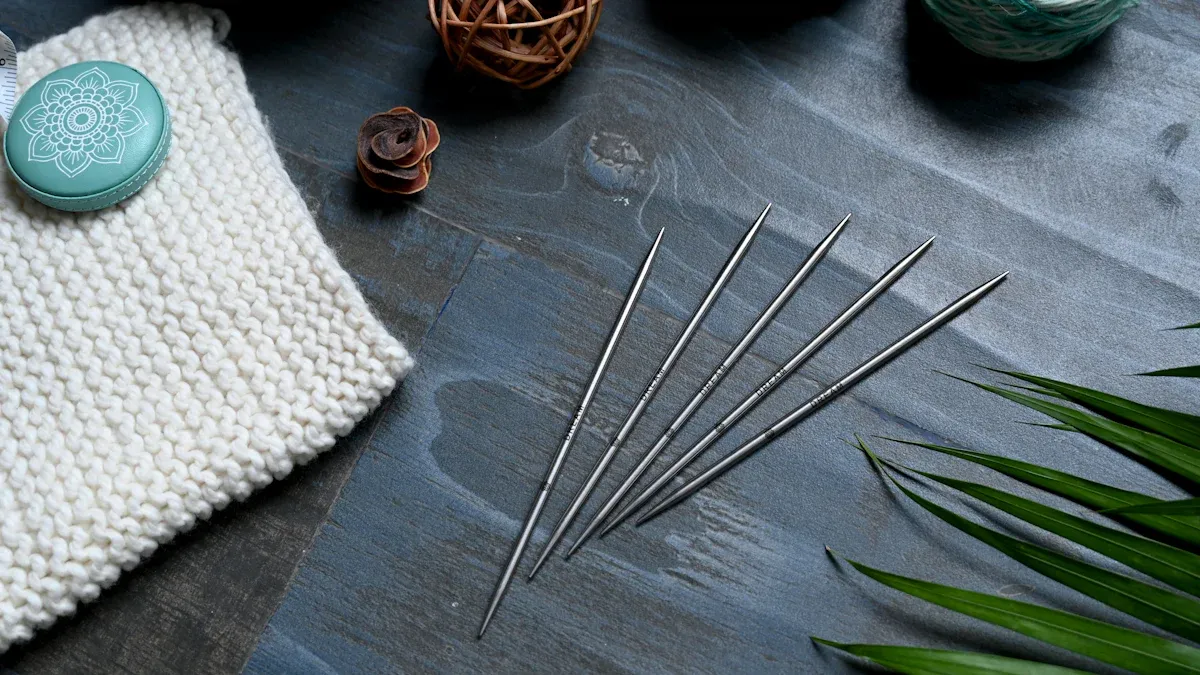
To knit a swatch in the round, cast on enough stitches for a tube. You can use double-pointed needles or a circular needle. Knit every round and avoid purling. Some knitters cheat by making a fake swatch in the round. Knit across, then slide your stitches back to the other end of the needle, and carry the yarn loosely behind. This lets you knit every row without joining in the round.
Note: Your gauge can be different when you knit flat versus in the round. Always match your swatch style to your project style.
Washing and Blocking the Swatch
After you finish knitting your swatch, you need to wash and block it. This step is important because yarn can change after washing. Washing and blocking a swatch can change stitch and row counts, leading to a more accurate gauge. Wet blocking helps the fabric relax, which can affect the final size of your knitwear.
Here’s how you can wash and block your swatch:
Soak your swatch in lukewarm water with a gentle wool wash.
Gently squeeze out the water. Don’t wring or twist.
Lay your swatch flat on a towel and shape it to the right dimensions.
Let it dry completely before measuring a gauge swatch.
You should measure your gauge before and after blocking. Sometimes, the yarn stretches or shrinks. This helps you see how your finished project will behave after its first wash.
Tip: Always block your swatch the same way you will care for your finished knitwear. This gives you the most reliable gauge.
Knitting a proper gauge swatch takes time, but it saves you trouble later. You learn how your yarn acts, how to knit a gauge swatch, and how to determine your gauge size. You get a better fit and a project that looks just the way you want.
Measuring Stitches and Rows
Now that you have a clean, dry swatch, it’s time to measure your stitches and rows. This step helps you see if your gauge matches the pattern. You want your custom knitwear to fit just right, so don’t skip this part. Grab a ruler or a special gauge tool. Lay your swatch flat on a table. Make sure you don’t stretch the fabric. You want to see how the yarn sits naturally after knitting and blocking.
Start by measuring the stitches. Place your ruler across the middle of the swatch, not near the edges. Edges can curl or look uneven, so the center gives you the best reading. Count how many stitches fit in four inches. If your ruler only shows inches, that’s fine. Just count the full stitches between the marks. Sometimes, you see half a stitch at the end. Write that down too. Every half stitch can change your gauge.
Next, measure the rows. Turn your ruler so it runs up and down the swatch. Count how many rows fit in four inches. Again, use the center of the swatch. Rows can look like little bumps or lines, depending on your knitting style and yarn. If you see a partial row, include it in your count. Write down your row gauge with the same care as your stitch gauge.
Here’s a quick checklist for measuring your gauge:
Lay the swatch flat and smooth.
Use a ruler or gauge tool.
Measure in the center, away from the edges.
Count full and partial stitches across four inches.
Count full and partial rows up and down four inches.
Write down both numbers.
Tip: If you want extra accuracy, measure in a few different spots and take the average. This helps if your knitting or yarn has small changes across the swatch.
If your stitch or row count doesn’t match the pattern’s gauge, don’t worry. You can adjust your needle size or try a different yarn. Sometimes, your knitting style changes with different yarns or needles. That’s normal. The goal is to get as close as possible to the pattern’s gauge. A small difference in gauge can make a big change in the size of your finished piece.
You might wonder why measuring gauge matters so much. The answer is simple. Gauge controls the fit, drape, and look of your custom knitwear. If you use a different yarn or change your knitting style, your gauge can change. Always check your gauge before you start a new project. This habit saves you time and yarn in the long run.
Measuring stitches and rows is a skill you build with practice. Each time you knit a swatch, you learn more about your yarn, your knitting, and your gauge. Keep a notebook with your measurements. Over time, you’ll see patterns in your knitting and yarn choices. This helps you pick the best gauge for every project.
Adjusting Gauge for Custom Fit
Changing Needle Size
When you want your custom knitwear projects to fit just right, changing your needle size is often the first thing you try. Needle size has a big impact on gauge. If your gauge swatch results show too many stitches per inch, you can switch to a larger needle. This will make your stitches bigger and reduce the number of stitches per inch. If you have too few stitches, try a smaller needle. This makes your stitches tighter and increases the stitch count.
A larger needle gives you a looser fabric and more drape.
A smaller needle creates a tighter, firmer fabric.
Changing needle size affects the fabric’s drape, with tighter gauges leading to stiffer fabrics and looser gauges resulting in more movable fabrics. A tighter gauge can make garments appear significantly different, affecting their overall fit and look.
Swatching helps you see how different needle sizes change your fabric. Always knit a few swatches with different needles before starting your knitting project. This way, you can compare the gauge swatch results and pick the right size for your project. Remember, the recommended gauge in your pattern is just a starting point. Your own knitting style and tension will affect the final outcome.
Adjusting Tension
Tension is how tightly or loosely you hold your yarn while knitting. Your tension can change the gauge even if you use the same yarn and needles as the pattern. If your stitches look too tight, try relaxing your hands and letting the yarn flow more freely. If your stitches are too loose, hold the yarn a bit tighter.
The tightness or looseness of your yarn affects knitting and gauge.
Purl stitches may be looser than knit stitches, which can change your gauge.
Swatching helps you see how your tension affects the fabric. Try knitting a few swatches with different tensioning methods. You might wrap the yarn around your fingers or hold it in a new way. Swatching helps you see which method gives you the right gauge for your custom knitwear projects. If you keep getting the wrong gauge, try adjusting your tension before switching needles or yarn.
Sometimes, you may have the perfect yarn for a sweater, and the perfect sweater pattern in mind, but the two don’t quite match up in terms of gauge. If you’re willing to venture a little ways outside the comforting zone of following a pattern exactly, many designs are flexible enough to allow adjustment for gauge.
Switching Yarn or Needles
If changing needle size and adjusting tension do not give you the recommended gauge, you might need to switch your yarn or needle material. Different yarns have different thicknesses and textures. Some yarns are sticky, while others are smooth. Sticky yarn with sticky needles can make your stitches tight. Slick yarn with slick needles can make your stitches loose.
Switching from bamboo to metal needles can lead to big differences in gauge.
Straight needles may give you a more consistent gauge than circular needles.
Swatching helps you see how different yarns and needles work together. Try making swatches with different yarns or needle materials. Compare the gauge swatch results to the recommended gauge in your pattern. If you find a combination that matches, you are ready to start your knitting project.
Measuring yarn gauge is important when you switch yarns. Always check your gauge after making a change. Swatching helps you see if you need to adjust your needle size or tension again. If you wonder what if gauge doesn’t match, keep experimenting with swatches until you get the right size.
To achieve a custom fit, it’s crucial to understand the relationship between gauge and finished size. The formula is simple: number of stitches per inch multiplied by the desired inches equals the total number of stitches required.
Swatching helps you see how every change affects your knitting project. Keep checking gauge and measuring yarn gauge as you go. This way, you will always get the right size for your custom knitwear projects.
Achieving Negative Ease
Negative ease sounds tricky, but you can master it with a little practice. When you want your custom knitwear to fit close to your body, you use negative ease. This means your finished piece will be smaller than your actual measurements. The fabric stretches to fit you, so your sweater or hat hugs your shape. You see this a lot in socks, hats, and fitted sweaters.
To get negative ease, you need to pay close attention to gauge. Start by measuring your body or the person you are knitting for. Write down the chest, waist, or head size. Next, look at your pattern. Does it mention negative ease? If not, you can add it yourself. Subtract one or two inches from the body measurement. This new number is your target size for the finished piece.
Now, grab your yarn and needles. Knit a gauge swatch using the same yarn and needles you plan to use for your project. Wash and block the swatch, then measure your gauge. Count how many stitches you get per inch. This number helps you figure out how many stitches to cast on.
Here’s a simple formula:
Number of stitches to cast on = Target size (in inches) × Gauge (stitches per inch)
Let’s say your head measures 22 inches. You want your hat to have 1 inch of negative ease, so your target size is 21 inches. If your gauge is 5 stitches per inch, you multiply 21 by 5. You need to cast on 105 stitches.
Negative ease works best with stretchy yarn. Wool is a great choice because it bounces back after stretching. Cotton yarn stretches less, so you might want to use a little less negative ease. Try to avoid stiff yarn for fitted projects. If you use a yarn with little stretch, your knitwear might feel too tight.
Check your gauge often as you knit. Sometimes, your tension changes as you work. If your gauge gets tighter, your project could end up too small. If your gauge loosens, you might lose the snug fit. Keep your knitting even and relaxed.
Here’s a quick table to help you choose the right amount of negative ease:
Project Type | Suggested Negative Ease | Best Yarn Choices |
|---|---|---|
Socks | 1-2 inches | Wool, blends |
Hats | 1-2 inches | Wool, acrylic |
Sweaters | 0.5-2 inches | Wool, stretchy blends |
Tip: Always knit a new gauge swatch if you change your yarn or needles. This helps you keep your measurements accurate.
Negative ease gives your custom knitwear a professional look. You control the fit by adjusting your gauge, yarn, and knitting style. Try different yarns and see how they stretch. Practice with small projects like hats or mittens. Soon, you’ll feel confident adding negative ease to any pattern.
Troubleshooting Gauge Issues
Uneven Gauge
You might notice your stitches look bumpy or your rows seem wavy. Uneven gauge happens to every knitter at some point. It can make your custom knitwear look messy or change the fit. You want your gauge to stay steady so your project turns out just right.
Here are some common reasons for uneven gauge:
You change how tightly you hold your yarn while knitting.
You switch between different types of needles.
You get distracted or tired while working on your project.
Swatching helps you spot uneven gauge before you start your main piece. When you knit a swatch, you see how your yarn feels and how many stitches you get. If you notice uneven stitches, try these fixes:
Try smaller needles if you have too few stitches.
If your stitch gauge matches but your row gauge does not, focus on getting the right stitch gauge and adjust the length by adding or removing rows.
Consider using a different yarn if you keep having trouble.
You want to keep your tension even. Practice helps you get better. Take breaks if your hands feel tired. Swatching also lets you estimate how much yarn you’ll need and how your finished item will feel.
Gauge Changes After Blocking
Blocking can surprise you. You finish your knitting, wash your piece, and suddenly your gauge changes. The fabric might stretch or shrink. You want to know how your yarn will act after blocking so your custom knitwear fits well.
Gauge can change when you switch knitting techniques, like moving from colorwork to stockinette. Sometimes, you need to change needle sizes to keep your gauge steady. Knitting flat and knitting in the round can also give you different results. Purl stitches are often looser than knit stitches, which affects gauge.
Here’s how you can handle gauge changes after blocking:
Measure your gauge before and after blocking.
Write down any changes you see.
If your gauge changes a lot, try a different yarn or adjust your needle size.
Regularly check your gauge while knitting so you can catch problems early.
Knowing your gauge before blocking helps you keep the fit you want. If you notice changes, make notes. This helps you avoid the same issues in future projects.
Tip: Always block your swatch the same way you’ll care for your finished knitwear. This shows you the true gauge.
Flat vs. Circular Gauge Differences
You might knit some parts of your project flat and others in the round. Gauge can change between these methods. Flat knitting uses both knit and purl rows. Circular knitting uses only knit stitches. Purl stitches are usually looser, so your gauge can shift.
Method | Stitches per 4 inches |
|---|---|
Flat | 9 |
In the Round | 10 |
If you knit the body flat and the sleeves in the round, the sleeves might end up tighter. This difference matters most if you design your own patterns. For most projects, you want to match your swatch style to your project style. Knit your swatch flat if your project is flat. Knit in the round if your project is in the round.
Here are some tips for handling gauge differences:
Always knit your swatch in the same way you’ll knit your project.
Measure your gauge often while working.
Adjust your needle size if you see changes.
Use the same yarn for swatching and your main project.
You want your custom knitwear to fit and look great. Paying attention to gauge, yarn, and knitting style helps you avoid surprises.
Adapting Patterns for Off-Gauge
Sometimes, you just can’t get your gauge to match the pattern, no matter how many swatches you knit. Maybe your favorite yarn gives you a different gauge, or your knitting style always leans a bit tight or loose. Don’t worry! You can still make a project work by adapting the pattern for off-gauge results.
First, grab your measuring tape and check your gauge swatch. Write down how many stitches and rows you get per inch. Compare these numbers to the pattern. If your gauge is off, you’ll need to do a little math. You want your finished piece to fit, so you must adjust the stitch count or the size.
Here’s a simple way to adapt a pattern:
Measure your gauge with your chosen yarn and needles.
Decide the finished size you want for your knitting project.
Multiply your gauge (stitches per inch) by the number of inches you need.
Change the number of stitches you cast on to match your new total.
Let’s say the pattern calls for 5 stitches per inch, but your gauge is 4 stitches per inch. If you want a 40-inch sweater, the pattern says to cast on 200 stitches. With your gauge, you need 160 stitches instead. This adjustment helps your knitting fit just right.
Tip: Always check your row gauge too. If your row gauge is different, you may need to knit more or fewer rows to reach the right length.
You can also use a table to keep track of your changes:
Pattern Gauge | Your Gauge | Pattern Cast-On | Adjusted Cast-On |
|---|---|---|---|
5/inch | 4/inch | 200 | 160 |
6/inch | 5/inch | 180 | 150 |
If you’re working with a textured stitch or colorwork, remember that changing gauge can affect the look. Some patterns use repeats, so make sure your new stitch count fits the design. You might need to add or subtract a few stitches to keep the pattern balanced.
When you use a different yarn, always knit a new gauge swatch. Some yarns stretch more after blocking, while others stay firm. You want to see how your yarn behaves before you start the main project. If you switch yarns, check your gauge again and adjust the pattern as needed.
Knitting is all about experimenting. You can mix yarns, try new needles, and play with gauge until you find what works. If you end up off-gauge, don’t let it stop you. Adapting patterns gives you freedom to use the yarn you love and create custom knitwear that fits your style.
Note: Keep a notebook with your gauge, yarn, and pattern changes. This helps you remember what worked and makes future projects easier.
You can always ask other knitters for advice. Many people have tips for working with off-gauge projects. Share your results and learn from others. Knitting is a journey, and every project teaches you something new about gauge and yarn.
Tips for Consistent Gauge
Keeping a Gauge Notebook
If you want your knitting projects to turn out just right, start by keeping a gauge notebook. This simple tool helps you track your gauge, yarn, and needle choices for every project. You can write down the type of yarn you use, the needle size, and the gauge you get from your swatch. Add notes about how the yarn feels or if you had to change your tension. Over time, your notebook becomes a guide. You can look back and see what worked or what you want to try next time. Many knitters also tape a small piece of their swatch into the notebook. This way, you can feel the yarn and see the stitches later. A gauge notebook saves you time and helps you avoid mistakes in future knitting projects.
Swatching for Every Project
Swatching is the best way to make sure your gauge matches the pattern. You might feel tempted to skip this step, but it really matters. Every yarn acts a little differently, and your tension can change from project to project. If you don’t swatch, you risk ending up with a sweater that’s too tight or a hat that’s too loose. Studies show that without swatching, it’s very unlikely you’ll hit the right gauge for your project. Even if you use the same yarn and needles as the pattern, your gauge can still be off. Always knit a swatch before you start. Wash and block it the same way you’ll treat your finished piece. This helps you see how the yarn will behave and lets you adjust your needle size if needed. Swatching for every project gives you confidence that your knitting will fit and look great.
Tip: Swatch with the same yarn and needles you plan to use for your project. This gives you the most accurate gauge.
Using Gauge Tools
Gauge tools make measuring your stitches and rows much easier. You can find many types of tools at your local yarn shop or online. Some tools help you check your needle size, while others help you count stitches over a set area. Professional knitters often use these tools to get the most accurate gauge possible. Here’s a quick look at some popular options:
Key Features | |
|---|---|
Clover Knitting Needle Gauge | Durable, covers 20 needle sizes (US 0 to 19), clear markings, 6 inches long, sturdy plastic. |
Susan Bates Knitting Needle Gauge | Versatile, measures knitting needles and crochet hooks, durable metal, built-in rulers. |
ChiaoGoo Swatch & Needle Gauge | Affordable, semi-flexible plastic, dual conversion charts, compact and portable design. |
When you use a gauge tool, lay it flat on your swatch and count the stitches and rows inside the window. This helps you see if your gauge matches the pattern. If your gauge is off, try a different needle size or adjust your tension. Gauge tools also help you check your progress as you knit. You can catch changes early and fix them before they become a problem.
Remember: Always finish a row before putting your knitting down. This keeps your gauge even and your yarn tension steady.
Keeping a notebook, swatching for every project, and using the right tools will help you keep your gauge consistent. You’ll enjoy your knitting more and get results you love.
Learning from Experience
You might think that getting the perfect gauge is all about following rules, but your own experience is just as important. Every time you start a new knitting project, you learn something new about how gauge, yarn, and your hands work together. Sometimes, you get it right on the first try. Other times, you need to adjust your yarn or try a different needle to match the gauge. That’s normal. Every knitter goes through this.
When you finish a project, take a moment to look back. Did your gauge stay the same from start to finish? Did the yarn behave the way you expected? Maybe you noticed that your gauge changed when you switched from one type of yarn to another. Or maybe your knitting got tighter when you felt stressed. These little details help you understand your own style.
Here are some ways you can learn from your own knitting experience:
Write down your gauge for each project in your notebook.
Make notes about the yarn you used and how it felt in your hands.
Record if you had to change your needle size to get the right gauge.
Notice if your gauge changed after washing or blocking your project.
Ask yourself if you liked the drape and feel of the finished piece.
You can also talk to other knitters. Everyone has stories about yarn that surprised them or gauge that just would not cooperate. Sharing your experiences helps you learn faster. You might even pick up a new trick for checking gauge or handling tricky yarn.
Tip: Don’t get discouraged if your gauge is off sometimes. Every project teaches you something new. The more you knit, the better you understand how yarn, needles, and gauge work together.
Try different types of yarn. Some yarns stretch a lot after blocking, while others stay firm. You might find that you love working with soft, bouncy yarn, or maybe you prefer smooth, shiny yarn. Each kind of yarn changes your gauge in its own way. Keep swatching and testing. Over time, you’ll spot patterns in your own knitting.
Here’s a simple table to help you track what you learn:
Project | Yarn Used | Needle Size | Gauge Before | Gauge After | Notes |
|---|---|---|---|---|---|
Scarf | Wool | US 7 | 5/inch | 4.5/inch | Stretched after wash |
Hat | Cotton | US 6 | 6/inch | 6/inch | Stayed the same |
Sweater | Blend | US 8 | 4/inch | 3.8/inch | Loosened a little |
You will see that every yarn and every project is a chance to learn. The more you pay attention to your gauge, the more control you have over your knitting. Soon, you’ll know just how a yarn will behave and how to get the gauge you want. That’s the real secret to great custom knitwear—learning from your own experience.
Choosing the best gauge for your custom knitwear is easier when you follow a few simple steps:
Decide if you need bigger or smaller needles.
Knit a test square at least 6 to 8 inches wide.
Block your swatch just like you will treat your finished piece.
Swatching and blocking help you match your stitch gauge to the pattern and avoid wasted time or yarn. Try different yarns and needle sizes. Enjoy the process and watch your skills grow with every project!
FAQ
What is a gauge swatch, and why do you need one for knitwear?
A gauge swatch is a small sample you knit before starting your project. You use it to check if your stitches and rows match the pattern. This step helps your knitwear fit the way you want.
How big should your gauge swatch be for accurate knitwear results?
You should make your gauge swatch at least 6 inches square. A bigger swatch gives you a better idea of how your knitwear will turn out. Measure in the center to avoid edge stitches that can be tighter or looser.
Do you need to wash and block your gauge swatch before starting knitwear?
Yes! Always wash and block your gauge swatch the same way you will treat your finished knitwear. This step shows you how the yarn will behave and helps you avoid surprises after you finish your project.
What if your gauge swatch does not match the pattern for your knitwear?
If your gauge swatch does not match, try a different needle size. Use bigger needles if you have too many stitches. Use smaller needles if you have too few. Keep making gauge swatches until you get the right fit for your knitwear.
Can you reuse a gauge swatch for different knitwear projects?
You should knit a new gauge swatch for each knitwear project. Yarn, needles, and your knitting style can change. A fresh gauge swatch helps you get the best results every time you start new knitwear.
How does yarn choice affect your gauge swatch and knitwear?
Different yarns can change your gauge swatch and the feel of your knitwear. Some yarns stretch more, while others stay firm. Always make a gauge swatch with the yarn you plan to use for your knitwear.
Why does your knitting style matter when making a gauge swatch for knitwear?
Your knitting style changes how tight or loose your stitches are. This affects your gauge swatch and the final fit of your knitwear. If you knit tightly, you get more stitches per inch. If you knit loosely, you get fewer.
Can you skip the gauge swatch step for small knitwear projects?
You should never skip the gauge swatch, even for small knitwear projects. A gauge swatch helps you avoid mistakes and wasted yarn. It makes sure your knitwear fits and looks the way you want.