
You might ask, “what is the minimum order quantity for yarn suppliers?” In 2025, this number varies by supplier. Some Chinese suppliers allow you to purchase only 6 pieces, while others require you to buy 300 pieces. Suppliers in other regions often request thousands of pieces. Yarn suppliers establish these rules to manage costs and improve efficiency. When you buy yarn, the minimum order quantity influences your selection and overall spending.
Key Takeaways
Minimum order quantities, or MOQs, are different for each supplier. Some suppliers ask for as few as 6 pieces. Others may want thousands of pieces. The amount depends on the yarn type and the supplier’s rules.
Knowing about MOQs helps you plan your buying better. You can get the right amount of yarn. This way, you do not spend too much money.
Suppliers use MOQs to save money and control their stock. They also want buyers to buy more at once. This can help buyers get better prices.
If you buy more yarn, the price for each piece is lower. This saves money over time.
Things like how yarn is made, where materials come from, and what people want affect MOQs.
Wholesalers usually have smaller MOQs than manufacturers. This means you can order less yarn from them.
If you get along well with suppliers, you can talk about lower MOQs. You might also be able to mix different yarns in one order.
In 2025, more suppliers are lowering MOQs because of sustainability. This lets businesses buy only what they need. It also helps cut down on waste.
Minimum Order Quantity Explained
What Is Minimum Order Quantity?
When you ask about the minimum order quantity for yarn suppliers, you want to know the smallest amount you can buy at one time. In the yarn business, this is the lowest number of units or weight a supplier will make and send in one order. This rule helps you plan what to buy. It also helps the supplier organize their work. The minimum order quantity changes based on the yarn type, how the supplier runs their business, and what people want to buy.
Why Do Yarn Suppliers Set Minimums?
You may wonder why suppliers have these rules. Suppliers set minimum order quantities for many reasons. The table below lists the main reasons and explains each one:
Reason | Explanation |
|---|---|
Cost Efficiency | MOQs help save time and money on packing and shipping. They also lower mistakes when filling orders. |
Inventory Management | MOQs help suppliers guess sales and plan what to make and store. |
Customer Commitment | Bigger orders mean fewer returns, so suppliers keep more profit. |
Bargaining Power | Buying more gives you better deals from suppliers. |
Encouragement of Bulk Purchases | MOQs push customers to buy more, which builds loyalty and value. |
When you ask about the minimum order quantity for yarn suppliers, you see that suppliers want to keep costs down and work smoothly. They also want to make sure buyers are serious and not just trying samples.
Impact of MOQ on Buyers
The minimum order quantity affects you in different ways. When you shop for yarn, you need to match your needs with the supplier’s minimum. If you buy more yarn, you usually pay less for each piece. For example:
If you order 100 meters of fabric, it costs $3.80 per meter. If you order 1,000 meters, the price drops to $2.50 per meter.
This shows that buying more can help you save money.
But minimums can also cause problems:
Minimum order quantities can make you spend more if they do not fit your needs.
Buying too much can waste yarn and cost more to store.
If the minimum is higher than you want, you may need to buy extra or pay more.
You may face other problems when you ask about the minimum order quantity for yarn suppliers. These include:
Rare or custom yarns often need bigger orders.
Big suppliers with machines may set higher minimums.
Special colors or patterns usually need larger orders.
Yarn that sells fast may have lower minimums.
You need to think about your budget, space, and project needs when you look at the supplier’s minimum order quantity. If you understand the minimum order quantity for yarn suppliers, you can make smart choices and avoid spending too much.
Factors Affecting Minimum Order Quantity
Production Setup
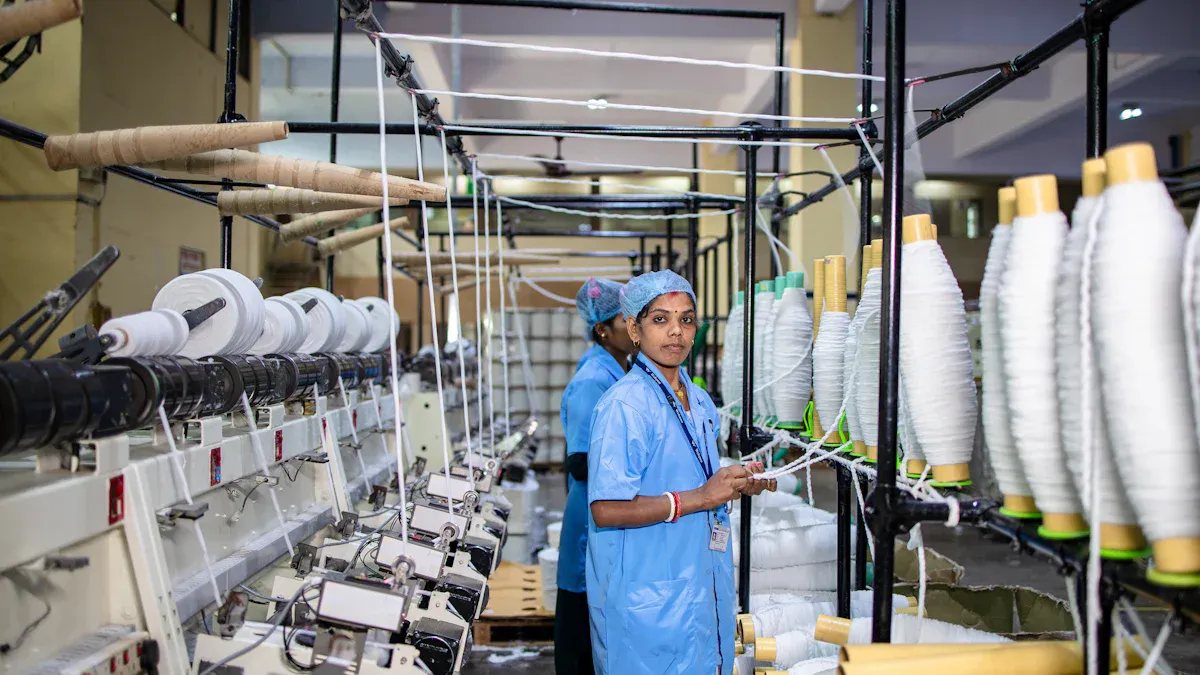
Production setup plays a big role in deciding the minimum order quantity for yarn suppliers. You need to understand how factories work before you place an order. When a supplier starts making yarn, they must prepare machines and workers. This process takes time and money. If you order a small amount, the supplier may lose money because the setup costs stay the same no matter how much yarn they make.
Machine Setup Costs
Machine setup costs can be high. Suppliers want to cover these costs, so they set a minimum. If you order more yarn, the cost of setting up the machines spreads over many units. This makes each unit cheaper. Suppliers often ask for a higher minimum to make sure they do not lose money. You can see why a small order is not always possible.
Efficient production needs larger orders to keep costs low.
Quality checks for custom yarn work better with bigger batches, so suppliers set a higher minimum.
Batch Size
Batch size means how much yarn a supplier makes at one time. If you ask for a small batch, the supplier may need to stop the machines and clean them before starting a new color or type. This takes extra time and money. Suppliers set a minimum batch size to avoid wasting resources. You should know that a larger batch size often means a higher minimum.
Raw Material Sourcing
Raw material sourcing also affects the minimum order quantity. Suppliers buy cotton, wool, or synthetic fibers in bulk. If they buy less than their own supplier’s minimum, their costs go up. This means you may need to order more yarn to help the supplier keep prices fair.
Sourcing raw materials below the minimum leads to higher costs for everyone.
Each supplier has a specific minimum for fabric and trims, which changes the price and profit.
You should always ask your supplier about their raw material sourcing rules. This helps you plan your order and avoid surprises.
Dye Lot Requirements
Dye lot requirements can change the minimum order quantity too. When you want yarn in a special color, the supplier must dye a whole batch at once. The dyeing process works best with a certain minimum amount. If you order less than this, the color may not match in future orders. Suppliers set a minimum to make sure the color stays the same and the process stays efficient. You should check the dye lot minimum before you choose your colors.
Supplier Type
The kind of yarn supplier you choose changes how much you must buy. Some suppliers are wholesalers. Others are manufacturers or mills. Each one has its own rules for orders. Wholesalers usually let you buy less yarn. Sometimes, you can buy just one piece. Some wholesalers want you to spend a certain amount on your first order. If you order again, they may lower this amount.
Here is a table that shows how supplier type affects order requirements:
Supplier Type | Minimum Order Requirement |
|---|---|
Wholesale | |
Wholesale | No Minimum Quantity Requirements – Sold By The Each |
Wholesale | $300 minimum for first purchase, $150 for subsequent purchases |
Manufacturers and mills often want you to buy more yarn. They need to pay for making the yarn. So, they ask for bigger orders. Always check the supplier’s rules before you buy. This helps you plan your money and avoid problems.
Tip: If you are friendly with your supplier, you might get better deals or lower minimums later.
Market Demand
Market demand also changes how much yarn you must buy. If lots of people want the same yarn, suppliers make bigger batches. This means you may have to order more. Popular colors or types often have higher minimums. If you want rare yarn, you may not need to buy as much. Fewer people want these, so suppliers change their rules.
The table below explains how market demand affects order size:
Factor | Description |
|---|---|
Customer Demand | High demand for certain products justifies larger MOQs. |
Niche products may have lower MOQs due to limited market size. | |
Competitive Landscape | Manufacturers may adjust their MOQs to remain competitive and attract clients. |
Watch what is popular before you order. If a yarn is getting popular, you may need to buy more. If you want something special, you might be able to order less. Suppliers also change their rules to beat other sellers. They may lower the minimum order quantity to get your business.
Note: Ask your supplier if they can change the minimum order quantity for special projects or yarn that does not sell fast.
MOQ Ranges by Yarn Type

Cotton Yarn MOQ
When you look for cotton yarn, you will notice that suppliers set different minimums. Most suppliers in 2025 offer flexible options. You can often start with a small order, especially if you choose standard types like poplin or twill. This helps you test the yarn before you buy more.
Here are the typical minimum order quantities for cotton yarn:
Many suppliers let you order as little as 100 meters.
Some suppliers set the minimum at 200 meters for common yarn types.
A few suppliers may require up to 300 meters, especially for special requests.
If you want to buy bulk yarn, you can often get a better price per meter. You should always check with your supplier to see if you can mix colors or types to reach the minimum. This makes it easier for you to get the yarn you need for your project.
Tip: Ask your supplier if you can combine different colors or constructions in one order. This can help you meet the minimum and try more options.
Wool Yarn MOQ
Wool yarn suppliers often have higher minimums than cotton. This happens because wool production costs more and takes more time. You need to plan your order carefully if you want to use wool yarn for your products.
The table below shows the standard minimum order quantity for a major supplier:
Supplier | Custom Yarn MOQ Details | |
|---|---|---|
Nester Hosiery, LLC | 2400 pairs per style / 12,000 units on first PO | MOQ changes by yarn type (like Merino Wool or Cotton). You must use the yarn within six months or buy the rest. |
Some suppliers may offer lower minimums for basic wool yarn, but you should expect to order more if you want custom blends or colors. Always ask about the rules for leftover yarn, especially if you do not plan to use it all at once.
Note: If you work with a supplier often, you may get more flexible terms for your wool yarn orders.
Synthetic Yarn MOQ
Synthetic yarn, such as polyester or acrylic, usually comes with flexible minimums. Many suppliers can offer smaller starting orders, especially for standard products. You may find that the minimum order for synthetic yarn is similar to cotton, but it can change if you want special finishes or colors. Always check with your supplier to see what options they offer.
Specialty Yarn MOQ
Specialty yarns include unique fibers, custom blends, and yarns with special finishes. You might want these for high-end fashion, technical uses, or creative projects. When you order specialty yarn, you need to know that suppliers often set higher minimum order quantities.
You will see that many suppliers ask for at least 3,000 meters of specialty yarn. This number can go even higher if you want a custom color or a special design. Some suppliers set their minimums based on the type of yarn or the process needed to make it. For example, if you want a yarn with a special dye or finish, the supplier may need to run a full batch to get the right result.
Here are some common minimum order quantities for specialty yarns:
Many suppliers require more than 3,000 meters for each order.
Standard woven fabrics often start at 500 to 1,000 meters per color or design.
The minimum can change if you ask for a complex yarn or a special finish.
You should know that several factors affect the minimum order quantity for specialty yarn:
The type of yarn you choose can raise or lower the minimum.
Complex designs or special dyeing methods often need larger orders.
If you want a rare fiber, the supplier may need to buy more raw material, which increases the minimum.
You can ask your supplier if they allow you to mix colors or designs to meet the minimum. This helps you get more variety without buying too much of one kind. You should also check if the supplier offers sample runs for new specialty yarns. Some suppliers let you order a smaller amount for testing before you commit to a big order.
Tip: Always talk to your supplier about your project needs. Clear communication helps you find the best solution for your specialty yarn order.
If you plan to use specialty yarn in your products, you need to prepare for higher minimums. This helps you avoid surprises and manage your budget. Specialty yarns give you more options, but you must plan your order carefully.
Wholesale Yarn Suppliers and MOQ
When you buy from wholesale yarn suppliers, you need to understand how minimum order quantity (MOQ) works. Each supplier category sets different rules. You can save money and avoid problems if you know what to expect before you place your order.
MOQ for Wholesalers
Wholesale yarn suppliers often set lower MOQs than mills or manufacturers. You can find suppliers who let you start with a small order. Some ask for a dollar amount, such as $300 for your first order and $150 for later orders. Others let you buy by the piece or bolt. You can sometimes mix different types of yarn to reach the minimum. This helps you test new products without buying too much.
Here is what you might see when you work with wholesale yarn suppliers:
You may need to buy at least 5 or 6 bolts per shipment.
Some companies allow reorders at 3 bolts.
For basic cotton yarn, the MOQ can be as low as 50 yards.
Specialty yarns may require 300 yards or more.
You can often negotiate with the supplier, especially if you build a good relationship.
Tip: Ask if you can combine different yarn types or colors in one order. This makes it easier to meet the minimum and try more options.
MOQ for Mills and Manufacturers
Mills and manufacturers set higher MOQs than wholesale yarn suppliers. They need to keep their machines running efficiently. You will see bigger minimums, especially for custom or specialty yarn. These suppliers want to make sure each order covers their costs.
Here is a table that shows how MOQs compare:
Type | MOQ Characteristics |
|---|---|
Manufacturers | Set higher MOQs to ensure cost-effectiveness and profitability. |
Wholesalers | Use MOQs to manage inventory and keep operations smooth. |
You may find that some mills require thousands of yards for each order. They do this to keep production costs low. If you want a special yarn or color, you might need to order even more. Always ask about the rules before you decide.
MOQ for Online Suppliers
Online suppliers give you more flexibility. Many wholesale yarn suppliers now sell online. You can often start with a small order, sometimes as little as one piece. Some online shops let you mix and match yarn types to reach the minimum. This helps you try new yarn without a big commitment.
You should check the supplier’s website for their rules. Some online suppliers have no minimums for reorders. Others set a low dollar amount for each order. You can find options that fit your needs, whether you want a small batch or a large shipment.
Note: Online wholesale yarn suppliers often update their MOQs. Always check before you place your order.
If you understand how MOQs work for each supplier type, you can plan your yarn orders better. You will avoid surprises and get the best value for your business.
Negotiating Minimum Order Quantity

When to Negotiate MOQ
You should try to negotiate the minimum order quantity if your needs are different from the supplier’s rules. If you want to test a new yarn or work with a new supplier, you might not want to buy a lot at first. You can also ask for a lower minimum if you plan to buy more later or want to mix different yarn types in one order. Suppliers often listen to buyers who want to work with them for a long time or have special projects.
Tip: Talk to your supplier early. Share your style calendars or production plans before you order. This shows you are serious and helps the supplier get ready for your order.
Strategies for Lower MOQ
There are smart ways to ask for a lower minimum order quantity. These ideas help you get the yarn you need without buying too much.
Give your style calendars to the supplier before you order.
Book production slots early, even if your order is not final.
Visit the supplier or have a video call during busy times to show you care.
Offer to sign a long-term contract or promise bigger orders later. Suppliers may lower the minimum if they think you will keep buying.
Ask for a trial order with a smaller amount. Promise to order more if the first batch works for you.
Try to get extra value, like better payment terms or the chance to mix yarn types or colors in one order.
Building Supplier Relationships
Having a good relationship with your supplier can help you get better deals. If you show respect and keep your promises, suppliers trust you more. They may let you order less or mix products to reach the minimum. Talking often, visiting, and giving honest feedback builds trust over time.
Group Buying
Group buying is another way to get a lower minimum order quantity. You can join with other buyers who need the same yarn. By making a bigger order together, you help the supplier use their machines better. This way, everyone gets the yarn they want without buying too much.
Risks of Negotiation
Negotiating the minimum order quantity can have some risks. If you ask for a smaller order, the supplier may have higher costs or problems with handling. This can cause delays or mistakes in your shipment. Sometimes, you might have to buy more than you need just to meet the supplier’s needs. This can make your costs go up and leave you with extra yarn.
Custom colors or finishes often need bigger batches. If your order does not fit the supplier’s machine size, the cost for each yard can rise. You should always think about your need for a lower minimum and the supplier’s ability to give you good yarn at a fair price.
Note: Always talk clearly with your supplier about what you need and what you can do. Good communication helps you avoid problems when you try to get a lower minimum order quantity.
2025 Trends in Yarn Supplier MOQ
Sustainability Impact
You see a big change in how yarn suppliers set their minimum order quantity in 2025. Many companies now focus on sustainability. They want to protect the environment and meet the needs of new brands. These brands often care about eco-friendly materials and do not want to buy too much at once. Suppliers respond by lowering their minimums. This helps you order only what you need and avoid waste. You can choose yarn that matches your values and supports green practices. Lower minimums also help you test new products without taking big risks.
If you run a small business or a new brand, you benefit from these changes. You can buy less yarn and still get high-quality, sustainable options.
Digital Orders
Ordering yarn has become easier with digital tools. In 2025, many suppliers use online platforms to manage orders. You can see real-time stock, pick colors, and place orders from your computer or phone. This makes the process faster and more flexible. You do not need to wait for long emails or phone calls. Digital systems also help suppliers track what you want and adjust their minimums. If you need a small batch, you can often find a supplier who will work with you. This change gives you more control and saves time.
You can compare prices and minimums from different suppliers.
You can mix and match yarn types in one order.
You can get updates on your order status right away.
Global Supply Chain Changes
The world market for yarn has changed a lot in 2025. Many suppliers now offer lower minimum order quantities. This helps them react quickly when customers want something new. You get more choices and do not have to buy large amounts. Suppliers also need to stay flexible because the market can change fast.
Lower minimums let you try new yarn without a big investment.
Suppliers can adjust their production to match what you need.
You can respond to trends and customer requests more easily.
Note: These trends make it easier for you to start new projects and grow your business. You can order the right amount of yarn at the right time.
You can buy yarn in a smarter way in 2025 if you know about minimum order quantity. MOQ helps you spend less money. It also helps you keep track of your yarn and finish your projects on time. Try these ideas to make your orders better:
Strategy | Benefit |
|---|---|
Combine orders across colors | You meet MOQ and get more choices |
Partner with other brands | You share big orders and pay less |
Negotiate with suppliers | You can ask for lower MOQ or talk about extra fees |
Research suppliers and yarn types | You find options that fit what you need |
Keep learning about new things in the yarn world. You can find suppliers by searching online, going to trade shows, or talking to others.
FAQ
What does MOQ mean in yarn buying?
MOQ means Minimum Order Quantity. You must buy at least this much yarn. Suppliers use this rule to keep costs down and work faster.
Can you mix colors or types to meet the MOQ?
Yes, many suppliers let you mix colors or yarn types. This helps you reach the MOQ without buying too much of one kind.
Why do specialty yarns have higher MOQs?
Specialty yarns need special materials or custom work. Suppliers set higher MOQs to pay for setup and keep quality high. You should plan your order before you buy these yarns.
How do you find suppliers with low MOQs?
You can look on online marketplaces or go to trade shows. You can also ask people for supplier names. Many online suppliers offer lower MOQs to help small businesses and new brands.
Is it possible to negotiate the MOQ?
You can often ask for a lower MOQ. Building a good relationship with your supplier helps. Try group buying or promise to order more later to lower the minimum.
What happens if you order less than the MOQ?
If you order less than the MOQ, you may pay extra fees. Sometimes, the supplier will not accept your order. Always check the rules before you buy.
Does MOQ change for custom colors?
Yes, custom colors usually need a higher MOQ. Dyeing machines work best with more yarn. Ask your supplier about the minimum for custom colors.
Are MOQs different for online and offline suppliers?
Yes, online suppliers often have lower MOQs. You can start with small orders and test yarn. Offline suppliers, like mills, may want bigger orders to work well.