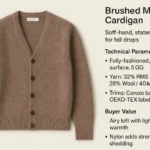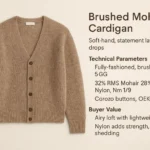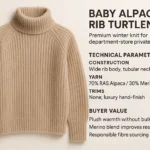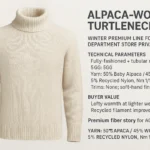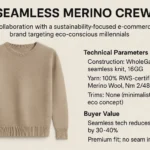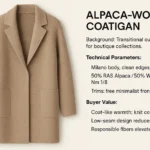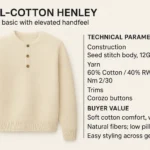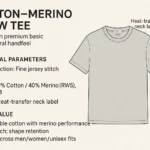

When you ask, “why do brands source knitwear from China?”, the answer lies in factors like price, skill, and reliable supply chains. Fashion brands choose China because it is the leading country for producing cotton and synthetic fiber. For instance:
China produces more polyester fibers than any other nation, making these fibers affordable and versatile.
China’s cotton output is projected to reach seven million metric tons in 2024/2025.
These advantages enable brands to maintain low costs while ensuring high quality.
Key Takeaways
Brands save money by getting knitwear from China. This is because making things there costs less. Factories in China work very well and fast.
Workers in China are skilled and use new machines. This helps them make good quality knitwear.
Factories in China can get lots of cotton and fibers nearby. This keeps prices low and makes things faster.
Big factories in China can take small or big orders. This helps brands of any size get what they need.
Orders are finished quickly in China. This helps brands keep up with trends and what customers want.
Chinese factories offer many services like design, dyeing, and shipping. This makes the whole process easier for brands.
Factories in China check quality very carefully. This makes sure products are always good. It helps brands earn trust from customers.
Brands can use China’s strong transport system. This helps them send products on time all over the world.
Why Do Brands Source Knitwear from China?
If you wonder why brands get knitwear from China, there are many reasons. Chinese factories help brands save money, get materials easily, and use skilled workers. These things make China a top place for making clothes.
Cost Efficiency
Labor and Overhead Savings
Some people think labor in China is always cheap, but that is not true now. Wages in China have gone up a lot in the last few years. Other countries like Bangladesh, India, and Vietnam now pay workers less. For example:
Bangladesh: $95 each month
India: $120 to $150 each month
Vietnam: $180 to $220 each month
Even though China pays more, brands still save money. Chinese factories use machines and smart ways to move goods. These things help keep costs low. Brands can save 30% to 50% compared to the U.S. ThirdLove, a brand, saved 40% on each item by buying from China.
Economies of Scale
Chinese factories make lots of clothes at once. They can handle big orders for both cheap and fancy brands. When you order more, each piece costs less. Factories in China use good machines and skilled people. This helps them work fast and do a good job.
Tip: If you order a lot, you pay less for each piece. You can plan big sales without worrying about high prices.
Here is a table that shows why brands get knitwear from China and how Chinese factories help you save:
Reason | Description |
|---|---|
Skilled Workforce | Experts check your knitwear to make sure it is good. |
Scale and Speed | Factories make big orders quickly. |
Efficiency | Machines and smart shipping keep costs low. |
Economies of Scale | Bigger orders mean you pay less for each item. |
Total Package | Getting materials and boxes nearby saves time and money. |
Material Access
Cotton and Synthetic Fiber Supply
Good materials are important for nice knitwear. China makes more than half of the world’s textile fibers. In 2014, China made 64.1% of synthetic fibers and 26.2% of cotton. Chinese factories can get these materials easily. This changes how clothes are made all over the world.
Factories in China use local cotton and synthetic fibers. This makes buying from China fast and cheap. You do not have to wait for materials from far away. You get what you need right away.
Here is a table that shows how getting materials affects prices:
Material Type | Description | How It Affects Clothing Prices |
|---|---|---|
Polyester and Synthetic Fabrics | China makes lots of cheap synthetic fibers | Lower material costs make clothes cost less. |
Cotton | China grows a lot of cotton | Getting cotton nearby keeps prices low. |
Competitive Pricing
Chinese factories use new ways to make clothes. They have many kinds of materials. Their prices are good for brands. Other countries may charge more because they do not have these things. You get better prices when you buy from China.
Aspect | China | Other Major Exporters |
|---|---|---|
Production Techniques | New and save money | Not always as good |
Raw Materials | Many choices | Not as many choices |
Pricing Strategy | Good prices | Prices are higher |
Industrial Cluster | Factories are close together | Not as connected |
If you ask why brands get knitwear from China, you see that Chinese factories help you save money. They have the materials, skills, and big factories you need. You get good knitwear for less money. Making clothes in China helps your brand grow.
Supply Chain & Materials
Integrated Sourcing
Yarn and Fabric Proximity
Factories in China are close to yarn and fabric suppliers. This helps the supply chain move faster and work better. Many factories are grouped together in places like Zhejiang, Jiangsu, and Guangdong. These areas have everything needed to make clothes. Local governments help these factory groups. This support keeps factories strong and able to compete.
Being near yarn and fabric suppliers makes the supply chain work better.
Factory groups in main provinces give all you need for making clothes.
Local government help lets the knitwear industry grow and stay strong.
Streamlined Procurement
You save time and money by getting materials from nearby places. Chinese factories can get yarn, fabric, and trims very fast. This means you do not wait long for supplies. You can start making clothes sooner and finish on time. When you work with Chinese suppliers, you often talk to just one main person. This makes things easy and clear.
Full-Package Services
Dyeing and Finishing
Chinese factories give full-package services. You can get design, dyeing, and delivery all in one place. Dyeing and finishing are important for how your clothes look and feel. Factories use new machines to dye and finish fabrics. This keeps colors bright and fabrics soft.
Here is a table that shows what full-package services you get:
Service | Description |
|---|---|
Design development | Making designs and technical details |
Material sourcing | Getting materials from many suppliers |
Sample development | Making and improving product samples |
Bulk production | Making lots of items with quality checks |
Packaging | Special packaging made for each client |
Logistics management | Handling shipping and delivery to the final place |
You also get:
Custom designs starting at 50 pieces per style
Flexible minimum order amounts
One main contact for the whole process
Clear prices and timelines
Consistency in Quality
You want every item to be good. Chinese factories use new technology and strict quality checks. They use digital tools like 3D knitting software to check designs before making them. Factories follow clear steps and talk clearly to stop mistakes.
Quality Assurance Method | Description |
|---|---|
Advanced Technology | Factories use modern knitting machines and software to work better. |
Digital Transformation | 3D software helps see and fix designs before making them. |
Quality Control Systems | Strong systems make sure each item is high quality. |
Clear Communication | Factories use clear steps to stop confusion. |
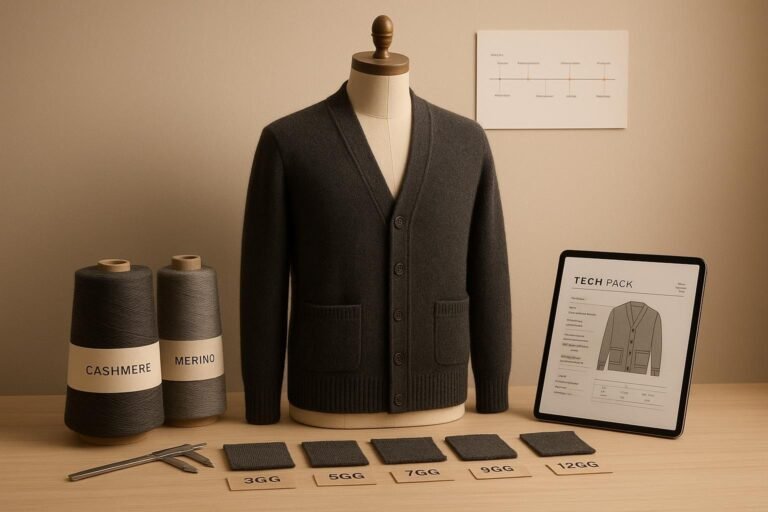
Detailed Specifications | You give tech packs with exact sizes and quality needs. |
You get the same good quality in big orders. This helps your brand earn trust and grow. Choosing China for knitwear gives you a strong supply chain and good partners.
Knitwear Manufacturing Expertise
Skilled Workforce
Advanced Knitting Techniques
You get help from many skilled workers in China’s textile industry. These workers know how to use advanced machines for knitwear. Chinese manufacturers teach their teams to use new knitting technology. This lets them make detailed patterns and soft clothes. Many factories use computer-controlled knitting machines. These machines help make creative designs and strong knitwear.
China sells more textiles to other countries than anyone else.
About 8 million people work in the textile industry.
The industry does every step, from yarn to finished clothes.
Chinese manufacturers use their experience to give you great results. You can trust them with simple or hard orders.
Training and Adaptability
You want your products to follow new trends and styles. Chinese manufacturers spend money on training for their workers. They teach new skills and update old ones. This helps workers learn new machines and ways to make clothes. You get a team that can handle changes in fashion and technology.
China’s labor force is about 402 million people.
Over 733 million people in China earn money in some way.
Many workers in clothing factories learn new skills each year.
You can count on these manufacturers to keep up with your needs. They change quickly when you want new designs or materials.
Quality Assurance
Repetitive Manufacturing Consistency
You want every piece to be good quality. Chinese manufacturers check each step carefully. They start with audits of factories and suppliers. These audits look at skills, tools, and systems. You get products that meet your needs every time.
Description | |
|---|---|
First-Article Inspections (FAI) | Checks the first item to make sure it is right before making more. |
In-Process Inspections (IPI) | Watches the process to find problems early. |
Pre-Shipment Inspections (PSI) | Looks at finished goods before they leave the factory. |
Container Loading Supervision (CLS) | Makes sure products are loaded safely for shipping. |
Sorting Services | Takes out any bad items before shipping. |
Chinese manufacturers also watch production and manage suppliers. You get the same high quality in every batch.
International Standards
You want your knitwear to meet world quality rules. Chinese manufacturers follow strict rules and get important certificates. These include:
Standard | Description |
|---|---|
Quality management system standard | |
OEKO-TEX | Certificate for safe textiles |
BSCI | Standard for fair labor practices |
You can ask for these certificates when you work with China clothing factories. These rules help you trust the safety and quality of your products.
Note: Chinese manufacturers often pass social and environmental checks. This means you get products that meet both your quality and ethical needs.
You can see that factories in China have skilled workers, strong training, and high quality standards. This makes them a top choice for making clothes.
Production Scale & Flexibility
Large-Scale Facilities
High-Volume Capacity
You can trust china manufacturing clothing with big orders. Many factories in China are very large. They make millions of clothes every year. For example, Suzhou Hengrun has 10 big factories. These factories make over 10 million clothes each year. Big factories can handle lots of orders at once. You do not have to worry about delays. They have enough space and workers for busy times. You get a steady supply, even when many people want clothes.
Automation
Chinese factories use smart machines to work faster. These machines help make clothes quickly and well. Automation lets factories finish orders fast and keep quality high. Machines do jobs like knitting, cutting, and packing. This means fewer mistakes and saves time. You pay less and get your clothes sooner. Automation also helps factories change styles fast. They can make new designs without slowing down.
Tip: Automation in china manufacturing clothing helps you get new clothes to stores faster.
Order Flexibility
Small Batch Options
Not all brands need huge orders. Chinese factories know this. Some companies, like Zhongshan Xingtai Clothing Co., Ltd., let you order any amount. You can buy just a few or many. QYOURECLO helps new brands with small orders. This makes it easy to start your own brand. You can also get special labels and packaging. This helps your brand look different.
Zhongshan Xingtai Clothing Co., Ltd. lets you order any amount.
QYOURECLO helps new brands with small orders.
QYOURECLO gives custom design, labels, and packaging for all orders.
This means you can try new ideas without spending a lot.
Quick Turnaround
You want your clothes fast. Chinese factories send orders quickly, big or small. Most bulk orders take 30 to 90 days. Custom knitwear can be ready in 14 to 28 days. Here is a table that shows how fast you get your clothes:
Production Type | Turnaround Time (Days) | Notes |
|---|---|---|
Bulk Clothing in China | 30 to 90 | Most take 45–75 days, up to 90 days for custom styles |
Custom Knitwear (Knitwise) | 14 to 28 | Making takes 7–14 days, shipping takes 7–14 days (economy) or 3–5 days (express) |
You can plan your sales and new launches easily. Fast orders help you keep up with new trends and what customers want.
Note: Order flexibility and fast delivery make china manufacturing clothing a good choice for all brands.
Infrastructure & Logistics
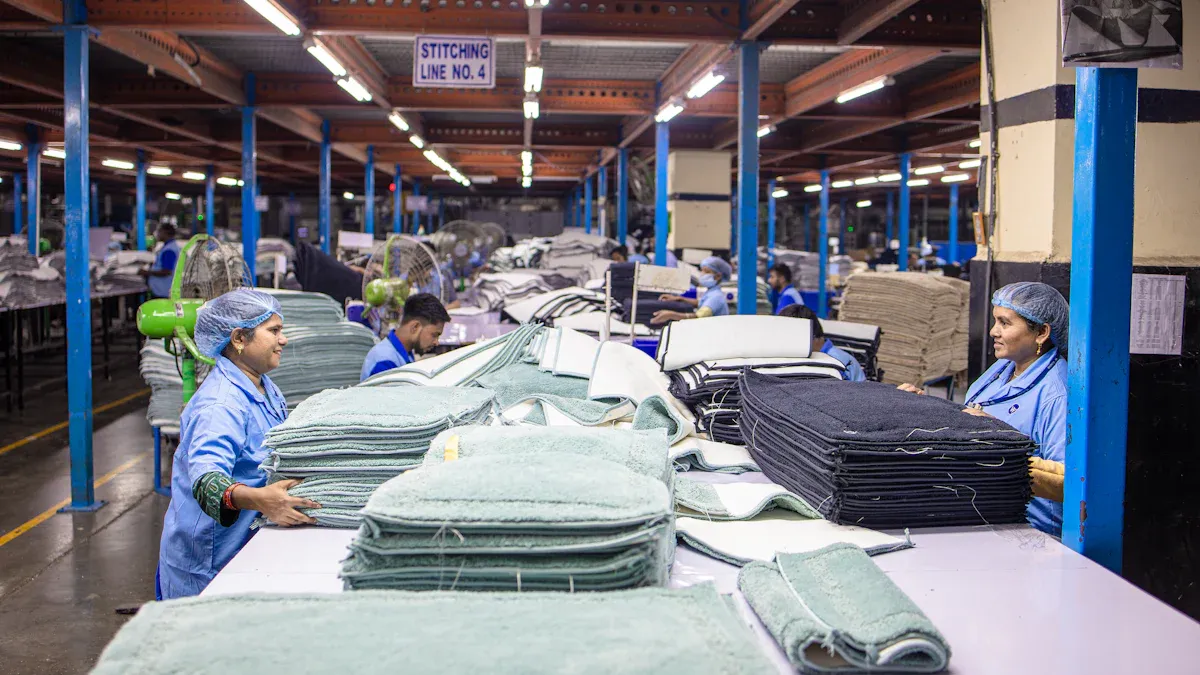
Transportation Networks
Port and Airport Access
China has a very good transportation system. Big ports and airports are close to where factories are. This helps you move goods fast and easily. You can send products to many countries without waiting long. The table below shows why these networks help your business:
Advantage | Description |
|---|---|
Developed transportation network | China has many highways, railways, ports, and airports for quick shipping. |
Efficient logistics system | The logistics system is strong and saves money, making it easy to ship worldwide. |
Proximity to production bases | Factories are near big ports, so exporting is easier. |
Factories in cities like Shanghai, Ningbo, and Shenzhen ship knitwear fast. You do not have to worry about long trips inside the country. This means your products get to stores on time.
Reliable Distribution
You want your orders to arrive safely and on time. Chinese manufacturers use trusted delivery systems. They work with good shipping partners who track your goods. You can check your order online. This helps you plan your stock and sales better.
Tip: Good delivery systems lower the chance of lost or late shipments, so your customers stay happy.
Export Expertise
Customs and Documentation
You need the right papers to send goods to other countries. Chinese manufacturers take care of export documents. They get everything ready for easy shipping. Here is a table that shows the main papers you need:
Required Document | Details |
|---|---|
Commercial Invoice | Must list what the product is, HS code, fiber content, value, where it was made, factory address, and buyer address. |
Certificate of Origin | Shows where the goods were made; needed for some trade deals. |
Customs-compliant Labeling | Labels must show fiber content, where it was made, and care instructions. Labels must be clear and last a long time. |
You should check that all labels and papers are correct. This helps you avoid problems at customs. Many Chinese manufacturers work with expert shipping and customs helpers. They know the rules and keep test reports. This makes sure your goods pass customs without trouble.
Global Shipping Support
You get strong help for shipping worldwide with Chinese manufacturers. They know U.S. import rules and other country laws. They use approved factories and follow FTC label rules. If you need help, they can guide you. This helps you avoid shipment problems and delays.
Make sure labels and papers are right to avoid customs trouble.
Work with expert shipping and customs helpers to follow the rules.
Keep test reports and watch for new trade rules.
Note: Good shipping and export skills help your brand grow around the world. You can trust your orders to arrive safe and on time.
Innovation & Compliance
Market Agility
Fast Prototyping
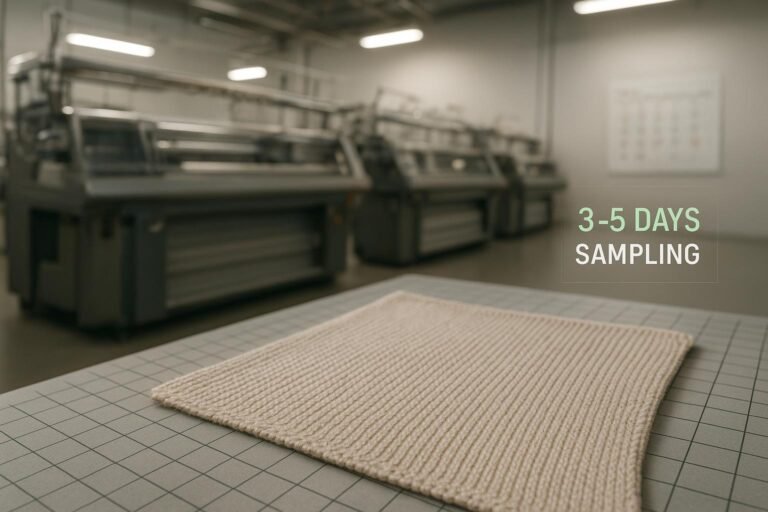
You want your brand to keep up with new trends. Chinese knitwear factories help by making samples quickly. They use advanced machines and skilled teams. Your ideas become real samples in just a few days. This fast work lets you test new designs before others do. You can change styles based on what customers like now.
Trend Response
Fashion changes quickly. Chinese manufacturers watch global trends and listen to buyers. The knitting yarn market in China offers both cheap and premium products. Factories use new materials and care about eco-certifications for exports. You benefit because they adapt fast. If you want bright colors or special textures, they can make them. Many brands pick double jersey fabric because it feels nice and looks good. Factories give more choices and better quality.
Technology & Sustainability
Eco-Friendly Processes
You care about the planet. Chinese knitwear factories do, too. Many use organic cotton and wool. They recycle and try to make less waste. Some factories reuse materials and cut down on trash. Most focus on eco-friendly textiles because many shoppers want sustainable brands. You get products that are better for the earth and match your customers’ values.
Factories use organic fibers and recycled materials.
They recycle and try to make less waste.
They focus on making sustainable fibers.
Smart Manufacturing
You want high-quality clothes made with new technology. Chinese factories use 3D knitting machines and automation. These tools help make seamless and custom knitwear. You get clothes that fit well and last longer. Smart machines use less energy and make less waste. New technologies like WHOLEGARMENT and smart textiles make production faster. You get better quality and lower costs.
3D knitting makes seamless and eco-friendly clothes.
Automation makes work faster and reduces mistakes.
Smart textiles add new features to your clothes.
Compliance Standards
Social and Environmental Audits
You want safe and fair factories to make your products. Chinese manufacturers follow strict rules. They pass audits that check working conditions and the environment. These checks help you trust your supply chain.
Certifications
You can ask for proof that factories follow the rules. Many Chinese knitwear factories have important certifications. These show they meet high standards for safety, the environment, and worker rights.
Certification | Description |
|---|---|
GRS | Certifies recycled content and responsible practices. |
RWS | Verifies animal welfare and land management for wool. |
RDS | Ensures animal welfare for down and feathers. |
B CORP | Shows high social and environmental performance. |
SEDEX | Improves working conditions in supply chains. |
BSCI | Supports social compliance in factories and farms. |
BLUESIGN | Ensures sustainable textile production and consumer safety. |
OEKO-TEX 100 | Confirms safety and socially sound production. |
ISO14001 | Helps minimize environmental impact and comply with regulations. |
Note: These certifications help you show customers your products are safe, ethical, and sustainable.
Addressing Concerns
Quality Control
Brand Oversight
You want your knitwear to be good every time. Big brands use strong systems to check quality in Chinese factories. You can hire outside inspectors to look at samples during and after making them. This helps find problems early. Talking clearly with your factory is very important. Getting updates often helps stop mistakes and keeps everyone working together. You should ask the factory to follow rules like ISO 9001. This shows they have a good way to manage quality. Having written agreements and checking samples before making lots helps avoid confusion.
Here is a table that shows how brands keep quality high:
Practice | Description |
|---|---|
Third-party inspection services | Inspectors check samples during and after production to ensure quality requirements are met. |
Clear communication | Regular communication with the factory helps prevent misunderstandings and issues. |
Compliance with international standards | Adhering to standards like ISO 9001 indicates a strong quality management system. |
Documented agreements | Having clear agreements and pre-production samples reduces the risk of misunderstandings. |
Tip: You can visit factories or use video calls to watch how things are made.
Intellectual Property
Protection Measures
You want to keep your designs and brand safe in China. Intellectual property laws help protect your ideas. There are four main ways to protect IP:
Type of IP | Description | Duration of Protection |
|---|---|---|
Copyrights | Protects the public expression of an idea in tangible form. | Life of the owner + 50 years |
Patents | Provides the legal right to manufacture or market a unique product design. | 20 years |
Trademarks | Protects the use of language, images, and sounds associated with a product or brand. | 10 years (renewable) |
Trade Secrets | Specialized advantages over competitors that are kept secret. | Indefinite, as long as secrecy is maintained |
To keep your IP safe, you should:
Work with a company outside China to help with legal matters.
Only share your designs with people you trust.
Decide who owns the IP before you start making anything.
Note: Register your trademarks and patents in China for extra protection.
Ethics & Environment
Progress and Challenges
You might worry about ethics and the environment in China’s knitwear industry. Some factories have problems like forced labor, especially in Xinjiang. The U.S. has banned cotton from these places. Dyeing clothes and fast fashion waste also hurt the environment.
Factories and brands are trying to fix these problems. Many now use organic materials and better ways to make clothes. They try to show where their materials come from. Companies also think about what happens to materials from start to finish. By working together early, you can help cut waste and make work better for people.
Forced labor and worker problems still happen in some places.
Dyeing and fast fashion waste can harm nature.
Brands use organic materials and better ways to help.
Working together and being open helps make things better.
Remember: You can ask your suppliers to show proof they use good practices and eco-friendly materials.
Risk Management
Diversification Strategies
When you buy knitwear from China, you face many risks. These risks include trade fights, tariffs, delays, and rule changes. You need smart ways to keep your business safe.
One good way to lower risk is to diversify. This means you do not depend on just one supplier or country. You spread your orders to different places and partners. Here are some ways brands do this:
Supplier Diversification: You can work with more than one supplier. This helps if one supplier has problems. If a factory closes or is late, you still have other choices.
Geographical Diversification: You can pick factories in different countries. This helps if one area has trouble. Some brands use factories in Vietnam, Bangladesh, or Turkey with China.
Multi-Country Footprint: You can make products in more than one country. This helps if there are trade wars or disasters.
Vertical Integration: You can move some steps closer to home. This lowers the risk of high tariffs and helps control quality.
Innovative Product Development: You can change materials or designs to avoid extra taxes. For example, you might use fibers that do not have tariffs.
Price Segmentation: You can set prices for each market. This helps keep profits when costs change.
Leveraging Technology: You can use software to watch your supply chain. This helps you spot problems early and act fast.
Strengthen On-Ground Visibility: You can hire local experts to check factories and products. This helps you find risks before they get big.
Many famous brands use these ideas. Zara keeps some production in Spain and nearby places. This helps them avoid tariffs and react fast to changes. Outdoor brands switch to new materials from other countries during trade fights. These actions show why it is important to stay flexible.
Tip: Always check your supply chain for weak spots. By spreading risks, you keep your business running well, even when things change quickly.
You can use these ideas to protect your brand. If you plan ahead and stay flexible, you can handle surprises and keep your customers happy.
Fashion brands pick China for knitwear for many reasons. You save money when you make clothes there. Workers in China have lots of skill. Factories are big and can make lots of clothes fast. Shipping is quick, so you get your products on time. Brands care about quality and doing the right thing. They also use new technology to make better clothes. In the next five years, China will improve even more. The industry will be greener and smarter. You will have more good choices for getting knitwear from China soon.
FAQ
How do you ensure quality when sourcing knitwear from China?
You can ask for samples to check quality. Third-party inspectors can look at the products for you. You can also ask for certificates like ISO 9001. Many factories let you see items before they ship. Talking clearly with your supplier helps you get what you want.
Can you order small batches from Chinese knitwear factories?
Yes, many factories let you buy small amounts. Some let you order as few as 50 pieces per style. This helps you try new ideas or start a small brand. You do not need a lot of money to begin.
Are Chinese knitwear factories eco-friendly?
Many factories use organic fibers and recycled stuff. You can look for certificates like OEKO-TEX or GRS. These show the factory cares about the earth. Always ask your supplier to prove they use eco-friendly ways.
How fast can you get knitwear delivered from China?
Most factories finish big orders in 30 to 90 days. Custom samples can take 14 to 28 days. Shipping time depends on where you live and how you ship. Express shipping is quicker but costs more money.
What documents do you need for importing knitwear from China?
You need a commercial invoice and a certificate of origin. You also need labels that follow customs rules. Some countries want more papers. Your supplier or shipping helper can get everything ready.
How do you protect your designs when working with Chinese factories?
Register your trademarks and patents in China. Only share your designs with people you trust. Use clear contracts that say who owns the design. You can also ask legal experts for more help.
What are the main benefits of sourcing knitwear from China?
You save money and get skilled workers. Factories make products fast and have many materials. You can order small or big amounts. Shipping is strong and quick. Many brands pick China for these reasons.
Tip: Always check your supplier’s certificates and reviews before you order.