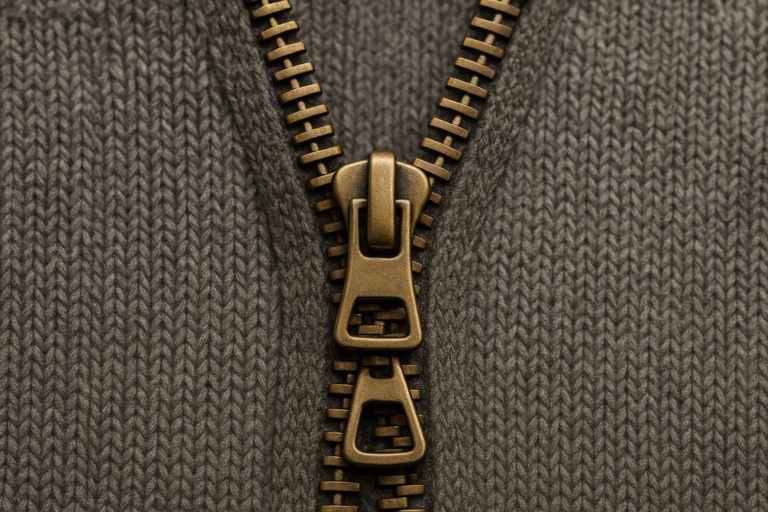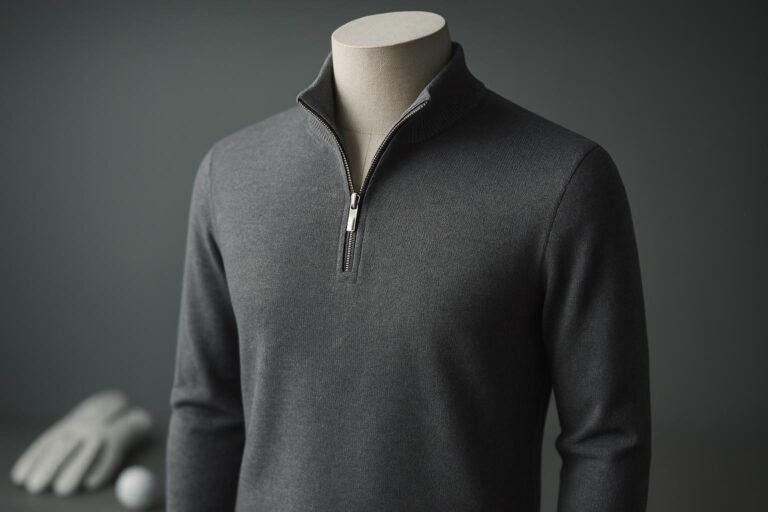

If you’re speccing two‑way zippers for knit jackets or sweaters, the trade‑off is familiar: pay a premium for YKK or chase lower COGS with vetted generics—and then manage the risk. This guide models the numbers for our shared baseline: Metal #5, antique brass finish, Y‑pull, two‑way open‑end, for 50–200 piece pilots, FOB China, USD. It’s designed as a practical YKK vs generic two-way zippers cost comparison. Prices and assumptions are indicative as of 2026‑03‑25 and will vary by length, finish details, and supplier.
Key takeaways
Under low‑MOQ tiers (50/100/200), generics are typically cheaper on unit COGS; modeled midpoints suggest a ~$0.40–$0.70 delta at 100 pcs for the same spec and length.
One‑time tooling (e.g., custom pull mold) can dominate effective cost at 50 pcs; amortization shrinks fast by 200 pcs. Always separate tooling from unit quotes.
When zipper‑related DHU rises a few points, rework and delay costs can erase the COGS savings from generics. There’s a clear DHU break‑even where YKK becomes cheaper on TCO.
Documentation and supply assurance matter: verified REACH/RoHS scope, nickel‑release where applicable, and authorized channels reduce compliance and counterfeit risk.
The practical path: buy for COGS on price‑sensitive basics you can buffer; buy for TCO when launch certainty and compliance paperwork are non‑negotiable.
TL;DR — who wins by scenario
Low‑MOQ pilot with tight launch date: YKK, because stronger distributor networks and documentation completeness typically lower delay penalties and rework exposure.
Cost‑down basics tolerant to minor QC variance: Vetted Generic, because unit price wins and tooling can be simpler/cheaper at 50–200 pcs.
Specialty finishes and custom pulls (antique brass parity critical): Tie/YKK‑lean if supplier provides finish reports (salt‑spray/wear). Require hard evidence before PO.
Multi‑color repeats with consistent tolerances: YKK, as authorized programs standardize finish and tolerances across regions and cycles.
Side‑by‑Side Cost & Risk Comparison — YKK vs Generic Two‑Way Zippers
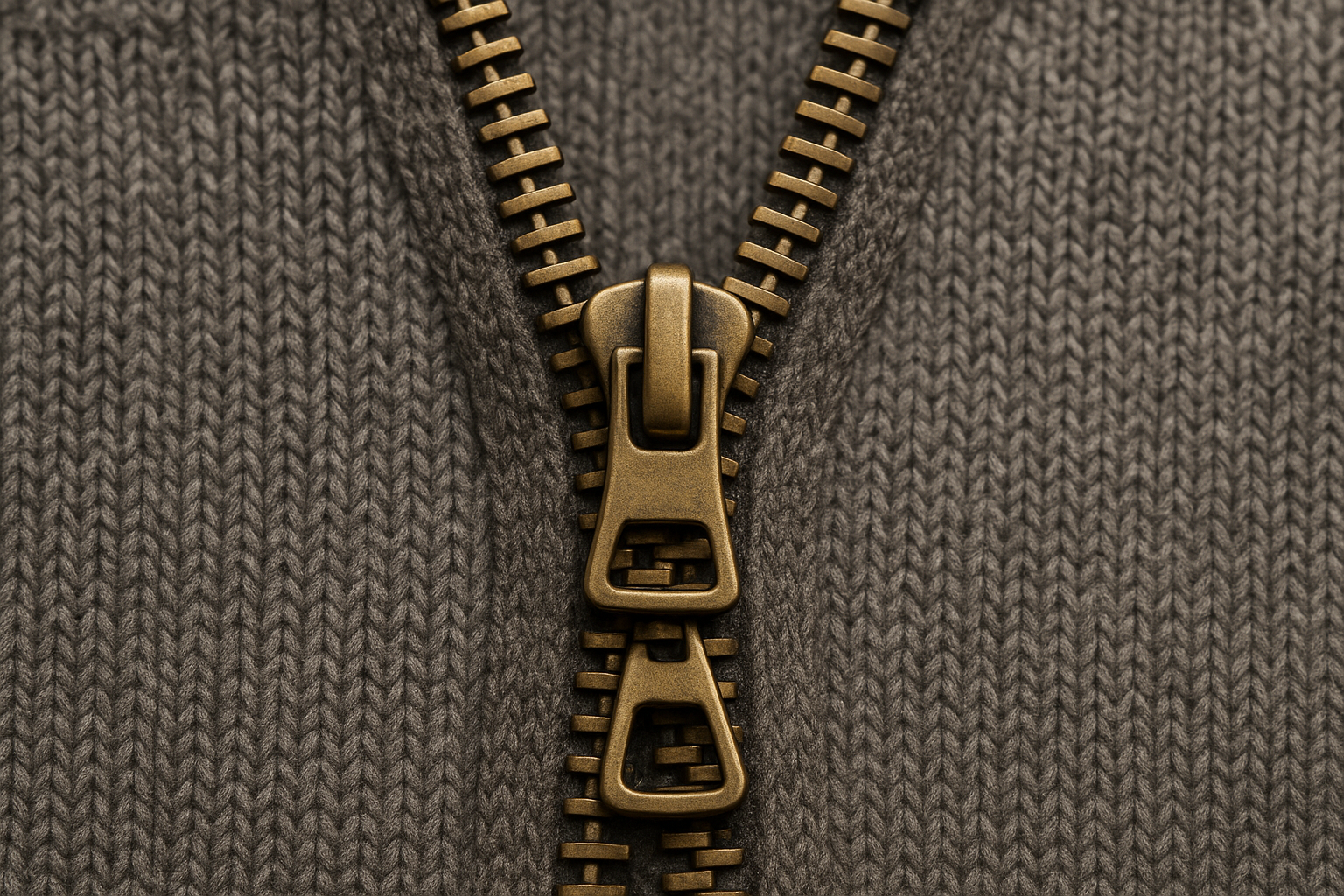
Scope: Metal #5 two‑way (double‑slider) open‑end, Antique Brass finish, Y‑pull, sweaters/knit jackets; 55–65 cm. Terms: FOB China. Currency: USD. Pricing indicative as of 2026‑03‑25 and subject to change.
Dimension | YKK #5 two‑way metal (Antique Brass, Y‑pull) | Generic #5 two‑way metal (Antique Brass‑look, Y‑pull‑equiv.) | Notes |
|---|---|---|---|
Baseline spec | #5, two‑way open‑end; Antique Brass finish code family (e.g., “I”) per YKK; Y‑pull options via slider families | #5 two‑way open‑end; Antique Brass‑look finish; Y‑pull‑equiv. | YKK finish references appear in the YKK Standard Finish catalog; confirm exact code/slider in quoting. See the YKK Standard Finish PDF and product library for terminology. |
Unit price @50 pcs | $1.80–$2.40 | $1.40–$1.90 | Indicative ranges for 55–65 cm lengths; verify with time‑stamped proformas. |
Unit price @100 pcs | $1.60–$2.10 | $1.10–$1.60 | Midpoint delta often ~$0.40–$0.70 at 100 pcs for this spec. |
Unit price @200 pcs | $1.45–$1.95 | $0.95–$1.40 | Metals and FX drive volatility; length and slider model also matter. |
Price‑break elasticity (50→100→200) | ~10–20% | ~15–25% | Generics may discount more aggressively at low MOQs to win pilots. |
One‑time tooling (custom pull mold) | $300–$900 (amortized: $6–$18 @50; $3–$9 @100; $1.50–$4.50 @200) | $300–$900 (similar amortization) | If stock pulls are acceptable, tooling may be $0; confirm logo/DTM needs as explicit line items. |
Lead time (sample/bulk) & OTD band | Samples or stock: ~1–2 weeks via distributor; MTO: ~3–6 weeks. OTD often 90–95%+ via authorized channels | Varies widely: ~2–5 weeks typical; OTD band ~80–90% depending on supplier | Region‑specific expedited programs exist; always verify with local distributor and put dates into PO milestones. |
Quality proxy (zipper‑related DHU at pilot) | Model 0.3–1.0% | Model 1.5–3.5% | Use PSI AQL plans and zipper tests per ASTM D2061/EN 16732. Record actuals during pilots. |
Rework cost proxy (per 100 units) | 0.5 repairs × $15–$60 = $7.5–$30 | 3 repairs × $15–$60 = $45–$180 | Retail repair labor ranges provide an upper‑bound TCO view. |
Compliance docs availability | REACH/RoHS scope declarations, OEKO‑TEX lot‑level options commonly available via authorized channels | Mixed; request REACH/RoHS scope, nickel‑release per EN 1811, OEKO‑TEX if offered | Ask for current, lot‑specific declarations with date/lot references. |
Durability/finish integrity | Consistent finish; verify Antique Brass parity; cycle/finish data via distributor or tests | Variable by supplier; require salt‑spray/wear evidence for Antique Brass | For standards: see ASTM D2061 strength tests and EN 16732 context. |
Fit‑for‑knit tolerances | Tighter, more consistent | More variable; validate on PP/size sets | Knit shrinkage can misalign zippers—pre‑shrink and approve on size sets. |
Supply assurance & anti‑counterfeit | Strong brand protection and authorized networks | Vet carefully; risk of substitutions | YKK outlines anti‑counterfeit controls and recommends authorized channels. |
Example risk‑adjusted TCO (per 100, zipper‑only) | COGS mid $1.85 → $185; rework proxy $7.5–$30 → TCO ≈ $192.5–$215 | COGS mid $1.25 → $125; rework proxy $45–$180 → TCO ≈ $170–$305 | TCO can flip the choice at higher DHU or tight launch penalties. |
References (terminology and methods):
YKK finishes/terminology and #5/two‑way availability: see the YKK Standard Finish catalog and EXCELLA overview on the YKK product library. For example: the YKK Standard Finish PDF lists Antique Brass code “I,” and EXCELLA confirms #5/two‑way support.
Zipper performance test methods: ASTM D2061 strength/operability methods; EN 16732 context replacing BS 3084 in the EU.
Anti‑counterfeit/supply assurance: YKK brand protection and authorized channel guidance.
Repair labor ranges used for TCO proxy: U.S. alteration references indicate ~$15–$60 per zipper replacement.
External links (descriptive anchors):
YKK Standard Finish Antique Brass code reference in the official catalog: YKK Standard Finish PDF
Zipper test method overview: ASTM D2061 zipper strength tests
YKK anti‑counterfeiting and authorized channels: YKK brand protection overview
Retail repair labor proxy used in TCO modeling: Alterations Express guide to jacket zipper repairs
BOM math worked examples (50–200 pcs, FOB China)
Prices are indicative as of 2026‑03‑25. Replace with your proforma quotes.
Example A — 50 pcs, Generic with custom pull mold
Unit price (generic midpoint): $1.65 × 50 = $82.50
One‑time custom pull mold: $600 (amortized $12.00 each at 50)
Effective zipper COGS at 50: $1.65 + $12.00 = $13.65 per garment (zipper line only)
Note: At 200 pcs the same $600 mold amortizes to $3.00 each; effective zipper COGS would drop to $1.25 + $3.00 ≈ $4.25 if the unit quote at 200 is $1.25.
Example B — 100 pcs, YKK using stock Y‑pull (no mold)
Unit price (YKK midpoint): $1.85 × 100 = $185.00
Tooling: $0 (stock pull)
Effective zipper COGS at 100: $1.85 per garment
Comparison: At 100 pcs the generic midpoint might be ~$1.35; delta ≈ $0.50 per zipper. If your DHU and delay risk exceed ~0.5–1.0% equivalent in rework/penalties, YKK can be cheaper on TCO.
Practical quoting tips: Always request line items for unit price by length and finish, custom pull/tooling, dye‑to‑match (DTM) tape surcharge, packaging, and lead time. DTM surcharges at low MOQs can be material—get them in writing.
DHU→TCO micro model (per 100 units)
Assumptions for illustration only (update with your PSI data):
Rework/repair cost per garment if zipper fails: $15–$60 (retail labor proxy)
Pilot DHU (zipper‑related): YKK 0.5%; Generic 3.0%
Outputs (per 100 garments): YKK rework cost = 0.5 × $15–$60 = $7.5–$30. Generic rework cost = 3.0 × $15–$60 = $45–$180. If unit COGS delta at 100 pcs ≈ $0.50, total COGS delta per 100 = $50 favoring Generic. But if rework is ≥$60 higher for Generic, TCO flips to YKK.
Why these tests matter: ASTM D2061 outlines zipper strength/operability checks that catch weak separable units and slider issues. A solid PSI plan (ANSI/ASQ Z1.4 sampling) reduces DHU variance. See the ASTM overview and a practical PSI guide from QIMA for process context.
External links (descriptive anchors):
Zipper test methods and scope: ASTM D2061 zipper strength tests
PSI/AQL sampling practice for apparel accessories: QIMA garment quality inspection procedures
How to choose for knitwear — a simple decision path
Need guaranteed documentation (REACH/RoHS scope, nickel‑release where applicable) and launch certainty at 50–200 pcs? Favor YKK or buy YKK via an authorized distributor. Put delivery milestones and document checklists into the PO.
Prioritizing lowest initial COGS for basics and can buffer minor QC variance? A vetted Generic often wins—provided you qualify the supplier, define tolerances, and budget a small DHU contingency.
Designing around antique brass parity and custom pulls? Require finish evidence (salt‑spray/wear photos, lot COA) before PO—then pick the supplier that proves parity at your length and slider combo.
Repeating across several colorways? Favor the network that can standardize tolerances and color lots across cycles to avoid knit‑zipper misalignment.
Also consider: operationalizing your decision
If you want to speed up quoting and reduce spreadsheet errors, a structured BOM and price‑break model helps. AzKnit — an OEM/ODM knitwear partner — can source YKK or vetted generics and provides an example BOM template and price‑break calculator for 50/100/200‑piece pilots. This helps teams build accurate line items (unit quotes, tooling amortization, and DTM surcharges) and run quick what‑ifs on DHU/TCO, without changing your brand’s chosen supplier. Learn more about the manufacturer at AzKnit.
FAQs
What does “two‑way” mean on a #5 zipper?
Two sliders move independently so wearers can open from top or hem. It’s common on knit jackets for sitting comfort and ventilation.
Is YKK nickel‑free by default?
Not by default. For metal zippers, ask for nickel‑free options or EN 1811 nickel‑release conformance as part of your compliance pack. Request lot‑specific declarations.
What paperwork proves REACH/RoHS scope for this zipper spec?
Ask for current REACH Annex XVII and RoHS‑scope declarations tied to the lot, plus OEKO‑TEX Standard 100 if applicable. YKK and vetted generics can provide these via authorized channels; verify dates and lot references.
What lead time should I plan for at 50–200 pcs?
Stock or distributor‑held SKUs can be ~1–2 weeks; made‑to‑order two‑way metal in Antique Brass is often ~3–6 weeks. Custom pulls and DTM tape add time. Use PO milestones and buffer for plating queues.
How do I amortize tooling at low MOQs?
Divide one‑time fees (e.g., $600 mold) by the order quantity: $12 at 50, $6 at 100, $3 at 200. Track this as a separate BOM line so you can re‑use the mold on future runs at near‑zero incremental cost.
How much DHU contingency should I budget?
For pilots, many teams budget 0.5–1.0% for YKK and 1.5–3.5% for vetted generics on zipper‑related issues, then update with real PSI data. Even a 1–2 point change can swing TCO.
Pricing and scope notes
This article is a practical YKK vs generic two-way zippers cost comparison. All pricing shown is indicative and time‑stamped as of 2026‑03‑25, FOB China, USD, for Metal #5 two‑way open‑end Antique Brass with Y‑pull at sweater lengths (55–65 cm). Metal inputs, FX, length, slider models, finish process, and supplier capacity will shift quotes. Always request updated, time‑stamped proformas with explicit line items for tooling and DTM surcharges.