Featured Snippet:
Cotton is primarily grown in warm, semi-tropical climates within the “global cotton belt,” situated between 37°N and 32°S latitude. The world’s leading producers are China and India, which together account for roughly half of global supply, followed closely by Brazil and the United States. Production is heavily constrained by the availability of water (irrigation vs. rainfall), heat units (degree days), and pest management. While over 70 countries cultivate cotton, the top four nations dominate export markets and influence global fiber prices (USDA PSD, 2024).
For textile sourcing professionals and supply chain analysts, answering “where is cotton grown?” is no longer a geography trivia question—it is a matter of risk management, compliance, and cost engineering.
The global map of cotton production is shifting. While traditional powerhouses like the United States and China remain dominant, new frontiers in Brazil and West Africa are altering trade flows. Furthermore, the distinction between where cotton is grown and where it is exported is critical; the largest producers are often the largest consumers, meaning their crop never hits the global market.
This article provides a detailed, data-backed analysis of global cotton production for the 2024/2025 marketing year, examining the agronomic realities, regional specializations, and logistical flows that define the modern fiber market.
1. Cotton in the World Today: What “Where It’s Grown” Actually Means
Before analyzing rankings, it is essential to define the metrics used in global agriculture, as they often lead to confusion in sourcing reports.
Seed Cotton vs. Lint
When farmers harvest cotton, they harvest “seed cotton”—a mix of fiber (lint) and seeds.1 The ginning process separates these.
-
Seed Cotton: The raw weight from the field.
-
Lint: The fiber used for textiles. All figures in this report refer to cotton lint, unless otherwise specified.
Harvested Area vs. Production
A country can have a massive “harvested area” but low production due to poor yields. For example, India has the world’s largest cotton acreage but trails China in total production due to significantly lower yields per hectare (USDA, 2024).
The Global Cotton Belt
Cotton is a heat-loving plant (xerophyte).2 It requires a long, frost-free growing season (minimum 160 days) and plenty of sunshine. Consequently, commercial production is restricted to the “Cotton Belt,” a band of latitudes generally between 37°N and 32°S.
-
Northern Limit: Roughly the latitude of Norfolk, Virginia (USA) or Tashkent (Uzbekistan).
-
Southern Limit: Roughly the latitude of Sydney (Australia) or Buenos Aires (Argentina).
2. Global Cotton Map (Narrative Overview)
The geography of cotton is defined by three major climatic clusters:
-
The Monsoon Cluster (South Asia): India and Pakistan rely heavily on seasonal monsoon rains. This makes production volumes volatile; a late monsoon can devastate the crop.
-
The Irrigated Deserts (Central Asia, Egypt, Australia, Xinjiang, US West): These regions grow cotton in arid environments using 100% irrigation. While water stress is a long-term risk, these regions typically produce the highest yields and most consistent quality because water is controlled precisely.
-
The Rainfed Plains (Brazil, West Africa, US Delta): These areas rely on regular rainfall patterns. Brazil’s Mato Grosso region has emerged as a powerhouse here, utilizing a distinct “second crop” (safrinha) cycle.
3. The Top Cotton-Producing Countries (Current Ranking)
As of the 2024/2025 marketing year, global cotton production is dominated by four nations which collectively account for approximately 70-75% of the world’s fiber.
Notable Shift: Brazil has risen rapidly, challenging the United States for the position of the world’s third-largest grower and, in recent months, the world’s largest exporter.
Top Cotton Producers (2024/25 Projections)
| Rank |
Country |
Production (Million 480lb Bales) |
Harvested Area (Million Hectares) |
Yield (kg/Hectare) |
Primary Characteristics |
| 1 |
China |
27.5 |
2.85 |
2,101 |
90%+ from Xinjiang; heavy irrigation; high mechanization. |
| 2 |
India |
24.5 |
12.40 |
430 |
Largest area globally; mostly rainfed; pest issues limit yield. |
| 3 |
Brazil |
16.7 |
1.95 |
1,864 |
Rainfed (high rainfall); 100% mechanized; export-oriented. |
| 4 |
United States |
14.2 |
3.48 |
888 |
Mix of rainfed/irrigated; high tech; exports ~75% of crop. |
| 5 |
Pakistan |
6.0 |
2.40 |
544 |
Irrigated (Indus River); struggling with heat/pests. |
| 6 |
Turkey |
3.4 |
0.40 |
1,850 |
GMO-free niche; high quality; domestic consumption focus. |
| 7 |
Uzbekistan |
2.9 |
0.96 |
658 |
100% irrigated; transitioning to privatized cluster system. |
| 8 |
Australia |
4.8 |
0.65 |
2,050+ |
Highest yields globally; 100% irrigated; mechanized. |
Source: Consolidated analysis based on USDA FAS “Cotton: World Markets and Trade” (August/September 2024 data).
4. Regional Deep Dive: Where Cotton Is Grown and Why
A) South Asia (The Volume Leader)
Key Countries: India, Pakistan, Bangladesh.
Agronomy:
India is the giant of global acreage. Production is concentrated in three zones:
-
Northern Zone (Punjab/Haryana/Rajasthan): Heavily irrigated.
-
Central Zone (Gujarat/Maharashtra): The core production hub. mostly rainfed.
- Southern Zone (Telangana/Andhra Pradesh): Mixed irrigation.Characteristics:
South Asian cotton is predominantly Gossypium hirsutum (Upland). Pakistan focuses on medium staples.3 The region faces significant challenges with the Pink Bollworm and leaf curl virus, which create yield stagnation.4+1
B) East Asia (The Industrial Hub)
Key Countries: China.
Agronomy:
Production has shifted dramatically over the last decade from the Yellow River and Yangtze River basins to the Xinjiang Uyghur Autonomous Region (XUAR) in the northwest.
-
Xinjiang: Accounts for over 90% of China’s total output (National Bureau of Statistics of China, 2023). It is an arid, desert climate utilizing drip irrigation under plastic mulch.
-
Characteristics: High consistency, high strength, and bright white color due to the dry harvest season. However, sourcing from this region is heavily restricted for Western brands due to forced labor sanctions (e.g., UFLPA in the US).
C) Central Asia (The Transition Economy)
Key Countries: Uzbekistan, Turkmenistan, Tajikistan.
Agronomy:
This region relies entirely on the Amu Darya and Syr Darya river systems for irrigation.
-
Uzbekistan: The leader. Historically associated with state-mandated harvest, Uzbekistan has privatized its sector into “Textile Clusters”—vertically integrated units that grow, gin, and spin.5
-
Characteristics: Generally Medium to Long staple. Since the lifting of the Cotton Campaign boycott in 2022, Uzbek cotton is re-entering global supply chains, marketed as “traceable.”
D) Middle East & North Africa (MENA)
Key Countries: Turkey, Egypt.
Agronomy:
-
Turkey: Grown in the Aegean (Izmir) and Southeast Anatolia (GAP region). Turkish cotton is highly prized in Europe for being generally GMO-free (non-GMO).6
-
Egypt: The Nile Delta produces the world-famous Gossypium barbadense (Extra Long Staple or ELS). Note that ELS represents less than 3% of global cotton production.
-
Characteristics: Egypt produces Giza varieties (Giza 94, Giza 96) known for extreme fineness and length, used in luxury shirting and sheeting.7
E) Sub-Saharan Africa (The Smallholder Hub)
Key Countries: Benin, Mali, Burkina Faso, Cote d’Ivoire (The “C-4”), plus Tanzania and Uganda.
Agronomy:
Production here is distinct: it is almost entirely rainfed and grown by smallholder farmers (plots < 2 hectares) rather than industrial farms.
-
West Africa: Uses a shorter season window. The cotton is hand-picked.
-
Characteristics: Hand-picking results in very low vegetative trash (leaves/stems) but carries a high risk of polypropylene contamination from foreign fibers (e.g., woven bags used by pickers). It is considered a high-quality medium staple fiber, often preferred by Asian spinners.
F) The Americas (The Export Giants)
Key Countries: United States, Brazil.
Agronomy:
G) Australia (The High-Yield Specialist)
Key Countries: Australia.
Agronomy:
Grown in the Murray-Darling Basin (New South Wales/Queensland).
-
Characteristics: Australia has the highest yields in the world (often 3x the global average) because farmers only plant what they have water to irrigate. If reservoirs are low, they do not plant. The fiber is premium upland: long, strong, and fine, often competing with lower-grade Egyptian cotton.
5. Who Exports Cotton vs. Who Grows Cotton
It is a critical mistake to conflate growing with exporting. The world’s top two growers (China and India) consume most of their cotton domestically to feed their massive textile milling industries. They are net importers in many years to blend different quality profiles.
Consequently, the export market is dominated by countries with low domestic spinning capacity relative to their agricultural output.
Top Cotton Exporters (2024/25 Forecast)
| Rank |
Country |
Export Volume (Million Bales) |
Primary Destination |
| 1 |
Brazil |
~12.4 |
China, Vietnam, Bangladesh, Turkey |
| 2 |
United States |
~11.8 |
China, Vietnam, Pakistan, Turkey |
| 3 |
Australia |
~5.6 |
Vietnam, China, Indonesia |
| 4 |
Benin/West Africa |
~1.1 (Benin only) |
Bangladesh, Vietnam |
Note: Brazil is projected to surpass the US as the top exporter in 2024/25 due to US crop reductions (USDA WASDE, Aug 2024).
Trade Routes:
The primary flow of physical cotton today is from the Americas and West Africa $\rightarrow$ Asia.
Specifically, fiber moves to the “spinning ring”: Vietnam, Bangladesh, Indonesia, Pakistan, and China. These nations spin the yarn, knit/weave the fabric, and sew the garments.
6. Production Systems: Rainfed vs. Irrigated Cotton
Understanding the water source is vital for sustainability reporting and risk assessment.
Irrigation Types
-
Flood/Furrow: Low efficiency. Common in Central Asia and parts of Pakistan.
-
Center Pivot/Overhead: High efficiency. Standard in the US and Brazil.
-
Drip: Maximum efficiency. Standard in Israel, Xinjiang (China), and newer projects in India.
Rainfed vs. Irrigated: Risks and Outcomes
| Feature |
Rainfed Cotton |
Irrigated Cotton |
| Primary Regions |
Brazil, West Africa, India (Central), US (West Texas – dryland) |
Egypt, Australia, Uzbekistan, China (Xinjiang), US (West) |
| Yield Stability |
Low/Volatile. Dependent on timing of rain. |
High. Water is applied exactly when the plant needs it. |
| Fiber Quality |
Variable. Rain at harvest can degrade color (make it gray/spotted). |
Consistent. Harvest is timed for dry periods. |
| Water Footprint |
“Blue Water” footprint is zero. Relies on “Green Water” (rain). Better for corporate water accounting. |
High “Blue Water” footprint. Draws from aquifers or rivers, posing environmental risk. |
| Cost |
Lower input cost (no pumping). |
Higher input cost. |
7. Cotton Quality by Origin: What Buyers Actually Notice
While every country can produce various grades, supply chains rely on regional averages for blending.
8. Sustainability and Compliance Considerations by Region
Sourcing managers must overlay the map of production with the map of risk.
-
China (Xinjiang): Forced Labor Risk. The US Uyghur Forced Labor Prevention Act (UFLPA) creates a rebuttable presumption that goods from this region are made with forced labor.8 Sourcing requires extreme caution and usually physical segregation of supply.
-
Central Asia (Uzbekistan/Turkmenistan): State-Imposed Labor.9 While Uzbekistan has largely eradicated systemic forced labor (ILO, 2022), Turkmenistan remains high-risk.
-
India: Water and Pesticides. High use of pesticides in some zones. Groundwater depletion is critical in northern India.10
-
Brazil: Deforestation. While most cotton is grown in established agricultural zones (Cerrado), scrutiny is increasing regarding whether cotton expansion displaces cattle ranching into the Amazon.
Practical Checklist: Questions to Ask Your Supplier
-
Country of Origin (COO): Can you identify the country of origin for the raw fiber, not just the yarn spinning location?
-
Segregation: Is the cotton “Identity Preserved” (physically separated) or “Mass Balance” (mixed credits)?
-
Certification: Do you have transaction certificates (TCs) for GOTS (Organic), GRS (Recycled), or bale lists for US Trust Protocol/Better Cotton?
9. Why Cotton Geography Changes Over Time
The cotton map is not static. It shifts based on economic and environmental pressures.
-
The Rise of Brazil (2015–Present): Brazil invested heavily in logistics and agronomy to facilitate double-cropping (soybeans then cotton). This lowered the effective land cost for cotton, allowing them to undercut US prices while maintaining high quality.
-
US Acreage Volatility: In 2022 and 2023, the US abandoned roughly 40-50% of its planted acres in Texas due to severe drought (USDA, 2023). This unreliability is pushing buyers toward Brazilian and Australian contracts.
-
Pest Resistance in India: The Pink Bollworm has developed resistance to Bt Cotton (Genetically Modified) in India, causing yield stagnation and prompting some farmers to switch to maize or pulses.11
10. Practical Sourcing Guidance: How to Use This Information
-
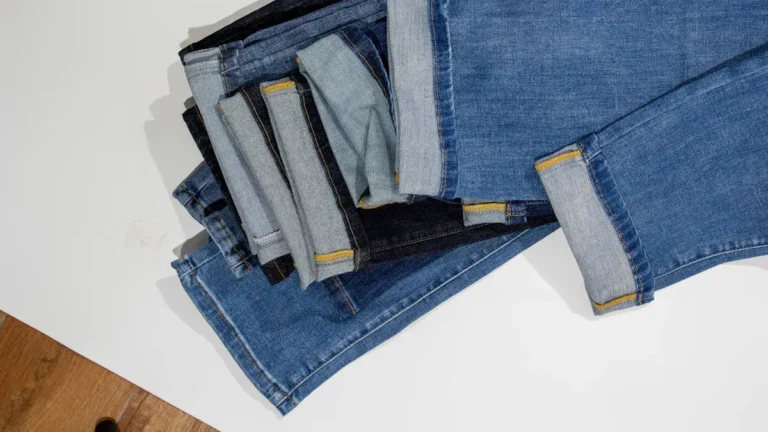
For Denim Brands: Focus on US (West Texas), Brazilian, or Pakistani cotton. The coarser micronaire and cost structure fit heavy-weight fabrics.
-
For Luxury/Shirting: Stick to Egyptian Giza, US Pima, or high-grade Australian Upland. The strength and length are non-negotiable for fine yarns (50s count and higher).
-
For Tees/Basics: West African cotton is a hidden gem—excellent whiteness and dye uptake for the price, provided your mill handles contamination well.
-
For Sustainability Claims:
-
Water: Prioritize rainfed origins (Brazil, West Africa) or highly efficient irrigated origins (Australia).
-
Social: Avoid origins with active sanctions unless full traceability is established.
11. FAQ (Frequently Asked Questions)
Which countries grow the most cotton today?
China and India are the undisputed leaders in volume, producing roughly 50-55 million bales combined annually. They are followed by Brazil and the United States. While rankings fluctuate due to weather, these four countries consistently dominate global supply.
Is cotton grown in Europe?
Yes, but in limited quantities. Greece and Spain are the primary producers within the European Union.12 Greece accounts for approximately 80% of EU cotton production.13 The climate in Northern Europe is too cold and the growing season too short for cotton.+1
Where is organic cotton mostly grown?
India is the world’s largest producer of organic cotton, accounting for over 50% of global organic supply (Textile Exchange, 2023).14 Other significant producers include Turkey, China, and Kyrgyzstan. However, verification of organic integrity in some regions remains a supply chain challenge.
Why is cotton grown in dry regions?
Cotton is naturally a desert plant. It tolerates heat and drought better than corn or soy. Furthermore, growing cotton in dry regions (like Egypt or Australia) reduces pest pressure and prevents the fiber from rotting or graying during harvest, provided irrigation is available.
What is extra-long staple (ELS) cotton and where is it grown?
ELS cotton (Gossypium barbadense) has fibers longer than 34mm (1.3/8 inches). It is stronger and softer than standard cotton. It is grown primarily in Egypt (Giza), the United States (Pima), China, and India (Suvin). It represents less than 3% of the global cotton market.
Which countries export the most cotton?
The United States and Brazil are the top exporters. Although China and India grow more cotton, they have massive domestic textile industries that consume their own crop. Brazil and the US have smaller domestic textile sectors, leaving the majority of their crop for export.
How can I verify cotton origin claims?
Verification requires forensic auditing or documentation systems. Standard methods include Transaction Certificates (for GOTS/OCS), platform tracking (Better Cotton Platform), or scientific testing like Oritain, which uses stable isotope analysis to match fiber to the specific soil composition of a region.15
Key Terms Glossary
-
Bale: The standard trading unit for cotton. US statistical bales weigh 480 lbs (217.7 kg).16
-
Boll: The rounded seed capsule of the cotton plant containing the fibers.17
-
Gin: The machine (and facility) that separates the fiber (lint) from the seed.
-
Lint: The raw white fiber after it has been removed from the seed.
-
Micronaire: A measure of the air permeability of compressed cotton fibers, indicating fineness and maturity.18
-
Staple Length: The average length of the longer half of the fibers. Longer staples generally produce finer, stronger yarns.19
-
Upland Cotton: Gossypium hirsutum, the most common variety, making up ~97% of global production.
-
ELS: Extra Long Staple cotton (Gossypium barbadense), the premium luxury variety.20