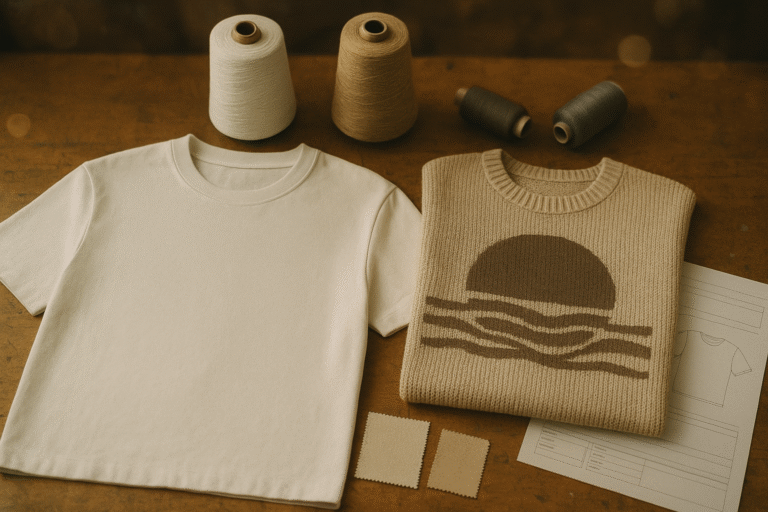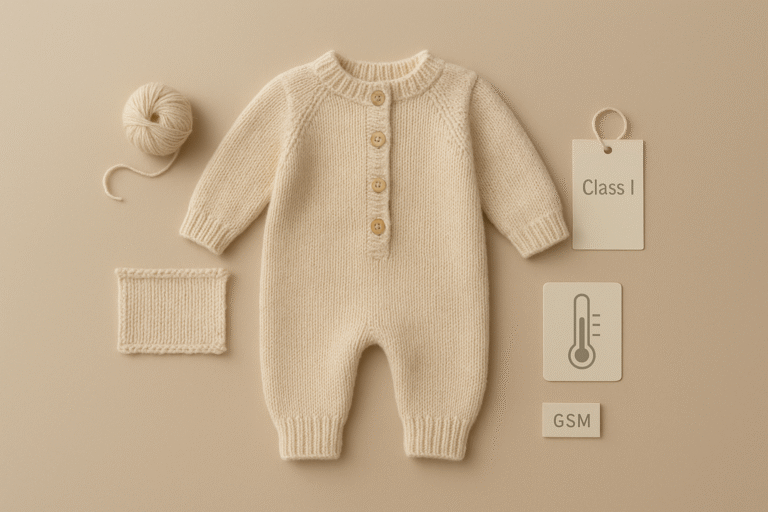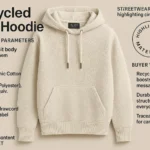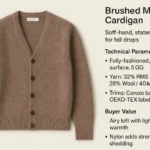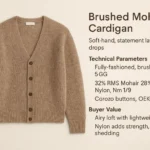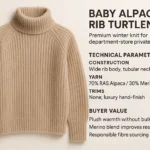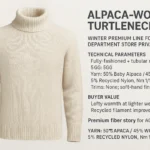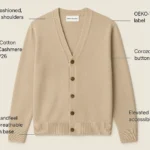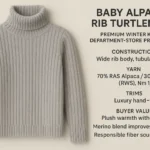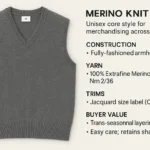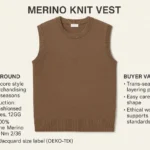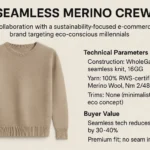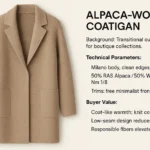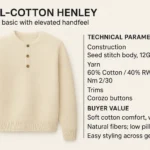


A detailed tech pack is a key tool for making knitwear. If you’re wondering how do I prepare a tech pack for knitwear production? you need to add main parts like garment measurement specs, technical flat sketches, a bill of materials, fabric and yarn details, construction notes, labeling, and packing rules. Each part in your tech pack helps stop mistakes and makes production faster. When you use a fashion tech pack, you create a tech pack that facilitates clear communication and ensures strong tech packs for each team. If you miss any part from your tech pack checklist, it can cause confusion and expensive mistakes.
If you follow a tech pack template and checklist, you help everyone know the plan and maintain quality. The table below shows common problems if you leave out parts of your tech pack:
Challenge | Description |
|---|---|
Incomplete Measurements | Missing measurements can make products fit badly, cause delays, and cost more. |
Lack of Detailed Specifications | Without detailed specs, makers may have trouble making the garment right. |
Poor Quality Images and Sketches | Bad visuals can make people misunderstand the design, which hurts the final product. |
Neglecting Fabric and Material Details | Leaving out fabric details can cause wrong material use, which hurts quality and cost. |
Overlooking Finishing Details | Missing finishing details can mean poor quality control and problems with the final product. |
Not Specifying Packaging Requirements | Without packaging details, products may not look right, which can hurt the brand. |
Failing to Update Changes | Not updating changes can cause mistakes in production and confusion with makers. |
Poor Communication and Collaboration | Not talking well can cause misunderstandings and expensive mistakes during production. |
This guide answers how do I prepare a tech pack for knitwear production? Use this checklist to stop these problems and learn how to make a tech pack that helps every step of production.
Key Takeaways
A detailed tech pack is very important for knitwear production. It has garment measurements, sketches, materials, and instructions.
Clear communication in a tech pack helps stop mistakes. It also makes production faster. Everyone knows what to expect.
Add all needed parts to your tech pack checklist. This stops confusion and costly mistakes during manufacturing.
Check and update your tech pack often to keep it correct. This helps keep quality high and keeps everyone updated.
Use templates and checklists to keep your tech pack organized. This makes sure you add every detail and stops confusion.
Work with your manufacturer early in the process. Their advice can help make your tech pack and production better.
Follow packing guidelines closely. Good instructions stop damage and help your knitwear arrive safely.
Use the same words and clear pictures in your tech pack. This helps everyone understand your design and lowers mistakes.
Why a Knitwear Tech Pack Matters
A tech pack is like a plan for your knitwear. You use it to help with every step. It starts with design and ends with production. When you make a tech pack, you tell everyone what you expect. This stops confusion and keeps your project moving.
Communication and Clarity
Designers and manufacturers must talk clearly. A full tech pack helps everyone understand. It saves time and money. You do not need extra samples or fixes. You keep your product the same every time. This helps you keep good quality.
A clear tech pack can save lots of time with suppliers.
Your team and partners trust you when they know the plan.
Working together gets easier when you share the same info.
A tech pack is the main document for your project. You use it to track changes and comments. Everyone stays updated and knows what is happening.
Tip: Always put every detail in your tech pack. This helps you stop mistakes and confusion.
Production Speed and Accuracy
You want your knitwear made fast and right. A detailed tech pack helps you do this. It turns your ideas into steps for the factory. You make things clear and speed up samples.
A good tech pack has sketches, measurements, and notes.
Everyone uses the same info, so work is more accurate.
Automation tools can make a tech pack fast and cut mistakes.
When you use correct tech pack data, you can use smart knitting machines. These machines need clear steps to work well and fast. Automation with a strong tech pack makes work better.
Reducing Manufacturing Errors
You want to stop mistakes when making knitwear. A tech pack removes guessing. It is like a contract with your factory. It tells them about fabric and how to make things.
Tech packs are like guides for making clothes.
They help all teams know what to do.
Starting with a tech pack makes you feel sure about the work.
A good tech pack is needed for samples and big orders. You stop mix-ups and make sure your knitwear is just right.
Note: Start every project with a tech pack. This gives you control and helps you make good products every time.
Essential Knitwear Tech Pack Components
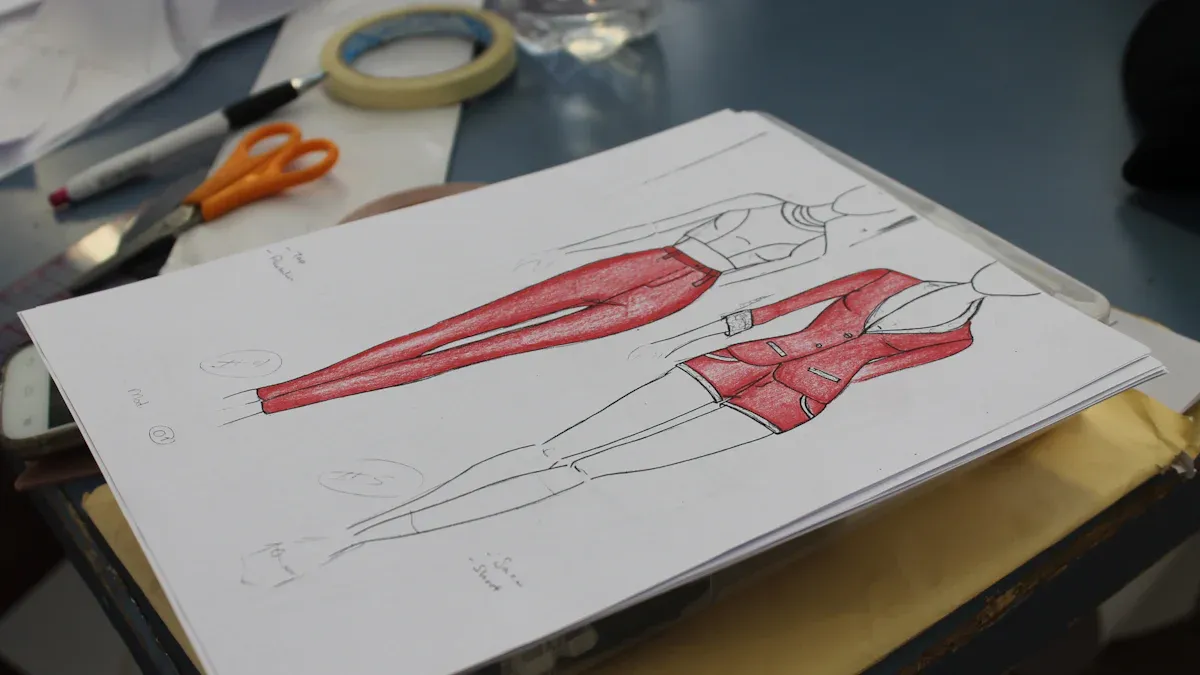
A strong tech pack helps you guide every step of knitwear production. You need to include all the main components in your tech pack checklist. This section explains the most important parts you must add to your detailed tech pack. When you use each part, you make sure your knitwear tech pack is clear and complete.
Cover Page and Product Summary
Start your tech pack with a cover page. This page gives a quick look at your product. You show the style name, style number, season, and designer. You also add a short description of the garment. This summary helps everyone know what you want to make.
A good cover page includes:
Style name and number
Season and collection
Designer or brand name
Product description
Date and version
You use the cover page to track changes and updates. When you update your tech-pack, you keep everyone on the same page. This step helps you avoid confusion and mistakes.
Tip: Always update the cover page when you make changes to your tech pack. This helps your team and manufacturer stay organized.
Technical Flat Sketches and CADs
Technical design sketches are a key part of your tech pack. You use these sketches to show the shape and details of your garment. Technical flat sketches and CADs give clear and detailed documentation. They help you share your ideas with the factory. These tools act as blueprints for manufacturers. You make sure your knitwear looks right when you use them.
Front, Back, and Side Views
You need to add front, back, and side views in your tech-pack. These views show every angle of your garment. You help the factory see how the knitwear should look. You also make it easy for them to follow your design.
Front view: Shows the main design and features.
Back view: Displays details on the back, like seams or labels.
Side view: Highlights sleeve shape or side details.
When you include all views, you stop errors in production. You make sure your knitwear matches your vision.
Detail Sketches
Detail sketches show close-ups of special parts. You use them to explain pockets, trims, or stitch patterns. These sketches help the factory understand small features. You add notes to point out important details.
Show buttons, zippers, or special stitches.
Add arrows and labels for clarity.
Use simple lines and shapes.
Technical flat sketches and CADs help you work with manufacturers. You reduce mistakes and make sure your knitwear tech pack is easy to follow.
Note: Always check your technical design sketches for accuracy. Clear sketches help you avoid design interpretation errors.
Colorways and Reference Images
Colorways and reference images are vital components in your tech pack checklist. You use colorways to show all the colors for your knitwear. You add Pantone references to keep colors accurate. This step helps you match colors during production.
You also include reference images. These images show the look and feel you want. You use swatches and lab dips to preview colors before full production. You agree on a color standard with your supplier, such as Pantone, for consistency.
Here is how colorways and reference images help you:
You show every color option for your garment.
You use Pantone codes to keep colors the same.
You add swatches and lab dips to test colors.
You use reference images to guide the factory.
Colorway Component | Purpose |
|---|---|
Pantone Reference | Ensures color accuracy |
Swatches | Shows fabric and color samples |
Lab Dips | Previews colors before production |
Reference Images | Guides design and style |
A knitwear tech pack acts as a guide for manufacturers. You detail materials, construction, and colorways. You make sure your knitwear matches your vision and meets quality standards.
Tip: Always agree on color standards with your supplier. This helps you keep colors consistent and avoid costly mistakes.
Measurement Specifications
You need clear measurement specs in your tech pack. This helps your knitwear fit well. These technical specifications stop size problems. They keep your product the same each time. You use measurement specs to guide the factory. Testers also use them. Good measurement specs help you make fewer mistakes. They save time for everyone.
Size Chart
A size chart is a table with body measurements for each size. You put this chart in your tech pack. Everyone can see the fit you want. The size chart lists chest, waist, hip, sleeve, and length for all sizes. You use these numbers to set your technical specifications. This keeps your knitwear sizing correct.
Size | Chest (in) | Waist (in) | Hip (in) | Sleeve (in) | Length (in) |
|---|---|---|---|---|---|
XS | 32 | 24 | 34 | 22 | 23 |
S | 34 | 26 | 36 | 22.5 | 24 |
M | 36 | 28 | 38 | 23 | 25 |
L | 38 | 30 | 40 | 23.5 | 26 |
XL | 40 | 32 | 42 | 24 | 27 |
Tip: Always check your size chart before you send your tech pack. This helps you stop fit problems that cost money.
Points of Measurement (POM)
Points of Measurement (POM) are spots on the garment you measure. You mark these points on your technical flat sketches. You list them in your tech pack. POMs help you and the manufacturer measure the same way every time.
Best ways to make measurement specs that stop fit problems:
Know body measurements for a good fit.
Change specs after feedback from testers.
Test patterns with real samples and knitters.
Adjust raglan lines and armhole depths for comfort.
Make cardigan fronts straight by changing bust or shoulder drop.
Use bust darts to fix hem alignment.
You use these steps to make your measurement specs better. This keeps your knitwear comfy and fitting well.
Bill of Materials (BOM)
The Bill of Materials (BOM) is a very important part of your tech pack. You use the BOM to list all materials for your knitwear. This includes yarns, fabrics, trims, and accessories. A detailed BOM helps you control costs. It helps you manage materials.
A good BOM lowers manufacturing costs and fabric waste. You list raw materials and how much you need. This helps you avoid buying too much. It lowers storage costs. This accuracy helps your costing sheets. Your finance team gets good data.
Your BOM should have:
Exact specs, amounts, and cost breakdowns for all materials.
Info for smart material choices and inventory.
Details to keep production on budget.
Notes about sustainable materials and ethical sourcing.
Lower costs by listing raw materials and approved suppliers.
Cut fabric waste by listing exact materials and amounts.
Make costing sheets better for manufacturing cost checks.
Yarns and Fabrics
You list all yarns and fabrics in your BOM. For each, you write the type, color, supplier, and amount. This helps you and the manufacturer get the right materials. It keeps your knitwear quality high. You use these details to match your technical specifications and measurement specs.
Trims and Accessories
You also list trims and accessories in your BOM. These are buttons, zippers, labels, and tags. You give details like size, color, and where they go. This makes sure your tech pack covers every part of your knitwear.
Note: Always update your BOM when you change any material. This keeps your tech pack correct. It helps you stop mistakes during production.
Fabric and Yarn Details
You need to add fabric and yarn details in your tech pack. This helps you keep quality and consistency. These technical specifications help you control how your knitwear looks and feels. You use this part to guide your manufacturer. It keeps your product standards high.
When you pick yarn, you look at the fiber source. This can be cotton, silk, synthetic blends, or wool. The fiber source changes softness and stretch. You also check how even and strong the yarn is. This shows its thickness and how tough it is.
Pick good yarns, both natural and synthetic, for the right fabric.
Keep yarn stable by using strong quality checks.
Test every step for stretch, abrasion resistance, and color fastness.
Check yarns for color, strength, and dirt when they arrive.
Use lab dips to match yarn color to standards.
Test yarn strength and see if it resists washing and light.
Fiber Content and Gauge
You list the fiber content and gauge for each yarn in your tech pack. Fiber content tells you what the yarn is made of, like 100% cotton or a wool blend. Gauge shows how many stitches per inch. This changes the fabric’s thickness and how it hangs. You use these details to meet your technical specifications and measurement specs.
Source and Handle
You add the source and handle of your yarn and fabric in your tech pack. The source tells you where the material comes from. The handle describes how the fabric feels, like soft, smooth, or stretchy. You use this info to keep your knitwear tech pack complete. It helps your product stay high-quality.
Tip: Always test your yarn and fabric for quality before you start production. This helps you stop problems and keeps your knitwear the same.
Construction and Stitch Details
You need to include a construction details page in your tech pack. This page explains how to build your knitwear. You use construction details to guide the factory and make sure your product looks and feels right. The way you stitch and assemble your garment changes how it fits, lasts, and looks.
Stitch Techniques
You choose stitch techniques based on the type of fabric and the style you want. Each method affects the durability and comfort of your knitwear. Here are some common stitch techniques you should add to your tech-pack:
Overlock stitching wraps raw edges with several threads. This stops fraying and makes your garment last longer.
Flatlock stitching works well for stretchy fabrics. It lets seams stretch and move without breaking. This gives your knitwear comfort and strength.
Linking stitches join panels smoothly. You use this for a neat finish on shoulders or sides.
Rib stitches add stretch to cuffs and hems. They help your garment keep its shape.
You use these construction details to make sure your knitwear tech pack supports both style and function. When you pick the right stitch, you improve the fit and the look of your product.
Seams and Finishes
Seams and finishes are important parts of your tech-pack. You use them to hold your garment together and give it a clean look. Good seams and finishes help your knitwear last longer and look better.
You choose seam types like overlock, flatlock, or French seams based on the fabric and design.
You add finishing details such as edge binding, hemming, or coverstitching to prevent unraveling.
You use construction details to show where each seam and finish goes.
When you explain seams and finishes in your tech pack, you help the factory avoid mistakes. You make sure your knitwear matches your vision and meets quality standards.
Tip: Always test your seams and finishes on sample fabric before full production. This helps you catch problems early.
Labeling Instructions
You need clear labeling instructions in your tech-pack. Labels help customers know how to care for your knitwear. They also show your brand and meet legal rules. You use labeling instructions to guide the factory and keep your product compliant.
Care and Brand Labels
You must include care and brand labels in your tech pack. These labels tell customers how to wash and dry your garment. They also show your logo and style number. Different countries have different rules for labels. You need to follow these rules to sell your knitwear worldwide.
Requirement | Description |
|---|---|
Fiber Content | Must be expressed as a percentage and securely attached. |
Country of Origin | Optional in the UK but essential for trade regulations; varies by country. |
Care Instructions | Not mandatory in the UK but recommended for customer support; includes washing and drying tips. |
Flammability Warnings | Required for children’s clothing; must include specific wording and formatting. |
Label Position | Must be indicated; typically placed on inside seams for visibility. |
Style Numbers and Brand Info | Important for branding; helps consumers identify products. |
Additional Information | Certifications or sustainable practices can be included on labels. |
German Regulations | Fiber content must be clearly labeled; country of origin may vary; care instructions are recommended. |
You use this table to check your labeling instructions. This helps you meet international standards and keep your brand strong.
Placement Details
You must show where to put each label in your tech-pack. You use diagrams or notes to mark label positions. Most labels go on inside seams, necklines, or waistbands. You add placement details to your construction details page. This helps the factory attach labels in the right spot.
Mark label positions on your technical sketches.
Use arrows and notes for clarity.
Check that labels are easy to see and read.
Note: Always review label placement before production. This helps you avoid mistakes and meet legal rules.
Folding and Packing Guidelines
You need folding and packing guidelines in your tech pack. These instructions help your knitwear look good when it arrives. They also make shipping faster and safer. You use folding and packing guidelines to keep your brand consistent and your products protected.
Folding Method
You must explain how to fold your knitwear in your tech-pack. The folding method affects how your product looks and fits in the package. You use simple steps to show the factory how to fold each piece.
Fold sweaters with sleeves tucked behind for a neat look.
Stack cardigans flat to avoid creases.
Use tissue paper between layers to protect the fabric.
You add folding instructions to your construction details page. This helps the factory keep your knitwear looking fresh and ready for sale.
Packing Materials
You must list packing materials in your tech-pack. These materials protect your knitwear during shipping. You use bags, boxes, and tags to keep your product safe and presentable.
Use clear poly bags for each garment.
Add branded tags and price labels in the right spot.
Choose sturdy boxes for bulk shipping.
You include packing materials in your tech pack to guide the factory. This helps you maintain brand consistency and improve shipping efficiency.
Tip: Always check your folding and packing guidelines before shipping. This helps you avoid damage and keep your knitwear looking great.
You use your tech pack to control every step of production. When you add construction details, labeling instructions, and packing guidelines, you make sure your knitwear meets high standards. You help the factory work faster and avoid mistakes. Your tech-pack is the key to quality and efficiency.
How Do I Prepare a Tech Pack for Knitwear Production?
Gathering Accurate Information
You start by collecting all the details about your knitwear. You need to know the style, measurements, materials, and colors. You also gather information about the stitches and the construction of your garment. When you ask yourself, how do i prepare a tech pack for knitwear production?, you begin with facts. You measure samples and check every part of your design. You write down the yarn type, the gauge, and the size chart. You also take clear photos or make sketches. You talk to your team and ask questions. You make sure you do not miss anything. This step helps you avoid mistakes later.
Using Templates and Checklists
You use a template to organize your information. A template gives you a structure for your tech-pack. It shows you where to put each detail. When you wonder, how do i prepare a tech pack for knitwear production?, you follow the template step by step. You fill in the style name, the measurements, and the construction notes. You add the bill of materials and the packing instructions. You also use a checklist. The checklist helps you remember every part you need. You tick off each item as you finish it.
Templates and checklists improve the completeness and accuracy of knitwear tech packs by ensuring that all critical details are documented clearly. This minimizes misunderstandings and errors during the manufacturing process, leading to more precise and consistent garment production.
You can find templates online or make your own. You keep your checklist close as you work. You check your work before you send it to the factory. This step answers the question, how do i prepare a tech pack for knitwear production?, because it helps you stay organized and thorough.
Tip: Always double-check your checklist before you share your tech-pack with others.
Collaborating with Manufacturers
You talk to your manufacturer early. You share your tech-pack and ask for feedback. You listen to their advice about construction or materials. You ask, how do i prepare a tech pack for knitwear production?, and you learn from their experience. You answer their questions and fix any unclear points. You send updates if you change the design or the measurements. You work together to solve problems. You keep your communication clear and simple.
When you work with your manufacturer, you make sure your knitwear matches your vision. You also make the production process smoother. You use teamwork to get the best results.
Note: Good collaboration helps you avoid delays and costly errors.
Reviewing and Updating Your Tech-Pack
You need to review your tech pack before you send it to the manufacturer. Careful review helps you catch mistakes and make sure every detail is correct. You want your tech pack to match your design and production needs. When you check your tech pack, you improve the quality of your knitwear and avoid costly errors.
Start by reading each section of your tech pack. Look at your sketches, measurements, and material lists. Check that your instructions are clear and easy to follow. If you find missing information, add it right away. You should also compare your tech pack with your original design notes. This helps you spot any changes or updates you need to make.
Use this checklist to guide your review:
Check all measurements and size charts for accuracy.
Make sure technical sketches match your design.
Confirm color codes and reference images.
Review the bill of materials for correct yarns, fabrics, and trims.
Verify construction details and stitch techniques.
Inspect labeling instructions and placement diagrams.
Look at folding and packing guidelines.
Tip: Ask a team member or a trusted partner to review your tech pack. A fresh set of eyes can catch mistakes you might miss.
You need to update your tech pack when you make changes to your design or production plan. If you change a measurement, material, or color, update your tech pack right away. Use version numbers and dates on your cover page. This helps everyone know which version is the latest.
Here is a simple table to track your tech pack updates:
Version | Date | Changes Made | Reviewed By |
|---|---|---|---|
1.0 | 2024-03-01 | Initial draft | Designer |
1.1 | 2024-03-05 | Updated size chart | QA Team |
1.2 | 2024-03-10 | Changed yarn supplier | Production |
1.3 | 2024-03-15 | Added new colorway | Designer |
You should keep your tech pack organized and easy to read. Use clear headings, bullet points, and tables. Save your tech pack in a safe place, like a shared drive or cloud folder. This makes it easy for your team and manufacturer to find the latest version.
Note: Regular review and updates help you keep your tech pack accurate. This leads to better production results and fewer mistakes.
When you review and update your tech pack, you show your commitment to quality. You help your team work better and make sure your knitwear meets your standards. Careful review and updates are key steps in successful knitwear production.
Accuracy Tips for Your Knitwear Tech Pack
Double-Check Measurements
You must check every measurement in your tech pack. If you miss a number, your knitwear might not fit. Wrong sizes can cause problems. There are ways to double-check your measurements.
Send graded specs to your factory. This keeps the fit the same each season.
Measure samples and work with patternmakers. This helps you find mistakes before making the product.
Use a block style to get body measurements. This makes finding the base size easier.
Tip: Always compare your measurements with your template before sending your tech-pack. Careful checking saves time and money.
Use Clear Visuals and Annotations
You should use clear pictures and simple notes in your tech pack. Factories need to see what you want. If your sketches are hard to read, mistakes can happen. Good visuals help everyone understand your design.
Evidence Description | Explanation |
|---|---|
Clear visuals give factories exact references. | This helps them build garments the way you want, so there is less confusion. |
Detailed construction notes help factories put garments together. | If you miss stitch info, they may use wrong methods, so clarity is important. |
Complete flats stop mistakes in size or construction. | Without them, factories may make samples that do not match your design, which causes errors. |
You can add arrows, labels, and close-up sketches for special details. Using a template keeps your visuals neat and easy to follow.
Note: Clear visuals and notes help you avoid expensive mistakes.
Maintain Consistent Terminology
You need to use the same words in your tech pack. If you change words, your team may get confused. Consistent terminology is like a shared language. Everyone knows what you mean, so there is less confusion.
Using the same words helps everyone understand your knitwear ideas.
It gives your team and factory a clear plan, so work goes smoothly.
A tech pack with clear terms helps you avoid mistakes and saves time.
Tip: Make a glossary for your tech-pack. This helps new team members and manufacturers learn your words fast.
You can use your template to keep your language the same in every part. When you use clear and consistent words, you help everyone work together and make better knitwear.
Common Tech Pack Mistakes to Avoid
Missing or Incomplete Information
You must put every detail in your tech pack. If you forget something, factories might guess what you want. This can cause mistakes and confusion. Teams may not follow your instructions. Quality checks get harder when rules are not clear. Production slows down because people ask more questions.
Factories might guess designs and make mistakes.
Teams may not understand instructions, which causes confusion.
Quality checks are tough when rules are not clear.
More questions slow down production.
If you only give basic specs, you might get delays. You may not get samples approved quickly. A detailed tech pack helps you get samples approved faster. It also makes your timeline shorter.
Metric | Basic Specifications | Detailed Tech Pack |
|---|---|---|
First Sample Approval Rate | 28% | 72% |
Development Timeline (weeks) | 6.3 | 3.1 |
You should check your tech pack for missing measurements. Look for unclear notes and incomplete lists. This helps you avoid expensive mistakes. It keeps your project moving.
Tip: Review your tech pack with your team before you send it. This helps you find missing or incomplete details.
Ambiguous Instructions
You need to write clear instructions in your tech pack. If your directions are not clear, factories may not understand your design. This can cause mistakes when making your knitwear. Static documents need people to read and figure out details. This can make information get lost. If data is in odd formats, factories may not follow your plan.
Unclear instructions cause mistakes in manufacturing.
Factories have trouble with static documents and must read them by hand.
Passing info to factories can lose details if formats are not standard.
You should use simple words and clear pictures. Add notes and diagrams for special parts. When you make things clear, factories can build your knitwear the right way.
Note: Always ask your factory if your instructions make sense. Their advice helps you make your tech pack better.
Overlooking Size Grading
You must add size grading in your tech pack. If you skip this, your clothes may not fit well in all sizes. A Graded Specification Sheet helps factories adjust for each size. Pattern grading makes more sizes from one sample. This keeps the fit and shape right.
A Graded Specification Sheet helps clothes fit in all sizes.
It is a chart that guides factories to adjust for each size.
Good notes help you get high quality and the same fit for all sizes.
Pattern grading makes more sizes from one sample and keeps the fit right.
Technical designers need to know grading to make patterns bigger or smaller.
You should write size grading for every style. This helps you get good fit and quality for all your products.
Tip: Work with a technical designer to make grading sheets. This helps you stop fit problems and keeps your customers happy.
Ignoring Packing Details
Packing details play a big role in your knitwear tech pack. If you skip this part, you risk damage, confusion, and unhappy customers. You want your knitwear to arrive in perfect shape. You also want your brand to look professional. Packing instructions help you reach these goals.
When you ignore packing details, you leave the factory guessing. Workers may fold sweaters the wrong way. They might use bags that do not protect the fabric. Boxes could be too small or too big. These mistakes can lead to wrinkled garments, broken buttons, or lost tags. Your knitwear may look messy when it arrives at stores.
You should always include clear packing guidelines in your tech pack. Packing details tell the factory how to fold, bag, and box each item. You also explain how to add tags and labels. This helps everyone follow your plan.
Here are common problems you face when you ignore packing details:
Sweaters arrive wrinkled or creased.
Labels and tags get lost or damaged.
Wrong bags or boxes cause extra waste.
Products look messy and hurt your brand image.
Stores spend more time fixing packing mistakes.
Tip: Add step-by-step folding instructions and packing material lists to your tech pack. This helps the factory pack each item the right way.
You can use a simple table to show your packing plan:
Item Type | Folding Method | Bag Type | Box Size | Tag Placement |
|---|---|---|---|---|
Sweater | Sleeves tucked behind | Poly bag | Medium carton | Neck label |
Cardigan | Flat, buttons closed | Tissue wrap | Large carton | Side seam label |
Scarf | Rolled, not folded | Zip pouch | Small carton | Hang tag |
Packing details also help you save money. You avoid wasted materials and lower shipping costs. You keep your knitwear safe during transport. You also make sure your products look great when customers open the box.
If you want your knitwear to stand out, you must pay attention to packing. Good packing shows you care about quality. It also helps stores and customers trust your brand.
Note: Review your packing instructions before you send your tech pack. Ask your factory for feedback. Make changes if you see problems in samples.
Packing details are not just extra steps. They are part of your quality control. When you include them in your tech pack, you protect your knitwear and your reputation.
Final Review and Approval
Internal Review Steps
You need to check your tech pack before sending it to the factory. This helps you find mistakes and make sure your knitwear is good. First, think about your design, quality, and budget. Then, collect everything you need. Gather sketches, pictures, samples, and what is required.
Next, look at the technical parts. Find important details and see if there are any problems with making the item. Write your documents using the right format. Work with your team to check and improve the tech pack. Finish your documents so they are ready for the factory.
Here is a simple checklist for checking your sample:
Look at the sample and compare it to your sketches.
Make sure the sample is good quality.
Check the sample with your bill of materials.
Measure the sample.
Try the sample on a model.
Send your notes to the factory.
These steps help you make sure your knitwear matches your plans.
Manufacturer Feedback
You need to get feedback from your manufacturer before you say your tech pack is done. Share your documents and ask what they think. Manufacturers can find problems with how things are made or the materials. They might give ideas to make things better or easier to make. Listen to what they say and change things if needed.
Ask your manufacturer to look at your sketches, measurements, and instructions. Ask them to make a sample. Check the sample for fit, finish, and how it is made. If you see problems, send clear notes back to the factory. Good talking helps you stop mistakes and delays.
Tip: Always write down feedback and changes. This helps you remember what was fixed and keeps your tech pack current.
Version Control
You must use version control to keep your tech pack organized. Every time you change something, update the version number and date. This helps your team and the factory know which file is the newest. Use a simple table to track changes:
Version | Date | Changes Made | Reviewed By |
|---|---|---|---|
1.0 | 2024-03-01 | Initial draft | Designer |
1.1 | 2024-03-05 | Updated construction notes | QA Team |
1.2 | 2024-03-10 | Changed yarn supplier | Production |
1.3 | 2024-03-15 | Added new colorway | Designer |
Save your tech pack in a shared folder or online drive. Make sure everyone uses the newest version. Version control helps you stop mix-ups and keeps production running well.
Note: Careful checking, listening to the manufacturer, and using version control help you make great knitwear every time.
A full tech pack helps you make good knitwear. When you write down every detail, you make fewer mistakes. This helps your results get better.
Do each step in your tech pack for the best results.
Check and change your documents often.
Talk and work with your team and manufacturer.
Remember: Working together and checking your work helps you make better products and keeps production easy.
FAQ
What is a tech pack for knitwear?
A tech pack is a document that shows every detail about your knitwear design. You use it to tell manufacturers how to make your product. It includes sketches, measurements, materials, and instructions.
Why do you need technical sketches in your tech pack?
Technical sketches help you show your design clearly. Factories use these drawings to understand the shape and details of your knitwear. You avoid mistakes when you give clear sketches.
How do you choose yarn for your knitwear tech pack?
You pick yarn based on fiber content, color, and strength. You test samples for softness and durability. You list the yarn type and supplier in your tech pack to keep quality high.
What happens if you forget packing instructions?
If you skip packing instructions, your knitwear may arrive wrinkled or damaged. Stores might spend more time fixing mistakes. You protect your brand by adding clear packing steps in your tech pack.
How often should you update your tech pack?
You update your tech pack every time you change a design, measurement, or material. You use version numbers and dates to track updates. This keeps everyone working with the latest information.
Can you use templates for your knitwear tech pack?
Yes, you can use templates to organize your tech pack. Templates help you remember every detail. You save time and reduce errors by following a checklist or template.