
If you manage private‑label knitwear, you don’t want vague “fast track” promises—you need an enforceable SLA. This FAQ formalizes AzKnit’s program for chunky knit cardigans: 5 business days for prototype samples and roughly 3 calendar weeks for bulk production, with clear scope limits, quality acceptance criteria, and a remedies clause that assigns cost ownership when delays are on us.
Key takeaways
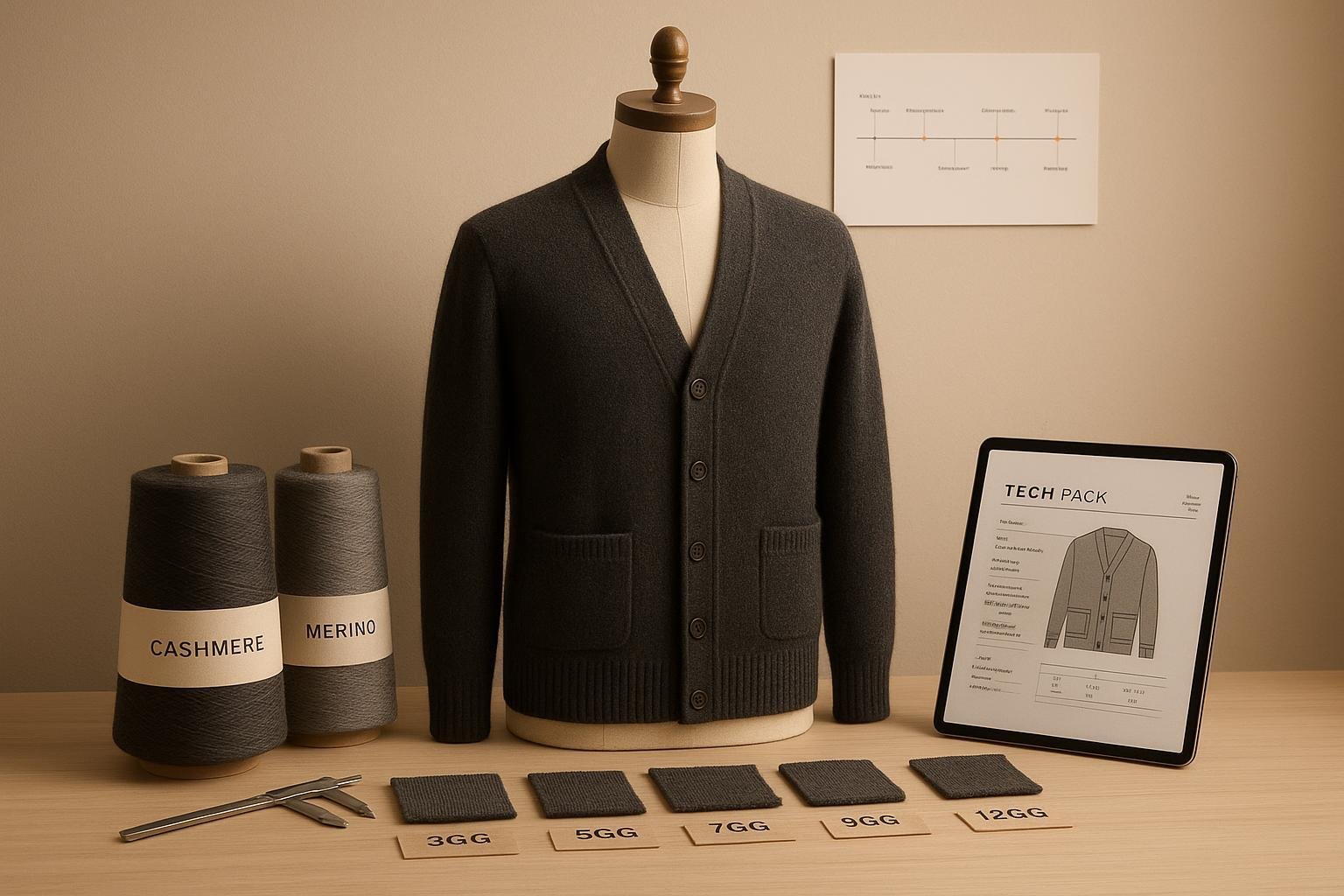
Scope: SLA applies only when yarn is in AzKnit stock and the style runs on standard gauges (5G/7G/12G) with conventional silhouettes.
Timelines: 5 business days for prototypes; ~15 business days for bulk after PP approval and yarn allocation. External lab timing and customs are out of scope.
Remedies: If AzKnit causes a covered delay, we fund necessary expedite/rework and cover express airfreight to protect your launch date (buyer approves the expedite plan within 24 hours).
Quality gate: General Inspection Level II with AQL Critical 1.5, Major 2.5, Minor 4.0 as baseline; measurement tolerances and a defect matrix are published below.
Capacity & pilots: Pilot MOQs at 50/100/300 pieces; aggregate capacity 100k+ pieces/month with per‑style weekly caps confirmed per PO.
SLA scope and eligibility for the chunky knit cardigan manufacturer SLA
Q: Which orders qualify for the 5‑day sample and 3‑week bulk SLA?
A: Orders qualify when all of the following are true:
Yarn is from AzKnit’s in‑stock library (no custom dyeing or lab dips).
Gauge is standard: 5G, 7G, or 12G.
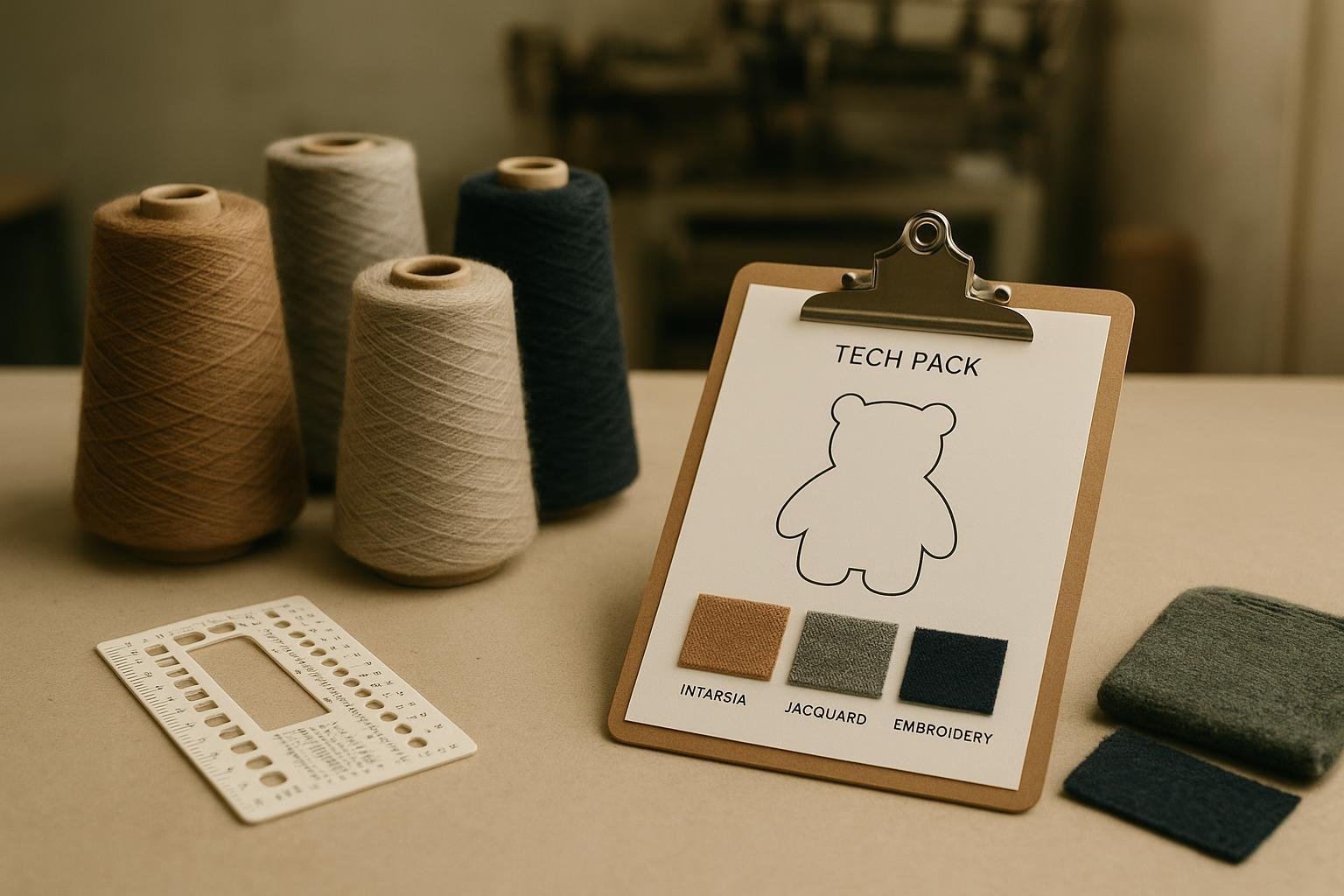
Silhouette is conventional (e.g., classic cardigan) without complex multi‑color jacquard/cable patterns or heavy washes.
Complete tech pack and BOM are locked at Day 0, and PP approval occurs within 24 hours of submission.
Q: What’s out of scope?
A: Custom‑dyed yarns, non‑standard gauges, complex stitch structures, garment‑dye or heavy chemical/enzymatic washes, and multi‑step embellishment programs. These can be quoted with realistic lead times but aren’t covered by this SLA.
Q: How do we confirm eligibility?
A: On Day 0 we run an eligibility check: yarn lot availability, gauge routing, line capacity, and complexity screen. You’ll get a written confirmation that the order is SLA‑covered, plus a milestone schedule.
Timelines, milestones, and the Gantt
Q: When does the clock start?
A: The 5‑day sample clock starts after we confirm the complete tech pack, BOM, and yarn/color selection. The 3‑week bulk clock starts after PP approval and yarn allocation are in place.
Q: What are the milestones?
A: The standard path looks like this (business days):
Day 0: Tech pack/BOM lock; SLA eligibility confirmed; yarn in stock.
Days 1–5: Prototype sample made and submitted; buyer aims to reply within 24 hours.
Days 6–8: PP sample and size set (if required); yarn lot finalization.
Days 9–23 (≈15 business days): Bulk knitting → linking → washing/finishing → packing with in‑line QC.
Days 21–23: FRI (final random inspection) at General Level II per baseline AQL; ship on pass.
Notes: External lab testing and customs clearance aren’t included in the SLA clock. Peak‑season booking may require reserving capacity slots; we’ll flag this during eligibility.
Quality acceptance: AQL, tolerances, and defect matrix
Q: What inspection standard and AQLs do you use?
A: We follow ISO 2859‑1 (equivalent to ANSI/ASQ Z1.4) for sampling, with General Inspection Level II. Our baseline AQLs are Critical 1.5, Major 2.5, and Minor 4.0—common apparel practice documented by the AQL explainer and simulator from QIMA.
Q: Can you show a worked example of acceptance numbers?
A: For a lot of 4,000 cardigans at General Level II, the code letter is L with a sample size of 200. Using the baseline AQLs:
Minor 4.0 → Accept 13 / Reject 14
Major 2.5 → Accept 10 / Reject 11
Critical 1.5 → Accept 5 / Reject 6
These acceptance numbers align with published AQL tables referenced by the source above.
Q: What are your standard measurement tolerances for cardigans?
A: Unless otherwise specified by the buyer, we apply the following knit‑appropriate tolerances (in centimeters). These defaults can be tightened per the buyer’s spec where needed.
Measurement point | Tolerance (± cm) |
|---|---|
Chest (1″ below armhole) | 1.5 |
Body length (HPS) | 1.5 |
Sleeve length (from armhole seam) | 1.0 |
Across shoulder | 1.0 |
Bottom opening (relaxed) | 1.5 |
Q: How do you classify defects?
A: We use a knitwear‑specific defect matrix to drive consistent judgments during in‑line QC and FRI:
Class | Examples |
|---|---|
Critical | Open seam at stress point; sharp foreign object; severe oil stain not cleanable |
Major | Shade variance beyond tolerance; mis‑measure beyond spec; skipped stitches visible on face |
Minor | Loose thread without risk; slight press shine; small, removable mark |
For more on inspection procedures and checklists in apparel, see QIMA’s garment inspection guidance in their garment QC procedures overview.
Lab testing workflow and TAT
Q: Which tests are typical for chunky knit cardigans, and how long do they take?
A: Standard panels include chemical screening aligned to buyer RSLs (e.g., azo dyes, formaldehyde, pH, and applicable heavy metals) and physical tests such as colorfastness to washing/rubbing/perspiration, dimensional stability, pilling, and seam strength. Public pages from leading labs explain scopes—for instance, Intertek’s colorfastness testing overview and SGS’s softlines standards hub. Typical turnaround is 5–10 business days for standard softlines panels, but we’ll confirm exact TAT per order with the designated lab (e.g., SGS, Intertek, Bureau Veritas).
Q: How does REACH factor into your testing plan for EU/UK shipments?
A: We align chemical panels with buyer RSLs and relevant REACH requirements, including Annex XVII restrictions and SVHC communication duties per Article 33. For authoritative guidance, see ECHA’s SVHC guidance document and the Annex XVII restrictions list. Tests that affect product release are planned early so they don’t delay the SLA path.
Pilot MOQs, capacity disclosure, and booking rules
Q: What are the pilot MOQ options?
A: We support pilots at 50, 100, and 300 pieces per style under the SLA scope (stocked yarn, standard gauge, conventional silhouette, single colorway unless otherwise agreed). Pricing and yield assumptions are shared up front.
Q: What capacity can you commit?
A: Aggregate capacity is 100,000+ pieces per month across gauges. Per‑style weekly output varies by gauge, size break, and stitch complexity; we confirm caps per PO during the Day‑0 eligibility step and set a calendar plan accordingly.
Q: How do peak seasons impact the SLA?
A: We run a booking window and “lock the line” mechanism. If your style is SLA‑eligible, we reserve the relevant machine time on confirmation to protect your slot. During peak months, earlier booking improves the chance of Day‑0 eligibility.
Remedies, escalation, and communications
Q: What happens if AzKnit misses a covered milestone?
A: Under our remedies clause (selected option 1C), if the delay is attributable to AzKnit, we will: (i) fund the necessary rework and expedited production and (ii) cover express airfreight to meet the agreed launch date. To activate this remedy, the buyer approves the expedite plan and routing within 24 hours of notification. We document the cause, actions, and costs for audit.
Q: Can you give a practical example?
A: Suppose FRI slips by two days due to our internal rework. With your 24‑hour approval, we move the shipment to express air and absorb the incremental freight and rework costs so your go‑live date holds.
Q: How do we escalate issues and stay informed?
A: You’ll have a named account manager with an 8‑hour initial response SLA and a production lead/QC manager on copy. We send milestone updates at submission/approval, bulk start, 50% progress, FRI booking, and ship‑date confirmation, so deviations are caught early.
Next steps
Disclosure: AzKnit is our manufacturing partner. If you want to check eligibility for an upcoming cardigan program or request the one‑page SLA PDF, contact the team via the site. You can learn more about AzKnit’s capabilities on our homepage.