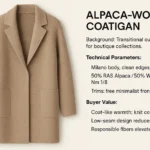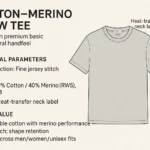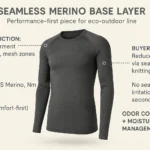

Buying 100 knit sweaters for a U.S. launch? This FAQ walks you through how to estimate unit landed cost under DDP (Delivered Duty Paid) to your address, using four common merino/wool styles and a practical packing assumption: 10 pieces per carton, 60×40×40 cm, flat pack with polybag and desiccant.
Key takeaways
DDP to a U.S. address bundles origin handling, international freight, import clearance, duty/taxes, and last‑mile delivery into one price; you typically just unload.
For wool knit sweaters under HTSUS Chapter 61, heading 6110, indicative General rates commonly sit in the mid‑teens; verify the exact 10‑digit line and current rate on the USITC site before import.
With 10 cartons (100 pcs total CBM ≈ 0.96), courier DDP charges are driven by dimensional weight; LCL ocean DDP is driven by CBM plus port and last‑mile fees.
Unit landed cost = ex‑factory unit + export/origin + freight + insurance + brokerage/entry + MPF/HMF (as applicable) + duty (+ any Section 301, if applicable) + last‑mile + accessorials, divided by 100.
Payment flow typically runs: sample fee → PO deposit → pre‑shipment balance (or DDP balance) → final reconciliation on delivery.
What does DDP include for 100 pcs delivered to a U.S. address?
Under Incoterms DDP, the seller arranges and pays for origin export steps, main carriage, import clearance, duties/taxes, and final delivery to the named place; the buyer normally only unloads. The ICC explains that DDP places maximum obligations on the seller and may be challenging if the seller cannot legally clear import; in such cases, consider DAP/DPU alternatives. See the International Chamber of Commerce resources on managing tariff risk and DDP/DAP differences for authoritative scope and caveats: ICC guidance on using Incoterms to manage tariff risk (2025) and ICC Academy explainer on DAP vs DDP.
How to calculate US landed cost for merino sweaters, step by step
Disclosure: AzKnit is our product. The price references below are illustrative examples to show calculation logic as of 2026‑02‑02; confirm actual quotes at time of order.
EXW (ex‑works) reference bands per unit (100 pcs, typical gauges, standard trims):
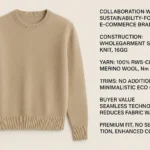
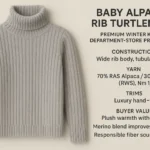
100% merino pullover (2A): $26–$38
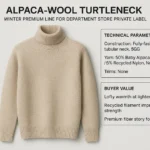
80/20 wool/nylon pullover (2B): $21–$31
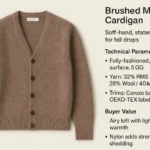
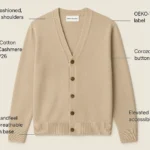
100% wool cardigan (2C): $28–$42
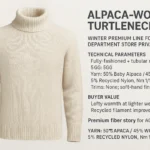
Wool‑blend hoodie (2D): $23–$35
Quick conversions (illustrative):
FOB adds origin inland haul + export clearance/THC: typically +$0.40–$0.90 per unit at this scale.
CIF adds ocean/air freight + insurance to U.S. port/airport: depends on mode; see worked examples below.
DDP adds U.S. entry/brokerage, MPF/HMF (if ocean), duty (and any Section 301, if applicable), plus last‑mile delivery to your address.
Here’s the idea: EXW → add origin costs → add main carriage → add import fees/duty → add last‑mile. The sum, divided by 100 units, is your DDP unit landed cost.
Which HTS/HS codes and duty rates apply to our four sweater types?
For U.S. imports, sweaters, pullovers, cardigans and similar knit articles generally classify under HTSUS heading 6110 within Chapter 61. The precise 10‑digit subheading depends on fiber content (e.g., of wool vs. of man‑made fibers), gender/size, construction, and sometimes knit‑to‑shape. Do not rely on generic codes. Always verify on the official USITC release and confirm with a licensed broker.
Authoritative source: USITC HTS download hub (current Chapter 61 PDFs). Use the current release and navigate to heading 6110.
Indicative modeling (for budgeting only; verify at entry time):
2A 100% merino pullover: under “of wool” in 6110; many lines historically show General rates around the mid‑teens ad valorem.
2B 80/20 wool/nylon pullover: classification follows chief weight; many “of wool” lines sit near the same band, but confirm the exact 10‑digit.
2C 100% wool cardigan: same heading 6110 “of wool” with cardigan‑specific splits; verify the line and rate.
2D wool‑blend hoodie: if knit and sweater‑like, many styles still classify under 6110; verify based on construction.
Section 301 check: treatment for PRC‑origin goods can change. Before import, confirm current applicability for your exact 10‑digit line via USTR/Federal Register updates. See the Federal Register notice on Section 301 administration in 2025 for context: Implementation of additional duties on PRC products.
Broker note: Ask your broker to validate (1) the 10‑digit HTS code, (2) the General rate, (3) whether any Section 301 adds apply, and (4) whether any special programs or exclusions are available.
How do the packing specs affect freight allocation for 100 pcs?
Packing assumption 3A: 10 pieces per carton; carton size 60×40×40 cm; flat pack with polybag + desiccant.
Cartons: 100 pcs ÷ 10 pcs/ctn = 10 cartons
CBM per carton: 0.6 × 0.4 × 0.4 = 0.096 m³
Total CBM: 10 × 0.096 = 0.96 m³
Dimensional weight for courier/air uses the higher of actual vs volumetric. Major carriers publish L×W×H (cm) ÷ 5,000 for international services; see FedEx and DHL rate guides for 2026 confirming the 5,000 divisor. For example, one carton’s dimensional weight: 60×40×40 ÷ 5,000 = 19.2 kg (rounded up per carrier rules). Ten cartons → ~192 kg chargeable if dimensional exceeds actual.
References: FedEx 2026 rate changes page and DHL 2026 Service & Rate Guide.
Ocean LCL is billed by CBM plus origin/destination handling and documentation. With total CBM ≈ 0.96, expect base ocean rates per CBM plus minimum/handling charges that make small shipments non‑linear. Route and season drive the band.
What government fees and brokerage should I expect?
MPF (Merchandise Processing Fee): For FY2026, 0.3464% ad valorem with minimum $33.58 and maximum $651.50 per formal entry; source: CBP user fees adjustment for FY2026 (Federal Register) and CBP help article on MPF min/max.
HMF (Harbor Maintenance Fee): Assessed on ocean cargo when loaded/unloaded at a port. Industry norm references 0.125% of value; CBP help text currently shows “125%,” which appears inconsistent with practice. Verify with the regulation and your broker; see eCFR Title 19 Part 24 index.
Brokerage and advancement: Under DDP, the seller’s carrier/forwarder typically bundles entry and brokerage, but may charge advancement/disbursement fees on duties/taxes (e.g., a percentage or a fixed minimum). Confirm inclusions on your quote.
Worked example: courier DDP vs ocean LCL DDP for 100 pcs (as of 2026‑02‑02)
Assumptions for all four styles: 100 pcs; 10 cartons; total CBM ≈ 0.96. Illustrative net weight per piece 0.6–0.8 kg; dimensional weight dominates courier scenario (≈192 kg chargeable). Duty modeling uses a mid‑teens ad valorem band for “of wool” examples; verify your exact line on USITC.
Item | Courier DDP (illustrative) | Ocean LCL DDP (illustrative) |
|---|---|---|
Ex‑factory unit (2A merino pullover example) | $32.00 | $32.00 |
Origin export + pickup (per unit) | $0.60 | $0.80 |
Main carriage (allocated per unit) | $5.40 (192 kg × ~$5.0/kg + surcharges) | $3.00 (0.96 CBM × ~$140/CBM + min/handling) |
Insurance (per unit) | $0.10 | $0.10 |
US brokerage/entry (per unit) | $0.35 | $0.60 |
MPF (per unit) | $0.20 (entry min spread over 100) | $0.20 |
HMF (per unit) | — | $0.05 |
Duty (per unit, mid‑teens band) | $5.10 (e.g., 16% × $31.8 customs value) | $5.10 |
Last‑mile delivery (per unit) | $0.70 | $1.10 |
Accessorials buffer (per unit) | $0.30 | $0.40 |
Indicative DDP unit total | ~$44.75 | ~$43.35 |
Notes:
Freight bands: Courier air 3.9–7.5/kg typical in early 2026 depending on service lane and surcharges; LCL CBM bands vary by port pair and season. See Flexport route references for CN→US for indicative levels.
This table shows one SKU (2A) for clarity. Other SKUs will differ primarily by ex‑factory value and possibly by duty line if classification differs.
Sensitivity: ±15% on freight can move unit totals by ~$1–$2 at this scale; duty shifts linearly with customs value.
Secondary view: DDP landed cost merino sweaters vs FOB/CIF quotes
When you compare quotes, ensure you’re aligning apples to apples. EXW/FOB/CIF don’t include U.S. entry, duty/taxes, or last‑mile; DDP does. Use the step‑by‑step method above to bridge the gap: start from your EXW, add origin costs, freight, U.S. fees and duty, then last‑mile to reach a DDP landed cost per unit.
What payment milestones and documents should we plan for?
A practical milestone flow for a 100‑piece DDP order:
Sampling: sample fee invoiced; lab‑dip/yarn shade approvals if applicable; sample lead time typically 3–5 days (Knowledge Base Source).
PO confirmation: 30–50% deposit against Proforma Invoice with agreed tech pack, BOM, size run, labeling instructions.
Bulk production: typical mass production lead time ~3 weeks (Knowledge Base Source). Mid‑production photo or TOP sample if required.
Pre‑shipment: quality inspection (AQL), packing list and commercial invoice issued; balance payment due before shipment or on DDP release as agreed.
DDP shipment: seller arranges export, main carriage, U.S. entry, pays duties/taxes, and performs last‑mile. Provide tracking and ETA.
Delivery and reconciliation: buyer unloads; any accessorials/advancement charges itemized and reconciled on final statement.
Documents to prepare: Proforma Invoice, Commercial Invoice, Packing List, HTS declaration, Country‑of‑Origin statement, any test reports, and care/fiber labeling compliant with FTC rules; see FTC’s Made in USA and labeling guidance for labeling basics.
What traps should small shipments avoid?
Dimensional weight shock: with 60×40×40 cm cartons, courier charges bill on volume; if your knits compress safely, consider vacuum packing to drop CBM and chargeable kg.
LCL minimums: sub‑1 CBM moves may pay disproportionately high minimum/handling fees; consolidating skus or timing can reduce unit cost.
Misclassification risk: wrong HTS adds duty and delay. Always validate the 10‑digit with a broker using the latest USITC Chapter 61 release.
Section 301 surprises: confirm applicability for your exact code via the latest USTR/Federal Register notices before booking.
Hidden advancement fees: ask if the DDP carrier charges a percentage on duties/taxes it fronted; request caps or fixed fees.
Labeling gaps: missing fiber content, COO, or RN can trigger holds. Align labels before production.
Looking for a reproducible worksheet? Use the math above as your template: plug in your ex‑factory price, confirm HTS and duty with your broker, choose a freight mode, and apportion fees over 100 units. If you want our filled example spreadsheet for the four sweater types, reach out and we’ll share a copy.