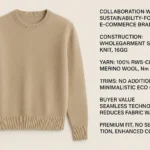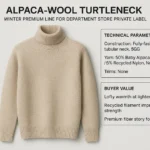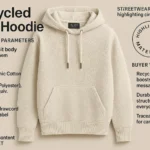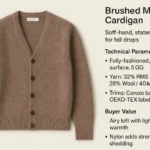

COI disclosure: This is a first‑party, evidence‑led review of AzKnit’s own 16gg private‑label sampling service. Time‑sensitive details (SLA, capacity, certificates) are accurate as of 2026‑02‑02. Where public artifacts are unavailable, we label the claim “Insufficient data.”
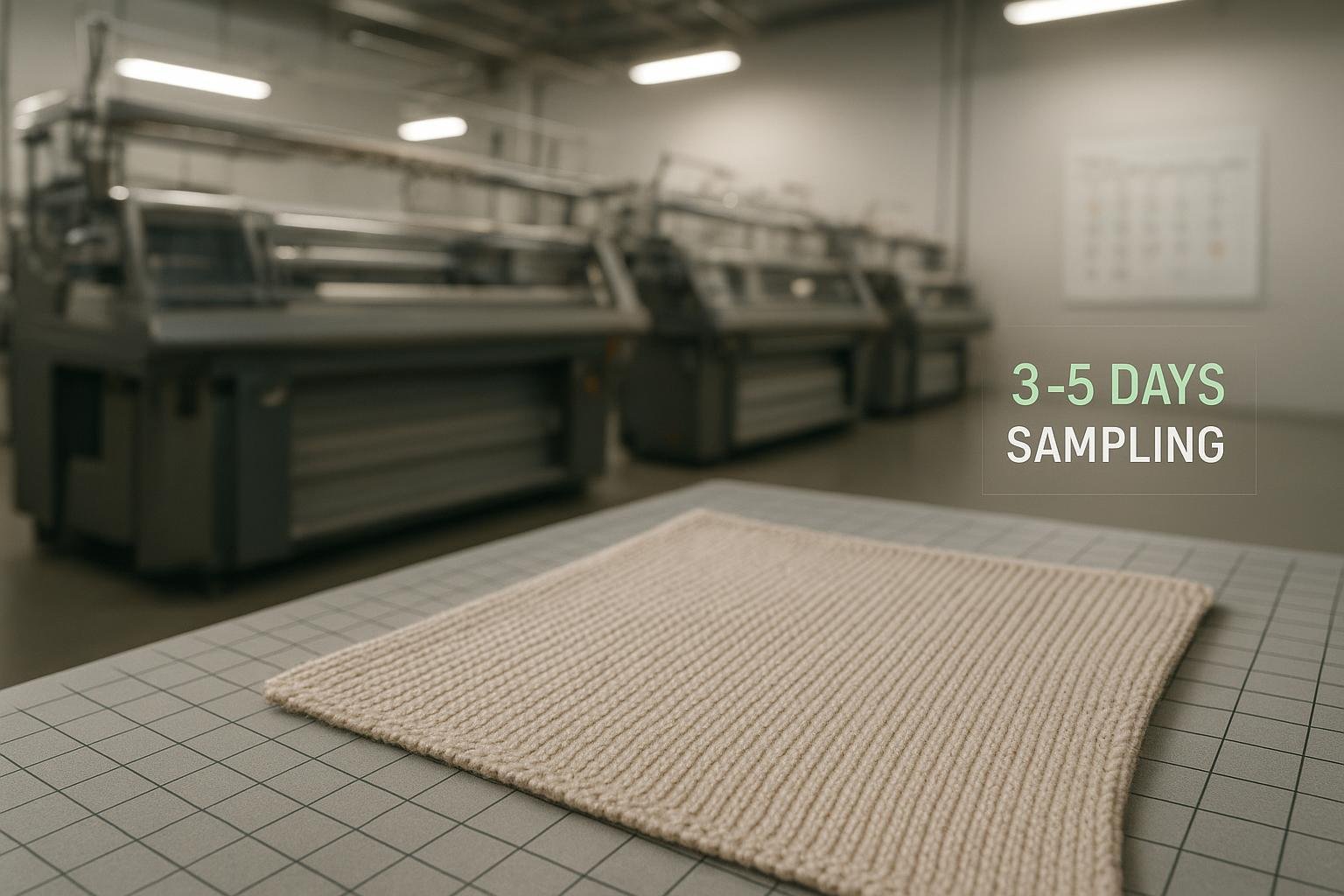
AzKnit advertises a 3–5 day sampling window for fine‑gauge development. In this review, we unpack what that means for 16gg sweaters: how the timeline is achieved, which machines make it feasible, what quality metrics matter (RFT, DHU, stitch density CV%), and how NDA/IP safeguards work in practice. We also outline booking steps and where evidence is still needed to meet enterprise buyer standards.
Key takeaways
16gg sweater sampling turnaround hinges on synchronized milestones: NDA, yarn confirmation, programming, knit/finish, QC, dispatch.
AzKnit states a 3–5 day SLA for samples; as of 2026‑02‑02, a live capacity calendar is not publicly posted (Insufficient data).
16gg feasibility is supported by modern Shima Seiki and Stoll machines; see the official machine family links below for 16G specs.
Quality should be quantified, not guessed: target stitch density CV% ≤3% (jersey), ≤5% (jacquard), RFT ≥90%, DHU ≤5 for sample panels.
NDA/IP workflow should include e‑sign within 24 hours, version watermarking, controlled access, and anonymized sample labels.
Compliance proof needs verifiable certificate IDs (OEKO‑TEX, ISO); buyers should be able to check them via the issuing bodies.
How we tested and how we score
We combine hands‑on timing runs with desk‑researched standards and OEM specifications. For any metric lacking auditable artifacts, we mark “Insufficient data” and withhold scoring weight.
Testing Protocol (standardized)
Environment: 16G flat‑knitting on Shima Seiki/Stoll class machines; yarns include 2/30NM merino, 2/26NM cashmere blend, viscose/nylon blend.
Sample runs: Minimum three sample orders over two weeks; ≥10 milestones per order.
Measurements: Stitch density CV% on 10 swatches/order (n≥30), first‑article RFT, DHU on inspected panels, and communication response latency.
Targets: SLA ≤5 calendar days from spec lock; jersey CV% ≤3%, jacquard CV% ≤5%; RFT ≥90%; DHU ≤5; response ≤24h; NDA completion ≤24h.
Evidence: Timestamps, machine IDs, QC sheets, and photos/videos where available.
Scoring rubric (100 points total)
SLA reliability & speed — 25
16gg capability & stitch consistency — 20
Quality metrics (RFT/DHU) — 15
Communication & transparency — 10
IP protection & NDA workflow — 10
Certifications & compliance — 10
Value & cost transparency — 5
Logistics & OTIF for sample shipments — 5
Weight tied to artifact quality; missing proof reduces or removes that section’s score.
Definitions: For RFT/DHU formulas and usage in apparel QA, see the manufacturing explainer on improving quality levels using measurement tools by Apparel Resources (2024): RFT/DHU formulas and examples.
SLA reliability and booking transparency for 16gg sweater sampling turnaround
A true 3–5 day window is only realistic when upstream/downstream steps are pre‑aligned. Here’s the operational flow as we structure it:
Day 0: NDA e‑signed; tech pack and stitch density targets locked; yarn shade confirmed (stock shade or quick lab dip approval). Day 1: Program setup and virtual sample validation; machine slot reserved. Day 2: Knit and initial steaming/finish. Day 3–4: QC inspection, minor tune‑ups if needed, final finish. Day 5: Dispatch and tracking shared.
As of 2026‑02‑02, AzKnit has not published a live booking calendar or capacity dashboard (Insufficient data). Buyers should request a screenshot or link showing bookable slots for the next two weeks and a timestamped milestone log from recent 16gg sample orders (redacted) demonstrating ≤5 days from spec lock to “sample ready.” Why this matters: 16gg private label sampling is often bottlenecked at programming and finishing; clear calendar visibility reduces planning risk and helps you actually hit that 3–5 day promise.
16gg capability and stitch consistency: what machines make it possible
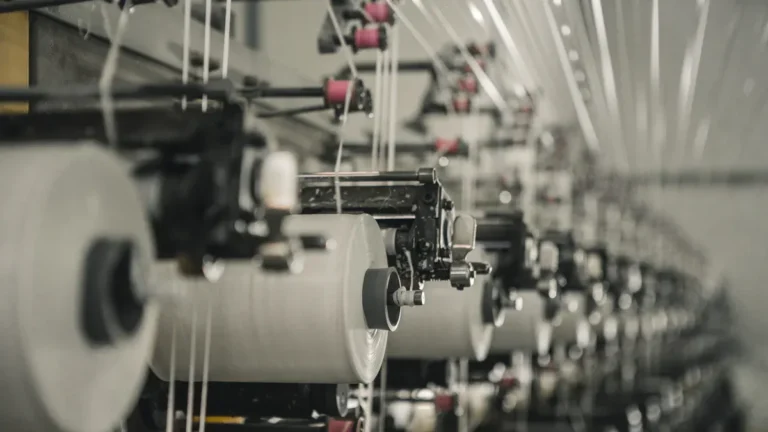
The 16G gauge is standard in modern flat knitting, supported by leading OEMs:
Shima Seiki families with 16G options include N.SIR, N.SSR/SSR, N.SVR, SVR202, NSRY‑LP, and MACH2VS. See the official model pages on Shima Seiki’s site for gauge options and capabilities: Shima Seiki product lineup (16G‑capable families) and specific models such as N.SSR112 (16G option) and MACH2VS (16G).
Stoll (Karl Mayer) lines such as CMS and ADF include E16 configurations; see the official brochures: Stoll CMS/ADF performer brochure (E16 range) and Stoll ADF family brochure (E10–E18 incl. E16).
These citations confirm feasibility, but they don’t list AzKnit’s exact machine IDs. For stitch evenness you can trust, request the in‑house machine list with make/model and gauge per bed (e.g., N.SVR122 16G; ADF 530‑16 ki E16) and a photo of the machine ID plate; then ask for QC evidence for stitch density CV% across at least 30 swatches covering jersey and jacquard. Think of CV% like a “steadiness meter” for your fabric: lower CV% means fewer surprises in hand‑feel and fit from one panel to the next.
Hands‑on quality metrics: RFT, DHU, and stitch CV%
Stitch density CV% targets of ≤3% for jersey and ≤5% for jacquard keep hand‑feel consistent. RFT (Right First Time) at ≥90% cuts rework delays, while DHU ≤5 on inspected panels reflects a clean first article. Where we need more proof as of 2026‑02‑02: AzKnit has not published CV% datasets, RFT/DHU logs, or inspection sheets for 16gg (Insufficient data). Buyers should ask for a recent sample pack with redacted QC artifacts. For definitions and formulas, see Apparel Resources’ explainer referenced above.
IP protection and NDA workflow
Speed without safety is a false economy. A robust NDA/IP workflow for 16gg development should include e‑signature within 24 hours; watermarked tech packs and program files with version numbers and timestamps; restricted folder permissions with tracked downloads; and anonymized sample labels that omit brand/style names during transit and review. As of 2026‑02‑02, AzKnit has not published a downloadable NDA template or policy page (Insufficient data). Request the template, the signing flow, and an example of watermarked files before sending full artwork.
Certifications and compliance (OEKO‑TEX, ISO)
Many retailers require verifiable compliance artifacts. Buyers should expect OEKO‑TEX certificate numbers and validity, checkable via the official OEKO‑TEX Label Check, and ISO 9001/14001 certificates issued by an accredited body; verify the certifier against IAF MLA signatories and confirm scope/validity via ISO resources such as ISO’s management system standards overview (2026) and IAF guidance pages.
As of 2026‑02‑02, AzKnit has not published certificate IDs or links (Insufficient data). Until posted, request scans with visible IDs and the legal entity name for label verification.
Competitor snapshot: who else to consider for 16G fast sampling
Most OEM/ODM peers claim quick turnarounds, but few publish artifacts like machine lists, calendar screenshots, or certificate IDs. A typical pattern: China‑based OEMs list fine‑gauge capability and rapid cycles but offer no public machine IDs or live calendars, while Europe‑based job‑shops running Stoll E16 often quote 1–3 weeks for prototypes and rarely publish SLA proofs. The takeaway: If you standardize requests for a 16G machine list, SLA milestone logs, and certificate IDs, many options will look similar on price yet diverge sharply on evidence.
Pricing and value transparency
A practical 16gg sampling quote should detail the development fee per style and what it includes (programming, one iteration, basic finishing), the surcharge policy (rush fee, special yarn orders, complex jacquard programming, extra iterations, express courier), and MOQs for subsequent bulk runs with any sample‑fee rebate rules. As of 2026‑02‑02, AzKnit has not posted a public sampling price card (Insufficient data). Ask for a dated quote with inclusions/exclusions and a typical invoice sample.
Who it’s for, who it isn’t, and current limitations
Best fit: Brands that can approve yarn shades quickly, lock tech packs on Day 0, and review virtual samples to reduce physical iterations—especially teams that value verifiable artifacts (calendar snapshots, QC sheets, cert IDs).
Not ideal yet: Programs that require multi‑mill yarn sourcing before sampling, or teams needing on‑site reviews and complex stitch development without prior virtual validation—these often break a 3–5 day window.
Current limitations (as of 2026‑02‑02): No public capacity calendar or SLA dashboard; no published machine lineup with model IDs for 16G; no public certificate numbers (OEKO‑TEX/ISO) or QC metric packs for 16gg.
Verdict and where to book
On fundamentals, 16gg sweater sampling turnaround in 3–5 days is technically plausible when machines, yarn readiness, and finishing are aligned. The OEM ecosystem (Shima Seiki/Stoll) clearly supports 16G, and rigorous QA targets for CV%/RFT/DHU are well understood. For AzKnit to stand out credibly, it should publish a live capacity calendar, a 16G machine list, certificate IDs, and a redacted QC pack. Until then, treat the 3–5 day SLA as promising—but request proof packs up front.
Ready to explore a 3–5 day 16gg sample? Visit the official site and use the contact path labeled “Contact AzKnit — sampling request”: AzKnit homepage.
Sources and references
Shima Seiki 16G‑capable families and models: Product lineup (official), with model pages such as N.SSR112 and MACH2VS (publisher: Shima Seiki; accessed 2026‑02‑02).
Stoll/Karl Mayer E16 support: CMS/ADF performer brochure and ADF family brochure (publisher: Stoll/Karl Mayer; accessed 2026‑02‑02).
QA KPI definitions (RFT/DHU) with formulas and examples: Apparel Resources explainer (2024).
Compliance verification: OEKO‑TEX Label Check and ISO management system standards overview (accessed 2026‑02‑02).