
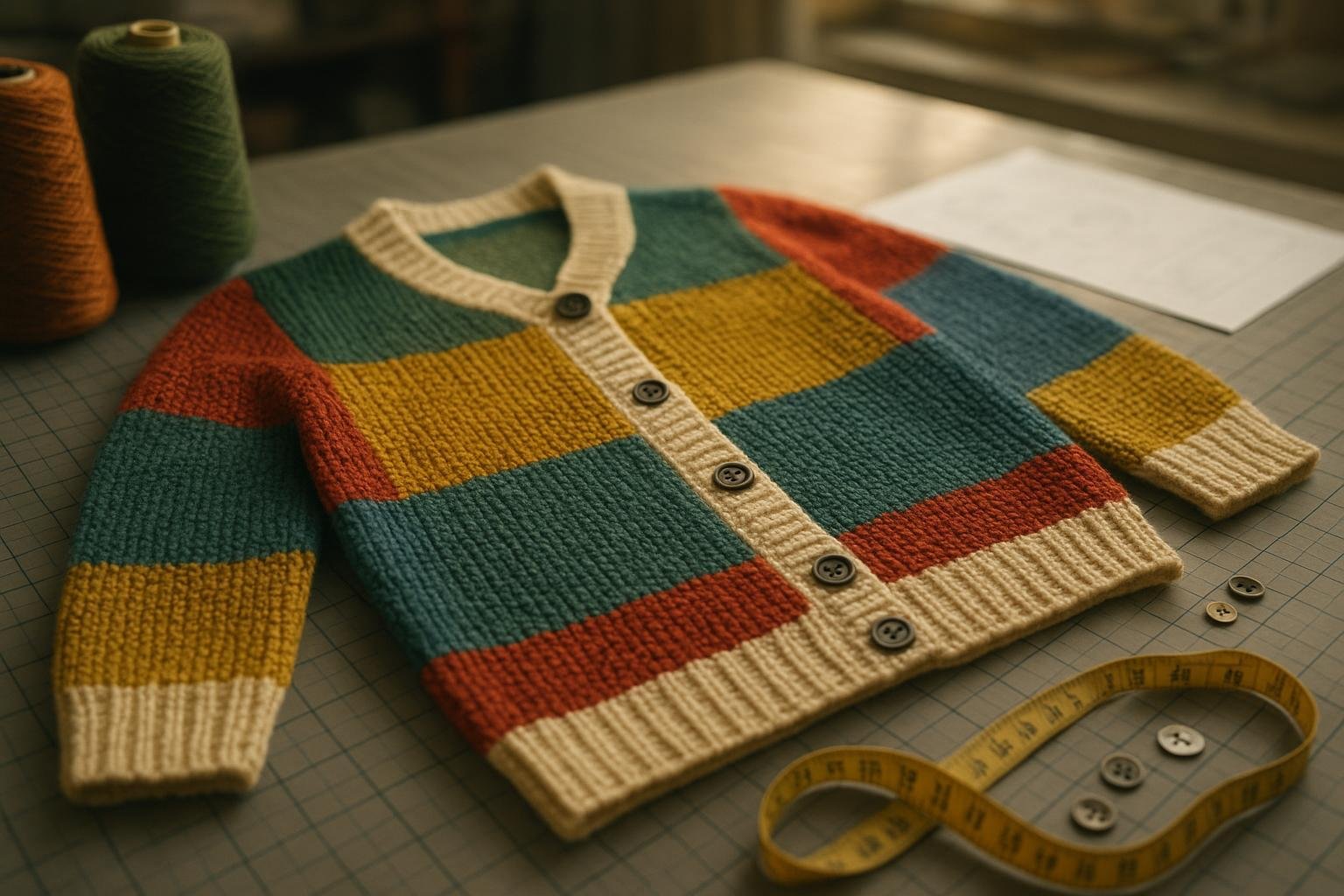
Producing a Harry Styles–inspired patchwork cardigan at low MOQs calls for more than a mood board. You need a tight materials plan, stitch choices that hold their shape, a square-by-square construction workflow, and quality gates that keep pilling, shrinkage, and color issues in check. This guide gives private‑label teams a practical path to a 3–5 day sample and about three weeks to bulk, without compromising IP safety or cost visibility. It’s also designed to match commercial‑investigational search intent for private label patchwork cardigan manufacturing, so you can move from research to reliable execution.
Key takeaways
Start with square stability: lock gauge, density, and target dimensions at swatch stage before any full sample.
Choose colorwork methods deliberately: intarsia for lighter panels with clean backs; jacquard for speed at the cost of extra yarn and thickness.
Hit the timelines by parallelizing work: knit pilot squares, prep trims, and block panels while the tech pack is finalized.
Control costs at low MOQs by limiting colors per garment, standardizing rib trims, and documenting stitch‑time per panel.
Bake in lab tests early: pilling, dimensional change after wash, and colorfastness need defined targets and retest triggers.
Stay IP‑safe by changing palette logic, panel order, and proportions—and avoiding brand names in product listings.
Who this is for
You’re a DTC founder, a creative lead, or a small buying team planning 50–500 units per color/style. You need a fast path from inspiration to a repeatable, IP‑safe product that passes wear tests and looks consistent across sizes. This ultimate guide focuses on private label patchwork cardigan manufacturing from a factory‑floor perspective.
Timelines for private label patchwork cardigan manufacturing
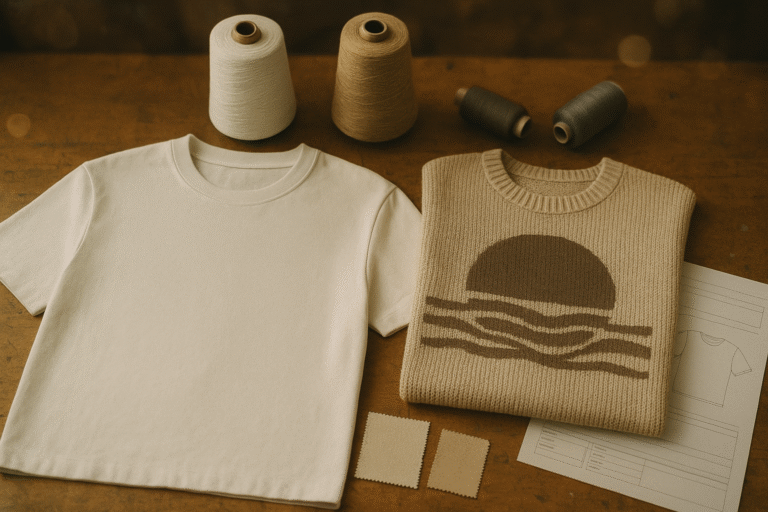
Fast sampling and swift bulk are earned upstream. To make 3–5 day samples and roughly three‑week production realistic, reserve sample capacity and start from a stock‑yarn shortlist so swatches can be cast on day zero. Approve two pilot squares first to validate stitch density, edge behavior, and blocked size; only then green‑light full‑panel knitting. Prepare trims in parallel—rib bands and collar strips can be knit while squares are produced and blocked. Finally, freeze a first‑round size set and tolerances early. You can refine grade rules later, but don’t stall the first physical sample. This parallelization removes idle time between steps—each square functions as a micro work order that feeds final assembly.
Materials and yarn engineering for stable squares
Square stability determines everything—seams lie flatter, panels align, and the cardigan hangs cleanly.
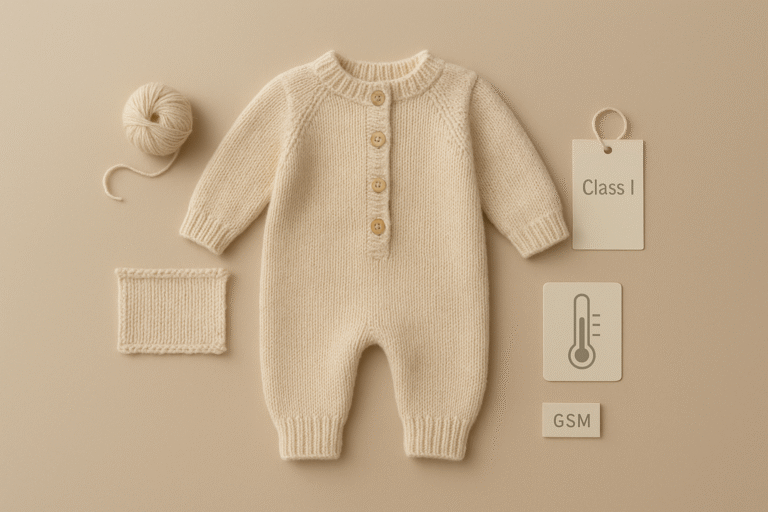
Density and GSM: For chunky, multi‑panel builds, aim for a density window that avoids loose edges. Start by swatching to a target stitches‑per‑10 cm and rows‑per‑10 cm, then weigh the blocked swatch to estimate GSM and yarn yield per panel. Practical, swatch‑based yield math is standard practice—measure grams per square area and scale to garment area plus waste. Useful primers include the relation between yarn count and machine gauge often referenced in production planning, and the European Scientific Journal study (2017) on how gauge choices impact stitch density and GSM.
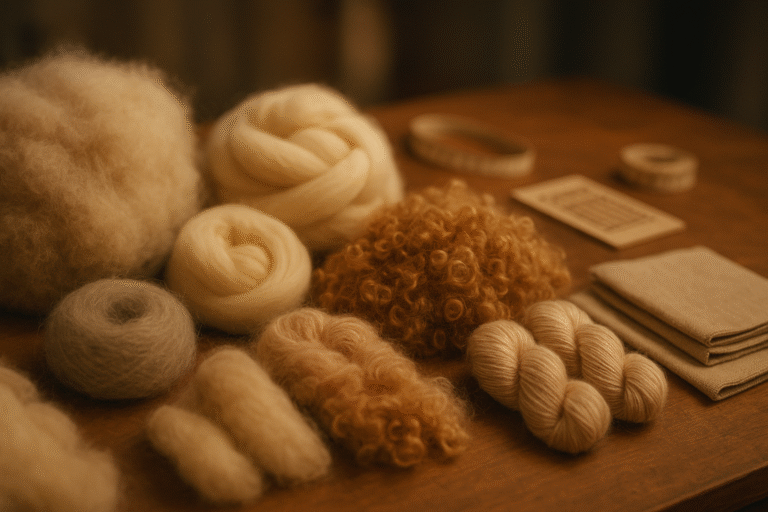
Fiber choices: Merino‑rich blends bring elasticity and recovery; cashmere or alpaca adds loft but may fuzz. Cotton or cotton‑rich blends give structure but need tighter density to curb growth. Recycled and certified fibers are viable if the gauge is controlled.
Gauge realism: Finer gauges boost stitch time on intarsia; looser gauges risk oversized growth after blocking. Balance handle with square control.
For quick context, planners often cite the engineering link between yarn count and machine gauge to select viable programs, and empirical research from the European Scientific Journal reinforces how gauge selections influence weight and drape.
Stitch and gauge choices for color blocks
Two colorwork approaches dominate production of multi‑color squares and panels, each with trade‑offs in handle, cost, and speed.
Intarsia blocks: Separate carriers per color create single‑layer panels with a clean reverse and minimal bulk—ideal for large blocks and clear geometry. It typically runs slower and requires skilled set‑up, which can increase unit cost at low MOQs. A buyer‑friendly explainer in Both Sides Now contrasts intarsia with other techniques in plain language and shows why it can cost more to make.
Jacquard floats: Faster to knit and good for repeating motifs; however, floats add thickness and yarn consumption and can pucker if tension is off. Technical overviews like Knitwear.io’s comparison of intarsia and jacquard summarize the speed and yarn‑use trade‑offs for manufacturing teams.
Decision frame: If your design favors bold, large color panels and lighter drape, choose intarsia or true pieced squares. If you need speed and micro‑motifs, jacquard is efficient—just plan for extra GSM and potential snag care.
Construction and assembly with clean seams
Patchwork only looks premium if the seaming and finishing are tight. Focus on three controls:
Block to size: Pin and block each square to its target dimensions before joining. Use fiber‑appropriate methods—hover steam animal fibers, wet‑block cotton/linen, and be gentle with acrylics to avoid “killing” the yarn. Blocking primers used by knit practitioners explain when to use steam, wet, or dry methods and fiber‑specific cautions; two accessible overviews are Gathered’s blocking guide and Mary Maxim’s fiber‑specific tips.
Mattress stitch linking: Join right sides together, picking up consistent horizontal bars along the same columns. Tension seams in short runs; snug every 4–5 cm to keep the seam flat. Expert how‑tos from Interweave and Nimble Needles detail vertical, horizontal, and perpendicular mattress stitch variants and show how to avoid ridge build‑up.
Rib trims that stabilize: Knit collar, cuff, and waistband ribs at a smaller needle or tighter program setting to control stretch and recover shape.
Tech pack to PPS workflow with one practical example
A clean tech pack keeps speed and quality on track. At minimum, include a panel map with square sizes, stitch types, and color codes; target density windows (stitches/rows per 10 cm), blocked square dimensions, and tolerances; trim specs with needle size or program settings; a measurement chart per size with grade rules; and lab test targets with acceptance criteria and retest triggers.
Example workflow: Day 0, approve the palette and two pilot squares; confirm density windows and blocked dimensions. Days 1–2, knit remaining panels in parallel, prepare ribs, and run quick pilling pre‑checks on pilot swatches. Day 3, assemble the sample with mattress stitch, light press, take measurements, fit, and note adjustments.
Neutral vendor example: At AzKnit — Disclosure: AzKnit is our product — a pre‑booked sample slot, an in‑stock yarn card, and a modular assembly cell support a 3–5 day sampling window when designs stay within a constrained gauge and color palette. Bulk production in about three weeks is achievable once PPS is approved and materials are available. This is an example capability range rather than a universal guarantee; timelines vary by design complexity and yarn readiness. Comparable outcomes are also feasible with regional OEMs or local artisanal knit studios when they offer stock yarns, coordinated assembly, and early QA gates.
Cost drivers and example bands at low MOQs
Costs vary by fiber grade, color count, stitch method, and assembly complexity. Use the table below as an orientation tool for 50–500 units per color/style. These are non‑binding example bands to help teams budget and compare quotes.
Cost driver | Impact on cost | Typical band for low MOQs |
|---|---|---|
Fiber and yarn grade | Merino/cashmere blends increase cost; cotton/recycled blends often lower | Material input often 30–55% of unit cost |
Color count per garment | Each additional color increases yarn handling, potential waste | +$0.50–$1.50 per extra color per unit |
Technique choice | Intarsia is slower; jacquard uses more yarn due to floats | ±$1.00–$3.00 per unit vs baseline |
Square count and seam length | More panels and longer seams add labor time | +$0.20–$0.60 per additional seam |
Trims and buttons | Heavier ribs, specialty buttons, branded labels add up | $0.80–$2.50 per unit |
Lab tests and compliance | Pilling, wash, colorfastness, safety tests allocation | $0.10–$0.40 per unit (batch‑amortized) |
Logistics and duties | Vary by route, INCOTERMS, HS code | 8–25% of landed cost, market‑dependent |
How to reduce variance: limit colors per style, standardize ribs and buttons across SKUs, and document stitch‑time per square to avoid surprise labor charges in private label patchwork cardigan manufacturing programs.
QC and compliance targets that prevent returns
Write lab targets into your tech pack and enforce them at PPS and TOP stages. Typical buyer‑side acceptance bands include:
Pilling resistance: Many brands target Grade 3–4 or better on ISO 12945 methods at 2,000–5,000 cycles, depending on fabric weight. A buyer‑friendly checklist for ISO 12945‑2 Martindale pilling helps teams define methods and thresholds.
Dimensional change after laundering: Use AATCC 135 or ISO 6330 methods. Aim for ≤3–5% change after specified wash cycles. Production planning guides for home laundering tests explain the procedures and grading logic.
Colorfastness: For washing, crocking, and light, methods like AATCC 61/8 and ISO 105 series are standard. Overviews from accredited labs outline common targets of Grey Scale Grade 3–4 or better.
Button pull strength: Adult cardigans often specify ≥70–75 N minimum; children’s or safety‑sensitive specs may require ≥90 N. Testing overviews describe jigs, rates, and pass criteria.
If you’re documenting a factory standard for private label patchwork cardigan manufacturing, place these targets on the spec sheet next to each test method and call out retest triggers and hold points.
Reference primers to share with lab partners:
A buyer‑oriented Martindale pilling checklist aligned to ISO 12945‑2 provides test setup cues and target grading bands: https://knitwear.io/iso-12945-2-martindale-pilling-checklist/
Intertek’s colorfastness testing overview summarizes common AATCC and ISO methods in buyer language: https://www.intertek.com/textiles-apparel/colorfastness-testing/
Practical summaries of button pull strength testing describe fixtures and typical acceptance thresholds: https://www.ametektest.com/learningzone/standards/international-testing-standards-for-textiles-and-fabrics
IP‑safe inspired design and marketing
This guide is about producing an original, inspired‑by interpretation—not a replica. Two things matter: your design choices and your marketing language.
Design choices: Change the color palette logic, square sequencing, collar and placket proportions, button scale, and the stitch mix. Create and archive your own charts and panel maps to document originality. Community builds and roundups that reference the official JW Anderson release, such as Coastal Crochet’s Harry Styles inspired Cardigan! overview, show how makers vary stitches and layouts while keeping a patchwork spirit: https://coastalcrochet.com/2023/06/12/harry-styles-inspired-cardigan-%F0%9F%8E%B6/
Marketing language: Avoid using other brands’ or celebrities’ names in product titles and listings. In the U.S., the United States Patent and Trademark Office explains how trademarks and trade dress protect source identifiers in fashion and what conduct to avoid in branding and listings: https://www.uspto.gov/about-us/events/fashion-beauty-and-intellectual-property-trademarks. In the EU, the Official Journal entry for Regulation (EU) 2024/2822 provides the current design law framework to review with counsel: https://eur-lex.europa.eu/eli/reg/2024/2822/oj
Note: This section is educational and not legal advice. When in doubt, consult qualified counsel in your target markets.
Mini case in brief
A small DTC label needed 200 units in two colors for a pre‑sale window. The team locked a four‑color palette and two stitch types at swatch stage, approved two pilot squares on day zero, and prepared 2×2 ribs in parallel. The sample was assembled on day three, with minor tension adjustments noted for bulk. Lab pre‑checks reached Grade 4 on pilling at 2,000 cycles and <3% dimensional change post‑wash on the swatch, so the PPS proceeded. With a modular assembly cell and stock‑yarn availability, bulk cleared final QC at just over three weeks, hitting measurements within tolerance and producing consistent square alignment across sizes.
Next steps and FAQs
What file should I share first? Send a concise tech pack with a panel map, stitch list, palette, and density targets, plus two reference photos for silhouette only.
How many colors are too many? Past five colors per garment, expect rising yarn waste and handling costs. Keep version one to three or four.
Can I mix intarsia and pieced squares? Yes. Many teams run jacquard for repeating micro motifs, intarsia for large blocks, and piece simple solids to keep bulk in check.
What does success look like? Clean seams, square‑level dimensional consistency after wash, pilling grades at or above target, and a drape that matches the brand’s visual language.
Select sources embedded above for context and further reading:
Blocking methods and fiber cautions: Gathered’s blocking guide and Mary Maxim’s tips — https://www.gathered.how/knitting-and-crochet/crochet/how-to-block-crochet; https://www.marymaxim.com/blogs/yarn/can-you-block-polyester-yarn-tips-and-techniques
Mattress stitch explainers: Interweave’s technique article; Nimble Needles walk‑through — https://www.interweave.com/article/knitting/mattress-stitch-a-knitters-best-friend/; https://nimble-needles.com/stitches/how-to-do-a-mattress-stitch-in-knitting/
Intarsia vs. jacquard: Knitwear.io’s comparison and a buyer‑friendly primer — https://knitwear.io/jacquard-intarsia-knit-techniques/; https://putthison.com/both-sides-now-intarsia-and-other-knits/
Pilling and laundering tests: ISO 12945‑2 checklist; home laundering overview — https://knitwear.io/iso-12945-2-martindale-pilling-checklist/; https://www.onlineclothingstudy.com/2020/01/garment-testing-home-laundering-methods.html
Colorfastness overview: Intertek — https://www.intertek.com/textiles-apparel/colorfastness-testing/
IP education and EU design framework: USPTO fashion trademarks page; EUR‑Lex OJ entry for Regulation (EU) 2024/2822 — https://www.uspto.gov/about-us/events/fashion-beauty-and-intellectual-property-trademarks; https://eur-lex.europa.eu/eli/reg/2024/2822/oj