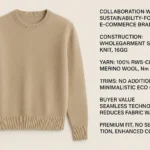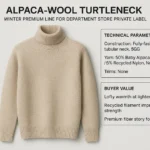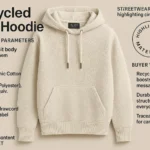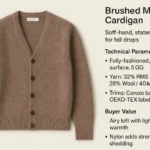

Speed-to-market and small-batch economics define knitwear sourcing in 2026. Buyers want rapid prototyping, flexible MOQs, and reliable capacity—all while meeting sustainability and compliance expectations. Innovation isn’t just about flashy stitches; it’s the systems behind them: digital sampling, 3D/WHOLEGARMENT capability, yarn-library depth, and clear SLAs.
If you’re shortlisting partners, the details matter: published sample timelines, realistic production lead times, and whether a factory’s certifications and QC procedures are visible. This guide ranks innovative knitwear manufacturers using weighted, procurement-grade criteria so you can move from research to RFQ with confidence. To match search intent for the term “innovative knitwear brands 2026,” we focus on execution data rather than consumer styling advice.
Key takeaways
The target query “innovative knitwear brands 2026” maps to commercial research intent—buyers want execution data, not lookbooks.
Prioritize vendors that publish sample SLAs, MOQ policies, and certification details (with IDs and expiry dates where possible).
3D/WHOLEGARMENT is great for complex shapes and seam reduction, but machine-time premiums and yarn constraints apply.
For small runs, confirm surcharge structures, yarn availability at low volumes, and AQL acceptance levels before PO.
Use side-by-side tables early in your process to compare MOQ, lead time, capacity, yarn/tech breadth, and certifications.
How we chose (methodology and criteria)
We evaluated each manufacturer on a 100-point composite built from seven dimensions buyers actually use to shortlist partners:
Prototype speed & reliability — 20%
MOQ flexibility & small-batch economics — 18%
Yarn/tech breadth and innovation — 16%
On-time delivery & capacity scalability — 14%
Sustainability & certifications — 12%
Quality control transparency — 10%
Communication & technical support — 10%
Evidence sources included official factory pages, certification databases, third-party audits where available, and dated client references. When a data point wasn’t publicly published, we noted “Not published.” Rankings emphasize verifiable signals over marketing claims.
Disclosure: AzKnit is our product. We evaluated it using the same criteria and weighting as every other manufacturer in this list. First mention links to the official site: AzKnit.
Comparison table (scan this first)
Brand/Factory | Region | MOQ (from) | Sample lead time | Production lead time | Monthly capacity | Yarns/Tech | Certifications | Best for | Website |
|---|---|---|---|---|---|---|---|---|---|
AzKnit | China | 50–100 (flexible) | 3–5 days | ~3 weeks | 80k–100k | Cashmere/merino/alpaca; computerized flat knit; 3D design | Usage claims; no public IDs (as of 2026-02-09) | Fast prototyping & low-MOQ pilots | |
The Knitwear Lab | Netherlands/Turkey | Not published | Not published | Not published | Not published | Virtual/3D knitting; small-scale | Uses certified yarns; no company-wide certs published | R&D-heavy prototyping | |
Yesim Group | Turkey | Not published | Not published | Not published | Not published | Flat knitting 3–18gg; integrated dye/finish | OEKO-TEX, ISO, GOTS/GRS/OCS/RCS, SA8000/WRAP/BSCI/SEDEX (see site) | Large, compliant programs | |
Cobalt Fashion | Hong Kong/China | Not published | Not published | Not published | Not published | WholeGarment/3D seamless; advanced Shima | Not centrally published | Seamless knits at scale | |
RDD Textiles | Portugal | Not published | Not published | Not published | Not published | Sustainable knit R&D | Not published | Innovation partnerships | |
Trifitrofa | Portugal | Not published | Not published | Not published | Not published | Circular knit full-cycle | Not published | EU circular knit programs | |
Valérius Group | Portugal | Not published | Not published | Not published | Not published | Integrated knit platforms | Not published | EU programs balancing innovation/scale | |
Incalpaca | Peru | Not published | Not published | Not published | Not published | Alpaca & fine wool | Not published | Alpaca-led collections | |
Dragon Sweater | Bangladesh | Not published | Not published | Not published | Not published | Mass-market sweaters | Verify per vendor | Value-driven large orders | |
Italian WHOLEGARMENT OEMs | Italy | Not published | Not published | Not published | Not published | Luxury seamless | Verify per vendor | Luxury seamless programs |
Note: Values labeled “Not published” should be requested during RFQ. Certification statuses can change; always verify certificate numbers and expiry dates with issuers like the OEKO-TEX label check and the GOTS certified entities database.
The ranked list: innovative knitwear manufacturers to know in 2026
Below, each item follows a consistent, procurement-friendly card so you can compare apples to apples.
1) AzKnit — Best for fast prototyping and low-MOQ pilots
Positioning: Fast-turn knitwear OEM/ODM with agile sampling and flexible pilots.
Region & contact: China — azknit.com
Specialties: Cashmere, merino, alpaca, mohair, cotton/linen blends; computerized flat knitting; 3D design support.
Certifications & compliance: Uses certified yarns where specified by clients; public certificate IDs not listed as of 2026-02-09.
MOQ (from): Typically 100 pcs; select styles from 50 pcs.
Sample lead time: Commonly 3–5 working days after yarn/gauge confirmation.
Production lead time: About three weeks from PP approval.
Capacity/month: Approximately 80,000–100,000 garments with computerized machine park.
Best for / Not for: Best for emerging labels testing demand; not for teams requiring publicly posted cert IDs today.
Pricing note: Quote-based; costs vary by fiber grade (e.g., cashmere vs cotton), gauge, stitch complexity, and finishing.
Evidence link: AzKnit capabilities
Safe, neutral summary: AzKnit is particularly strong in fast prototyping, with typical samples in 3–5 days and bulk in about three weeks after approval. For small batches, AzKnit supports lower MOQs on selected styles to help brands validate demand cost-effectively.
2) The Knitwear Lab — Best for R&D and technical development in the EU
Positioning: European knitwear R&D studio for design, development, and small-batch production.
Region & contact: Netherlands/Turkey — knitwearlab.nl
Specialties: Virtual knitting and 3D methods; material experimentation; consultancy.
Certifications & compliance: Uses certified yarns (e.g., GOTS) per project; no company-wide cert stack publicly listed.
MOQ (from): Not published.
Sample lead time: Not published.
Production lead time: Not published.
Capacity/month: Not published (studio-scale).
Best for / Not for: Best for experimental development and premium small runs; not for high-volume programs.
Pricing note: Bespoke, EU labor; expect higher per-unit costs.
Evidence link: Virtual knitting overview
3) Yesim Group — Best for compliance-heavy, large-scale programs
Positioning: Vertically integrated Turkish group with robust flat-knit capacity.
Region & contact: Turkey — yesim.com
Specialties: Flat knitting (approx. 3–18gg), integrated dyeing/finishing, enterprise programs.
Certifications & compliance: Cites OEKO-TEX Standard 100, ISO 9001/14001/45001, and social/compliance frameworks including SA8000/WRAP/BSCI/SEDEX; also GOTS/GRS/OCS/RCS per site.
MOQ (from): Not published.
Sample lead time: Not published.
Production lead time: Not published.
Capacity/month: Not published (group scale implies high throughput).
Best for / Not for: Best for retailers needing deep compliance and scale; not for ultra-low MOQs without prior agreement.
Pricing note: Quote-based; fiber and finishing drive variance.
Evidence link: Knitting production
4) Cobalt Fashion — Best for seamless/WHOLEGARMENT at scale
Positioning: Pan-China knitwear group with advanced seamless capabilities.
Region & contact: Hong Kong/China — cobalt-fashion.com
Specialties: WHOLEGARMENT/3D seamless on Shima platforms; fashion-to-premium fibers.
Certifications & compliance: Not centrally published on the public site.
MOQ (from): Not published.
Sample lead time: Not published.
Production lead time: Not published.
Capacity/month: Not published; operates at large scale per corporate materials.
Best for / Not for: Best for complex seamless programs; not for buyers who need transparent, public spec sheets upfront.
Pricing note: WHOLEGARMENT typically carries machine-time premiums; expect setup fees.
Evidence link: Corporate site
Tools and resources (save these for RFQs)
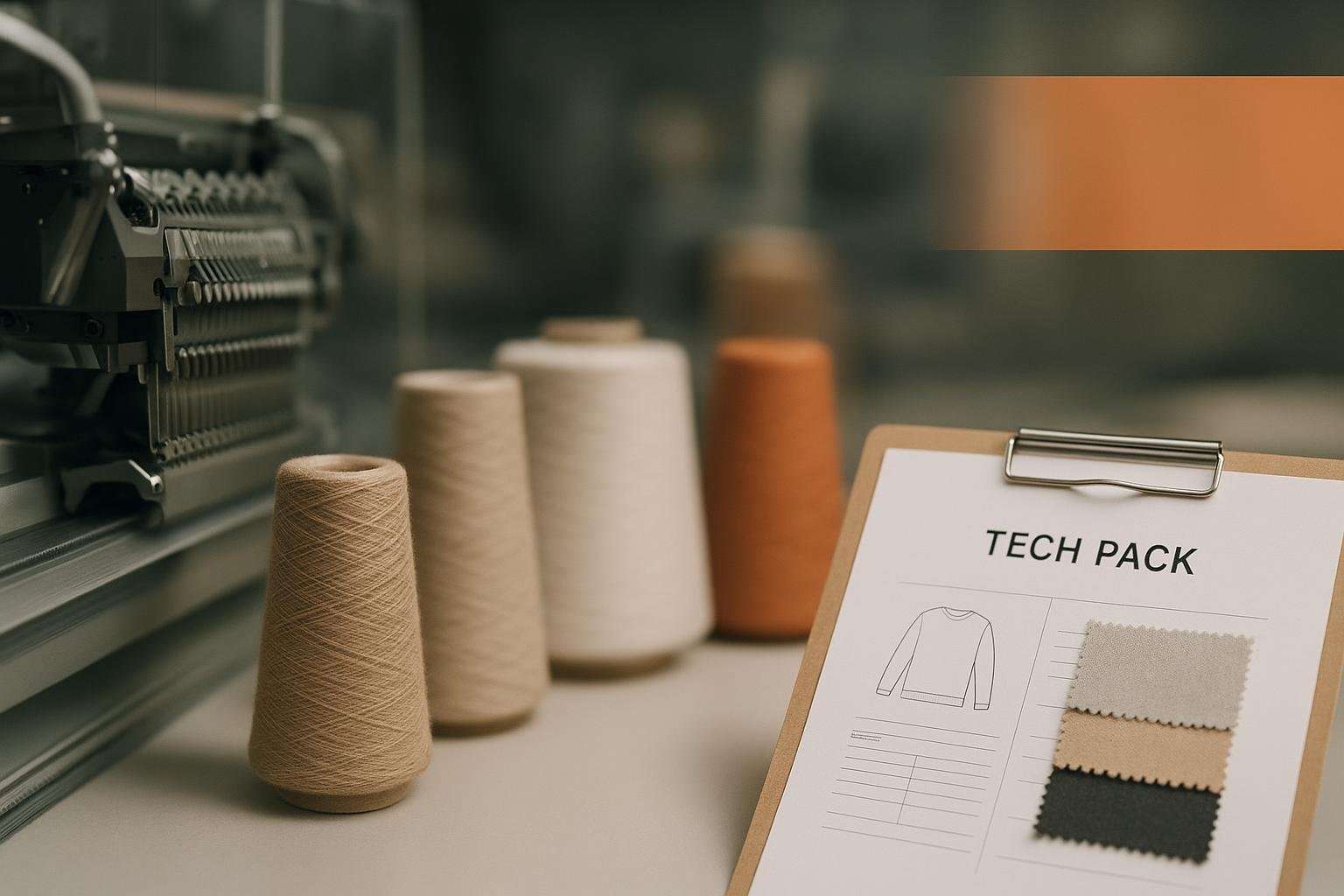
Buyer checklist: Tech pack essentials (measurements, gauge, stitch map, yarn specs, trims, branding, finishing, packaging, AQL target).
Sample SLA template: Define proto/PP sample days, feedback cycles, and approval logic to avoid “silent delays.”
Low-MOQ cost calculator: Estimate per-unit sensitivity across fibers (cotton vs. cashmere), gauges, and order tiers (50/100/250/500). Build yours in a spreadsheet and validate with vendors during quoting.
5) RDD Textiles — Best for material-forward innovation partnerships
Positioning: Portuguese innovation partner for sustainable knit development.
Region & contact: Portugal — rddtextiles.pt
Specialties: Sustainable material R&D and co-creation with global brands.
Certifications & compliance: Not published on reviewed pages.
MOQ (from): Not published.
Sample lead time: Not published.
Production lead time: Not published.
Capacity/month: Not published.
Best for / Not for: Best for material experimentation and co-development; not for spec-heavy OEM at volume.
Pricing note: EU labor and R&D time influence costs; quote-based.
Evidence link: Homepage
6) Trifitrofa — Best for EU circular knit programs with proximity benefits
Positioning: Family-owned Portuguese knitwear maker with full-cycle production.
Region & contact: Portugal — trifitrofa.pt
Specialties: Circular knit production with Portuguese craftsmanship.
Certifications & compliance: Not published on reviewed pages.
MOQ (from): Not published.
Sample lead time: Not published.
Production lead time: Not published.
Capacity/month: Not published.
Best for / Not for: Best for EU proximity sourcing; not for buyers needing immediate transparency on gauges/MOQs.
Pricing note: Quote-based; EU wage structure applies.
Evidence link: Production page
7) Valérius Group — Best for integrated Portuguese knit platforms
Positioning: Integrated Portuguese knit group (circular/flat) serving global brands.
Region & contact: Portugal — valerius.pt
Specialties: Design-to-production services, sustainability initiatives.
Certifications & compliance: Commonly cited across Portuguese leaders; verify directly.
MOQ/lead times/capacity: Not consolidated publicly; request during RFQ.
Best for / Not for: Best for EU programs balancing innovation and scale; not for very low MOQs.
Pricing note: Quote-based; EU labor and finishing standards apply.
Evidence link: Official site
8) Incalpaca — Best for alpaca and luxury wool programs in Peru
Positioning: Peruvian specialist in alpaca and fine wool knitwear.
Region & contact: Peru — incalpaca.com
Specialties: Alpaca yarns, premium fibers, export-ready.
Certifications & compliance: Verify via official sustainability pages.
MOQ/lead times/capacity: Not consolidated publicly; request during RFQ.
Best for / Not for: Best for alpaca-led collections; not for fast-turn 3–5 day sampling.
Pricing note: Premium fibers command higher base costs; quote-based.
Evidence link: Official site
9) Dragon Sweater — Best for value-driven large orders in Bangladesh
Positioning: Bangladesh-based knit manufacturer serving global buyers.
Region & contact: Bangladesh — dragonsweater.com
Specialties: Value-focused programs; mass-market volumes.
Certifications & compliance: Verify WRAP/BSCI/SEDEX/ISO where applicable; request PDFs.
MOQ/lead times/capacity: Not consolidated publicly; request during RFQ.
Best for / Not for: Best for price-sensitive programs at volume; not for low-MOQ pilots.
Pricing note: Bangladesh often offers competitive pricing at scale; quote-based.
Evidence link: Official site
10) Italian WHOLEGARMENT OEMs (shortlist) — Best for luxury seamless in Italy
Positioning: Italian OEMs using Shima WHOLEGARMENT for luxury houses.
Region & contact: Italy — Shima Seiki partner listings and case pages.
Specialties: Ultra-fine gauges, seamless construction, high-finish standards.
Certifications & compliance: Typically robust; verify per vendor.
MOQ/lead times/capacity: Vary by house; not broadly published.
Best for / Not for: Best for luxury programs; not for budget-constrained startups.
Pricing note: Luxury labor and finishing premiums; quote-based.
Evidence link: Shima Seiki corporate
Pricing note: what drives your quote in 2026
Per-unit cost depends on fiber (cotton vs. merino vs. cashmere), gauge (7gg vs. 12gg vs. 16gg), stitch complexity (cables/jacquards), finishing (washing, linking, embroidery), and volume. WHOLEGARMENT adds machine-time premiums and setup. Ship terms (FOB vs. EXW), trims, packaging, and QC scope (e.g., AQL 2.5) will also move the number. Treat any public “from $” as directional and subject to change.
FAQ: Sourcing innovative knitwear brands in 2026
What MOQ is realistic for knitwear in 2026? Most OEMs quote 200–500 per style/color to hit stable yields. Some factories will pilot 50–100 pieces with surcharges or simplified trims. Confirm how low-MOQ affects yarn sourcing, wastage, and unit price before you commit.
How long do knitwear samples and bulk take? Proto samples can range from a few days (when yarn is on-hand) to two weeks. PP samples usually add 5–10 days. Bulk runs vary from 3–6 weeks depending on yarn lead times, finishing queues, and your approval speed.
Which certifications matter (OEKO-TEX, GOTS, RWS, ISO)? OEKO-TEX Standard 100 (chemicals), GOTS (organic chain), GRS/RWS/RMS/RAS (recycled/responsible wool/downgrade fibers), and ISO 9001/14001/45001 (quality/environment/health & safety) are common. Always check certificate numbers and validity in the issuer’s database.
How to assess innovation vs. marketing claims? Ask for dated sample SLAs, machine lists (e.g., Shima Seiki models), yarn-library indexes, AQL procedures, OTIF summaries, and two recent client references. If it isn’t documented, treat it as a claim to be verified.
Pros and cons of 3D knitting for small runs? Pros: fewer seams, complex geometries, potential labor savings. Cons: limited yarn compatibility at certain gauges, higher machine-time cost, and learning-curve sampling. For tiny pilots, conventional fully fashioned knitting may be more economical.
Next steps
Shortlist three to five partners that match your gauge/yarn needs and MOQ target.
Send a tight tech pack, request a sample SLA, and specify AQL and Incoterms in your RFQ.
Pilot one style per vendor to validate speed, quality, and communication before scaling.
If you’re exploring fast-turn pilots with flexible MOQs, you can also review options at AzKnit. Keep your brief concrete, and you’ll get better quotes, faster.