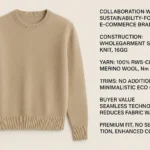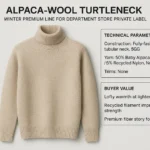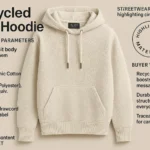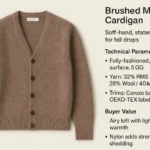

If you’re scoping next season’s sweaters and debating Fisherman knit versus Aran knit, here’s the practical, factory‑ready answer. This guide clarifies what each style really means in production terms—stitch architecture, gauge (GG), yarn systems, GSM, construction, QC/shrinkage control—and how those choices affect MOQ, lead time, and landed cost in 2026.
Key takeaways
Choose Fisherman (gansey/Guernsey or dense fisherman’s rib) when you need rugged, dense fabrics, simpler linkage, and faster throughput. Expect higher yarn grams for full fisherman’s rib.
Choose Aran when your brief prioritizes heritage‑rich textures and premium storytelling (cables, diamonds, honeycomb). Plan extra minutes for panel alignment and linking, especially at finer gauges.
Yarn and gauge drive cost: fisherman’s rib typically uses about 30–40% more yarn than comparable stockinette; complex Aran panels also increase grams and minutes—validate with swatches before costing.
QC controls differ: ribs demand growth/recovery checks; Aran needs stitch definition, panel symmetry, and seam/link integrity checks. Use ISO 6330/AATCC TM135 for shrinkage and ISO 12945‑2 for pilling.
There’s no single winner. Make the call by scenario: workwear utility and fast test runs favor Fisherman; premium capsules and certified luxury yarns often favor Aran.
What each style means in production terms
Fisherman (gansey/Guernsey)
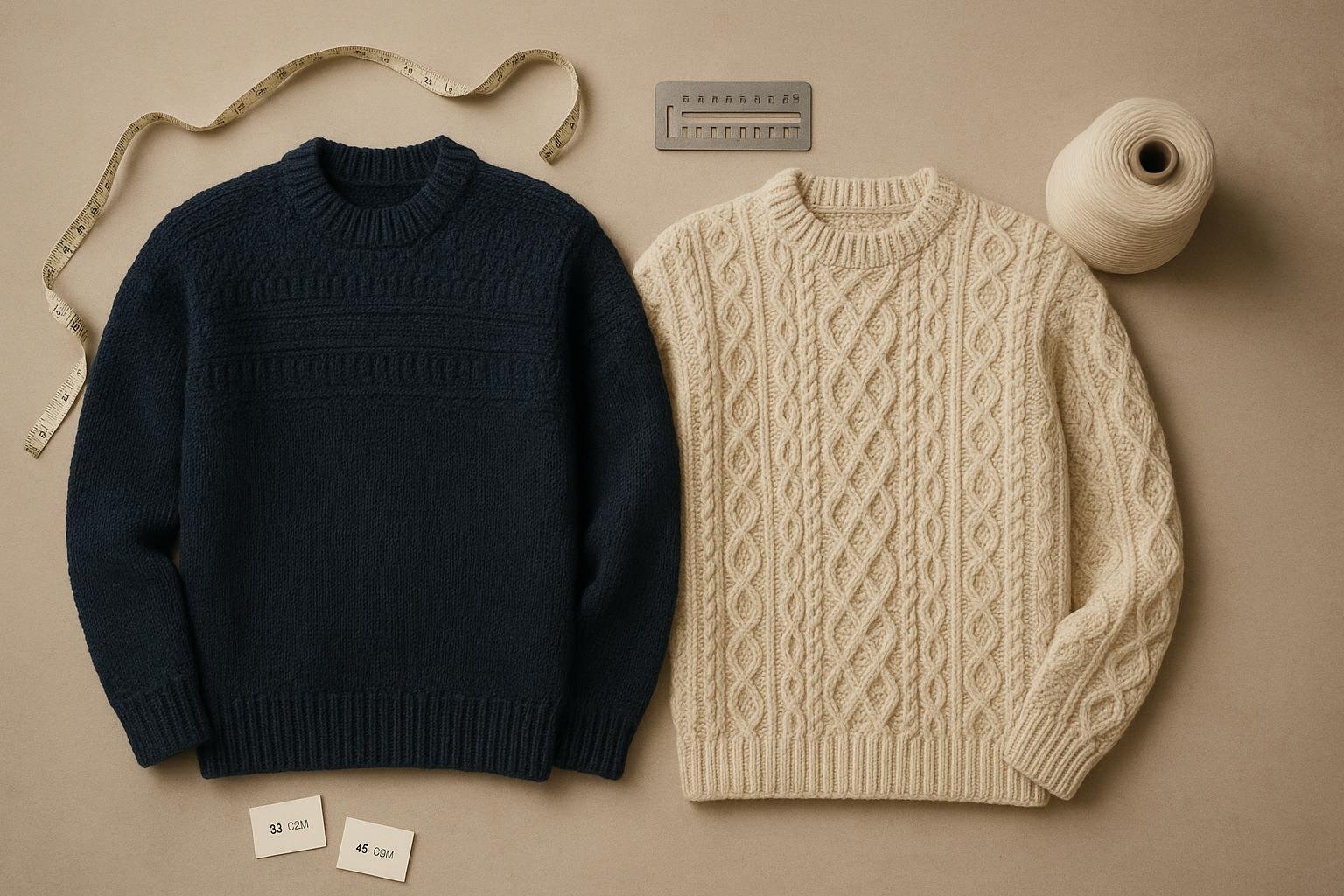
Historically built for North Sea and Channel fishermen, gansey/Guernsey sweaters are dense, abrasion‑resistant knits—often worked in the round to the armholes with underarm gussets and strategic knit‑purl motifs. That heritage translates in factories to tighter mid‑fine gauges, stockinette‑dominant programs, and reduced linking complexity compared with heavy panel work. See museum and maker summaries in Modern Daily Knitting’s feature (2026 access) for corroborating details on construction and density.
Why it matters in production: dense fabric at 7–10GG equivalents is durable and wind‑shedding; simpler programs can improve throughput and reduce hand‑linking.
Reference: cultural/technical overview via the Modern Daily Knitting gansey feature (2026 access): gansey overview at Modern Daily Knitting.
Fisherman’s rib (aka shaker; brioche‑related)
Fisherman’s rib creates deep, lofty, reversible ribs. It’s visually “chunky,” thermally warm, and yarn‑hungry. Tutorials and technique explainers align on higher yarn consumption versus stockinette; Nimble Needles (2026 access) notes approximately +30–40% yarn for full fisherman’s rib, tension‑dependent.
Why it matters in production: grams go up, which directly lifts unit cost; vertical growth after wash requires disciplined size‑set controls.
References: step‑by‑step and consumption note via Nimble Needles fisherman’s rib guide (2026); see also Sheep & Stitch tutorial (2026 access).
Aran panels (cable, diamond, honeycomb)
Aran sweaters organize cables, diamonds, honeycomb, and moss/seed into panel layouts across body and sleeves. The V&A places Aran within 20th‑century British/Irish knitting traditions (2026 access), while many retailers document common stitch taxonomies and symbolic readings—useful for merchandising, though partially romanticized.
Why it matters in production: panel programming and alignment raise transfer operations and linking minutes, especially at finer gauges or in premium blends where hand‑linking is preferred.
References: V&A overview of British and Irish knitting traditions (2026 access); background taxonomy via Wikipedia’s Aran jumper entry (2026 access).
Fisherman knit vs Aran knit — production and spec comparison (2026)
Below is a condensed, factory‑oriented comparison. Treat ranges as planning anchors; confirm with swatches and PP samples.
Dimension | Fisherman (gansey/Guernsey or fisherman’s rib) | Aran (cable/diamond/honeycomb panels) |
|---|---|---|
Best for | Rugged workwear; fast‑turn test runs where simpler programs help throughput | Heritage storytelling; premium capsules where stitch relief adds value |
Stitch architecture | Stockinette‑dominant with knit‑purl motifs; or full/half fisherman’s rib | Multi‑panel cables/diamonds/honeycomb with moss/seed grounds |
Typical yarn/fiber | Hard‑twist wool, merino, lambswool, or pragmatic blends; darks/neutrals common | Merino, lambswool, cashmere or luxe blends; undyed/cream and fashion tints |
Recommended machine gauge (GG) | Gansey: ~7–10GG equivalents for dense fabric; Fisherman’s rib: 3–7GG for lofty ribs (spec‑dependent). See Shima/Stoll ranges (2026 access). | Often 5–10GG for pronounced relief; fine‑gauge possible but slower and link‑heavier |
Target GSM (post‑wash) | Dense gansey: mid‑high GSM; fisherman’s rib: high GSM due to loft (swatch to confirm) | Mid‑high GSM from raised textures; confirm per yarn and panel density |
Yarn consumption | Fisherman’s rib typically +30–40% vs stockinette (tension‑dependent); gansey near stockinette baseline | Cables consume more than stockinette; quantify via swatch yield (no universal %) |
Construction/finishing | In‑the‑round bodies reduce linking; collars/cuffs still finished; control rib growth | Panel alignment critical; more linking/hand‑linking at fine GG; block to fix dimensions |
Manufacturing complexity | Generally lower for gansey; moderate for fisherman’s rib due to grams/growth control | Higher due to transfers, alignment, and linking; skill intensity rises with gauge |
MOQ & lead time (2026 scope) | Typically supports lower MOQs and faster dev where programs are simpler; rib grams may affect yarn booking | Higher complexity may push MOQs up and add sampling/PP rounds; allow buffer for linking |
QC focus | ISO 6330/AATCC TM135 shrinkage; rib recovery and length growth; ISO 12945‑2 pilling | Cable definition consistency; panel symmetry; seam bulk/link density; same standards |
Primary cost levers | Yarn grams (especially ribs), knitting minutes at target GG, minimal linking | Panel transfer minutes, linking/hand‑linking minutes, higher grams from texture |
Caption example (illustrative only; 2026‑03): If a size M fisherman’s rib crew weighs 780 g post‑wash and yarn is $22/kg, yarn cost ≈ 0.78 × $22 = $17.16 before labor/overheads. Always validate grams via PP swatches.
External capability context for gauge ranges: Shima Seiki product lineup (2026 access) and Stoll “Performer” brochure (2026 access) indicate industry machines spanning roughly 5–18GG with variable‑gauge options.
How to choose for your line (scenario guidance)
If you’re building a premium capsule that lives or dies on storytelling, Aran wins. Those cable, diamond, and honeycomb panels read instantly “heritage” and justify elevated fibers like merino or cashmere. If you’re outfitting a rugged or utility segment, dense gansey or a well‑controlled fisherman’s rib delivers abrasion resistance and wind shedding with fewer linking minutes.
Fast‑turn tests tilt Fisherman as well—simpler stitch programs tend to move quicker through sampling and PPS. For certified sustainable capsules, either style can work; ensure your supplier’s OEKO‑TEX/GOTS/GRS scope actually covers the lot you’ll buy, and secure documentation up front.
Here’s a straightforward decision checklist you can run with your team:
Target use‑case and margin model: premium storytelling (Aran) or utility/throughput (Fisherman)?
Yarn system: luxe naturals (Aran showcases stitch definition) or pragmatic blends (Fisherman tolerates harder wearing specs)?
Gauge and GSM: do you want pronounced relief (mid GG Aran) or dense/wind‑shedding fabric (7–10GG gansey; 3–7GG ribs)?
Calendar pressure: can you afford extra linking/PP rounds (Aran) or do you need a faster pass (Fisherman)?
QC risk appetite: rib growth control vs panel alignment—where will your team be stricter and more experienced?
Costing model you can copy (2026 scope)
Unit cost ≈ (Yarn grams × Yarn $/kg) + (Knitting minutes × $/min) + (Linking/finishing minutes × $/min) + Trims + Wash/Block + QA + Freight/Duty.
Worked example (illustrative only; 2026‑03):
Grams: 680 g (dense gansey M after wash)
Yarn: $18/kg → Yarn cost ≈ 0.68 × $18 = $12.24
Knitting minutes: 28 @ $0.18/min → $5.04
Linking/finishing: 14 @ $0.22/min → $3.08
Trims/wash/QA allocation: $2.10
Freight/duty allocation: $1.90
Indicative unit cost ≈ $24.36 (before overheads/FX buffers)
Disclaimer: Values vary with yarn markets, labor rates, and logistics. Treat as a structure, not a quote. Always replace with PP‑verified grams/minutes.
QC and dimensional stability controls that actually matter
Shrinkage and dimensional change
Use ISO 6330 or AATCC TM135 to define wash cycles and drying methods, then measure pre/post‑wash length/width to set tolerance windows. A concise explainer of ISO 6330’s approach is available via RI.SE (2026 access). See the standards and overview: ISO 6330 sample PDF (2012 reference) and RI.SE dimensional change explainer (2026 access).
Pilling and surface changes
Test to ISO 12945‑2 (Modified Martindale) and grade 1–5 after specified rub cycles. Industry resources provide method context: see Centexbel’s ISO 12945‑2 note (2026 access).
Style‑specific pitfalls
Fisherman’s rib: watch vertical growth; mandate rack measurements post‑wash and set tighter length tolerances. Consider half fisherman’s rib to moderate grams and growth.
Aran panels: enforce cable definition and panel symmetry in PP/TOP; check seam bulk and link density, especially on finer gauges and luxury fibers.
FAQs that searchers ask
Q: What’s the simplest way to summarize Fisherman knit vs Aran knit?
A: Fisherman (gansey/rib) favors dense utility and faster manufacturability; Aran favors textured panels and premium storytelling. Both can be warm; their production realities (grams, transfers, linking) are what separate them.
Q: Which uses more yarn—fisherman’s rib or Aran cables?
A: Full fisherman’s rib typically runs about +30–40% yarn over comparable stockinette, per technique guides (2026 access). Cabled Aran panels also add grams, but the exact delta is design‑dependent—confirm with 10×10 cm swatches.
Q: What machine gauge (GG) should I plan for Aran sweaters?
A: Many factories target mid gauges (about 5–10GG) to show relief with reasonable throughput. Fine‑gauge Aran is possible but usually slower and more link‑heavy. See official machine families in Shima Seiki’s product lineup (2026 access) and Stoll’s multi‑gauge brochure (2026 access) for industry ranges.
Q: Is fisherman’s rib the same as brioche?
A: They’re closely related and can look similar, but they’re worked differently. Most factories can translate the visual into a production‑friendly program; specify which structure you want and validate with swatches. A clear tutorial is Sheep & Stitch’s fisherman’s rib guide (2026 access).
Q: Are Aran stitches’ “meanings” historically proven?
A: Many symbolic attributions are modern merchandising stories. The stitch taxonomy (cable, diamond, honeycomb) is still useful for design briefs. A balanced heritage context is provided in the V&A’s knitting traditions overview (2026 access).
Sourcing help (neutral)
If you need a partner to execute either style, a manufacturer like AzKnit supports broad gauge coverage (approximately 3–16GG per internal capability notes), typically fast sampling windows, and standardized wash/size‑set protocols to stabilize measurements from sample to bulk. Request current documentation (machine lists, certification scope, and SOPs) before committing calendars.
Ready to decide? Build two PP swatches—one dense gansey or fisherman’s rib at your target GG and one Aran panel set—wash to ISO 6330/AATCC TM135, record post‑wash GSM/grams, and let the data pick the winner for your brief.