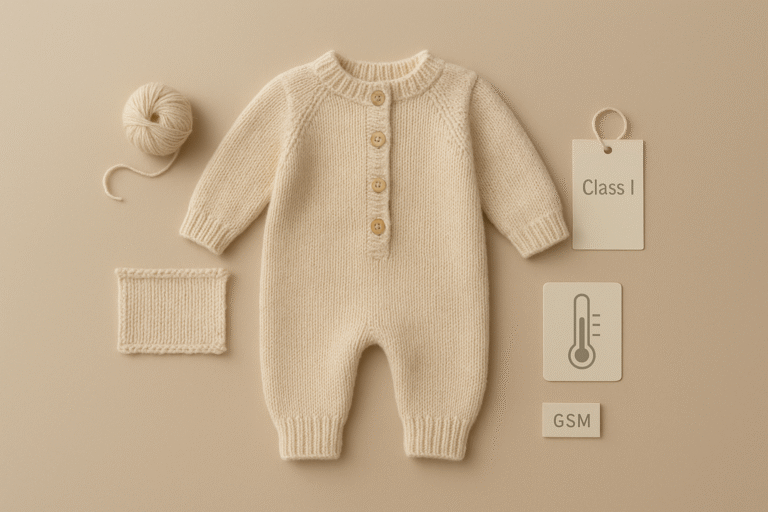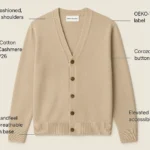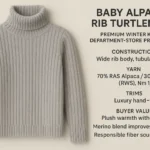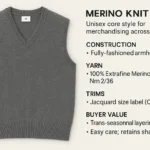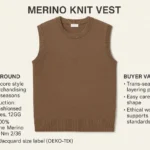

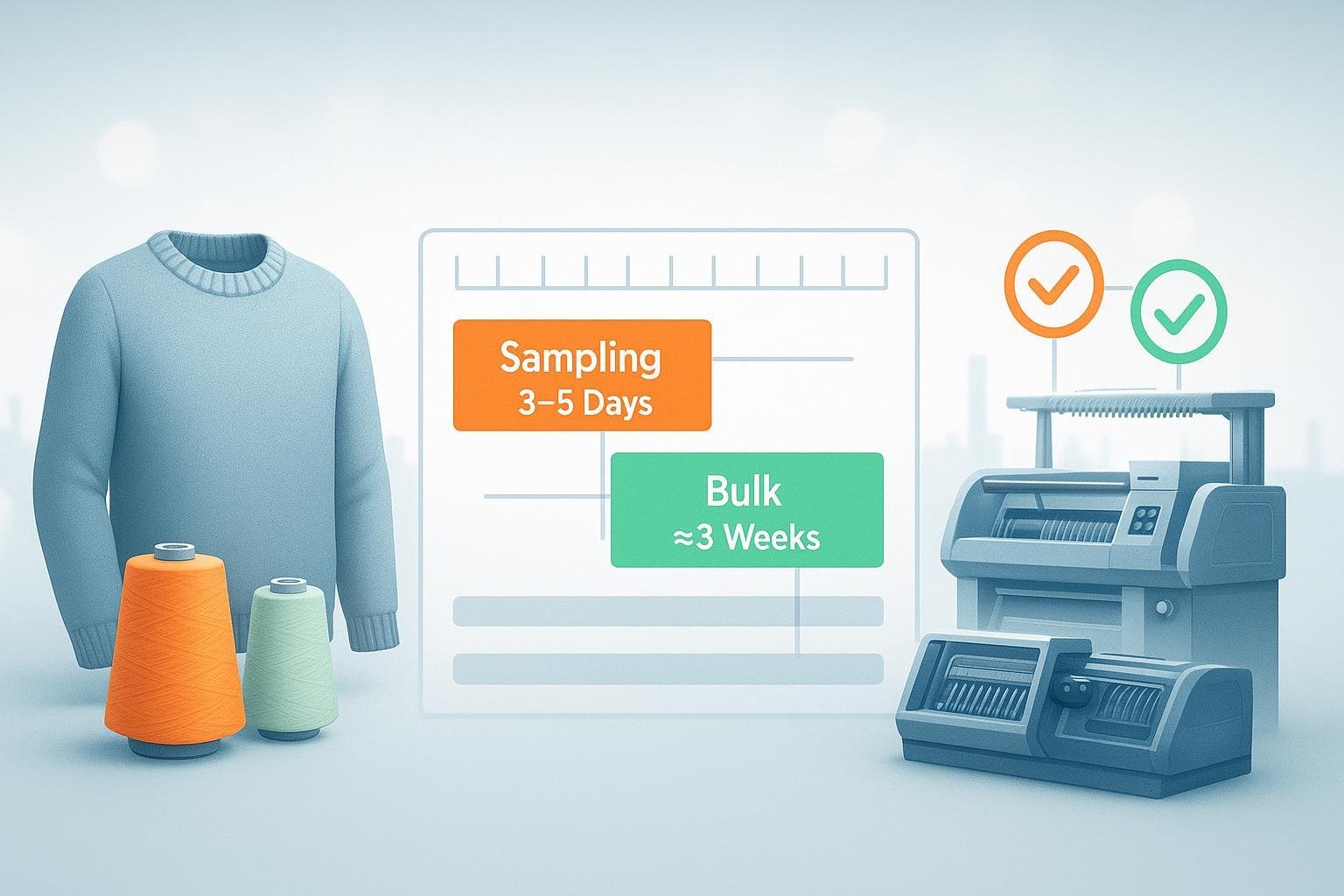
If you run a small, fast-moving DTC brand, the difference between “nice idea” and “in‑market drop” often comes down to two numbers: 3–5 days for samples and ≈3 weeks for bulk production. This Ultimate Guide shows how to evaluate OEM vs ODM knitwear partners, structure SLAs, and design a four‑week path from concept to launch—with low MOQs (≈50+) and landed‑cost clarity.
We’ll ground the advice in verifiable sources for testing and compliance, point you to official tariff tools, and share two practical scenarios: a four‑week seasonal drop and frictionless replenishment for a classic style.
Key takeaways
3–5 day sampling and ≈3‑week bulk are achievable when you use stock yarns, cap revision rounds, parallelize approvals, and pre‑book machines; otherwise, timelines drift toward 8–12+ weeks.
OEM gives maximal design control but typically needs more development time; ODM trades some uniqueness for speed via ready patterns and stitch libraries.
Use SLAs that specify: response times (<24h), revision caps (≤2), machine booking windows, inline QC gates, and logistics decisions (air/DDP for urgent drops).
OEM vs ODM for knitwear—what’s faster, what’s safer?
The choice between OEM and ODM is a tradeoff between control, speed, and IP exposure.
OEM (you own the design/IP): Best when differentiation matters and you have a finished tech pack. Expect longer development unless you leverage stock yarns and a tight sampling playbook.
ODM (factory base design, you customize): Fastest path to market using pre‑validated silhouettes, stitch patterns, and size blocks. Watch exclusivity terms and confirm how much you can alter gauge, yarn, or trims.
When timing is critical, ODM often wins the first drop, while OEM may be preferable for hero products where nuance (fit, hand‑feel, stitch density) is the brand. Either way, treat speed as an operations problem, not just a vendor attribute.
Rhetorical check: If the factory offered you machines tomorrow but your tech pack is incomplete, would you still hit a four‑week launch?
OEM/ODM knitwear manufacturer comparison and lead time: what actually drives speed
Lead time is less about a headline promise and more about controllable inputs. In practical terms, five levers compress the calendar without compromising quality: yarn readiness (stock programs over custom dye), disciplined sample iterations (virtual + capped rounds), machine allocation (pre‑book knitting/linking), inline QC gates to prevent rework, and logistics choices that preserve calendar days (air/DDP when speed matters).
A vendor page like the Knitwear.io quick‑sampling overview notes 3–5 day prototypes and bulk as fast as 2–3 weeks in optimized scenarios; use this as a feasibility signal, not a guarantee, and bind your own SLAs accordingly. See the vendor example in the Knitwear.io quick‑sampling guide.
The 4‑Week Fast‑Launch Roadmap (from concept to product live)
Think of the calendar as a relay where steps overlap. Here’s a narrative Gantt you can adapt.
Week 0.5 (Days 1–3): Brief, tech pack, and yarn decision. Lock silhouette, target gauge, stitch density, size run, and wash care. Choose stock yarns in first season to remove dye lead time. Share measurement tolerance tables and finishing notes.
Week 1 (Days 2–5): 3–5 day sampling window. Use virtual sampling to pre‑screen design details (stitch density, logo placement). Submit comments within 24 hours. Cap to two physical rounds.
Week 2 (Days 6–10): Pre‑production prep. Approve sample; confirm size grading; freeze BOM; book machines (knitting/linking) and finishing (washing/blocking). Place trims/labels immediately.
Week 3–4 (Days 11–28): ≈3‑week bulk production. Knit → link → wash/block → finish → inline QC and final AQL. Parallel‑process packaging and labels. For speed, plan air freight or courier for DTC warehouse receipt. For roles and obligations when shipping DDP, review the ICC Academy’s DDP overview.
Decision gates and contingencies: If a sample misses the fit target, quantify tolerance vs. time—accepting a ±1 cm chest variance might save three days. If yarn stock is short, split colors by transport mode (hero colors by air; long‑tail by sea) to salvage launch dates.
The 3–5 day sampling playbook (how to make it real)
Sampling is where calendars either compress or unravel. Keep it tight with these moves. Use stock yarns with known hand‑feel and fast availability; where color is critical, align via lab dips without a custom dye. Go virtual‑first to reduce physical rounds; confirm the factory’s 3D knit toolchain and request examples. Cap revisions at two and commit to <24‑hour feedback cycles with a single decision owner. Provide a knit‑specific tech pack (gauge, stitch density, yarn spec, tolerance table, blocking method, wash/setting). Bind the SLA: “Dev sample in 3–5 working days from spec lock; each revision in ≤3 days; final PP sample in ≤7 days after design freeze.” For downstream quality, many global buyers anchor testing on program documents like the Inditex Physical Testing Requirements (2025); apply the same discipline as a small DTC team.
Hitting ≈3‑week bulk production (machine booking, inline QC, logistics)
Bulk compression depends on removing idle time and avoiding rework. Reserve knitting and linking windows as soon as you approve the sample; confirm gauge set‑ups, needles, and operator allocation. Add inline QC hold points (post‑knit panel check; post‑link seam strength; post‑wash measurement) to prevent cascading defects. Ensure finishing capacity (washing, setting, blocking) and share exact wash/press specs. Pre‑approve labels/packaging and stage deliveries to arrive before finishing completes. For a four‑week launch, air/DDP often preserves the calendar; FOB/sea can follow for replenishment colors once demand stabilizes.
Low MOQs and transparent pricing: from 50 to 500 units
MOQ flexibility is real when you reduce changeovers and share components. Keep colorways tight, reuse labels/packaging, and choose stitches that don’t require exotic set‑ups at low volumes.
Units (per style/color) | Indicative unit price trend | Notes that influence price and lead time |
|---|---|---|
50 | Highest | Stock yarn only; minimal customization; accept wider measurement tolerances; air/DDP likely for speed |
100 | High–mid | Minor stitch or trim variation; maintain stock yarn; consolidate labels/packaging |
250 | Mid | Better machine efficiency; negotiate linking allocation; consider sea for non‑urgent colors |
500 | Lowest (of this ladder) | Strong efficiency; more room for complex jacquards or intarsia; plan mixed logistics |
Landed‑cost thinking Build your model as: ex‑factory + labels/packaging + sampling + inspection + freight + insurance + duties + last mile. For the U.S., search your HS code with the USITC Harmonized Tariff Schedule tool; for the EU, check My Trade Assistant in Access2Markets.
Quality, testing, and certifications you can verify
Hold a “big brand” bar by referencing recognized methods and requesting lab results. For pilling, review ISO 12945‑2 (Modified Martindale); the method scope is described in the ISO 12945‑2 preview. For dimensional stability, align on ISO 6330 or AATCC 135 to keep shrinkage within 3–5% depending on fiber; see the AATCC standards catalog. For colorfastness, reference AATCC 61 (laundering), ISO 105‑X12/AATCC 8 (rubbing), and ISO 105‑E04/AATCC 15 (perspiration). Certifications that support safety and claims: request OEKO‑TEX Standard 100 certificate numbers and verify on the OEKO‑TEX site; consult the current OEKO‑TEX STANDARD 100 document. If using organic content, review GOTS Version 7.0 (2023) for rules and labeling. For inspection, many apparel programs use ISO 2859‑1 with General Inspection Level II and AQLs around 2.5% minor, 1.5% major, 0–1.0% critical; a practical explainer is the Sofeast guide.
Two real‑world scenarios
Scenario A — Four‑week seasonal DTC drop (stock yarns + virtual sampling) Day 1: Lock design spec and choose a stock yarn that matches hand‑feel and gauge. Days 2–4: Virtual review; confirm logo placement and stitch texture. First physical arrives Day 4 or 5; feedback returned same day; one revision. Days 6–8: Approve dev sample and freeze BOM; book knitting/linking; place label/trim orders. Days 9–27: Knit → link → wash/block → finish; inline QC at each gate. Parallel packaging prep. Air/DDP out on Day 26; warehouse receipt by Day 28. Result: Launch page live end of Week 4.
Scenario B — Classic style replenishment (frictionless reorders) Baseline: Maintain a master size set and reference wash measurements; record yarn lot numbers to minimize color variance; keep finishing recipe consistent. Reorder flow: Confirm rolling machine booking windows monthly; share a 90‑day forecast so yarn stock can be buffered; approve TOP from first bulk and lock that as reference. Lead time: Reorders in ≈3 weeks are realistic when yarn/labels are on‑hand and measurements stay within prior tolerances; mix air (top sizes) and sea (long‑tail) shipments to balance speed and cost.
Vendor selection checklist and sample SLA language
Use this condensed checklist to keep your evaluation grounded in verifiable, lead‑time‑driven criteria: stock yarn program with on‑hand cones; written confirmation of machine booking windows and linking capacity; evidence of inline QC gates and AQL practice; ability to share lab test plans and (where applicable) current OEKO‑TEX/GOTS certificates; willingness to bind SLAs such as “3–5 business days for dev samples from spec lock; ≤24h feedback cycles; ≤2 revision rounds; ≈3 weeks bulk from PP approval with pre‑booked machines; shipment method agreed at PO (air/DDP for urgent drops).”
Neutral brand mention Some buyers use partners like AzKnit when they need OEM/ODM flexibility, low starting MOQs, and a clear sampling‑to‑bulk orchestration model; always corroborate timelines and credentials with your own SLAs and document checks.
Closing: Put the pieces together
Here’s the deal: speed is engineered. If you come prepared with a complete knit tech pack, accept stock yarns for the first drop, cap revisions, and pre‑book machines, a four‑week launch—anchored by 3–5 day sampling and ≈3‑week bulk—stops being a slogan and starts looking like your new normal. Build a landed‑cost model with the US/EU duty tools, bind SLAs that reward responsiveness, and verify quality with recognized standards and certifications. Then, make reorders boring—on purpose.
Search intent recap This Ultimate Guide is designed for OEM/ODM knitwear manufacturer comparison and lead time evaluation. Use it to short‑list factories, structure your SLAs, and plan realistic calendars without guesswork.