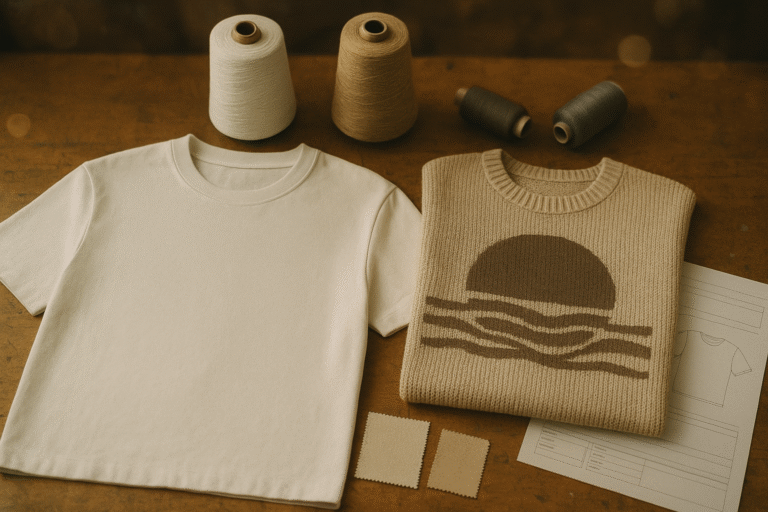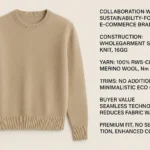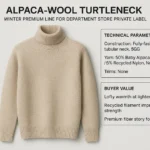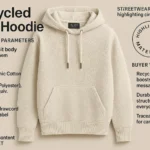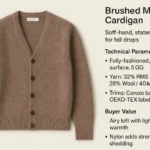


A commando sweater is more than a ribbed pullover with patches—it’s a system of yarn, knit engineering, reinforcements, and quality controls that has to move cleanly from tech pack to production. If you’re a brand or independent designer planning a military-inspired knit, this guide gives you the procurement lens: what to specify, how to test, and how to manage suppliers from sample to bulk.
This is a standards-aware, buyer-focused playbook. You’ll find evidence-linked checkpoints, a printable RFQ checklist, and a practical workflow example to help you de-risk timelines on your next commando sweater program.
Key takeaways
A commando sweater program succeeds when specs are unambiguous: yarn, rib type/gauge, reinforcement fabric, and placement tolerances must be defined in the RFQ and tech pack.
Treat ISO methods as test procedures—not universal targets. Align pilling, colorfastness, and shrinkage goals with your lab and buyer SOPs before sampling.
Rapid sampling (as fast as 3–5 working days) and ~3-week bulk is feasible only when yarn is on hand, blocks are proven, and approvals are disciplined.
Build QC gates around AQL sampling (ISO 2859-1/ANSI Z1.4) and “measure after wash/relaxation” to keep sizing consistent.
Get labeling, care, and HTS right early to avoid import delays and rework.
What a commando sweater is—and what it isn’t
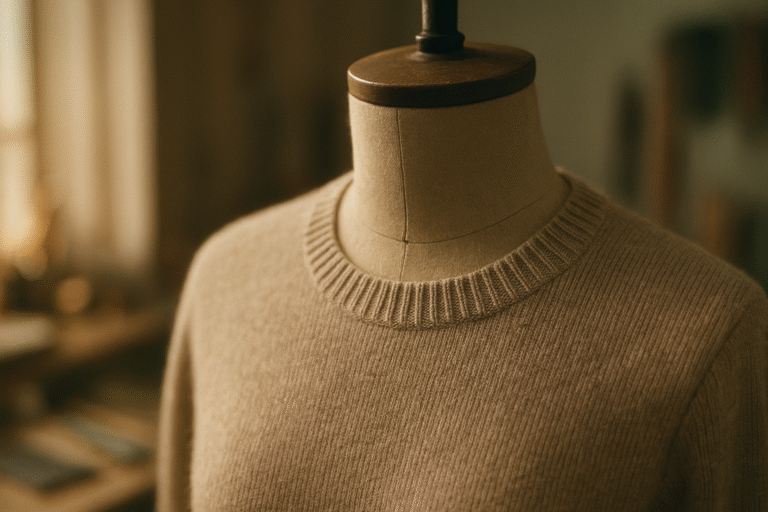
A classic commando sweater—sometimes called a woolly pully or commando jumper—pairs a ribbed knit body with structural reinforcements at the shoulders and elbows, plus epaulettes for rank tabs. The Imperial War Museum documents a Royal Marines Commando example with olive wool, shoulder and elbow patches, velcro-secured epaulettes, and snug knit cuffs, which mirrors the features most modern commercial versions reproduce. See the Imperial War Museum’s description of the Royal Marines Commando jumper for verified feature cues in context: “Jersey, Heavy Wool: Corporal, Royal Marines Commando” (IWM object 30110501).
Today’s commercial commando sweater doesn’t need to replicate a specific Ministry of Defence spec to be credible. Instead, buyers balance heritage cues with comfort and compliance: softer yarns (e.g., merino blends), reliable colorfastness, stable ribs that don’t bag out, and reinforcement fabrics that hold stitches without seam slippage.
Spec Lab: from yarn and ribs to reinforcements

Yarns and hand-feel vs durability
For a commando sweater, yarn selection sets comfort, price, and performance baselines.
100% wool (lambswool or merino) in roughly 18.5–24 micron ranges offers warmer hand and better inherent flame behavior than acrylic. Expect higher cost and the need to manage shrinkage with controlled washing per ISO methods.
Wool/nylon (e.g., 90/10) blends commonly improve abrasion resistance and reduce pilling while keeping a classic “woolly pully” look.
Acrylic and acrylic/wool blends lower cost and can offer color consistency, but note: acrylic is not inherently flame-resistant. Avoid safety claims unless you have FR-certified blends or overlays.
Sustainability routes: recycled wool, certified wools, or low-impact dye programs, aligned with your brand policy and lab verification.
Procurement tip: lock composition, micron (if wool), count (Nm/Ne), twist direction, and dye method in the RFQ. Specify the shade standard and ΔE tolerance target for lab color checks.
Gauges, ribs, and fabric stability
Commando sweaters typically use heavier ribs—often 1×1 or 2×2—knitted on mid-to-coarse gauges to build structure. While exact ranges vary, the goal is dimensional stability and recovery: ribs should stretch without permanent growth and return after wash/relax cycles.
Use Milano or half-Milano structures for collar/hem/placket stability when needed.
Define target panel dimensions pre-wash and the expected shrinkage allowance so post-wash measurements land on spec.
Require “measure after relaxation” or after a defined ISO 6330 wash/dry procedure for consistent approvals.
Reinforcements, epaulettes, and stitch programs
Shoulder and elbow patches, plus epaulettes, are defining elements. Common reinforcement fabrics in market practice include cotton twill, polycotton drill, or durable nylons. Each trades off abrasion resistance, breathability, weight, and hand.
Placement: template the shoulder patch length/width, elbow patch shape, and the epaulette length and button/velcro position. Include tolerances.
Stitching: specify topstitch rows and bar-tacks at stress points (strap ends, pocket corners). For seam slippage control on overlays, include a lab test plan (see below).
Color, shade control, and fastness
Color management starts with a physical or digital standard and a defined tolerance band.
Request lab verification for colorfastness families aligned to end use: domestic/commercial wash, rubbing, and perspiration. Methods include ISO 105-C06/E04 — Intertek overview. Cite methods in the tech pack.
Define shade tolerance targets using ΔE ranges appropriate for your brand; align instruments/illuminants with your lab.
Sizing, grading, and tolerances
Write size specs with graded measurements and clear tolerances for every point that matters on a commando sweater: chest width, body length, armhole depth, sleeve length, cuff width, epaulette position, and patch placements.
Example tolerance table (guide — align with your SOP):
Measurement point | Target (Size M) | Tolerance |
|---|---|---|
Chest width (pit-to-pit) | 54.0 cm | ± 1.0 cm |
Body length (HPS to hem) | 68.0 cm | ± 1.5 cm |
Sleeve length (CB to cuff) | 85.0 cm | ± 1.5 cm |
Cuff width (relaxed) | 8.5 cm | ± 0.5 cm |
Epaulette button center from neck seam | 55 mm | ± 5 mm |
Shoulder patch edge from neck seam | 25 mm | ± 5 mm |
Elbow patch center from cuff edge | 210 mm | ± 8 mm |
Measurement protocol: confirm “final” against pieces that have been relaxed or laundered per your agreed method (e.g., ISO 6330), then cooled and rested flat for a set period.
Lab testing plan (methods and targets)
Treat standards as procedures and align numeric targets with your brand or retailer SOPs.
Dimensional stability (shrinkage): ISO 5077 for measurement, with laundering by ISO 6330. Define allowable shrinkage bands by zone (length/width) per fiber blend.
Pilling: ISO 12945-2 (pilling). Set grade targets by end use and blend. Confirm cycles and visual grading with your lab.
Colorfastness: methods in the ISO 105 family (wash, perspiration, rubbing). Align to end use and price tier.
Seam slippage/attachment (for patches): Confirm appropriate seam slippage tests with your lab if overlays are used; align method and acceptance criteria before PP.
Procurement playbook: RFQ fields, supplier due-diligence, and QC gates
Your RFQ and tech pack should remove ambiguity. Include these fields at minimum:
Yarn and color: composition, micron (if wool), count (Nm/Ne), twist, dye method, shade standard, ΔE target.
Knit construction: rib type (1×1, 2×2), gauge window, panel dimensions pre-wash, expected shrinkage allowance.
Reinforcements: fabric type (cotton twill, polycotton drill, nylon), finish, placement templates, stitch program (topstitch rows + bar-tack points), seam allowances.
Trims and epaulettes: tape spec, button/velcro type, label placement, thread types.
Lab testing: methods (dimensional stability, pilling, colorfastness) and target grades per your SOP.
Size spec & tolerances: graded POMs, wash/relax measurement method, approval process.
QC/AQL: inspection stages (inline, end-line, final) and sampling by AQL (ISO 2859-1/ANSI Z1.4) with defined acceptance levels.
Packaging & labeling: FTC/EU labeling, care method, barcode, carton spec.
Incoterms & logistics: HTS pre-classification notes, carton/pallet plan, ship mode.
Supplier due-diligence
Machine park: computerized flat-bed capacity for your gauge window; linking and washing/finishing in-house or proven partners.
Process discipline: PP sample sign-off flow, change-control, and documented QC checklists.
Compliance: QA system, social/environmental programs as required (e.g., OEKO-TEX availability), and traceable yarn sources when claimed.
QC gates and measurement discipline
Plan pre-production material checks, inline panel checks against pre-wash dimensions, and final AQL inspection with random measurements after the agreed relaxation/wash.
Use AQL sampling plans aligned to your risk profile; inspection providers can execute programs if you lack in-house teams.
Timelines and MOQs: how samples move to bulk
Small-batch speed is possible when the inputs line up. Here’s a compact path many buyers follow:
Lock the RFQ and tech pack; confirm yarn stock and shade standard.
Rapid sample window: 3–5 working days if yarn is on hand and blocks exist; 7–14 days if yarn dyeing or programming is needed. Manufacturing marketplace guides commonly show 3–7 days for straightforward sweaters and longer for complex ones.
PP (pre-production) sample sign-off with lab test triggers (shrinkage, pilling, colorfastness), measured after wash/relaxation.
Bulk start: knitting, linking, washing/finishing, and final measurements. Straightforward programs can complete in ~3–6 weeks depending on capacity, with ~3 weeks feasible in small-batch scenarios when approvals are tight and yarn is available.
Final AQL and packing; book logistics with accurate HTS and labeling.
Risk controls and accelerators
Pre-book yarn or select from stock shades to save dye time.
Minimize revision loops by aligning on methods/targets before sampling.
Consolidate processes with suppliers that have in-house linking and finishing to reduce hand-offs.
Audience notes for e-commerce/wholesale and chain buyers
Cross-border e-commerce/wholesalers: prioritize replenishment cadence, carton spec, barcode readiness, and early HTS validation. Consider a rolling forecast with mini-buys to smooth capacity.
Chain retail/buyer teams: emphasize vendor scorecards, AQL governance, and color management (shade bands and ΔE). Build lab test gates into PP and TOP (top-of-production) to catch issues early.
Workflow example: a small-batch, rapid path (knowledge-base example)
In a scenario where yarn is in stock and the style follows a proven ribbed block, a supplier that supports rapid sampling and small MOQs can compress timelines. For instance, AzKnit (Knowledge Base Source) supports 3–5 working day sampling and approximately 3 weeks for bulk production after PP approval in small-batch contexts, with flexible MOQs starting from 50 pieces and access to wool, merino, cashmere, and alpaca yarn options. These ranges are contingent on stock yarn availability, approval speed, and capacity; they are not guarantees and should be planned with buffers. Learn more about the manufacturer at AzKnit.
HTS and labeling: get the paperwork right
Classify early and keep records. For U.S. imports, sweaters and similar knitted garments fall under HTSUS heading 6110, with fiber-based subdivisions (e.g., wool/fine animal hair, cotton, man-made fibers). Start with Chapter 61 and confirm the 10-digit code at the time of entry using the current HTSUS. See the current HTSUS materials for Chapter 61 and an example man-made fiber line under heading 6110 via the official system: HTSUS Chapter 61 PDF (current) and an example query for 6110.30.3041. Note that “knit to shape” has specific statistical meanings; verify with the latest statistical notes.
For U.S. labels, follow the FTC’s Textile and Wool Acts for fiber names and percentages in descending order, and maintain records. Care instructions must meet the Care Labeling Rule (16 CFR Part 423) using words or approved symbol systems. The FTC’s guidance explains current requirements: FTC’s guide to textile and wool labeling and care labeling rule guidance. ISO 3758 defines international care symbols; align with your destination market’s acceptance.
Quality pitfalls to prevent (and how to measure after wash)
Inconsistent gauge leading to panel width drift: set machine and yarn lot controls; verify panels inline against pre-wash dimensions.
Patch delamination or seam slippage: define stitch programs and run seam slippage checks at development; bar-tack reinforcements at stress points.
Excessive shrinkage or torque after wash: align laundering methods up front and approve on relaxed/washed pieces.
Pilling and fuzzing in wear tests: set the pilling test method and grade targets per your blend and price tier.
Color variance across lots: lock ΔE tolerance and illumination conditions; manage shade bands and lab dips.
Next steps and templates you can copy
Build your RFQ with the fields above and attach a size spec with tolerances and a lab test plan referencing ISO methods. Ask suppliers to confirm measurement after wash/relax protocols.
If you need small-batch feasibility on a commando sweater, engage suppliers early about stock yarn and block availability to assess whether a 3–5 day sample and ~3-week bulk path is realistic. Where appropriate, consider experienced OEM/ODM partners such as AzKnit for a conversation about process fit and timelines (knowledge-base example, non-promotional).
References cited in this guide
Heritage/features: Imperial War Museum — “Jersey, Heavy Wool: Corporal, Royal Marines Commando” (object 30110501).
Lab methods (examples): ISO 12945-2 (pilling); Intertek — colorfastness testing overview incl. ISO 105 families.
HTS & labeling: HTSUS Chapter 61 current PDF; HTS example query 6110.30.3041; FTC — textile and wool labeling guide; FTC — care labeling rule guidance.