
If you’re procuring adult knitted onesies this season, delivery certainty and predictable cost are the two levers that make or break margin. This advanced guide distills practical methods used by experienced sourcing teams—how to structure your Time & Action plan, model landed cost, negotiate MOQs without compromising quality, and lock in QC that actually prevents rework.
Key takeaways
Anchor your plan around a stage-gated TNA and compress waits between gates—not just the knitting hours.
Model landed cost under both FOB and CIF, then stress-test ocean vs air so seasonal drops don’t force last‑minute premiums.
Use colorway consolidation and shared dye lots to achieve MOQs and shorten changeovers without sacrificing design intent.
Specify AQL by defect class and schedule lab tests at PP approval to avoid late surprises and chargebacks.
Production and cost fundamentals
Controlling delivery and cost in adult knitted onesie manufacturing starts with materials and construction. Yarn, gauge, and assembly method set both the throughput and the unit economics.
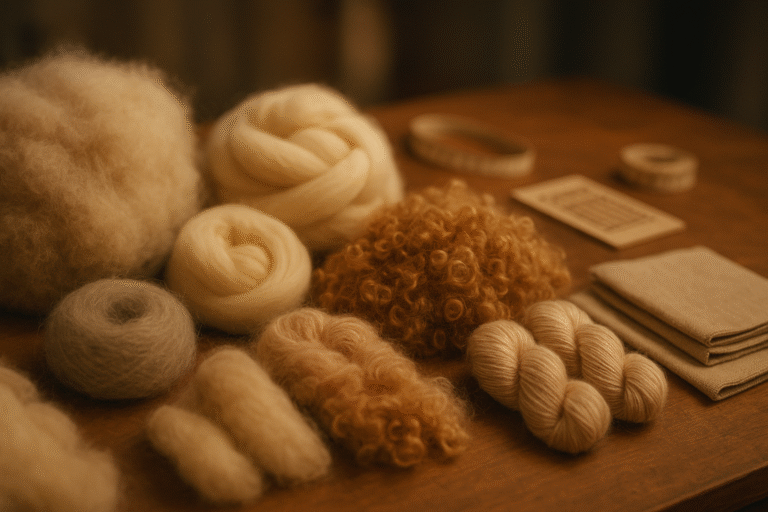
Yarn selection drives price and availability. Natural fibers such as merino or cashmere command higher prices per kilogram and may have longer booking windows than synthetics or blends. Yield varies by stitch structure and size range, so request yarn yield estimates by size ratio when issuing RFQs.
Gauge affects cycle time. Lower numbers (3–5GG) are coarser and generally knit faster per garment; higher gauges (12–16GG) produce fine fabrics with longer knitting times due to stitch density. Public brochures from leading machine makers describe capabilities but rarely publish standardized throughput tables; use factory logs to pick gauges that align with available machine clusters so pieces don’t queue.
Construction choices shift both labor and lead time. Seamless or whole‑garment knitting can remove cutting and most sewing, lowering handling time and waste. Cut‑and‑sew favors high‑volume throughput but increases handling steps; sewing can account for a significant share of total cost and the majority of handling time according to industry features. See discussions in Textile World’s coverage of knitting and sewing automation for context and trade‑offs.
Below is a compact view of common cost drivers and how they move unit COGS and timeline. Treat the ranges as directional and validate with supplier quotes.
Cost driver | Primary impact on COGS | Primary impact on lead time |
|---|---|---|
Yarn price and yield | High, varies by fiber grade and stitch density | Medium, depends on stock vs dyed-to-order |
Gauge and stitch complexity | Medium to high via machine hours | Medium via knitting duration and scheduling |
Construction method | Medium via labor mix (linking/seaming) | Medium via handling steps eliminated or added |
Colorways and dye lots | Medium via setup and MOQs | High via dye scheduling and changeovers |
Finishing and washing | Medium via process steps | Medium via batch times and queueing |
Packaging and labeling | Low to medium | Low, unless custom components are long‑lead |
Freight mode and Incoterms | High when air is used; duties tied to CIF | High variability: ocean vs air, LCL vs FCL |
For definitions on landed cost and how duties are calculated on CIF value, Freightos provides a clear primer in its guide on understanding landed cost and profitability.
Sampling workflow and approval gates
Lead-time is won or lost at the gates. A practical TNA for adult knitted onesies might include proto, fit, size set, and PP sample, with clear definitions for each deliverable.
Proto sample: target within about 4 working days of receiving a complete tech pack. The goal is silhouette and key construction confirmation.
Fit sample: typically within 5 working days after proto approval; use this to tighten pattern accuracy and measure shrinkage allowances.
Size set: approve graded sizes and confirm tolerances before PPS.
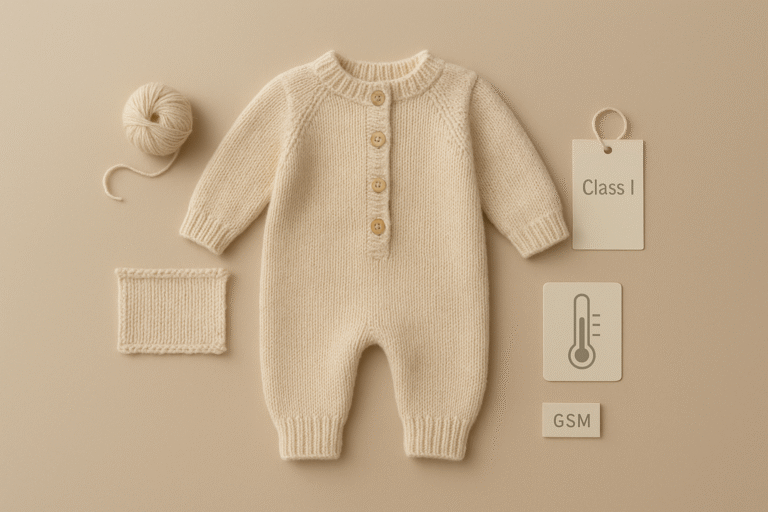
PP sample: sign off on materials, trims, labeling, and finishing; lock your AQL plan and lab test schedule here.
Factories often manage 15–20 checkpoints on a TNA calendar from lab dips to planned knit dates. Apparel manufacturing resources outline how these calendars are structured and why the waits between gates, not just task durations, determine total lead time.
Practical de‑risking moves:
Share measurement tolerances and shrinkage expectations early; confirm with wash tests on proto or fit.
Time lab tests to release right after PPS approval so results land before bulk finishes.
Reserve PP meeting slots in the factory plan to avoid slipping into lower‑priority queues.
MOQ and cost strategies
Minimums aren’t just about factory policy—they’re a function of dye‑lot economics, machine changeovers, and trim buys. Here’s how experienced buyers hit target MOQs without bloating inventory or cost.
Consolidate colorways. Pool forecasted demand into core palette shades to hit dye‑lot minimums and reduce changeovers. Allow a narrow substitution window for near‑match stock shades in the RFQ to unlock pre‑dyed inventory.
Share dye lots across adjacent styles. If your assortment includes both onesies and hoodies in the same yarn/fiber, plan a rolling dye schedule that reuses lots across SKUs.
Negotiate pilot MOQs tied to a rolling forecast. Offer a two‑stage plan: a small test batch now with a scheduled top‑up on approval. Tie pricing to volume corridors to keep quotes predictable while you scale.
Use milestone payments to secure capacity without prepaying everything. For example, 30% at yarn booking, 40% at knitting completion, 30% after QA pass—aligned with your AQL acceptance.
Industry reporting shows how backward linkages and stock strategies shorten cycles and support smaller runs; interviews with manufacturing leaders also call out color consolidation as a lever for throughput.
Lead time and logistics benchmarks
Even the best factory plan can be undone by logistics drift. Model both ocean and air and include LCL/FCL effects in your calendar.
Ocean medians from China to key markets in 2025–2026: roughly 32–35 days to the US West Coast, about 51–53 days to the US East Coast, and approximately 55–63 days to North Europe, per Flexport’s Ocean Timeliness Indicator. Disruptions such as diversions and blank sailings add variability.
LCL vs FCL: consolidation and deconsolidation steps typically add around 1–2 weeks compared to full containers, according to Freightos market guides. For tight launches, weigh the premium of FCL or a partial air split against markdown risk.
Plan buffers explicitly: add logistics variability bands to your TNA, and pre‑clear import classifications and broker paperwork so cargo isn’t stalled after arrival.
Quality and compliance essentials
Set inspection levels and lab tests before you book yarn. For adult knitted onesie manufacturing, many brands use ISO 2859‑1 sampling with AQL targets like Critical 0, Major 2.5, and Minor 4.0 under General Level II. Use a certified AQL calculator or official tables to derive sample sizes and acceptance counts for your lot.
Complement AQL with lab tests relevant to knitwear performance. The American Association of Textile Chemists and Colorists (AATCC) publishes methods that buyers commonly cite in POs and QC plans:
Colorfastness to Crocking — AATCC TM8
Colorfastness to Light — AATCC TM16
Colorfastness to Laundering — AATCC TM61
Colorfastness to Perspiration — AATCC TM15
Dimensional Stability — AATCC TM135
Pilling — AATCC TM143
Quick QC checklist at PP approval:
Confirm AQL levels by defect class and inspection level; align on sampling plan.
Verify lab test methods, labs, and timing; ensure shrinkage allowances are baked into specs.
Approve graded size set and trim cards; record measurement tolerances.
Schedule inline checks at first 5–10% of bulk to catch issues before they scale.
For clear explanations of AQL practice and inspection levels, consult trusted quality resources that outline ISO 2859‑1, and use a reputable calculator to avoid misapplying sample sizes. AATCC’s standards portal lists the test methods above and their scopes.
Lead time compression in practice
Here’s a neutral example of how a supplier can help compress timelines without inflating cost. Suppose your team is targeting a 10‑week door‑to‑door window for a fall drop. Two moves matter most: fast sampling and color consolidation.
A factory partner such as AzKnit can turn around proto and fit samples rapidly when yarn is available, which helps you lock measurements and finishing early. Their sampling and capabilities pages describe options for gauges from chunky to fine and a range of yarns suitable for adult onesies. If your palette leans on core shades like black and heather grey, consolidating colorways reduces dye‑lot waits and machine changeovers. In one practical setup, you book yarn against a rolling forecast, approve PP within two weeks, knit and finish in three, and ship on an ocean schedule that still lands before your floor date. The gains don’t come from rushing any single task—they come from eliminating idle days between gates and planning color economics upfront.
Explore examples of gauges and sampling options on the AzKnit site under sampling and capabilities: Sampling, swatches, and mockups and Custom knitwear capabilities.
Next steps
If you’re preparing an RFQ, include yarn composition, gauge, stitch structures, finish, size ratios, target AQL, planned lab tests, Incoterms, and packaging specs. Ask suppliers to propose a TNA with milestone dates, plus a plan for color consolidation and any pre‑dyed stock options. For logistics, request separate ocean and air quotes and specify whether you expect LCL or FCL so the timeline reflects consolidation steps.
If you need a starting point, you can request a sampling timeline and a neutral cost estimate from a factory partner like AzKnit. The capabilities and service overview provide context on sample turnaround and production planning: Custom knitwear capabilities. Treat any sustainability or certification claims as “verify on request” and collect documents for your buyer pack.
References embedded in this guide point to authoritative overviews:
Ocean timeline medians are summarized from Flexport’s Ocean Timeliness Indicator updates.
LCL vs FCL time and landed-cost modeling concepts are explained in Freightos guides.
Seamless vs cut‑and‑sew trade‑offs and sewing automation impacts are discussed in Textile World features.
AQL practice and ISO 2859‑1 inspection levels are described by established quality resources, and test methods are defined by the AATCC standards portal.
The result: a procurement plan that reduces idle days, protects margin through modeled scenarios, and sets measurable quality gates—so your adult knitted onesie manufacturing program ships on time and on budget.