If you’re building a premium knitwear line, fiber choice isn’t just an aesthetic decision—it’s a risk decision.
It affects:
how the garment feels on first try-on (the moment your customer decides “worth it” or “not for me”),
how it behaves after wash (shrink, growth, pilling, halo, shedding),
and how much cash you tie up when you commit to a minimum order quantity (MOQ).
This guide breaks down the most common luxury natural fibers used in premium knitwear—what they are, why they’re considered luxury, where they win (and lose), and how to test them fast before you commit to bulk.
What “luxury natural fiber” actually means in knitwear
In knitwear, “luxury” isn’t a single attribute. It’s usually a mix of:
Handfeel: softness, smoothness, lack of prickle, “dry” vs “buttery” touch.
Warmth-to-weight: how much insulation you get without bulk.
Visual quality: luster (shine), depth of color, and whether the surface looks refined or fuzzy.
Performance: pilling resistance, elasticity, recovery, and shape retention.
Rarity + provenance: limited supply, region of origin, or a story your customer values.
Finish potential: whether the fiber takes brushing, steaming, or other finishing well.
A key technical term you’ll see often is micron count—the fiber diameter. In general: lower microns = softer feel, especially next to skin. Thread Collective has a clear primer on what micron count means for softness.
Quick map: animal vs plant luxury fibers
Most luxury natural fibers in knitwear come from either animals (protein fibers) or plants (cellulosic/bast fibers). They behave differently on the machine and on the body.
Animal fibers (cashmere, merino, alpaca, mohair, yak, camel hair, vicuña): usually warmer, often softer, and typically better for cold-weather knitwear.
Plant fibers (linen, hemp): breathable and crisp with a “cool touch,” great for warm-weather premium knits—but often less elastic.
Silk sits in its own category: it’s an animal fiber (protein), but it behaves more like a “luxury enhancer” in knits—adding shine, drape, and strength, especially in blends.
Cashmere
Cashmere is combed from the undercoat of cashmere goats and is prized because it can feel almost weightless while still warm.
Why it’s luxury
Fine fiber diameter is a big driver of next-to-skin softness.
Warmth without weight makes it ideal for premium layering.
AzKnit’s cashmere reference page cites a fineness around 14–16.5 microns for cashmere fiber (see AzKnit’s cashmere fiber fineness parameters).
Where it wins in knitwear
Fine-gauge sweaters and cardigans
Scarves, beanies, and “entry” accessories for your first capsule
Blends when you want cashmere handfeel but need better durability
Trade-offs to plan for
Pilling risk: soft fibers can pill, especially if they’re short-staple or loosely spun.
Care sensitivity: customers need clear care labels and expectations.
Merino wool
Merino wool is a premium wool known for softer handle than many other sheep wools, plus excellent temperature regulation.
Why it’s luxury
Fine merino can be very soft next to skin.
Performance is strong: warmth, breathability, odor resistance.
Merino fineness varies widely. Micron-count ranges help you set realistic softness expectations, especially for next-to-skin pieces.
Where it wins in knitwear
Everyday premium sweaters
Base layers and fine knits
Blends where you want structure + recovery
Trade-offs to plan for
Shrink/felting risk: depends on finishing and care.
Prickle risk: increases as micron count rises—don’t assume “merino” automatically means soft.
Alpaca
Alpaca fiber (from alpacas) is known for warmth and softness. It also contains no lanolin, which is one reason it’s often positioned as “hypoallergenic” (though skin sensitivity varies person to person).
Spin Off notes alpaca can range broadly in diameter and softness grades (see Spin Off’s guide to choosing fiber).
Where it wins in knitwear
Cozy sweaters, scarves, hats
Textured knits where warmth is the selling point
Blends with merino (to add elasticity) or silk (to add drape)
Trade-offs to plan for
Lower elasticity than wool: pure alpaca can relax or grow if the structure isn’t designed for it.
Mohair
Mohair comes from Angora goats and is famous for its luster and “halo” (that soft fuzz that catches light). It often shows up as mohair yarn in brushed, airy silhouettes.
Why it’s luxury
The surface looks rich and dimensional.
It’s strong and can be very resilient in the right construction.
AzKnit’s mohair reference describes fiber diameter ranges roughly 23–38 microns depending on grade and age (see AzKnit’s mohair fabric overview).
Where it wins in knitwear
Brushed sweaters with halo
Statement cardigans
Blends where you want a premium surface without extreme fragility
Trade-offs to plan for
Shedding can be a real customer complaint—especially in brushed finishes.
Next-to-skin softness varies: many mohair pieces are better as mid-layers.
Silk (often as a blend)
Silk is a filament fiber made by silkworms. In knitwear, it’s frequently used to enhance another fiber rather than stand alone.
Where it wins
Adds luster and a refined surface
Improves drape
Can improve strength in blends
In practice, many premium lines use silk blends (for example, wool–silk or alpaca–silk) when they want elegance without the fragility of a pure silk knit.
Trade-offs
Often more delicate care requirements
Can show wear if used in very high-friction areas
Linen
Linen (from flax) is prized in premium warm-weather clothing for breathability and a distinct dry, crisp handfeel.
Where it wins in knitwear
Summer knits with a “cool touch”
Loose-gauge tops and polos
Blends that add texture and premium summer identity
If your brand does warm-weather sweaters, linen knitwear can be a signature—but you’ll need to design around low stretch.
Trade-offs
Wrinkling and creasing is part of the look.
Low elasticity means you’ll rely more on structure, stitch choice, and pattern.
Hemp
Hemp is a strong plant fiber often used when brands want an eco-forward story with durability.
Where it wins
Premium casual knits with longevity positioning
Blends that benefit from strength and breathability
If you’re exploring durable summer yarns, hemp fabric in knit form can work well in blends that soften the hand.
Trade-offs
Can feel coarse unless processed well or blended.
Yak (rare but increasingly visible)
Yak down is often described as soft and warm, and it can sit between cashmere and wool in feel depending on processing.
Where it can win
Limited-run premium capsules where the rarity story matters
Cold-weather knits where warmth is the hero attribute
Trade-offs
Supply consistency and shade matching can be harder.
Avoid overspecific micron claims unless you have a technical source from your supplier.
Camel hair
Camel hair is a traditional luxury fiber with a naturally warm, soft handle and a strong heritage story.
Where it can win
Premium outerwear knits and winter accessories
Blends where you want warmth and a heritage feel
Trade-offs
Like other rare fibers: availability, lot consistency, and cost.
Vicuña
Vicuña is one of the rarest luxury animal fibers, with strict sourcing constraints.
Where it fits
Ultra-high-end pieces where price is not the limiting factor
Trade-offs
Limited availability and extremely high cost.
You’ll need a very clear brand strategy to justify it.
Key Takeaway: For most emerging knit brands, “luxury” usually comes from how a fiber feels and performs in your specific knit structure—not from chasing the rarest fiber on the planet.
How luxury fibers behave in knitting (the issues that make or break your sample)
Fiber choice affects your development cycle because it changes the failure modes.
1) Pilling
Soft, fine fibers can pill—especially if:
staple length is shorter,
the yarn is loosely spun,
or the knit structure has a lot of surface abrasion.
Cashmere and brushed mohair can look premium, but they’re also the first to trigger customer complaints if you don’t test and finish properly.
2) Elasticity and growth
Wool (especially merino) typically has better natural resilience. Alpaca and some plant fibers may relax.
If your silhouette depends on recovery (cuffs, hems, fitted ribs), plan structure and blending accordingly.
ASTM provides a reference method for measuring stretch and growth in knitted fabrics (see ASTM D2594 stretch and growth testing).
3) Shrinkage and dimensional stability
Shrinkage can come from fiber behavior, finishing, and customer care habits.
Plan for:
wash testing,
clear care labels,
and realistic customer expectations.
4) Dyeing and color consistency
Luxury fibers can take color beautifully—but color control depends on dyeing method, fiber type, and lot discipline. If your brand relies on exact shades, the operational side matters as much as the aesthetic.
The sampling + MOQ playbook (how to move fast without expensive mistakes)
If you’re early-stage, knitwear sampling is where you win or lose time.
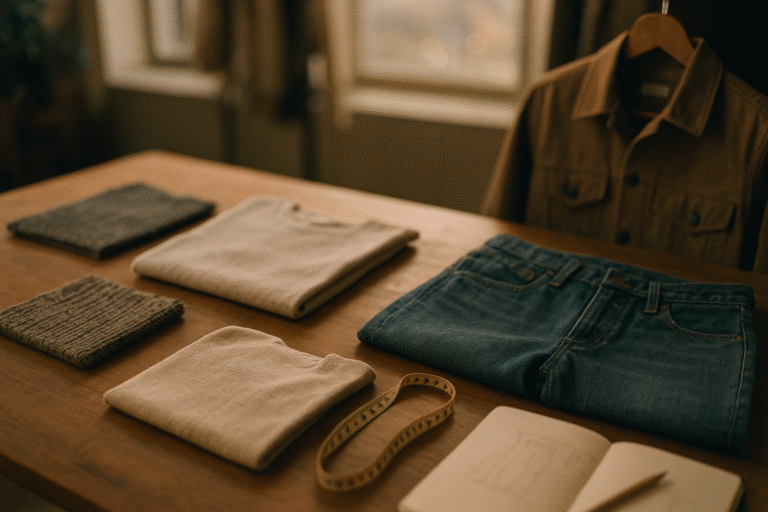
Step 1: Request swatches the smart way
Don’t ask for “a cashmere swatch.” Ask for a decision set.
For each fiber you’re considering, request:
2–3 yarn options (e.g., pure + one durable blend + one premium blend)
the same knit structure (so you’re comparing apples to apples)
a washed version (or wash it yourself)
If you need a concrete example of what “good sampling inputs” look like (tech pack or reference photo + size + gauge + yarn + target price + MOQ + delivery window), AzKnit lays out a 5-step workflow here: samples, swatches, and mockups.
Step 2: Run a “founder-grade” test loop (simple, fast, brutally honest)
You don’t need a lab to catch the biggest problems. You need consistency.
Test every sample the same way:
Wash test: the care method you plan to recommend
Measure: before vs after (length, width)
Rub test: high-friction zones (underarm, side seam area)
Wear test: a few hours under a jacket or bag strap
Visual check: halo shedding, fuzz, and surface change
For production-level QC thinking, QIMA’s checklist is a useful baseline reference (see QIMA’s garment quality control inspection overview).
Step 3: Use MOQ as a design input (not a surprise at the end)
MOQ isn’t only “the factory’s rule.” It’s a cost structure reality.
If you want low MOQ:
simplify stitch + trim complexity,
use stock yarns/colors where possible,
and design capsules where multiple styles share yarn and color.
AzKnit’s explainer breaks down what drives MOQ and how small brands reduce risk in early runs: knitwear MOQ guide for custom orders.
Step 4: Plan timeline like a drop calendar
A realistic early-stage timeline often looks like:
Swatches → choose yarn + gauge
Development sample (fit + feel)
Revisions (if needed)
PP sample (lock specs)
Bulk production
AzKnit states development samples can be turned in 3–5 working days once yarn and gauge are confirmed, with bulk production commonly around 3 weeks after approval (see AzKnit’s custom knitwear services overview).
Pro Tip: If you need speed, limit early swatches to 3–5 colorways per style, then expand once the structure is locked.
Sustainability and animal-welfare: what you should know (and what to ask)
Luxury fibers are a brand story—and a brand risk.
Cashmere: the grassland problem is real
Reporting in Science has discussed how rising cashmere demand is linked to grassland degradation in Mongolia (see Science’s coverage on cashmere demand and Mongolia’s grasslands (2019)).
UNDP has also described how degraded pastureland is a major challenge and how sustainable cashmere initiatives aim to improve land management (see UNDP’s discussion on sustainable cashmere and land degradation (2021)).
If cashmere is part of your brand, your sourcing story matters.
Certifications: know what each one actually covers
Certifications can help, but only if you know what question you’re trying to answer.
RWS / RAS / RMS: designed to address responsible animal welfare and land management in wool/alpaca/mohair supply chains.
OEKO-TEX: focuses on harmful substances and chemical safety in textiles.
GOTS: covers organic fiber processing and supply chain requirements (especially relevant for organic cotton blends).
The practical move: ask for verifiable documentation (certificate numbers, audit scope, what part of the supply chain is certified).
A simple framework to choose the right luxury natural fibers
If you only remember one thing: don’t pick a fiber in isolation. Pick a fiber for a specific product promise.
Start with these four questions
What’s your customer’s “luxury” expectation? Butter-soft? Crisp summer texture? Quiet sheen?
Where will the garment be worn? Next-to-skin vs layering changes everything.
What’s your tolerance for returns and complaints? (Pilling, shedding, shrink.)
What’s your first-production risk appetite? Lower MOQ often means fewer yarn/color options.
Fast match suggestions
“Soft next-to-skin, refined” → fine merino or cashmere blends
“Halo, fashion texture, statement” → mohair blends
“Warmth, cozy, premium casual” → alpaca/merino blends
“Summer premium knit” → linen or hemp blends with smart structure
FAQ
Is cashmere always the most luxurious?
Not automatically. Cashmere can be incredible, but a great fine merino or alpaca blend can outperform it for durability and customer satisfaction—especially if your audience doesn’t baby their garments.
What’s the biggest mistake new knit brands make with luxury fibers?
Skipping wash and wear testing. The sample that feels perfect off the machine can behave very differently after a wash cycle.
How many swatches should I request before sampling?
Enough to compare 2–3 yarn options in the same structure. Too many options slows decisions; too few options creates blind spots.
Key takeaways
“Luxury natural fibers” is about handfeel + performance + provenance—not just rarity.
Cashmere, merino, alpaca, and mohair are the most common luxury pillars in knitwear, each with different failure modes.
Build your development plan around sampling and MOQ reality: test early, standardize your checks, and treat yarn + gauge as the real starting line.
When you tell a sustainability story, back it with evidence and documentation—not vague claims.
Next steps
If you’d like to turn these fiber choices into a tight swatch set and a fast sampling timeline, start with a clear spec (target handfeel, gauge range, price point, and care label) and request swatches before you finalize your tech pack. A manufacturing partner that can move quickly from swatch to development sample is usually the difference between “launching this season” and “missing the window.”