Cotton is a natural fiber that you find in many of your clothes and household items. People have grown cotton for about 3,000 years, making it a part of daily life since ancient times. Today, you see cotton grown mainly in warm regions around the world.
In 2022, cotton made up about 22% of all fiber produced for textiles.
It accounts for 81% of all natural fiber production and is the most important non-food cash crop in the world.
Key Takeaways
Cotton is a natural fiber found in many things we use. It makes up 22% of all textile fibers made. The cotton plant grows best in warm places with lots of sun. It needs special conditions to grow well. Cotton feels soft and lets air pass through. It is also hypoallergenic, so it is good for clothes. This is helpful for people with sensitive skin. Farmers now use better ways to grow cotton. These ways help the environment and keep the cotton good. Cotton is often mixed with other materials. This makes it stronger and more comfortable. That is why many types of clothes use cotton blends.
What Is Cotton
Cotton Plant Basics
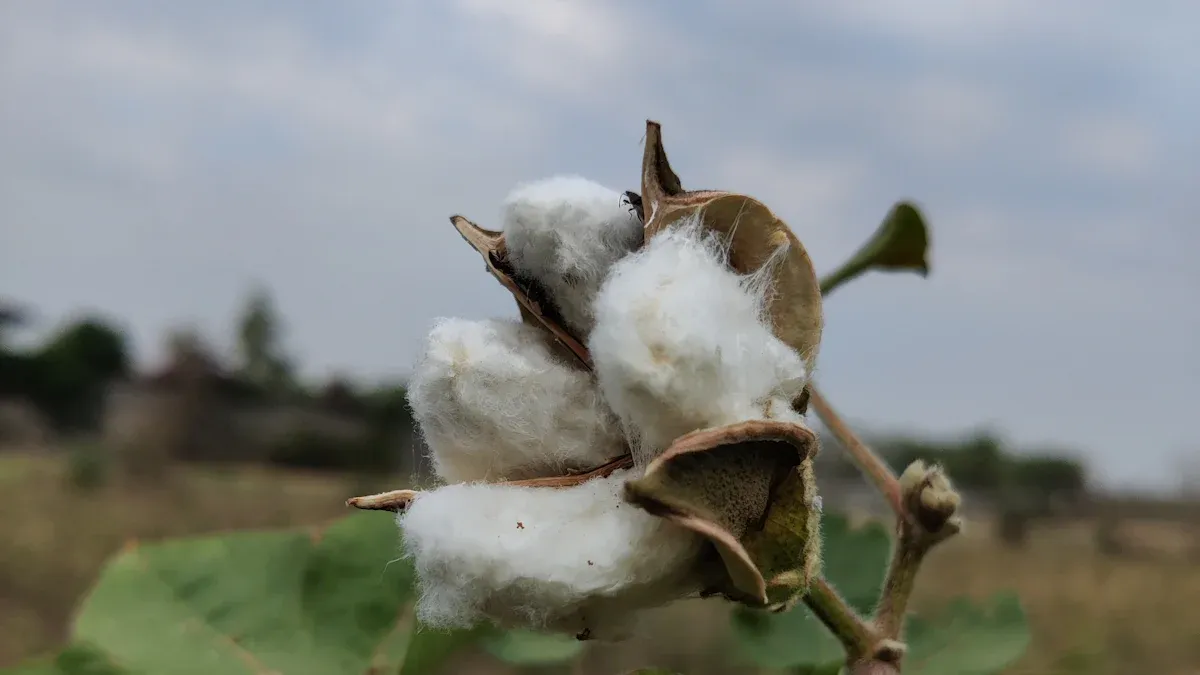
Cotton is a soft fiber from the Gossypium plant. This plant grows best in warm places. It is part of the mallow family. The cotton plant changes as it grows. First, seeds sprout and make small green leaves. Then, flower buds appear and bloom into white or yellow flowers. After pollination, the flowers turn pink and fall off. Green bolls are left behind. When the bolls mature, they open and show white cotton fibers. Farmers pick these fibers and use them to make fabric.
The Gossypium plant is different from other fiber plants. It has special features you can see in the table below:
Characteristic | Gossypium spp. (Group 1) | G. barbadense var. brasiliensis (Group 2) |
|---|---|---|
Staple Length | Longer by 17% | N/A |
Fiber Strength | Greater by 35% | N/A |
Length Uniformity Index | Greater by 6% | N/A |
Other Fiber Quality Differences | No significant difference | N/A |
Cotton plants grow in many places. They can live in different soils and climates. Farmers watch the plant’s stages to know when to water, fertilize, and harvest. This helps cotton become one of the world’s most important crops.
Cotton has a long history. Ancient people liked it for comfort and many uses. Archaeologists found cotton threads in Mehrgarh, Pakistan, from 6,000-5,500 BC. In Mohenjo-daro, India, a piece of cotton fabric was found on a silver vase lid from 3,000-2,750 BC. People in northeastern Africa used cotton from the 1st century BC to the 7th century AD. Meroë, Sudan, became known for making and selling cotton cloth in the 4th century BC. The Indus Valley was a center for cotton farming and spreading. Herodotus, a Greek historian, wrote about Indian cotton in the 5th century BCE. This shows cotton was important in trade. Alexander the Great’s soldiers wore cotton clothes when they went to India. They liked how comfortable it was.
Cotton Fiber Features
Cotton fibers have special traits that make them great for textiles. When you touch cotton, it feels soft and strong. The plant’s stages affect fiber quality. Longer fibers make smoother and stronger fabric. You can see the main features of cotton fiber in the table below:
Property | Description |
|---|---|
Length | Cotton fibers are ½ inch to 2 inches long. Longer fibers mean better quality. |
Fineness | The fiber’s diameter is between 3 to 6 micrograms per inch. |
Strength | Cotton has moderate strength of 26-44 cN/tex. It gets 20% stronger when wet. |
Elongation | It stretches 5-10% before breaking. |
Hydrophilicity | Cotton absorbs moisture and regains 8.5% under normal conditions. |
Heat conductivity | Cotton lets heat pass through, so it feels cool in summer. |
Heat | It breaks down above 150°, making black char. |
Flame | Cotton burns easily and smells like burning paper. LOI is 18%. |
Sun exposure | Sunlight can damage cotton fibers over time. |
Cotton fibers soak up moisture well. This keeps you cool and comfy. Cotton’s heat conductivity makes it good for summer clothes. Cotton burns fast and smells like burning paper. Sunlight can make the fibers weak, so keep cotton away from direct sun.
Cotton is still important around the world. People long ago used cotton for clothes, trade, and daily life. You enjoy its softness, strength, and comfort. The plant’s stages—from seed to fiber—help make the cotton you use every day.
Where Cotton Grows

Main Regions
Cotton grows in many places around the world. Most cotton comes from warm areas with lots of sunshine. These places have the best weather for cotton plants. Cotton fields are found in tropical and subtropical zones. The temperature stays high, and the soil keeps enough water.
Cotton does well where summers are hot and winters are mild. The plant needs at least 180 days without frost to make good fibers.
Here is a table that shows the main climate zones for cotton:
Climatic Zone | Description |
|---|---|
Tropical/Subtropical | Cotton is mainly grown in hot regions in about 65 countries. |
Temperate | Some types grow in warmer temperate areas of cotton-growing countries. |
You can see cotton fields in places like Aksu, Hetian, Kashgar, and Bazhou. These places have the right heat and sunlight. The biggest cotton-growing countries are India, China, the United States, and Brazil. These countries have large areas with good weather and soil for cotton.
Top Producers
You may wonder which countries grow the most cotton. The answer depends on field size and how much cotton each field makes. Here is a table with the top five cotton producers by yearly output:
Rank | Country | Annual Output (Million Bales) | Global Share (%) |
|---|---|---|---|
1 | China | 30 | 25.6 |
2 | India | 23.5 | 20.1 |
3 | Brazil | 18.25 | 15.6 |
4 | United States | 14 | 12 |
China and India make the most cotton in the world. China makes about 6.7 million metric tons each year. India makes around 5.7 million metric tons. The United States makes 3.2 million metric tons. Brazil also gives a lot of cotton to the world.
Cotton production changes every year. For example, India’s cotton output will drop by 6.5%. This is because farmers are planting less and getting lower yields. The United States expects its cotton crop to be the highest in three years. The forecast is 15.1 million bales.
Here is a table showing the average cotton yield per hectare in major cotton-producing places:
Country | Average Yield (kg/hectare) |
|---|---|
Australia | 1,658 |
Syria | 1,303 |
China | 1,103 |
Egypt | 994 |
Brazil | 999 |
Pakistan | 593 |
India | 287 |
Australia gets the most cotton from each field. India gets the least among the top producers. This means some countries grow more cotton even if they plant less.
Cotton farming can hurt the environment in different ways. Growing cotton can cause soil problems and water shortages, especially in dry places. Farmers use a lot of water—over 10,000 liters for each kilogram of cotton. Pesticides and fertilizers can damage local nature. Because of these problems, many farmers now use better ways, like organic farming and smarter watering, to protect the land and water.
When you look at where cotton grows, you see that weather, soil, and farming methods all matter. Cotton grows in warm places, and top producers use different ways to get the best crops. Cotton is still important for clothes and industry, but people are working to make cotton farming better for the planet.
Where Does Cotton Come From
Cotton’s Journey
When you ask, “where does cotton come from,” you start with a tiny seed in the soil. The journey of cotton begins when farmers plant these seeds in warm, sunny fields. As the plants grow, you see green leaves and white or yellow flowers. After pollination, the flowers drop, and green bolls appear. Inside each boll, soft cotton fibers form. The journey of cotton continues as the bolls mature and burst open, showing fluffy white cotton.
You might wonder how farmers collect the cotton. The journey of cotton moves forward with harvesting. Farmers use machines called cotton pickers or strippers. Cotton pickers use spinning spindles to pull the cotton from the bolls. Cotton strippers remove the whole boll from the plant. After harvesting, the journey of cotton includes packing the cotton into large modules for storage and transport.
Modern technology helps farmers during the journey of cotton. Precision agriculture uses GPS and sensors to check soil and plant health. Some farmers use genetically engineered cotton that resists pests. These advances make the journey of cotton more efficient and better for the environment.
From Plant to Fabric
The journey of cotton does not end in the field. You see the next steps in the cotton from plant to fabric process. First, the harvested cotton goes to a cotton gin. Here, machines separate the fibers from seeds and debris. This step is important in the journey of cotton because it gives you clean fibers.
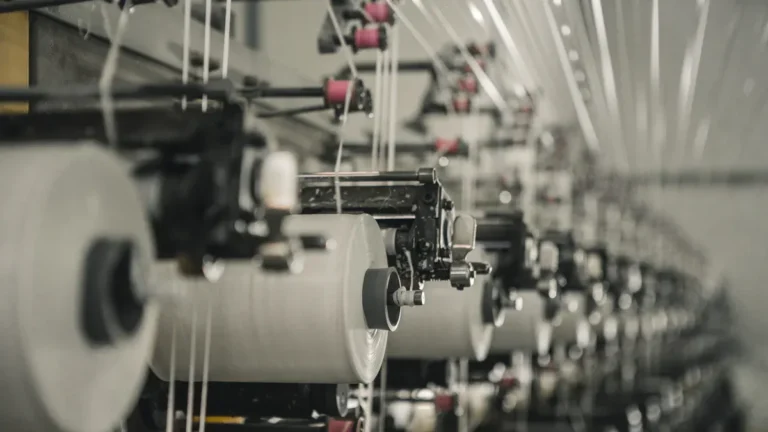
Next, the journey of cotton moves to spinning. Machines twist the fibers into yarn. Then, workers or machines weave or knit the yarn into fabric. The cotton from plant to fabric process finishes with dyeing, printing, and other treatments. Now, you have soft, strong fabric ready for clothes, towels, or sheets.
You can see how the journey of cotton takes many steps. Each part, from planting to harvesting and from ginning to weaving, helps answer the question, “where does cotton come from.” The cotton from plant to fabric process brings you the comfortable textiles you use every day.
Why Cotton Thrives
Climate Needs
You might wonder why you see cotton fields in some places but not others. The answer starts with climate. Cotton needs warm weather to grow well. You will find the best cotton fields in areas where the temperature stays between 68°F and 86°F during the day. At night, the temperature should not drop below 59°F. Cotton seeds need at least 59°F to start growing. The plant can handle heat up to 95°F, but too much heat can lower the yield.
Rainfall also matters. Cotton grows best where yearly rainfall is between 20 and 60 inches. Humidity should stay around 50-60%. These conditions help the plant make strong fibers and healthy bolls. If you look at how cotton grows, you will see that too much rain or cold weather can hurt the crop.
Tip: If you want to know how cotton is grown in different countries, check the local climate first. Warm, sunny days and mild nights help the plant thrive.
Here is a quick look at the climate needs for cotton:
Daytime temperature: 68-86°F
Nighttime temperature: 59-68°F
Minimum for germination: 59°F
Maximum tolerance: 95°F
Annual rainfall: 20-60 inches
Relative humidity: 50-60%
Soil and Water
Soil and water play a big role in how cotton grows. The plant likes soil that drains well. If the soil holds too much water, the roots can rot. If the soil dries out, the plant cannot make good bolls. Loam and clay loam soils work best because they keep enough moisture without getting soggy.
You need to manage water carefully. In places with little rain, farmers use irrigation to keep the soil moist. Good irrigation can boost cotton yields by up to 30%. Poor irrigation or hard, compacted soil can make it hard for roots to grow and take in nutrients.
Here is a table showing how different factors affect cotton yield:
Environmental Factor | Impact on Cotton Yield |
|---|---|
Soil Moisture | Too little or too much water lowers yield |
Soil Drainage | Poor drainage causes root rot and weak plants |
Soil Fertility | Low nutrients mean weak fibers and fewer bolls |
Irrigation | Good irrigation improves yield and fiber quality |
Heat Stress | High heat can cut yield by 26% |
When you learn how cotton grows, you see that the right mix of climate, soil, and water makes all the difference. If you want to understand how cotton is grown, look at the weather, the soil, and how farmers manage water. These factors help cotton thrive in the world’s top-producing regions.
Advantages of Cotton
Comfort and Softness
Cotton feels nice when you wear it. The fibers are soft and gentle. They do not scratch your skin. Cotton lets air move through your clothes. This keeps you cool on hot days or when you play sports. It soaks up sweat and helps your skin stay dry. Many people pick cotton t-shirts because they are soft. They do not make you itch. If your skin is sensitive, cotton may bother you less than synthetic fabrics.
Breathability
Cotton is great because it lets air pass through. You do not feel sticky or too hot. This makes cotton good for summer clothes and sportswear. You can wear cotton in warm weather and feel comfortable. Synthetic fibers trap heat, but cotton helps your body stay cool.
Versatility
Cotton is used in many things you see every day. It is not only for clothes. You find cotton in towels, bedding, curtains, and car seats. Doctors use cotton for bandages and swabs. Farmers use cotton byproducts for animal feed and to help soil. Cottonseed oil is used in cooking and skincare.
Clothing and linens
Medical supplies and hygiene products
Home textiles like bedding and curtains
Automotive interiors
Paper, cardboard, and cottonseed oil
Sustainability
You can pick organic cotton if you care about nature. Organic cotton uses fewer chemicals and less water than regular cotton. Farmers use ways that help the soil and protect animals. The table below shows how organic cotton is better for the environment than traditional cotton:
Fiber Type | Carbon Footprint | Water Use | Chemical Use |
|---|---|---|---|
Traditional Cotton | High | High | High |
Organic Cotton | Lower | Lower | Lower |
Choosing organic cotton helps cut pollution and saves resources.
Hypoallergenic Qualities
Cotton is gentle for your skin. Doctors and scientists tested cotton on people with sensitive skin. They found cotton does not cause irritation or allergies. You can use cotton if you have allergies or skin problems. Many baby and feminine care products use cotton for this reason.
Tip: If you want to avoid skin irritation, pick products made from pure cotton.
Cotton Blends in Knitwear
Popular Cotton Blends
When you look for knitwear, you see many cotton blends. Each blend gives your clothes a special feature. Here are some common blends you might find:
Cotton-Polyester: This blend mixes natural cotton with strong polyester. Your clothes last longer and do not wrinkle easily.
Cotton-Modal: Modal comes from beech trees and is very soft. When mixed with cotton, it makes fabric smooth and gentle on your skin.
Cotton-Spandex: Spandex helps your clothes stretch. This blend lets your knitwear move with you.
You can check the table below to compare these blends:
Property | Cotton-Polyester | Cotton-Modal | Cotton-Spandex |
|---|---|---|---|
Durability | High | Medium | Medium |
Softness | Less soft | Very soft | Soft |
Wrinkle Resistance | Excellent | Good | Good |
Breathability | Good | Excellent | Less breathable |
Flexibility | N/A | N/A | High |
Benefits of Cotton Blends in Knitwear
Cotton blends give you many good things in your knitwear. These blends make your clothes stronger, softer, and easier to care for.
Tip: Cotton blends do not shrink much and keep their shape after washing.
Here are some main benefits:
Your clothes last longer because they are more durable.
You spend less time ironing since they resist wrinkles.
Your clothes fit well after many washes because they shrink less.
You stay dry and comfy because they wick away moisture.
Your clothes stay bright and new because the colors last.
Many people like cotton blends because they feel soft and nice. About 75% of shoppers pick clothes made from cotton or its blends. Most people say cotton clothes are the softest and most comfortable. You also see cotton blends used for activewear, loungewear, and everyday outfits. These blends give you the comfort of cotton plus extra features like stretch or easy care.
You find cotton growing in warm places like China, India, the USA, and Brazil. Cotton is a natural fiber. It starts as a plant and ends up as fabric. This process gives jobs to millions of people and is part of daily life.
Cotton is used to make clothes, things for your home, and medical items.
The cotton industry gives work to 150 million people and helps world trade.
Farmers use better ways to grow cotton and keep nature safe.
Factor | Description |
|---|---|
Versatility and Comfort | Cotton is in many things. It feels soft and lets air through. |
Socio-economic Importance | Cotton farming helps families and whole communities everywhere. |
The story of cotton shows why it is still important in your life.
FAQ
Where does cotton grow best?
Cotton grows best where it is warm and sunny. The biggest cotton fields are in India, China, the United States, and Brazil. These countries have good weather and soil for cotton plants.
How do farmers harvest cotton?
Farmers use machines called cotton pickers or strippers. Cotton pickers pull the fibers from the bolls. Cotton strippers take off the whole boll. These machines help farmers work faster and safer.
Is cotton good for sensitive skin?
Cotton is a good choice if your skin is sensitive. It feels soft and does not bother your skin. Doctors say cotton is safe for people with allergies or skin issues.
What products use cotton?
Cotton is in clothes, towels, bedding, and medical things. You also find cotton in car seats, curtains, and paper. Many things you use every day have cotton fibers.
Why do people choose cotton blends?
People like cotton blends because they are comfy and strong. These clothes stretch, do not wrinkle much, and last longer. Cotton blends also keep their shape after you wash them.