

Neoprene fabric is a soft, man-made material. It keeps water out and holds in heat. It also bends without breaking. You see neoprene in many things you use. It is good for comfort and safety. Neoprene is waterproof and keeps things warm. This makes it great for sportswear, cases for electronics, medical supports, and car parts. The table below shows how different jobs use neoprene every day:
Industry | Applications |
|---|---|
Sportswear | Wetsuits, fitness wear, scuba gear, elbow pads, gloves |
Consumer Goods | Electronic cases, lunch bags, mouse pads, footwear |
Industrial | Protective gear, equipment needing durability and resistance |
Automotive | Seals, gaskets, weather-resistant components |
Medical | Supports, braces, flexible medical products |
You use neoprene because it is strong and comfortable. It also helps protect you in many ways.
Key Takeaways
Neoprene fabric does not let water in, so you stay dry during water sports and when it rains.
The material keeps heat in, so you stay warm when it is cold.
Neoprene bends easily and is strong, so you can move without it ripping.
It feels soft and comfortable, so people use it for clothes and accessories.
Neoprene does not get damaged by chemicals or heat, so it works well in factories and cars.
You can see neoprene in many things, like wetsuits, laptop covers, and medical braces.
If you pick neoprene products, you get both safety and a nice look in your stuff.
Try to find eco-friendly neoprene to help the planet and still enjoy its good features.
Neoprene Fabric Overview

What is Neoprene Fabric
You might ask why neoprene fabric is so useful. Neoprene fabric feels soft and stretches. You see it in sports gear, cases, and medical supports. Factories make neoprene fabric from a rubber called polychloroprene. They turn this rubber into foam. Then, they put the foam between two fabric layers. These layers are usually nylon or polyester. This way, neoprene fabric gets its special feel and strength.
Neoprene fabric is different because it keeps water out. It also holds in heat and bends without breaking. You can stretch or twist it, and it goes back to normal. This makes neoprene fabric great for things that need to be strong and comfy. That is why wetsuits, laptop sleeves, and braces often use neoprene fabric.
Key Features
Neoprene fabric has many good features. Here are some important ones:
Waterproof: Neoprene fabric does not let water in. It keeps you dry in water sports or rain.
Insulating: The foam inside neoprene fabric traps air. This helps keep you warm, even in cold water.
Flexible: You can move easily in neoprene fabric. It stretches with you and does not rip fast.
Durable: Neoprene fabric can handle rough use. It does not get ruined by sun, saltwater, or chemicals.
Comfortable: Neoprene fabric feels soft on your skin. It also protects you from bumps.
Tip: If you want to stay warm and dry, pick neoprene fabric.
The way neoprene fabric is made helps it work well. The foam has tiny gas bubbles inside. These bubbles stop water from getting through. They also help keep heat in. The table below shows how this design gives neoprene fabric its best features:
Feature | Explanation |
|---|---|
Closed-Cell Structure | Has small gas bubbles that block water, making it more water resistant. |
Insulation | The bubbles trap air, so it keeps you warm. |
Buoyancy | The air pockets help neoprene float, so it is good for wetsuits. |
Water Resistance Variability | Some types of neoprene block water better, depending on how they are made. |
You can see why people like neoprene fabric. Its special design and features make it good for many things. When you pick neoprene fabric, you get something that protects and supports you.
Neoprene Fabric Properties
Waterproof & Insulating
Neoprene fabric keeps water out very well. Its closed-cell structure stops water from getting through. You can wear neoprene in rain or underwater, and you will stay dry. This is why people use it for wetsuits, swimwear, and gear that protects you. You might wonder if neoprene works better than other materials. Lab tests show neoprene can handle a lot of water pressure. It can take more than 10,000 mm H₂O in the hydrostatic pressure test. This means you can use it underwater without leaks. Neoprene does not soak up much water. Closed-cell neoprene takes in less than 2% water after one day. Open-cell types soak up much more water.
Here is a table that shows how neoprene fabric does in waterproof tests:
Testing Method | Description |
|---|---|
Hydrostatic Pressure Test | Neoprene can handle over 10,000 mm H₂O, so it stays dry even underwater. |
Water Absorption Test | Closed-cell neoprene takes in less than 2% water after 24 hours. |
Neoprene fabric also keeps you warm. The foam inside holds air, which helps trap heat. You will feel comfortable in cold water or chilly weather. Neoprene’s thermal conductivity is between 0.13 and 0.17 W/m·K. This means heat moves slowly through neoprene, so you do not lose warmth fast.
Flexibility & Durability
Neoprene fabric bends and stretches easily. You can move around without trouble when you wear it. The material goes back to its shape after you stretch or twist it. This makes neoprene good for sportswear, braces, and accessories. You do not have to worry about rips or tears when you are active. Neoprene is tough, so it lasts a long time even if you use it a lot. You can use it outside, in water, or in the sun, and it stays strong.
Tip: If you want gear that moves with you and stays strong, neoprene fabric is a smart pick.
Chemical & Heat Resistance
Neoprene fabric protects you from chemicals and heat. You can use it near oils, greases, and many solvents, and it will not get ruined. Neoprene stands up to petroleum-based things, alcohols, and some salts. You can trust it for car parts, work gear, and safety equipment. Neoprene also works well in high heat. It can take up to 120°C (248°F) before it starts to break down. Most neoprene products work safely up to 250°F (121°C). You get good results in hot or tough places.
Neoprene stands up to oils, greases, and solvents.
It works with alcohols and some salts.
You can use neoprene fabric in hot places up to 120°C (248°F).
Neoprene fabric gives you waterproofing, warmth, flexibility, and protection from chemicals and heat. You can count on it for many uses at home, in sports, and at work.
Comfort & Texture
When you choose neoprene fabric, you get more than just protection. You also enjoy comfort every time you use it. Neoprene feels soft and smooth against your skin. The foam core gives you a gentle cushion, so you do not feel hard edges or rough surfaces. This makes neoprene a favorite for clothing, sports gear, and accessories.
You will notice that neoprene fabric does not itch or scratch. The outer layers, usually made from nylon or polyester, add to the smooth feel. These layers help prevent irritation, even if you wear neoprene for a long time. Many people with sensitive skin prefer neoprene because it stays gentle and does not cause rashes.
The texture of neoprene stands out. When you touch it, you feel a slight bounce. The foam inside gives a springy effect. This helps absorb shocks and bumps. If you drop your laptop in a neoprene sleeve, the fabric helps protect it. If you wear a neoprene brace, it cushions your joints and muscles.
Note: Neoprene fabric adapts to your body shape. It stretches and molds to fit you, so you get a snug, comfortable fit every time.
Neoprene also keeps you comfortable in different weather. The closed-cell foam traps air, so you stay warm in cold conditions. At the same time, the fabric lets your skin breathe. You do not feel sweaty or sticky. This balance makes neoprene a smart choice for wetsuits, gloves, and sportswear.
Here are some reasons why you might like the comfort and texture of neoprene:
Soft Touch: Neoprene feels smooth and gentle on your skin.
Cushioning: The foam core absorbs shocks and protects you from bumps.
Flexible Fit: Neoprene stretches and moves with you, so you do not feel restricted.
No Irritation: The fabric layers prevent itching and rashes.
Temperature Control: Neoprene keeps you warm but does not trap sweat.
You can see how these features make neoprene a top pick for many products. The table below shows how comfort and texture help in different uses:
Product Type | Comfort Benefit |
|---|---|
Wetsuits | Soft, snug fit; keeps you warm |
Laptop Sleeves | Cushions devices; smooth to the touch |
Braces & Supports | Gentle on skin; absorbs impact |
Gloves | Flexible; no chafing |
Footwear | Soft lining; adapts to your foot shape |
If you want gear that feels good and works well, neoprene fabric gives you both. You get comfort, protection, and a pleasant texture every time you use it.
How Neoprene Fabric is Made
Materials Used
You might wonder what is used to make neoprene fabric. Factories use a few main things. The most important is chloroprene. Chloroprene comes from petrochemicals. Some factories use limestone to make organic polychloroprene. These materials come from places like the USA and China. The table below shows the main materials and where they come from:
Raw Material | Source |
|---|---|
Chloroprene | Derived from petrochemicals (USA) |
Limestone | Used for organic polychloroprene (USA, China) |
Neoprene fabric is strong and flexible because of these materials. The type of material can change how good the fabric is. It can also change how it affects the environment.
Manufacturing Process
Factories use many steps to make neoprene fabric. Each step changes how the fabric feels and works.
Foaming & Sheet Formation
First, there is the polymerization process. This step links small molecules to make polychloroprene. You get a rubbery material that bends and lasts long. Next, workers mix polychloroprene with other things. This mixing step changes how hard or soft neoprene will be. After mixing, the calendering process starts. Heated rollers press the neoprene into flat sheets. This step sets how thick and smooth the fabric will be.
Tip: How factories mix and press neoprene changes how stretchy and tough it is.
Here is a table that shows the main steps and how they affect quality:
Step | Description | Effect on Quality |
|---|---|---|
Polymerization | The chemical reaction that links monomers to form long chains of polychloroprene. | Ensures desired properties like flexibility and durability. |
Mixing | Combining polychloroprene with additives to shape hardness and other traits. | Determines final hardness and characteristics of neoprene. |
Calendering | Pressing neoprene bits through heated rollers to create sheets. | Affects thickness and smoothness of the final product. |
Finishing | Final treatments and cutting of neoprene into desired shapes. | Ensures product readiness for specific applications. |
Bonding with Fabric Layers
After making sheets, factories bond neoprene to fabric layers. Nylon or polyester is often used for this. Heat and pressure stick the fabric to both sides of the neoprene. This step makes neoprene fabric soft and strong. You get a material that is easy to sew and nice to wear.
Polymerization links molecules for flexibility.
Mixing adds traits like hardness.
Calendering sets thickness and smoothness.
Finishing gets neoprene ready for products.
Environmental Considerations
Making neoprene fabric uses a lot of energy. The process creates high carbon emissions because it needs heat and pressure. Factories also have trouble with waste. Old neoprene and scraps often go to landfills. Recycling neoprene is hard, so waste piles up. The polymerization step adds even more carbon emissions.
Making neoprene uses much energy and raises carbon emissions.
Waste is hard to manage, and neoprene often ends up in landfills.
Polymerization needs heat and pressure, which increases emissions.
Note: If you care about the planet, look for brands that use recycled materials or eco-friendly ways to make neoprene fabric.
Uses of Neoprene Fabric
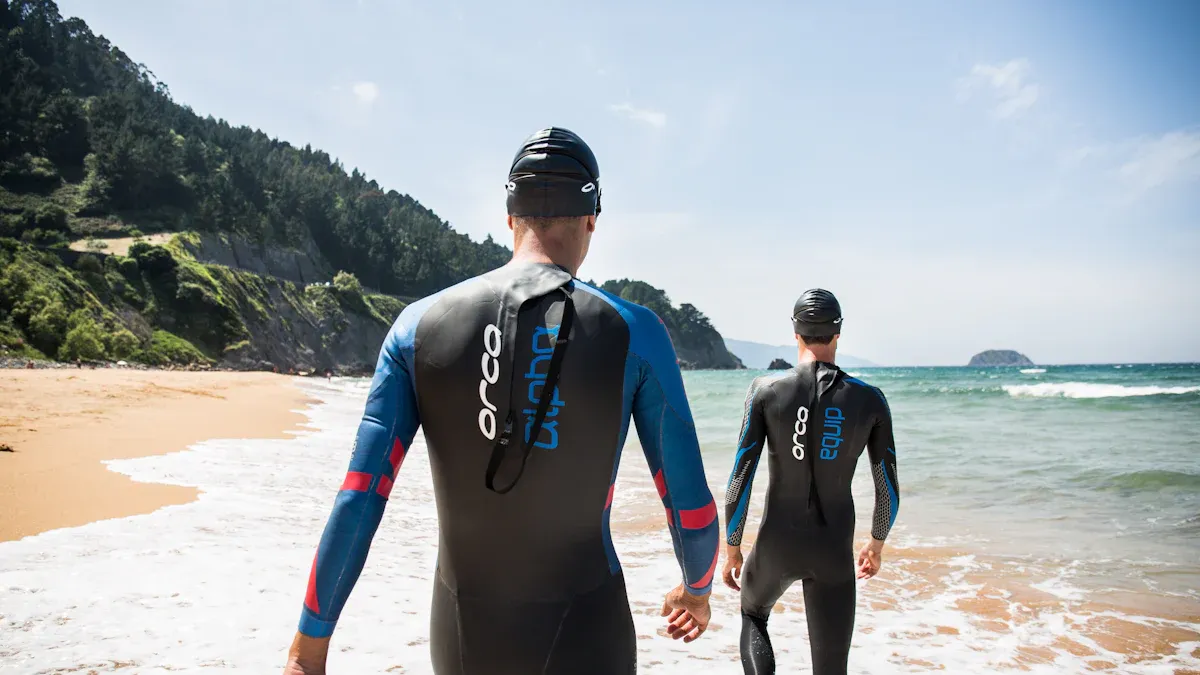
Neoprene fabric is used in many industries. It is water-resistant, flexible, and comfortable. You can find it in clothes, sports gear, medical items, and daily accessories. Let’s look at how neoprene helps you in different ways.
Apparel & Accessories
Neoprene fabric is important for making clothes and accessories. You see it in wetsuits, swimwear, sportswear, shoes, and many kinds of bags. Its special features make it popular for both sports and fashion.
Wetsuits & Swimwear
If you swim or surf in cold water, you want to stay warm and move easily. Neoprene fabric helps with this. The closed-cell foam inside neoprene holds heat, so you do not get cold fast. This keeps you comfortable and lets you swim longer.
Neoprene wetsuits also help you float better. The small nitrogen bubbles inside give you more buoyancy. This helps you keep a good position in the water. Neoprene fits close to your body, so you move faster and with less effort. It also protects your skin from scrapes, stings, and the sun.
Here is a table that shows how neoprene helps wetsuits and swimwear:
Benefit | Description |
|---|---|
Thermal Insulation | Keeps you warm by trapping heat. |
Buoyancy | Helps you float and maintain good body position. |
Snug Fit | Reduces drag and improves movement in water. |
Abrasion Protection | Shields you from scrapes, stings, and UV rays. |
Durability | Lasts longer, even with saltwater and sun exposure. |
Neoprene wetsuits and swimwear work better and feel better than old materials.
Sportswear & Footwear
Neoprene fabric is great for sportswear and shoes. It keeps out water and can handle rough use. You see it in rain jackets, gym clothes, and boots for wet places. The closed-cell design keeps most water away, so you stay dry outside.
Neoprene sportswear stretches with your body. You can move easily, and your gear does not rip fast. In shoes, neoprene keeps your feet warm and dry. Neoprene boots have rubber soles and neoprene tops, so they are waterproof and warm. You can wear them for fishing, hiking, or working outside.
Neoprene is used in wetsuits, rainwear, and insulation.
Neoprene shoes are made for wet places and last a long time.
People pick neoprene for outdoor fun, work, and casual wear.
Tip: If you want sportswear or boots that keep you dry and warm, neoprene fabric is a smart choice.
Bags & Backpacks
You see neoprene bags and backpacks everywhere. People like them because they are light, water-resistant, and look cool. Neoprene tote bags, gym bags, and travel backpacks are easy to clean and look modern.
More people are buying neoprene bags each year. City workers, fitness fans, and students all use these bags every day. Over 65% of young adults want bags that look good and work well, so neoprene bags are very popular.
Here is a table showing the top neoprene bags and their features:
Bag Type | Primary Buyers | Key Features | Market Share (2025 est.) | Growth Rate (2021–25) |
|---|---|---|---|---|
Neoprene Tote Bags | Urban Professionals | Lightweight, Water-Resistant, Stylish | 35% | 14% CAGR |
Gym/Duffel Bags | Fitness Enthusiasts | Multi-Compartment, Easy-Clean, Durable | 25% | 16% CAGR |
Travel Backpacks | Travelers, Students | Waterproof Zippers, Ergonomic Straps | 20% | 18% CAGR |
Diaper Bags | Parents & Caregivers | Organized Pockets, Insulated Sections | 10% | 12% CAGR |
Laptop Sleeves & Cases | Professionals, Students | Shock-Resistant, Slim Design | 10% | 15% CAGR |
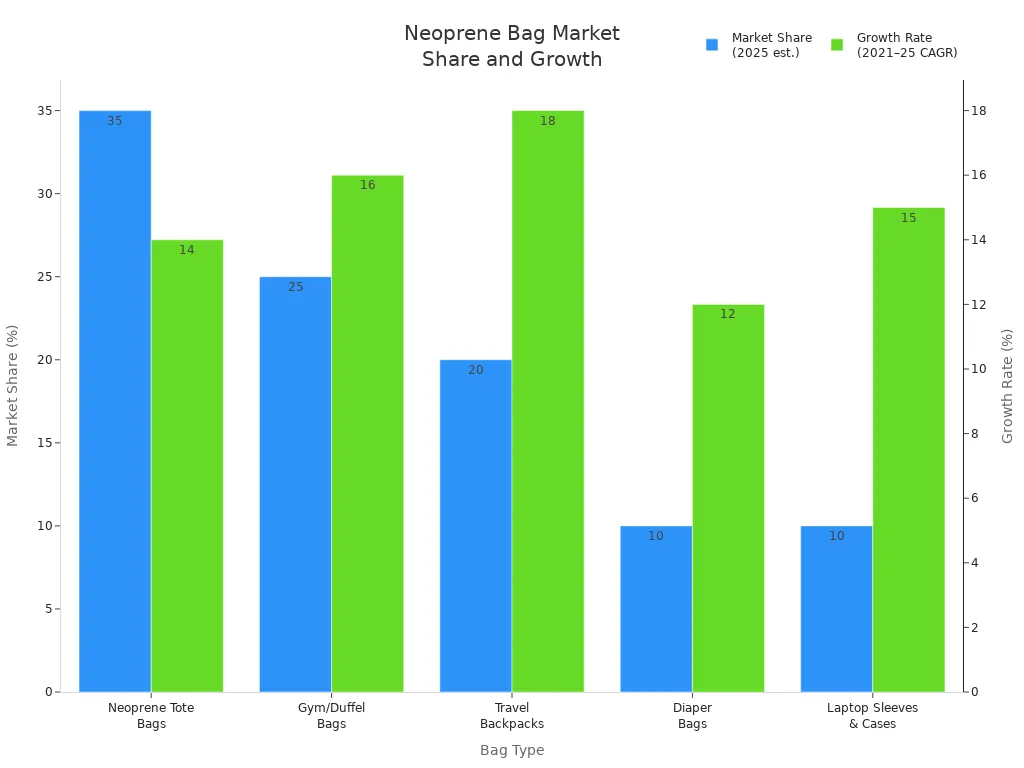
You get these benefits:
Light weight
Water resistance
Many pockets
Comfortable straps
Stylish looks
Eco-friendly choices
Custom designs
The world market for neoprene bags has grown by 18% each year from 2021 to 2024. That is why so many people choose neoprene for their bags and backpacks.
Sports & Outdoor Gear
Neoprene fabric is a top pick for sports and outdoor gear. It is used in protective gear and water sports items because it is tough and keeps you safe.
Protective Equipment
If you play sports like rugby or football, you need gear that protects you. Neoprene fabric gives you flexibility, absorbs shocks, and lasts a long time. You can move easily, but you also get a cushion from bumps.
Here is a table showing how neoprene helps in protective gear:
Property | Description |
|---|---|
Flexibility | Lets you move easily during high-performance sports |
Durability | Lasts a long time, even in tough conditions |
Shock-Absorption | Protects you from impacts and abrasions |
You see neoprene in shin guards, elbow pads, and martial arts gear. It absorbs shocks, so you do not get hurt as much. You stay safe while you play.
Neoprene is used in sports gear for rugby and football.
It is found in shin and elbow guards for martial arts.
Note: Neoprene fabric is important for athletes who want protection and easy movement.
Water Sports Gear
You use neoprene for water sports gear like gloves, life vests, and fishing clothes. The fabric keeps your hands and body dry, even in cold or wet places. Neoprene traps a thin layer of water, which your body warms up, so you feel good.
Here is a table showing the benefits of neoprene in water sports gear:
Benefit | Description |
|---|---|
Waterproofing | Keeps water out, so your hands and body stay dry. |
Thermal Insulation | Maintains warmth by trapping a thin layer of water. |
Flexibility | Lets you move your hands and body easily. |
Durability | Withstands harsh conditions and lasts a long time. |
You find neoprene in wetsuits, swimming gloves, fishing clothes, and golf jackets. The fabric’s strength and water resistance make it great for outdoor fun.
Medical & Consumer Products
Neoprene fabric is not just for sports. You also see it in medical and consumer products that help you stay healthy and protect your electronics.
Braces & Supports
Doctors and therapists often tell you to use neoprene braces and supports. You wear them on your knees, wrists, or ankles after you get hurt. Neoprene gives gentle pressure, which helps lower swelling and improve blood flow. It also keeps your joints warm, which can help with pain and healing.
Here is a table comparing neoprene to other materials for braces and supports:
Material | Benefits | Drawbacks |
|---|---|---|
Neoprene | Excellent compression and warmth, helps manage pain, consistent support, maintains shape | May be too warm for long wear |
Breathable Technical Fabrics | Superior moisture management, lighter weight, antimicrobial, better temperature control | N/A |
Studies show neoprene braces can lower swelling by up to 25% after an injury. Prosthetic liners made from neoprene stop 80% of skin rubbing problems. Blood pressure cuffs with neoprene last two to three times longer than cotton ones.
Mouse Pads & Laptop Cases
You want to keep your electronics safe from bumps and scratches. Neoprene mouse pads and laptop sleeves do this well. The material cushions your devices and absorbs shocks. You also get a slim, cool look that fits in your bag.
More people buy neoprene laptop sleeves because they want protection and style. You can find many colors and designs to match your taste. Neoprene mouse pads are also popular because they give a smooth surface and last a long time.
Beverage Coolers
You use neoprene beverage coolers to keep your drinks cold. The closed-cell design traps air, which stops heat from getting in. This keeps your drink cool, even in the sun. Neoprene coolers can slow down warming by up to 50% compared to other materials.
Neoprene is flexible, strong, and easy to clean. You can use these coolers at picnics, parties, or outside and know your drink will stay cold.
Tip: If you want to keep your drinks cold and your electronics safe, choose neoprene fabric products.
Industrial & Commercial Uses
Neoprene fabric is used in many industries. You see it in cars, boats, and buildings. It is also used where strong insulation is needed. Neoprene is waterproof, flexible, and tough. This makes it a top pick for many jobs.
Automotive & Marine
Neoprene is found in many car and boat parts. It keeps water out and resists oil. It can handle heat too. Car makers use neoprene for seals, gaskets, and hoses. These parts need to last and work in hard places. Neoprene does not crack or break when hot or oily.
On boats, neoprene stands up to saltwater and sun. It is used in hatch seals, window gaskets, and seat covers. Neoprene also lines wetsuits for people working near water. It keeps you dry and warm in rough weather.
Here is a table that shows how neoprene helps in cars and boats:
Application | Why Neoprene Works Well | Example Products |
|---|---|---|
Seals & Gaskets | Blocks water, oil, and air leaks | Car door seals, engine gaskets |
Hoses & Tubing | Handles heat, oil, and pressure | Fuel hoses, coolant lines |
Seat Covers | Resists water, easy to clean | Boat seats, car seat covers |
Protective Linings | Stands up to salt, sun, and chemicals | Boat hatch linings, engine covers |
Tip: If you want your car or boat to last, pick neoprene parts. They work well and keep things running.
Construction & Insulation
Neoprene fabric is also used in building and construction. Builders use it for insulation and soundproofing. It is also a barrier against water. Neoprene sheets go between walls or under floors. This stops heat and cold from moving through. It helps keep buildings warm in winter and cool in summer.
Neoprene is also used in expansion joints and vibration pads. These parts help buildings move a little without cracking. Neoprene absorbs shocks and blocks noise. It also keeps water from leaking into basements or roofs.
Here are some ways neoprene is used in construction:
Thermal Insulation: Neoprene sheets keep heat inside.
Soundproofing: Neoprene blocks noise between rooms.
Expansion Joints: Neoprene lets buildings move safely.
Vibration Pads: Neoprene absorbs shaking from machines.
Waterproof Barriers: Neoprene stops leaks in roofs and basements.
Note: Neoprene makes buildings safer and quieter. You get better results when you use it for insulation and protection.
Custom Printing & Design
You can make neoprene fabric look how you want. Many companies offer custom printing on neoprene. You can pick the color, pattern, or logo. This makes neoprene good for branding and style.
You see custom neoprene in laptop sleeves, lunch bags, and sports gear. It is also used for promotional items. Schools, teams, and businesses use printed neoprene for their logos. You can also get special shapes or sizes.
Here is what you get with custom neoprene design:
Personalized Colors: Match your team or company colors.
Logos & Graphics: Print your logo or art on the fabric.
Unique Shapes: Order special sizes or shapes.
Gift & Promo Items: Make custom gifts that stand out.
Custom Option | How It Helps You | Common Products |
|---|---|---|
Color Printing | Shows off your brand or style | Laptop sleeves, bags |
Logo Placement | Promotes your business or team | Sports gear, bottle coolers |
Special Shapes | Fits your exact needs | Cases, pads, covers |
Alert: If you want products that stand out, pick custom-printed neoprene. You get both function and style.
Military & Specialized Applications
Neoprene is very important for military and special gear. You see it in things used in hard places. This fabric can handle bad weather, strong chemicals, and lots of use. When you need something safe and tough, you can trust it.
Tactical Gear
Soldiers, police, and rescue teams use tactical gear. They need equipment that works in rain, heat, or cold. Neoprene helps make this possible. It keeps out water and chemicals, so you stay safe in risky places. You find it in gloves, knee pads, elbow pads, and vests. These items bend with your body but also protect you from bumps.
Gloves made with this fabric keep hands dry and warm.
Knee and elbow pads help cushion your joints during action.
Vests and harnesses use it for comfort and to absorb shocks.
Note: You can trust tactical gear with this material because it lasts through many hits and rough use.
Here is a table that shows how different uses need certain properties:
Application Type | Key Properties |
|---|---|
Industrial Applications | Oil and chemical resistance, durability |
Military Applications | Resilience, weather resistance, chemical resistance |
Heavy-duty Applications | Suitable for harsh chemicals and repeated impacts |
Specialized Protective Equipment
You also see this fabric in special safety gear. Factory workers, firefighters, and people in dangerous jobs use it every day. It protects you from chemicals, oil, and very hot or cold things. You might wear a suit or mask lined with this material if you work with dangerous liquids or gases.
Chemical-resistant suits keep your skin safe from spills.
Face masks and respirators use it to block out bad fumes.
Insulated covers and pads protect you from heat or cold.
This fabric meets strict rules for safety and how well it works. It does not break down when it touches chemicals or faces bad weather. You get gear that lasts longer and keeps you safer.
Tip: If you need protection in tough places, pick equipment made with this material. It gives you comfort and strong defense.
You have learned that neoprene fabric is special because it keeps water out, bends easily, and holds in heat. You can find neoprene in sports gear, medical supports, bags, and car parts. These features help neoprene work well in many parts of your life.
If you want things that last and keep you safe, think about choosing neoprene next time.
FAQ
What makes neoprene fabric waterproof?
Neoprene fabric has a closed-cell structure. This means tiny gas bubbles block water from passing through. You stay dry even in wet conditions.
Can you wash neoprene fabric in a washing machine?
You should hand wash neoprene with mild soap and cool water. Machine washing can damage the fabric or seams. Always air dry it flat.
Is neoprene fabric safe for sensitive skin?
Most people find neoprene gentle and non-irritating. The smooth outer layers help prevent itching. If you have allergies, test a small area first.
Does neoprene fabric stretch out over time?
Neoprene stretches to fit your body but returns to its original shape. It does not lose its stretch quickly. You get a snug fit every time.
What products use neoprene fabric the most?
You see neoprene in wetsuits, laptop sleeves, braces, gloves, and bags. Many sports and medical products use it for comfort and protection.
How long does neoprene fabric last?
Neoprene lasts for years with proper care. It resists sun, water, and chemicals. You should avoid sharp objects and high heat to keep it strong.
Can you recycle neoprene fabric?
Recycling neoprene is hard. Few places accept it. Some brands use recycled neoprene in new products. Check with local recycling centers for options.
Is neoprene fabric heavy to wear?
Neoprene feels light and comfortable. The foam core keeps weight low. You can wear neoprene gear for hours without feeling weighed down.