

Imagine you walk on a busy street in Tokyo. You see students wearing navy blazers, pleated skirts, and shiny shoes. These famous outfits show the story of Japanese school uniforms and how they changed. Early leaders in Japan started uniforms to help students feel equal and together. The table below shows how Western styles helped this change in the Meiji era:
Evidence | Explanation |
|---|---|
Uniforms became popular at all-male schools as Western clothes spread during Japan’s fast modernization. | This means school uniforms were linked to Western clothing styles. It shows that society was changing to become more modern. |
You can see that the uniform became more than just clothes. It helped shape how students saw themselves. It also showed the dreams of a country that was changing.
Key Takeaways
Japanese school uniforms changed a lot over time. They started as traditional clothes. Now, they look modern. These changes happened over 150 years.
Uniforms help students feel equal. Students do not worry about fashion. They do not worry about social status. This helps them focus on learning.
Genderless uniforms are new. They help include everyone. Students can show their identity. They choose what to wear.
Anime and manga made school uniforms famous. Real uniforms are simpler. They look the same for everyone. This helps students get along.
School uniforms may change in the future. They might use eco-friendly materials. Designs could be customizable. These changes match new values and technology.
150-Year Evolution of Japanese School Uniforms
Meiji Era Beginnings and Western Influence
Japanese school uniforms have changed a lot in 150 years. The changes started in the Meiji era. Japan began to open up to other countries. The country wanted to become modern fast. Leaders wanted students to look the same and modern. They made new uniforms for schools. These uniforms were inspired by Western military and navy clothes. Boys wore the military uniform with a stiff collar and shiny buttons. Girls stopped wearing kimono and wore sailor-style uniforms. This change showed Japan wanted to learn from other places and join the modern world.
When Japanese school uniforms started in the Meiji era, students stopped wearing traditional clothes. They wore uniforms that looked like Western military and navy styles. Boys wore the military uniform with a stand-up collar and shiny buttons. Girls switched from kimono to sailor-style uniforms. This change happened because Japan was trading and learning from Western countries.
Not everyone liked these new uniforms at first. Some people thought Western styles looked modern and special. Others wanted to keep wearing traditional Japanese clothes. Some people protested against the new uniforms. Leaders like Shimazu Hisamitsu wanted students’ clothes to show class differences.
Boys were the first to wear Western-style uniforms in schools, while girls started with traditional clothes but later wore Western styles.
People had different opinions; some thought Western clothes were modern and fancy, but others wanted to keep Japanese clothes.
Protests showed that traditional clothes were important, and Shimazu Hisamitsu wanted uniforms to show social class.
The government helped change school uniforms in Japan. During the Meiji era, leaders wanted students to look united and modern. Uniforms became a symbol of Japan’s identity.
Historical Period | |
|---|---|
Meiji Era | The government wanted students to look modern and united, so uniforms became a symbol of Japan’s identity. |
Post-WWII | A new law in 1947 focused on equality and coeducation, so schools could choose their own uniforms. |
1950s | After the economy improved, more schools used uniforms. Primary schools picked simple uniforms to make students look equal. |
1960s | Uniforms became more practical and similar, but secondary schools kept old styles to help students feel part of a group. |
1949 Onwards | New groups started to challenge dress codes, showing a struggle between fitting in and being different. |
Introduction of Hakama and Tsume-eri
If you look at Japanese uniforms, you will see two important styles. Girls wore the pleated skirt, which is a pleated skirt. The pleated skirt let girls move more easily than a kimono. It still looked feminine. This change meant girls could join school and society in new ways.
The pleated skirt showed that girls were learning for more than just home life. They could help Japan become modern. The pleated skirt let girls move freely but still look proper. This change meant girls had new chances in school and life.
The pleated skirt kept a feminine look. Girls could move more easily than in a kimono. They did not wear trousers, so gender rules stayed the same.
Boys wore the tsume-eri. It had a stiff collar and was dark and simple. The tsume-eri showed discipline and unity. It helped boys feel like part of a group. This matched Japanese values at the time.
Money also changed how uniforms looked over the years. Uniform makers started using cheaper and easier fabrics. Parents could buy uniforms more easily. Online shopping made it even simpler. Now, you can find eco-friendly and smart fabrics. The market keeps changing with new ideas.
The uniform market in Japan changed because of government rules and what people liked. This affected the materials and how easy uniforms were to get.
Money problems made companies use cheaper and easier fabrics. People wanted uniforms that were comfortable and easy to wash.
Online shopping made it easier for parents to buy uniforms, especially in cities.
New materials like eco-friendly and smart fabrics show that people care about the environment and new technology.
The story of Japanese school uniforms is more than just about clothes. It is about becoming modern, keeping traditions, and finding identity. Uniforms changed because of design, government rules, and money. This history shows how uniforms are connected to Japanese culture.
Evolution of High School Uniforms
Sailor Suits and Military Styles
High school uniforms in Japan have changed a lot over time. In the early 1900s, boys wore military-style uniforms. Girls started wearing sailor suits. Elizabeth Lee brought the sailor suit idea from British navy uniforms. Many girls liked this style because it looked cute and modern. The sailor suit fit well with Japan’s focus on the military before World War II. Boys wore the tsume-eri. It had a stiff collar and dark colors. This uniform showed discipline and unity. These uniforms matched what Japanese culture wanted at that time.
The sailor suit and tsume-eri made students feel like a team. They also showed Japan’s wish to be modern and equal.
If you look back, old uniforms were based on Meiji formal clothes. They used navy blue colors. Later, uniforms started using more Western styles. They added colors like white, blue, green, and black.
Transition to Blazers and Plaid Designs
After World War II, uniforms changed again. Schools began using Western blazers for both boys and girls. In the 1980s, a new look became popular. Students wore blazers with gold buttons and emblems. Boys wore checked pants. Girls wore plaid skirts. This style made students look smart and modern.
Period | Boys’ Uniforms | Girls’ Uniforms |
|---|---|---|
Before Meiji | Kimono and pleated skirt | Kimono |
Meiji Period | Hakama added | Kimono with pleated skirt |
Taishō Period | Gakuran (trousers and tunic) | Gakuran (matching trousers) |
Post-WWII | Western blazers | Serafuku (still worn today) |
Now, students show their own style with uniforms. Some wear shirts untucked or hide their badges. Most high school uniforms have blazers. For teens today, blazers are the most common uniform. This shows that Japanese culture likes both old and new ideas.
Schools in big cities like Tokyo and Osaka have more relaxed uniform rules. This means uniform rules can change depending on where you live.
The story of high school uniforms in Japan shows how society changes. You can see how students moved from group identity to showing their own style. High school uniforms still show the spirit of Japanese schools and the changing world.
Pop Culture and Modern Japanese School Uniform Trends
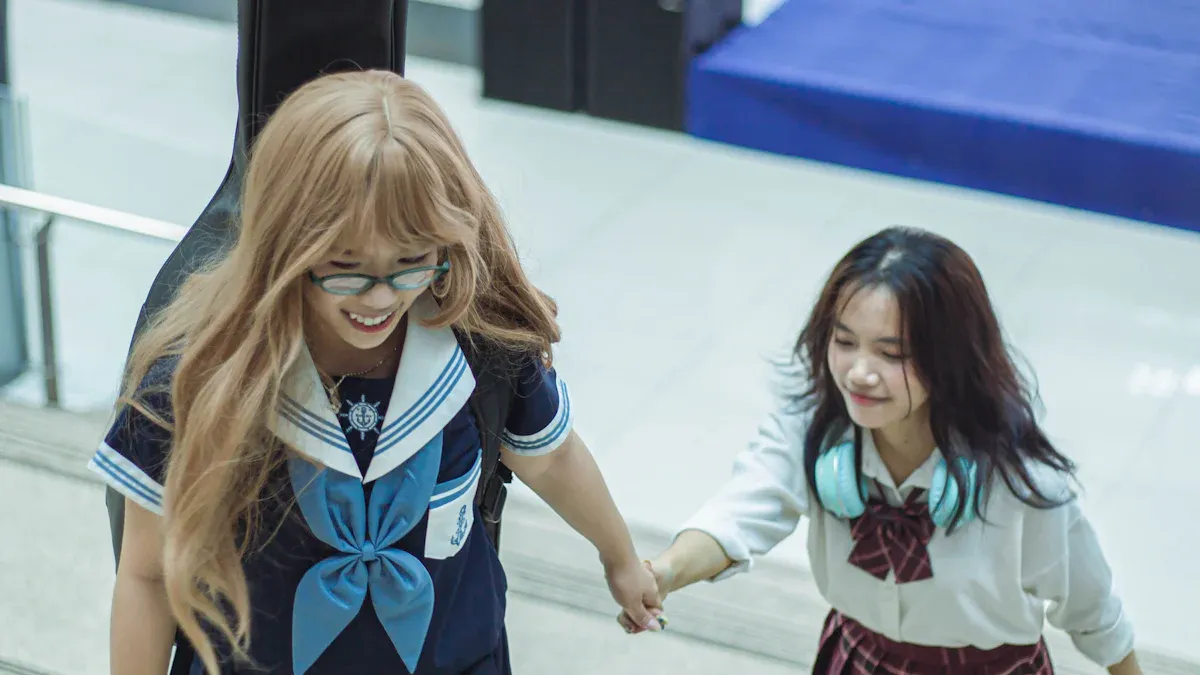
Anime, Manga, and Media Influence
You often see Japanese school uniforms in anime and manga. These stories show students in bright and cool seifuku. Real uniforms are much simpler. Most schools use navy, black, or beige colors. Anime characters wear bold uniforms with fun extras. Schools do not let students wear these things.
Anime shows creative uniforms, but real schools want rules. Students must look the same. This shows that Japanese culture cares about group harmony.
Many famous anime and manga use uniforms to show youth. The sailor suit and military uniform are in many stories. These uniforms help you feel what students feel. They show love, friendship, and growing up. Sometimes, media shows rebellious styles like sukeban. This look became popular in movies and manga. It made uniforms a sign of being different and standing out.
Time Period | Uniform Style Description | Cultural Influence |
|---|---|---|
Pre-1920 | Boys wore military uniform, based on military uniforms. | Showed respect and modern ideas from the West. |
1920s | Girls’ sailor suits, based on British Navy. | Became a sign of youth and purity. |
Post-WWII | Relaxed styles, summer uniforms, gym clothes. | Changed to comfort and being yourself. |
Late 1990s | Blazers and ties replaced sailor suits. | Matched world fashion trends. |
Present | Mix of old and new uniform styles. | Shows the struggle between fitting in and being yourself. |
Genderless and Customizable Uniforms
There is a big change in Japanese school uniforms today. Many schools now have genderless uniforms. Students can pick pants or skirts, no matter their gender. About 40% of schools have genderless uniforms or let students choose. Around 60% of schools allow or plan to allow LGBTQ-inclusive uniforms.
“Students at Mizue Daini Junior High School in Tokyo can mix and match their uniforms because of the ‘genderless uniform‘ rule.”
Mr. Naoya Seki from the Edogawa ward’s education board said, “We needed to rethink old ideas and respect every student as an individual.” Schools want students to feel safe and welcome. More than half of schools have changed or will change their uniforms.
Genderless uniforms help students feel safe and respected.
You can show your style with customizable uniforms.
These changes show how Japanese uniforms are changing and reflect new ideas in Japan.
The move to genderless uniforms is a new step for Japanese school uniforms. You see old and new styles coming together. Schools now care more about each student and their choices.
Social and Cultural Significance of Japanese School Uniforms
Identity, Belonging, and Controversies
Wearing a uniform in Japan means you are part of a group. Uniforms help students feel equal with each other. You do not have to worry about expensive clothes or brands. This makes it easier to focus on school and friends. Uniforms help students come together and show school pride.
Uniforms make students equal by removing clothing differences.
You can focus on learning because you do not worry about outfits.
Wearing the same uniform helps you feel proud and builds community.
The tsume-eri is a traditional uniform that stands for discipline. Japanese culture values harmony and group identity. Uniforms show you belong and follow school rules. Some people think uniforms help students act well and work together.
Uniforms stand for discipline, unity, and equality.
You share a school identity that is bigger than personal style.
Uniforms help make a good place to learn.
There are debates about uniforms in Japan. Some students and parents want more freedom in what they wear. Others worry about the cost of new uniforms, especially when styles change. Many families use hand-me-downs or get help from the PTA. Some parents want schools to allow basic color choices.
Evidence Type | Findings |
|---|---|
Proponents’ View | Uniforms may help discipline and group spirit, which helps schoolwork. |
Opponents’ View | Uniforms can limit self-expression and hurt self-esteem. |
Overall Findings | Studies show little effect on social skills or attendance. |
Reflection of Societal Change
Japanese uniforms change as society changes. In the past, uniforms showed elite status and tradition. When more students went to college, uniforms became a sign of school identity and equality. Student protests in the 1960s and 1970s challenged strict uniform rules. By the 1980s, schools started using blazers and modern styles.
Today, many schools have genderless uniforms. Students can pick pants or skirts, no matter their gender. This change respects personal expression and supports LGBTQ students. The Education Ministry asks schools to think about students’ needs and give more choices. Japanese culture keeps changing, and uniforms show these new ideas.
Some schools now have uniforms that do not follow old gender rules.
Students can choose what fits their identity best.
Parents and students want uniforms to be flexible and affordable.
Japanese uniforms show how tradition and new ideas mix. Uniforms change with society and help students feel included.
You can see that school uniforms in Japan changed a lot from the Meiji era to now. The table below shows important events, like the taishō period, that changed student life:
Year | Milestone | Impact on Student Life |
|---|---|---|
1879 | Gakushūin adopts the first school uniform | Made some students feel special and inspired other schools. |
1886 | Imperial University adopts naval-style uniforms | Connected uniforms to social rank and student goals. |
1900 | Introduction of pleated skirt for female students | Let girls join more school activities. |
1920s | Shift to Western-style sailor suits for girls | Helped students find new ways to show themselves. |
1960s-70s | Student movements challenge uniform policies | Some schools stopped using uniforms, letting students speak up. |
1980s | Shift from sailor uniforms to blazers | Added more styles and made schools look better. |
You can see that uniform changes match changes in Japanese society. Uniforms went from old styles to modern ones. This shows Japan cares about world fashion. Genderless uniforms let students pick what fits them best. Students sometimes choose schools because of uniforms. This means fashion is important in education.
Experts think school uniforms will keep growing and changing. You will see new trends like eco-friendly clothes, custom designs, and smart fabrics. The market will get bigger with new technology and what students want.
Japanese school uniforms keep changing over time. You will see new styles and ideas that show who you are and what you believe.
FAQ
What do Japanese students usually wear to school?
You usually wear a uniform. Most schools require blazers, shirts, and skirts or pants. Some schools let you choose between pants and skirts. Uniforms help you feel part of your school.
Why do Japanese schools use uniforms?
Uniforms help you feel equal with classmates. You do not need to worry about fashion or brands. Schools believe uniforms teach discipline and unity.
Can you customize your school uniform?
Some schools let you pick accessories like bags or socks. A few schools allow you to choose pants or skirts. You can show your style in small ways.
Do all Japanese schools have the same uniform?
No, you see many styles. Some schools use blazers and plaid skirts. Others use sailor suits or simple shirts. Each school picks its own design.
How do anime and manga affect real uniforms?
Anime and manga show colorful and creative uniforms. You see bold styles in stories. Real uniforms stay simple and follow school rules.