
“Micron count for itch‑free sweaters” is best defined as a dual‑metric threshold: Mean Fiber Diameter (MFD) at or below 19.5 µm, paired with a very low share of coarse fibers—specifically, fibers over 30 µm (%>30 µm) kept around 1.0% (and no higher than 2.0%). These metrics are measured on accredited OFDA or Laserscan reports and, together, predict whether a wool sweater feels comfortable against bare skin.
Key takeaways
Core threshold: For next‑to‑skin sweaters, aim for MFD ≤ 19.5 µm and keep %>30 µm near 1.0% (ceiling 2.0%).
Why it works: Coarse fibers above ~30–32 µm drive mechanical “prickle”; controlling the coarse tail matters as much as the mean.
Testable and auditable: Use IWTO‑recognized methods—Laserscan (IWTO‑12) or OFDA (IWTO‑47/62)—and require histograms, SD/CvD, and Comfort Factor on certificates.
ROI focus: Stricter coarse‑tail control at a given MFD is linked to fewer “itchy/scratchy” complaints and lower return rates; quantify impact with your own A/B data.
Practical gates: Premium next‑to‑skin often means MFD ≤ 18.5 µm and %>30 µm ≤ 0.5–1.0%; standard next‑to‑skin can work at MFD ≤ 19.5–20.0 µm with %>30 µm ≤ 1.5–3.0%.
Primer: micron count for itch‑free sweaters (MFD vs %>30 µm)
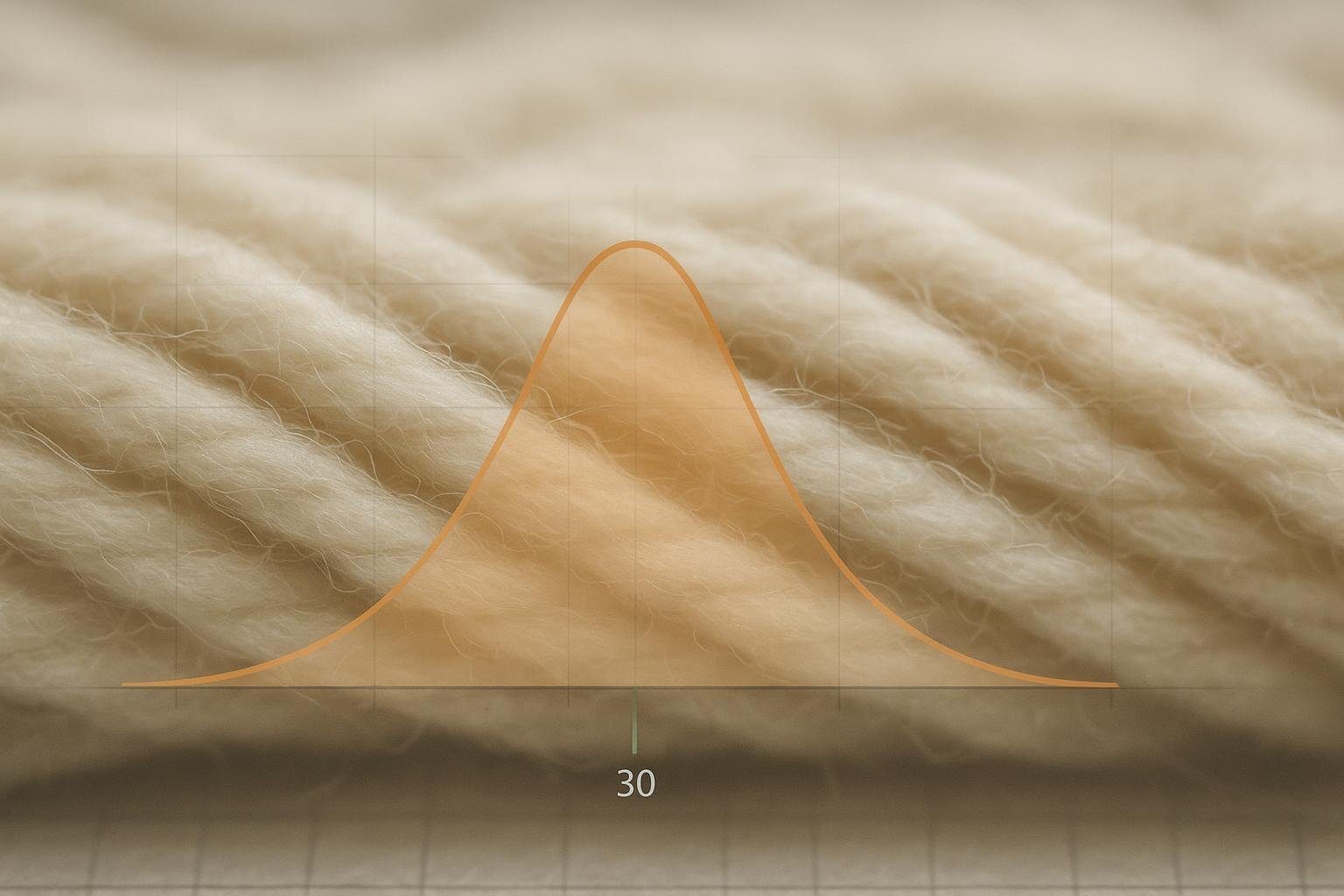
MFD is the arithmetic mean of fiber diameters in a sample. Lower means finer, and finer usually feels softer. But two yarns with the same mean can feel different if one has a “fatter” coarse tail in its diameter distribution. That’s where %>30 µm (sometimes reported via Comfort Factor, the complement) comes in: it quantifies the fraction of stiff, thick fibers most likely to trigger prickle when a garment is worn next to skin.
Dermatology and textile science agree the discomfort isn’t about “wool allergy” for the typical wearer. It’s a mechanical response: very coarse fibers don’t bend on contact and activate cutaneous nociceptors. Keeping the coarse tail very low while maintaining a fine mean reduces that stimulus. Think of it this way: the average height of a crowd tells you something, but a handful of towering outliers can still block your view—the coarse tail is those outliers.
What the literature and standards say
Mechanism and thresholds: A consensus article in Acta Dermato‑Venereologica explains that prickle is driven by coarse fibers, typically above ~30–32 µm, and recommends superfine wools for sensitive skin. See the dermatology summary in the peer‑reviewed piece “Wool and Skin Health,” which debunks the idea of a general “wool allergy” and centers diameter as the driver of discomfort, with next‑to‑skin use requiring finer fibers. Read the discussion in the journal’s consensus article for context: Acta Dermato‑Venereologica consensus on wool and skin (2017).
Dominant role of diameter and wearer‑trial evidence: A comprehensive review synthesizes clinical trials and measurement methods, finding fiber diameter the dominant determinant of comfort and pointing readers to standard instrument outputs. See Doyle et al.’s peer‑reviewed review (2021).
Method and report outputs: CSIRO’s Laserscan overview documents that accredited reports include mean diameter, distribution (histogram), coefficient of variation of diameter (CvD), and Comfort Factor (share of fibers below ~30.5 µm). Details at CSIRO’s Laserscan fibre measurement page. SGS technical bulletins describe how labs report MFD, SD, CvD, and CF and show typical distributions: SGS mean fibre diameter and distribution notes.
Procurement anchor for coarse‑tail limits: For fine apparel tops, USDA’s grading language includes “30.1 microns and over: not more than 1%,” which provides usable wording for sourcing contracts. See USDA AMS wool grades and standards. For diameter bands aligned to next‑to‑skin applications, see IWTO Wool Notes 2024.
Acceptance criteria for “itch‑free sweater” yarns and tops
Set procurement specs that can be measured and audited. The table below summarizes practical gates for next‑to‑skin knitwear.
Metric | Target/Window | Absolute ceiling | Why it matters | Test method & reporting |
|---|---|---|---|---|
Mean Fiber Diameter (MFD) | ≤ 19.5 µm (preferred 18.0–19.5 µm) | Consider reject > 19.8 µm unless %>30 µm ≤ 1.5% and handle panel passes | Finer mean reduces overall stiffness and enhances perceived softness | IWTO‑12 (Laserscan) or IWTO‑47/62 (OFDA); require MFD, SD, CvD, histogram |
% of fibers > 30 µm | Target ≤ 1.0% | 2.0% | Coarse fibers (>30–32 µm) drive prickle; keep coarse tail minimal | Report Comfort Factor and compute %>30 µm; show histogram bins near 30 µm |
CvD (coefficient of variation of diameter) | ≤ 24–26% | Investigate > 28% | Lower variability improves handle consistency and reduces odds of coarse outliers | Include CvD/SD on certificate; compare to historical lots |
Sampling (yarn/top intake) | 5 cones per lot; composite snips; thousands of fibers measured | — | Representative sampling improves confidence without slowing timelines | Lab certificate must show method, sample size, histogram, CF |
How to read a Laserscan/OFDA certificate
Use a simple checklist so teams make consistent decisions:
Confirm the method and lab: IWTO‑12 (Laserscan) or IWTO‑47/62 (OFDA), with accreditation visible on the certificate.
Check sample size and resolution: thousands of fibers measured, with a diameter histogram (often 1 µm bins) and Comfort Factor (%<30 or %<30.5 µm).
Extract the core stats: MFD, SD, CvD. Compute %>30 µm as 100 − CF and note where the histogram sits around 30 µm.
Compare to spec gates: MFD ≤ 19.5 µm and %>30 µm ≤ 1.0% (ceiling 2.0%). If either is borderline, run a small, blinded handle panel before acceptance.
Record traceability: capture certificate number, IWTO method, and (if provided) instrument ID and calibration batch for audit trails.
For examples of expected outputs and definitions, see the method overviews at CSIRO on Laserscan outputs and SGS bulletins on distributions and Comfort Factor.
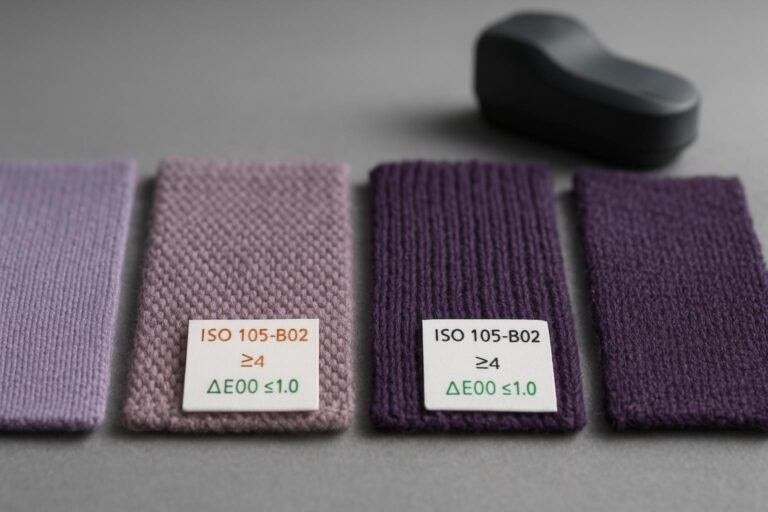
Swatch verification and short wear‑panel SOP
Lab metrics should lead, but a quick, blinded wear check can catch edge cases where construction or finishing amplifies fiber ends at the skin. Here’s a compact approach that doesn’t slow launches:
Panel size and duration: 10–20 participants, 30–60 minutes of next‑to‑skin wear in controlled conditions. Use a simple Likert prickle scale and allow free‑text feedback.
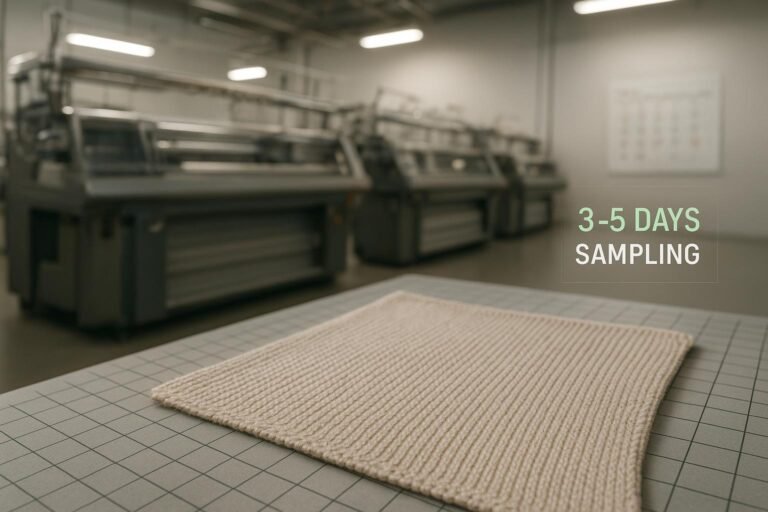
Sampling: Use swatches cut from production‑representative knits (start/middle/end of roll), noting gauge, yarn twist, and finishing.
Decision rule: Treat the panel as a sanity check when lab numbers are borderline; it’s not a substitute for diameter metrics.
The clinical mechanism and wearer‑trial rationale are summarized in Acta Dermato‑Venereologica’s consensus and in Doyle et al.’s review (2021).
KPI and ROI: linking thresholds to fewer returns and complaints
Your primary KPI is the return rate and complaint/NPS tags related to “itchy/scratchy.” The causal link—coarse fibers above ~30–32 µm increase prickle—is well supported. The business impact flows from fewer prickle‑flagged returns and negative reviews when %>30 µm is tightly controlled at a given MFD.
A simple model to start:
Define two sourcing bands: (A) MFD 18.5–19.5 µm with %>30 µm ≤ 1.0%; (B) MFD 20–21 µm with %>30 µm 2–3%.
Run parallel seasons or A/B buys on similar styles. Track the share of returns tagged “itchy/scratchy,” related support tickets, and NPS comments.
Quantify avoided reverse‑logistics costs (shipping, reprocessing), margin preserved, and review‑driven sales lift. Use conservative attribution and confidence intervals. Report the certificate numbers and methods for both cohorts to keep the analysis audit‑ready.
The literature establishes the causality; your brand data establishes the magnitude. See the mechanistic and trial synthesis in Doyle et al. (2021).
Practical example (anonymized benchmark)
Disclosure: AzKnit is our product. The following is a neutral, anonymized example used as an external benchmark for how a factory might set and verify comfort‑relevant gates.
Scenario: A next‑to‑skin crewneck sweater program requires MFD ≤ 19.5 µm and %>30 µm ≤ 1.0% (ceiling 2.0%). The intake certificate shows MFD 19.2 µm, CvD 24.5%, Comfort Factor 99.1% (so %>30 µm = 0.9%), IWTO‑12 Laserscan, certificate no. LS‑24‑01987.
Decision: Accept the lot. Histogram shows minimal mass beyond 30 µm. Proceed to swatch verification; a 15‑person, 45‑minute blinded panel yields a median prickle score within tolerance and no strong outliers.
Borderline illustration: Another lot reads MFD 19.4 µm but CF 97.8% (%>30 µm = 2.2%). Despite the fine mean, the coarse tail exceeds the ceiling. Either reject or request corrective action (e.g., dehairing or alternate top). If time‑critical, run a handle panel; if prickle risk remains high, do not use for next‑to‑skin styles.
Next steps and procurement language
Use contract wording that is specific and auditable:
For next‑to‑skin wool knitwear, supplier shall provide accredited test certificates (IWTO‑12 Laserscan or IWTO‑47/62 OFDA) showing: (a) Mean Fiber Diameter ≤ 19.5 µm; (b) Comfort Factor report and histogram with % of fibers over 30 µm ≤ 1.0% (absolute ceiling 2.0%); (c) SD and CvD disclosed; (d) sample size and instrument/method reference. Lots exceeding these limits require corrective actions or technical sign‑off following a blinded handle verification.
For method primers and report anatomy, see CSIRO’s Laserscan explanation and SGS distribution/CF notes. For application‑aligned diameter bands, review IWTO Wool Notes 2024. For a coarse‑tail cap suitable for tops, reference USDA AMS language on “30.1 microns and over: not more than 1%”.
Closing
If you’re specifying next‑to‑skin sweaters, treat “micron count for itch‑free sweaters” as a dual gate: MFD at or below 19.5 µm and %>30 µm near 1.0% with a hard ceiling at 2.0%. Verify with accredited IWTO methods, read the histogram—not just the mean—and use a quick wear panel when you’re on the fence. Do that, and you’ll give shoppers the soft feel they expect while keeping avoidable “itchy/scratchy” returns in check.