
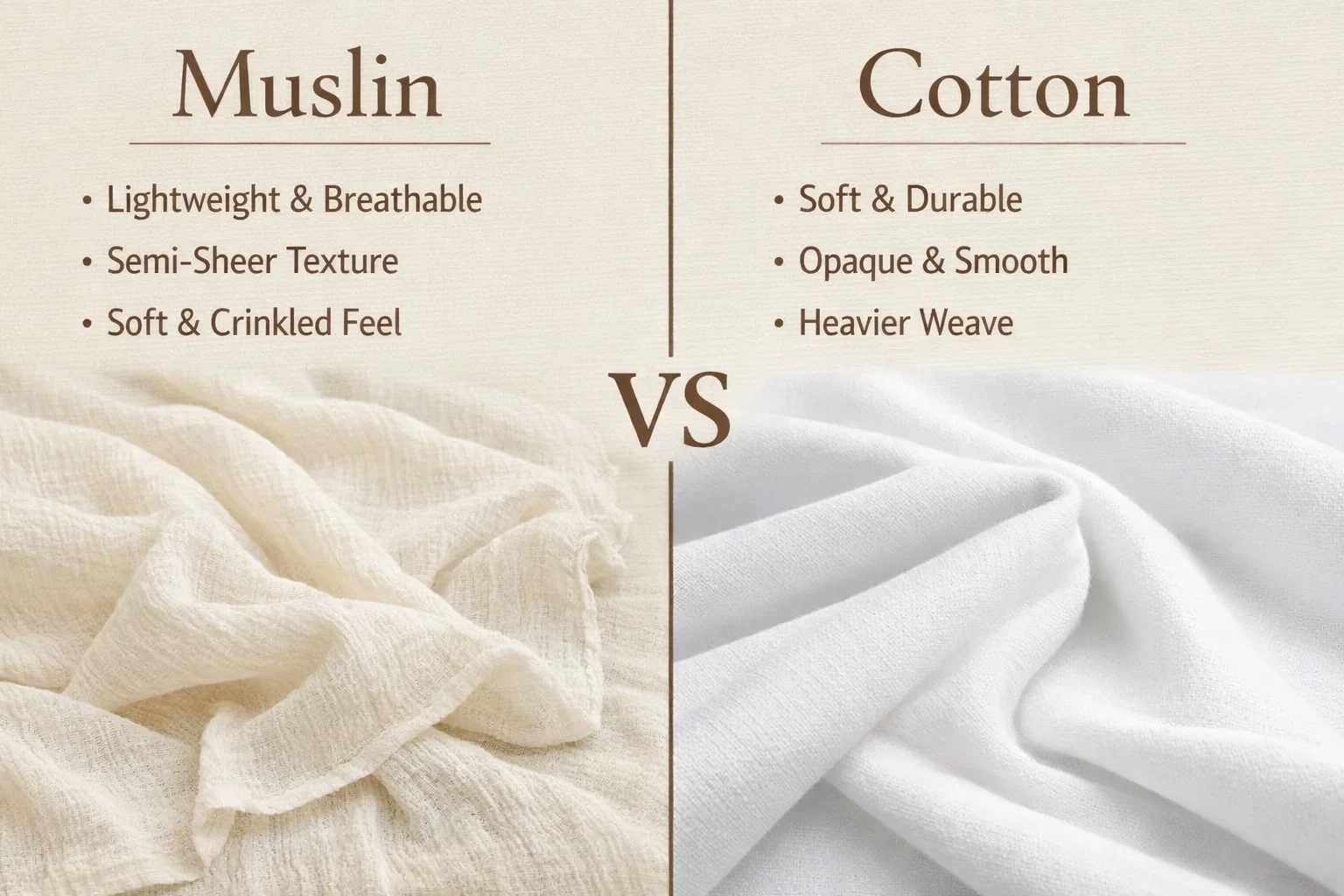
Imagine you want to make a baby blanket or a light summer dress. You have to pick between muslin vs cotton. If you want a fabric that feels cool and light, muslin is a great choice. It lets air pass through and feels soft on your skin. If you need something strong with a smooth look, cotton is better. Look at the table below to see how muslin vs cotton compare:
Factor | Muslin | Cotton |
|---|---|---|
Breathability | Excellent | Good |
Softness | Textured, gauzy | Smooth, very soft |
Durability | Less durable | More durable |
Moisture-wicking | Dries fast | Absorbent, dries slower |
Styling potential | Elegant draping | Versatile for many styles |
Think about comfort, how long you want the fabric to last, and how you will wash it.
Key Takeaways
Muslin is light and lets air through. It is great for summer clothes and things for babies. Cotton is strong and can be used in many ways. It is good for clothes you wear a lot and things that need to last. Think about how soft the fabric is and how to wash it when you pick muslin or cotton for your project. Use muslin if you want something soft and gentle. Cotton is better for things that will be used often. Always try out small pieces of fabric first. Check if they shrink or feel soft before you start your project. This helps you get the best results.
Muslin and Cotton Overview
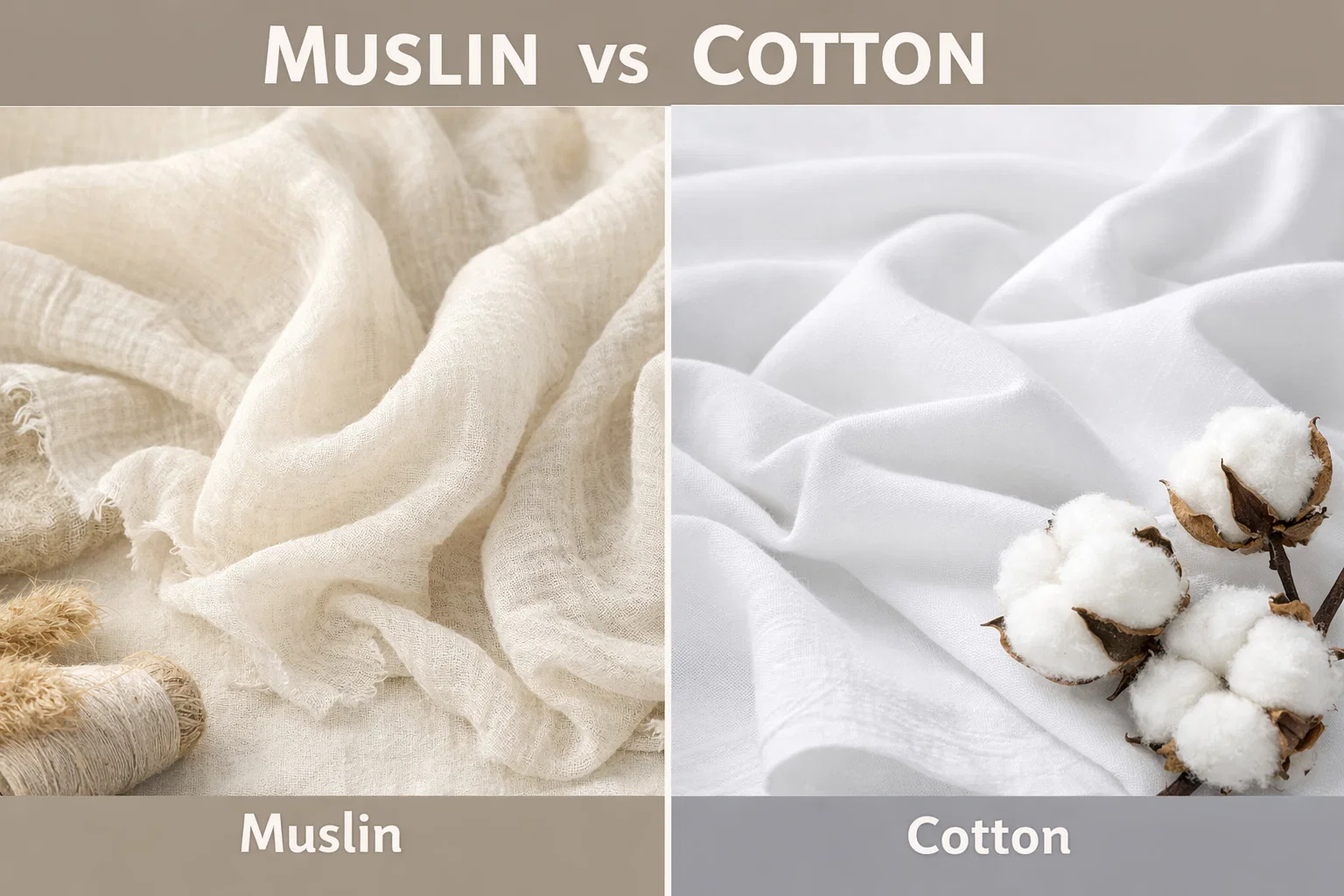
What Is Muslin?
You may notice muslin in many places, from clothing to kitchen tools. Muslin is a plain-weave fabric made from cotton fibers. People have used muslin for centuries because it feels light and lets air pass through easily. You can find muslin in many forms, but it always keeps its soft and airy feel. Muslin often looks a bit sheer and has a gentle texture. When you wash muslin, it becomes even softer, which makes it great for sensitive skin. You can use muslin for clothing, crafts, or even medical bandages. The simple way people make muslin gives it a natural and comfortable quality.
What Is Cotton?
Cotton is one of the most popular fabrics in the world. You see cotton in t-shirts, sheets, and jeans. Cotton comes from the fluffy fibers of the cotton plant. People grow cotton in warm, dry places. After picking the cotton, workers clean, card, and spin the fibers into yarn. Factories then weave the yarn into fabric. Cotton can feel soft or crisp, depending on how people make it. You can find cotton in many types, such as Pima, Egyptian, or Upland. Each type has its own feel and strength. Cotton fabric works well for many uses because it is strong, easy to wash, and comfortable.
Key Features
You can compare muslin and cotton by looking at their main features:
Feature | Muslin | Cotton |
|---|---|---|
Weave Type | Plain, twill, or other weaves | |
Weight | Usually lightweight | Light to heavy |
Softness | Very soft, gets softer with wash | Varies by type |
Breathability | Highly breathable | Generally breathable |
Absorbency | Very absorbent | Absorbent |
Thread Count | 40-80 (modern muslin) | Varies widely |
Muslin uses a simple weaving process, which gives it a loose, airy feel. Cotton fabric can be woven tightly or loosely, so it can be thick or thin. Muslin stands out for its lightness and comfort, while cotton is known for its strength and wide range of uses. You can choose muslin when you want something soft and cool. You can pick cotton when you need something strong and long-lasting.
Muslin vs Cotton: Main Differences
Weave and Texture
When you look at muslin vs cotton, the weave is one of the key differences. Muslin uses a plain weave. In this weave, one weft thread goes over and under each warp thread. This simple pattern makes muslin lightweight and breathable. You can feel the air move through the fabric. The texture of muslin can range from smooth to slightly coarse, but it always feels airy.
Cotton fabrics can use many types of weaves. Some cotton fabrics have a tight weave, which makes them denser and more durable. Others use a looser weave for a softer feel. The texture of cotton can be smooth, crisp, or even heavy, depending on the weave and the type of cotton used.
Fabric Type | Weaving Technique | Characteristics |
|---|---|---|
Muslin | Plain weave | Lightweight, fine, breathable |
Cotton | Tighter or varied | Denser, more durable, versatile |
Tip: If you want a fabric that feels light and lets air pass through, muslin is a great choice. For projects that need a sturdy fabric, cotton with a tighter weave works better.
Softness and Comfort
Softness is important when you choose fabric for clothing or bedding. Muslin feels soft right away and gets even softer after each wash. Many people love muslin for its gentle touch, especially for sensitive skin. Some users say muslin bedding helps them sleep better because it keeps them cool and comfortable all night.
Cotton also offers softness, but it depends on the type and weave. Some cotton fabrics, like Egyptian or Pima, feel very smooth and soft. Others, like denim, feel rougher. Both muslin and cotton can feel soft, but muslin stands out for its airy, gentle touch.
Muslin is soft and becomes softer with every wash.
Cotton can be soft or crisp, depending on the type.
Both fabrics work well for comfort, but muslin is often chosen for its gentle feel.
Durability
Durability matters if you want your project to last. Muslin has good tear strength, so it does not rip easily. You can use muslin for many things, but it is not as tough as some cotton fabrics. Muslin works well for items that do not need to handle a lot of wear and tear.
Cotton is known for its strength. Tightly woven cotton fabrics, like denim or canvas, can handle a lot of use. Some cotton fabrics can withstand thousands of abrasion cycles. If you need a fabric that holds its shape and lasts a long time, cotton is the better choice.
Muslin resists tearing but is less durable than heavy cotton.
Cotton fabrics can be very durable, especially with a tight weave.
Choose muslin for light use and cotton for heavy-duty projects.
Breathability
Breathability is a big reason people choose muslin vs cotton for summer clothes or bedding. Muslin’s loose weave lets air flow easily. This makes muslin lightweight and breathable, perfect for hot weather. Muslin also wicks away moisture and dries quickly, so you stay cool and dry.
Cotton is also breathable, but the level depends on the weave. Some cotton fabrics, like broadcloth, are less airy. Others, like cotton gauze, let more air pass through. Both muslin and cotton help keep you comfortable, but muslin is the top pick for breathability.
Muslin’s loose weave gives it excellent breathability.
Cotton’s breathability changes with the weave.
Both fabrics work for warm weather, but muslin keeps you cooler.
Care and Maintenance
You want your fabric to last, so care is important. Muslin needs gentle washing. Use cold water and a gentle cycle. Lay muslin flat to dry or use low heat in the dryer. Avoid bleach and fabric softeners, as they can damage the fibers. Muslin gets softer with each wash, but rough handling can cause it to lose shape.
Cotton is easier to care for. You can wash most cotton fabrics in warm or cold water on a normal cycle. You can dry cotton in the dryer. Like muslin, cotton gets softer with each wash. Avoid bleach and fabric softeners to keep the fabric in good shape.
Care Aspect | Muslin Care Instructions | Cotton Care Instructions |
|---|---|---|
Washing | Cold water, gentle cycle | Machine wash on normal settings |
Drying | Lay flat or low heat in dryer | Machine dry on normal settings |
Fabric Softener | Avoid | Avoid |
Bleach | Avoid | Avoid |
Ironing | Do not iron | Not usually needed |
Softening with Wash | Gets softer with every wash | Gets softer with every wash |
Note: Handwashing is safest for delicate muslin. For thicker muslin or cotton, machine washing on a gentle cycle is fine.
When you compare muslin vs cotton, you see that both have strengths. Muslin stands out for its lightweight and breathable feel, while cotton is known for its durability and shape retention. Knowing these key differences helps you pick the right fabric for your next project.
Best Uses for Each Fabric
Clothing
You see muslin and cotton in many types of clothing. Muslin works well for summer dresses, blouses, and children’s clothes. You feel cool and comfortable because muslin is lightweight and airy. Many people choose muslin for casual wear and traditional garments. The softness of muslin makes it gentle on your skin, which is why parents often pick it for kids’ outfits.
Cotton is a staple in the fashion industry. You find cotton in t-shirts, jeans, and everyday wear. High-quality cotton gives you comfort and durability. You can wear cotton for work, play, or special events. The fabric holds its shape and stands up to frequent washing. When you think about styling muslin and cotton, you notice that muslin brings a relaxed, breezy look, while cotton offers structure and versatility.
Tip: Muslin is perfect for hot, humid days. Cotton is better for clothes that need to last and look neat.
Quilting and Crafts
You can use muslin and cotton for many craft projects. Quilting cotton is sturdy and easy to handle. You get crisp lines and a polished look in your finished quilts. Beginners like cotton because it holds its shape and comes in many colors and prints.
Muslin is popular for sewing, doll-making, and as a backing for quilts. You can use muslin for test garments, also called “toiles,” before cutting your final fabric. Muslin is easy to sew and cut, but it is less durable than cotton. For crafts that need strength, choose cotton. For projects that need a soft, natural touch, muslin is a good pick.
Baby Products
You want safe and gentle fabrics for babies. Muslin is praised for its breathability and softness. The open weave lets air flow, which helps prevent overheating. Muslin swaddles and blankets keep babies cozy without getting too warm. Many parents love muslin for its gentle feel on sensitive skin.
Cotton is also a favorite for baby items. You find cotton in swaddles, onesies, and crib sheets. Cotton is hypoallergenic and easy to wash. Some parents prefer cotton for its lightweight fabric and practicality. Both muslin and cotton meet safety standards for baby products.
Home Decor
You can use muslin and cotton to decorate your home. Muslin gives a natural look, which fits earthy or Scandinavian styles. You see muslin in sheer curtains, canopies, and table linens. The fabric is breathable and lets light in while giving you privacy. Muslin is eco-friendly, non-toxic, and safe for homes with children.
Cotton is common in upholstery, cushion covers, and drapes. You find cotton in many design styles, from country to coastal. High-quality cotton adds comfort and style to your space. You can pick cotton for items that need to last and look polished.
Home Decor Use | Muslin Features | Cotton Features |
|---|---|---|
Curtains | Sheer, lets in light, natural look | Dense, blocks more light, structured |
Table Linens | Soft, eco-friendly, easy to style | Durable, easy to clean, many patterns |
Cushion Covers | Breathable, gentle on skin | Strong, holds shape, versatile designs |
You can choose muslin for a soft, airy feel or cotton for strength and variety in your home.
Choosing the Right Fabric
Project Needs Checklist
When you decide between muslin vs cotton, you want to match the fabric to your project. Use this checklist to help you make the best choice:
Define your use case. Are you making baby clothes, a summer dress, or cleaning cloths?
Check the fiber content. Look for 100% cotton for breathability and comfort.
Evaluate the weight and GSM. Weigh the fabric if possible to see if it fits your needs.
Assess the weave tightness. Hold the fabric up to the light. A tighter weave means more durability.
Test for softness. Rub the fabric against your wrist to check comfort.
Review shrinkage information. Wash a small sample and see if it shrinks.
Inspect edges for fraying. Launder a piece to check seam strength.
Verify certifications. Look for labels like GOTS or Oeko-Tex for safety.
Avoid red flags. Watch for signs of aging or poor quality.
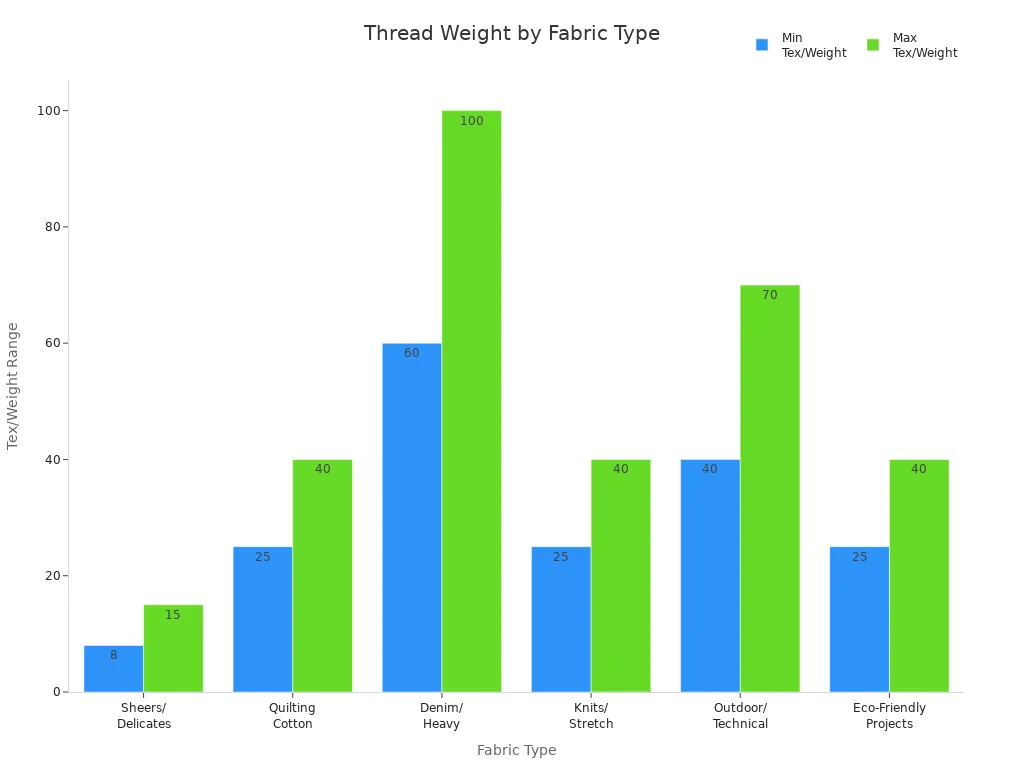
You can also match fabric properties to your project using this table:
Fabric Type | Recommended Thread Fiber | Tex/Weight Range | Project Examples |
|---|---|---|---|
Sheers/Delicates | Silk, Fine Polyester | Tex 8–15 | Chiffon blouses, lace trim |
Quilting Cotton | Cotton, Cotton-Poly | Tex 25–40 | Quilts, shirts |
Denim/Heavy Fabrics | Polyester-Core, Cotton | Tex 60+ | Jeans, workwear |
Knits/Stretch | Polyester | Tex 25–40 | T-shirts, sportswear |
Eco-Friendly | Organic Cotton | Tex 25–40 | Baby clothes, sustainable wear |
Mistakes to Avoid
You want your project to succeed, so avoid these common mistakes:
Forgetting to define your use case. If you skip this, you might pick the wrong weight or finish.
Ignoring fiber labels. Always check for 100% cotton if you want purity. Blends may not behave the same.
Overlooking weave density. Hold the fabric to the light. Too much light means it may not last.
Not testing for shrinkage. Wash a sample first. If it shrinks more than 8%, adjust your pattern.
Skipping drape tests. Drape the fabric over your arm or a mannequin. Make sure it matches your final vision.
Missing certifications. Look for safety and sustainability labels.
Not buying swatches. Order samples before buying in bulk.
If you want a soft, airy feel, choose muslin. For strength and structure, choose cotton. Always test and review before starting your project.
You can notice big differences between muslin and cotton. Muslin feels light and lets air move through. Cotton is strong and keeps its shape well. Muslin is good for clothes in hot weather, baby blankets, or photo backdrops. Cotton is better for clothes you wear a lot or things that get used often. The table below shows what fabric experts think:
Fabric Type | Key Characteristics | Best Uses |
|---|---|---|
Cotton | Durable, shape-retaining | Everyday clothing, heavy-use items |
Muslin | Lightweight, breathable | Hot-weather garments, baby products, photography backdrops |
Muslin is great for soft and light projects.
Cotton is best for things that need to last.
Picking muslin or cotton depends on what you are making.
Use the checklist to help you choose the right fabric.
FAQ
Can you use muslin for quilting?
You can use muslin for quilt backings or practice blocks. Muslin feels soft and lightweight. Cotton works better for the quilt top because it holds its shape and lasts longer.
Is cotton or muslin better for baby blankets?
Muslin feels gentle and breathable, which makes it great for baby blankets. Cotton gives you more durability. You can choose muslin for softness or cotton for strength.
How do you wash muslin and cotton fabrics?
Wash muslin in cold water on a gentle cycle. Lay flat or use low heat to dry.
Wash cotton in warm or cold water. Dry on normal settings. Avoid bleach for both fabrics.
Does muslin shrink more than cotton?
Muslin can shrink more than tightly woven cotton. Always wash and dry a sample before starting your project. This step helps you avoid surprises.