Sweater collars (more accurately: necklines) look like a small detail—until you’re building a line and suddenly they’re driving everything else: styling photos, layering compatibility, customer comfort, and even fit-related returns.
If you’ve ever had a sample that looked great on the hanger but felt “tight at the neck,” gaped at the collarbone, or stretched out after wear, you already know the truth: neckline decisions are both design choices and production choices.
This guide breaks down the most common sweater collar types you’ll see in US retail (including popular types of sweater necklines), with clear definitions, when-to-use guidance, and the production notes that help you avoid the usual pitfalls.
Key Takeaway: In sweaters, “collar” often gets used as a catch-all term, but most of what people mean is the neckline shape plus the neck finish (rib, band, roll, shawl, etc.). Naming it correctly makes tech packs, sampling feedback, and sourcing conversations much smoother.
Collar vs neckline (in sweaters): what we’re actually talking about
In fashion, neckline is the shape of the opening at the top of a garment. A collar is an added structure around that opening (think: a turtleneck collar, a shawl collar, a polo collar).
In knitwear and casual retail listings, people blend the two terms. You’ll see “mock neck sweater” (collar) and “boat neck sweater” (neckline) used interchangeably as “neck styles.” A general index like the standard neckline term list (Wikipedia) is helpful, but sweater construction makes some of these behave differently than in woven tops.
How to choose a sweater neckline for a collection (the fast decision framework)
If you’re building an assortment, don’t pick necklines by vibes alone. Use a quick filter so your line stays cohesive and manufacturable.
1) Warmth vs breathability
Highest warmth: turtleneck, roll neck, funnel neck
Balanced: mock neck, shawl collar
Most breathable: V-neck, boat neck, scoop
Warmth isn’t only about height—the opening size and air gap matters too. A cowl can be warm because it drapes, but it can also leak heat if it sits loose.
2) Layerability (under coats and over shirts)
Layering is where a “beautiful neckline” can turn into a bulk problem.
If you expect customers to layer under blazers or coats, crew and mock neck are usually safest.
If your customer loves button-downs, a V-neck is a workhorse.
High collars (turtleneck/roll/funnel) can feel restrictive under tight outerwear—choose yarn and collar height carefully.
3) Styling range (how many outfits this sweater can live in)
Emerging brands win when one SKU can do multiple jobs.
Crew + V tend to have the widest outfit range.
Boat + cowl + shawl can be more editorial, but narrower in styling use-cases.
4) Return risk (the neckline problems that get called “bad fit”)
In sweaters, returns often spike when the neckline:
feels tight going over the head
sits too close to the throat
stretches and becomes sloppy
rolls or collapses in a way that looks “cheap”
A practical maker’s lens on neckline shaping and stability (translated into brand terms) can be found in resources like Tin Can Knits’ guide to sweater necklines (2021) and The Knitwit’s neckline sizing guidance (2020).
Sweater collar types: quick glossary map
If you’re skimming, here’s the simplest way to think about sweater collar types (a.k.a. sweater neckline types):
Closed: crew, high crew, scoop
Open: V-neck (including deep V), boat/bateau
High collars: turtleneck, mock neck, funnel neck, roll neck
Draped/wrap: cowl neck, shawl collar
With openings: quarter-zip/half-zip, henley placket, polo collar
Keep reading for the “what it is / when to use / production notes” for each.
Closed / round necklines (easy, dependable, retail-friendly)
Crew neck (round neck)
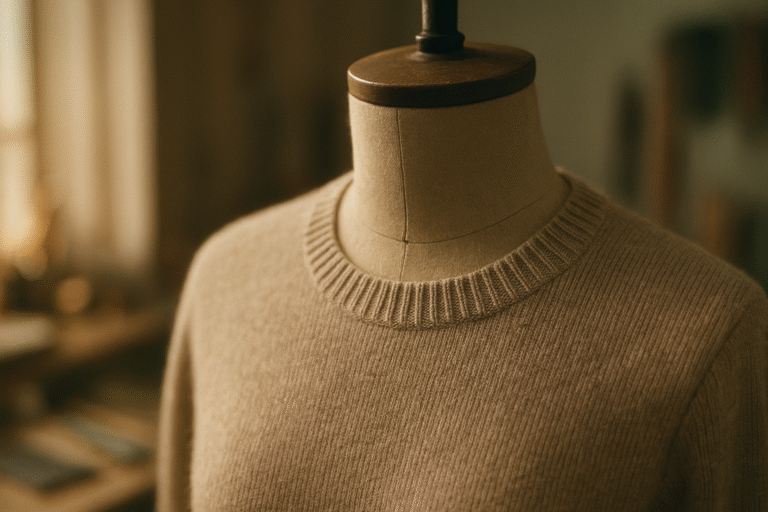
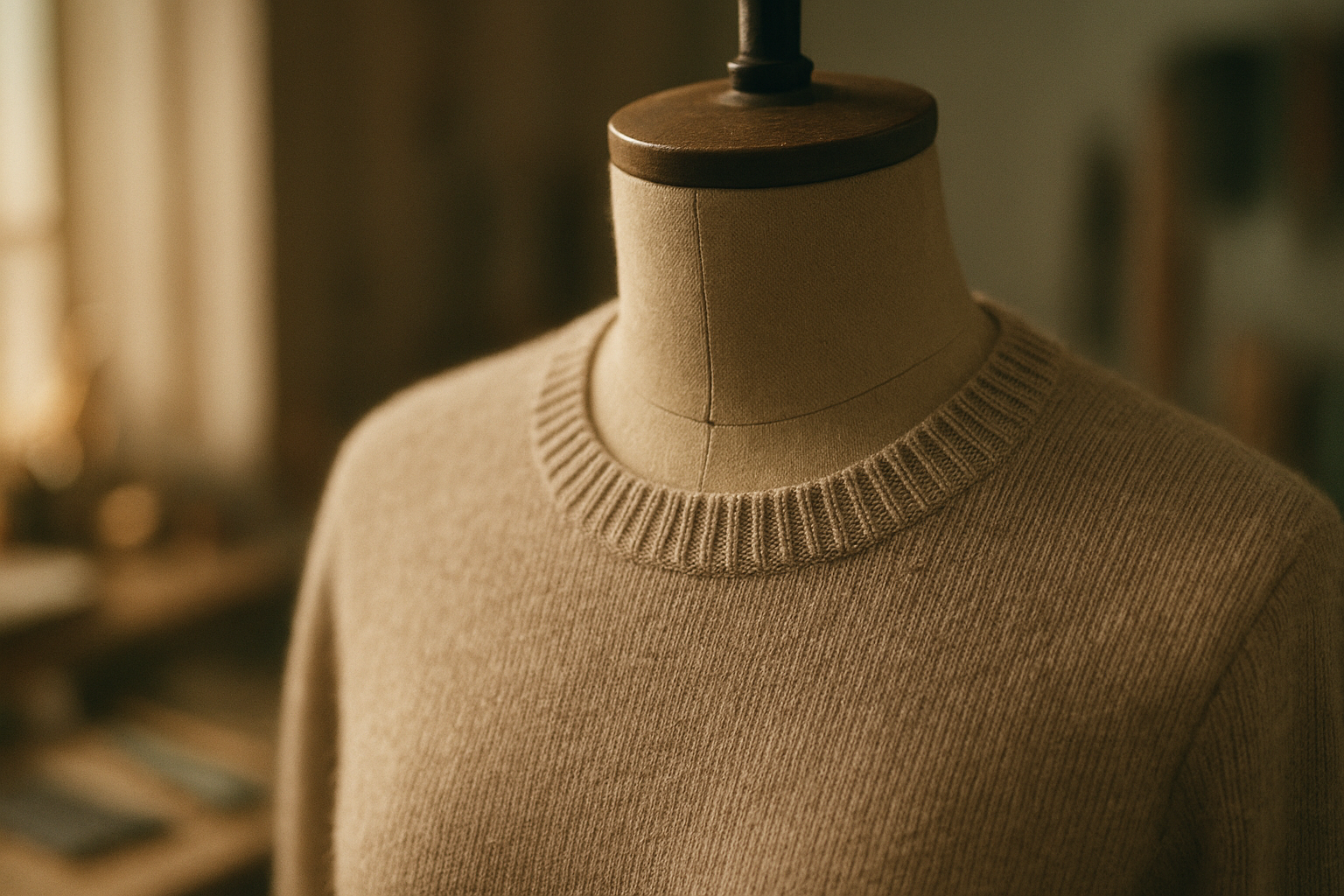
What it is: One of the most common sweater collar types—a classic round opening that sits at the base of the neck with a rib finish.
When to use it
You want the most broadly wearable neckline.
You’re building core colorways or “uniform” sweaters.
You need something that layers under jackets without bulk.
Production notes
The neck finish (often rib) does a lot of the work: too stretchy and it bags out; too firm and it feels tight going over the head.
If you’re specifying rib, clarify structure (e.g., 1×1 vs 2×2) and how you want the collar to sit.
Related terms: round neck, jewel neck (in some listings).
High crew / athletic crew
What it is: A crew neck with a slightly smaller opening or higher rise, often used for sportier silhouettes.
When to use it
You want a clean neckline that feels modern and minimal.
You’re making heavier knits where a wide opening looks sloppy.
Production notes
High crews magnify comfort issues. If the yarn has any prickle or the collar is tight, customers notice immediately.
Scoop neck
What it is: A deeper, rounded neckline that shows more collarbone than a crew.
When to use it
You’re designing for transitional seasons or a more feminine, open look.
You want an easy styling win with necklaces and layers.
Production notes
Deeper openings can drift or grow over time if the neckline isn’t stabilized.
Test with real wear: the neckline should sit flat without pulling or gaping.
Boat neck (bateau)
What it is: A wide neckline that runs horizontally across the collarbone toward the shoulders.
When to use it
You want a refined silhouette that’s different from crew/V.
Your collection supports a slightly dressier knit.
Production notes
The risk is slippage: if the neckline is too wide, it can fall off the shoulder, especially with softer yarns.
Boat necks are sensitive to shoulder shape—fit test on more than one body type.
Related terms: bateau, Sabrina neckline (sometimes).
Open necklines (more skin, more styling options—also more fit sensitivity)
V-neck
What it is: A V-shaped opening—one of the core sweater collar types used for clean layering.
When to use it
Your customer layers over shirts or wants a longer-looking neckline.
You’re designing “smart casual” knits that can live in retail or work settings.
Production notes
V-necks can distort if the chest is too tight or the neckline shaping is off—what looks like a “design issue” is often a fit/ease issue.
The point of the V is a stress zone. Reinforcement and clean finishing matter.
Related terms: deep V, cardigan V (for button-front styles).
Deep V / plunging V
What it is: A V-neck with extra depth.
When to use it
You want fashion-forward styling and clear layering intent.
Production notes
Returns often come from “too revealing” or “doesn’t sit right.” It’s not forgiving.
Plan the bra/undershirt reality: many customers won’t wear it without a layer.
Split crew (a crew with a notch)
What it is: A crew neckline with a small center-front split or notch.
When to use it
You want a subtle design detail without going full V-neck.
Production notes
The notch needs to hold its shape; otherwise it looks accidental.
High collars (warmth and presence—be careful with comfort and structure)
High collars are where confusion usually spikes because the names are close. If you’ve ever searched turtleneck vs mock neck vs funnel neck, you’ve seen how inconsistent the terminology can get.
A readable breakdown of the differences between similar neck styles is in Heddels’ breakdown of turtle, mock, and roll necks (2023) and knitwear-specific references like Knit Picks’ anatomy-of-a-sweater collar overview (2020).
Turtleneck (polo neck)
What it is: A tall, close-fitting collar that covers the neck and typically folds over.
When to use it
You need clear winter warmth.
You want a sleek silhouette that feels premium.
Production notes
Comfort is everything. Too tight at the opening feels claustrophobic.
Collar height changes the whole experience—sample it and test wear for at least a few hours.
Related terms: polo neck (UK), folded neck.
Mock neck
What it is: A shorter stand collar that sits higher than a crew neck but doesn’t fold like a turtleneck.
When to use it
You want a “polished” neckline without the full warmth/commitment of a turtleneck.
You’re designing for customers who dislike fabric touching the jawline.
Production notes
Mock necks need enough structure to stand, but not so much that they feel stiff.
Great candidate for fine-gauge knits where a full turtleneck would feel bulky.
Funnel neck
What it is: An upright collar that often stands slightly away from the neck, creating a funnel shape.
When to use it
You want modern, architectural lines.
Your customer likes warmth but doesn’t want a tight neck.
Production notes
Funnel necks are structure-dependent. If the yarn is too soft or the gauge too loose, the collar collapses.
Fit test with outerwear: a funnel can add bulk under a coat.
Roll neck
What it is: A high collar where the edge naturally rolls/curls rather than folding cleanly.
When to use it
You want an effortless, casual feel—often seen in fisherman or heritage styles.
Production notes
Rolling is part of the design, but uncontrolled rolling can look messy.
Keep an eye on “bump” or bunching issues at the neckline during sampling.
Draped / wrap collars (soft drama—more sensitive to yarn and weight)
Cowl neck
What it is: A long collar that drapes in soft folds like a built-in scarf.
A simple consumer-facing explanation appears in Shamrock Gift’s overview of crew, cowl, turtle, and shawl necklines. It’s also a helpful starting point if you’re comparing cowl neck vs turtleneck for warmth, comfort, and the amount of “neck coverage” your customer actually wants.
When to use it
You want softness and a more feminine silhouette.
You’re designing statement knits where the neckline is the focal point.
Production notes
Drape is controlled by yarn weight, gauge, and collar length.
Heavy yarn can pull the neckline down; light yarn can look limp.
Shawl collar
What it is: A collar that wraps around the neck like lapels, often seen on cardigans and heavier knits.
When to use it
You want a cozy “outerwear sweater” vibe.
You’re building premium cardigans with a strong silhouette.
Production notes
Shawl collars need clean shaping to avoid collapsing or twisting.
They add bulk—plan your merchandising and sizing accordingly.
Collars with openings (functional, retail-friendly, and great for fit flexibility)
Quarter-zip / half-zip
What it is: A zipper opening that allows a higher collar while still making the garment easy to put on.
When to use it
You want adjustability (warmth on/off) and sport-to-casual versatility.
You want fewer complaints about tight neck openings.
Production notes
Zips introduce hardware and QC complexity. Test zipper feel against skin.
Collar stability matters: a floppy zip collar looks cheap.
Polo collar
What it is: A fold-over collar (often with a placket), adapted to knitwear.
When to use it
You want a preppy or “smart knit” identity.
Your collection leans into layered looks.
Production notes
Collar roll and edge finish are quality tells. Make sure it sits cleanly.
Henley / placket neck
What it is: A short front opening (buttons/snaps) without a full collar.
When to use it
You want a casual staple with a little variation.
You want easier on/off without going full zip.
Production notes
Plackets need reinforcement; sloppy plackets read as poor construction.
Production notes that make or break sweater collar types (what to specify in a tech pack)
Most neckline issues come from a mismatch between desired look and structure.
Rib structure + gauge: why collars stretch or hold
Rib is popular at necklines because it provides elasticity and recovery. But “rib” is not one thing.
Rib stitch + gauge affect how firmly a neckline hugs and how well it snaps back.
Gauge also affects the feel of the collar: chunky gauges create thicker collars; fine gauges create cleaner, softer edges.
If you’re aligning design intent with manufacturing parameters, an accessible factory-side overview of how stitch type and gauge (GG) change fabric behavior appears in rib knits and sweater gauge (AzKnit knit structures).
Yarn choice: softness at the neck is not optional
The neckline sits on high-sensitivity skin. A yarn that feels “fine” on the body can still irritate at the neck.
If you’re selecting fibers or blends, it helps to speak the same language as your supplier. For example, yarn micron, ply, and twist influence softness, bulk, and durability—concepts summarized in yarn micron and ply basics (AzKnit yarn parameters).
Finishing: the professional details customers notice
Even with a good design, finishing can make a neckline look premium—or cheap.
Trims should add both stretch and stability.
Edges should sit flat.
Stress points (like V-necks and plackets) need clean reinforcement.
A practical sewist’s view on stable knit openings and trims can be found in Threads Magazine’s professional finishes for sweater knits (2024).
Sampling QC checklist (neckline edition)
When you’re approving a sweater sample, run these checks specifically for the neckline:
Over-the-head comfort: does it go on/off without fighting it?
Sit and shape: does it lie flat at rest, without gaping or puckering?
Stretch recovery: after gently stretching the neckline, does it return cleanly?
Collar behavior (if high collar): does it stand, fold, or drape as intended—or collapse?
Layer test: try it over a tee and under a jacket. Any bunching at the neck?
Skin feel: is the collar scratchy, stiff, or irritating after 10–15 minutes?
Pro Tip: If a neckline is “almost right,” don’t accept it as-is. Neck finishes are among the easiest parts of a sweater to refine once you know what’s wrong—tightness, gaping, collapse, or discomfort each point to different adjustments.
Where AzKnit fits (light-touch, for brands who want fewer sampling surprises)
If you’re developing knitwear and want clearer communication between design intent and production reality, it helps to work with a partner that can translate collar and neckline choices into knitting parameters, trims, and QC checkpoints.
You can learn more About AzKnit here: About AzKnit.
FAQ: sweater neckline questions brands ask all the time
What’s the difference between a collar and a neckline?
A neckline is the shape of the opening; a collar is the structure around it (like a turtleneck, shawl collar, or polo collar). In casual listings, “collar type” often means “neck style.”
Which sweater neckline is best for layering?
For broad layering compatibility, crew neck and V-neck are the easiest. If you want more warmth without a tight feel, mock necks can be a strong middle ground.
Which necklines tend to feel tight or cause returns?
High, close necklines (turtlenecks and some high crews) create the most sensitivity. The opening needs enough stretch and the yarn needs to feel good on the neck.
How do I keep a neckline from stretching out?
Most solutions combine the right rib structure and stable finishing. The goal is controlled stretch—enough to wear comfortably, but stable enough to recover.
Is “roll neck” the same as “turtleneck”?
They’re related, but not identical. Turtlenecks typically fold cleanly; roll necks often curl/roll at the edge as part of the look.
Next steps (if you’re building a sweater assortment)
If you’re finalizing a knitwear line, start by choosing 2–3 necklines that match your brand’s “default” styling (e.g., crew + V + one high collar). Then sample them in your intended yarns and test them for comfort, shape retention, and layerability.
If you want a manufacturing partner to quote and sample your designs, you can review AzKnit custom knitwear services and request a low-friction sampling discussion.