When Was the Cardigan Made? A Historical and Manufacturing Perspective
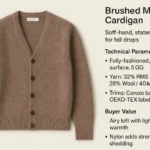
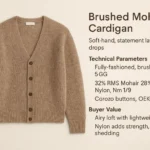
The cardigan, as a distinct garment, originated in the mid-19th century, with its creation most commonly dated to the 1850s. Its development is closely linked to military wear, functional knit construction, and later evolution into civilian fashion.
The Origin of the Cardigan (1850s)
The cardigan is named after James Brudenell, a British army officer who led the Charge of the Light Brigade during the Crimean War (1853–1856).
During this period, British officers wore knitted, open-front wool garments under their uniforms for warmth. These garments were practical, buttoned, and easy to layer—key characteristics that define the cardigan today.
After the war, this style of knitwear gained popularity in Britain and was referred to as a cardigan, directly derived from the Earl’s title.
Early Construction: Functional Knitwear
Early cardigans were:
-
Hand-knitted or frame-knitted
-
Made primarily from wool
-
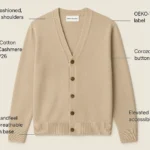
Button-front, collarless, and waist-length
-
Designed for warmth, ease of wear, and repairability
From a manufacturing standpoint, these early cardigans used simple knit structures (stockinette and rib) and emphasized function over decoration. This foundation is why the cardigan became one of the most adaptable knitwear categories in history.
Transition Into Civilian and Women’s Fashion (Late 19th – Early 20th Century)
By the late 1800s and early 1900s, cardigans moved beyond military use:
-
Adopted into everyday menswear in Britain
-
Integrated into women’s fashion for practicality and modesty
-
Used as indoor wear due to heating limitations in homes
The rise of industrial knitting machines in Europe accelerated cardigan production, allowing consistent sizing, repeatable patterns, and wider distribution.
Cardigans in Modern Fashion History
1920s–1940s
-
Became common in women’s wardrobes
-
Used in school uniforms and leisurewear
-
Often worn as matching knit sets
1950s
1970s–1990s
-
Expanded into oversized, cable-knit, and textured styles
-
Adopted across subcultures, from academic to casual streetwear
2000s–Present
Why the Cardigan Endures
The cardigan’s longevity is rooted in its construction logic:
-
Open-front design allows flexible layering
-
Knit structure provides elasticity and comfort
-
Adaptable to different yarns, gauges, and climates
-
Suitable for mass production and premium craftsmanship alike
From hand-knit origins to modern computerized knitting, the cardigan has continuously evolved while retaining its original functional DNA.
Summary Timeline
-
1850s: Cardigan emerges during the Crimean War
-
Late 19th century: Adopted into civilian wear
-
Early 20th century: Integrated into women’s fashion
-
Mid–late 20th century: Becomes a global staple
-
21st century: Fully diversified across fashion segments and manufacturing models
The cardigan, first made in the mid-19th century, remains one of the most enduring and technically versatile garments in knitwear history.
Azknit provides oem/odm service for knitwear. Help to create your own brands knitwear series like sweater, hoodie, cardigan, dresses and tank tops.
Azknit has been working with more than 30+ worldwide brands and finished more than 100 samples each months.
Feel free to contact for your own design quote.